
lovethailand home >Central Travel Attractions >Samut Songkhram Travel Attractions >Am Phawa >Bang Chang > Wat Bang Kaphom
TL;DR: Wat Bang Kaphom is located at Amphawa Subdistrict, Amphawa District, Samut Songkhram, open Open Daily, hours 08:00-16:30. Highlights include Four overlapping Buddha footprint replicas, old Chinese-style sanctuary, relief stucco murals, Luang Pho Kong worship.
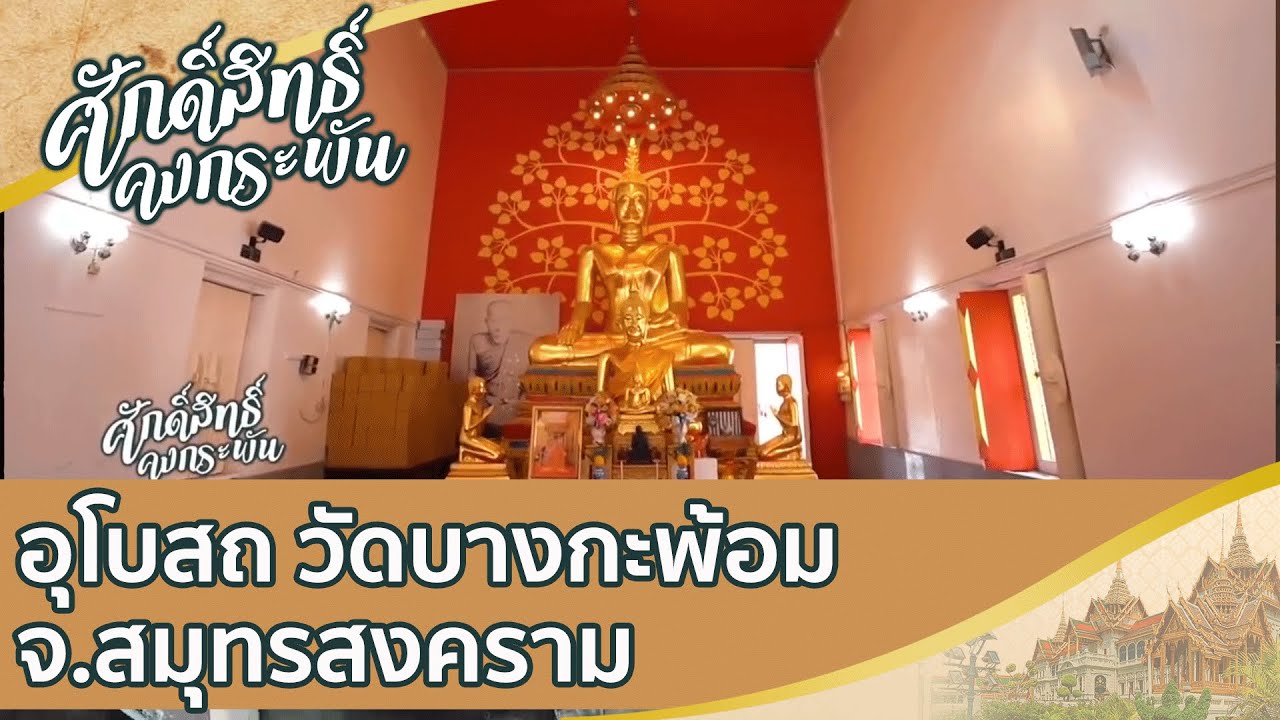
Wat Bang Kaphom

Open Days: Open Daily
Opening Hours: 08:00-16:30
Wat Bang Kapom in Samut Songkhram is one of those temples that quietly leaves a strong impression once you arrive. It is not simply a local temple associated with Luang Pho Kong, the revered monk of the Mae Klong region, but also an old religious site filled with layered local memory, rare artistic details, and a calm historical atmosphere that feels very different from the more crowded temple destinations around central Thailand. For travelers exploring Amphawa beyond the floating market, Wat Bang Kapom offers a more reflective and culturally rich experience.
The temple is a Mahanikaya temple located in Amphawa Subdistrict, Amphawa District, Samut Songkhram Province, about 3 kilometers from the provincial center. Its grounds cover 4 rai, 1 ngan, and 62 square wah. Wat Bang Kapom is regarded as an old temple from the late Ayutthaya period and remains one of the most culturally significant temples in the Amphawa area. Its reputation today is shaped by both its historical architecture and its strong association with Luang Pho Kong Thammachoto, one of the best-known monks in the Mae Klong cultural region.
The origin story of the temple is rooted in local legend. It is said that during the Second Fall of Ayutthaya, a husband and wife fled the war and settled in this area, making a living by weaving a large bamboo container known as a “phom.” When Burmese troops approached and escape was no longer possible, they hid inside one of these woven containers and vowed that if they survived, they would build a temple on that very spot. After escaping danger, they fulfilled that vow and established a temple first known as “Wat Bang Kab Phom,” which later evolved into the name Wat Bang Kapom. This legend gives the temple a distinctly local identity built on survival, devotion, and gratitude.
Beyond the legend, Wat Bang Kapom is also historically important as an old temple that developed through the late Ayutthaya, Thonburi, and Rattanakosin periods. Its value lies not only in age, but in the survival of architectural and artistic features that are rarely seen in such complete form. Visitors interested in Thai religious art will find that the temple has a much deeper character than an ordinary stop for merit-making. It preserves visible traces of older craftsmanship and regional temple culture in a way that feels authentic rather than staged.
One of the temple’s best-known features is the old sanctuary housing a remarkable set of four overlapping Buddha footprint replicas. This is one of the main sacred highlights of Wat Bang Kapom and one of the reasons many visitors come specifically to this temple. The footprints are not only devotional objects, but also part of an important artistic setting that reveals the level of skill involved in the temple’s historical construction and later preservation. Inside the hall, the atmosphere is solemn and quiet, making the space feel especially powerful for both worship and contemplation.
Another outstanding element is the temple’s rare stucco mural work. Unlike ordinary wall paintings, the murals here are created in relief, with raised and recessed surfaces, and some parts are enhanced with color. This creates an unusual three-dimensional effect and gives the walls a distinctive visual depth. The artistic language of the temple therefore goes beyond painting alone and enters the realm of sculptural storytelling. For travelers interested in temple interiors, Wat Bang Kapom offers one of the more unusual examples in Samut Songkhram.
The old ordination hall and related structures also show Chinese stylistic influence, especially in forms associated with the artistic taste of King Rama III’s era. The architecture differs from the more familiar Thai roofline model, and details such as the rounded doorway and decorative figures near the entrance help create a clear visual identity. These features make Wat Bang Kapom particularly rewarding for visitors who enjoy observing architectural variation among Thai temples rather than focusing only on major pilgrimage destinations.
No article about Wat Bang Kapom would be complete without mentioning Luang Pho Kong Thammachoto, the temple’s most celebrated former abbot. He served as abbot from 1905 to 1943 and played a major role in restoring and developing the temple. Luang Pho Kong remains one of the most revered monks in the Mae Klong region, and his name continues to draw devotees to the temple. Many visitors come to pay respect to his image and to honor the legacy of a monk whose spiritual reputation has endured across generations.
The current appeal of Wat Bang Kapom lies in the way sacred faith, old craftsmanship, and local memory continue to exist together in one place. The temple is not a highly commercialized attraction. Instead, it offers a quieter atmosphere that suits visitors looking for prayer, heritage, and a more grounded view of Amphawa’s religious culture. This makes it ideal for travelers who want to move beyond the floating market and see another side of Samut Songkhram.
The temple is currently open daily from 08:00 to 16:30, which makes daytime visits the most practical. Morning to early afternoon is the best time to appreciate the interior details, especially the old hall and its relief decorations, as natural light helps reveal the texture of the surfaces more clearly. Because the temple is not far from Amphawa Floating Market and other nearby cultural sites, it can easily be included in a half-day or full-day Amphawa itinerary.
Getting There is quite easy. Wat Bang Kapom is located around 3 kilometers from the center of Samut Songkhram and can be reached conveniently by private car. It sits along the Mae Klong-Bang Phae route in the Amphawa area, making it simple to combine with nearby sites such as Amphawa Floating Market, King Rama II Memorial Park, and other old temples in the district. Visitors staying overnight in Amphawa can visit the temple comfortably in the morning before continuing to riverside cafés, restaurants, or other cultural attractions.
Overall, Wat Bang Kapom is one of the most rewarding temples in Samut Songkhram for visitors interested in history, sacred art, and regional identity. Its importance is not limited to one famous monk or one old building. Instead, it stands as a place where legend, devotion, architecture, and local heritage are woven together in a way that feels deeply rooted and unmistakably real. For foreign travelers looking for a meaningful temple visit in Amphawa, Wat Bang Kapom deserves a place on the itinerary.
| Name | Wat Bang Kapom |
| Location | Amphawa Subdistrict, Amphawa District, Samut Songkhram |
| Address | Amphawa Subdistrict, Amphawa District, Samut Songkhram 75110, Thailand |
| Highlights | Four overlapping Buddha footprint replicas, old Chinese-style sanctuary, relief stucco murals, Luang Pho Kong worship |
| History | An old temple from the late Ayutthaya period, around 1769 CE, with continued importance through the Thonburi and Rattanakosin eras |
| Name Origin | Tradition says the original name evolved from “Wat Bang Kab Phom,” linked to a wartime hiding story involving a woven bamboo container called a phom |
| Distinctive Features | Historic temple atmosphere, rare relief stucco wall art, Chinese-influenced architecture, and strong devotional ties to Luang Pho Kong |
| Travel Information | About 3 km from Samut Songkhram town and easy to combine with Amphawa attractions by car |
| Current Status | Open to visitors and worshippers as usual |
| Open Days | Open Daily |
| Opening Hours | 08:00-16:30 |
| Facilities | Worship Areas, Open Temple Grounds, Nearby Parking Access, Historic Sanctuary Viewing Areas |
| Main Areas / Zones | Main Sanctuary, Luang Pho Kong Hall, Hall of Six Buddha Images, Luang Pho Dam Hall, Buddha Footprint Hall |
| Abbot / Caretaker | Phra Kru Samuh Sanya Siripanyo |
| Main Contact Number | 034-751334 |
| Nearby Tourist Attractions | 1. Wat Kaeo Fah - 1 km 2. Wat Nang Wang - 1 km 3. Amphawa Floating Market - 3 km 4. King Rama II Memorial Park - 3 km 5. Wat Bang Khae Noi - 5 km |
| Nearby Restaurants | 1. The Pomelo Amphawa - 1 km Tel. 061-394-3136 2. Pa Maew Red Noodle Soup Wat Phong Phang - 1 km 3. Sabannga Restaurant - 1 km 4. Baan Kung Maenam Homestay - 1 km 5. Krua Khai Yoem Amphawa - 1 km |
| Nearby Accommodations | 1. Prima Amphawa - 2 km Tel. 091-414-4848 2. Amphawa Na Non Hotel - 2 km Tel. 034-752-111, 082-444-2111 3. House Of Passion - 3 km 4. Asita Eco Resort - 3 km Tel. 084-289-6264 5. Baan Amphawa Resort & Spa - 1 km Tel. 034-752-228 |
Frequently Asked Questions (FAQ)
Q: Is Wat Bang Kapom open every day?
A: Yes. The temple is open daily from 08:00 to 16:30.
Q: What is Wat Bang Kapom best known for?
A: It is best known for Luang Pho Kong, its four overlapping Buddha footprint replicas, and its rare relief stucco murals inside the old sanctuary.
Q: Why is Luang Pho Kong important?
A: Luang Pho Kong Thammachoto was a highly revered former abbot of the temple and remains one of the most respected monks associated with the Mae Klong region.
Q: Is Wat Bang Kapom suitable for cultural travelers?
A: Yes. It is especially suitable for visitors interested in old temples, sacred art, regional history, and a quieter side of Amphawa.
Q: How much time should I spend at Wat Bang Kapom?
A: Most visitors can spend around 1 to 2 hours exploring the temple, paying respect, and viewing the old sanctuary.
Q: Is Wat Bang Kapom close to Amphawa Floating Market?
A: Yes. It is about 3 kilometers away, so it can be combined easily with other Amphawa attractions in the same trip.
 Category: ●Places of Worship
 Group: ●Temple
Last Update : 8 MonthAgo
 Last Update : 8 MonthAgo
 Click to Access the Navigation Map GPS
Wat Bang Kaphom Map
Recommend

 Art, Culture and Heritage
 Historical Sites and Monuments(2)
 Landmarks and Memorials(1)
 Art, Craft Centres, Tradition(1)
 Museums(6)
 Historic Homes and Cities(1)
Temple(34)
 Church(1)
 Other Sacred Sites(1)
 Research and Development
 Royal Project(2)
 Suburban Living
 Village, Community(6)
 Local Market(2)
 Floating Market(5)
 Nature and Wildlife
 River, Canal(1)
 Bays and Beaches(1)
 Other natural attractions(1)
 Entertainment and Agricultural
 Farms, Parks and Ecotourism(1)
 Waterpark(1)
 Shopping
 Department Store(1)
 Travel Articles, Recipes
 Travel Review, Food Review(1)


