
lovethailand home >Central Travel Attractions >Samut Sakhon Travel Attractions > 20 Best Places to Visit in Samut Sakhon Central Th..
TL;DR: 20 Best Places to Visit in Samut Sakhon Central Thailand, open Daily Opening Hours: 08:00 – 18:00.
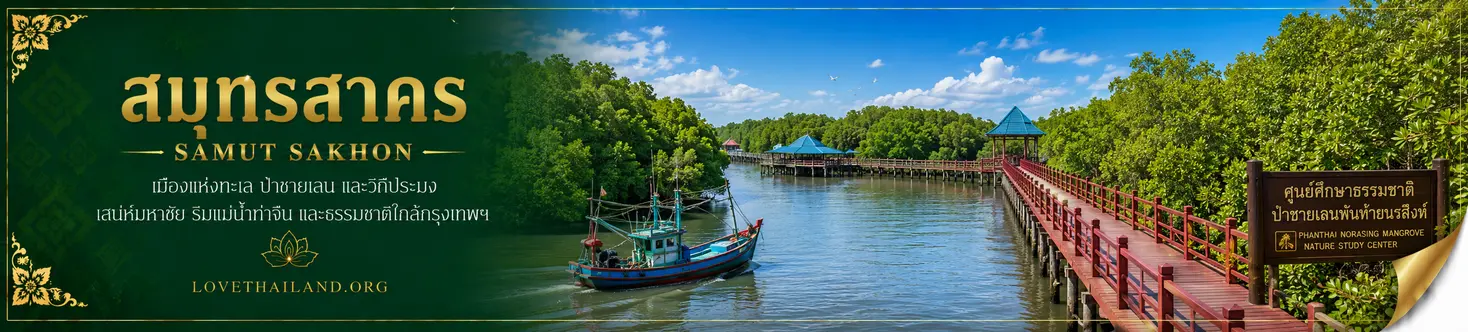
20 Best Places to Visit in Samut Sakhon Central Thailand
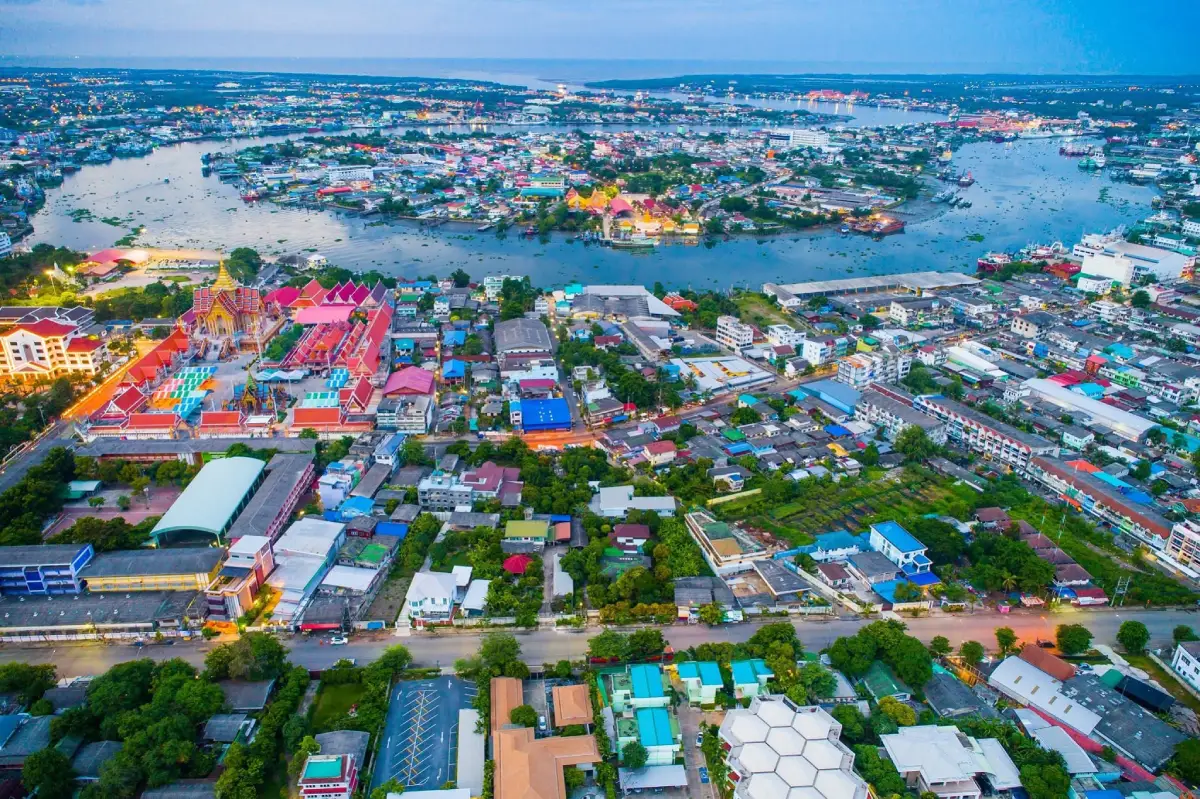
20 Best Places to Visit in Samut Sakhon, Central Thailand Samut Sakhon is a province close to Bangkok that works equally well for a one-day trip or a 2–3 day journey. The province is known not only for fresh seafood and Mahachai Market, but also for the historic fishing community of Tha Chalom, the story of Phanthai Norasing, ancient temples along the Tha Chin River, Chinese shrines, early-Rattanakosin fortifications, Benjarong craftsmanship, and historic canals connected with important events from the Ayutthaya period. Travelers with only 1 day can focus on the Mahachai–Tha Chalom area or the Phanthai Norasing–Khok Kham zone. Those with 2–3 days should add Krathum Baen District and communities along the Tha Chin River for a broader experience of history, culture, handicrafts, food, and Samut Sakhon’s fishing-town way of life.
Samut Sakhon lies southwest of Bangkok, with the Tha Chin River serving as the province’s main waterway before flowing into the Gulf of Thailand. Most of the landscape consists of low-lying plains crossed by numerous canals, agricultural areas, aquaculture ponds, fishing communities, and industrial zones. This combination gives the province a far more diverse identity than the image of an industrial or seafood-producing city alone.
Historically, the area was closely connected with navigation and trade along the Tha Chin River. Mahachai developed as a port town and distribution center, while Tha Chalom on the opposite bank grew through fishing, shipbuilding, commerce, and Thai–Chinese settlement. Over time, Tha Chalom became one of the areas most closely associated with the early history of local administration in Thailand.
Samut Sakhon is also linked with the older name “Tha Chin,” which reflects the historical role of Chinese communities and river trade in the region. The city later developed continuously in administration, commerce, and transportation until Mahachai became the modern provincial center. Traces of the old town remain visible in temples, forts, shrines, neighborhood streets, and riverside markets.
One of the best-known historical stories associated with the province is that of Phanthai Norasing, the royal helmsman during the reign of King Suea. He accepted punishment under the Palace Law after the prow of the royal barge was broken while navigating the difficult bends of Khlong Khok Kham. The story gives the Phanthai Norasing and Khlong Khok Kham areas historical importance far beyond their role as attractions near Bangkok.
Samut Sakhon is culturally diverse, shaped by Thai communities, Thai–Chinese communities, and people whose livelihoods are connected with fishing, trade, and industry. Chinese influence can be seen in shrines, vegetarian festivals, beliefs surrounding the city guardian deity, traditional shops, and market life in Mahachai and Tha Chalom. Meanwhile, the Benjarong craftsmanship of Don Kai Dee reflects a strong local tradition of decorative arts in Krathum Baen.
Food is another major reason to visit Samut Sakhon. Mahachai Market is one of the province’s principal centers for fresh seafood, dried seafood, fish, shrimp, crab, shellfish, and ingredients from the fishing industry. The province also has numerous seafood restaurants, Chinese eateries, traditional sweets, and processed products that are easy to buy as souvenirs. Travelers who want to understand the province properly should therefore make time for markets and communities rather than visiting only temples or landmark attractions.
For trip planning, the province can be divided into several practical zones. Mahachai is suitable for Mahachai Market, Samut Sakhon City Pillar Shrine, Wichian Chodok Fort, and attractions in the city center. Tha Chalom is ideal for the old fishing community, Wat Chong Lom, and Guanyin Bodhisattva. The Phanthai Norasing–Khok Kham zone is best for history, coastal ecosystems, and old waterways, while Krathum Baen is suitable for Don Kai Dee Benjarong Village and handicraft communities.
Travel from Bangkok is easy by car via Rama II Road or by taking the Wongwian Yai–Mahachai railway line. The train offers a very different experience from driving because passengers can walk directly from Mahachai Station into the market, then cross the Tha Chin River by ferry to explore Tha Chalom on foot. For Phanthai Norasing, Khok Kham, Krathum Baen, Ban Phaeo, or several districts in one day, a private car is more convenient.

1. Phanthai Norasing Historical Park is one of the most important historical attractions in Samut Sakhon. Located in Phanthai Norasing Subdistrict, Mueang Samut Sakhon District, the park combines the Phanthai Norasing Shrine, places of worship, historical learning areas, and nature routes, allowing visitors to experience faith, history, and mangrove ecology in the same destination.
Highlights: Phanthai Norasing Shrine, the story of the royal barge helmsman, Mae Si Nuan Shrine, sacred halls, historic takhian wood, nature trails, and the setting of Khlong Khok Kham, which played a central role in the Phanthai Norasing story.
The story of Phanthai Norasing took place during the reign of King Sanphet VIII, commonly known as King Suea. While navigating the royal barge Ekkachai through the winding Khlong Khok Kham, the vessel struck a tree branch and its prow was damaged. Under the Palace Law, the person responsible for damaging a royal barge was subject to punishment. Although the king wished to pardon him, Phanthai Norasing insisted on accepting the prescribed penalty in order to preserve the authority of the law and royal tradition.
The event transformed Phanthai Norasing into a symbol of honesty, responsibility, and respect for the law. His story has been retold through textbooks, literature, television dramas, and many other forms of media, becoming part of Thailand’s collective historical memory.
Inside the park, visitors can pay respect at the shrine and walk through sites associated with the historical event. The surrounding area is relatively green and peaceful, creating a very different experience from an indoor museum focused mainly on text and displays.
Families with children can use the park as an outdoor history classroom because it connects stories from textbooks with an actual landscape. Nature lovers can also explore green areas and mangrove environments while learning about nearby coastal communities.
The park is easy to combine with Khlong Khok Kham and Wat Khok Kham as part of a half-day or full-day historical route without repeatedly returning to central Mahachai.
Open Days: Daily Opening Hours: 08:00 – 18:00
Getting There: From Bangkok, take Rama II Road toward Samut Sakhon and follow signs toward Phanthai Norasing. A private car is the most convenient option if continuing to Khlong Khok Kham and nearby attractions.

2. Mahachai Market is one of the places that best represents the identity of Samut Sakhon. Located beside the Tha Chin River in Mahachai, it functions as a fresh market, seafood center, ferry connection, and part of the historic commercial district. Travelers who want to see the real working character of the city and its fishing economy should not miss it.
Highlights: Fresh seafood, shrimp, crab, fish, shellfish, dried seafood, riverside market life, the municipal pier, the Mahachai–Tha Chalom ferry, and the lively atmosphere of a working port town from early morning.
Mahachai Market has long been central to the provincial economy because Samut Sakhon is one of Thailand’s most important fishing and seafood-processing centers. Marine products from fishing boats and production areas are distributed through the market, restaurants, wholesalers, and related industries, keeping the district active throughout much of the day.
Morning is the best time to visit because seafood selections are widest, most shops are open, and visitors can observe local trading activity at its busiest. Anyone buying seafood to take home should bring a cooler bag or insulated container, particularly if traveling for several more hours.
The market sells far more than fresh seafood. Visitors will also find dried seafood, salted fish, dried shrimp, snacks, sweets, and ready-to-eat dishes, making it useful both for serious food shopping and for tourists looking for local flavors and souvenirs.
One of the market’s major advantages is its proximity to Mahachai Railway Station. Travelers can take the train from Wongwian Yai for a day trip, walk directly into the market, and then continue by ferry across the river to Tha Chalom without needing a private car.
Mahachai Market can be combined with Samut Sakhon City Pillar Shrine, Wichian Chodok Fort, and Tha Chalom in a single day. This is one of the best introductory routes for first-time visitors because it combines food, history, and the working atmosphere of a river-port city.
Open Days: Daily Opening Hours: 05:00 – 19:00
Getting There: Drive from Bangkok via Rama II Road into Mahachai, or take the Wongwian Yai–Mahachai train and walk from Mahachai Station to the market and municipal pier.
Map (GPS):Open Google Maps – Mahachai Market

3. Tha Chalom Fishing Village is a historic community on the opposite bank of the Tha Chin River from Mahachai. It is important as a fishing settlement, port town, Thai–Chinese commercial district, and an area closely associated with the history of Thailand’s first sanitary district. It is one of the best places to understand the history of Samut Sakhon beyond the seafood market.
Highlights: Historic fishing community, Thai–Chinese heritage, old streets and houses, Wat Chong Lom, Chinese shrines, shipbuilding traditions, ferry piers, and the history of Tha Chalom’s early municipal sanitation system.
Tha Chalom developed from its location along the Tha Chin River, which was ideal for fishing, navigation, shipbuilding, and commerce. As river-based trade expanded, markets, houses, shops, boatyards, and a multicultural community grew around the port.
Tha Chalom has national historical significance because it is widely recognized in connection with the establishment of Thailand’s first sanitary district. This marked an important transition from a traditional port settlement toward a more organized form of local urban administration.
Exploring the community is best done slowly rather than as a quick check-in stop. Visitors can observe old houses, neighborhood streets, temples, shrines, shops, and traces of the fishing economy that continue to shape everyday life.
Crossing the river by ferry from Mahachai is part of the experience. The journey is short but immediately reveals the character of a river town. After arriving in Tha Chalom, visitors can continue on foot or by local transport to Wat Chong Lom, Guanyin Bodhisattva, and Thanon Thawai.
The community is particularly suitable for history enthusiasts, photographers, urban walkers, and travelers who prefer real neighborhoods to purpose-built attractions. Visitors should remember that Tha Chalom is a living residential area and should photograph people and homes respectfully.
Open Days: Daily Opening Hours: The community can be explored throughout the day
Getting There: The most atmospheric route is to travel to Mahachai and take the ferry across the Tha Chin River to Tha Chalom. The area is also accessible by road.

4. Wat Sutthiwat Wararam (Wat Chong Lom) is an important royal temple in Tha Chalom near the mouth of the Tha Chin River and the Gulf of Thailand. It has religious significance as well as strong historical connections with the Tha Chalom fishing community.
Highlights: Historic royal temple, riverside setting near the Tha Chin estuary, Luang Pu Kaeo, temple halls, its role as a spiritual center for Tha Chalom, and swiftlets that inhabit parts of the temple grounds.
The name “Wat Chong Lom” reflects the temple’s location near the river mouth, where winds from the Gulf of Thailand are a defining feature of the landscape. The surrounding area was historically important for port activities and fishing, so the temple became deeply integrated into local community life.
As a royal monastery, the temple remains one of the province’s significant Buddhist sites. Visitors can pay respect, make merit, and explore the architecture while learning about monks and communities associated with the temple.
One unusual feature is the population of swiftlets that inhabit parts of the temple. The coexistence of wildlife and religious architecture gives Wat Chong Lom a distinctive atmosphere and also reflects the ecology of the river-mouth environment.
The temple is suitable for older travelers, Buddhist visitors, history enthusiasts, and anyone exploring Tha Chalom on foot. Visitors should dress respectfully and avoid disturbing areas where birds are nesting or religious ceremonies are taking place.
Guanyin Bodhisattva is located directly behind the temple, and the visit can easily continue to Tha Chalom community, Thanon Thawai, and the ferry pier, allowing travelers to spend half a day or more in the area without long transfers.
Open Days: Daily Opening Hours: 08:00 – 16:30
Getting There: The temple is located in Tha Chalom Subdistrict, Mueang Samut Sakhon District. Visitors can cross by ferry from Mahachai and continue through the community or drive directly into Tha Chalom.
Map (GPS):Open Google Maps – Wat Sutthiwat Wararam

5. Don Kai Dee Benjarong Village is an important handicraft community in Don Kai Dee Subdistrict, Krathum Baen District. It is one of the places that has made Samut Sakhon well known for high-quality Benjarong porcelain. Visitors can see both finished products and the actual working process of skilled artisans within the community.
Highlights: Hand-painted Benjarong porcelain, local artisans, production demonstrations, display houses and shops, contemporary Thai decorative arts, and the story of how Benjarong became an important community livelihood.
The Benjarong tradition in Don Kai Dee grew from the experience of local people who had previously worked in ceramic and porcelain factories. When employment conditions changed, some artisans brought their knowledge and skills back home and began developing the craft independently before forming a recognizable handicraft community.
Benjarong is distinguished by hand-painted decorative patterns using several colors on glazed ceramic surfaces. Designs include traditional Thai motifs, flowers, thep phanom figures, and contemporary patterns. Each piece therefore reflects the individual skill of its maker.
Visiting the village provides a different experience from buying Benjarong in a conventional shop because travelers can observe the actual production process, from preparing the ceramic form and drawing patterns to coloring and firing.
The village is suitable for families, students, designers, art lovers, and travelers looking for high-quality local souvenirs. Buying directly from the community also supports the preservation of artisan skills and returns income to local producers.
Travelers from Bangkok can make Don Kai Dee the main stop on a Krathum Baen route and continue to temples and historic riverside communities nearby, revealing a side of Samut Sakhon beyond Mahachai.
Open Days: Daily Opening Hours: 08:00 – 16:30
Getting There: The village is located in Moo 1, Don Kai Dee Subdistrict, Krathum Baen District. From Bangkok, use Phet Kasem Road or connecting routes into Krathum Baen. A private car is useful when continuing to other attractions in the district.

6. Wat Yai Chom Prasat is an important historic temple in Tha Chin Subdistrict, Mueang Samut Sakhon District. Located beside the Tha Chin River, it is valued for architecture, craftsmanship, and the history of riverside settlement. Travelers interested in old temples and Ayutthaya-period artistic traditions should include it in their Samut Sakhon itinerary.
Highlights: Brick-and-plaster ordination hall, mondop-style entrance, carved wooden floral and animal motifs, ruins of an old viharn, a curved base resembling the hull of a Chinese junk, and the atmosphere of an old temple beside the Tha Chin River.
Wat Yai Chom Prasat reflects the historical importance of communities in the Tha Chin River basin. Many Central Thai settlements developed along rivers that functioned as the main transportation routes, and the presence of substantial religious architecture indicates the prosperity of communities in earlier periods.
The ordination hall and entrance structures deserve careful attention, particularly the fine carved wooden decorations featuring plants and animals. These details reveal the skill of traditional craftsmen and differ markedly from the materials and decorative methods used in modern temples.
The remaining structure of the old viharn is also notable because its curved base resembles the hull of a traditional Chinese junk. Seeing the physical structure gives visitors a clearer understanding of historical construction methods than photographs or museum explanations alone.
The temple is suitable for history, architecture, and art enthusiasts as well as photographers interested in historic religious buildings. Visitors should avoid touching old carvings or fragile surfaces and should dress respectfully.
The temple can be combined with Tha Chalom, Wat Chong Lom, or Mahachai in the same day because all are located within Mueang Samut Sakhon District.
Open Days: Daily Opening Hours: 08:00 – 16:30
Getting There: The temple is located in Tha Chin Subdistrict, Mueang Samut Sakhon District. From Mahachai, follow local roads toward the Tha Chin area. A private car is most convenient when visiting several temples and communities.
Map (GPS):Open Google Maps – Wat Yai Chom Prasat

7. Samut Sakhon City Pillar Shrine is an important center of faith in Mahachai, located beside the river embankment near the Tha Chin River and Wichian Chodok Fort. Local people commonly refer to the guardian deity as “Chao Pho Wichian Choti” and often come to pay respect before going to sea, beginning trade, or undertaking an important activity.
Highlights: Chao Pho Wichian Choti, Chinese-style shrine architecture, the provincial city pillar, fishing-community beliefs, Tha Chin riverside setting, and proximity to Wichian Chodok Fort and Mahachai Market.
The shrine clearly reflects Mahachai’s Thai–Chinese identity. Beliefs surrounding a guardian deity protecting the city and seafarers are closely connected with the context of a fishing and port community. Many people whose livelihoods are connected with the sea continue to pay respect here for good fortune and safety.
The provincial city pillar is also located in the same area, bringing two belief systems together: a Chinese-style guardian shrine and the traditional Thai concept of a city pillar. This combination illustrates the coexistence of different cultural traditions in Samut Sakhon.
A visit does not require much time and works well as the starting point for a walking route through Mahachai. After paying respect, visitors can continue on foot to Wichian Chodok Fort, Mahachai Market, and the municipal pier.
Photography should be respectful. Visitors should avoid blocking worshippers and should not photograph people performing rituals at close range without permission.
During Chinese festivals and community ceremonies, the shrine becomes much busier than usual. Travelers who prefer a quieter atmosphere can visit on weekday mornings or afternoons.
Open Days: Daily Opening Hours: 06:00 – 18:00
Getting There: The shrine stands beside the river embankment on Setthakit 1 Road in Mahachai Subdistrict, close to Mahachai Market and Wichian Chodok Fort. It is within walking distance of the market area.

8. Wichian Chodok Fort is an important historic military site in Mahachai, located close to Samut Sakhon City Pillar Shrine. Although only part of the original fortification survives, the site demonstrates the strategic importance of Samut Sakhon as a river-mouth city that required defense from maritime threats during the early Rattanakosin period.
Highlights: Brick fort walls, defensive structures, gun positions, history from the reign of King Rama III, and a location near the Tha Chin River that illustrates the logic of river-based urban defense.
The fort was constructed during the reign of King Nangklao, Rama III, when Siam was paying close attention to political and military developments in the region. River-mouth cities were strengthened to defend against hostile vessels approaching via waterways.
The structure was built of brick and plaster and included walls, defensive positions, and openings for weapons. Although some sections have disappeared, the surviving remains help visitors imagine the form of urban defense during an era when artillery and river control were essential to security.
One of the site’s most interesting features is its location within modern Mahachai, allowing visitors to see the overlap of old and new urban landscapes. Shrines, markets, roads, and daily commercial activities continue around the historic fort.
The site is suitable for students, history enthusiasts, and travelers who want to understand Samut Sakhon as more than a seafood-market destination. It does not take long to visit and is easy to include between the city pillar shrine and Mahachai Market.
Combining the fort with the shrine and market, followed by a ferry crossing to Tha Chalom, creates a compact full-day route through the history of both banks of the Tha Chin River.
Open Days: Daily Opening Hours: 08:00 – 17:00
Getting There: The fort is located in Mahachai Subdistrict near the provincial government area and city pillar shrine. Visitors can walk from Mahachai Market or drive into the city via Setthakit 1 Road.
Map (GPS):Open Google Maps – Wichian Chodok Fort

9. Guanyin Bodhisattva is an important place of worship in Tha Chalom, located behind Wat Sutthiwat Wararam or Wat Chong Lom. Its main feature is a large statue of Guanyin in the posture of compassion, accompanied by Chinese decorative elements and an artificial mountain, creating a site that combines faith, art, and Thai–Chinese culture.
Highlights: Large Guanyin statue, water-pouring gesture, lotus base, dragon decorations around the artificial mountain, and a location next to Wat Chong Lom in historic Tha Chalom.
Guanyin is a symbol of compassion in Mahayana Buddhism and is deeply respected in Thai–Chinese communities. The presence of a large Guanyin statue in Tha Chalom reflects the cultural roots of a port community where Chinese merchants and settlers played an important historical role.
The statue was designed to be visible from a distance, seated on a lotus base with a mountain and dragon motifs forming part of the composition. The scale gives the site a very different atmosphere from a small neighborhood shrine.
Devotees commonly pray for peace, compassion, health, and good fortune. Visitors who are not participating in worship can still appreciate the sculpture and learn about Chinese religious traditions in Tha Chalom.
The site is suitable for families, older travelers, spiritual visitors, Chinese-culture enthusiasts, and photographers. Visitors should dress respectfully and avoid disturbing people engaged in worship.
Because it is directly beside Wat Chong Lom, both places can be visited together before continuing to Tha Chalom community, Thanon Thawai, and the ferry pier.
Open Days: Daily Opening Hours: 05:00 – 18:00
Getting There: The statue is located behind Wat Sutthiwat Wararam in Tha Chalom Subdistrict. Visitors can cross from Mahachai by ferry or drive directly to Tha Chalom.
Map (GPS):Open Google Maps – Guanyin Bodhisattva

10. Khlong Khok Kham is an important historic canal in the Khok Kham–Phanthai Norasing area of Mueang Samut Sakhon District. It is famous as the setting of the Phanthai Norasing incident during the reign of King Suea. The canal’s former sharp bends and difficult navigation were directly connected with the event that later became one of Thailand’s best-known historical stories.
Highlights: Historic Phanthai Norasing canal, old waterways, canal-side communities, Wat Khok Kham, connection with Phanthai Norasing Historical Park, and the history of later canal-cutting projects designed to improve navigation.
Historically, Khlong Khok Kham contained many sharp bends and was difficult for large vessels to navigate, particularly royal barges that required precise steering. The physical geography of the canal therefore played an important role in the Phanthai Norasing incident.
After the event, the navigational problems created by the winding canal contributed to later efforts to improve waterways and create shortcuts. The area is therefore significant both for historical memory and for the development of water transportation in Central Thailand.
Visitors today do not come to see a large monument but rather to understand the real geographical setting behind the historical story. Observing the canal, communities, and nearby temples gives much more context to the Phanthai Norasing story than reading about the event alone.
The canal also reflects Samut Sakhon’s traditional water-based way of life. Houses, temples, roads, and agricultural areas around the canal show that waterways still remain important to local identity even though roads have replaced much of their former transportation role.
The best route combines Khlong Khok Kham with Phanthai Norasing Historical Park and Wat Khok Kham, allowing travelers to connect the event, the historical figure, and the real geography in one trip.
Getting There: Khlong Khok Kham lies within Khok Kham Subdistrict and the Phanthai Norasing area. From Rama II Road, follow local roads toward Khok Kham and Phanthai Norasing. A private car is the most practical option.
Map (GPS):Open Google Maps – Khlong Khok Kham

11. Samut Sakhon Provincial Buddha Monthon is an important Buddhist site in Amphaeng Subdistrict, Ban Phaeo District. The grounds are open, peaceful, and green, making the area suitable for worship, merit-making, quiet walks, or simply spending time away from the busier market and industrial zones of Samut Sakhon.
Highlights: Main Buddha image, large Buddhist ceremonial grounds, peaceful atmosphere, open walking areas, and a location in Ban Phaeo that can easily be combined with markets and agricultural communities.
The site was developed as a provincial center for Buddhist activities, with space for ceremonies, merit-making, and important religious events. Its broad and open grounds can accommodate gatherings larger than those typically held at a neighborhood temple.
The principal Buddha image is the main focal point and is where most visitors begin by paying respect before walking through the surrounding area. The relatively low density of buildings creates a calm atmosphere suitable for families and older travelers.
The Buddha Monthon also adds variety to a Ban Phaeo itinerary. The district is often associated with orchards, canals, and community markets, so including a Buddhist destination gives a more complete view of local life.
Photography is best in the morning or late afternoon when the light is softer. Visitors attending religious activities should dress respectfully and maintain a quiet atmosphere.
The site combines naturally with Ban Phaeo Market and agricultural areas in the district.
Open Days: Daily Opening Hours: 08:00 – 17:00
Getting There: Samut Sakhon Provincial Buddha Monthon is located in Moo 2, Amphaeng Subdistrict, Ban Phaeo District. From Rama II Road, continue toward Ban Phaeo and then Amphaeng Subdistrict.

12. Wat Kalong is an important temple in Kalong Subdistrict, Mueang Samut Sakhon District. It is widely associated with Luang Pho Sut Siritharo, a highly respected monk known among local residents and devotees from across Thailand. The temple therefore has religious, historical, and community significance.
Highlights: Luang Pho Sut Siritharo, Suea Phen sacred amulets, the history of an old temple in Kalong, important sacred objects, and the atmosphere of a coastal Samut Sakhon community.
Wat Kalong has a long history dating to the early Rattanakosin period, but it became especially well known through Luang Pho Sut, who served as abbot and played an important role in the community. His name remains strongly associated with sacred objects valued by collectors and devotees.
The “Suea Phen” or leaping tiger motif is one of the symbols closely connected with Luang Pho Sut and has become a recognizable identity of the temple. Its significance goes beyond amulets and also reflects stories of compassion, Buddhist teaching, and the monk’s relationship with the local community.
Visitors can pay respect, make merit, and learn more about Luang Pho Sut within the temple grounds. The temple retains the atmosphere of a working community monastery rather than a purely tourist-oriented site.
Wat Kalong lies near coastal routes, salt fields, and agricultural communities, allowing travelers to combine a Buddhist visit with nature and local-lifestyle attractions without returning to central Mahachai.
Visitors should dress respectfully and be particularly considerate during ceremonies or periods when large numbers of devotees are present.
Getting There: The temple is located in Moo 1, Ban Kalong Bon, Kalong Subdistrict, Mueang Samut Sakhon District. From Rama II Road, enter the Kalong area and follow local roads to the temple.
Map (GPS):Open Google Maps – Wat Kalong
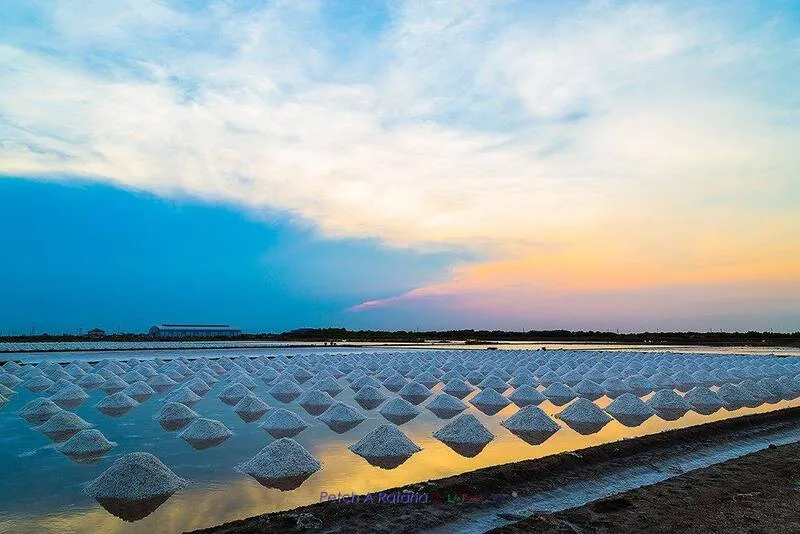
13. Shrimp Farms and Salt Fields represent one of the landscapes most closely associated with coastal Samut Sakhon. They can be seen across areas such as Kalong, Na Khok, Ban Bo, Bang Thorat, Khok Kham, and Phanthai Norasing. Broad salt pans, white salt piles, water wheels, shrimp ponds, and shorebirds create a distinctive visual identity.
Highlights: Salt pans, white salt piles, traditional water-management equipment, shrimp ponds, coastal ecosystems, migratory birds, and the continuing tradition of sea-salt production.
Salt farming depends on soil conditions, seawater, sunshine, and wind. Farmers channel seawater into a sequence of shallow ponds and allow it to evaporate gradually until salt crystals form. The entire process is closely tied to climate and seasonality.
Salt fields are important not only economically but also ecologically. Shallow ponds and surrounding wetlands provide feeding areas for many bird species, particularly during migration periods.
Photographers often prefer early morning or late afternoon, when the salt piles and water surfaces reflect softer light. Most fields are active working areas, so visitors should remain in permitted locations and never enter private salt pans without permission.
For families, the route offers a valuable opportunity for children to see how salt is actually produced and understand how coastal geography supports local occupations.
The area can be combined with Wat Kalong, Khok Kham, and nearby birdwatching locations.
Open Days: Daily Opening Hours: 08:00 – 17:00
Getting There: Shrimp farms and salt fields are spread across coastal Mueang Samut Sakhon, especially Khok Kham, Kalong, Na Khok, Ban Bo, Bang Thorat, and Phanthai Norasing. A private car is the most practical option.

14. Samut Sakhon Science Centre for Education is an informal learning center in Khok Kham Subdistrict, Mueang Samut Sakhon District. It was established to promote knowledge of science, nature, the environment, and technology for children, students, and the general public.
Highlights: Science exhibitions, experiments, environmental learning areas, activities for students and families, and a location that connects easily with the Khok Kham–Phanthai Norasing route.
The center occupies more than 18 rai and began operating in the late 1990s. Its main purpose is to make science accessible through experiments, activities, and exhibitions rather than relying only on textbook learning.
The content is particularly suitable for students and families because it connects science with everyday phenomena and with Samut Sakhon’s real environment, including coastlines, mangroves, water systems, and occupations linked with natural resources.
Parents can combine the center with Phanthai Norasing Historical Park to give children both science and history in the same day.
Some activities may operate on schedules or change over time, so travelers should keep their itinerary flexible and check activity information before visiting.
The center is best suited to families, schools, student groups, and travelers interested in educational experiences rather than simple sightseeing.
Getting There: The center is located at 28/44 Moo 1, Khok Kham Subdistrict, Mueang Samut Sakhon District. From Rama II Road, enter the Khok Kham area and follow local roads.

15. Plong Liam is an industrial heritage site in Tha Mai Subdistrict, Krathum Baen District, located within Ban Plong Liam School. Its distinctive feature is an old chimney left from a former sugar-production operation, providing physical evidence of the industrial history of the Tha Chin River basin.
Highlights: Historic chimney, industrial structures from the steam-engine era, sugar-production history, economic heritage of the Tha Chin basin, and its location within the Tha Mai community.
Krathum Baen and the Tha Chin River basin were once important agricultural and processing areas. Sugar factories played a significant role in the local economy as mechanized production began replacing earlier methods.
The surviving chimney helps visitors understand the scale and technology of the former operation. Even though other structures have disappeared or changed, the chimney remains an industrial landmark within the community.
The site is most suitable for visitors interested in economic history, industrial architecture, and the transformation of riverside communities rather than those looking for large-scale recreational attractions.
Because the chimney is located within school grounds, visitors should respect school activities, particularly during teaching hours.
Plong Liam can be combined with Wat Nang Sao and Don Kai Dee Benjarong Village for a Krathum Baen itinerary covering industrial history, religion, and handicrafts.
Getting There: Plong Liam is located at Ban Plong Liam School in Tha Mai Subdistrict, Krathum Baen District. Travelers can approach from Rama II Road or Phet Kasem Road.
Map (GPS):Open Google Maps – Plong Liam

16. Wat Nang Sao is an old temple in Tha Mai Subdistrict, Krathum Baen District. It is particularly famous for its Maha Ut chapel, which has only one main entrance and a curved base resembling the hull of a Chinese junk. This unusual architecture gives the temple significant value in Samut Sakhon’s art and architectural history.
Highlights: Single-entrance Maha Ut chapel, curved boat-shaped base, historic wooden structure, old Thai architecture, and local legends associated with the temple’s name.
The term “Maha Ut” is used for religious buildings with restricted entrances, often only one principal doorway. Such structures are relatively rare today, making the chapel at Wat Nang Sao important for both artistic and architectural study.
The curved building base resembles the hull of a boat, a feature found in older Thai architecture and one that differs greatly from the design of modern temples. Viewing the building from close range reveals these structural details clearly.
The temple also has local stories involving young women and the origin of the name “Wat Nang Sao.” These stories add cultural depth, although the temple’s architectural heritage remains the main reason to visit.
The site is best suited to travelers interested in historic temples, art, architecture, and photography. Visitors should avoid touching historic surfaces and should dress respectfully.
Wat Nang Sao can be combined with Plong Liam and Don Kai Dee Benjarong Village in the same Krathum Baen route.
Open Days: Daily Opening Hours: 08:00 – 17:00
Getting There: The temple is located in Tha Mai Subdistrict, Krathum Baen District. From Highway 35, continue onto Route 3091 and then Soi Wat Nang Sao 2.
Map (GPS):Open Google Maps – Wat Nang Sao

17. Ban Phaeo Market is a historic community market beside the canal in Ban Phaeo District. Its atmosphere comes from old wooden shop houses, waterside communities, and trading traditions that developed when canals were the main transportation routes. It is ideal for travelers who want to experience the rural side of Samut Sakhon rather than the fishing economy of Mahachai.
Highlights: Historic wooden shop houses, canal-side market atmosphere, local food, agricultural produce, orchard culture, and an authentic neighborhood market still used in daily life.
Ban Phaeo is an important agricultural district with fruit orchards, coconut plantations, and farmland connected by canals. The market has long served as a place where local residents exchanged goods and agricultural products.
The appeal of the market does not come from size or tourist-focused decoration but from the feeling of a real local market selling food, fresh produce, household goods, and agricultural products.
Food lovers can look for community dishes, Thai sweets, and seasonal fruit, while photographers will find wooden shop houses, canals, boats, and riverside scenes very different from Mahachai.
Morning is the best time to visit because temperatures are cooler and more shops are active. Visitors should avoid blocking walkways and should respect the market’s role as a working community space.
The market can be combined with Samut Sakhon Provincial Buddha Monthon and agricultural communities around Ban Phaeo.
Open Days: Daily Opening Hours: 08:00 – 17:00
Getting There: The market is located in Ban Phaeo Subdistrict, Ban Phaeo District. From Rama II Road, continue toward Ban Phaeo and enter the market district.
Map (GPS):Open Google Maps – Ban Phaeo Market

18. Samut Sakhon Fish Pier is one of the places that most clearly demonstrates Samut Sakhon’s role as a fishing city and maritime economic center. Located in the Mahachai area, it functions as a landing, trading, and distribution point for seafood moving from fishing boats to markets and commercial operators.
Highlights: Fishing-boat berths, seafood unloading, working-port atmosphere, fishing labor, fishing vessels, and its relationship with Mahachai Market and the seafood-processing industry.
Samut Sakhon is one of Thailand’s major centers for marine fishing and seafood processing. The fish pier is therefore much more than a tourist stop; it is working infrastructure forming part of the seafood supply chain every day.
Visitors can observe fishing boats, seafood handling, transport vehicles, and commercial activity in an environment very different from a retail market. The experience helps explain the amount of work required before seafood reaches markets and restaurants.
Morning is the liveliest period, but visitors should remember that this is an active workplace. Stay within permitted areas, avoid obstructing operations, and be careful around wet surfaces and moving vehicles.
The fish pier is particularly suitable for documentary photographers, visitors interested in the fishing economy, and travelers who want to understand Samut Sakhon as a working city.
It can be combined with Mahachai Market, the city pillar shrine, and Tha Chalom as part of a route following seafood from the point of landing to retail markets.
Open Days: Daily Opening Hours: 05:00 – 17:00
Getting There: The fish pier is located in Mahachai, Mueang Samut Sakhon District. It can be reached from Rama II Road or added to a Mahachai Market itinerary.

19. Thanon Thawai is a historic road in Tha Chalom closely connected with community development and important events during the reign of King Rama V. Today, the road remains a useful walking route through the old community, passing temples, shrines, houses, and street-art locations.
Highlights: Historic road, Tha Chalom community, old houses, temples, shrines, street art, and the history of urban development associated with Thailand’s first sanitary district.
The road’s name is associated with cooperation among Tha Chalom residents in improving the area and expressing loyalty during the reign of King Rama V. It is therefore more than a transportation route and forms part of the collective memory of the community.
Walking along Thanon Thawai allows visitors to experience Tha Chalom at close range. Wooden houses, shops, shrines, and temples line the route, revealing details easily missed when passing quickly by vehicle.
Several locations feature contemporary murals and community artwork that tell stories of local history and daily life, adding a modern layer without erasing the older urban context.
The road is most comfortable for walking in the morning or late afternoon. Comfortable shoes are recommended, and visitors should remember that the buildings along the street remain part of a real residential community.
Thanon Thawai can be included in the same walking route as Tha Chalom Fishing Village, Wat Chong Lom, and Guanyin Bodhisattva without requiring a car between every stop.
Open Days: Daily Opening Hours: The area can be explored throughout the day
Getting There: Thanon Thawai is located in Tha Chalom Subdistrict. Visitors can cross by ferry from Mahachai and begin walking through the community, or drive directly to Tha Chalom.
Map (GPS):Open Google Maps – Thanon Thawai

20. Samut Sakhon Aquatic Animal Exhibition Center is an educational center focusing on marine resources and aquatic animals in Khok Kham Subdistrict, Mueang Samut Sakhon District. It is particularly suitable for families and children who want to understand coastal ecosystems, aquatic species, and the importance of marine resources to a province whose economy is deeply connected with fishing.
Highlights: Aquatic-animal displays, coastal-resource education, marine ecosystems, fisheries, and a location near mangrove areas, shrimp farms, and salt fields around Khok Kham.
The center’s main strength is the way it connects aquatic-animal knowledge with the real context of Samut Sakhon, a province characterized by fishing vessels, seafood-processing industries, and coastal aquaculture.
Children can learn about aquatic species and their habitats, while adults can explore themes involving sustainable resource use, ecosystem conservation, and environmental change along the coast.
A typical visit takes around 1–2 hours and provides a useful indoor break from outdoor sightseeing, particularly during hot weather.
Its location in the Khok Kham area makes it easy to combine with Phanthai Norasing Historical Park, salt-field routes, and coastal nature attractions.
Parents can extend the learning experience by discussing fisheries, aquatic resources, and coastal conservation after the visit.
Open Days: Daily Opening Hours: 11:00 – 17:00
Getting There: The center is located in Khok Kham Subdistrict, Mueang Samut Sakhon District. From Mahachai, use Sahakorn Road or Nikhom Sahakorn Road toward Khok Kham.
| Category | Details |
| Mahachai Zone | 1. Mahachai Market 2. Samut Sakhon City Pillar Shrine 3. Wichian Chodok Fort 4. Samut Sakhon Fish Pier Best for fishing-town culture, fresh seafood, river-mouth history, Thai–Chinese beliefs, and the commercial atmosphere along the Tha Chin River. |
| Tha Chalom Zone | 1. Tha Chalom Fishing Village 2. Wat Sutthiwat Wararam (Wat Chong Lom) 3. Guanyin Bodhisattva 4. Thanon Thawai Best for walking through an old community, learning about Thailand’s early municipal sanitation history, Thai–Chinese culture, religion, and port-town life beside the Tha Chin River. |
| Phanthai Norasing–Khok Kham Zone | 1. Phanthai Norasing Historical Park 2. Khlong Khok Kham 3. Samut Sakhon Science Centre for Education 4. Samut Sakhon Aquatic Animal Exhibition Center 5. Shrimp Farms and Salt Fields Suitable for Ayutthaya-period history, science learning, coastal ecosystems, fisheries, and coastal agriculture. |
| Krathum Baen Zone | 1. Don Kai Dee Benjarong Village 2. Plong Liam 3. Wat Nang Sao Suitable for Benjarong handicrafts, industrial history, historic temples, traditional craftsmanship, and Tha Chin riverside communities. |
| Ban Phaeo Zone | 1. Samut Sakhon Provincial Buddha Monthon 2. Ban Phaeo Market Suitable for Buddhist visits, old canal-side markets, orchard communities, and rural Samut Sakhon away from the fishing districts. |
| Kalong–Western Coastal Zone | 1. Wat Kalong 2. Shrimp Farms and Salt Fields Suitable for Buddhist travelers, visitors interested in Luang Pho Sut Siritharo, salt farming, shrimp aquaculture, and coastal landscapes. |
| Best for Families and Children | 1. Phanthai Norasing Historical Park 2. Samut Sakhon Science Centre for Education 3. Samut Sakhon Aquatic Animal Exhibition Center 4. Don Kai Dee Benjarong Village 5. Mahachai Market 6. Ban Phaeo Market |
| Best for History Lovers | 1. Phanthai Norasing Historical Park 2. Khlong Khok Kham 3. Tha Chalom Fishing Village 4. Wichian Chodok Fort 5. Thanon Thawai 6. Wat Yai Chom Prasat 7. Plong Liam 8. Wat Nang Sao |
| Best for Buddhist and Spiritual Visits | 1. Wat Sutthiwat Wararam 2. Guanyin Bodhisattva 3. Wat Yai Chom Prasat 4. Wat Kalong 5. Wat Nang Sao 6. Samut Sakhon Provincial Buddha Monthon 7. Samut Sakhon City Pillar Shrine |
| Best for Nature and Coastal Ecosystems | 1. Shrimp Farms and Salt Fields 2. Khok Kham–Phanthai Norasing coastal area 3. Samut Sakhon Aquatic Animal Exhibition Center 4. Kalong coastal route Suitable for wetlands, shorebirds, salt farming, shrimp ponds, and understanding the relationship between coastal resources and local livelihoods. |
| Best for Arts and Handicrafts | 1. Don Kai Dee Benjarong Village 2. Wat Yai Chom Prasat 3. Wat Nang Sao 4. Guanyin Bodhisattva Best for Benjarong painting, wood carving, historic temple architecture, and Thai–Chinese religious art. |
| Best for Thai–Chinese Culture | 1. Samut Sakhon City Pillar Shrine 2. Guanyin Bodhisattva 3. Tha Chalom Fishing Village 4. Mahachai Market 5. Thanon Thawai These places illustrate the contribution of Thai–Chinese communities to trade, fishing, religion, and urban development in Mahachai and Tha Chalom. |
| Best for Photography | 1. Tha Chalom Fishing Village 2. Shrimp Farms and Salt Fields 3. Don Kai Dee Benjarong Village 4. Wat Yai Chom Prasat 5. Thanon Thawai 6. Ban Phaeo Market 7. Samut Sakhon Fish Pier 8. Plong Liam |
| Best for Seafood and Markets | 1. Mahachai Market 2. Samut Sakhon Fish Pier 3. Ban Phaeo Market 4. Tha Chalom community Mahachai is best for fresh and dried seafood, while Ban Phaeo is better for local dishes, agricultural produce, and canal-side market atmosphere. |
| Local Food and Products to Try | 1. Fresh shrimp, crab, fish, and shellfish from Mahachai 2. Cooked seafood dishes 3. Salted fish, dried shrimp, and processed seafood 4. Chinese food and sweets in Mahachai–Tha Chalom 5. Seasonal fruit and agricultural produce from Ban Phaeo 6. Sea salt and products from salt-farming areas |
| Recommended Souvenirs | 1. Dried seafood 2. Salted fish and dried shrimp 3. Don Kai Dee Benjarong porcelain 4. Sea salt 5. Seasonal fruit from Ban Phaeo 6. Traditional sweets and community products |
| Distinctive Local Culture and Identity | Mahachai fishing-town culture, historic Tha Chalom, Thai–Chinese heritage, the history of Tha Chalom sanitation administration, the Phanthai Norasing story, salt-farming traditions, Don Kai Dee Benjarong craftsmanship, and canal-side agricultural communities in Ban Phaeo. |
| Recommended Areas to Stay | 1. Mahachai: Best for Mahachai Market, the city pillar shrine, Wichian Chodok Fort, and ferry access to Tha Chalom 2. Rama II Area: Convenient for travelers with cars connecting Khok Kham, Phanthai Norasing, and central Samut Sakhon 3. Krathum Baen: Best for Don Kai Dee Benjarong Village, Wat Nang Sao, and Plong Liam An overnight stay is not necessary for a one-day trip from Bangkok, but 1 night makes it easier to divide the city, coast, and outer districts into separate routes. |
| 1-Day Itinerary – Mahachai and Tha Chalom | Morning: Mahachai Market Late Morning: Samut Sakhon City Pillar Shrine – Wichian Chodok Fort Lunch: Seafood in Mahachai Afternoon: Ferry to Tha Chalom – Tha Chalom Fishing Village – Wat Chong Lom – Guanyin Bodhisattva – Thanon Thawai |
| 1-Day Itinerary – Following the Phanthai Norasing Story | Morning: Phanthai Norasing Historical Park Late Morning: Khlong Khok Kham Lunch: Khok Kham or Phanthai Norasing area Afternoon: Samut Sakhon Science Centre for Education or Samut Sakhon Aquatic Animal Exhibition Center Evening: Salt-field landscapes and coastal scenery |
| 1-Day Itinerary – Krathum Baen | Morning: Don Kai Dee Benjarong Village Late Morning: Wat Nang Sao Lunch: Krathum Baen Afternoon: Plong Liam Suitable for art, handicrafts, architecture, and industrial history. |
| 1-Day Itinerary – Ban Phaeo | Morning: Ban Phaeo Market Late Morning: Walk through the community and canal area Lunch: Ban Phaeo Afternoon: Samut Sakhon Provincial Buddha Monthon Seasonal orchard or agricultural-community visits can also be added. |
| 1-Day Itinerary – Coastal Lifestyle | Morning: Wat Kalong Late Morning: Shrimp Farms and Salt Fields Lunch: Seafood in the coastal area Afternoon: Samut Sakhon Aquatic Animal Exhibition Center or Khok Kham Suitable for nature, coastal agriculture, and photography. |
| 2 Days 1 Night in Samut Sakhon | Day 1: Mahachai Market – City Pillar Shrine – Wichian Chodok Fort – ferry to Tha Chalom – Wat Chong Lom – Guanyin Bodhisattva – Thanon Thawai – stay in Mahachai Day 2: Phanthai Norasing Historical Park – Khlong Khok Kham – Samut Sakhon Aquatic Animal Exhibition Center – Shrimp Farms and Salt Fields |
| 3 Days 2 Nights in Samut Sakhon | Day 1: Mahachai Market – City Pillar Shrine – Wichian Chodok Fort – Tha Chalom – Wat Chong Lom – Thanon Thawai Day 2: Phanthai Norasing Historical Park – Khlong Khok Kham – Science Centre – Aquatic Animal Exhibition Center – Salt Fields Day 3: Don Kai Dee Benjarong Village – Wat Nang Sao – Plong Liam, or alternatively Ban Phaeo Market – Samut Sakhon Provincial Buddha Monthon |
| Best Way to Get Around | The Wongwian Yai–Mahachai railway is ideal for travelers who want to visit Mahachai Market and Tha Chalom without a car. From the station, the market and ferry pier are within easy walking distance. A private car is more convenient for Phanthai Norasing, Khok Kham, Krathum Baen, Ban Phaeo, and salt-field routes. |
| Best Time to Visit | Samut Sakhon can be visited throughout the year. November to February is generally more comfortable for walking through communities, visiting coastal areas, and photographing salt fields. Early morning is best for Mahachai Market and the fish pier, while exposed outdoor attractions are less comfortable around midday. |
Frequently Asked Questions (FAQ)
Q: Where should first-time visitors go in Samut Sakhon?
A: First-time visitors should consider Mahachai Market, Tha Chalom Fishing Village, Phanthai Norasing Historical Park, Wat Chong Lom, and Don Kai Dee Benjarong Village. Together they provide a good introduction to seafood, history, community life, traditional craftsmanship, and the province’s fishing-town identity.
Q: Can Samut Sakhon be visited as a day trip from Bangkok?
A: Yes. Samut Sakhon is very suitable for a day trip from Bangkok. The most efficient approach is to focus on one zone, such as Mahachai–Tha Chalom, Phanthai Norasing–Khok Kham, Krathum Baen, or Ban Phaeo.
Q: Can I travel around Samut Sakhon without a private car?
A: Yes. The easiest car-free route is to take the train from Wongwian Yai to Mahachai, walk to Mahachai Market, continue to the city pillar shrine and Wichian Chodok Fort, and then cross the river by ferry to Tha Chalom, Wat Chong Lom, and Thanon Thawai.
Q: What is the best time to visit Mahachai Market?
A: Morning is best because the seafood selection is widest, the market is most active, and visitors can observe local trading at its busiest. If buying seafood to take home, bring an insulated bag or cooler.
Q: What is there to see in Tha Chalom?
A: Tha Chalom offers an old fishing community, Wat Sutthiwat Wararam or Wat Chong Lom, Guanyin Bodhisattva, Thanon Thawai, shrines, historic houses, and the history associated with Thailand’s first sanitary district. It is best explored slowly on foot.
Q: What are the best attractions in Samut Sakhon for children?
A: Phanthai Norasing Historical Park, Samut Sakhon Science Centre for Education, Samut Sakhon Aquatic Animal Exhibition Center, and Don Kai Dee Benjarong Village are particularly suitable because children can learn through real places, demonstrations, and activities.
Q: Where should I go to learn about Phanthai Norasing?
A: Begin at Phanthai Norasing Historical Park and then continue to Khlong Khok Kham and the surrounding Khok Kham community. This allows visitors to connect the historical figure, the event, and the real landscape.
Q: What are the best nature attractions in Samut Sakhon?
A: The shrimp-farm and salt-field routes around Khok Kham, Kalong, and Phanthai Norasing are suitable for coastal landscapes, birds, and agricultural life. The Samut Sakhon Aquatic Animal Exhibition Center adds educational context about marine ecosystems.
Q: What handicraft is Samut Sakhon famous for?
A: Don Kai Dee Benjarong porcelain is one of the province’s best-known handicrafts. Visitors can observe artisans drawing patterns, applying colors, and producing finished Benjarong pieces, as well as purchase products directly from the community.
Q: Which places are best for historic temples and architecture?
A: Wat Yai Chom Prasat and Wat Nang Sao are especially important. Wat Yai Chom Prasat is known for old wood carving and historic temple structures, while Wat Nang Sao is distinguished by its single-entrance Maha Ut chapel and curved boat-shaped base.
Q: What food is Samut Sakhon best known for?
A: Fresh seafood is the province’s strongest food identity, including shrimp, crab, fish, and shellfish. Dried seafood, salted fish, dried shrimp, Chinese food in Mahachai–Tha Chalom, and seasonal fruit from Ban Phaeo are also worth trying.
Q: What souvenirs should I buy in Samut Sakhon?
A: Good choices include dried seafood, salted fish, dried shrimp, sea salt, Don Kai Dee Benjarong porcelain, and seasonal fruit from Ban Phaeo.
Q: What are the best photography spots in Samut Sakhon?
A: Tha Chalom, Thanon Thawai, salt fields, Ban Phaeo Market, Don Kai Dee Benjarong Village, Wat Yai Chom Prasat, and Plong Liam offer very different photography opportunities, including old-town scenes, handicrafts, historic architecture, and coastal landscapes.
Q: How should I plan a 2-day, 1-night trip to Samut Sakhon?
A: On the first day, explore Mahachai and Tha Chalom, beginning at Mahachai Market, the city pillar shrine, and Wichian Chodok Fort before crossing by ferry to Wat Chong Lom, Guanyin Bodhisattva, and Thanon Thawai. On the second day, visit Phanthai Norasing Historical Park, Khlong Khok Kham, the Aquatic Animal Exhibition Center, and the salt-field route.
Q: What is the best time of year to visit Samut Sakhon?
A: Samut Sakhon can be visited year-round, but November to February is generally more comfortable for walking through communities and visiting coastal areas. Mahachai Market is best in the morning, while exposed outdoor sites are more comfortable outside the hottest midday hours.
 Category: ●Travel Articles, Recipes
 Group: ●Travel Review, Food Review
Last Update : 3 WeekAgo
 Last Update : 3 WeekAgo
Recommend

 Art, Culture and Heritage
 Historical Sites and Monuments(3)
 Landmarks and Memorials(4)
 Art, Craft Centres, Tradition(2)
 Museums(1)
 Historic Homes and Cities(1)
 Educational Places
 Museum for Study(1)
 Places of Worship
 Temple(31)
 Other Sacred Sites(12)
 Research and Development
 Royal Project(1)
 Suburban Living
 Village, Community(4)
 Local Market(2)
 Floating Market(2)
 Nature and Wildlife
 National Parks and Marine Reserves(1)
 River, Canal(4)
 Bays and Beaches(1)
 Other natural attractions(3)
 Entertainment and Agricultural
 Zoos and Aquariums(1)
 Shopping
 Shopping and Night Market(1)
Travel Review, Food Review(1)


