
lovethailand home >Central Travel Attractions >Samut Sakhon Travel Attractions >Muang Samut Sakhon >Ka Long > Shrimp Farms and Salt Fields
TL;DR: Shrimp Farms and Salt Fields is located at Coastal areas of Mueang Samut Sakhon District, especially around Khok Kham, Kalong, Na Khok, Ban Bo, Bang Thorat, and Phanthai Norasing, open Daily, hours 08:00 AM - 05:00 PM.
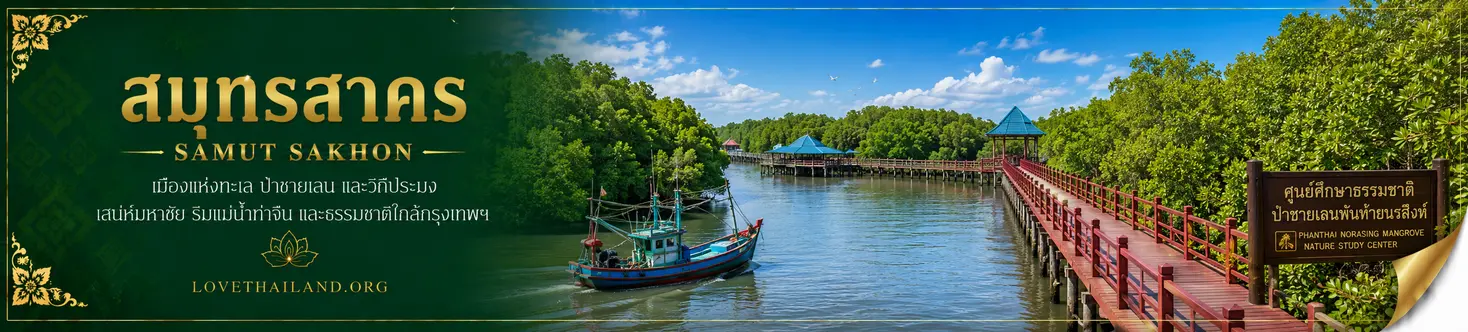
Shrimp Farms and Salt Fields
Open Days: Daily
Opening Hours: 08:00 AM - 05:00 PM
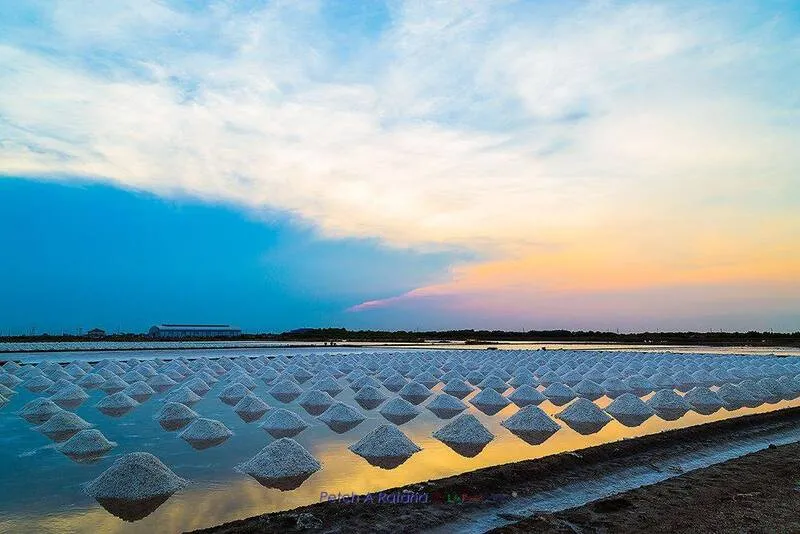
Shrimp Farms and Salt Fields in Samut Sakhon are among the most distinctive coastal landscapes in central Thailand. Along the shoreline areas of Mueang Samut Sakhon District, especially around Kalong, Na Khok, Ban Bo, Bang Thorat, Khok Kham, Phanthai Norasing, and the roadside zones stretching along Rama II Road toward Samut Songkhram, travelers can still see wide salt fields, white salt piles, wind-driven water wheels, and flocks of birds moving across the open sky. The scenery feels simple at first glance, yet it carries a strong sense of place that reflects the coastal identity of the province.
In the clearest sense, this is not just a roadside view. The shrimp farms and salt fields of Samut Sakhon represent a cultural landscape shaped by local knowledge, coastal geography, and traditional livelihoods. Visitors do not come here only to admire the scenery, but also to understand how sea salt has been produced, how water is managed in the fields, and how people have long relied on the sea in more than one way.
Samut Sakhon has long been known as one of Thailand’s major coastal provinces, and it is especially important in relation to marine resources and sea salt. Its flat coastal terrain and exposure to sun, wind, and seawater made it highly suitable for salt production. As a result, salt farming became one of the traditional occupations of local communities. The landscape that travelers see today is therefore not accidental. It is the visible outcome of long-standing environmental knowledge and practical adaptation to the coast.
What makes the salt-field scenery in Samut Sakhon so appealing is the combination of beauty and authenticity. Depending on the season, visitors may see shallow reflective pans shining under the sun, workers tending the fields, water wheels spinning in the wind, or bright white piles of harvested salt standing out against the open sky. These are not decorative elements created for tourism. They are part of a real working environment, which is exactly why the place feels memorable.
The area is also attractive from a nature perspective. Salt fields and nearby wet coastal zones often become feeding and resting areas for birds. Because the landscape is open, low, and shaped by water, visitors frequently notice birds flying across the horizon or standing in the shallow areas of the fields. This adds another layer to the experience and makes the route especially rewarding for photographers, slow travelers, and anyone who enjoys wide coastal scenery.
Beyond the visual appeal, the salt fields carry the story of sea salt itself. Sea salt in Samut Sakhon is not simply a commercial product. It comes from a carefully managed process in which seawater is brought into the pans and gradually concentrated by sunlight and wind until salt crystals form. The work requires knowledge of weather, timing, water control, and field maintenance. Understanding that process makes the landscape much more meaningful than a simple photo stop.
For travelers who want a more structured experience, the most practical access point is Khok Kham Salt Tourism Village, also known by many visitors as the Salt School. This learning site helps explain the traditional salt-making process in Samut Sakhon in a way that is easy to understand. Instead of merely driving past the fields, visitors can connect what they see with the real methods, tools, and local knowledge behind salt production.
One of the strongest attractions of the area is the way the scenery changes throughout the day and across the production season. On some days the fields reflect the sky like mirrors. On others, harvested salt forms bright white shapes across the land. When the wind is right, the water wheels become another visual highlight. These shifts make the area especially appealing to travelers who enjoy photography and scenic drives rather than crowded attractions.
The atmosphere here is also very different from urban travel. The wide horizon, sea breeze, open land, and soft tones of the fields create a calm feeling that many people find surprisingly refreshing. The beauty of the place is not dramatic in a grand sense. It is quiet, spacious, and rooted in everyday work. That understated character is one of the reasons the salt fields stay in people’s memory.
The shrimp farms and salt fields also help explain Samut Sakhon as a whole. The province is widely associated with fisheries, seafood, and marine-based livelihoods. Seeing both shrimp ponds and salt fields within the same broad coastal zone allows visitors to understand the province more clearly. The sea provides more than fish and shellfish. It also supports another traditional economy through salt.
For general travelers, there are several ways to enjoy the area. Those who simply want scenic views can drive through the coastal routes and stop at suitable points along the way. Those who want to learn more should include the Salt School or the Khok Kham learning area in their itinerary. This creates a much fuller experience, combining visual beauty with local knowledge.
Another reason this destination works well is its accessibility from Bangkok. Because Samut Sakhon is close to the capital, the salt-field route is suitable for a day trip. It can also be combined with other attractions in the province such as Phanthai Norasing Historical Park, Krok Krak Temple, Mahachai Market, and nearby coastal communities. This makes it easy to create a one-day route with scenery, local culture, history, and seafood all in the same journey.
Travel Information is straightforward if you are driving. The easiest route is via Rama II Road into Samut Sakhon and then onward to Khok Kham or nearby coastal areas in Mueang Samut Sakhon District. Travelers who want a specific learning point rather than a general scenic drive should head directly to the Salt School in Khok Kham. Visitors without a private car can first travel into Samut Sakhon and continue by local transport, but having your own vehicle makes the route significantly easier and more flexible.
The best time to visit depends on what kind of experience you want. Morning and late afternoon are excellent for photography because the light is softer and the field patterns are easier to appreciate. Travelers who want to see active salt-related work more clearly should check with the learning site or local operators before visiting, as the appearance of the fields changes with the season and weather.
On clear days, the interplay of sky, water, salt, wind, and birds creates one of the most distinctive coastal scenes near Bangkok. That is why the salt fields of Samut Sakhon remain appealing even in an era when many roadside landscapes are changing rapidly. They still offer a rare chance to see a working cultural landscape that expresses the province’s identity in a very direct way.
For travelers who appreciate places with real stories, practical heritage, and quiet beauty, the shrimp farms and salt fields of Samut Sakhon are well worth a visit. They are not only scenic, but also meaningful, because they reflect how coastal communities have lived with the sea for generations and continue to shape the landscape through traditional knowledge.
| Name | Shrimp Farms and Salt Fields, Samut Sakhon / Khok Kham Salt Tourism Village |
| Location | Coastal areas of Mueang Samut Sakhon District, especially around Khok Kham, Kalong, Na Khok, Ban Bo, Bang Thorat, and Phanthai Norasing |
| Address | Main learning point in Moo 3, Khok Kham Subdistrict, Mueang Samut Sakhon District, Samut Sakhon |
| Coordinates | Khok Kham area, Mueang Samut Sakhon District |
| Highlights | Salt-field scenery, shrimp-farm landscape, white salt piles, wind-driven water wheels, coastal birds, sea-salt learning experience, scenic roadside photography |
| History | A traditional coastal livelihood landscape of Samut Sakhon that later developed into a learning destination for sea-salt culture in Khok Kham |
| Name Origin | The name reflects the long-standing coexistence of shrimp ponds and salt fields within the coastal zone of Samut Sakhon |
| Distinctive Features | A coastal cultural landscape where sea-salt production, open wetland scenery, and traditional livelihoods remain visible in one destination |
| Travel Information | Best reached by private car via Rama II Road into Samut Sakhon, then onward to Khok Kham or nearby coastal zones; the Salt School in Khok Kham is the clearest point for learning-based visits |
| Current Status | Still an active salt-producing landscape in Samut Sakhon, with a salt-learning attraction in Khok Kham open to visitors |
| Open Days | Daily |
| Opening Hours | 08:00 AM - 05:00 PM |
| Facilities | Salt-learning area, scenic viewpoints, photography-friendly roadside landscape, easy road access, nearby seafood restaurants and local stops |
| Main Areas / Zones | Khok Kham Salt Tourism Village, roadside salt-field views, coastal salt pans, shrimp-farm landscape, learning zones in Khok Kham |
| Main Contact Number | +66 86 524 1021 |
| Official Website / Official Page | Amazing Thailand, Thailand Tourism Directory, Khok Kham Municipality, Facebook: Salt School |
| Nearby Tourist Attractions | 1. Phanthai Norasing Historical Park - approx. 9 km 2. Khok Kham Mangrove Conservation Area - approx. 7 km 3. Wat Krok Krak - approx. 12 km 4. Mahachai Market - approx. 15 km 5. Saphan Khiao, Ban Rang Chan Fishing Community - approx. 11 km |
| Nearby Restaurants | 1. Ruean Thale Seafood - approx. 8 km, Tel. 034-452-222 2. Krua Lung Ya - approx. 9 km 3. Restaurants around Phanthai Norasing - approx. 9 km 4. Seafood restaurants in Mahachai - approx. 15 km 5. Cafes and local restaurants in Khok Kham - approx. 5 km |
| Nearby Accommodations | 1. Grand Inter Hotel - approx. 13 km, Tel. 034-411-666 2. Central Place Samut Sakhon - approx. 14 km, Tel. 034-427-777 3. The One Place Samut Sakhon - approx. 14 km 4. Hotels in the Mahachai area - approx. 15 km 5. Accommodations along Rama II in Samut Sakhon - approx. 12 km |
Frequently Asked Questions (FAQ)
Q: Where are the shrimp farms and salt fields in Samut Sakhon?
A: They are found across the coastal zone of Mueang Samut Sakhon District, especially around Khok Kham, Kalong, Na Khok, Ban Bo, Bang Thorat, and Phanthai Norasing.
Q: Where should I go if I want to learn about salt farming properly?
A: The best practical point is Khok Kham Salt Tourism Village, often known as the Salt School, where visitors can learn about the traditional sea-salt process in Samut Sakhon.
Q: When is the best time to visit?
A: Morning and late afternoon are excellent for photography and sightseeing because the light is softer and the field patterns stand out more clearly.
Q: Is this suitable for a day trip from Bangkok?
A: Yes. Samut Sakhon is close enough for an easy day trip and can be combined with other attractions in the province.
Q: What makes this place special?
A: Its charm comes from the wide salt-field scenery, white salt piles, wind-driven water wheels, coastal birds, and the chance to understand a traditional livelihood that still shapes the landscape today.
Q: Is there an entrance fee?
A: General roadside viewing does not follow a fixed ticket system, while specific learning activities or guided visits should be checked directly with the site or local contact before traveling.
 Category: ●Nature and Wildlife
 Group: ●Other natural attractions
Last Update : 7 MonthAgo
 Last Update : 7 MonthAgo
 Click to Access the Navigation Map GPS
Shrimp Farms and Salt Fields Map
Recommend

 Art, Culture and Heritage
 Historical Sites and Monuments(3)
 Landmarks and Memorials(4)
 Art, Craft Centres, Tradition(2)
 Museums(1)
 Historic Homes and Cities(1)
 Educational Places
 Museum for Study(1)
 Places of Worship
 Temple(31)
 Other Sacred Sites(12)
 Research and Development
 Royal Project(1)
 Suburban Living
 Village, Community(4)
 Local Market(2)
 Floating Market(2)
 National Parks and Marine Reserves(1)
 River, Canal(4)
 Bays and Beaches(1)
Other natural attractions(3)
Bays and Beaches(1)
Other natural attractions(3)
 Entertainment and Agricultural
 Zoos and Aquariums(1)
 Shopping
 Shopping and Night Market(1)
 Travel Articles, Recipes
 Travel Review, Food Review(1)


