
lovethailand home >Central Travel Attractions >Samut Sakhon Travel Attractions >Muang Samut Sakhon >Ka Long > Wat Kalong
TL;DR: Wat Kalong is located at Moo 1, Ban Kalong Bon, Kalong Subdistrict, Mueang Samut Sakhon District, Samut Sakhon, open Open Daily, hours Open All Day (typical temple hours).
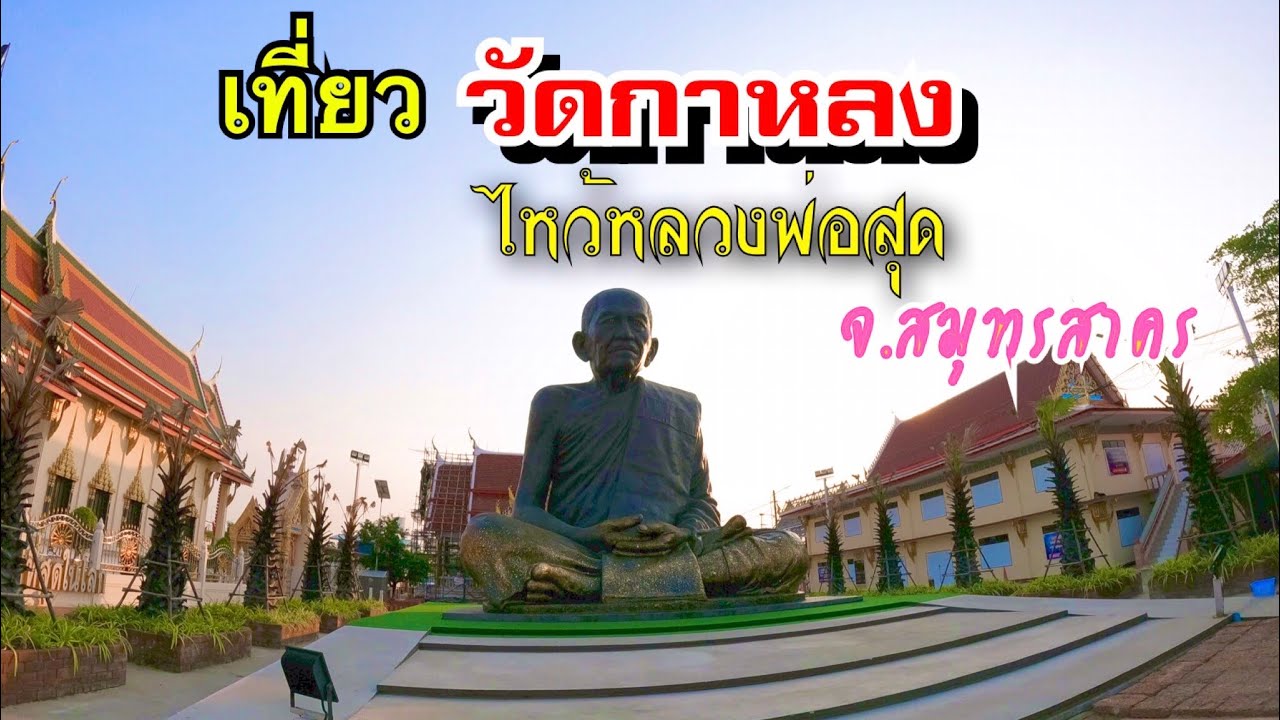
Wat Kalong

Open Days: Open Daily
Opening Hours: Open All Day (typical temple hours)
Wat Kalong is a local temple of the Mahanikaya order in Moo 1, Ban Kalong Bon, Kalong Subdistrict, Mueang Samut Sakhon District, Samut Sakhon. It is one of the province’s most recognized temples because of its strong association with Luang Pho Sud Siritharo, a famous monk whose amulets and sacred yantra traditions made Wat Kalong well known across Thailand. For visitors interested in temples, local belief, Thai amulet culture, and the cultural landscape of coastal Samut Sakhon, Wat Kalong offers far more than a simple stop for merit-making. It is a place where local faith, temple history, and social memory come together very clearly.
The temple began in what was once a low-lying landscape surrounded by mixed woodland. Around 1824, a monk traveling from Bangkok saw that the area was suitable for establishing a temple and encouraged local villagers to help restore and develop the site. Later, a monk from the Kalong area was invited to take responsibility for the temple and continue its development. Wat Kalong was formally established in 1824 and later received its royal consecrated boundary in 1955. These origins are important because they show that the temple grew directly out of local cooperation and the spiritual geography of the area, rather than through purely royal or urban patronage.
What makes Wat Kalong especially memorable is the way its identity became centered on Luang Pho Sud Siritharo. The temple today houses several important devotional objects, including an image of Luang Pho Sud, Luang Pho Kalong, a replica of Phra Phutthachinnarat, Luang Pho Thong, Phra Sivali, and Luang Pho Sothon. Even so, the temple’s strongest public identity comes from Luang Pho Sud and the sacred objects associated with him. His influence transformed Wat Kalong from a local temple into a destination known by collectors, devotees, and cultural travelers throughout the country.
Luang Pho Sud is especially famous for sacred amulets believed to carry protective power, particularly the yan takraw, a distinctive type of yantra associated with invulnerability, safety, and powerful spiritual protection. This yantra tradition is widely regarded as one of the temple’s signature legacies. The form combines ritual inscription and sacred empowerment using multiple script traditions, including Khmer, Lao, and related regional characters. Because of this, the yan takraw is not seen merely as an ornament or souvenir, but as a ritual object with a deep place in Thai protective-belief culture.
Wat Kalong became even more famous through long-circulating stories linking Luang Pho Sud with Ti Yai, the notorious outlaw of an earlier era. According to popular belief, Luang Pho Sud gave him sacred protective objects, which later became part of the public imagination surrounding Ti Yai’s repeated escapes from danger. Whether approached as social legend or belief history, this association made the temple a nationally recognized name. It also means that Wat Kalong occupies a special place not only in Buddhist devotion, but also in the wider cultural memory of modern Thailand.
Yet the temple’s importance goes beyond amulets and legend. In local religious life, Luang Pho Sud remains a central figure of devotion, and many visitors come to pray for protection, safety, success, and good fortune. The temple grounds still preserve this devotional atmosphere clearly. Worshippers do not come only to admire a famous monk from the past. They come because his spiritual presence remains meaningful in their everyday lives. This living faith is one of the reasons why Wat Kalong continues to matter deeply to the community and to visitors from outside the province.
The temple atmosphere is open, calm, and distinctly local. Compared with larger urban temples in Maha Chai or Tha Chalom, Wat Kalong feels more closely tied to its surrounding community. This makes it especially attractive for travelers who want to experience a temple in a more grounded setting. If you visit during the temple’s annual festival period, you will see another side of Wat Kalong: a lively gathering of devotees, traders, and local residents returning to honor Luang Pho Sud. On quieter days, the temple is better suited to slow walking, prayer, and observing the rhythm of local religious life.
As a travel destination, Wat Kalong fits well into a broader coastal Samut Sakhon itinerary. It can be combined with nearby stops such as the Rainbow Bridge at Kalong Seaside, mangrove viewpoints, and local seafood eateries. This makes the temple especially useful for travelers who want to go beyond Maha Chai and explore another side of the province. Kalong offers a mix of coastal atmosphere, local belief, and lesser-known community culture, and Wat Kalong sits at the center of that experience.
Getting There is easiest by private car. From Samut Sakhon town, head toward Kalong Subdistrict along the route leading to the coastal Kalong area. The temple is located at 40 Moo 1, Ban Kalong Bon. Visitors without private transport should first reach Samut Sakhon town and continue by local transport into Kalong. Because several nearby attractions are spread through the same general area, Wat Kalong works very well as part of a half-day or full-day route focused on coastal community travel.
Wat Kalong is therefore much more than a temple associated with amulets. It is a historic local temple, a center of devotion to Luang Pho Sud, a place tied to one of Thailand’s most memorable social legends, and an important stop for anyone trying to understand the cultural identity of coastal Samut Sakhon. For visitors asking what makes Wat Kalong worth visiting, the answer lies in the full combination of old temple history, sacred reputation, local atmosphere, and enduring faith.
| Name | Wat Kalong |
| Location | Moo 1, Ban Kalong Bon, Kalong Subdistrict, Mueang Samut Sakhon District, Samut Sakhon |
| Address | 40 Moo 1, Kalong Subdistrict, Mueang Samut Sakhon, Samut Sakhon 74000 |
| Highlights | Luang Pho Sud Siritharo, giant Luang Pho Sud statue, preserved devotion to Luang Pho Sud, yan takraw tradition, famous sacred amulets from Wat Kalong |
| History | Established in 1824 in the early Rattanakosin period and granted royal consecrated boundary status in 1955 |
| Distinctive Features | Famous for the sacred objects of Luang Pho Sud Siritharo, especially the yan takraw, and for its place in Thai social memory through stories linked with Ti Yai |
| Travel Information | Best reached by private car from Samut Sakhon town toward Kalong coastal area; local transport from town is also possible |
| Current Status | Still active as a community temple and continues to host regular temple activities and annual events |
| Open Days | Open Daily |
| Opening Hours | Open All Day (typical temple hours) |
| Main Areas / Zones | Giant Luang Pho Sud statue, Luang Pho Sud worship area, replica Phra Phutthachinnarat, Luang Pho Thong, Phra Sivali, Luang Pho Sothon |
| Abbot / Caretaker | Phra Khru Vinaiyathorn Witsanu Kittiyano |
| Main Contact Number | 034-851-354 |
| Official Website / Official Page | Facebook: Wat Kalong Samut Sakhon |
| Nearby Tourist Attractions | 1) Rainbow Bridge Kalong Seaside 7 km 2) Kalong Seaside 7 km 3) Wat Nuam Kanon 10 km 4) Talad Talay Thai 14 km 5) Wat Khok Kham 18 km |
| Nearby Restaurants | 1) Jay Jai Restaurant Kalong Seaside 7 km Tel. 094-282-2698 2) Ruean Chai Nam Cafe & Restaurant 7 km 3) Magmai Chai Len 8 km 4) Krua Ban Thung Ban Na Kwang Station 9 km 5) Kai Yang Wichian Buri Kalong Yui The 10 km |
| Nearby Accommodations | 1) Forlove Hotel 12 km 2) Grand Inter Hotel 18 km 3) 100 Rai Resort 19 km 4) Finland Resort Inn 20 km 5) The Residence Thepkanjana 20 km |
Frequently Asked Questions (FAQ)
Q: Where is Wat Kalong located?
A: Wat Kalong is in Moo 1, Ban Kalong Bon, Kalong Subdistrict, Mueang Samut Sakhon District, Samut Sakhon.
Q: What is Wat Kalong best known for?
A: It is best known for Luang Pho Sud Siritharo and the famous yan takraw amulet tradition.
Q: Why is Luang Pho Sud important?
A: Luang Pho Sud is one of the best-known monks of Samut Sakhon and is especially respected for sacred amulets believed to offer protection and safety.
Q: When was Wat Kalong established?
A: The temple was established in 1824 and later received its royal consecrated boundary in 1955.
Q: Who is the current abbot of Wat Kalong?
A: The current abbot is Phra Khru Vinaiyathorn Witsanu Kittiyano.
Q: What else can I visit near Wat Kalong?
A: Nearby places include Rainbow Bridge Kalong Seaside, Kalong Seaside, Wat Nuam Kanon, Talad Talay Thai, and Wat Khok Kham.
 Category: ●Places of Worship
 Group: ●Temple
Last Update : 7 MonthAgo
 Last Update : 7 MonthAgo
 Click to Access the Navigation Map GPS
Wat Kalong Map
Recommend

 Art, Culture and Heritage
 Historical Sites and Monuments(3)
 Landmarks and Memorials(4)
 Art, Craft Centres, Tradition(2)
 Museums(1)
 Historic Homes and Cities(1)
 Educational Places
 Museum for Study(1)
Temple(31)
 Other Sacred Sites(12)
 Research and Development
 Royal Project(1)
 Suburban Living
 Village, Community(4)
 Local Market(2)
 Floating Market(2)
 Nature and Wildlife
 National Parks and Marine Reserves(1)
 River, Canal(4)
 Bays and Beaches(1)
 Other natural attractions(3)
 Entertainment and Agricultural
 Zoos and Aquariums(1)
 Shopping
 Shopping and Night Market(1)
 Travel Articles, Recipes
 Travel Review, Food Review(1)


