
lovethailand home >North Travel Attractions >Phitsanulok Travel Attractions >Muang Phitsanulok >Ban Khlong > Wat Yang
TL;DR: Wat Yang is located at Moo 1, Ban Khlong Subdistrict, Mueang Phitsanulok District, Phitsanulok Province, open Daily, hours 08.00 – 17.00.
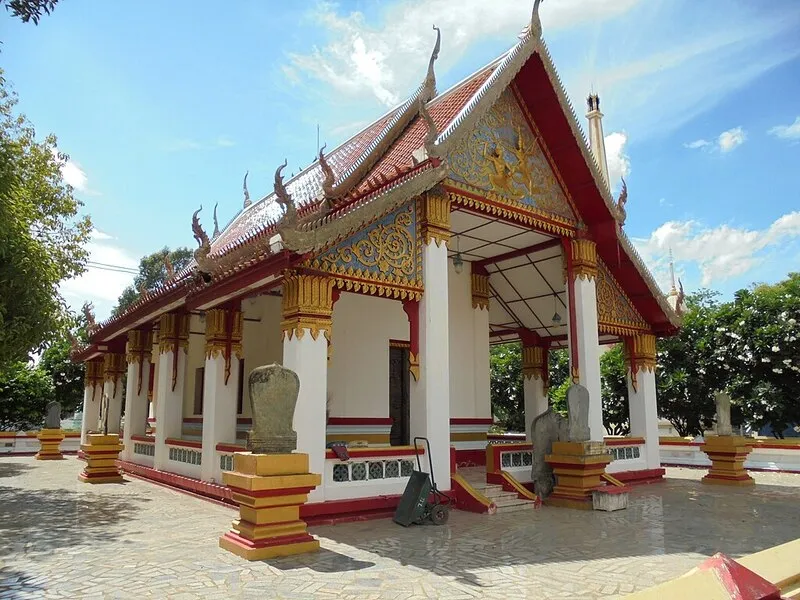
Wat Yang
Open Days: Daily
Opening Hours: 08.00 – 17.00
Wat Yang in Phitsanulok Province is an old community Buddhist temple located along the Nan River in Ban Khlong Subdistrict, Mueang Phitsanulok District. The temple is important for its local history, Buddhist art, riverside community identity, and long-standing faith centered on Phra Samrit Kosi, better known among local people as Luang Pho Khiao. Established as a temple in B.E. 2398 and granted its official consecrated boundary in B.E. 2461, Wat Yang has served the Ban Khlong community for more than a century and remains a meaningful place for worship, merit-making, and cultural learning.
Wat Yang is situated in Moo 1, Ban Khlong Subdistrict, Mueang Phitsanulok District, Phitsanulok Province. Its location near the Nan River gives the temple a strong connection with the old riverside way of life. In earlier times, rivers and canals were important routes for transportation, trade, communication, and settlement. Temples located along the river therefore served not only as places of worship but also as social centers where communities gathered, learned, celebrated festivals, and maintained their shared identity.
Unlike the large royal temples in central Phitsanulok, Wat Yang has the character of a local community temple. This gives it a quieter and more intimate atmosphere. Visitors who come here can experience another side of Phitsanulok: not only the famous royal temples and major historic sites, but also the smaller riverside temples that have supported everyday Buddhist life for generations. Wat Yang is especially suitable for travelers who want to understand how Buddhism remains closely connected with local communities in Thailand.
The historical value of Wat Yang is strengthened by a record written by Prince Narisara Nuwattiwong during his visit to Phitsanulok. In his travel notes, he mentioned stopping at Wat Yang and observing its scripture hall, old scripture cabinets, ordination hall, and sermon hall. He described 4 scripture cabinets with different decorative styles, including one with standing angels, one with walking angels, one made in a Bangkok artisan style, and another in a plain gold style. These details show that Wat Yang once preserved Buddhist manuscripts and religious objects that reflected both local craftsmanship and artistic connections with the capital.
The scripture hall and scripture cabinets are important because they represent the role of temples as centers of learning. Before modern schools became widespread, temples were places where religious texts, moral teachings, literacy, and cultural knowledge were preserved and transmitted. The presence of multiple scripture cabinets at Wat Yang suggests that the temple had an active role in keeping Buddhist knowledge alive within the community. Even when the structures themselves appear simple, their cultural meaning remains significant.
The most revered sacred object at Wat Yang is Phra Samrit Kosi, or Luang Pho Khiao. This bronze Buddha image is about 190 centimeters tall and is commonly described as being in the posture of granting protection or reassurance. Its name, Luang Pho Khiao, means the green revered Buddha image, referring to the green patina that has formed across the bronze surface over time. This green surface is not merely a visual feature; it is a mark of age, material transformation, and the long life of the sacred image.
Luang Pho Khiao is valued not only as a religious image but also as an important work of Buddhist art. The image is associated with the Amaravati artistic tradition, a Buddhist art style from India that shows some Greco-Buddhist influence. The local historical account places its creation roughly between B.E. 663 and B.E. 863. This background gives the image a special artistic significance because it connects Wat Yang with a much wider Buddhist art history that extends beyond Thailand into the ancient Buddhist world of India and Southeast Asia.
The posture of Luang Pho Khiao carries a deep Buddhist meaning. The raised hand symbolizes reassurance, protection, compassion, and the calming of fear. For devotees, paying respect to the image is a way to seek peace, safety, emotional strength, and auspiciousness. Many visitors come to Wat Yang not only to see an old bronze Buddha image, but to connect with a sacred presence that has been respected by local people for generations.
The green patina on Luang Pho Khiao gives the image a distinctive identity. Bronze naturally changes as it ages, and the surface of this Buddha image has developed a green color over a long period of time. For worshippers, this appearance makes the image feel ancient, dignified, and deeply rooted in the past. Seeing the image in person allows visitors to sense both its artistic value and its spiritual role within the temple.
Wat Yang also reflects the cultural landscape of Phitsanulok as a city shaped by the Nan River. Many temples, communities, and historic areas in Phitsanulok developed along the river because the waterway supported travel, settlement, and daily life. Wat Yang is part of this riverside heritage. Its connection with Ban Khlong makes it an important reminder that the religious history of Phitsanulok is not limited to the city center, but also lives in the surrounding communities.
The temple continues to support Buddhist activities throughout the year. Local people come for merit-making, chanting, offerings, Buddhist holy days, Songkran ceremonies, and other traditional events. Luang Pho Khiao is often the spiritual focus of these visits. During festivals, villagers and visitors pay respect to the image and participate in rituals that strengthen the connection between family, community, and Buddhism.
For cultural travelers, Wat Yang is best appreciated slowly. Its charm is not based on grand scale or ornate royal architecture, but on quiet local faith, old religious objects, and the presence of Luang Pho Khiao. Walking through the temple, visitors can observe the ordination hall, sermon hall, temple grounds, and areas associated with Buddhist practice. The temple atmosphere is calm, direct, and closely tied to the life of the Ban Khlong community.
For those interested in art history, Luang Pho Khiao is the highlight. Visitors can observe the posture, proportions, bronze surface, and green patina of the image. These features make the Buddha image different from many newer temple images. The combination of age, material, local devotion, and artistic background gives Luang Pho Khiao a strong sense of character. It is a sacred object that invites both worship and careful observation.
In terms of belief, Luang Pho Khiao is regarded as a source of protection and auspiciousness. Local devotees often come to ask for peace, safety, health, and success in life. The image is therefore not only an artifact of the past; it remains an active focus of living faith. This is one of the most important qualities of Wat Yang: history and devotion continue together in the same space.
Wat Yang can also be included in a broader cultural route around Phitsanulok. After visiting the temple, travelers can continue to Wat Phra Si Rattana Mahathat Woramahawihan, Wat Nang Phaya, Wat Ratchaburana, Chan Palace, or Sgt. Maj. Thawee Folk Museum. This route helps visitors understand Phitsanulok from several perspectives: royal temples, ancient city history, local museums, and riverside community temples such as Wat Yang.
Getting There is convenient from Phitsanulok city. Visitors can travel to Ban Khlong Subdistrict by private car, local taxi, songthaew, or ride-hailing service. The temple is located in Moo 1 of Ban Khlong and can be found by searching for Wat Yang Ban Khlong Phitsanulok on a navigation map. The trip is suitable for a short visit from the city center and can easily be combined with other attractions in the same day.
The best time to visit is in the morning or late afternoon, when the weather is more comfortable and the atmosphere is peaceful. Visitors should dress respectfully, speak quietly, and behave appropriately inside the temple grounds. If taking photographs, especially near sacred images or during religious activities, visitors should be considerate and avoid disturbing monks, worshippers, or ceremonies.
Wat Yang is suitable for Buddhist pilgrims, travelers interested in local temples, students of Thai art and history, photographers, and foreign visitors who want to see a quieter side of Phitsanulok. For international travelers, the temple offers a useful example of how Buddhist faith is practiced not only in famous royal temples but also in community temples that have supported local life for generations.
Overall, Wat Yang is a meaningful cultural and religious site in Phitsanulok. Its long history, official temple status, riverside location, old scripture tradition, and the revered bronze Buddha image known as Luang Pho Khiao make it a place worth visiting for those who want a deeper understanding of the province. A visit to Wat Yang provides both a spiritual experience and a valuable glimpse into the living heritage of a Thai riverside community.
| Name | Wat Yang |
| Location | Moo 1, Ban Khlong Subdistrict, Mueang Phitsanulok District, Phitsanulok Province |
| Highlights | Luang Pho Khiao, also known as Phra Samrit Kosi, a bronze Buddha image about 190 centimeters tall, and the temple’s old riverside community history |
| History | Established as a temple in B.E. 2398 and granted its consecrated boundary in B.E. 2461. It is an old local temple of Ban Khlong Subdistrict. |
| Name Origin | The temple name is connected with Ban Wat Yang, an old community in Ban Khlong Subdistrict of Mueang Phitsanulok District. |
| Distinctive Features | Old riverside community temple, revered Luang Pho Khiao image, and historical reference in the travel notes of Prince Narisara Nuwattiwong |
| Key Evidence | Phra Samrit Kosi or Luang Pho Khiao, scripture hall, 4 old scripture cabinets, ordination hall, sermon hall, and historical travel record mentioning Wat Yang |
| Travel Information | Accessible from Phitsanulok city by private car, local taxi, songthaew, or ride-hailing service. The temple is located in Moo 1, Ban Khlong Subdistrict. |
| Current Status | Active local Buddhist temple and spiritual center of Ban Khlong community, open for worship and Buddhist activities |
| Open Days | Daily |
| Opening Hours | 08.00 – 17.00 |
| Facilities | Worship area, temple grounds, sermon hall, nearby or on-site parking, and areas for community Buddhist activities |
| Main Areas / Zones | Luang Pho Khiao worship area, ordination hall, sermon hall, scripture hall, temple courtyard, and Buddhist activity areas |
| Abbot / Caretaker | Phra Khru Sophon Chanthaphothi |
| Official Website / Official Page | Wat Yang Ban Khlong Phitsanulok |
| Nearby Tourist Attractions | 1. Wat Phra Si Rattana Mahathat Woramahawihan, about 4 km 2. Wat Nang Phaya, about 4 km 3. Wat Ratchaburana, about 4 km 4. Chan Palace, about 5 km 5. Sgt. Maj. Thawee Folk Museum, about 7 km |
| Nearby Restaurants | 1. OMNI COFFEE ROASTERS, about 2 km 2. Tam Niyom Cafe, about 2 km 3. ease cafe, about 3 km 4. Baan Kru Iw Restaurant, Ban Khlong Branch, about 4 km, Tel. 063-665-6224 5. Chim Cafe and Restaurant, about 5 km, Tel. 095-630-8696 |
| Nearby Accommodations | 1. Shinnabhura Historic Boutique Hotel, about 3 km, Tel. 055-219-888 2. Hansanan Hotel Phitsanulok, about 4 km, Tel. 066-103-5665, 055-320-600 3. HOP INN Phitsanulok Mittraphap Road, about 5 km, Tel. 065-950-4679 4. B2 Phitsanulok Premier Hotel, about 5 km, Tel. 052-009-161, 088-263-2897, Call Center 1328 5. Pattara Resort & Spa, about 6 km, Tel. 055-282-966, 063-519-0007 |
Frequently Asked Questions (FAQ)
Q: Where is Wat Yang in Phitsanulok located?
A: Wat Yang is located in Moo 1, Ban Khlong Subdistrict, Mueang Phitsanulok District, Phitsanulok Province, near the Nan River.
Q: Why is Wat Yang important?
A: Wat Yang is an old local temple established in B.E. 2398 and granted its consecrated boundary in B.E. 2461. It remains a spiritual center of the Ban Khlong community.
Q: Who is Luang Pho Khiao?
A: Luang Pho Khiao is Phra Samrit Kosi, a bronze Buddha image in the protection-giving posture, about 190 centimeters tall, and the most revered sacred image at Wat Yang.
Q: Why is the Buddha image called Luang Pho Khiao?
A: The image is called Luang Pho Khiao because its bronze surface has developed a green patina over time, giving it a distinctive green appearance.
Q: Who is the abbot of Wat Yang?
A: The abbot of Wat Yang is Phra Khru Sophon Chanthaphothi.
Q: Who should visit Wat Yang?
A: Wat Yang is suitable for Buddhist pilgrims, cultural travelers, art-history enthusiasts, students, photographers, and visitors interested in local temples along the Nan River.
Q: How long should visitors spend at Wat Yang?
A: A visit of about 45 minutes to 1 hour is suitable for paying respect to Luang Pho Khiao, walking around the temple grounds, and experiencing the riverside community atmosphere.
Q: What nearby attractions can be visited with Wat Yang?
A: Nearby attractions include Wat Phra Si Rattana Mahathat Woramahawihan, Wat Nang Phaya, Wat Ratchaburana, Chan Palace, and Sgt. Maj. Thawee Folk Museum.
 Category: ●Places of Worship
 Group: ●Temple
Last Update : 3 MonthAgo
 Last Update : 3 MonthAgo
 Click to Access the Navigation Map GPS
 Art, Culture and Heritage
 Historical Sites and Monuments(1)
 Landmarks and Memorials(2)
 Art, Craft Centres, Tradition(3)
 Museums(3)
 Educational Places
 Educational Gardens, Farm(1)
Temple(29)
Educational Gardens, Farm(1)
Temple(29)
 Mosque(1)
 Other Sacred Sites(3)
 Research and Development
 Royal Project(1)
 Suburban Living
 Village, Community(1)
 Nature and Wildlife
 National Parks and Marine Reserves(7)
 Mountain (Doi)(4)
 Dam, Reservoir, Lake(5)
 Waterfalls(19)
 Caves(3)
 River, Canal(9)
 Other natural attractions(1)
 Entertainment and Agricultural
 Farms, Parks and Ecotourism(2)
 Outdoor and Adventure Activities(1)


