
lovethailand home >Central Travel Attractions >Pathum Thani Travel Attractions > 20 Best Places to Visit in Pathum Thani Central Th..
TL;DR: 20 Best Places to Visit in Pathum Thani Central Thailand, open Daily Opening Hours: 10:00 – 17:00; Saturday, Sunday, and public holidays until.
20 Best Places to Visit in Pathum Thani Central Thailand
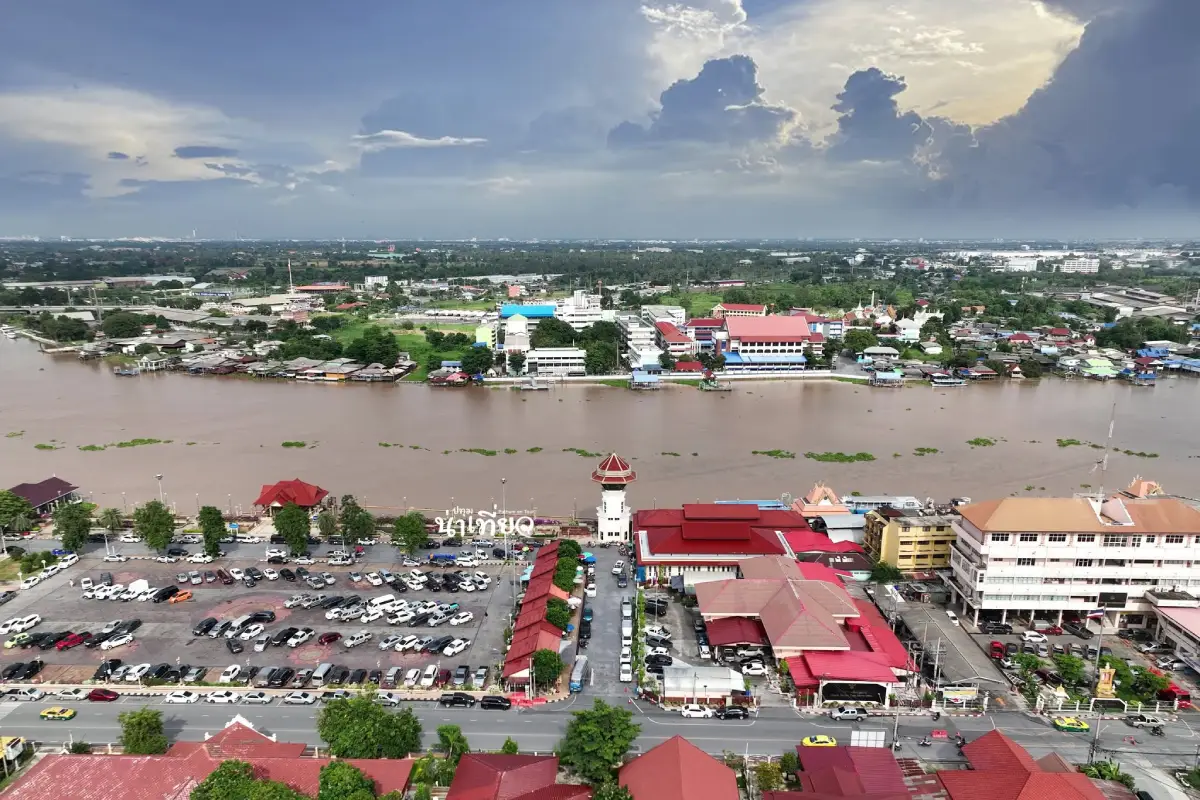
20 Best Places to Visit in Pathum Thani, Central Thailand Pathum Thani is a metropolitan province immediately north of Bangkok with a much wider range of attractions than many travelers expect. The province offers everything from a major amusement park and nationally important science museums to agricultural learning centers, historic temples, Mon communities, riverside markets, military history, and cultural museums. Travelers with only one day can focus on the Rangsit–Thanyaburi area for family attractions or central Pathum Thani for temples and community markets. With 2–3 days, it is possible to add Khlong Luang, Lat Lum Kaeo, Sam Khok, and Lam Luk Ka for a more complete combination of science, history, religion, and local culture.
Pathum Thani lies on the flat floodplain of the Chao Phraya River immediately north of Bangkok. Much of the province consists of low-lying land crossed by an extensive canal network that has long supported agriculture, transportation, and community settlement. Its proximity to Bangkok has transformed Pathum Thani into an important residential, educational, industrial, scientific, and technological center, while some districts still preserve agricultural landscapes and traditional canal-side communities.
The history of Pathum Thani is closely connected with Mon communities. Mon people from Martaban migrated to the Sam Khok area during the Ayutthaya period, with additional migrations taking place during the Thonburi and early Rattanakosin eras. These communities established temples, settlements, and traditions that became an important foundation of Pathum Thani’s cultural identity.
An important event occurred during the reign of King Buddha Loetla Nabhalai, Rama II, when the King visited Sam Khok and local Mon residents presented him with lotus flowers. He subsequently bestowed the name “Prathum Thani,” meaning the City of Lotuses. The spelling later evolved into “Pathum Thani,” and the lotus remains a powerful symbol associated with the province’s history and identity.
Mon culture can still be found in communities around Sam Khok and along the Chao Phraya River through temples, religious art, food, language, and traditional ceremonies. Important examples include the Hongsa flag and centipede-banner traditions, Mon-style merit-making, and honey-offering ceremonies, all of which demonstrate the close relationship between religion, family, and community life.
Pathum Thani’s food culture includes Mon dishes such as Mon-style khao chae and Mon curries, together with traditional Thai food, old-fashioned sweets, and dishes sold at community markets. The province’s fertile plains and canal system also support a wide variety of agricultural products including rice, vegetables, fruit, and ornamental plants, which can be found both in large wholesale markets and local farming communities.
Another major strength of Pathum Thani is its concentration of nationally important learning attractions, particularly in Khlong Luang District and the Khlong Ha area. The province is home to the National Science Museum, Rama IX Museum, the Supreme Artist Hall, and the Golden Jubilee Museum of Agriculture. This makes Pathum Thani particularly suitable for families, children, students, and travelers who want to combine sightseeing with educational experiences outside the classroom.
For practical trip planning, Pathum Thani can be divided into several zones. Rangsit–Thanyaburi is best for amusement parks and family activities. Khlong Luang–Khlong Ha is ideal for museums, science, and agriculture. Central Pathum Thani–Ban Klang is suited to temples and riverside markets. Sam Khok is associated with Mon culture and historic temples. Lat Lum Kaeo offers Wat Chedi Hoi and a more rural landscape, while Lam Luk Ka contains important historical attractions close to Bangkok.
Travel from Bangkok is convenient via Phahonyothin Road, Vibhavadi Rangsit Road, Rangsit–Nakhon Nayok Road, Tiwanon Road, and several expressway routes. A private car is the most convenient option for travelers visiting several districts in one day, while the Rangsit and Khu Khot areas can also be reached by rail transit followed by local transport. Pathum Thani therefore works well for both day trips and short weekend breaks.

1. Dream World is one of Thailand’s largest and best-known amusement parks. Located on Rangsit–Nakhon Nayok Road in Thanyaburi District, Pathum Thani, it is a major destination for families, children, couples, and groups of friends who want to spend an entire day enjoying rides, shows, themed areas, and photography spots without traveling far from Bangkok.
Highlights: Rides ranging from family-friendly to thrilling, Adventure Land, Fantasy Land, Dream Garden, Snow Town, landscaped gardens, photography zones, and activities for both children and adults in one large complex.
The amusement park is divided into several themed zones, each with a different atmosphere. Dream World Plaza functions as the main entrance area and features colorful architecture, while Dream Garden focuses more on gardens and relaxing scenery. Some rides also provide elevated views across the park.
Fantasy Land is particularly suitable for children and visitors who enjoy fairy-tale settings, with themed buildings and decorative scenes designed for photography. Adventure Land is aimed more at visitors looking for exciting and high-energy rides. This range allows family members with different interests to spend a full day together without needing to visit separate destinations.
Snow Town is another popular attraction because visitors can experience cold temperatures and a simulated snowy environment that contrasts sharply with Thailand’s tropical climate. On weekends and holidays, additional shows and special activities can make a full-day visit even more varied.
Families traveling with children should plan rides according to height restrictions and age. Visitors who want to experience the most popular rides should arrive in the morning to reduce waiting time. Saturdays, Sundays, and public holidays are busier than weekdays, so additional travel and queueing time should be expected.
Dream World can technically be combined with attractions around Rangsit or Khlong Luang, but travelers who intend to try many rides will usually find that spending the entire day at the amusement park is the more practical option.
Open Days: Daily Opening Hours: 10:00 – 17:00; Saturday, Sunday, and public holidays until 19:00
Getting There: From Bangkok, use Vibhavadi Rangsit Road or Phahonyothin Road toward Rangsit, then continue along Rangsit–Nakhon Nayok Road toward Khlong 3. The park is located beside the main road and is easily accessible by car. Public-transport users can first reach Rangsit and continue by local transport to the park.
Map (GPS):Open Google Maps – Dream World

2. The National Science Museum is located at Technopolis in Khlong Ha Subdistrict, Khlong Luang District. It is one of Thailand’s most important science and technology learning centers and is particularly suitable for children, young people, families, students, and travelers who enjoy interactive exhibitions.
Highlights: The distinctive cube-shaped Science Museum building, multi-level exhibitions, interactive experiments, displays about the human body, energy, technology, communication, the environment, and access to other museums within the National Science Museum organization.
The Science Museum is designed around observation, experimentation, and participation rather than simply reading information panels. Exhibitions cover topics ranging from basic scientific principles and the human body to energy, communication, technology, and the relationship between people and the environment.
The building itself consists of three interconnected cube-like structures and has become one of the most recognizable architectural symbols of the museum. Exhibitions are arranged in sequence, allowing visitors to move gradually from basic concepts toward more complex scientific ideas.
One of the strongest advantages of the Khlong Ha area is the concentration of several museums and learning centers within a relatively small zone. Rama IX Museum and other National Science Museum facilities are nearby, making it possible for families to spend an entire day learning without traveling across different districts.
Visitors should allow at least 2–3 hours for the main Science Museum and considerably longer if planning to enter several buildings in one day. Parents traveling with children can select exhibitions according to individual interests so that the experience remains engaging rather than becoming an exhausting museum marathon.
The museum combines especially well with Rama IX Museum and the Supreme Artist Hall, making Khlong Ha one of the most complete educational tourism zones in Pathum Thani.
Open Days: Tuesday – Sunday and public holidays; closed Monday Opening Hours: Tuesday – Friday 09:30 – 16:00 / Saturday, Sunday and public holidays 09:30 – 17:00
Getting There: The museum is located at Technopolis, Khlong Ha Subdistrict, Khlong Luang District. From Bangkok, use Rangsit–Nakhon Nayok Road and enter the Khlong Ha area, or approach through Khlong Luang from Phahonyothin Road. A private car is the most convenient choice when visiting several museums in the same area.

3. The Golden Jubilee Museum of Agriculture is a large agricultural learning center beside Phahonyothin Road in Khlong Luang District. It explores the relationship between soil, water, forests, seeds, ecosystems, and farmers’ livelihoods, making it suitable for families, students, and anyone interested in agriculture and self-reliant living.
Highlights: Agricultural museum buildings, multimedia exhibitions, New Theory Agriculture, royal development initiatives, soil and water management, seed conservation, self-reliance, and practical learning activities.
The museum does not present agriculture merely as an occupation. Instead, it explains how food, water, forests, soil, seeds, and ecosystems are directly connected with quality of life. Even visitors who are not involved in farming can therefore understand and apply some of these ideas in everyday life.
Displays use a wide range of media, including models, reconstructed scenes, photographs, sound, and multimedia presentations. These formats make subjects related to agricultural systems and natural resources easier to understand for visitors of different ages.
Another major focus is the presentation of royal initiatives concerning agriculture, water management, and self-reliance. This gives the site a role as both a museum and a learning center where theoretical knowledge is connected with practical ways of living.
Families should allow several hours because the grounds are large and the content is extensive. When traveling with children, interactive zones and practical activities can help make the learning experience more engaging.
The museum can be combined with Talaad Thai or with the science museums in Khlong Luang without needing to return toward central Pathum Thani.
Open Days: Tuesday – Sunday; closed Monday and public holidays Opening Hours: 09:00 – 16:00
Getting There: The museum is located beside Phahonyothin Road around kilometer markers 46–48 in Khlong Nueng Subdistrict, Khlong Luang District, opposite the Nava Nakorn area. From Bangkok, follow Phahonyothin Road north toward Khlong Luang.

4. Wat Chedi Hoi is one of Pathum Thani’s most distinctive temples. Located at Ban Khlong Bang Luang in Bo Ngoen Subdistrict, Lat Lum Kaeo District, the temple is famous for chedis constructed from ancient oyster shells discovered in large quantities beneath the surrounding land. This unusual feature connects Buddhist faith with local natural history and geology in a way rarely found at other temples.
Highlights: Chedis made from ancient oyster shells, a temple museum, historic objects, large fossilized shells, a herbal garden, turtle ponds, and the rural atmosphere of Lat Lum Kaeo.
The story of Wat Chedi Hoi began when excavation work for water storage revealed large quantities of ancient shells beneath the ground. These shells were later used to construct chedis, creating the distinctive appearance that gave the temple its modern name.
Visitors immediately notice the unusual surface texture of the chedis, where countless shells can clearly be seen incorporated into the structures. This gives them a very different appearance from conventional brick-and-plaster chedis and makes them the principal photography highlight of the temple.
The grounds also contain collections of Buddha images, old household objects, pottery, and other items preserved for learning purposes. This makes the temple particularly suitable for families and children interested in both natural history and Buddhist culture.
The temple occupies a relatively large area and offers more to explore than a quick worship stop. Herbal gardens and animal ponds provide additional points of interest, making the site suitable for a half-day visit, especially for families.
Wat Chedi Hoi can be combined with temples and communities in Lat Lum Kaeo or continued toward Sam Khok. It is particularly suitable for travelers who want to experience the more rural side of Pathum Thani beyond Rangsit and Khlong Luang.
Open Days: Daily Opening Hours: 08:00 – 16:30
Getting There: From central Pathum Thani, use Highway 346 or the Pathum Thani–Bang Len route toward Lat Lum Kaeo, then continue into Bo Ngoen Subdistrict toward Ban Khlong Bang Luang. A private car is the most convenient option.
Map (GPS):Open Google Maps – Wat Chedi Hoi

5. Wat Bot is a historic temple in Ban Klang Subdistrict, Mueang Pathum Thani District, located beside the Chao Phraya River and closely associated with Mon communities in the area. Its main appeal lies in its long history, religious art, and riverside atmosphere that reflects the cultural roots of Pathum Thani.
Highlights: A centuries-old temple, traces of Mon culture, religious halls and structures, historic objects, Luang Pu Thian, and a peaceful riverside setting beside the Chao Phraya River.
Wat Bot has a history extending back to the Ayutthaya period and developed alongside communities settled beside the Chao Phraya River. Its riverside location reflects earlier settlement patterns when rivers and canals functioned as the principal transportation routes before the development of modern roads.
Religious architecture and artistic details within the temple show connections with Mon culture, which has played an important role in Pathum Thani’s identity. Travelers interested in local history can therefore use a visit to Wat Bot as an introduction to Mon communities around Ban Klang and Sam Khok.
The temple remains an active community religious site where local residents regularly make merit and pay respect to sacred images. Visitors should therefore dress respectfully and maintain a quiet atmosphere within religious areas.
Photography enthusiasts can focus on riverside views and older temple buildings, while families and older visitors can explore the grounds at a relaxed pace because the principal attractions are concentrated within the temple compound.
Wat Bot combines easily with Wat San Chao Floating Market and other Ban Klang attractions, allowing visitors to create a convenient half-day itinerary that combines merit-making with local food.
Open Days: Daily Opening Hours: 08:00 – 17:00
Getting There: The temple is located in Moo 5, Ban Klang Subdistrict, Mueang Pathum Thani District, on the eastern side of the Chao Phraya River. Travel via Tiwanon Road or through central Pathum Thani toward Ban Klang.
Map (GPS):Open Google Maps – Wat Bot

6. Wat San Chao Floating Market is a popular riverside market in Ban Klang Subdistrict, Mueang Pathum Thani District. Located within the Wat San Chao area, it is particularly attractive to food lovers because of its wide range of local dishes and traditional snacks. Visitors can combine eating, shopping, and merit-making in the same trip.
Highlights: Kuichai dumplings, noodles, pork satay, steamed fish curry, khanom khrok, traditional local dishes, riverside market atmosphere, and worship at religious sites within the Wat San Chao area.
The market functions more as a genuine community market than as a purpose-built photography attraction. Its strength lies in its range of food, long-established vendors, and the atmosphere of local residents coming to shop and eat as part of daily life.
Food is the main reason many visitors come. Stalls offer savory dishes, desserts, snacks, and items suitable for taking home. Several vendors have operated for many years and have established regular customers, making the market a good destination for a food-focused day trip close to Bangkok.
Another distinctive feature is the market’s close connection with religious spaces. Visitors can begin by making merit and paying respect to sacred sites before continuing directly into the market for food and shopping.
Morning through lunchtime is the best period to visit because the greatest number of shops are open and food choices are still plentiful. On weekends, allow additional time for parking and larger visitor numbers.
The market can be combined with Wat Bot and Wat Makham in the Ban Klang area, creating an easy “temples and food” route for either half a day or a full day.
Open Days: Daily Opening Hours: 08:00 – 16:00
Getting There: Wat San Chao Floating Market is located in Ban Klang Subdistrict, Mueang Pathum Thani District. From Bangkok, use Tiwanon Road or Phahonyothin Road and continue toward central Pathum Thani and Ban Klang.

7. Talaad Thai is one of Thailand’s largest central agricultural markets. Located beside Phahonyothin Road in Khlong Nueng Subdistrict, Khlong Luang District, it functions as a major distribution center for vegetables, fruit, flowers, fresh food, and agricultural products supplying markets, restaurants, hotels, and businesses across the country.
Highlights: Fruit markets, vegetable markets, flowers, field crops, fresh food, seasonal agricultural produce, 24-hour wholesale trading, and the atmosphere of a large-scale agricultural distribution center.
Talaad Thai is interesting not only as a place to shop but also as a major component of Thailand’s food-distribution and agricultural economy. Visitors can observe how large quantities of produce move from farmers and traders toward markets, restaurants, and other destinations in Bangkok and beyond.
The complex is divided into different market sections, making it easier to locate specific products such as vegetables, seasonal fruit, flowers, and fresh food. Activity levels vary according to the time of day and the type of goods being traded.
For general visitors, the market is suitable for people who enjoy local markets, seasonal fruit, or seeing the behind-the-scenes operation of Thailand’s wholesale food system. Those buying small quantities should select areas that serve retail customers because some sections focus primarily on wholesale transactions and large-scale loading operations.
The market operates 24 hours a day, but the experience changes according to the time. Morning is convenient for ordinary shoppers and visitors seeking the atmosphere of a fresh market, while nighttime and early morning reveal the most intense wholesale and distribution activity.
Talaad Thai can be combined with the Golden Jubilee Museum of Agriculture because both are located in the Khlong Luang area along the same Phahonyothin Road corridor.
Open Days: Daily Opening Hours: 24 Hours
Getting There: Talaad Thai is located at 31 Moo 9, Phahonyothin Road, Khlong Nueng Subdistrict, Khlong Luang District, near Thammasat University Rangsit Campus. From Bangkok, follow Phahonyothin Road north through Rangsit toward Khlong Luang.
Map (GPS):Open Google Maps – Talaad Thai

8. Rama IX Museum is located within the National Science Museum complex in Khlong Ha Subdistrict, Khlong Luang District. This large museum explores the Earth, nature, living organisms, ecosystems, and royal development concepts associated with King Rama IX through modern exhibitions and immersive learning spaces.
Highlights: Exhibitions on the origin of the universe and Earth, biodiversity, ecosystems, resource management, interactive learning, and the connection between scientific thinking and sustainable development.
The museum is designed to help visitors understand the Earth as an interconnected system, beginning with the origins of the universe and planet, continuing through geological change and the development of life, and ultimately examining relationships between humans and nature.
Ecosystem exhibitions demonstrate differences between natural environments and explain how biodiversity affects human life. The content works well for both children and adults because some sections are highly visual while others encourage visitors to connect scientific ideas with real environmental challenges.
Another major theme explores royal initiatives associated with King Rama IX in areas such as water, soil, forests, and quality-of-life development. The displays emphasize that environmental solutions require understanding both natural conditions and the needs of local communities.
The museum is large, so visitors should allow several hours and wear comfortable walking shoes. Families with children may prefer to take breaks between sections to avoid information fatigue and allow more time for meaningful learning.
Rama IX Museum is easily combined with the National Science Museum and the Supreme Artist Hall in the same Khlong Ha zone, making the area suitable for a full-day museum itinerary.
Open Days: Tuesday – Sunday; closed Monday Opening Hours: 09:00 – 16:00
Getting There: The museum is located within the National Science Museum complex in Khlong Ha Subdistrict, Khlong Luang District. Use Rangsit–Nakhon Nayok Road and continue along Khlong Ha Road or the Technopolis access route.
Map (GPS):Open Google Maps – Rama IX Museum

9. The Supreme Artist Hall is an arts and cultural learning center in Khlong Ha Subdistrict, Khlong Luang District. It was established to honor King Rama IX in his role as the “Supreme Artist” and presents his artistic achievements across multiple creative disciplines.
Highlights: Artistic achievements across 9 disciplines, including painting, music, photography, sculpture, literature, craftsmanship, multimedia displays, and sections related to Thailand’s National Artists.
The exhibitions demonstrate that King Rama IX’s artistic interests extended far beyond music and photography. They include painting, sculpture, craftsmanship, literature, design, and other forms of creative expression.
Displays combine original works, photographs, documents, and multimedia, allowing visitors to understand both the finished pieces and the context or creative ideas behind them.
Travelers interested in Thai art should allow enough time to read and examine individual disciplines because the content is broad. Students and young visitors can also use the hall as an introduction to Thai art and important cultural figures.
The building and galleries have a quiet atmosphere, making the site suitable for visitors who want a calmer experience after crowded attractions. Older travelers and families can explore at a relaxed pace without physically demanding activities.
The Supreme Artist Hall is located close to the National Science Museum complex and therefore works especially well on the same itinerary as the National Science Museum and Rama IX Museum.
Open Days: Tuesday – Sunday; closed Monday Opening Hours: 09:30 – 16:00
Getting There: The hall is located along Khlong Ha Road in Khlong Ha Subdistrict, Khlong Luang District, close to the National Science Museum complex. From Bangkok, use Rangsit–Nakhon Nayok Road and continue into the Khlong Ha area.

10. National Memorial is located in Khu Khot Subdistrict, Lam Luk Ka District, near the junction of Vibhavadi Rangsit Road and Phahonyothin Road. It is an important center for learning about Thai national and military history and is particularly suitable for students, families, and travelers who prefer exhibitions based on historic objects, large-scale visual displays, and military equipment.
Highlights: Thai historical exhibitions, the panoramic history building, large mural paintings, military history, outdoor military equipment, uniforms, and memorial areas honoring the sacrifices and achievements of earlier generations.
The National Memorial was established as a place of remembrance and historical education. Its exhibitions cover major events in Thai history together with the role of Thailand’s armed forces in different periods, allowing visitors to follow historical development through objects, photographs, documents, and reconstructed scenes.
The panoramic history building is one of the most distinctive sections. Large mural paintings present a continuous visual narrative of Thai history around the exhibition space, making chronological developments easier to understand than when events are viewed as isolated displays.
Military exhibits include uniforms, insignia, objects, and information about wars and important missions. Outdoor areas display large military equipment, giving children and visitors interested in military technology an opportunity to see full-scale objects at close range.
A general visit can take around 1–2 hours, while educational groups should allow more time to study the exhibits in detail. Visitors should dress respectfully and follow site regulations because the memorial is managed within a military institutional context.
The National Memorial can be combined with the Royal Thai Air Force Museum in the Don Mueang area or used as the first or final stop of a Rangsit–Lam Luk Ka itinerary.
Open Days: Open daily except Monday and Wednesday Opening Hours: 08:30 – 15:30
Getting There: The memorial is located in Khu Khot Subdistrict, Lam Luk Ka District, near the junction of Vibhavadi Rangsit Road and Phahonyothin Road. It is easily accessible by car from Bangkok. BTS travelers can get off at Khu Khot Station and continue by local transport.
Map (GPS):Open Google Maps – National Memorial

11. Khlong Sam Floating Market is a community-based attraction in Khlong Sam Subdistrict, Khlong Luang District. It reveals a quieter side of Pathum Thani beyond universities, industrial estates, and the urban areas of Rangsit. Its main appeal lies in the canal-side atmosphere, local community life, and the memory of floating-market culture that once played an important role in everyday life across Thailand’s central plains.
Highlights: Canal-side community scenery, local food, community shops, traditional waterside life, and a relaxed weekend atmosphere suitable for an easy day trip.
The canal network around Khlong Sam forms part of the agricultural landscape and water-management system of the wider Rangsit area. These waterways have played an important role in the development of Pathum Thani for generations. Visiting the market therefore offers more than food and shopping; it also provides insight into the relationship between canals, homes, agriculture, and community settlement.
Vendors in the market area focus on food, drinks, snacks, and community products. The market is particularly pleasant in the morning and around lunchtime, especially for visitors who prefer smaller local markets and a more relaxed atmosphere than large wholesale markets or shopping centers around Rangsit.
Khlong Sam Floating Market is suitable for families, older travelers, and visitors who want an unhurried outing close to Bangkok. Exploring the market does not require an entire day, so it can easily be combined with other attractions in Khlong Luang or Khlong Ha.
Travelers can continue to Wat Phra Dhammakaya, the National Science Museum, Rama IX Museum, or Rama 9 Reservoir. Using the market as a breakfast, lunch, or rest stop adds a community and food element to an itinerary otherwise focused on museums and educational attractions.
Open Days: Saturday – Sunday Opening Hours: 08:00 – 17:00
Getting There: The market is located in Khlong Sam Subdistrict, Khlong Luang District. From Bangkok, use Rangsit–Nakhon Nayok Road and turn into the Khlong Sam area. Depending on the starting point, travelers can also approach from Phahonyothin Road through Khlong Luang.

12. The Former City Hall of Pathum Thani is a historic government building in Bang Prok Subdistrict, Mueang Pathum Thani District, on the western side of the Chao Phraya River. It is one of the best places for understanding the development of old Pathum Thani during a period when government offices and important communities were still closely connected with river transportation.
Highlights: Historic government architecture, old-town character, the administrative history of Pathum Thani, the Chao Phraya riverside setting, and convenient access to other heritage attractions in central Pathum Thani.
The building once served as the administrative center of the province and remains evidence of how Pathum Thani developed before government complexes and modern urban districts expanded along newer road networks.
Its significance is not limited to the architecture. The riverside location reflects the former importance of water transportation, when temples, markets, government offices, and settlements developed along the Chao Phraya River and canal systems rather than around highways and major roads.
History enthusiasts and architectural photographers can explore the building and surrounding area at an easy pace. Because it lies within the central urban area, it works best as one stop on a half-day heritage route rather than as a stand-alone destination.
Nearby attractions can include Wat Hong Pathumawas, the Pathum Thani City Pillar Shrine, Wat Bang Luang, and other historic riverside sites. Together they form a useful route for travelers who want to understand the history of Pathum Thani as an old river town.
Open Days: Daily Opening Hours: 08:00 – 16:30
Getting There: The former city hall is located in Bang Prok Subdistrict, Mueang Pathum Thani District. From Tiwanon Road, continue into central Pathum Thani and follow local roads toward the western bank of the Chao Phraya River.

13. Wat Makham is a historic Mon temple beside the Chao Phraya River in Ban Klang Subdistrict, Mueang Pathum Thani District. It is important for its community history, architecture, and religious art, especially the old ordination hall with features associated with late Ayutthaya-period craftsmanship.
Highlights: A boat-shaped ordination hall base, carved wooden pediment depicting Narayana riding Garuda, lacquer-and-gold doors, traces of Mon cultural heritage, and a riverside fish sanctuary.
Wat Makham is closely connected with Mon communities that settled around Ban Klang and the Chao Phraya River. The temple has therefore served both as a religious center and as a place where community identity and cultural traditions have been preserved.
The ordination hall deserves particular attention. Its architectural elements include a curved base reminiscent of a ship’s hull, carved wooden details, and decorative work that demonstrates the craftsmanship of earlier periods.
The rear of the temple opens toward the Chao Phraya River and includes an area where visitors can feed fish. This creates a noticeably different atmosphere from urban temples and makes the site suitable for families and older travelers who want to make merit and rest beside the river without extensive walking.
Visitors interested in Mon culture can include Wat Makham in a wider route through old Pathum Thani communities, because the temple’s art and history connect naturally with several other Mon temples and settlements in the province.
Wat Makham can be combined very easily with Wat San Chao and Wat San Chao Floating Market, making this one of the simplest itineraries for travelers who want to combine temples with local food in central Pathum Thani.
Open Days: Daily Opening Hours: 07:00 – 18:00
Getting There: Wat Makham is located in Moo 3, Ban Makham, Ban Klang Subdistrict, Mueang Pathum Thani District. Use Tiwanon Road toward Ban Klang and continue along local roads toward Wat San Chao and Wat Makham.
Map (GPS):Open Google Maps – Wat Makham
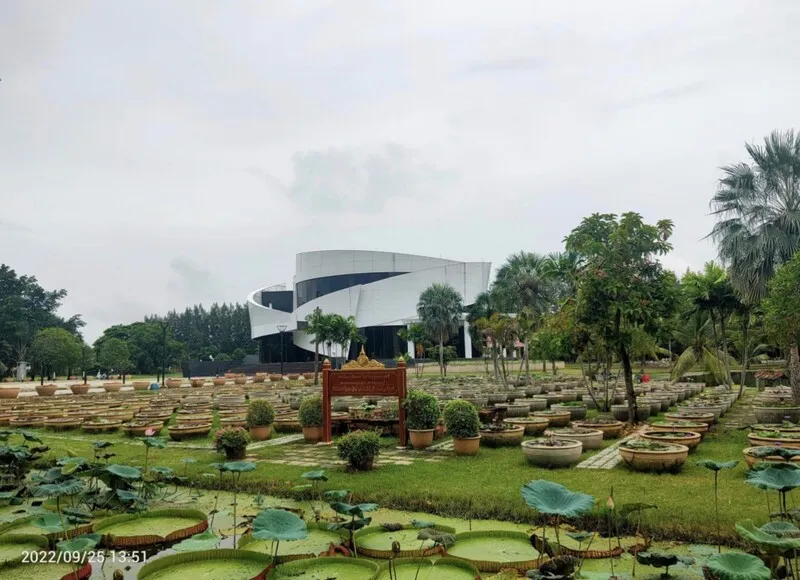
14. Lotus Museum is located within Rajamangala University of Technology Thanyaburi in the Khlong Hok area. This outdoor learning center focuses on lotus species and aquatic plants and has a particularly meaningful connection with Pathum Thani, whose provincial name and history are closely associated with the lotus.
Highlights: Numerous lotus varieties, aquatic plants, plant-collection plots, conservation and research work, flowers in a wide range of colors, and an outdoor environment well suited to photography.
The Lotus Museum began as a conservation and research site for aquatic plants before expanding into a learning area for students, researchers, and the general public. Instead of relying mainly on indoor galleries, it uses outdoor ponds and planted areas as its principal exhibition spaces.
The variety of lotus plants allows visitors to observe differences in flower shape, color, leaves, and growth patterns directly from living specimens. This makes the museum especially useful for understanding botany in a more immediate way than photographs or display panels alone.
Morning is the best time to visit because temperatures are more comfortable and many lotus varieties are in good condition for viewing and photography. Photography enthusiasts should allow time to explore several ponds rather than stopping at only one area.
For families, the Lotus Museum provides an easy introduction to plants, water, and simple ecosystem concepts, while adults can enjoy the greenery and relaxed photographic opportunities at the same time.
The museum can be combined with the Rangsit Science Centre for Education in the Khlong Hok area, or travelers can continue toward Khlong Ha for the National Science Museum complex.
Open Days: Monday – Friday Opening Hours: 08:30 – 16:30
Getting There: The Lotus Museum is located within Rajamangala University of Technology Thanyaburi in Khlong Hok, Thanyaburi District. From Rangsit–Nakhon Nayok Road, continue toward Khlong Hok and enter the university campus.
Map (GPS):Open Google Maps – Lotus Museum

15. Kanchanaphisek National Museum is a national ethnology museum in Khlong Ha Subdistrict, Khlong Luang District. It was established to collect, study, preserve, and communicate knowledge about ethnic groups, cultural traditions, ways of life, and the diversity of communities throughout Thailand.
Highlights: Ethnological exhibitions, cultural objects, traditional clothing, everyday tools, handicrafts, and information about the lifestyles and cultural identities of different ethnic groups.
The museum differs from conventional archaeological museums because its primary focus is on people. Culture, objects, beliefs, clothing, tools, and everyday practices are used to explain how different communities have developed and adapted to their surroundings.
Objects on display reveal differences in clothing, household items, handicrafts, and lifestyles. These differences reflect relationships between communities and their landscapes, available natural resources, beliefs, and social structures.
The museum is suitable for students, researchers, and visitors interested in anthropology, history, and culture. It is also useful for families who want to add a social and cultural dimension to an itinerary otherwise dominated by science museums in the Khlong Ha area.
Because the exhibitions are information-rich, visitors should spend time reading the sections that most interest them rather than rushing through every display. Educational groups may benefit from planning their visit in advance.
Kanchanaphisek National Museum combines naturally with the Supreme Artist Hall, National Science Museum, and Rama IX Museum, making Khlong Ha one of Pathum Thani’s strongest museum clusters.
Open Days: Monday – Friday Opening Hours: 09:00 – 16:00
Getting There: The museum is located in Khlong Ha Subdistrict, Khlong Luang District. Use Rangsit–Nakhon Nayok Road and enter Khlong Ha Road before continuing toward the museum area.

16. Wat Phra Dhammakaya is a large Buddhist temple in Khlong Sam Subdistrict, Khlong Luang District. Founded in 1970, it is widely known for large-scale Buddhist ceremonies, meditation activities, and contemporary architecture with a layout very different from that of traditional Thai temples.
Highlights: The Dhammakaya Cetiya, large ceremonial grounds, meditation buildings, extensive spaces designed for large gatherings, and meditation-related activities.
The most recognizable landmark is the Dhammakaya Cetiya and its surrounding grounds. The architecture uses contemporary geometric forms and very large open spaces, creating an appearance that differs substantially from traditional Thai temples centered on ordination halls, viharns, and conventional chedis.
The temple plays an important role in meditation instruction and large Buddhist activities. Some events attract very large numbers of participants, so the site has been designed with extensive areas for group activities and movement throughout the temple complex.
Visitors interested in contemporary religious architecture can observe the scale and planning of the temple, while those interested in meditation can review current programs and activities organized by the temple.
Visitors should dress respectfully and follow site regulations, particularly during major ceremonies or religious events when large numbers of participants may be present and temporary traffic arrangements may be introduced.
The temple can be combined with Khlong Sam Floating Market, Talaad Thai, or museums in Khlong Luang because these attractions lie within the same broader travel zone and are connected by the Khlong Luang and Rangsit road networks.
Open Days: Daily Opening Hours: 05:00 – 22:00
Getting There: Wat Phra Dhammakaya is located in Khlong Sam Subdistrict, Khlong Luang District. From Bangkok, use Phahonyothin Road or the expressway toward Khlong Luang, then continue into the Khlong Sam area.
Map (GPS):Open Google Maps – Wat Phra Dhammakaya

17. Rangsit Science Centre for Education is a science learning center in Thanyaburi District with extensive grounds and educational exhibitions suitable for children, students, families, and visitors who prefer a relaxed educational attraction rather than a very large museum complex.
Highlights: Science exhibitions, planetarium programs, astronomy, environmental education, learning activities, and outdoor areas.
The center focuses on activity-based learning and exhibitions that explain scientific principles in accessible ways. Children can learn through experimentation and observation rather than relying only on classroom-style information.
The planetarium is one of the most popular features because it introduces stars, the solar system, and astronomical phenomena through an immersive visual format. It is particularly suitable for school-age children and family groups.
Outdoor spaces around the center allow visitors to alternate between indoor exhibitions and breaks outside, making the experience feel less enclosed than a full day spent entirely inside museums.
Visitors should check the schedule for time-specific activities such as planetarium presentations before planning the order of the visit. Families with children who want to join several activities should allow at least half a day.
The center can be combined with the Lotus Museum in the Khlong Hok area or with the museum cluster in Khlong Ha, creating a strong full-day educational itinerary for families.
Open Days: Tuesday – Sunday; closed Monday and public holidays Opening Hours: 09:00 – 16:00
Getting There: The center is located in the Rangsit–Thanyaburi area between Khlong 5 and Khlong 6. From Rangsit–Nakhon Nayok Road, turn toward the internal road network leading in the direction of Rajamangala University of Technology Thanyaburi.

18. Wat Chinwararam Worawihan is a second-class royal monastery of the Worawihan category in Bang Khayaeng Subdistrict, Mueang Pathum Thani District, beside the Chao Phraya River. The temple is important for its history, Buddhist art, murals, and architecture, making it particularly suitable for travelers who want to examine historic temple art in detail.
Highlights: The ordination hall, historic murals, important Buddha images, religious buildings from several periods, and the peaceful atmosphere of a royal monastery beside the Chao Phraya River.
The temple was formerly known as Wat Makham Tai and was developed during the early Rattanakosin period. Later restoration and elevation to royal-monastery status added new elements while preserving traces of earlier structures.
The ordination hall is one of the most important parts of the temple because it contains mural paintings and Buddhist artistic elements that reveal older styles of temple decoration. Art enthusiasts should allow time to examine details rather than treating the visit as a quick worship stop.
The riverside setting creates a calm atmosphere closely associated with the traditional landscape of old Pathum Thani. The temple is therefore suitable for families, older visitors, and travelers who prefer slow-paced cultural sightseeing.
Visitors should dress respectfully and avoid flash photography where restrictions apply. Historic wall paintings and decorative surfaces should not be touched, helping preserve fragile art and religious heritage.
Wat Chinwararam can be combined with the Former City Hall of Pathum Thani, Wat Makham, Wat San Chao Floating Market, and other attractions in central Pathum Thani, creating a convenient one-day temple and heritage route.
Open Days: Daily Opening Hours: 08:00 – 16:30
Getting There: The temple is located in Bang Khayaeng Subdistrict, Mueang Pathum Thani District, on the western side of the Chao Phraya River. Use the Bangkok–Pathum Thani route or local roads from central Pathum Thani toward Bang Khayaeng.

19. Rare Stone Museum is a private collection museum in Ban Klang Subdistrict, Mueang Pathum Thani District, displaying natural stones, jade, fossils, and unusually shaped objects from various sources. It is suitable for travelers who enjoy small specialist museums and collections that differ from conventional historical exhibitions.
Highlights: Naturally shaped stones resembling animals and objects, jade, fossils, cave formations, pottery, silverware, and a wide variety of unusual collectibles.
The museum’s charm lies in looking at natural stone formations with imagination. Many pieces resemble animals, people, or everyday objects without having been carved, turning the visit into an exercise in observation and interpretation.
In addition to stones, the collection contains items such as silverware, pottery, and objects from different periods, giving the museum more variety than a purely geological collection.
The museum is especially suitable for families and children who enjoy observing unusual objects and discussing what different stones resemble. Adults interested in collecting can also spend time examining individual pieces and materials.
A visit does not require an entire day, so the museum works well as an additional stop on a central Pathum Thani route, particularly when combined with Wat Makham, Wat San Chao Floating Market, or Wat Chinwararam Worawihan.
Including the museum in a “museum + market + temple” itinerary adds variety and prevents the day from being dominated entirely by temples or outdoor attractions.
Open Days: Daily Opening Hours: 09:00 – 17:00
Getting There: The museum is located in Ban Klang Subdistrict, Mueang Pathum Thani District, close to central Pathum Thani and the Wat San Chao area. It can be reached via Tiwanon Road and local roads through Ban Klang.
Map (GPS):Open Google Maps – Rare Stone Museum

20. Rama 9 Reservoir is a large water-management project located between Rangsit Drainage Canal 5 and Rangsit Drainage Canal 6, covering areas connected with Khlong Luang and Thanyaburi districts. It is important as water infrastructure and as a practical example of reservoir-based flood mitigation and water-storage management.
Highlights: Large reservoir areas, water-management concepts, open landscapes, green surroundings, and opportunities to learn about the canal and drainage systems of the wider Rangsit area.
The project helps receive and store excess water from the Rangsit canal system, reducing the amount of water entering urban areas during periods of high flow. Stored water can also support water-management needs during periods of greater demand.
The reservoir provides a practical way to understand water retention and flood-management principles. Visitors interested in environmental management, engineering, or disaster mitigation can see how canals and storage areas work together as part of a larger system.
The surrounding landscape is broad and open, offering a different atmosphere from museums and temples in Khlong Ha. It can provide a useful change of pace for travelers interested in water systems, environmental planning, and large-scale infrastructure.
Visitors should remember that the site’s primary function is water management rather than recreation. Access regulations should therefore be followed carefully, and restricted operational areas should not be entered.
The reservoir can be combined with Khlong Sam Floating Market, Rama IX Museum, and the National Science Museum to create a one-day itinerary combining science, environmental learning, water management, and community life.
Getting There: The project lies between Rangsit Drainage Canal 5 and Canal 6 in the area connecting Khlong Luang and Thanyaburi districts. Use Rangsit–Nakhon Nayok Road and continue along local canal-side roads around Khlong Ha and Khlong Hok.
Map (GPS):Open Google Maps – Rama 9 Reservoir
| Category | Details |
| Rangsit–Thanyaburi Zone | 1. Dream World 2. Lotus Museum 3. Rangsit Science Centre for Education 4. Rama 9 Reservoir This zone is suitable for families, children, students, science enthusiasts, nature lovers, and travelers looking for an easy day trip close to Bangkok. |
| Khlong Luang–Khlong Ha Zone | 1. The National Science Museum 2. Rama IX Museum 3. Kanchanaphisek National Museum 4. The Supreme Artist Hall 5. The Golden Jubilee Museum of Agriculture 6. Talaad Thai 7. Wat Phra Dhammakaya 8. Khlong Sam Floating Market This area is ideal for science, museums, art and culture, agriculture, local markets, and family-friendly educational trips. |
| Central Pathum Thani–Ban Klang Zone | 1. Wat Bot 2. Wat San Chao Floating Market 3. The Former City Hall of Pathum Thani 4. Wat Makham 5. Wat Chinwararam Worawihan 6. Rare Stone Museum This zone is best for temples, old-town history, Mon culture, community markets, local food, and Chao Phraya riverside heritage. |
| Lat Lum Kaeo Zone | 1. Wat Chedi Hoi A good choice for travelers interested in unusual temples, shell-based architecture, natural history, geology, and the rural landscape of Pathum Thani. |
| Lam Luk Ka–Khu Khot Zone | 1. National Memorial Suitable for history lovers, military-history enthusiasts, students, and families interested in Thai national history through exhibitions and large-scale objects. |
| Best for Families and Children | 1. Dream World 2. The National Science Museum 3. Rama IX Museum 4. The Golden Jubilee Museum of Agriculture 5. Rangsit Science Centre for Education 6. Lotus Museum 7. Wat Chedi Hoi 8. Rare Stone Museum |
| Best for Science and Learning | 1. The National Science Museum 2. Rama IX Museum 3. Rangsit Science Centre for Education 4. The Golden Jubilee Museum of Agriculture 5. Lotus Museum 6. Rama 9 Reservoir |
| Best for History Lovers | 1. The Former City Hall of Pathum Thani 2. National Memorial 3. Wat Bot 4. Wat Makham 5. Wat Chinwararam Worawihan 6. Kanchanaphisek National Museum 7. The Supreme Artist Hall |
| Best for Buddhist Pilgrimage | 1. Wat Chedi Hoi 2. Wat Bot 3. Wat Makham 4. Wat Phra Dhammakaya 5. Wat Chinwararam Worawihan These temples represent a mix of historic riverside temples, Mon heritage, royal monasteries, unusual religious architecture, and large contemporary Buddhist complexes. |
| Best for Culture and Community Tourism | 1. Wat Bot 2. Wat Makham 3. The Former City Hall of Pathum Thani 4. Wat San Chao Floating Market 5. Khlong Sam Floating Market 6. Wat Chinwararam Worawihan These places are especially suitable for travelers interested in Mon culture, riverside communities, local markets, and the historic development of Pathum Thani. |
| Best for Photography | 1. Wat Chedi Hoi 2. Lotus Museum 3. The Former City Hall of Pathum Thani 4. Wat Chinwararam Worawihan 5. The Supreme Artist Hall 6. Rama 9 Reservoir 7. Dream World |
| Best for Nature and Open Spaces | 1. Lotus Museum 2. Rama 9 Reservoir 3. Wat Chedi Hoi These attractions are suitable for visitors interested in aquatic plants, open landscapes, green spaces, rural scenery, and water-related environments. |
| Local Food and Products to Try | 1. Mon-style khao chae 2. Mon curries 3. Local food from Wat San Chao Floating Market 4. Kuichai dumplings and community-market snacks 5. Seasonal fruit and vegetables from Talaad Thai 6. Traditional Thai sweets and local dishes from community markets |
| Recommended Souvenirs | 1. Traditional Thai sweets from local markets 2. Seasonal fruit 3. Agricultural products from Talaad Thai 4. Agricultural products from learning centers in Khlong Luang 5. Local handicrafts and community products |
| Important Local Culture | Mon culture along the Chao Phraya River, Hongsa flag and centipede-banner traditions, honey-offering ceremonies, Buddhist merit-making traditions, canal-side community life, and the historical legacy of Sam Khok as one of the cultural roots of Pathum Thani. |
| Recommended Accommodation Areas | 1. Rangsit–Thanyaburi: Best for Dream World, Lotus Museum, and Rangsit Science Centre for Education 2. Khlong Luang: Best for the National Science Museum, Rama IX Museum, Talaad Thai, the Golden Jubilee Museum of Agriculture, and Wat Phra Dhammakaya 3. Central Pathum Thani: Best for Wat San Chao Floating Market, Wat Bot, Wat Makham, Wat Chinwararam Worawihan, and riverside heritage routes An overnight stay is not essential for a one-day trip from Bangkok, but staying one night makes it easier to explore several zones without rushing. |
| 1-Day Pathum Thani Itinerary – Families and Children | Morning: The National Science Museum Lunch: Eat in the Khlong Ha area Afternoon: Rama IX Museum Evening: Return toward Rangsit or have dinner in the Rangsit area |
| 1-Day Pathum Thani Itinerary – Amusement Park and Family Activities | Morning to Evening: Spend the entire day at Dream World This itinerary is ideal for families with children, groups of friends, and visitors who want to enjoy multiple rides without changing destinations during the day. |
| 1-Day Pathum Thani Itinerary – Temples and Local Food | Morning: Wat Bot Late Morning: Wat Makham Lunch: Wat San Chao Floating Market Afternoon: Wat Chinwararam Worawihan Evening: The Former City Hall of Pathum Thani and the old riverside town area |
| 1-Day Pathum Thani Itinerary – Science and Nature | Morning: Lotus Museum Late Morning: Rangsit Science Centre for Education Afternoon: Rama 9 Reservoir Evening: Khlong Sam Floating Market if traveling on Saturday or Sunday |
| 1-Day Pathum Thani Itinerary – History and Culture | Morning: National Memorial Late Morning: The Former City Hall of Pathum Thani Afternoon: Wat Chinwararam Worawihan Evening: Walk around central Pathum Thani near the Chao Phraya River |
| 2 Days 1 Night in Pathum Thani | Day 1: The National Science Museum – Rama IX Museum – The Supreme Artist Hall – stay in Khlong Luang or Rangsit Day 2: Wat Bot – Wat Makham – Wat San Chao Floating Market – Wat Chinwararam Worawihan – The Former City Hall of Pathum Thani |
| 3 Days 2 Nights in Pathum Thani | Day 1: Dream World – stay in Rangsit or Thanyaburi Day 2: The National Science Museum – Rama IX Museum – The Supreme Artist Hall – Kanchanaphisek National Museum Day 3: Wat Chedi Hoi – central Pathum Thani – Wat Makham – Wat San Chao Floating Market – Wat Chinwararam Worawihan |
| Best Way to Get Around | A private car is the most convenient option for travelers who want to visit several districts in one day because attractions are spread across Rangsit, Khlong Luang, Thanyaburi, central Pathum Thani, Lat Lum Kaeo, and Lam Luk Ka. Rangsit and Khu Khot can be reached by rail transit followed by local transport or taxis. Organizing the trip by geographical zone is the best way to reduce travel time. |
| Best Time to Visit | Pathum Thani can be visited throughout the year. November to February is generally the most comfortable period for outdoor attractions and temples because temperatures are usually milder. Museums are suitable year-round, while some community markets are best visited on weekends according to their opening schedules. |
Frequently Asked Questions (FAQ)
Q: Where should first-time visitors go in Pathum Thani?
A: First-time visitors looking for variety should consider the National Science Museum, Rama IX Museum, Wat Chedi Hoi, Wat San Chao Floating Market, and Wat Chinwararam Worawihan. Together they cover science, nature, Buddhism, local history, and community food.
Q: Can Pathum Thani be visited as a day trip from Bangkok?
A: Yes. Pathum Thani is very suitable for a day trip from Bangkok. The most efficient approach is to focus on one zone, such as Rangsit–Thanyaburi, Khlong Luang–Khlong Ha, or central Pathum Thani–Ban Klang, rather than trying to cross the entire province in one day.
Q: How should I plan a 2-day, 1-night trip to Pathum Thani?
A: Spend the first day in Khlong Luang and Khlong Ha, visiting the National Science Museum, Rama IX Museum, and the Supreme Artist Hall. On the second day, explore central Pathum Thani with Wat Bot, Wat Makham, Wat San Chao Floating Market, Wat Chinwararam Worawihan, and the Former City Hall of Pathum Thani.
Q: What are the best attractions in Pathum Thani for children?
A: Dream World, the National Science Museum, Rama IX Museum, Rangsit Science Centre for Education, the Golden Jubilee Museum of Agriculture, Lotus Museum, and Rare Stone Museum are among the best choices for families with children.
Q: Where should science lovers go in Pathum Thani?
A: Start with the National Science Museum and Rama IX Museum, then consider Rangsit Science Centre for Education, Lotus Museum, and Rama 9 Reservoir for a broader mix of science, technology, nature, and environmental learning.
Q: What are the best historical attractions in Pathum Thani?
A: National Memorial, the Former City Hall of Pathum Thani, Wat Bot, Wat Makham, Wat Chinwararam Worawihan, Kanchanaphisek National Museum, and the Supreme Artist Hall are suitable for travelers interested in Thai history, urban heritage, traditional art, and cultural development.
Q: Which temples should I visit in Pathum Thani?
A: Wat Bot, Wat Makham, Wat Chinwararam Worawihan, Wat Chedi Hoi, and Wat Phra Dhammakaya offer very different experiences, ranging from historic riverside Mon temples and a royal monastery to a shell-covered temple and a large contemporary Buddhist complex.
Q: What culture is Pathum Thani best known for?
A: Mon culture is one of Pathum Thani’s strongest cultural identities, particularly around Sam Khok and communities along the Chao Phraya River. It can be experienced through temples, food, language, Hongsa flag and centipede-banner traditions, honey-offering ceremonies, and traditional community life.
Q: What food should I try in Pathum Thani?
A: Try Mon-style khao chae, Mon curries, kuichai dumplings, traditional Thai sweets, and local dishes at Wat San Chao Floating Market. Talaad Thai is also a good place to explore seasonal fruit, vegetables, and agricultural products.
Q: What souvenirs should I buy in Pathum Thani?
A: Good choices include traditional Thai sweets, seasonal fruit, agricultural products, community-made products, and local food from markets. Talaad Thai is especially useful for travelers looking for a wide selection of fresh agricultural produce.
Q: Can I travel around Pathum Thani without a private car?
A: Yes, particularly around Rangsit and Khu Khot, where rail transit and local transport are available. However, attractions in Khlong Luang, Khlong Ha, Lat Lum Kaeo, and central Pathum Thani are spread across wider areas, so taxis or a private car are more convenient when visiting several places in one day.
Q: What are the best photography spots in Pathum Thani?
A: Wat Chedi Hoi, Lotus Museum, the Former City Hall of Pathum Thani, Wat Chinwararam Worawihan, the Supreme Artist Hall, Rama 9 Reservoir, and Dream World offer very different photographic settings, from historic temples and lotus ponds to open landscapes and colorful amusement-park scenes.
Q: What is the best time of year to visit Pathum Thani?
A: Pathum Thani can be visited year-round, but November to February is generally more comfortable for outdoor attractions. Museums are excellent choices throughout the year and are particularly useful during hot weather or rainy days.
Q: Is Pathum Thani suitable for older travelers?
A: Yes. Wat Bot, Wat Makham, Wat Chinwararam Worawihan, the Former City Hall of Pathum Thani, the Supreme Artist Hall, and Wat San Chao Floating Market are suitable choices for visitors who prefer moderate walking. Avoiding the hottest hours of the day will make outdoor visits more comfortable.
Q: Which Pathum Thani itinerary is best for families?
A: Families with children should consider the Khlong Ha museum zone, beginning with the National Science Museum and continuing to Rama IX Museum. Another option is a full day at Dream World. For a mix of nature and learning, combine Lotus Museum, Rangsit Science Centre for Education, and Rama 9 Reservoir.
 Category: ●Travel Articles, Recipes
 Group: ●Travel Review, Food Review
Last Update : 3 WeekAgo
 Last Update : 3 WeekAgo
Recommend

 Art, Culture and Heritage
 Historical Sites and Monuments(2)
 Landmarks and Memorials(1)
 Art, Craft Centres, Tradition(2)
 Museums(11)
 Art Gallery(1)
 Educational Places
 Museum for Study(1)
 Library(1)
 Training Center(1)
 Places of Worship
 Temple(44)
 Mosque(1)
 Other Sacred Sites(1)
 Research and Development
 Royal Project(1)
 Suburban Living
 Local Market(2)
 Floating Market(3)
 Nature and Wildlife
 River, Canal(1)
 Entertainment and Agricultural
 Animal camps and shows(1)
 Stadium(2)
 Amusement Park(1)
 Waterpark(1)
Travel Review, Food Review(1)


