
lovethailand home >Central Travel Attractions >Pathum Thani Travel Attractions >Muang Pathum Thani >Ban Klang > Pathumthani University
TL;DR: Pathumthani University is located at 140 Ban Klang 4/7 Alley, Near Tiwanon Road, Ban Klang, Mueang Pathum Thani District, Pathum Thani 12000, Thailand.
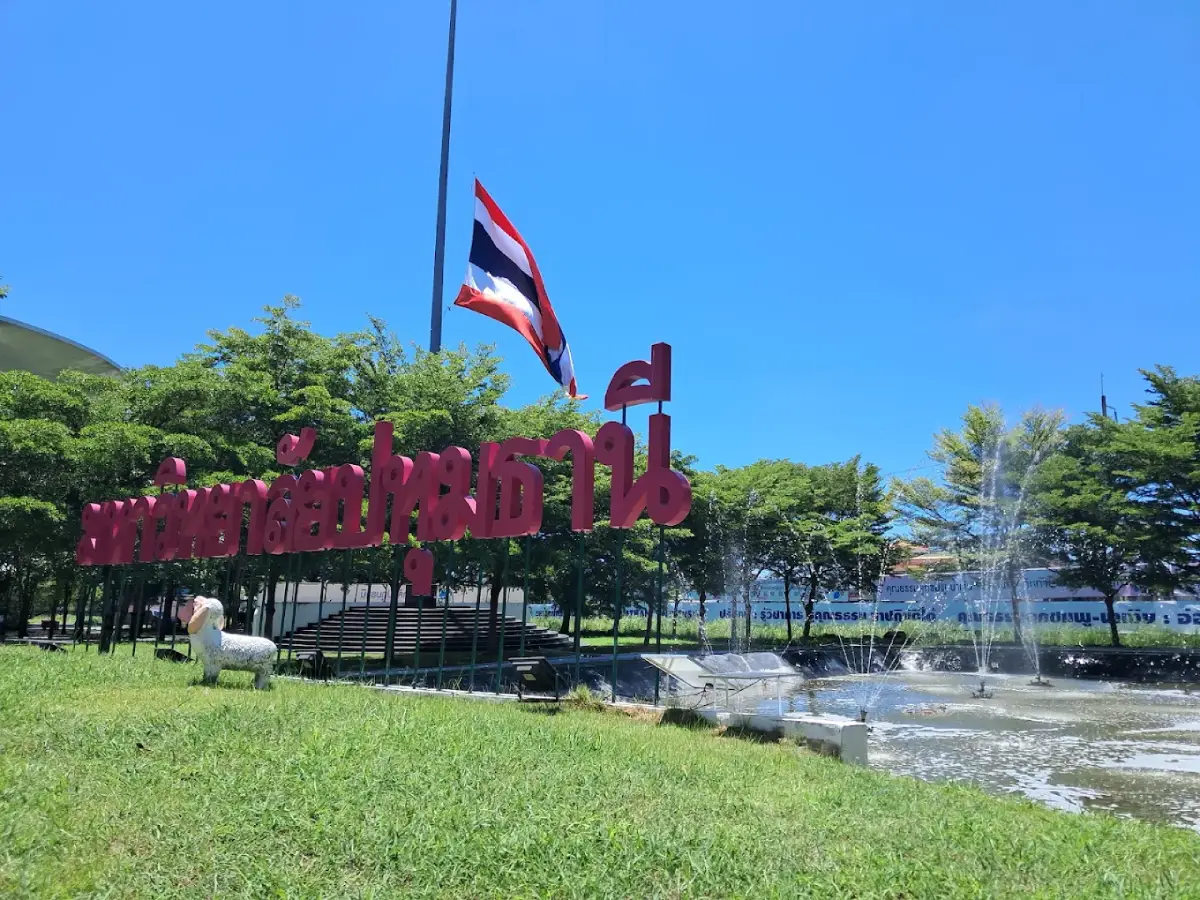
Pathumthani University
Office Hours: 08:30 – 17:00 (Office of Planning and Quality Assurance)
Pathumthani University (มหาวิทยาลัยปทุมธานี), commonly known as PTU, is a private higher education institution located at 140 Ban Klang 4/7 Alley, near Tiwanon Road, Ban Klang Subdistrict, Mueang Pathum Thani District, Pathum Thani Province 12000, Thailand. The institution was originally established as Pathumthani College on December 27, 1999, with Dr. Chanakarn Yuenyong as its founding license holder. It was subsequently granted university status on May 13, 2005. The institution was created to expand access to higher education for students in Pathum Thani and neighboring provinces while preparing graduates with academic knowledge, professional skills, and ethical responsibility. Today, PTU provides education in nursing, allied health sciences, medical technology, pharmacy, engineering, business administration, accounting, law, political science, education, and international programs. Its academic offerings cover undergraduate and postgraduate education as well as professional training. The university also contributes to research, academic services, and the preservation of local cultural traditions, particularly the Thai–Mon heritage of Pathum Thani Province.
Pathumthani University is an important example of a private higher education institution that developed alongside the rapid urban growth of Pathum Thani and the greater Bangkok metropolitan region. During the late 1990s, the province was undergoing substantial changes as industrial estates, commercial enterprises, educational institutions, and residential communities expanded into areas formerly associated with agriculture and riverside settlements. Demand for university-level education was no longer concentrated in central Bangkok alone. Establishing a private college in Pathum Thani therefore provided additional educational opportunities for people living and working in the surrounding provinces.
The university is situated in Ban Klang Subdistrict of Mueang Pathum Thani District, an area connected to Tiwanon Road, Rangsit–Pathum Thani Road, and major routes toward Bangkok and Nonthaburi. Surrounding neighborhoods include residential communities, markets, restaurants, healthcare facilities, and various types of businesses. This urban and industrial setting creates opportunities for academic programs to respond to practical needs in healthcare, engineering, business, education, and public administration.
Pathum Thani Province has a distinctive historical relationship with the Chao Phraya River and Mon communities that settled in the region over different periods of Thai history. Riverside temples, local markets, Buddhist ceremonies, and Mon cultural practices continue to contribute to the province's identity. Traditional Mon dance, Thai–Mon Songkran customs, local foods, and community religious activities represent a cultural heritage that remains relevant even as the surrounding area becomes increasingly urbanized. Understanding Pathumthani University therefore also involves recognizing its location within a province shaped by both historical traditions and modern economic development.
The institution began with a commitment to expanding opportunities for higher education in Pathum Thani and nearby communities. On December 27, 1999, Dr. Chanakarn Yuenyong received permission to establish Pathumthani College under the legislation governing private higher education institutions. The founding objectives emphasized human resource development, academic excellence, advanced professional capabilities, and ethical conduct. These principles established the direction for the institution's subsequent academic expansion and its transformation into a university.
During its earliest years, Pathumthani College developed academic programs in professional fields that responded to the needs of students and employers. Engineering and business education formed part of its initial academic foundation. The institution subsequently expanded into law, political science, education, and health-related disciplines. The growing diversity of programs provided opportunities for students pursuing different career paths and supported the objective of producing graduates capable of applying knowledge responsibly in professional environments.
The Faculty of Engineering and Technology traces its establishment to the institution's founding period in 1999. Its educational approach has emphasized the practical application of engineering knowledge in fields such as design, construction, electrical systems, machinery, and industrial production. The Faculty of Business Administration, established in 2000, was developed to prepare students in business management, accounting, business information systems, and organizational operations. These disciplines were particularly relevant to the expanding private sector and industrial economy of Pathum Thani.
The Faculty of Law began teaching in the 2001 academic year, according to its institutional history. The faculty sought to develop graduates capable of interpreting laws, analyzing legal problems, applying reasoned judgment, and practicing professional ethics. The development of legal education reflected the increasing complexity of society, where technological innovation, commercial growth, and changing organizational structures were creating new legal and regulatory challenges.
After operating as a college, the institution was authorized to change its category to a university on May 13, 2005, adopting the name Pathumthani University. This change reflected its expanding academic organization and broader responsibilities in degree-level education, postgraduate study, research, and academic services. The institution continued developing professional disciplines while strengthening its role within the private higher education sector.
The distinction between 1999 and 2005 is important for understanding the university's history. December 27, 1999, marks the establishment of its predecessor institution, Pathumthani College, while May 13, 2005, marks the transition to university status. By 2026, approximately 27 calendar years had passed since the original establishment, while the university had held its present legal status for 21 years. Keeping the two dates separate prevents confusion between the origins of the institution and its subsequent development.
Dr. Chanakarn Yuenyong is the central figure in the university's founding history. Her academic background includes a certificate in education from Phranakhon Si Ayutthaya Teachers College, a Bachelor of Education from Phetchaburi Wittayalongkorn Teachers College under the Royal Patronage, a master's degree in industrial education from King Mongkut's Institute of Technology Ladkrabang, and doctoral studies in management at the Technological University of the Philippines.
Beyond education, Dr. Chanakarn Yuenyong previously served as a member of Thailand's House of Representatives and Senate representing Pathum Thani. She has also been associated with the establishment and administration of other private higher education institutions. Her professional experience illustrates the relationship between educational management, public affairs, and regional development. At Pathumthani University, she has remained closely identified with the institution since its establishment and continued to be named as rector in university news published during 2026.
The university's identity is closely connected with the name Pathum Thani, which contains the Thai word pathum, meaning lotus. The lotus is an important symbol of the province and appears prominently in the university emblem. This connection between the university's name and the regional symbol helps communicate its local identity while giving the lotus a further meaning associated with morality, goodness, and intellectual development.
The official university emblem takes the form of a circular design surrounded by a ribbon, with the Thai name displayed above and the English name below. Within the circle, a sacred lotus is positioned over a globe, with water and an open book incorporated beneath it. The university explains that the globe represents international outlook, the book symbolizes knowledge in different disciplines, and the lotus expresses morality and ethical values. Flowing water symbolizes the continuing movement of thought, while the ribbon represents courage, success, and honor.
These elements communicate an educational philosophy combining academic learning with ethical responsibility. The globe and book emphasize the importance of knowledge and openness to international developments, while the lotus connects intellectual growth with moral conduct. The water motif also evokes Pathum Thani's landscape of rivers and canals, although the university's official interpretation places particular emphasis on dynamic thought and continuous development.
The university's official colors are blue and pink. Blue represents strength, stability, and respect for the Thai monarchy, while pink expresses gentleness, brightness, and affection for the institution. Used together, the colors symbolize a balance between determination and compassion. They also reflect the university's commitment to developing graduates who combine professional competence with ethical awareness and a sense of belonging.
The university tree is the parichat tree, also commonly known in Thai as thonglang lai, with the scientific name Erythrina variegata. The species has botanical and cultural significance and appears in Thai literary and traditional contexts. The university flower is the lotus, representing purity, inner development, and wisdom. These botanical symbols add a dimension of cultural meaning to the university's identity and reinforce its connection with the province in which it is located.
The university's guiding philosophy is expressed in Thai as Ru Wichakan, Ru Khunnatham, Nam Patibat Dai, which may be translated as Knowledge in Academics, Understanding of Ethics, and the Ability to Put Learning into Practice. Academic knowledge provides the foundation for professional expertise, ethical understanding guides its responsible use, and practical competence allows graduates to apply what they have learned in real situations. The philosophy is especially relevant to a university offering professional education in healthcare, engineering, law, business, and teaching.
Its institutional determination emphasizes the preparation of graduates with strong academic abilities, practical professional skills, and responsibility toward society and the nation. The university's vision calls for academic excellence at the national level, international standards, and a commitment to developing local knowledge and communities. These principles position education not simply as a route to individual career advancement but also as a means of contributing to the wider public good.
Pathumthani University maintains a diverse academic organization. The institution identifies faculties of Nursing, Allied Health Sciences, Engineering and Technology, Business Administration and Accounting, Law, Political Science, Education, and Pharmacy. Its 2026 organizational information and student activities also identify a Faculty of Medical Technology, alongside an International College. The range of disciplines creates an environment in which students preparing for different professions can encounter broader perspectives on technology, public affairs, healthcare, and social responsibility.
The Faculty of Nursing is among the university's important professional units, with a history of nursing education dating to 2007. Nursing education involves health sciences, patient care, clinical decision-making, communication, and professional ethics. Preparing competent nurses requires both classroom education and supervised practical experience in professional settings. The university's published academic information identifies the Bachelor of Nursing Science and nursing assistant certificate studies among the faculty's offerings.
The Faculty of Allied Health Sciences developed from an earlier public health and environmental health academic unit. Its establishment was approved by the University Council in 2007 to respond to growing demand for health promotion and community well-being professionals. The faculty's fields include public health, occupational health and safety, sports and health sciences, traditional Thai medicine, emergency medical care, and related postgraduate studies in health systems and traditional medical knowledge.
Public health education contributes to the development of professionals working in health promotion, disease prevention, and community health management. Occupational health and safety is particularly relevant to the industrial economy of Pathum Thani, where manufacturing companies and other workplaces require the assessment and management of occupational risks. Applying health and safety knowledge can benefit workers, employers, and surrounding communities by supporting safer working environments.
Sports and health sciences connect exercise knowledge with physical performance, fitness, and health promotion, while sports management prepares students for organizational responsibilities within the sporting sector. Emergency medical care requires specialized knowledge, practical readiness, and cooperation with emergency response systems. Together, these fields demonstrate the diversity of professional roles involved in improving health and responding to the needs of contemporary society.
Traditional Thai medicine is another discipline with strong cultural significance. It involves the study and application of traditional Thai medical knowledge within the framework of professional standards. Pathumthani University identifies undergraduate and postgraduate programs in traditional Thai medicine and lists a traditional Thai medicine clinic among its campus services. Its academic activities have also included international knowledge exchange, such as participation in activities relating to Zhuang and Chinese traditional medical practices during 2026.
The Faculty of Medical Technology is identified in the university's organizational information and appeared in student activities during 2026. Medical technology concerns the laboratory analysis of clinical specimens, diagnostic testing, quality control, and the application of scientific methods to healthcare. Education in this field requires knowledge of biology, chemistry, laboratory practice, and professional responsibility, because accurate laboratory results are essential for medical decision-making and patient safety.
The Faculty of Pharmacy represents an important recent development in the university's academic activities. On January 31, 2025, Pathumthani University signed academic cooperation agreements with the Faculty of Pharmacy at Silpakorn University to support the development of pharmacy education and curriculum planning. In 2026, Pathumthani University published information about student orientation and a parents' meeting organized by its Faculty of Pharmacy. These developments demonstrate the institution's expansion in health-related professional education.
Pharmacy education encompasses pharmaceutical sciences, pharmacology, pharmaceutical care, medication safety, and the responsible use of medicines. These subjects form an important part of modern healthcare because pharmacists contribute to medicine management, patient counseling, and the prevention of medication-related problems. Education in pharmacy alongside nursing and other health sciences also creates opportunities for interdisciplinary understanding of diagnosis, treatment, and patient care.
The Faculty of Engineering and Technology provides programs in mechanical engineering, electrical engineering, industrial engineering and logistics, and civil engineering, together with postgraduate engineering education. These disciplines contribute to infrastructure development, industrial production, machinery, electrical systems, and the management of technical processes. Students are expected to develop analytical skills and the ability to apply scientific and engineering principles to professional problems.
Engineering education is particularly relevant to Pathum Thani's industrial environment, where organizations require expertise in machinery, production systems, construction, electrical installations, and logistics. Practical training, problem-solving exercises, and professional experience help graduates understand workplace requirements and safety standards. These skills can be applied across manufacturing, transportation, construction, and other technology-related industries.
The Faculty of Business Administration and Accounting offers programs in business computing, management, logistics and supply chain management, accounting, international business management, and tourism and hospitality management. These subjects involve organizational administration, financial analysis, cost management, business planning, and the coordination of commercial activities. In a digital economy, graduates also benefit from the ability to manage information and use technology in business operations.
Business education contributes to entrepreneurship and the development of small and medium-sized enterprises. Students can apply management, accounting, and technological knowledge to local businesses and service organizations. This is especially relevant in Pathum Thani, where commercial enterprises, industrial employers, and community businesses require people capable of planning operations, managing resources, and making informed business decisions.
The Faculty of Law provides undergraduate, master's, and doctoral education in law. Its teaching focuses on legal principles, reasoning, interpretation, and professional ethics. Legal knowledge is relevant to government administration, private businesses, contracts, public rights, and regulatory compliance. Understanding how laws are applied allows graduates to contribute to the fair and responsible operation of organizations and society.
The Faculty of Political Science provides academic programs in political science and public administration. These disciplines examine government, public institutions, public policy, administrative processes, and relationships between the state and citizens. The faculty's educational role includes helping students develop analytical abilities relevant to governance, public resource management, and the understanding of social and political issues.
The Faculty of Education prepares and develops educational personnel through programs in early childhood education, physical education, educational administration, curriculum and instruction, and innovation in educational management. It also offers a graduate diploma pathway in the teaching profession. These programs emphasize educational knowledge, teaching methods, learner development, school management, and professional preparation for work in educational institutions.
The International College extends the university's academic activities into cross-cultural learning environments. Its published program information includes digital business, hospitality industry management, early childhood education, digital education management, and music at different degree levels. International programs support academic communication and knowledge exchange among students with varied cultural and educational backgrounds. Admission arrangements and delivery formats are determined by the responsible academic units.
Research forms one of the university's core missions. Pathumthani University maintains research and innovation support services as well as channels for publishing scholarly work and academic journals. Access to research databases and academic information supports lecturers and students as they develop knowledge in their respective disciplines. These services contribute to teaching quality, research development, and the application of academic findings to professional and social issues.
In 2026, the university organized its tenth national and international research presentation and conference project, including online conference sessions on February 27 and April 25. Such activities provide opportunities for lecturers, researchers, and postgraduate students to exchange research findings and develop academic networks. Conferences also strengthen scholarly communication by encouraging the structured presentation and discussion of research across different fields.
Academic services to society are another important part of the university's mission. Its professional disciplines can contribute knowledge related to public health, traditional Thai medicine, education, business administration, and technology. Training, academic cooperation, and community-oriented activities help connect university expertise with the needs of the wider population and support lifelong learning beyond formal degree programs.
The university's relationship with local culture is particularly visible through its participation in preserving Mon dance. Mon dance is a traditional performance associated with the cultural heritage of Thai people of Mon descent in Pathum Thani. It is distinguished by graceful movements, music influenced by Mon traditions, and costumes expressing cultural identity. Learning and performing the dance provides students with direct experience of the province's cultural diversity and the importance of preserving living heritage.
In 2025, students from the faculties of Nursing and Education participated in Mon dance performances during Pathum Thani's traditional longboat racing festival. The event highlighted the preservation of community heritage and local performing arts. On February 5, 2026, nursing students also performed Mon dance at the 24th Higher Education Arts and Culture Festival, hosted by Phranakhon Rajabhat University in Bangkok. These activities demonstrate the continuing participation of university students in cultural preservation.
The university's engagement with Mon dance has significance beyond public performance. It offers opportunities for younger generations to learn about the history and practices of local communities and to appreciate cultural heritage transmitted through movement, music, clothing, and shared participation. For students in health-related fields, traditional movement activities can also provide an educational context for exploring well-being and the relationship between physical activity and cultural life.
Thai–Mon Songkran traditions form another important part of the university's documented cultural activities. On April 9, 2026, Pathumthani University organized a Thai–Mon Songkran heritage event at the Building Commemorating the 60th Anniversary of His Majesty's Accession to the Throne. The program included bathing a Buddha image, paying respect to elders, and a cultural performance called Poeng Songkran, Saran Ram. The presentation drew on Mon food culture, including khao chae, and the joyful atmosphere of the Songkran festival.
Songkran traditions in Mon communities are connected with respect for elders, merit-making, family relationships, and festival foods. Incorporating these cultural elements into university activities allows students to learn through direct participation rather than classroom instruction alone. It also helps bring educational institutions, cultural practitioners, and community members together in preserving traditions that remain meaningful in contemporary society.
The Katanyu-ta Bucha Phra Khun Khru ceremony, honoring teachers and expressing gratitude, is another significant university activity. On July 11, 2026, the university held the ceremony together with new student orientation in Bua Luang Meeting Hall on the third floor of its auditorium building. The event featured traditional ceremonial arrangements, student performances, and 108 decorated offerings. Alumni and current students also participated, strengthening connections between different generations of the university community.
New student orientation is organized through different activities intended to help first-year students adjust to university life. On June 17, 2026, Pathumthani University held Freshmen Mode On: Welcome to Next Journey at PTU, providing opportunities for new students to interact with student organizations and senior students. On June 24, the university organized a series of faculty-based activity stations involving students and academic personnel. These activities encouraged communication, teamwork, friendship, and familiarity with university life.
Student leadership and social responsibility are also supported through development programs. On June 4–5, 2026, the university organized PTU NextGen Leader SDGs, focusing on leadership, planning, communication, and teamwork. The activities were connected with the Sustainable Development Goals and encouraged students to consider the relationship between personal responsibility, collective action, and social development.
Sporting activities contribute another dimension to university life. Pathumthani University has participated in the Thailand University Games, and in October 2026 the university reported on its athletes' performances in the central regional qualifying competitions for the 52nd Thailand University Games. Participation in sport provides opportunities for students to develop physical fitness, discipline, cooperation, and commitment while representing their institution in competitions beyond the campus.
Important campus facilities include the university auditorium building, which provides venues for ceremonies, conferences, and student activities. Its Bua Luang Meeting Hall has hosted major events such as teacher-honoring ceremonies, orientation programs, and student gatherings. The Pathumchat Meeting Room has also been used for faculty activities and student development projects. These spaces are important to the university's academic and cultural life.
The Building Commemorating the 60th Anniversary of His Majesty's Accession to the Throne is another notable campus facility. It accommodates educational and ceremonial activities, including the Thai–Mon Songkran cultural program in 2026. The building illustrates how university spaces can support different functions, including teaching, meetings, institutional events, and the preservation of cultural traditions.
The Ubolratana Rajakanya Building, also known as Building 1, is an important location for academic administration. The Faculty of Engineering and Technology identifies its office on the first floor, while the Faculty of Nursing identifies its office on the third floor. Students and visitors attending appointments should check the appropriate department and its service hours before arrival, as individual faculties may operate on different schedules.
Academic information and library-related services provide further support for university learning. The institution offers access to research databases, academic journals, and scholarly information resources, including EBSCO services. These resources help students and lecturers locate reliable academic materials and support research across the university's professional and academic disciplines.
Other published campus facilities include teaching rooms, conference spaces, a food service area, shuttle services, exercise facilities, and a traditional Thai medicine clinic. Such services contribute to everyday student life and support the practical educational activities associated with several of the university's professional programs.
For visitors interested in educational travel, Pathumthani University offers a perspective on the development of private higher education in Thailand, professional training in healthcare and technology, and the relationship between academic institutions and local Thai–Mon culture. However, the university is an active educational institution, and access to laboratories, clinical facilities, and specialized teaching spaces is governed by university regulations. Groups interested in arranging study visits should contact the responsible academic department in advance.
The area around the university contains several worthwhile cultural attractions. Wat Bot, associated with Luang Pu Thian, Wat San Chao, Wat Makham, and Wat San Chao Riverside Market are located within Mueang Pathum Thani District. They offer opportunities to learn about Buddhist practices, riverside communities, local foods, and the cultural relationship between Thai and Mon traditions. These destinations can complement an educational visit to Pathumthani University.
Getting There is possible by private car, public bus, and taxi. The campus is located near Tiwanon Road in Ban Klang Subdistrict, Mueang Pathum Thani. Drivers from Bangkok may use Vibhavadi Rangsit Road or Phahonyothin Road before connecting with roads leading toward Rangsit, Pathum Thani, and Tiwanon Road. Travelers from Nonthaburi can also approach the Ban Klang area via Tiwanon Road. Route selection should be based on current traffic conditions and the precise destination within the campus.
For public transport, a bus stop named Pathumthani University is located on Tiwanon Road. Bus route 1-27, also identified as route 90, connects the Pathum Thani area with the BTS Mo Chit transport hub. Passengers should check the correct travel direction and boarding point, as some stops are located on the opposite side of the road from the university. Travelers using urban rail services can transfer to an appropriate bus or local transport connection toward Tiwanon Road.
Visitors driving to the university should use the name Pathumthani University or its address at 140 Ban Klang 4/7 Alley, Ban Klang, Mueang Pathum Thani, to avoid confusion with other universities in the province. Those visiting professional faculties such as Nursing, Engineering, or Pharmacy should confirm the destination building and department in advance, as individual academic units operate in different parts of the campus.
Pathumthani University illustrates how a private educational institution can connect modern professional education with the needs and cultural identity of its surrounding communities. From the establishment of Pathumthani College in 1999 and its elevation to university status in 2005 to the development of health sciences, postgraduate education, research activities, and cultural programs in 2026, the institution has continued to broaden its academic role. It serves as a center for knowledge, professional preparation, and community engagement in Pathum Thani while maintaining a guiding philosophy that emphasizes academic understanding, ethical responsibility, and the practical application of learning.
| University Name | Pathumthani University (PTU) |
| Thai Name | มหาวิทยาลัยปทุมธานี |
| Institution Type | Private Higher Education Institution |
| Address | 140 Ban Klang 4/7 Alley, Near Tiwanon Road, Ban Klang, Mueang Pathum Thani District, Pathum Thani 12000, Thailand |
| District and Province | Mueang Pathum Thani District, Pathum Thani Province |
| Original Institution Name | Pathumthani College |
| Original Foundation Date | December 27, 1999 |
| University Status Granted | May 13, 2005 |
| Institutional Age in 2026 | Approximately 27 Calendar Years Since the Founding Year; 21 Years as a University |
| Founder and License Holder | Dr. Chanakarn Yuenyong |
| Rector in 2026 | Dr. Chanakarn Yuenyong |
| Educational Philosophy | Academic Knowledge, Ethical Understanding, and the Ability to Apply Learning in Practice |
| University Colors | Blue and Pink |
| University Tree | Parichat / Indian Coral Tree (Erythrina variegata) |
| University Flower | Lotus |
| University Emblem | Circular Emblem Featuring a Lotus, Globe, Water, Open Book, and Surrounding Ribbon |
| Core Missions | Degree Education, Research, Academic Services to Society, and Preservation of Arts and Culture |
| Faculties and Academic Units | Faculty of Nursing, Faculty of Allied Health Sciences, Faculty of Medical Technology, Faculty of Pharmacy, Faculty of Engineering and Technology, Faculty of Business Administration and Accounting, Faculty of Law, Faculty of Political Science, Faculty of Education, and International College |
| Academic Strengths | Health Sciences, Nursing, Traditional Thai Medicine, Medical Technology, Engineering, Business, Education, Law, and Political Science |
| Important Campus Facilities | Auditorium Building, Bua Luang Meeting Hall, Pathumchat Meeting Room, Building Commemorating the 60th Anniversary of His Majesty's Accession to the Throne, Ubolratana Rajakanya Building, and Professional Academic Facilities |
| Traditions and Cultural Activities | Teacher-Honoring Ceremony, Student Orientation, Thai–Mon Songkran Activities, Mon Dance Performances, Student Club Activities, and University Sports |
| Facilities | Classrooms, Conference Facilities, Food Services, Laboratories, Shuttle Services, Traditional Thai Medicine Clinic, Fitness Facilities, and Academic Research Databases |
| Getting There | Via Tiwanon Road in Ban Klang by Private Car, Taxi, or Public Bus Route 1-27 (90), with a Stop Near the University |
| Nearby Cultural Attractions | 1. Wat Bot (Luang Pu Thian), Ban Klang 2. Wat San Chao, Ban Klang, Tel. +66 2 975 6302 3. Wat Makham, Ban Klang, Tel. +66 83 093 4665 4. Wat San Chao Riverside Market, Ban Klang, Tel. +66 93 434 3414 5. Poon Sap Market, Rangsit–Pathum Thani Road Area |
| Nearby Restaurants and Cafés | 1. Triple-T Cafe & Restaurant, Ban Klang, Tel. +66 2 010 0630 2. KAD Cafe, Ban Klang, Tel. +66 95 392 3664 3. Tiaw Dong Tan, Ban Klang, Tel. +66 81 442 4195 4. Nai Mueang Pathum Restaurant, Ban Klang, Tel. +66 96 067 8999 5. Quayside Cafe & Eatery, Ban Klang, Tel. +66 91 713 3292 |
| Nearby Accommodation | 1. Pani Resort, Ban Klang, Tel. +66 91 445 9255 2. Progress Mansion, Ban Klang, Tel. +66 2 959 6868 3. Campagne Hotel and Residence, Ban Klang, Tel. +66 86 336 3830 4. Ploen Ploen Residence, Bang Prok, Tel. +66 62 823 2710 5. Tinidee Hotel Bangkok Golf Club, Bang Kadi, Tel. +66 2 147 5858 |
| University Telephone | +66 2 975 6999 |
| Official Website | https://www.ptu.ac.th |
| Admissions Website | https://admission.ptu.ac.th |
| Current Status | Operating as a Private University in the 2026 Academic Year |
Academic Programs and Fields of Study at Pathumthani University, Academic Year 2026 (B.E. 2569)
| Faculty of Nursing | Bachelor's Degrees 1. Bachelor of Nursing Science 2. Bachelor of Nursing Science (International Program) Certificate Programs 1. Nursing Assistant Certificate |
| Faculty of Allied Health Sciences | Undergraduate Degrees 1. Bachelor of Public Health in Public Health 2. Bachelor of Science in Occupational Health and Safety 3. Bachelor of Science in Sports and Health Sciences 4. Bachelor of Arts in Sports Management 5. Bachelor of Traditional Thai Medicine 6. Bachelor of Emergency Medical Care Master's Degrees 1. Master of Public Health in Health Systems Management 2. Master of Traditional Thai Medicine Doctoral Degrees 1. Doctor of Philosophy in Environmental Education 2. Doctor of Philosophy in Public Health |
| Faculty of Medical Technology | Bachelor's Degree 1. Bachelor of Science in Medical Technology |
| Faculty of Pharmacy | Professional Degree 1. Doctor of Pharmacy / Bachelor of Pharmacy Professional Program (Pharm.D.) |
| Faculty of Engineering and Technology | Bachelor's Degrees 1. Bachelor of Engineering in Mechanical Engineering 2. Bachelor of Engineering in Electrical Engineering 3. Bachelor of Engineering in Industrial Engineering and Logistics 4. Bachelor of Engineering in Civil Engineering 5. Bachelor of Engineering in Civil Engineering (Continuing Program) Master's Degree 1. Master of Engineering in Engineering Doctoral Degree 1. Doctor of Philosophy in Engineering |
| Faculty of Business Administration and Accounting | Bachelor's Degrees 1. Bachelor of Business Administration in Business Computing 2. Bachelor of Business Administration in Management 3. Bachelor of Business Administration in Logistics and Supply Chain Management 4. Bachelor of Accountancy 5. Bachelor of Business Administration in International Business Management 6. Bachelor of Business Administration in Tourism and Hospitality Industry Management Master's Degree 1. Master of Business Administration (MBA) Doctoral Degree 1. Doctor of Business Administration (DBA) |
| Faculty of Law | Bachelor's Degree 1. Bachelor of Laws Master's Degree 1. Master of Laws Doctoral Degree 1. Doctor of Laws |
| Faculty of Political Science | Bachelor's Degree 1. Bachelor of Political Science in Political Science Master's Degrees 1. Master of Political Science 2. Master of Public Administration Doctoral Degrees 1. Doctor of Political Science 2. Doctor of Public Administration |
| Faculty of Education | Bachelor's Degrees 1. Bachelor of Education in Early Childhood Education 2. Bachelor of Education in Physical Education Graduate Diploma 1. Graduate Diploma in the Teaching Profession Master's Degrees 1. Master of Education in Educational Administration 2. Master of Education in Curriculum and Instruction 3. Master of Education in Educational Management Innovation 4. Master of Education in Curriculum Innovation and Learning Management Doctoral Degree 1. Doctor of Education in Educational Administration |
| International College | Bachelor's Degrees 1. Bachelor of Business Administration in Digital Business 2. Bachelor of Arts in Hospitality Industry Management 3. Bachelor of Education in Early Childhood Education Master's Degrees 1. Master of Business Administration in Digital Business 2. Master of Education in Digital Education Management 3. Master of Music Doctoral Programs 1. Doctoral Program in Digital Business 2. Doctoral Program in Music 3. Doctoral Program in Digital Education Management |
Frequently Asked Questions (FAQ)
Q: Where is Pathumthani University located?
A: Pathumthani University is located at 140 Ban Klang 4/7 Alley, near Tiwanon Road, Ban Klang Subdistrict, Mueang Pathum Thani District, Pathum Thani Province 12000, Thailand.
Q: Is Pathumthani University a public or private university?
A: It is a private higher education institution operating under Thailand's legislation governing private higher education.
Q: When was Pathumthani University established?
A: The institution was founded as Pathumthani College on December 27, 1999, and was granted university status on May 13, 2005.
Q: Who founded Pathumthani University?
A: Dr. Chanakarn Yuenyong was the founding license holder of Pathumthani College and played a central role in developing the institution into Pathumthani University.
Q: What faculties and academic programs does Pathumthani University offer?
A: Its academic fields include nursing, allied health sciences, medical technology, pharmacy, engineering, business administration, accounting, law, political science, and education, together with international programs. Specific admission arrangements depend on the relevant faculty and academic year.
Q: What are the university's important cultural traditions?
A: Important documented activities include the teacher-honoring ceremony, Thai–Mon Songkran celebrations, and Mon dance performances that contribute to the preservation of Pathum Thani's local cultural heritage.
Q: Can visitors enter Pathumthani University?
A: Visitors may contact the university for administrative services or attend activities open to the public. Access to laboratories, teaching facilities, clinics, and specialized academic areas is subject to the rules of the responsible department.
Q: How can I reach Pathumthani University by public bus?
A: A bus stop serving Pathumthani University is located on Tiwanon Road. Route 1-27 (90) connects the Pathum Thani area with the BTS Mo Chit transport hub. Travelers should check current directions and stop locations before departure.
 Category: ●University
 Group: ●Private University
Last Update : 2 DayAgo
 Last Update : 2 DayAgo

 Click to Access the Navigation Map GPS
Pathumthani University Map
Recommend

 Art, Culture and Heritage
 Historical Sites and Monuments(2)
 Landmarks and Memorials(1)
 Art, Craft Centres, Tradition(2)
 Museums(11)
 Art Gallery(1)
 Educational Places
 Museum for Study(1)
 Library(1)
 Training Center(1)
 Public university(2)
 Rajamangala University of Technology(1)
 Rajabhat University(1)
Private University(7)
 Places of Worship
 Temple(44)
 Mosque(1)
 Other Sacred Sites(1)
 Research and Development
 Royal Project(1)
 Suburban Living
 Local Market(2)
 Floating Market(3)
 Nature and Wildlife
 River, Canal(1)
 Entertainment and Agricultural
 Animal camps and shows(1)
 Stadium(2)
 Amusement Park(1)
 Waterpark(1)
 Travel Articles, Recipes
 Travel Review, Food Review(1)


