
lovethailand home >North Travel Attractions >Chiang Rai Travel Attractions >Mae Fa Luang >Mae Salong Nok > Phra Borommathat Chedi Srinagarindra Sathit Mahasa..
TL;DR: Phra Borommathat Chedi Srinagarindra Sathit Mahasantikhiri is located at About 4 km above Santikhiri Village, Mae Salong Nok Subdistrict, Mae Fa Luang District, Chiang Rai Province, open Daily, hours 09.00 – 17.00.
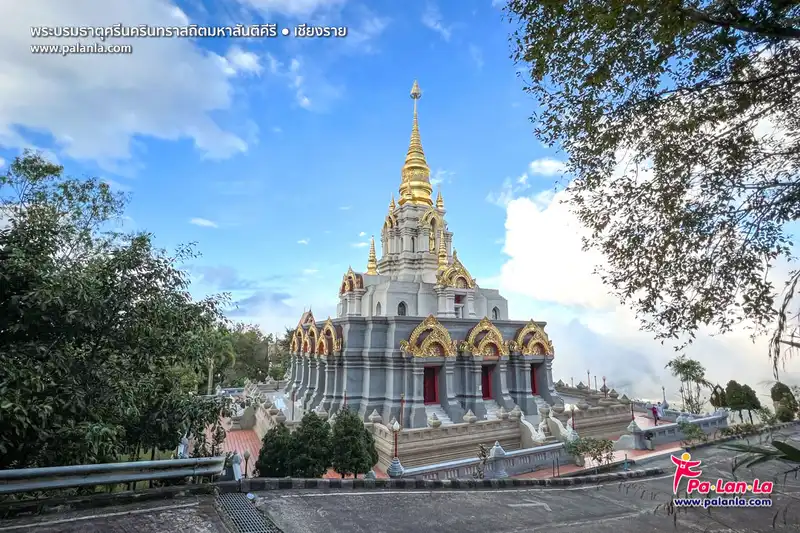
Phra Borommathat Chedi Srinagarindra Sathit Mahasantikhiri
Open Days: Daily
Opening Hours: 09.00 – 17.00
Phra Borommathat Chedi Srinagarindra Sathit Mahasantikhiri is one of the most important landmarks on Doi Mae Salong and one of the most memorable places to visit in Chiang Rai for travelers who appreciate mountain scenery, meaningful architecture, and a peaceful spiritual atmosphere. Located at the highest point above Santikhiri Village at around 1,500 meters above sea level, this pagoda stands in a commanding position that gives visitors both a place of worship and a panoramic viewpoint in a single destination.
The setting is one of the strongest reasons to visit. The pagoda rises above Santikhiri Village, about 4 kilometers away, at the highest point of the Mae Salong mountain range. Even before arriving, the journey itself already feels like part of the experience. The paved road climbs steadily uphill and includes steep and winding sections, gradually revealing wider mountain views and a stronger sense of elevation as visitors move higher above the village below. By the time the summit is reached, the pagoda feels fully integrated with the mountain landscape rather than simply placed on top of it.
The pagoda was completed around 1996 as a royal merit-making tribute to Princess Srinagarindra, widely known in Thailand as the Princess Mother or Somdet Ya. Because of this origin, the site carries a meaning that extends beyond ordinary sightseeing. It is not only a religious monument, but also a memorial structure tied to royal remembrance and national affection. This dual role gives the pagoda a dignified presence: it is at once sacred, commemorative, and symbolic for Doi Mae Salong as a whole.
Architecturally, the monument is a beautiful example of applied Lanna style. It stands on a tiered square base and rises to a height of about 30 meters, with each side of the base measuring roughly 15 meters. Grey tiles decorate the structure, giving the pagoda a calm and elegant tone that contrasts well with the blue sky and green mountains around it. Each side includes three recessed niches, which add depth to the design and strengthen its northern Thai character. The relic chamber is decorated with standing Buddha images facing the four directions, while the bell-shaped body is adorned with gilded carved panels that catch the light beautifully.
Near the main pagoda stands a viharn designed in a similar applied Lanna style, helping the site feel complete as a sacred mountain complex rather than a single isolated monument. This surrounding architectural context contributes greatly to the atmosphere of the place. Visitors can move between the pagoda and the viharn, take in the details of the design, and feel the balance between sacred architecture and open mountain space. Even when there are tourists present, the area generally retains a calm and contemplative mood.
One of the defining attractions of the pagoda is the view. Because the site occupies the highest point of Doi Mae Salong, visitors can see wide layers of mountains stretching into the distance. On clear days, the scenery feels open and expansive, while on misty days the atmosphere becomes softer and more dramatic. Looking down toward Santikhiri Village from above also gives a strong sense of place, helping visitors understand how the mountain settlement fits into the surrounding topography. This combination of sacred architecture and elevated scenery is what makes the site especially rewarding.
The late afternoon is often considered the best time to visit. As the sunlight softens, the pagoda appears more luminous and more distinct against the horizon. The decorated golden sections catch the warm light, while the cool grey surfaces of the structure harmonize with the mountain air and surrounding ridgelines. This is one of the reasons the pagoda has become such an important symbol of Mae Salong. It is visible from afar, yet even more impressive when experienced from nearby at the summit.
In practical terms, the road to the site is fully paved, but the climb is steep and winding enough that careful driving is essential. Travelers using private cars should drive slowly and be particularly cautious in rainy weather or heavy fog. The short distance from Santikhiri Village may sound easy, but the mountain conditions mean the route deserves attention. That said, this dramatic ascent also adds to the sense of arrival. Reaching the summit feels earned, and the reward is a quiet, elevated space with one of the broadest viewpoints in the area.
For visitors exploring Doi Mae Salong in a single day, the pagoda works especially well as part of a wider route. It pairs naturally with Santikhiri Village, General Tuan’s Memorial, the Mae Salong morning market, 101 Tea Plantation, and local Yunnan-style restaurants and cafés. Starting with the pagoda gives the day a reflective and scenic beginning, after which travelers can continue down into the village for tea, food, and local culture. This combination makes a trip to Mae Salong feel more balanced, blending landscape, history, religion, and everyday mountain life.
Photographers also find the site especially rewarding. The pagoda can be framed in wide landscape compositions, close architectural details, or atmospheric sunset images. The surrounding mountain light changes throughout the day, creating different moods from cool morning clarity to warm evening glow. Yet what makes the site memorable is not only its photographic appeal, but the feeling it creates. Even travelers who arrive mainly for the view often stay longer because of the stillness and dignity of the place.
Another important aspect of this site is the way it connects local mountain identity with national memory. Doi Mae Salong has a distinctive cultural background shaped by its highland setting and village history, while the construction of the pagoda as a tribute to the Princess Mother gives it a wider national significance. The site therefore brings together local geography, northern architectural language, and royal commemoration in a single monument. That layered meaning is part of what makes it stand out from many other viewpoints in Chiang Rai.
For practical travel planning, the pagoda is free to enter, and public contact information is available through the Mae Salong Nok Subdistrict Administration Organization. This helps visitors who want to confirm route details or local travel information before going. Although many travelers visit simply as part of a Mae Salong sightseeing circuit, the site rewards a slower visit. It is best appreciated by spending time around the pagoda, observing the view, and allowing the atmosphere of the summit to settle in rather than rushing through.
Getting There The pagoda is located about 4 kilometers above Santikhiri Village in Mae Salong Nok Subdistrict, Mae Fa Luang District, Chiang Rai Province. Most travelers go by private car or local transport from the village. The road is paved all the way, but it is steep and sharply winding, so extra care is needed, especially in wet conditions or fog. From Santikhiri, the drive is short, but visitors should allow enough time to enjoy the viewpoint before descending safely.
| Name | Phra Borommathat Chedi Srinagarindra Sathit Mahasantikhiri |
| Overview | A major pagoda at the highest point of Doi Mae Salong, built as a royal merit-making tribute to the Princess Mother and widely recognized for its Lanna-inspired architecture and panoramic mountain views. |
| Location | About 4 km above Santikhiri Village, Mae Salong Nok Subdistrict, Mae Fa Luang District, Chiang Rai Province |
| Highlights | Highest viewpoint on Doi Mae Salong, applied Lanna pagoda, nearby viharn, broad mountain scenery, especially beautiful in the late afternoon |
| History / Period | Completed around 1996 as a royal merit-making tribute to Princess Srinagarindra, the Princess Mother |
| Distinctive Features | Applied Lanna-style pagoda, about 30 m high, square tiered base about 15 m wide per side, grey-tiled finish, three niches on each side, standing Buddha images facing four directions, and a gilded carved bell-shaped body |
| Current Status | Open as both a sacred site and one of the key viewpoints on Doi Mae Salong |
| Open Days | Daily |
| Opening Hours | 09.00 – 17.00 |
| Entrance Fee | Free |
| Supervisor / Main Contact | Mae Salong Nok Subdistrict Administration Organization |
| Main Contact Number | 053-765129 |
| Travel Information | Accessible from Santikhiri Village by a fully paved road, but the route is very steep and winding, so careful driving is essential |
| Nearby Tourist Attractions | 1. Santikhiri Village – 4 km 2. General Tuan Memorial – 5 km 3. Mae Salong Morning Market – 4 km 4. 101 Tea Plantation – 6 km 5. Chinese Nationalist Soldiers Museum – 5 km |
| Nearby Restaurants | 1. Mae Salong Villa – 4 km, Tel. 053-765114-5, 095-0534999 2. 101 Tea Green View – 6 km, Tel. 090-705-9009 3. Shin Sane Restaurant & Guesthouse – 4 km, Tel. 053-765026, 087-185-1978 4. Santikhiri Morning Market Yunnan Food Zone – 4 km 5. Local restaurants around Santikhiri Village – 4 km |
| Nearby Accommodations | 1. Mae Salong Villa – 4 km, Tel. 053-765114-5, 095-0534999 2. 101 Tea Green View – 6 km, Tel. 090-705-9009 3. Shin Sane Guesthouse – 4 km, Tel. 053-765026, 087-185-1978 4. Maesalong Little Home – 5 km, Tel. 053-765389, 081-2887084 5. Doi Mok Dok Mai Resort – 5 km, Tel. 053-765495-7, 091-850-6262 |
Frequently Asked Questions (FAQ)
Q: Where is Phra Borommathat Chedi Srinagarindra Sathit Mahasantikhiri located?
A: It is located about 4 kilometers above Santikhiri Village in Mae Salong Nok Subdistrict, Mae Fa Luang District, Chiang Rai Province.
Q: When was the pagoda completed?
A: It was completed around 1996 as a royal merit-making tribute to Princess Srinagarindra, the Princess Mother.
Q: Is there an entrance fee?
A: No. Visitors can enter free of charge.
Q: What makes this site special?
A: It combines applied Lanna architecture, a sacred atmosphere, and one of the broadest viewpoints on Doi Mae Salong.
Q: Is the road difficult?
A: The road is paved all the way, but it is steep and very winding, so careful driving is necessary.
Q: What is the best time to visit?
A: Late afternoon is especially popular because the mountain views are wide and the pagoda looks particularly striking in the evening light.
Tel : 053765129
 Tel : 053765129
 Category: ●Places of Worship
 Group: ●Other Sacred Sites
Last Update : 5 MonthAgo
 Last Update : 5 MonthAgo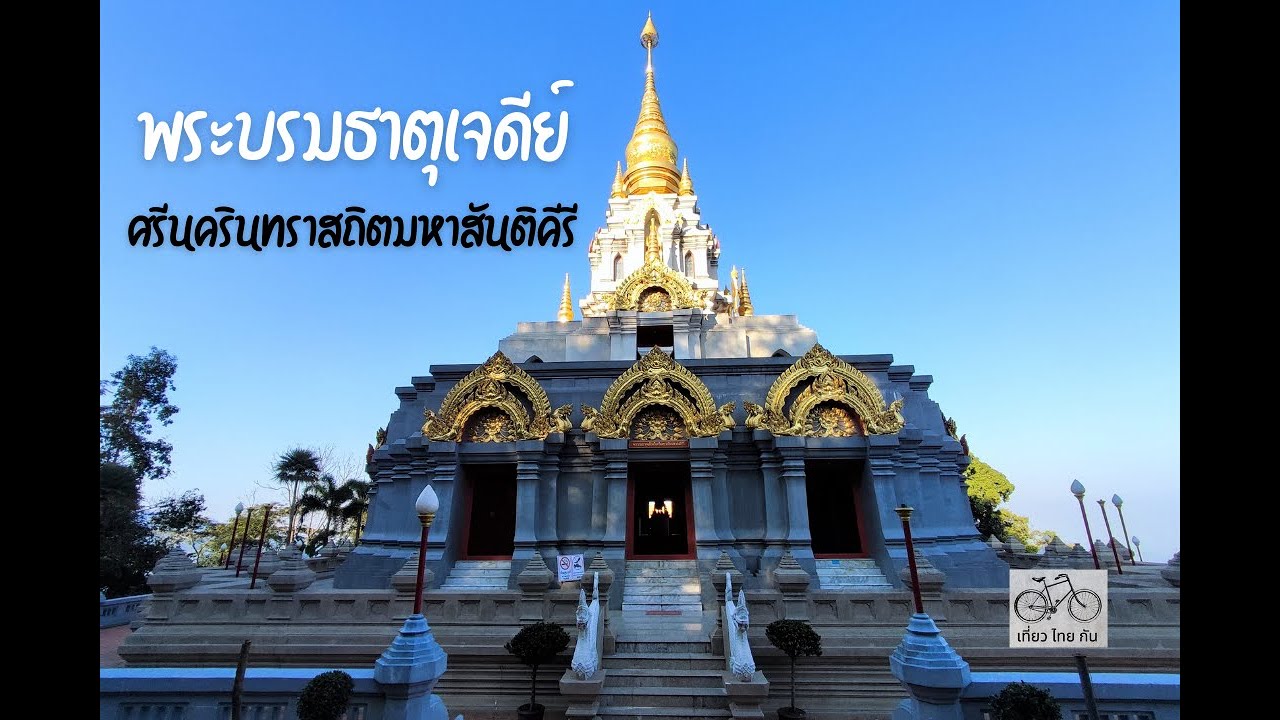
 Click to Access the Navigation Map GPS
Phra Borommathat Chedi Srinagarindra Sathit Mahasantikhiri Map
Recommend

 Art, Culture and Heritage
 Historical Sites and Monuments(3)
 Landmarks and Memorials(7)
 Art, Craft Centres, Tradition(6)
 Museums(8)
 Historic Homes and Cities(1)
 Educational Places
 Museum for Study(1)
 Library(1)
 Educational Gardens, Farm(3)
 Temple(38)
Other Sacred Sites(5)
Temple(38)
Other Sacred Sites(5)
 Research and Development
 Royal Project(9)
 Suburban Living
 Village, Community(16)
 Local Market(5)
 Nature and Wildlife
 National Parks and Marine Reserves(18)
 Mountain (Doi)(20)
 Dam, Reservoir, Lake(8)
 Waterfalls(16)
 Hot Springs(6)
 Caves(8)
 River, Canal(10)
 Sea, Beach(1)
 Other natural attractions(3)
 Entertainment and Agricultural
 Animal camps and shows(1)
 Farms, Parks and Ecotourism(9)
 Shopping
 Shopping and Night Market(2)
 Call Customer Service in Tourism
 Call Customer Service in Tourism(1)
 Travel Articles, Recipes
 Travel Review, Food Review(1)
 Food Menu, North Recipes(1)


