
lovethailand home >North Travel Attractions >Chiang Rai Travel Attractions >Wiang Kaen >Po > Phatang Royal Project Development Center
TL;DR: Phatang Royal Project Development Center is located at Ban Phatang, Por Subdistrict, Wiang Kaen District, Chiang Rai, open Daily, hours 08:00 – 16:00.
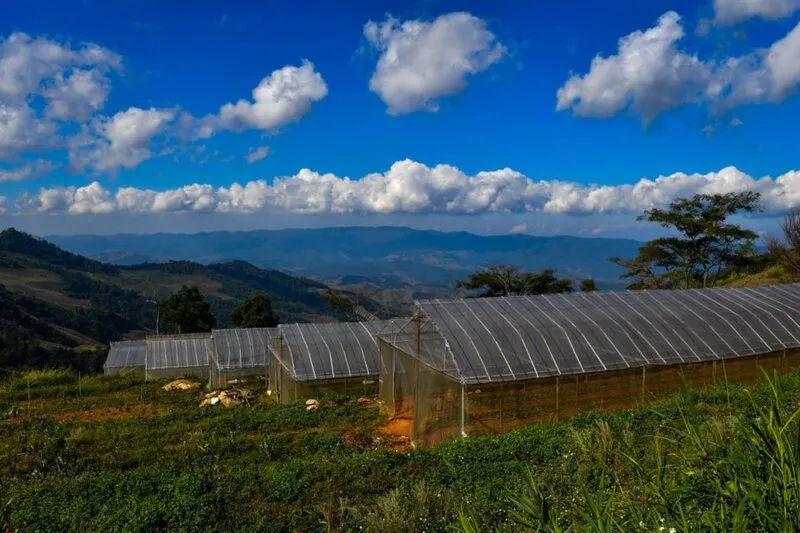
Phatang Royal Project Development Center
Open Days: Daily
Opening Hours: 08:00 – 16:00
Phatang Royal Project Development Center in Chiang Rai is one of the most rewarding highland destinations for travelers who want more than a viewpoint. It combines cool-climate agriculture, mountain scenery, ethnic culture, sea-of-fog landscapes, and the cross-border atmosphere of the Thai–Lao frontier. The result is a destination that feels scenic, meaningful, and distinctly different from ordinary mountain stops in northern Thailand.
Phatang Royal Project Development Center was originally a sub-unit of Huai Laeng Royal Project Development Center before being established as an independent center in April 2007. It is located around Ban Phatang on the Doi Pha Mon mountain range along the Thai–Lao border in Wiang Kaen District, Chiang Rai. The center oversees about 6,471 rai across 4 villages and 664 households, at an elevation of roughly 1,300–1,500 meters above sea level.
The destination is especially appealing for agricultural tourism. Visitors can explore demonstration plots and farmer plots growing cool-climate produce such as broccoli, radicchio, sweet snow peas, purple cabbage, peaches, persimmons, plums, and cape gooseberries. These crops are not only visually attractive but also reflect the success of highland livelihood development under the Royal Project model.
Another major draw is the nearby highland agricultural promotion area on Doi Pha Mon, known for cold-climate flower cultivation. During the right season, visitors can enjoy flower displays such as tulips and lilies, adding color and softness to the rugged mountain setting. This gives Phatang a broader identity: it is not only about fog and cliffs, but also about flowers, fruit, and mountain farming.
Cultural tourism is equally important here. The surrounding communities include Hmong, Yunnan Chinese, and Yao residents, and the area is known for traditional events such as Hmong New Year as well as Lunar New Year celebrations among Yao and Yunnan Chinese communities in February. For foreign travelers, this makes the area more than a scenic destination; it is also a place where living cultural heritage remains visible and meaningful.
In terms of natural attractions, Doi Pha Tang itself is the star of the area. At around 1,800 meters above sea level, it offers one of Chiang Rai’s best panoramic viewpoints over the Thai–Lao border. Sunrise above the sea of fog is the signature experience, while January adds another layer of beauty with blooming wild Himalayan cherry trees, often called Thailand’s mountain sakura, lining parts of the road.
Pha Bong Viewpoint, also known as Siam Gate, is another nearby highlight. Its rock opening forms a natural window that visitors can walk through, revealing wide mountain and valley views toward Laos. This unusual geological feature gives the area one of its most recognizable photo spots and makes the Phatang zone feel visually diverse, not just beautiful in the usual mountain sense.
Souvenirs from the area include Royal Project produce such as persimmons, plums, and peaches, along with highland handicrafts like Hmong embroidered textiles and woven fabrics. These local products add depth to the travel experience and connect visitors more directly to the communities who live and work on the mountain.
Getting There From Chiang Rai city, the usual route runs through Wiang Chai, Phaya Mengrai, Ban Ta, Ban Tha Charoen, Wiang Kaen, and Pang Hat before continuing up to Doi Pha Tang. The total distance is about 160 kilometers. About 1 kilometer after the main turn toward Doi Pha Tang, there is a right-hand junction leading to the center for another 500 meters. The route is scenic but mountainous, so careful driving is recommended.
The center itself does not provide on-site accommodation or restaurants, but there are several private resorts and restaurants in the surrounding Phatang area. This makes the destination easy to include in a 2-day or 3-day mountain trip, especially when combined with Doi Pha Tang, Siam Gate, and Phu Chi Fa.
Overall, Phatang Royal Project Development Center is a strong choice for travelers looking for a Chiang Rai destination that combines mountain atmosphere, meaningful local context, seasonal flowers and fruit, ethnic culture, and famous viewpoints in one connected area. It works equally well for photographers, road trippers, cool-season travelers, and visitors interested in the broader story of northern Thailand’s highland development.
| Name | Phatang Royal Project Development Center |
| Location Summary | A highland agricultural, nature, and cultural destination on the Doi Pha Mon range in Wiang Kaen District, Chiang Rai, known for cool-climate crops, border viewpoints, sea-of-fog scenery, and mountain sakura |
| Location | Ban Phatang, Por Subdistrict, Wiang Kaen District, Chiang Rai |
| Address | 151 Moo 14, Por, Wiang Kaen, Chiang Rai 57310 |
| Coordinates | Approx. 19.933958, 100.508731 |
| Highlights | Cool-climate vegetable and fruit plots, mountain flowers, Doi Pha Tang views, Siam Gate, sea of fog, and wild Himalayan cherry blossom season |
| History | Formerly a sub-unit of Huai Laeng Royal Project Development Center, later established independently in April 2007 |
| Caretaker | Royal Project Foundation / Phatang Royal Project Development Center |
| Distinctive Features | Elevation of 1,300–1,500 meters above sea level, steep mountain terrain, cool-climate agriculture, and strong access to Thai–Lao border viewpoints |
| Travel Information | From Chiang Rai city, take the route via Wiang Chai, Phaya Mengrai, Ban Ta, Ban Tha Charoen, Wiang Kaen, Pang Hat, and Doi Pha Tang. Total distance is about 160 km. A right turn to the center appears about 1 km after the main Doi Pha Tang junction, then another 500 meters inward |
| Current Status | Open to visitors |
| Open Days | Daily |
| Opening Hours | 08:00 – 16:00 |
| Fees | No entrance fee |
| Facilities | Agricultural learning area, parking, and nearby private restaurants and resorts in the Phatang zone |
| Main Areas / Zones | Vegetable plots, temperate fruit plots, flower-growing areas near Doi Pha Mon, and routes connecting to Doi Pha Tang and Siam Gate |
| Main Contact Number | 053-163-308, 081-882-7477 |
| Official Page | Facebook: ศูนย์พัฒนาโครงการหลวงผาตั้ง |
| Nearby Tourist Attractions | 1. Doi Pha Tang – approx. 1 km 2. Pha Bong Viewpoint (Siam Gate) – approx. 2 km 3. Doi Pha Mon Highland Agricultural Promotion Area – approx. 2 km 4. Phu Chi Fa – approx. 25 km 5. Banphot Wittaya School Sakura Viewing Area – approx. 7 km |
| Nearby Restaurants | 1. Phatang Hill Restaurant – approx. 1 km Tel. 087-191-5037, 089-432-1983 2. Ban Coffee Phatang – approx. 1 km Tel. 081-531-6404 3. Phatang Chill Chill Resort & Restaurant – approx. 2 km Tel. 089-860-2527 4. Phu Chi Fa Resort Restaurant – approx. 25 km Tel. 053-329-676, 081-952-2519 5. Por Piang Lai Ngao – approx. 20 km Tel. 098-754-1141 |
| Nearby Accommodations | 1. Phatang Hill Resort – approx. 1 km Tel. 083-782-4433 2. Phatang Chill Chill Resort – approx. 2 km Tel. 089-860-2527 3. Moon Shadow Phatang Resort – approx. 4 km Tel. 092-372-4386 4. Good View @ Phu Chi Fa – approx. 25 km Tel. 082-429-9189 5. Ban Phu Chi Fa Resort – approx. 25 km Tel. 081-783-5505 |
Frequently Asked Questions (FAQ)
Q: Is Phatang Royal Project Development Center open every day?
A: Yes. It is open daily.
Q: What are the opening hours?
A: The center is open from 08:00 to 16:00.
Q: Is there an entrance fee?
A: No. There is no entrance fee for visiting the center.
Q: What is the main highlight of the destination?
A: The main highlights are cool-climate crops, border mountain scenery, sea-of-fog viewpoints, Siam Gate, and wild Himalayan cherry blossoms in season.
Q: Are there hotels and restaurants inside the center?
A: No. The center itself does not provide on-site accommodation or restaurants, but several private options are available nearby.
Q: When is the best time to visit?
A: December to January is one of the best periods because the weather is cold, the fog is beautiful, and mountain sakura may be in bloom.
Q: Which nearby places should I combine with this trip?
A: Doi Pha Tang, Siam Gate, the Doi Pha Mon flower area, and Phu Chi Fa are the strongest nearby additions to the itinerary.
Tel : 053163308
 Tel : 053163308
Mobile : 0818827477
 Mobile : 0818827477
 Category: ●Research and Development
 Group: ●Royal Project
Last Update : 6 MonthAgo
 Last Update : 6 MonthAgo
 Click to Access the Navigation Map GPS
Phatang Royal Project Development Center Map
Gellery
Recommend

 Art, Culture and Heritage
 Historical Sites and Monuments(3)
 Landmarks and Memorials(7)
 Art, Craft Centres, Tradition(6)
 Museums(8)
 Historic Homes and Cities(1)
 Educational Places
 Museum for Study(1)
 Library(1)
 Educational Gardens, Farm(3)
 Places of Worship
 Temple(38)
 Other Sacred Sites(5)
Royal Project(9)
Other Sacred Sites(5)
Royal Project(9)
 Suburban Living
 Village, Community(16)
 Local Market(5)
 Nature and Wildlife
 National Parks and Marine Reserves(18)
 Mountain (Doi)(20)
 Dam, Reservoir, Lake(8)
 Waterfalls(16)
 Hot Springs(6)
 Caves(8)
 River, Canal(10)
 Sea, Beach(1)
 Other natural attractions(3)
 Entertainment and Agricultural
 Animal camps and shows(1)
 Farms, Parks and Ecotourism(9)
 Shopping
 Shopping and Night Market(2)
 Call Customer Service in Tourism
 Call Customer Service in Tourism(1)
 Travel Articles, Recipes
 Travel Review, Food Review(1)
 Food Menu, North Recipes(1)


