
lovethailand home >Central Travel Attractions >Bangkok Travel Attractions >Dusit >Dusit > Suan Dusit University
TL;DR: Suan Dusit University is located at Dusit, Bangkok, Thailand, open Monday–Friday (Except Public Holidays), hours 08:30–16:30 (Administrative and Registration Office Hours; Not General Public.
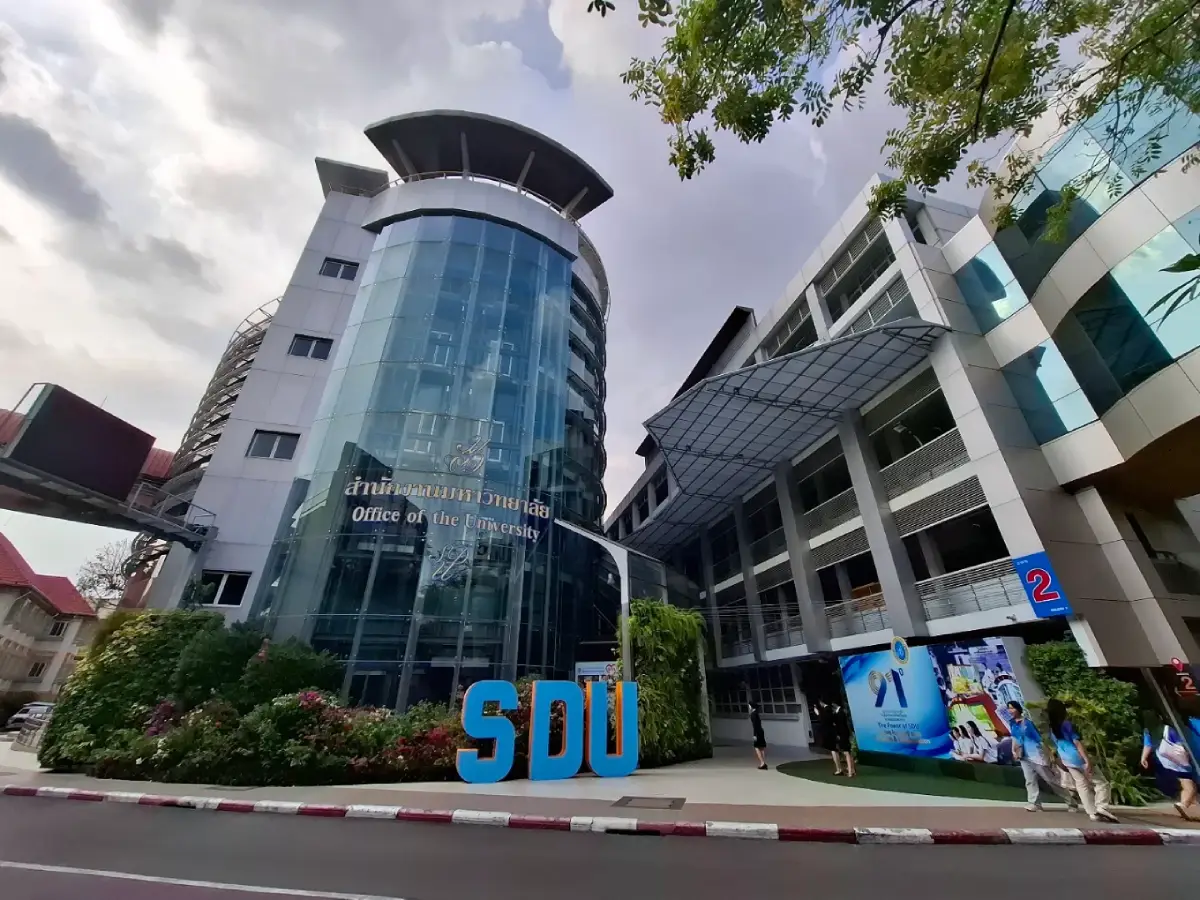
Suan Dusit University
Open Days: Monday–Friday (Except Public Holidays)
Opening Hours: 08:30–16:30 (Administrative and Registration Office Hours; Not General Public Access Hours for All Campus Buildings)
Suan Dusit Rajabhat University is the former name of Suan Dusit University (SDU), a public university with more than 92 years of educational history. Its main campus is located at 295 Nakhon Ratchasima Road, Dusit, Bangkok 10300, Thailand. The institution originated as the Special Secondary School of Home Economics, established on May 17, 1934, during a period when Thailand was developing vocational education and teacher training. It subsequently evolved into Phra Nakhon Home Economics School, Suan Dusit Teachers College, Suan Dusit Rajabhat Institute, and Suan Dusit Rajabhat University. On July 18, 2015, the institution became an autonomous public university under the Suan Dusit University Act B.E. 2558 (2015) and adopted its present name, Suan Dusit University. Today, the university is particularly distinguished by its expertise in culinary arts and food, early childhood education, hospitality and service industries, nursing and well-being, and law and politics. Its academic activities extend across multiple disciplines and educational locations throughout Thailand. The institution is also widely recognized for La-or Utis Demonstration School, Suan Dusit Poll, Suan Dusit Home Bakery, and an educational philosophy that connects academic knowledge with practical experience.
The main campus occupies a historically significant part of Bangkok's Dusit district, an area associated with the development of Dusit Palace, government institutions, educational establishments, and urban communities since the reign of King Chulalongkorn. Its surroundings include public buildings, religious landmarks, historical sites, and established neighborhoods where local commerce and everyday life continue to thrive. This central location places the university in close contact with Bangkok's social and cultural environment while providing opportunities to connect education with schools, food businesses, hospitality organizations, and health-related institutions.
Suan Dusit University's distinctiveness is not simply the result of expanding its faculties and degree programs. Its identity is deeply rooted in the specialist knowledge accumulated since the establishment of its original home economics school. Culinary arts, nutrition, handicrafts, household management, and teacher preparation formed the earliest foundations of the institution. Skills that were once associated primarily with domestic life were gradually transformed into structured academic disciplines with formal curricula, practical training, and educational assessment. This knowledge was subsequently developed into university-level expertise relevant to modern industries and professional occupations.
The institution emerged during a period when Thailand increasingly recognized the value of vocational education for women. Home economics education at that time included food preparation, sewing, handicrafts, household administration, and skills that could support both daily life and employment. Establishing a formal home economics school was therefore an important step toward developing structured professional education and creating occupational opportunities for women, particularly through teacher-training programs.
May 17, 1934, marks the beginning of the university's institutional history. Thailand's Ministry of Education, then known as the Ministry of Public Instruction, established the Special Secondary School of Home Economics under its vocational education administration. The school initially operated at the palace of Prince Chumphon Khet Udomsak in Bangkok, rather than on the university's present campus. Its principal purpose was to provide a four-year home economics education for women. It also introduced training for home economics teachers, preparing graduates to teach practical skills in other educational institutions.
The establishment of this school was an important development in Thai educational history because it introduced home economics as a formally organized field of study. Its purpose extended beyond preparing students for household responsibilities. Graduates could apply their skills in employment, education, and professional activities, while teacher-training programs enabled the knowledge to spread to schools and communities elsewhere in the country.
In 1937, the institution moved from Prince Chumphon's former palace to Chantharakasem Palace, an area later associated with the Ministry of Education. It was renamed Chantharakasem Home Economics School and continued developing its educational provision. Its programs included secondary-level home economics education and advanced home economics training, reflecting the increasing importance of structured instruction in specialist vocational subjects.
The change of name preserved the school's educational identity while acknowledging its new location. Expanded teaching arrangements enabled it to respond to the needs of its supervising authority and the students it served. The development of higher-level home economics training during this period helped establish the specialist academic traditions for which Suan Dusit would later become well known.
In 1941, the school moved from Chantharakasem Palace to an approximately 37-rai site in the Suan Sunandha area, the location that became the present Suan Dusit University campus. It adopted the name Phra Nakhon Home Economics School and transferred from the vocational education administration to the teacher-training division of the Department of General Education. This relocation established the geographical foundation of the modern university and connected its continuing educational history with Bangkok's Dusit district.
The Suan Sunandha and Dusit areas have significant historical associations with the royal palace district and urban development during the Rattanakosin period. The establishment of educational institutions within parts of this area illustrates the district's transformation into a center not only of royal and government administration but also of public learning. Suan Dusit University's history can therefore be considered alongside changes in Bangkok's urban planning, architectural development, and social institutions.
During the same period, the Ministry of Education established La-or Utis Kindergarten School on the same general site. Initially, the kindergarten and Phra Nakhon Home Economics School were administered separately. La-or Utis became an important institution in the development of early childhood education in Thailand and laid the foundation for Suan Dusit's later expertise in kindergarten teacher training, early childhood learning, and educational methods designed for young children.
Following the creation of the Department of Teacher Training under the Ministry of Education's administrative reforms in 1954, Phra Nakhon Home Economics School was transferred to that department in 1955. The kindergarten teacher-training section of La-or Utis was also transferred to the home economics school. These changes brought home economics teacher preparation and kindergarten teacher training into a closer institutional relationship, establishing an educational foundation that would influence Suan Dusit for decades.
In 1956, Phra Nakhon Home Economics School introduced Thailand's first Certificate in Education program specializing in home economics. It also offered courses preparing home economics teachers, kindergarten teachers, primary teachers, and secondary-level home economics teachers. This development strengthened the school's reputation for preparing specialist educators and broadened its contribution to the national teacher-training system.
The expansion of teacher-training programs continued until 1961, when the Ministry of Education elevated Phra Nakhon Home Economics School to Suan Dusit Teachers College under the Department of Teacher Training. The change from a school to a teachers college was a major institutional milestone. It allowed the institution to develop more advanced programs, expand its administrative structure, and strengthen its role in preparing teachers for Thailand's education system.
Following the Teachers College Act of 1975, Suan Dusit Teachers College reorganized its academic and administrative systems. The new framework allowed teachers colleges to provide bachelor's degree education in teaching-related disciplines and supported the development of academic divisions covering education, humanities and social sciences, and science. These reforms improved the formal academic structure of teacher education and established clearer pathways toward professional qualifications.
Another important development was the integration of kindergarten teacher preparation with La-or Utis Kindergarten into the early childhood education department of the Faculty of Education. The kindergarten developed into La-or Utis Demonstration Kindergarten. This arrangement enabled teacher-training students to connect educational theory with observations and practical experience involving young children, creating a model that contributed to the university's long-standing reputation in early childhood education.
Following amendments to the Teachers College legislation in 1984, teachers colleges were permitted to offer disciplines beyond teacher education. As a result, 1985 marked another major turning point. Suan Dusit Teachers College began offering associate-level programs in liberal arts and science, including journalism and public relations, English, communication design, food studies, clothing and textiles, and handicrafts. It also admitted male students for the first time, becoming a coeducational institution.
The introduction of coeducation and non-teaching academic programs transformed Suan Dusit's educational profile. More students could pursue different professional interests, and the college began evolving into a broader institution of higher education. Food and home economics remained important specializations, while languages, science, and communication developed in response to changing employment requirements and social expectations.
Between 1986 and 1991, Suan Dusit Teachers College continued expanding associate and bachelor's degree education through regular programs and special programs for employed personnel. These arrangements allowed working adults to improve their qualifications and professional expertise while continuing their careers. The expansion reflected Thailand's growing commitment to workforce development and anticipated the lifelong-learning principles that remain important to the university today.
In 1992, King Bhumibol Adulyadej (King Rama IX) bestowed the name Rajabhat Institute upon teachers colleges across Thailand. The Rajabhat Institute Act of 1995 subsequently transformed Suan Dusit Teachers College into Suan Dusit Rajabhat Institute. The new institutional status enabled the expansion of academic disciplines, research, community-oriented services, and regional educational cooperation. The institution increasingly developed the characteristics of a multidisciplinary university.
During the Rajabhat Institute period, Suan Dusit expanded educational opportunities beyond its main campus by establishing teaching centers and cooperating with external organizations. It also invested in information systems and distance-learning technologies. These initiatives enabled the university to serve students beyond Bangkok and encouraged new approaches to academic administration, learning resources, and access to higher education.
In 1997, the institution established its Graduate School and began offering master's degree education, including a business administration program developed through international academic cooperation. It also invested in distance-education infrastructure, videoconferencing systems, and virtual library services. At a time when such technologies were less widely used than today, these developments represented an important step in applying information technology to higher education.
The development of distance learning was especially significant for students who could not attend classes at the main campus. Videoconferencing and digital library resources enabled academic materials and teaching to reach different educational locations. The institution's early adoption of these approaches reflected its willingness to use technology to expand access and improve educational delivery.
On June 15, 2004, Suan Dusit Rajabhat Institute was elevated to Suan Dusit Rajabhat University under the Rajabhat University Act B.E. 2547 (2004). This change introduced a university-level administrative and academic framework while preserving the institution's established strengths in culinary education, early childhood teaching, and professional development. It also supported the expansion of programs in science, management, tourism, and hospitality.
The period between 2004 and 2015, when the institution officially operated as Suan Dusit Rajabhat University, was particularly important in shaping its public identity. The university became widely recognized through its specialized educational programs and service-oriented academic units, including Suan Dusit Poll and Suan Dusit Home Bakery. The former university name remains visible in historical documents, alumni records, and educational materials issued before the institutional transition of 2015.
The next major transformation occurred under the Suan Dusit University Act B.E. 2558 (2015), published in the Royal Thai Government Gazette on July 17, 2015, and effective from July 18, 2015. The legislation changed Suan Dusit Rajabhat University into an autonomous public university and established its present name, Suan Dusit University. Under the new legal structure, the university operates as a public institution with administrative arrangements defined by its own establishing legislation, rather than as an ordinary government department or state enterprise.
The Suan Dusit University Act received royal assent on July 16, 2015. The University Council subsequently designated July 16 as an important date commemorating the university's new institutional status. May 17, by contrast, remains significant as the original foundation date of the home economics school in 1934. Distinguishing these two dates helps explain the difference between the institution's historical origins and the legal establishment of the modern autonomous university.
The change to autonomous public university status created a more flexible framework for managing personnel, budgets, academic programs, and institutional affairs according to the law. The university's fundamental missions remained higher education, research, academic services, and cultural preservation. Its strategic development increasingly focused on strengthening specialist expertise and creating practical value from its established academic knowledge.
In 2026, Suan Dusit University marked 92 years since the establishment of the original home economics school on May 17, 1934, and 11 years since the transition to its current autonomous status in 2015. Assistant Professor Dr. Pitak Chancharoen served as University President in October 2026. The university continued implementing its SDU Goal 2025–2028 strategy, known as The Power of SDU, which emphasizes long-term institutional strength, sustainability, and quality management.
The university's current strategic direction identifies five areas of specialization: food, early childhood education, service industries, nursing and well-being, and law and politics. These strengths developed at different points in its history. Food and early childhood education originated from the institution's early home economics and teacher-training traditions, while other fields emerged through the expansion of higher education and the needs of contemporary society.
The Suan Dusit University Emblem consists of two overlapping oval forms. The outer oval is gold, symbolizing prosperity, and carries the university's name in Thai and English. The inner oval has a sea-blue background with a white monogram featuring either the Thai abbreviation “มสด” or the English initials “SDU.” The emblem represents unity within the university community and uses a contemporary visual identity reflecting the institution's modern educational role.
The university's official color is sea blue, a color retained through the institution's earlier identities as Phra Nakhon Home Economics School, Suan Dusit Teachers College, Suan Dusit Rajabhat Institute, and Suan Dusit Rajabhat University. Its official flowers are bougainvillea and cowslip creeper flowers, known in Thai as dok fueang fa and dok khachon. Both appear in the university's symbolic identity, representing the flourishing and widespread influence of knowledge and academic achievement.
The present academic structure of Suan Dusit University comprises five faculties, three specialized schools, and a Graduate School. The faculties are Education, Science and Technology, Management Science, Humanities and Social Sciences, and Nursing. The specialized schools are the School of Culinary Arts, the School of Tourism and Hospitality Management, and the School of Law and Politics. In this context, the term “school” refers to an academic unit within the university, comparable to a faculty, rather than a primary or secondary educational institution.
The School of Culinary Arts is perhaps the clearest expression of Suan Dusit's historical expertise. Its academic activities cover home economics, culinary technology, food product development, food-service business management, and nutrition. Teaching combines scientific knowledge with practical cooking skills, business management, and the presentation of food. Students are prepared to apply their knowledge in professional kitchens, food-related businesses, product development, and other areas of the culinary industry.
The university's culinary education has a particularly strong connection with Thai food culture and traditional home economics. Students learn not only to prepare dishes but also to select ingredients, maintain hygiene, control quality, develop recipes, calculate costs, and create commercially relevant products. This approach brings together Thai culinary heritage and modern food production and service standards, allowing traditional knowledge to contribute to contemporary business opportunities.
The School of Culinary Arts' 2026 academic programs include Home Economics, Food Service Business Management and Culinary Arts, Culinary Technology and Service, Technological Innovation for Food Entrepreneurs, and Nutrition and Culinary Arts for Physical Performance Enhancement and Anti-Aging. These programs reflect contemporary developments in the food industry, particularly the increasing importance of safety, nutrition, health, consumer experience, and innovative entrepreneurship.
The university's culinary knowledge is also demonstrated through Suan Dusit Home Bakery, a widely recognized university-associated bakery and food business. Its products and services illustrate how the institution's knowledge of cooking, baking, and food preparation can be developed beyond the classroom. The operation provides a practical example of connecting educational expertise with production, quality management, customer service, and commercial activity.
The Faculty of Education is another academic unit closely connected with the institution's origins. Its principal areas include early childhood education and primary education. Teacher preparation in these fields requires knowledge of child development, educational psychology, learning design, teaching resources, and the creation of environments that support children's well-being and intellectual growth. Suan Dusit places particular importance on combining academic theory with experience in actual educational settings.
A major strength of the Faculty of Education is its relationship with La-or Utis Demonstration School, which traces its origins to the kindergarten established in 1941. The demonstration school provides education for children and serves as a professional learning environment for teacher-training students. Observing children's development, planning activities, and applying educational methods in real classrooms help prepare future teachers for their professional responsibilities.
The Faculty of Education's 2026 undergraduate programs include Early Childhood Education and Primary Education. Related postgraduate programs address educational management in early childhood and primary education. Contemporary teacher preparation also involves understanding educational technology, inclusive learning environments, family engagement, and methods that respond to differences among children.
The School of Tourism and Hospitality Management supports the university's specialization in service industries. Its fields include Hotel Business, Aviation Business, Tourism and Tour Guiding, MICE and Event Management, Entrepreneurship in Tourism and Hospitality, and Wellness Business Management. These disciplines emphasize customer experience, professional service standards, organizational management, and intercultural understanding.
Tourism and hospitality are closely connected with the Thai economy. Students must develop professional communication, problem-solving abilities, cultural sensitivity, and practical knowledge of service operations. Digital booking systems and technology-driven customer services also play an important role in contemporary hotels, airlines, travel organizations, and event businesses.
The Faculty of Nursing prepares graduates for professional health-care roles. Its Bachelor of Nursing Science program combines health sciences with the theoretical and practical foundations of nursing. Students undertake clinical and community-based experience while developing competencies related to patient safety, professional ethics, responsibility, and collaboration with other health-care professionals.
Nursing education at Suan Dusit also connects with the university's wider emphasis on well-being and health care across different stages of life, particularly for children and older adults. Developing qualified nursing personnel contributes to public health, the quality of medical services, and the long-term capacity of Thailand's health-care system.
The Faculty of Science and Technology offers education in applied science and contemporary technology. Programs listed in the university's 2026 curriculum materials include Computer Science, Information Technology, Cosmetic Science, Occupational Health and Safety, Environmental Health and Disaster Management, Medical Science, Bioindustry for Business, Cybersecurity, and General Science Education. These disciplines develop competencies relevant to technology, industry, health, and scientific applications.
Cosmetic Science illustrates the connection between scientific knowledge and consumer product development. It involves the study of ingredients, formulations, and quality standards. Occupational Health and Safety focuses on preventing hazards in workplaces, while Environmental Health and Disaster Management addresses environmental risks and their effects on human well-being. These fields demonstrate how applied science can contribute directly to public health and industrial practices.
Computer Science and Cybersecurity are increasingly important as digital systems become essential to organizations and daily life. Their academic applications include software development, data systems, and information security. Such expertise supports online services, business administration, and the development of Thailand's digital economy.
The Faculty of Management Science prepares students for professional roles in business, accounting, communication, and entrepreneurship. Its academic offerings include Creative Business and Digital Technology, International Business, Digital Communication and Content Creation, Marketing and Personal Branding, Medical Secretarial Studies, and Creative Dance and Performance for the Entertainment Business. This diversity reflects the university's engagement with both traditional business disciplines and emerging creative industries.
Communication and content creation have become closely associated with the digital transformation of media. Students require skills in message design, audience analysis, content production, and responsible communication. International Business develops an understanding of commercial systems and intercultural relationships, while Accounting and Business Administration provide essential foundations for planning, financial management, and organizational performance.
The Faculty of Humanities and Social Sciences contributes expertise in languages, psychology, culture, and creative disciplines. Its 2026 curriculum materials include Language and Communication, English for Communication, Industrial and Organizational Psychology, Chinese for Communication, Thai Language and Culture, Creative Art Design with Artificial Intelligence, and English and Korean for Cross-Cultural Communication. These programs connect the humanities and social sciences with contemporary professional requirements.
Language education supports employment in organizations operating across linguistic and cultural boundaries. Industrial and Organizational Psychology helps explain human behavior in workplaces, employee development, and organizational relationships. The inclusion of artificial intelligence in creative design also reflects the university's efforts to engage with new technologies and changing forms of artistic production.
The School of Law and Politics focuses on legal studies, political science, public administration, and related aspects of governance. Its undergraduate academic fields include Law, Political Science, and Public Administration. These disciplines help students understand legal institutions, political systems, public policies, and the relationship between government and society.
Law and political studies require knowledge extending across several disciplines. Understanding public problems and government administration involves legal interpretation, public policy, organizational management, and communication with communities. Suan Dusit's approach to these fields is consistent with its wider emphasis on integrating academic knowledge with practical applications.
The Graduate School supports advanced education and research across specialist academic fields. The university's 2026 postgraduate curriculum manual lists programs related to Educational Leadership, Administrative Law and Public Administration, Early Childhood and Primary Education Management, and Culinary Technology and Service. It also includes a Graduate Diploma program in Sign Language Interpreting. These advanced qualifications support professional specialization, research, and the development of expertise relevant to education, public service, and other sectors.
Suan Dusit University's educational activities extend beyond Bangkok. Its regional locations include Suphan Buri Campus and educational centers in Lampang, Nakhon Nayok, Hua Hin, and Trang. These facilities help expand access to higher education and enable the university to develop academic cooperation with communities and organizations outside the capital. Programs may vary by location according to regional needs and university admissions arrangements.
Suan Dusit Poll is among the university's best-known public-facing organizations. It conducts opinion surveys addressing economic, social, educational, and other issues of public interest. Such surveys provide information about public attitudes and social trends, subject to the sampling methods, questions, and research scope applied in each study.
Suan Dusit Poll also demonstrates the university's contribution beyond conventional teaching. Opinion research requires survey design, data collection, sampling, statistical analysis, and careful communication of findings. Its activities illustrate how academic expertise can be used to examine issues affecting wider society and contribute to informed public discussion.
One World Library is an important part of the university's modern learning environment. The initiative promotes access to knowledge through different physical spaces and digital technologies, encouraging students to learn both inside and outside traditional classrooms. Learning areas, information resources, and technology-supported services help facilitate independent study, collaboration, and blended learning.
Another important campus facility is Raktakanishta Hall, known in Thai as Akhan Raktakanit. The building supports academic meetings, student events, and ceremonies such as Wai Khru. It represents the development of university facilities that accommodate both educational activities and gatherings of the wider university community.
Cultural preservation at Suan Dusit is closely connected with traditional Thai culinary knowledge, home economics, handicrafts, and service practices. Many of these subjects represent forms of practical cultural heritage that have been developed through formal education. Their continued application in professional training, food product development, and entrepreneurship helps connect historical knowledge with contemporary economic activities.
The Wai Khru Ceremony is one of the university's important educational traditions. It expresses students' gratitude and respect toward teachers and reinforces the cultural values associated with learning. On August 27, 2026, the School of Tourism and Hospitality Management held its annual Wai Khru ceremony on the second floor of Raktakanishta Hall. Activities included the presentation of ceremonial offerings, Bai Sri rituals, teacher-honoring trays, a symbolic blessing of textbooks, and wrist-tying ceremonies welcoming students. The event also recognized distinguished alumni and student achievements.
These ceremonies illustrate the continuing relationship between Thai traditions and modern higher education. In addition to expressing respect for teachers, they encourage creativity through the preparation of ceremonial floral arrangements and promote cooperation among students. Recognition of academic achievement and alumni contributions also reinforces connections across generations within the university community.
During the same academic year, the Faculty of Science and Technology organized a Wai Khru ceremony that included alumni recognition and the presentation of an atom emblem, a symbol associated with the faculty. The activity combined traditional expressions of gratitude with the professional identity of students studying science and technology.
Research and innovation form another important component of Suan Dusit University's academic mission. The Research and Development Institute supports the creation of knowledge and its application to professional and social needs. Fields such as food science, early childhood education, health, and service industries are directly connected to people's quality of life, while management, science, and technology contribute to organizational development and improved services.
The university's relationship between education and business activities is particularly distinctive. Its training environments and university-operated services provide opportunities for students to observe and understand professional practice. Activities such as food production, quality control, business operations, and customer service help demonstrate how theoretical knowledge can be transformed into professional competence and responsibility.
The university also engages with communities and businesses through academic services and the application of specialist knowledge. Food science and product development can support better products and business value, while early childhood education contributes to the development of qualified teachers. Nursing and well-being are associated with public health and quality of life. These fields demonstrate how university knowledge can serve society beyond the boundaries of the campus.
From an educational heritage perspective, Suan Dusit University offers an interesting example of the development of women's vocational education, teacher training, and culinary education in Thailand. Those interested in the history of early childhood education or the professionalization of food-related occupations can study the institution's development across more than nine decades. Selected university activities and facilities may also provide opportunities for educational visits, depending on the arrangements announced by the responsible units.
The university is, however, an active educational institution rather than an unrestricted tourist attraction. Visitors should not assume that classrooms, laboratories, administrative offices, or the demonstration school are generally open for public sightseeing. Study tours, specialist visits, and educational activities should be arranged with the university in advance, particularly where safety, teaching activities, and the privacy of children are involved.
Getting There: Suan Dusit University's main campus is located at 295 Nakhon Ratchasima Road, Dusit, Bangkok 10300, Thailand. Visitors may travel by private car, taxi, public bus, or public transportation connecting to the Dusit district. Passengers using the BTS Skytrain or MRT system can select a convenient station according to their starting location and continue by local bus or taxi. Drivers should consider traffic conditions and confirm parking arrangements before traveling because the surrounding district contains government buildings, schools, and busy urban roads.
Visitors should be aware that Suan Dusit University and Suan Sunandha Rajabhat University are two separate institutions. Although both are located in Bangkok's Dusit district and their histories have geographical connections with the former Suan Sunandha area, they have different administrations, campuses, and academic identities. Suan Dusit University is located on Nakhon Ratchasima Road, while Suan Sunandha Rajabhat University is located on U Thong Nok Road. Confirming the institution's full name and address helps prevent confusion when arranging transportation.
Several important historical and educational attractions are located in the surrounding Dusit district, including Wat Benchamabophit, the Equestrian Statue of King Chulalongkorn, Ananta Samakhom Throne Hall, the National Library of Thailand, Thewet Market, and Wat Thewarat Kunchorn. Together, these sites illustrate the area's architectural, religious, political, and cultural significance. Access to certain historic buildings may be restricted, so visitors should check entry arrangements separately before planning their visits.
Prospective students can obtain admissions information through Suan Dusit University's official recruitment and registration services. In 2026, the university published academic curriculum manuals for the 2026 academic year, covering its faculties, specialized schools, and postgraduate programs. These manuals provide information about program structures, entry qualifications, academic requirements, and potential professional careers. Admission rounds and the availability of individual programs may vary, so applicants should verify the current recruitment announcement for their chosen course and educational location.
Suan Dusit Rajabhat University and today's Suan Dusit University are therefore the same historical institution, although its name and legal status have changed during more than nine decades of educational development. From a home economics school established for women in 1934, Suan Dusit became an important teacher-training institution and subsequently a multidisciplinary university with specialist expertise in food, early childhood education, hospitality, health, law, management, and technology. Its significance lies in both its contribution to Thai educational history and its continuing efforts to prepare professionals whose knowledge and skills can benefit society.
| Former University Name | Suan Dusit Rajabhat University |
| Current University Name | Suan Dusit University (SDU) |
| Thai Name | มหาวิทยาลัยสวนดุสิต |
| Former Thai Name | มหาวิทยาลัยราชภัฏสวนดุสิต |
| University Type | Autonomous Public University |
| Location | Dusit, Bangkok, Thailand |
| Address | 295 Nakhon Ratchasima Road, Dusit, Bangkok 10300, Thailand |
| Main Campus Area | 37 Rai, 1 Ngan, and 10 Square Wa |
| Original Foundation Date | May 17, 1934 |
| Institutional Age in 2026 | 92 Years |
| Rajabhat University Establishment | June 15, 2004 |
| Current University Status Effective | July 18, 2015 |
| Current Establishing Legislation | Suan Dusit University Act B.E. 2558 (2015) |
| University President, October 2026 | Assistant Professor Dr. Pitak Chancharoen |
| Historical Institution Names | 1. Special Secondary School of Home Economics (1934) 2. Chantharakasem Home Economics School (1937) 3. Phra Nakhon Home Economics School (1941) 4. Suan Dusit Teachers College (1961) 5. Suan Dusit Rajabhat Institute (1995) 6. Suan Dusit Rajabhat University (2004) 7. Suan Dusit University (2015) |
| University Color | Sea Blue |
| University Flowers | Bougainvillea and Cowslip Creeper Flowers |
| Faculties | 1. Faculty of Education 2. Faculty of Science and Technology 3. Faculty of Management Science 4. Faculty of Humanities and Social Sciences 5. Faculty of Nursing |
| Specialized Schools | 1. School of Culinary Arts 2. School of Tourism and Hospitality Management 3. School of Law and Politics |
| Graduate Education | Graduate School |
| Academic Strengths | Food and Home Economics, Early Childhood Education, Hospitality, Tourism, Nursing and Well-Being, Law and Politics, Science, and Technology |
| Important Campus Facilities | 1. La-or Utis Demonstration School 2. Raktakanishta Hall 3. Office of Academic Resources and Information Technology 4. One World Library 5. Suan Dusit Poll 6. Suan Dusit Home Bakery 7. Cultural Learning Facilities 8. University Administration Building |
| Regional Educational Locations | 1. Suphan Buri Campus 2. Lampang Education Center 3. Nakhon Nayok Education Center 4. Hua Hin Education Center 5. Trang Education Center |
| Traditions and Events | Wai Khru Ceremonies, Student Welcoming Rituals, Teacher-Honoring Tray Competitions, Alumni Recognition, Cultural Activities, and Student Development Programs |
| Administrative Open Days | Monday–Friday, Except Public Holidays |
| Administrative and Registration Office Hours | 08:30–16:30 |
| One World Library Service Hours | Monday–Friday 07:30–19:00 and Saturday 08:30–16:30, According to Published Library Information |
| Campus Visits | Educational Tours and Visits to Academic Facilities Should Be Arranged with the Relevant University Unit. Access to Demonstration Schools and Teaching Laboratories Is Subject to University Regulations |
| Getting There | Private Car, Taxi, Public Bus, or BTS/MRT with Connecting Public Transportation to Nakhon Ratchasima Road, Dusit |
| Nearby Attractions | 1. Wat Benchamabophit Dusitwanaram 2. Equestrian Statue of King Chulalongkorn 3. Ananta Samakhom Throne Hall (Exterior Viewing Subject to Access Restrictions) 4. National Library of Thailand 5. Thewet Market 6. Wat Thewarat Kunchorn Worawihan |
| Nearby Restaurants and Cafes | 1. Suan Dusit Home Bakery, Nakhon Ratchasima Road, Tel. +66 2 244 5458 2. Steve Cafe & Cuisine, Thewet Area, Tel. +66 2 281 0915 3. Milin, Phichai Road, Tel. +66 61 969 9838 4. CHEZ MILINE, Sukhothai Road, Tel. +66 90 235 6424 5. CUT Raw & Grilled, Sukhothai Road, Tel. +66 99 391 6978 |
| Nearby Accommodation | 1. Suan Dusit Place Hotel, Nakhon Ratchasima Road, Tel. +66 2 241 7571 2. SSIP Boutique Dhevej Bangkok, Phitsanulok Road, Tel. +66 95 514 5151 3. Baan Tepa Boutique House, Si Ayutthaya Road, Tel. +66 86 868 0685 4. Suan Sunandha Palace Hotel, U Thong Nok Road, Tel. +66 2 243 0574 5. The Siam Hotel, Khao Road Area, Tel. +66 2 206 6999 |
| University Telephone | +66 2 244 5000 |
| SDU Service Center | +66 2 244 5555 |
| Registration Office Telephone | +66 2 244 5172–5175 |
| Contact Email | saraban@dusit.ac.th |
| Official Website | https://www.dusit.ac.th/ |
| Registration Website | https://regis.dusit.ac.th/ |
| Admissions Website | https://entrance.dusit.ac.th/ |
| Current Status | Operating as Suan Dusit University, an Autonomous Public University with Active Academic Programs and University Activities in 2026 |
Academic Programs and Fields of Study at Suan Dusit University — Academic Year 2026
| Faculty / School / Degree Level | Programs and Fields Listed in the 2026 Curriculum Manuals |
| Faculty of Education | Bachelor's Degree Programs 1. Bachelor of Education in Early Childhood Education 2. Bachelor of Education in Primary Education |
| Faculty of Science and Technology | Bachelor's Degree Programs 1. Bachelor of Science in Computer Science 2. Bachelor of Science in Cosmetic Science 3. Bachelor of Science in Occupational Health and Safety 4. Bachelor of Science in Environmental Health and Disaster Management 5. Bachelor of Science in Medical Science 6. Bachelor of Science in Bioindustry for Business 7. Bachelor of Science in Cybersecurity 8. Bachelor of Technology in Information Technology 9. Bachelor of Education in General Science |
| Faculty of Management Science | Bachelor's Degree Programs and Fields 1. Bachelor of Accountancy 2. Bachelor of Management 3. Bachelor of Communication Arts in Innovative Communication and Business Entrepreneurship 4. Bachelor of Communication Arts in Digital Communication and Content Creation 5. Bachelor of Business Administration in Creative Business and Digital Technology 6. Bachelor of Business Administration in International Business (China–ASEAN Business) 7. Bachelor of Business Administration in Medical Secretarial Studies 8. Bachelor of Business Administration in Business Administration 9. Bachelor of Business Administration in Marketing and Personal Branding 10. Bachelor of Arts in Creative Dance and Performance for Entertainment Business |
| Faculty of Humanities and Social Sciences | Bachelor's Degree Programs and Fields 1. Bachelor of Arts in Language and Communication 2. Bachelor of Arts in English for Communication 3. Bachelor of Arts in Industrial and Organizational Psychology 4. Bachelor of Arts in Chinese for Communication 5. Bachelor of Arts in Thai Language and Culture 6. Bachelor of Arts in Creative Art Design with Artificial Intelligence 7. Bachelor of Arts in English and Korean for Cross-Cultural Communication |
| Faculty of Nursing | Bachelor's Degree Program 1. Bachelor of Nursing Science |
| School of Culinary Arts | Bachelor's Degree Programs 1. Bachelor of Arts in Home Economics 2. Bachelor of Arts in Food Service Business Management and Culinary Arts 3. Bachelor of Science in Culinary Technology and Service 4. Bachelor of Science in Technological Innovation for Food Entrepreneurs 5. Bachelor of Science in Nutrition and Culinary Arts for Physical Performance Enhancement and Anti-Aging |
| School of Tourism and Hospitality Management | Bachelor's Degree Programs 1. Bachelor of Arts in Hotel Business 2. Bachelor of Arts in Tourism and Hospitality Entrepreneurship 3. Bachelor of Arts in Tourism and Tour Guiding 4. Bachelor of Arts in Aviation Business 5. Bachelor of Arts in MICE and Event Management 6. Bachelor of Arts in Wellness Business Management (English-Language Program) |
| School of Law and Politics | Bachelor's Degree Programs 1. Bachelor of Laws 2. Bachelor of Political Science 3. Bachelor of Public Administration |
| Postgraduate Programs | Graduate Diploma 1. Graduate Diploma in Sign Language Interpreting Master's Degree Programs 2. Master of Education in Early Childhood and Primary Education Management 3. Master of Arts in Administrative Law and Public Administration 4. Master of Science in Culinary Technology and Service Doctoral Degree Program 5. Doctor of Education in Educational Leadership |
| Program and Admission Information | The programs and fields above are drawn from the university's published curriculum manuals for the 2026 academic year. Some fields are specializations within a single degree program, and inclusion in a curriculum manual does not mean that every field is accepting new applicants in every admission round or is taught at the Bangkok campus. Applicants should verify the current intake, study location, and program requirements through the university's official admissions system. English program titles are descriptive translations unless separately confirmed as official titles. |
Frequently Asked Questions (FAQ)
Q: What is the current name of Suan Dusit Rajabhat University?
A: The institution is now called Suan Dusit University (SDU). It adopted its current name and became an autonomous public university on July 18, 2015, under the Suan Dusit University Act B.E. 2558.
Q: Where is Suan Dusit University located?
A: The main campus is at 295 Nakhon Ratchasima Road, Dusit, Bangkok 10300, Thailand. The university also operates Suphan Buri Campus and regional education centers in several provinces.
Q: When was Suan Dusit University founded?
A: Its historical origins date to May 17, 1934, when the Special Secondary School of Home Economics was established. It became Suan Dusit Rajabhat University on June 15, 2004, and Suan Dusit University on July 18, 2015.
Q: What are Suan Dusit University's opening days and office hours?
A: Administrative and registration offices are open Monday to Friday, 08:30–16:30, excluding public holidays. One World Library follows a separate published service schedule.
Q: What is Suan Dusit University best known for?
A: The university is particularly recognized for culinary arts and home economics, early childhood education, hospitality, nursing and well-being, and law and politics. It is also known for La-or Utis Demonstration School, Suan Dusit Poll, and Suan Dusit Home Bakery.
Q: What faculties and academic schools does Suan Dusit University have?
A: The university has five faculties: Education, Science and Technology, Management Science, Humanities and Social Sciences, and Nursing. It also has three specialized schools: Culinary Arts, Tourism and Hospitality Management, and Law and Politics, together with a Graduate School.
Q: Are Suan Dusit University and Suan Sunandha Rajabhat University the same institution?
A: No. Suan Dusit University is located on Nakhon Ratchasima Road, while Suan Sunandha Rajabhat University is located on U Thong Nok Road. They are separate universities, although both are situated in Bangkok's Dusit district and have historical geographical connections to the Suan Sunandha area.
Q: Can members of the public visit Suan Dusit University?
A: Visitors may contact university offices and participate in public events according to the relevant arrangements. Study tours and visits to teaching facilities, laboratories, or the demonstration school should be arranged in advance. For general inquiries, call +66 2 244 5555.
 Category: ●University
 Group: ●Rajabhat University
Last Update : 1 WeekAgo
 Last Update : 1 WeekAgo
 Click to Access the Navigation Map GPS
Suan Dusit University Map
Recommend

 Art, Culture and Heritage
 Historical Sites and Monuments(3)
 Landmarks and Memorials(23)
 Royal Palace(13)
 Art, Craft Centres, Tradition(35)
 Museums(59)
 Historic Homes and Cities(3)
 Art Gallery(16)
 Educational Places
 Museum for Study(6)
 Library(4)
 Public university(8)
 Autonomous Universities(8)
 Rajamangala University of Technology(6)
Rajabhat University(6)
 Private University(22)
 Places of Worship
 Temple(72)
 Church(2)
 Mosque(67)
 Other Sacred Sites(8)
 Research and Development
 Royal Project(1)
 Suburban Living
 Village, Community(5)
 Local Market(9)
 Floating Market(2)
 Nature and Wildlife
 River, Canal(3)
 Bays and Beaches(1)
 Other natural attractions(1)
 Entertainment and Agricultural
 Zoos and Aquariums(5)
 Animal camps and shows(5)
 Stadium(9)
 Farms, Parks and Ecotourism(20)
 Amusement Park(1)
 Waterpark(4)
 Theater(7)
 Cinema(1)
 Shopping
 Shopping and Night Market(20)
 Department Store(7)
 Spas and Wellness
 Spas and Wellness(1)
 Restaurant
 Michelin Star(5)
 Accommodation
 Hotel(3)
 Call Customer Service in Tourism
 Call Customer Service in Tourism(1)
 Travel Articles, Recipes
 Travel Review, Food Review(43)
 Royal Thai Desserts and Recipes(56)


