
lovethailand home >Central Travel Attractions >Bangkok Travel Attractions >Bang Khen >Anusawari > Phranakhon Rajabhat University
TL;DR: Phranakhon Rajabhat University is located at Anusawari, Bang Khen, Bangkok, Thailand, open Monday – Friday (Registration Office, Regular Working Days), hours 08:30 – 12:00 and 13:00 – 16:30.
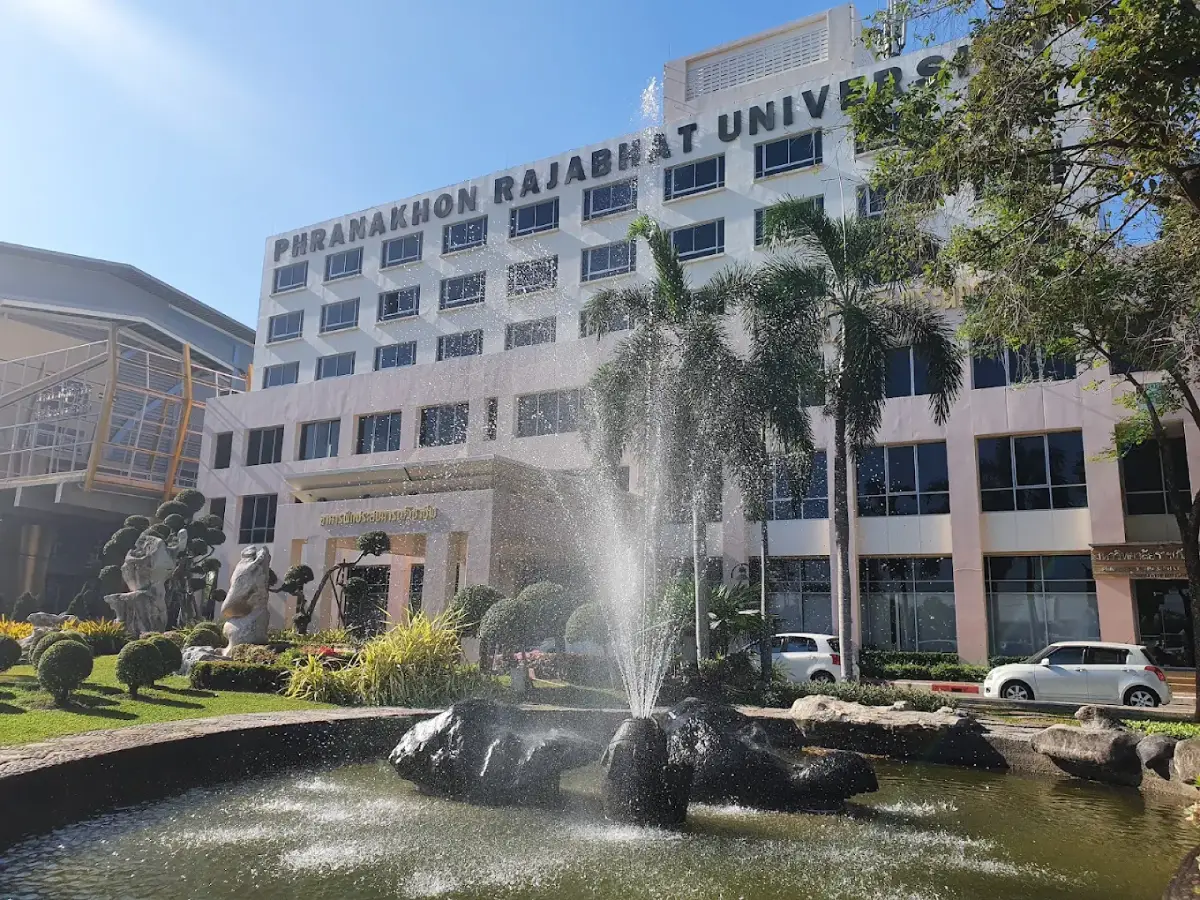
Phranakhon Rajabhat University
Open Days: Monday – Friday (Registration Office, Regular Working Days)
Opening Hours: 08:30 – 12:00 and 13:00 – 16:30
Phranakhon Rajabhat University (PNRU), known in Thai as Mahawitthayalai Rajabhat Phranakhon, is a public university located at 9 Chaeng Watthana Road, Anusawari Subdistrict, Bang Khen District, Bangkok 10220, Thailand. The university holds a significant place in Thai educational history as the country's first teacher-training institution. Its origins date to October 12, 1892, when the Teacher Training School was established during the reign of King Chulalongkorn (Rama V). After developing through several stages as a teacher-training school, Phranakhon Teachers College, and Phranakhon Rajabhat Institute, it officially became Phranakhon Rajabhat University on June 15, 2004. In 2026, the institution celebrated 134 years since its historical foundation. Today, its academic programs cover teacher education, humanities, social sciences, business, science, technology, applied Thai traditional medicine, and industrial technology, alongside research, community development, and cultural preservation.
What makes Phranakhon Rajabhat University particularly important is its place at the beginning of formal teacher education in Thailand. Its history began decades before the country's political transformation in 1932, during a period when modern schools were expanding and the state required properly trained teachers. The institution has consequently witnessed major changes in educational policy, teacher qualifications, academic degrees, and university administration. Although its name and responsibilities have evolved, the preparation of educators remains central to its institutional identity.
The university's present location is on Chaeng Watthana Road in northern Bangkok, close to Wat Phra Si Mahathat Woramahawihan, the Lak Si Monument area, and major transport interchanges. The surrounding neighborhoods contain residential communities, government offices, businesses, schools, and shopping facilities. This metropolitan setting enables the university to connect academic education with the economic and social development of Bang Khen, Lak Si, and neighboring districts.
Within the university grounds, teaching buildings, academic offices, cultural facilities, sports areas, and green spaces support students and staff. The campus accommodates formal instruction, professional practice, research activities, university ceremonies, and public engagement. Its combined teaching and cultural center is especially important for events associated with the institution's long teacher-training history.
The history of Phranakhon Rajabhat University begins with King Chulalongkorn's educational reforms in the late nineteenth century. As the Thai government modernized its administration and expanded formal schooling, it became necessary to establish a system for preparing teachers. Building new schools alone could not meet the country's educational needs without instructors trained to teach within a modern curriculum. A dedicated institution for teacher preparation was therefore established.
On October 12, 1892, the Teacher Training School, known in Thai as Rongrian Fuekhat Achan, was established at the former children's welfare facility in the Suan Mali area of Bamrung Mueang Road, Bangkok. It operated under the Department of Education within the Ministry of Public Instruction. The school is recognized by the university as Thailand's first teacher-training institution and was created to prepare qualified teachers for the country's expanding education system.
The school's first headmaster was Mr. Greenrod, an English educator. In its inaugural year, the institution had just three students: Nokyung Wisetkun, later known as Phraya Surintharacha; Bunrod Srethabut, later known as Phraya Bhirombhakdi; and a student named Sum. The small initial enrollment illustrates how limited formal teacher training was at the time, even though the institution would eventually become an important foundation of Thailand's educational development.
The establishment of the school helped introduce a more systematic approach to preparing teachers. Students were expected not only to acquire general knowledge but also to develop the ability to communicate that knowledge to others. This idea gradually contributed to the development of teacher qualifications, professional standards, and methods of instruction as schools expanded beyond Bangkok into provincial communities.
In its early decades, the teacher-training institution underwent changes in its location and academic arrangements as government educational policies developed. It maintained relationships with secondary schools in Bangkok, including institutions associated with Debsirin School, while training arrangements and qualifications were adjusted to meet the demand for elementary and secondary teachers.
On May 15, 1918, the institution adopted the name Teacher Training School, or Rongrian Fuekhat Khru, and offered a two-year elementary teacher-training certificate. Students entered according to the qualifications established by the education authorities. Secondary teacher preparation was organized in conjunction with other educational institutions, including Suankularb Wittayalai School, Debsirin School, and Wat Pathum Khongkha School.
These arrangements reflected the growing complexity of Thai education. Different school levels required teachers with appropriate subject knowledge and teaching preparation. By coordinating training across institutions, the education authorities could expand the supply of teachers while developing more specialized qualifications.
In 1934, the school was renamed Phranakhon Elementary Teacher Training School. Its title reflected a stronger emphasis on preparing primary-school teachers. This change occurred during a period when Thailand was restructuring public institutions and extending educational opportunities after the political transition of 1932. Teacher preparation continued to be an essential part of improving access to schooling.
In 1947, the institution became Phranakhon Teacher Training School. Its elementary teacher certificate program extended over three years, and the name Phranakhon became a permanent feature of the institution's identity. Phranakhon was historically associated with Bangkok and the former province of that name, linking the educational institution with its geographical origins.
A major milestone occurred on June 1, 1956, when Phranakhon Teacher Training School relocated from Chandrakasem Palace to its present area on Chaeng Watthana Road, behind Wat Phra Si Mahathat in Bang Khen. At that time, the area belonged to Phranakhon Province. The move established the geographical foundation of the modern university and allowed additional educational facilities to be developed.
Relocation was particularly important because teacher education required teaching rooms, practical facilities, and sufficient grounds for a growing student population. As academic programs became more advanced, the institution needed space for new buildings and specialized subjects. The Bang Khen location therefore represented a long-term investment in educational expansion.
On May 1, 1966, the Ministry of Education upgraded the institution to Phranakhon Teachers College. This change allowed it to provide advanced certificates in education and extend its teaching to industrial arts. Students could study vocational subjects related to automotive mechanics, electricity, metalworking, construction, and pottery. Additional subject specializations were introduced in subsequent years.
The expansion into industrial arts illustrated the increasing diversity of teaching requirements in Thai schools. The country needed teachers capable of delivering general academic subjects as well as practical and technical education. By responding to these needs, Phranakhon Teachers College broadened its academic expertise and prepared students for a wider range of educational responsibilities.
In 1974, Phranakhon Teachers College cooperated with the College of Education in Phranakhon to provide higher-level teacher education using the latter institution's curriculum. Qualified holders of advanced education certificates or associate-level qualifications could continue their studies toward a bachelor's-level education qualification. This arrangement helped strengthen the professional and academic preparation of teachers.
The Teachers College Act of 1975 provided the legal foundation for bachelor's degree education at the college. In 1980, Phranakhon Teachers College admitted its first students to a four-year Bachelor of Education program. This represented an important transition from certificate-based training to more comprehensive university-level teacher preparation.
Following amendments to the Teachers College Act in 1984, the institution gained the authority to provide education in academic fields beyond the teaching profession. Its range of study expanded to include education, science, and liberal arts. This was a decisive stage in the institution's evolution toward multidisciplinary higher education.
On February 14, 1992, King Bhumibol Adulyadej bestowed the name “Rajabhat” upon Thailand's teachers colleges. On January 25, 1995, Phranakhon Teachers College became Phranakhon Rajabhat Institute under the Rajabhat Institute Act of 1995. The institution's responsibilities expanded in higher education, research, academic services, and the preservation of Thai arts and culture.
On June 15, 2004, the institute officially acquired university status under the Rajabhat University Act of 2004 and became Phranakhon Rajabhat University. As a public university with legal-entity status, it could continue developing undergraduate and postgraduate education while strengthening its broader responsibilities toward local communities and Thai society.
On October 12, 2026, Phranakhon Rajabhat University reached the 134th anniversary of the establishment of its original teacher-training school in 1892. June 15, 2026, separately marked 22 years since the institution attained university status. These two dates represent different historical milestones. The university's educational heritage began more than a century before it adopted its present official title.
King Chulalongkorn's role in the institution's foundation is central to understanding the university's significance. The establishment of the Teacher Training School was part of his wider program of educational and administrative reform. Teacher training was essential to the creation of a modern national school system, and the monarch's support helped establish the foundations of professional teacher education in Thailand.
Mr. Greenrod, the first headmaster, was another important figure during the school's earliest years. The first three students, including Nokyung Wisetkun and Bunrod Srethabut, also occupy a place in its history. Their names illustrate the small beginnings of formal teacher education and the subsequent contributions made by individuals who participated in its earliest period.
The origin of the university's name reflects its educational and geographical history. The name Phranakhon became associated with the school during the twentieth century and referred to the historic capital area and former Phranakhon Province. The term Rajabhat originates from the royal name granted to Thailand's teachers colleges in 1992. The modern university name therefore combines the institution's original geographical identity with its teacher-training heritage.
University symbols and institutional identity are linked to the Rajabhat tradition and the history of teacher preparation. The university emblem incorporates the royal seal granted for Rajabhat institutions during the reign of King Bhumibol Adulyadej. Its principal symbolic elements include a sacred stupa, a wheel, radiating rays, and a multi-tiered royal umbrella, reflecting the institution's historical relationship with the monarchy.
The university's traditional color is dark green, while its symbolic flower is the Indian Cork Tree flower, known in Thai as Dok Peep or Kasalong. Its scientific name is Millingtonia hortensis. The tree produces clusters of delicate, fragrant white flowers with a trumpet-like shape. The flower provides a recognizable natural symbol for members of the university community.
The university's motto can be translated as “Wisdom Is Humanity's Precious Jewel.” Its institutional identity also emphasizes that teacher training is the foundation of the university. These principles reflect the enduring importance of knowledge, education, and professional responsibility in an institution whose origins lie in the formal preparation of teachers.
University leadership in 2026 is headed by Associate Professor Dr. Prueang Kitratporn, the Rector of Phranakhon Rajabhat University. The university's academic mission includes undergraduate and graduate education, curriculum development, research, lifelong learning, community services, and partnerships with public agencies, private organizations, and local communities.
University traditions and cultural activities are closely associated with the institution's role as Thailand's first teacher-training school. October 12 is particularly important because it marks the foundation of the original school in 1892. Anniversary activities bring attention to the development of the teaching profession and provide opportunities for university administrators, academics, staff, students, and graduates to commemorate the institution's history.
In October 2026, the university organized activities commemorating 134 years of Thai teacher education. Important ceremonies were held at the Combined Teaching and Cultural Centre, also known as the Buddhavichalai Building. The events included expressions of respect for the monarchy and activities involving representatives of the Rajabhat university network. These commemorations demonstrate that the school's founding in 1892 continues to hold significance in the culture of the modern university.
February 14 is another important date for Rajabhat universities nationwide because it commemorates the royal granting of the name Rajabhat in 1992. Remembering this occasion connects the history of Thailand's teachers colleges with the wider development of the Rajabhat university system.
Respect for teachers and the teaching profession remains particularly meaningful at Phranakhon Rajabhat University. Traditions associated with the relationship between teachers and students express the value of knowledge, educational responsibility, and the transmission of learning between generations. Student orientation, academic development, professional activities, and community projects also contribute to the wider educational experience.
The university supports cultural education through activities related to Thai history, religion, arts, and local wisdom. Such programs connect academic knowledge with cultural preservation and encourage students to recognize the social value of the communities in which they study and work.
Important places within Phranakhon Rajabhat University include teaching buildings, administrative facilities, meeting rooms, cultural spaces, and professional training areas. One of the most important is the Combined Teaching and Cultural Centre, or Buddhavichalai Building, which accommodates significant university ceremonies and educational and cultural events.
The Buddhavichalai Building provides a venue associated with academic gatherings, cultural learning, and activities related to ethics and religion. Its use during the commemoration of 134 years of Thai teacher education has also made it an important location for the institutional memory of the university.
Another important commemorative area is associated with the statue of King Chulalongkorn. The statue reflects the university's respect for the monarch who played a central role in the foundation of formal teacher training in Thailand. Ceremonial tributes to the king connect the present-day university with the educational reforms of the late nineteenth century.
The Office of Academic Resources and Information Technology supports learning by providing library resources, information services, and educational technology. Access to academic materials and digital information is an essential part of university study, supporting research, independent learning, and professional development.
The university also has facilities for practical training in business, tourism and hospitality, food preparation, industrial technology, and applied sciences. Such spaces help connect theoretical study with professional practice. Many modern occupations require students to gain experience with processes, equipment, and working environments relevant to their future careers.
The Secondary Demonstration School of Wat Phra Si Mahathat is another institution associated with the university's educational network. Its relationship with university-level teacher education reflects the continuing connections between professional teacher preparation and school-level learning.
Academic strengths at Phranakhon Rajabhat University are rooted in teacher education but now encompass many disciplines. The undergraduate curriculum structure published for the 2026 academic year identifies five principal academic units: the College of Teacher Education, Faculty of Management Science, Faculty of Industrial Technology, Faculty of Humanities and Social Sciences, and Faculty of Science and Technology.
The College of Teacher Education directly continues the university's original teacher-training mission. Its undergraduate fields listed for 2026 include Elementary Education, Early Childhood Education, Mathematics, Psychology of Guidance and Counseling, Music Education, Science and Technology Teaching, Dance Education, Social Studies, English, Thai, General Science, Physical Education, and Digital Technology and Computer Education.
The significance of the College of Teacher Education extends beyond preparing graduates for teaching positions. It contributes to the quality of education by developing future teachers' subject knowledge, understanding of learners, and ability to design learning activities. Digital technology and changes in student learning behavior have created new expectations for the teaching profession, making education-related technology and counseling increasingly relevant areas of study.
The Faculty of Humanities and Social Sciences provides education in languages, design, performing arts, political science, law, public administration, and community development. Its published 2026 curriculum includes fields such as Design, Political Science, Community Development, English, Dance and Theatre, Business Chinese, Thai, Geography and Geoinformatics, Public Administration, Law, and Buddhist Studies for Local Development.
Geography and Geoinformatics offer knowledge relevant to spatial analysis, environmental planning, and geographical information systems. Community Development and Buddhist Studies for Local Development, meanwhile, support the understanding of social needs and the application of academic knowledge to community-related issues. These fields reflect the university's broader responsibility toward local development.
The Faculty of Management Science focuses on business administration, organizational management, communication, and service industries. Its undergraduate fields published for 2026 include General Management, Marketing, Human Resource Management and Development, Modern Trade Business Management, Tourism and Hotel Management, Accounting, Tourism through a bilingual program, Digital Business Economics, and Communication Arts.
Tourism and hospitality education is particularly relevant in Thailand, where travel and service industries provide important employment opportunities. Meanwhile, programs connected with modern commerce and digital business economics address changes in business management, technology adoption, and consumer behavior. The faculty's curriculum therefore connects established business disciplines with the demands of a changing economy.
The Faculty of Industrial Technology develops expertise in applied sciences, engineering, manufacturing technology, product design, and logistics. Its 2026 curriculum includes Smart Electronics and Computer Engineering, Civil Engineering Technology, Digital and Information Technology Management, Industrial Management Technology, Industrial Product Design, Property and Building Technology Management, Logistics Management, Industrial Engineering Technology, and Architecture.
The faculty also provides a two-year continuing degree route in Industrial Technology for eligible applicants. This arrangement supports students with relevant previous vocational qualifications who wish to develop their knowledge and obtain further academic credentials. Such pathways help connect vocational education with higher education and professional development.
The Faculty of Science and Technology offers studies ranging from Environmental and Natural Resource Management, Mathematics, Computer Animation and Multimedia, Modern Agricultural Technology, and Biological Product Technology and Entrepreneurship to Computer Science, Information Technology, Cosmetic Science, Food Technology and Modern Entrepreneurship, Applied Thai Traditional Medicine, and Culinary Arts and Food Service.
These programs illustrate the increasing integration of science with technology, entrepreneurship, environmental management, and the food industry. Applied Thai Traditional Medicine also connects traditional healthcare knowledge with contemporary scientific and professional education.
Graduate education at Phranakhon Rajabhat University includes Graduate Diplomas, Higher Graduate Diplomas, master's degrees, and doctoral degrees. Academic fields cover Educational Administration, Curriculum and Instruction, Early Childhood Education, Law, Business Administration, Public Administration, Agricultural Technology Management and Community Resource Administration, Sustainable Community Architecture and Environment, Technology Management, and Development Strategy.
Advanced academic programs serve both new graduates and working professionals who wish to deepen their expertise. Education-related graduate degrees are especially closely connected to the university's original mission, while professional programs in management, law, agriculture, and community development extend its contribution to other sectors of society.
Chaibadan Phiphat College is another academic unit belonging to Phranakhon Rajabhat University, located at 259 Moo 5, Chai Badan Subdistrict, Chai Badan District, Lop Buri Province 15230. Its presence outside Bangkok illustrates the university's engagement with education and academic services in provincial areas. However, the location of an academic unit should not be interpreted as confirmation that every course in the university's catalog is offered there.
Research and innovation at Phranakhon Rajabhat University form part of its responsibility to contribute to education and society. The university's Research and Development Institute supports scholarly activities, research administration, and cooperation between academic departments. University research is particularly meaningful when it can help address community needs, professional development, natural resource management, and local economic opportunities.
The university also carries out activities related to sustainable development and the United Nations Sustainable Development Goals. Its academic and community engagement activities address education, environmental concerns, social development, and lifelong learning. Digital learning resources and public academic services offer opportunities for people to continue acquiring knowledge beyond formal degree programs.
Community development is an important part of the university's mission. Academic knowledge relating to agricultural technology, environmental management, business, tourism, hospitality, and education can contribute to occupational training, local products, natural resource conservation, and the development of professional skills. This approach is closely aligned with the community-oriented purpose of Rajabhat universities.
The relationship between the university and the Bang Khen and Lak Si communities reflects its location in a rapidly developing metropolitan area. Chaeng Watthana and Phahonyothin Roads connect residential neighborhoods, government offices, educational institutions, and commercial centers. Students encounter contemporary urban economic and social conditions, while nearby temples and heritage locations provide opportunities to learn about the area's history.
Wat Phra Si Mahathat Woramahawihan is an important religious landmark near the university. It is also closely associated with the historical description of the university's relocation to Chaeng Watthana Road in 1956. Learning about the temple and the development of Bang Khen helps place that move within the wider story of northern Bangkok's urban expansion.
Educational and cultural visits to Phranakhon Rajabhat University are especially relevant for visitors interested in the history of teacher education, Thailand's university system, cultural activities, and community development. The university's history, academic buildings, commemorative spaces, and educational facilities offer different perspectives on how an institution can develop over more than a century. Group visits and access to specialized teaching facilities should be arranged with the relevant department in advance.
Several attractions in the surrounding area can be combined with an educational visit, including Wat Phra Si Mahathat Woramahawihan, Baan Bang Khen, the Royal Thai Air Force Museum, Ying Charoen Market, and Wat Lak Si. These destinations offer different insights into religion, aviation history, local commerce, and community life. Together, they provide a broader introduction to northern Bangkok beyond its universities and transport connections.
Getting to Phranakhon Rajabhat University is possible by private vehicle, public bus, and urban rail. The university is located at 9 Chaeng Watthana Road, Anusawari Subdistrict, Bang Khen District, Bangkok. Drivers can approach the university from Chaeng Watthana Road and use the designated entrances according to current university regulations. Visitors bringing a vehicle should follow campus traffic and parking arrangements.
For visitors using rail transport, the most convenient landmark is Rajabhat Phranakhon Station on the MRT Pink Line, which serves the area immediately outside the university. Travelers using the BTS Sukhumvit Line can transfer to the Pink Line at Wat Phra Si Mahathat Station. Passengers using the SRT Red Line can connect with the Pink Line at Lak Si Station and travel onward to Rajabhat Phranakhon.
Public buses also operate along Chaeng Watthana Road and through the Lak Si area, although route numbers and service arrangements are subject to change. Visitors should check the current route before traveling. Additional travel time may be necessary during Bangkok's morning and evening peak periods because Chaeng Watthana Road is a major route serving businesses, government institutions, and surrounding communities.
Prospective students and parents should consult the university's official admissions system before applying. Entry requirements, academic programs, admissions rounds, and study arrangements can differ by faculty and level. The 2026 curriculum structure should also be distinguished from admissions announcements for the 2027 academic year, which began appearing on the university's website during the latter part of 2026.
Phranakhon Rajabhat University remains one of Thailand's historically important educational institutions. Beginning as a teacher-training school with just three students in its first year, it developed into a teachers college, a Rajabhat institute, and eventually a multidisciplinary public university. Its 134-year history illustrates the ability of Thai higher education to adapt to changing national needs while preserving the essential values of knowledge, professional responsibility, educational opportunity, and service to local communities.
| University Name | Phranakhon Rajabhat University (มหาวิทยาลัยราชภัฏพระนคร) |
| Abbreviation | PNRU |
| University Type | Public University, Rajabhat University Network |
| Location | Anusawari, Bang Khen, Bangkok, Thailand |
| Full Address | 9 Chaeng Watthana Road, Anusawari, Bang Khen, Bangkok 10220, Thailand |
| Original Foundation Date | October 12, 1892 |
| University Status Granted | June 15, 2004 |
| Institutional Age in 2026 | 134 Years |
| Royal Founder | King Chulalongkorn (Rama V) |
| First Headmaster | Mr. Greenrod |
| First Students | Nokyung Wisetkun, Bunrod Srethabut, and Sum |
| Former Institution Names | 1. Teacher Training School 2. Phranakhon Elementary Teacher Training School 3. Phranakhon Teacher Training School 4. Phranakhon Teachers College 5. Phranakhon Rajabhat Institute |
| Rector in 2026 | Associate Professor Dr. Prueang Kitratporn |
| University Color | Dark Green |
| Symbolic Flower | Indian Cork Tree Flower, Dok Peep or Kasalong (Millingtonia hortensis) |
| Motto | Wisdom Is Humanity's Precious Jewel |
| Institutional Identity | Teacher Training Is the Foundation of the University |
| Faculties and College | 1. College of Teacher Education 2. Faculty of Management Science 3. Faculty of Industrial Technology 4. Faculty of Humanities and Social Sciences 5. Faculty of Science and Technology |
| Additional Provincial Academic Unit | Chaibadan Phiphat College, 259 Moo 5, Chai Badan, Chai Badan District, Lop Buri 15230, Tel. +66 36 792 110 |
| Academic Levels | Bachelor's Degrees, Graduate Diplomas, Higher Graduate Diplomas, Master's Degrees, and Doctoral Degrees |
| Academic Strengths | Teacher Education, Humanities, Community Development, Business, Industrial Technology, Computer Science, Applied Thai Traditional Medicine, and Resource Management |
| Important Campus Facilities | 1. Combined Teaching and Cultural Centre (Buddhavichalai Building) 2. King Chulalongkorn Commemorative Statue 3. Office of Academic Resources and Information Technology 4. Professional Training Facilities 5. Student Activity and Sports Areas |
| Major Traditions and Activities | 1. Thai Teacher Education Founding Anniversary on October 12 2. Rajabhat Day on February 14 3. Ceremonial Tributes to King Chulalongkorn 4. Arts, Culture, and Community Development Activities |
| Registration Office Days | Monday – Friday, Except Public Holidays |
| Registration Office Hours | 08:30 – 12:00 and 13:00 – 16:30 |
| Educational Visits | Arrange Access to Teaching Buildings, Laboratories, and Group Study Visits with the Relevant University Department in Advance |
| Getting There by Rail | MRT Pink Line — Rajabhat Phranakhon Station. Connections to BTS Sukhumvit Line at Wat Phra Si Mahathat and SRT Red Line at Lak Si |
| Getting There by Car | Chaeng Watthana Road, Using the University's Designated Entrance and Parking Arrangements |
| Nearby Tourist Attractions | 1. Wat Phra Si Mahathat Woramahawihan 2. Baan Bang Khen 3. Royal Thai Air Force Museum 4. Ying Charoen Market 5. Wat Lak Si |
| Nearby Restaurants and Cafés | 1. HANGAR 33 Chaeng Watthana, Tel. +66 64 193 9462 2. Mahasan Café, Tel. +66 94 295 1929 3. VIBRANT Bang Khen, Tel. +66 65 095 6552 4. Svonzon.cafe, Tel. +66 63 613 1628 5. MK Restaurants, IT Square, Tel. +66 83 099 6197 |
| Nearby Accommodation | 1. B2 Don Mueang Premier Hotel, Tel. +66 2 101 0888 2. Best Western Nada Don Mueang Airport Hotel, Tel. +66 2 551 2222 3. Royal Bee Apart Hotel, Tel. +66 2 972 4600 4. Mida Hotel Don Mueang Airport, Tel. +66 2 574 1648 5. 48 Ville Donmuang Airport, Tel. +66 88 570 7948 |
| Main University Contact | +66 2 544 8456 |
| Admissions Office | +66 2 544 8046, +66 2 544 8451 |
| Registration and Assessment | +66 2 544 8056 – 8058 |
| Official Websites | www.pnru.ac.th course.pnru.ac.th admission.pnru.ac.th acade.pnru.ac.th |
| Current Status in 2026 | Active Public University Offering Undergraduate and Graduate Education with Published Academic Year 2026 Curriculum Structures |
Phranakhon Rajabhat University Academic Programs and Fields of Study, Academic Year 2026 (B.E. 2569) The following table presents the university's published 2026 curriculum structure, organized by academic unit and qualification level. The listing identifies degree programs and fields appearing in official curriculum records. It does not imply that applications are open for every listed program in every admissions round. Where an official English program title is unavailable, an equivalent descriptive translation is used.
| Faculty / College / Qualification Level | Academic Programs and Fields of Study |
| College of Teacher Education | Undergraduate — Bachelor of Education (Four Years) 1. Elementary Education 2. Early Childhood Education 3. Mathematics Education 4. Psychology of Guidance and Counseling 5. Music Education 6. Science and Technology Teaching 7. Dance Education 8. Social Studies Education 9. English Language Education 10. Thai Language Education 11. General Science Education 12. Physical Education 13. Digital Technology and Computer Education |
| Faculty of Humanities and Social Sciences | Undergraduate 1. Bachelor of Fine and Applied Arts — Design 2. Bachelor of Political Science — Political Science 3. Bachelor of Arts — Community Development 4. Bachelor of Arts — English 5. Bachelor of Fine Arts — Dance and Theatre 6. Bachelor of Arts — Business Chinese 7. Bachelor of Education — Library and Information Science 8. Bachelor of Arts — Thai Language 9. Bachelor of Science — Geography and Geoinformatics 10. Bachelor of Public Administration — Public Administration 11. Bachelor of Laws — Law 12. Bachelor of Fine Arts — Buddhist Studies for Local Development |
| Faculty of Management Science | Undergraduate 1. Bachelor of Business Administration — General Management 2. Bachelor of Business Administration — Marketing 3. Bachelor of Business Administration — Human Resource Management and Development 4. Bachelor of Business Administration — Modern Trade Business Management 5. Bachelor of Arts — Tourism and Hotel Management 6. Bachelor of Accountancy 7. Bachelor of Arts — Tourism (Bilingual Program) 8. Bachelor of Economics — Digital Business Economics 9. Bachelor of Communication Arts — Communication Arts |
| Faculty of Industrial Technology | Undergraduate 1. Bachelor of Science — Industrial Management Technology (Four Years) 2. Bachelor of Engineering — Smart Electronics and Computer Engineering (Four Years) 3. Bachelor of Science — Civil Engineering Technology (Four Years) 4. Bachelor of Science — Digital and Information Technology Management (Four Years) 5. Bachelor of Science — Industrial Product Design (Four Years) 6. Bachelor of Technology — Property and Building Technology Management (Four Years) 7. Bachelor of Science — Logistics Management (Four Years) 8. Bachelor of Technology — Industrial Engineering Technology (Four Years) 9. Bachelor of Architecture — Architecture (Five Years) Continuing Degree Route 10. Bachelor of Technology — Industrial Technology (Two-Year Continuing Program) |
| Faculty of Science and Technology | Undergraduate 1. Bachelor of Science — Environmental and Natural Resource Management 2. Bachelor of Science — Mathematics 3. Bachelor of Science — Computer Animation and Multimedia 4. Bachelor of Science — Modern Agricultural Technology 5. Bachelor of Science — Biological Product Technology and Entrepreneurship 6. Bachelor of Science — Computer Science 7. Bachelor of Science — Information Technology 8. Bachelor of Science — Cosmetic Science 9. Bachelor of Science — Food Technology and Modern Entrepreneurship 10. Bachelor of Applied Thai Traditional Medicine 11. Bachelor of Arts — Culinary Arts and Food Service |
| Graduate Diploma | 1. Graduate Diploma in the Teaching Profession |
| Higher Graduate Diploma | 1. Higher Graduate Diploma in Learning Management Technology |
| Master's Degrees | 1. Master of Education — Educational Administration 2. Master of Education — Curriculum and Instruction 3. Master of Education — Early Childhood Education 4. Master of Laws — Law 5. Master of Business Administration — Business Administration 6. Master of Public Administration — Public Administration 7. Master of Science — Agricultural Technology Management and Community Resource Administration 8. Master of Science — Sustainable Community Architecture and Environment |
| Doctoral Degrees | 1. Doctor of Philosophy — Technology Management 2. Doctor of Public Administration — Public Administration 3. Doctor of Business Administration — Business Administration 4. Doctor of Philosophy — Agricultural Technology Management and Community Resource Administration 5. Doctor of Philosophy — Development Strategy |
Frequently Asked Questions (FAQ)
Q: Where is Phranakhon Rajabhat University located?
A: Phranakhon Rajabhat University is located at 9 Chaeng Watthana Road, Anusawari, Bang Khen, Bangkok 10220, Thailand, close to Wat Phra Si Mahathat and the Lak Si area.
Q: When was Phranakhon Rajabhat University founded?
A: It was founded on October 12, 1892, as Thailand's first Teacher Training School and officially became Phranakhon Rajabhat University on June 15, 2004.
Q: How old was Phranakhon Rajabhat University in 2026?
A: The institution celebrated its 134th founding anniversary on October 12, 2026, calculated from the establishment of its original teacher-training school in 1892.
Q: Who played a key role in founding Phranakhon Rajabhat University?
A: King Chulalongkorn (Rama V) was central to establishing the original Teacher Training School, while Mr. Greenrod, an English educator, served as its first headmaster.
Q: What faculties and colleges does Phranakhon Rajabhat University have?
A: Its published 2026 undergraduate curriculum structure includes the College of Teacher Education and the Faculties of Management Science, Industrial Technology, Humanities and Social Sciences, and Science and Technology.
Q: What are the university's administrative office hours?
A: The normal registration office schedule is Monday to Friday, 08:30–12:00 and 13:00–16:30, excluding public holidays. Specialized offices and teaching facilities may have different schedules.
Q: Which train station is closest to Phranakhon Rajabhat University?
A: Rajabhat Phranakhon Station on the MRT Pink Line serves the university. Travelers can transfer from the BTS Sukhumvit Line at Wat Phra Si Mahathat or from the SRT Red Line at Lak Si.
Q: Does Phranakhon Rajabhat University offer master's and doctoral degrees?
A: Yes. Its graduate curriculum includes graduate diplomas, higher graduate diplomas, master's degrees, and doctoral degrees. Applicants should check current program announcements and individual admission requirements.
 Category: ●University
 Group: ●Rajabhat University
Last Update : 1 WeekAgo
 Last Update : 1 WeekAgo

 Click to Access the Navigation Map GPS
Phranakhon Rajabhat University Map
Recommend

 Art, Culture and Heritage
 Historical Sites and Monuments(3)
 Landmarks and Memorials(23)
 Royal Palace(13)
 Art, Craft Centres, Tradition(35)
 Museums(59)
 Historic Homes and Cities(3)
 Art Gallery(16)
 Educational Places
 Museum for Study(6)
 Library(4)
 Public university(8)
 Autonomous Universities(8)
 Rajamangala University of Technology(6)
Rajabhat University(6)
 Private University(22)
 Places of Worship
 Temple(72)
 Church(2)
 Mosque(67)
 Other Sacred Sites(8)
 Research and Development
 Royal Project(1)
 Suburban Living
 Village, Community(5)
 Local Market(9)
 Floating Market(2)
 Nature and Wildlife
 River, Canal(3)
 Bays and Beaches(1)
 Other natural attractions(1)
 Entertainment and Agricultural
 Zoos and Aquariums(5)
 Animal camps and shows(5)
 Stadium(9)
 Farms, Parks and Ecotourism(20)
 Amusement Park(1)
 Waterpark(4)
 Theater(7)
 Cinema(1)
 Shopping
 Shopping and Night Market(20)
 Department Store(7)
 Spas and Wellness
 Spas and Wellness(1)
 Restaurant
 Michelin Star(5)
 Accommodation
 Hotel(3)
 Call Customer Service in Tourism
 Call Customer Service in Tourism(1)
 Travel Articles, Recipes
 Travel Review, Food Review(43)
 Royal Thai Desserts and Recipes(56)


