
lovethailand home >Central Travel Attractions >Bangkok Travel Attractions >Phra Nakhon >Phra Borommaha Ratchawang > Silpakorn University (Wang Tha Phra Campus)
TL;DR: Silpakorn University (Wang Tha Phra Campus) is located at Phra Borom Maha Ratchawang, Phra Nakhon, Bangkok, Thailand, open Monday – Friday (University Administrative Offices), hours 08:30 – 16:30 (Office Hours, Not General Admission Hours for All Buildings).
Silpakorn University (Wang Tha Phra Campus)
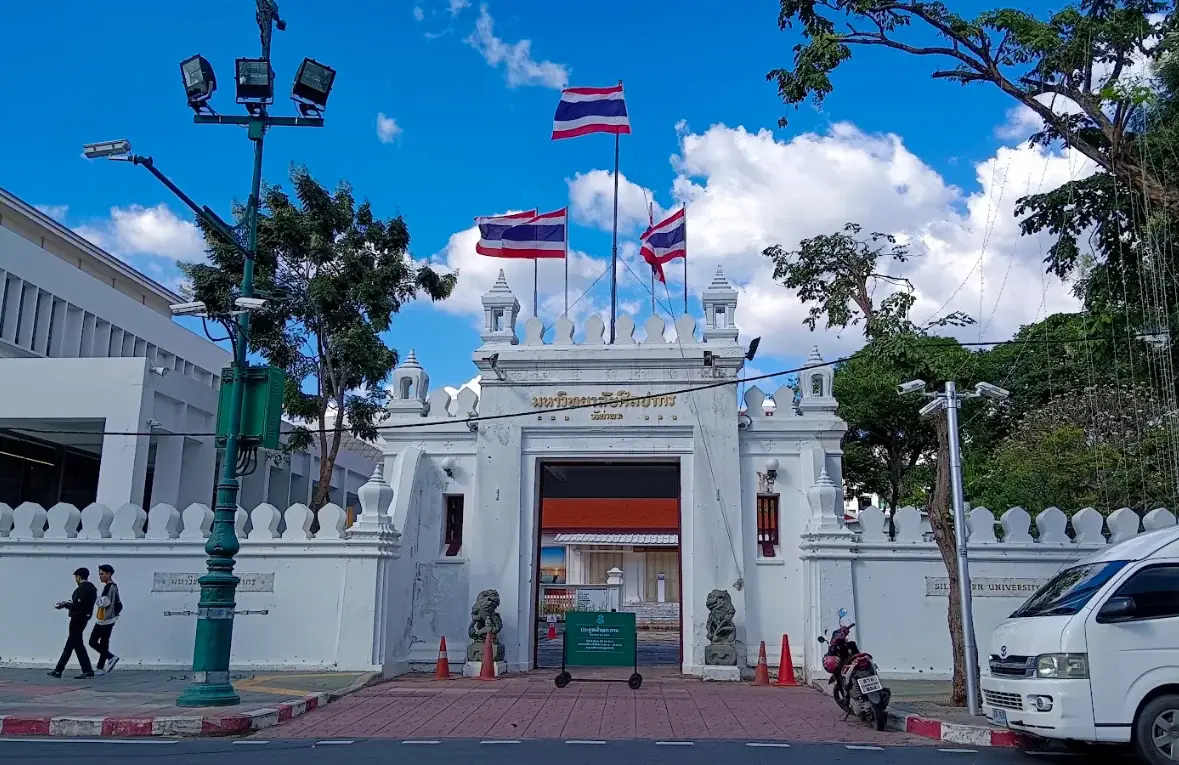
Open Days: Monday – Friday (University Administrative Offices)
Opening Hours: 08:30 – 16:30 (Office Hours, Not General Admission Hours for All Buildings)
Silpakorn University, Wang Tha Phra Campus is one of Thailand's most historically significant institutions of higher education, particularly renowned for its contribution to modern Thai art, architecture, archaeology, and design. Located at 31 Na Phra Lan Road, Phra Borom Maha Ratchawang, Phra Nakhon, Bangkok, directly opposite the Grand Palace, the campus stands in the heart of Rattanakosin Island, Bangkok's historic royal district. Silpakorn University traces its origins to the School of Fine Arts, established in 1933 by Professor Silpa Bhirasri, formerly known as Corrado Feroci, an Italian sculptor who played a fundamental role in the development of modern art education in Thailand. The institution officially became Silpakorn University on October 12, 1943. In 2026, the university celebrates its 83rd anniversary, while Wang Tha Phra remains an important historical center of art education, architectural conservation, scholarly activities, and contemporary artistic expression. The campus is closely associated with the Faculty of Painting, Sculpture and Graphic Arts, Faculty of Architecture, Faculty of Archaeology, and Faculty of Decorative Arts, as well as historic palace buildings, art galleries, and memorials dedicated to the university's founder.
What makes Wang Tha Phra particularly distinctive is that the campus occupies a former royal palace compound in Bangkok's historic city center. Unlike many contemporary university campuses designed as entirely new educational developments, Wang Tha Phra preserves the architectural and cultural legacy of an earlier royal residence. Several buildings reflect the evolution of court architecture, traditional craftsmanship, and the adaptation of historical spaces for modern educational purposes. Visitors entering the campus encounter an environment where artistic education and centuries of Thai history coexist within the same setting.
The university stands along Na Phra Lan Road, one of the most historically important streets in Bangkok. Across the road lies the Grand Palace and Wat Phra Kaew, while the surrounding district includes the Fine Arts Department, the National Museum Bangkok, Bangkok City Pillar Shrine, and Tha Chang Pier. This extraordinary concentration of cultural landmarks places Silpakorn University within a wider landscape of royal architecture, religious monuments, artistic heritage, museums, and traditional riverside communities. For students specializing in art, architecture, and archaeology, the surrounding city effectively becomes an extended learning environment.
The history of Wang Tha Phra began long before Silpakorn University was established. During the reign of King Rama I, a royal residence was constructed in the area north of the Grand Palace for Prince Krom Khun Kasatranuchit, a royal grandson of the king. The palace formed part of the early Rattanakosin royal residential landscape, when members of the royal family were accommodated in designated compounds surrounding the principal royal palace. Its original function was therefore closely linked to the organization of the new capital and the royal household.
The name Wang Tha Phra, meaning Tha Phra Palace, is associated with the history of a nearby landing place and an old city gate. The area had previously been connected with Tha Chang, the riverside landing traditionally used for royal elephants. According to the historical explanation of the place name, a large Buddha image known as Phra Si Sakyamuni was transported from Sukhothai and brought ashore in this area before being taken to Wat Suthat Thepwararam. The image was too large to pass through the existing gateway without alterations, and the gateway subsequently became known as Tha Phra, meaning the Buddha-image landing or gate. The name eventually became associated with the surrounding palace.
Wang Tha Phra served as a royal residence for several generations. During the reign of King Rama II, it was associated with Prince Krom Muen Jessadabodindra, who later ascended the throne as King Rama III. Consequently, the history of the palace is connected not only with royal residential life but also with important developments in early Bangkok's administration, royal craftsmanship, and cultural patronage.
Several members of the royal family who resided at the palace were involved in artistic and architectural work. Among them was Prince Krom Khun Ratchasihawikrom, who held responsibilities connected with royal craftsmanship. This history gives Wang Tha Phra a longstanding relationship with Thai arts and traditional craft production, predating its transformation into a center of modern art education by many decades.
During the reign of King Chulalongkorn, Rama V, Wang Tha Phra was granted to Prince Narisara Nuwattiwong, one of the most distinguished artistic figures in Thai royal history. Widely respected for his extraordinary knowledge of architecture, painting, music, theatrical arts, and design, Prince Naris is often remembered as a great master of Thai arts. His connection with Wang Tha Phra gives the campus an additional layer of significance as a place associated with the refinement and transformation of traditional Thai artistic practices.
Prince Narisara Nuwattiwong held numerous important official responsibilities while also producing influential creative work. During his residence, the palace underwent architectural renovation and expansion, incorporating both traditional Thai elements and aspects of Western architectural design. The resulting buildings demonstrate the aesthetic and technical changes that occurred in Thailand during the late nineteenth and early twentieth centuries, when royal architecture increasingly incorporated international influences while retaining important features of Thai craftsmanship.
Important surviving structures within the former palace complex include the Wang Tha Phra Throne Hall, the Central Residence, the Phannarai Residence, and the pavilion in Suan Kaeo Garden. These buildings differ in their design and historical functions but collectively illustrate the architectural character of royal residences from the Rattanakosin period. Their preservation allows visitors and researchers to examine building layouts, columns, balconies, window arrangements, decorative details, and relationships between residential structures and garden spaces.
Following the end of the palace's residential role, its buildings and grounds were gradually adapted to support the university's educational and cultural activities. Discussions and arrangements involving the Chitrabongse family during the early 1960s helped make parts of the palace available for the university's use. By 1964, these developments had contributed to the integration of former royal compounds along Na Phra Lan Road into the broader institutional landscape connected with Silpakorn University and the Fine Arts Department. This transformation illustrates how architectural heritage can be conserved through carefully considered contemporary use.
The educational history of Silpakorn University began in 1933 with the establishment of the School of Fine Arts under the Fine Arts Department. Founded by Professor Silpa Bhirasri, the school initially offered painting and sculpture instruction to civil servants and students without tuition fees. The underlying objective was to develop a systematic approach to artistic training and cultivate skilled professionals capable of contributing to the advancement of Thailand's visual arts.
Professor Silpa Bhirasri, originally named Corrado Feroci, was born in Italy and came to Thailand during the reign of King Vajiravudh, Rama VI. Trained as a sculptor, he initially worked on artistic commissions and public sculpture before becoming one of the most influential teachers in the history of Thai art. His long-term contribution lay in establishing modern methods of artistic education, encouraging students to combine disciplined technical training with individual creativity and an appreciation of Thai cultural heritage.
Silpa Bhirasri's teaching methods emphasized strong foundations in drawing, proportion, composition, light and shadow, anatomy, and sculpture. Students learned through close observation, repeated practical exercises, and the gradual development of technical confidence. His philosophy treated artistic talent as something requiring discipline, patience, intellectual engagement, and continuous practice, rather than relying solely on spontaneous inspiration.
In 1935, the School of Fine Arts merged with the School of Dramatic and Musical Arts and adopted the name Silpakorn School. The change broadened the institution's educational responsibilities and reflected an effort to create a more comprehensive system for teaching artistic disciplines. This period was especially significant in preparing Thailand for a modern higher education institution specializing in the arts.
On October 12, 1943, the school was officially elevated to university status and became Silpakorn University. The Faculty of Painting and Sculpture was established as its first faculty, later developing into the present Faculty of Painting, Sculpture and Graphic Arts. This was a landmark in Thailand's educational history because advanced artistic training gained formal university status, providing a foundation for the development of academic qualifications, specialized departments, research, and professional artistic education.
As art education became more firmly established, Silpakorn University began expanding into disciplines closely related to artistic production and cultural conservation. In 1955, the Faculty of Thai Architecture, later renamed the Faculty of Architecture, and the Faculty of Archaeology were founded. These developments expanded the university's role from the creation of visual artworks to the study of buildings, historical environments, archaeological evidence, traditional craftsmanship, and cultural heritage.
In 1956, the Faculty of Decorative Arts was established to develop education in applied arts and design. Its academic activities gradually encompassed interior design, visual communication, product design, applied art, ceramics, jewelry design, and fashion. The addition of this faculty helped create a university structure that included both fine arts and design disciplines relevant to contemporary professional and industrial needs.
These four founding artistic and cultural faculties became closely associated with Wang Tha Phra Campus. Their graduates have contributed to government institutions, educational organizations, museums, heritage conservation agencies, architectural practices, design studios, and creative industries. Through teaching, research, professional practice, and artistic production, the university has influenced many aspects of Thailand's modern cultural and visual environment.
During the 1960s, Silpakorn University adopted a policy of expanding its academic offerings beyond the arts and archaeology. The relatively small Wang Tha Phra site could not accommodate the growing number of academic programs and students. As a result, the university developed Sanam Chandra Palace Campus in Nakhon Pathom Province, beginning in 1966, creating additional opportunities for the establishment of faculties and academic disciplines outside Bangkok.
The university continued to expand through its Phetchaburi Information Technology Campus and other educational locations, including Taling Chan, the City Campus at Muang Thong Thani, and Bang Rak. Today, Silpakorn University also provides education in arts and humanities, education, science, pharmacy, engineering, music, management, information and communication technology, agriculture, and related fields. This development reflects the university's transformation into a multidisciplinary institution built upon a strong artistic foundation.
On July 2, 2016, Silpakorn University became an autonomous public university under the Silpakorn University Act B.E. 2559. The legislation changed the institution's administrative framework in areas including governance, financial management, personnel, and academic development. The university nevertheless retained its responsibilities for education, research, academic services, cultural preservation, and contributions to Thai society.
In 2026, the university is led by Professor Dr. Pharmacist Thanaset Ngaohirunpat, Rector of Silpakorn University. Its institutional direction emphasizes the integration of the arts and sciences, the development of creative research and innovation, and the application of knowledge to social and economic development. Wang Tha Phra continues to play an important role in this mission through academic gatherings, exhibitions, cultural events, and the preservation of historically significant buildings.
Professor Silpa Bhirasri remains the most important figure in the university's collective identity. Born in Florence, Italy, on September 15, 1892, he spent much of his professional life in Thailand and died on May 14, 1962. He is widely regarded as the father of modern Thai art because of his contributions to public sculpture, academic art education, and the training of generations of Thai artists.
His work extended across artistic commissions, monumental sculpture, teaching, and the development of public appreciation for art. By introducing structured Western academic methods while recognizing the importance of Thai cultural traditions, he helped shape an educational approach that influenced the development of modern Thai visual art. Many artists trained under his guidance or within the educational system he founded went on to become important figures in the country's artistic community.
The phrase "Art Is Long, Life Is Short" is deeply associated with Silpa Bhirasri and the culture of Silpakorn University. It expresses the belief that meaningful artistic works can preserve the ideas, skills, and spirit of their creators long after their individual lives have ended. For students and alumni, the phrase continues to symbolize dedication, perseverance, craftsmanship, and responsibility toward future generations.
Prince Narisara Nuwattiwong is another central historical figure connected with Wang Tha Phra. His remarkable artistic knowledge and contribution to traditional Thai craftsmanship are particularly important to understanding the history of the former palace. The transformation of his former royal residence into a place of artistic education gives the campus a special connection between the traditions of royal craftsmanship and the development of modern professional art.
The official emblem of Silpakorn University depicts Ganesha, known in Thai as Phra Phikanet, the deity associated with knowledge, artistic accomplishment, writing, and success. The emblem portrays Ganesha seated on a cloud-shaped throne decorated with traditional Thai kanok motifs. The deity holds symbolic objects in four hands, with the university's name displayed below. The emblem was officially adopted in July 1951, and a revised form for official university documents was subsequently introduced following the institution's transition to autonomous public university status in 2016.
Silpakorn University's official color is Viridian Green, known in Thai as si khiao tangchae, a shade associated with artistic pigments and the visual identity of the institution. The Chan tree is recognized as the university's symbolic tree. Together with the Ganesha emblem, these elements are incorporated into institutional ceremonies, communications, and the shared culture of Silpakorn students and alumni.
Silpa Bhirasri Day is one of the university's most meaningful annual traditions. It commemorates the founder's birthday on September 15 through ceremonies, tributes, art exhibitions, and educational activities. The event brings together students, faculty members, alumni, and artists to remember his achievements and celebrate the continuing importance of artistic education and creative practice.
In September 2026, Silpakorn University organized Silpa Bhirasri commemorative activities at Wang Tha Phra, including the exhibition "Pariwat 2026" at the Phra Phrombhichitr Architecture and Art Gallery of the Faculty of Architecture. The exhibition provided a platform for presenting creative architectural ideas and exploring the changing possibilities of design. Such events demonstrate that Wang Tha Phra remains an active center of artistic experimentation rather than simply a historical campus.
The university's foundation anniversary is commemorated on October 12 each year. The occasion provides an opportunity to reflect on the institution's development from the School of Fine Arts to a major multidisciplinary university. Memorial activities, academic gatherings, and alumni participation help preserve the university's heritage and reinforce a shared appreciation of its founding ideals.
Silpakorn also has a distinctive academic culture centered on studio practice, technical training, creative experimentation, exhibitions, and the critical review of artistic work. Students develop ideas through practical assignments, research, observation, experimentation, and discussions with instructors and fellow students. This approach encourages both personal expression and professional discipline.
Among the most important features of Wang Tha Phra Campus are its preserved former royal palace buildings. The Wang Tha Phra Throne Hall, Central Residence, Phannarai Residence, and Suan Kaeo Garden Pavilion provide valuable examples of historic architecture. Their façades, architectural proportions, verandas, columns, openings, and decorative features reflect craftsmanship from the later Rattanakosin period, including influences from Western architectural traditions.
The Art Centre at Silpakorn University was established in 1979 to promote contemporary art and support public engagement with artistic practice. At Wang Tha Phra, the art center occupies part of the preserved former palace complex and has played an important role in presenting exhibitions, cultural activities, and creative work by Thai and international artists. It is an important institutional link between academic art education and the broader public.
One of the art center's most attractive characteristics is its setting within historical palace architecture. The arrangement of rooms, windows, corridors, columns, and halls provides a distinctive visual environment for contemporary artworks. This combination creates a dialogue between architectural heritage and modern creativity, allowing visitors to experience artistic expression within a setting shaped by the history of Bangkok's royal residences.
Suan Kaeo Garden and its preserved pavilion are additional features of the historic compound. The garden reflects the relationship between traditional royal residential architecture and the surrounding landscape. Silpakorn University has maintained the area as part of its conservation responsibilities and developed opportunities for outdoor sculpture and cultural learning, providing an important connection between art, landscape design, and architectural heritage.
The Silpa Bhirasri Monument is a major memorial landmark for the university community. It is particularly significant during the annual Silpa Bhirasri Day activities, when students and alumni gather to pay tribute to the university's founder. The memorial embodies the relationship between successive generations of artists and the teacher who helped establish a modern system of art education in Thailand.
The Phra Phrombhichitr Architecture and Art Gallery, associated with the Faculty of Architecture, is another important venue for exhibitions, creative presentations, and academic activities. The gallery is named in honor of Phra Phrombhichitr, an important figure in the development of modern Thai architectural education who contributed to the establishment of the Faculty of Thai Architecture at Silpakorn University.
Wang Tha Phra Library is an essential academic resource for students and researchers working in fine arts, architecture, archaeology, humanities, and related disciplines. Its collections and digital resources support coursework, scholarly research, and independent learning. According to the library's October 2026 schedule, during the regular academic term from July 6 to November 8, 2026, the library opens Monday through Friday from 08:30 to 19:30 and Saturday and Sunday from 10:00 to 18:00. Public holidays, special arrangements, and vacation-period schedules are governed by the library's announcements.
The academic identity of Wang Tha Phra is especially associated with four faculties: the Faculty of Painting, Sculpture and Graphic Arts; the Faculty of Architecture; the Faculty of Archaeology; and the Faculty of Decorative Arts. Each faculty offers programs with its own educational requirements, creative methods, and research specializations. Some programs and year levels are also taught at Sanam Chandra Palace Campus or other Silpakorn educational locations, so the teaching campus must be distinguished from the faculty's administrative or historical home.
The Faculty of Painting, Sculpture and Graphic Arts, Silpakorn University's oldest faculty, has played a defining role in modern Thai visual art education. Its fields include painting, sculpture, graphic arts and printmaking, Thai art, art theory, and mixed-media practice. Students study artistic composition, the history and theory of art, visual expression, and practical creative processes. Studio learning and the development of individual artistic portfolios are central features of its educational approach.
The Faculty of Architecture originated as the Faculty of Thai Architecture, established on June 12, 1955. It has developed expertise in traditional Thai architecture, modern building design, architectural heritage conservation, urban design, architectural history, and landscape architecture. Its programs combine creativity with technical and cultural understanding, addressing the relationship between buildings, communities, the environment, and historical contexts.
In the 2026 academic year, the Faculty of Architecture introduced a new Bachelor of Landscape Architecture program under its 2026 curriculum. The program addresses landscape design, spatial planning, environmental management, and sustainable development. Its establishment demonstrates the continued expansion of architectural education into the design of outdoor environments and the relationship between people, landscapes, and the built environment.
The Faculty of Archaeology is one of Thailand's most important academic institutions for the study of cultural heritage. Its undergraduate fields include archaeology, art history, anthropology, local history, Thai, English, and French. At graduate level, the faculty also provides education in archaeology, art history, Thai and Oriental epigraphy, Sanskrit, anthropology, and archival and cultural heritage information management. These disciplines support the study, interpretation, documentation, and conservation of historical and cultural evidence.
Several programs at the Faculty of Archaeology were revised for the 2026 academic year, including archaeology, art history, Thai, English, and French. The revised programs connect established academic knowledge with contemporary research methods, intercultural communication, heritage management, and professional applications. Students in archaeology and art history, in particular, study historical evidence, artifacts, monuments, and cultural contexts to develop analytical and research skills.
The Faculty of Decorative Arts is an important center of applied art and design education in Thailand. Its undergraduate fields cover interior design, visual communication design, product design, applied art studies, ceramic art and design, jewelry design, and fashion design. Students develop creative thinking alongside knowledge of materials, production methods, design technology, and the needs of individuals and communities.
The faculty's educational activities are closely connected to Thailand's creative economy. Design graduates can contribute to product development, branding, visual communication, jewelry, fashion, crafts, and contemporary cultural industries. Their work often combines artistic expression with practical considerations such as function, user experience, production processes, and sustainable resource use.
Beyond the four faculties associated with Wang Tha Phra, Silpakorn University as a whole also includes academic units specializing in arts and humanities, education, science, pharmacy, engineering and industrial technology, music, animal science and agricultural technology, management, information and communication technology, and international education. These faculties operate across the university's various campuses and educational sites rather than being concentrated entirely at Wang Tha Phra.
Research and innovation at Silpakorn University increasingly combine artistic knowledge with science, technology, and social development. Fine arts research contributes to artistic techniques, conservation methods, and new forms of visual expression. Architecture and design research addresses historic building conservation, urban environments, materials, products, and spatial development. Interdisciplinary activities connect these fields with creative industries and wider social challenges.
In September 2026, Wang Tha Phra hosted activities presenting research and innovation based on the integration of art and science. Projects included creative architectural and artistic work, design research, and interdisciplinary innovation. Such events illustrate how the university continues to build upon its artistic heritage while applying research and creative knowledge to contemporary national development.
Silpakorn University's relationship with the surrounding Wang Tha Phra neighborhood is also significant. The nearby streets contain art-supply shops, bookstores, restaurants, cafés, small businesses, and visitor services that have long served students and local residents. The area's commercial and cultural character reflects the interaction between university life and the historic communities surrounding the Grand Palace and Tha Chang Pier.
The campus also plays an important role in architectural conservation. The continued use of former palace buildings as educational and cultural spaces creates opportunities for their maintenance and public interpretation. University research and activities relating to historic architecture, traditional woodworking, conservation techniques, and cultural heritage management help preserve knowledge associated with the buildings and their historical context.
For cultural and educational travelers, Wang Tha Phra provides a valuable introduction to the development of modern Thai art and the architectural history of Bangkok. Visits to authorized areas allow travelers to connect the legacy of Professor Silpa Bhirasri with that of Prince Narisara Nuwattiwong, gaining a broader understanding of the relationship between traditional court craftsmanship and contemporary artistic education.
Visitors should respect the campus as an active educational institution and an important conservation site. Some buildings are used for lectures, studios, administrative work, or specialized academic activities, while historic structures may have restricted access to protect their interiors. Group visits, photography inside particular buildings, and access to conservation areas should follow the regulations of the responsible university department. Exhibition schedules should be checked separately with the relevant galleries.
The university's location also makes it suitable for a cultural walking itinerary around Rattanakosin Island. A visit can be combined with the Grand Palace, Wat Phra Kaew, Bangkok City Pillar Shrine, the National Museum Bangkok, Wat Pho, and the Tha Chang riverside district. These destinations provide complementary examples of Thai architecture, Buddhist art, royal history, museum interpretation, and traditional urban life.
Getting There is straightforward by MRT, public bus, Chao Phraya riverboat, cross-river ferry, taxi, or private car. The university is situated on Na Phra Lan Road opposite the Grand Palace. Travelers using the MRT Blue Line can alight at Sanam Chai Station and continue on foot toward the historic palace district. The university's transport guidance describes the walk from Sanam Chai to Wang Tha Phra as approximately 15 minutes.
Visitors traveling by Chao Phraya Express Boat can choose a service that stops at Tha Chang Pier and then walk to the campus along Na Phra Lan Road. The pier is close to the Grand Palace and the university, making river transport an appealing option for visitors coming from other riverside districts. Travelers arriving from the Thonburi side may also use an operating cross-river ferry connection to the Tha Chang area, subject to the boat operator's current timetable.
Those arriving by private car can navigate to Silpakorn University, Wang Tha Phra Campus, on Na Phra Lan Road in Phra Nakhon district. Traffic around the Grand Palace can be heavy, especially during major ceremonies and peak visitor hours. Parking space within the university is limited and controlled by campus regulations. The university's travel guidance identifies Tha Maharaj and the Royal Navy Club as nearby paid-parking options.
Visitors planning to attend an exhibition should confirm its dates and opening hours before traveling. University administrative office hours do not necessarily correspond to gallery admission hours or access arrangements for historic buildings. Gallery opening schedules can vary according to exhibitions, events, and conservation requirements. Anyone wishing to visit a specific facility should contact the relevant university unit for current arrangements.
Silpakorn University, Wang Tha Phra Campus, therefore holds significance on several levels. It is a former royal palace landscape, a birthplace of modern Thai art education, an architectural conservation site, and a continuing center for artistic and academic activities. Its history reveals an important connection between royal craftsmanship and the development of higher education in art, architecture, archaeology, and design.
From the establishment of the School of Fine Arts in 1933 to Silpakorn University's 83rd anniversary in 2026, the institution has made a lasting contribution to Thailand's artistic, architectural, and cultural development. Wang Tha Phra continues to demonstrate that historic buildings can remain meaningful through education, preservation, and contemporary creative activity. It stands as both a working university campus and one of Bangkok's most important places for understanding the relationship between art, knowledge, and cultural heritage.
| University Name | Silpakorn University, Wang Tha Phra Campus |
| Thai Name | มหาวิทยาลัยศิลปากร วังท่าพระ |
| University Type | Autonomous Public University |
| Location | Phra Borom Maha Ratchawang, Phra Nakhon, Bangkok, Thailand |
| Address | 31 Na Phra Lan Road, Phra Borom Maha Ratchawang, Phra Nakhon, Bangkok 10200, Thailand |
| Campus Area | 7 Rai, 2 Ngan, 29 Square Wa |
| Original Institution Established | 1933, School of Fine Arts |
| School Renamed | 1935, Silpakorn School |
| University Foundation Date | October 12, 1943 |
| University Age | 83 Years in 2026, Counted From University Establishment |
| Founder | Professor Silpa Bhirasri (Corrado Feroci) |
| Rector | Professor Dr. Pharmacist Thanaset Ngaohirunpat |
| Historical Significance | Former Rattanakosin Royal Palace Compound and an Important Birthplace of Modern Art Education in Thailand |
| Historical Royal Figure | Prince Narisara Nuwattiwong |
| University Emblem | Ganesha (Phra Phikanet) |
| University Color | Viridian Green |
| University Tree | Chan Tree |
| University Philosophy | Arts and Sciences Creatively Contributing to a Sustainable Nation |
| Faculties Associated With Wang Tha Phra | 1. Faculty of Painting, Sculpture and Graphic Arts 2. Faculty of Architecture 3. Faculty of Archaeology 4. Faculty of Decorative Arts |
| University Educational Locations | Wang Tha Phra, Sanam Chandra Palace, Phetchaburi, Muang Thong Thani City Campus, Taling Chan, and Bang Rak |
| Important Campus Landmarks | 1. Wang Tha Phra Throne Hall 2. Central Residence 3. Phannarai Residence 4. Suan Kaeo Garden Pavilion 5. Art Centre, Silpakorn University 6. Phra Phrombhichitr Architecture and Art Gallery 7. Silpa Bhirasri Monument 8. Wang Tha Phra Library |
| Major Annual Events | Silpa Bhirasri Day on September 15 and University Foundation Day on October 12, Together With Art and Architecture Exhibitions Held Throughout the Academic Year |
| Academic Strengths | Fine Arts, Painting, Sculpture, Printmaking, Architecture, Thai Architecture, Archaeology, Art History, Design, and Cultural Heritage Management |
| Administrative Office Days | Monday – Friday, Except Public and University Holidays |
| Administrative Office Hours | 08:30 – 16:30 |
| Wang Tha Phra Library Hours | Regular Academic Term: Monday – Friday 08:30 – 19:30; Saturday – Sunday 10:00 – 18:00. Holidays and Vacation Periods Follow Library Announcements |
| Visitor Access | Entry to Historic Buildings, Art Galleries, and Exhibition Spaces Is Subject to the Schedules and Regulations of the Responsible University Units |
| Facilities | Library, Study Areas, Meeting Rooms, Exhibition Spaces, Food and Beverage Outlets, and Student Services Subject to University Regulations |
| Transportation | MRT Sanam Chai Station Followed by an Approximately 15-Minute Walk; Chao Phraya Riverboat to Tha Chang Pier; Public Bus; Taxi; Private Car |
| Nearby Parking | Tha Maharaj and Royal Navy Club, With Parking Fees and Conditions Set by the Operators |
| Nearby Attractions | 1. The Grand Palace 2. Wat Phra Kaew (Temple of the Emerald Buddha) 3. Bangkok City Pillar Shrine 4. National Museum Bangkok 5. Wat Pho (Temple of the Reclining Buddha) 6. Tha Chang Pier and Tha Maharaj |
| Nearby Restaurants and Cafés | 1. Midsummer Cafe, Silpakorn University, Tel. +66 62 939 4410 2. Cho Prathum Thong, Na Phra Lan Road, Tel. +66 83 756 6699 3. Siw Lang Chicken Rice, Na Phra Lan Road, Tel. +66 81 620 0911 4. The Gate Grand Palace, Tha Chang, Tel. +66 82 752 4993 5. Jiwakiat Coffee, Na Phra Lan Road, Tel. +66 64 949 5912 6. VEGANERIE Grand Palace, Maharat Road, Tel. +66 93 254 1290 |
| Nearby Accommodation | 1. Riva Arun Bangkok, Tel. +66 2 221 1188 2. sala rattanakosin Bangkok, Tel. +66 81 936 1388 3. Theatre Residence, Tel. +66 2 866 2066 (Across the River in Thonburi) 4. Chetuphon Gate, Tel. +66 83 988 8736 5. Siri Heritage Bangkok Hotel 6. 1905 Heritage Corner |
| University Telephone | +66 2 105 4686 |
| Faculty of Painting, Sculpture and Graphic Arts | +66 2 221 0820 |
| Faculty of Architecture | +66 2 221 5877 |
| Faculty of Archaeology | +66 2 221 7777 |
| Wang Tha Phra Library | +66 89 305 9949 |
| Official Website | https://www.su.ac.th/ |
| Current Status | Operating as an Important Educational and Cultural Heritage Conservation Campus of Silpakorn University |
Academic Programs and Fields of Study at Silpakorn University, Wang Tha Phra Campus, Academic Year 2026
| Faculty / Academic Unit | Programs and Fields of Study |
| Faculty of Painting, Sculpture and Graphic Arts | Bachelor's Degree 1. Bachelor of Fine Arts in Visual Arts (Five-Year Program), With Areas of Study in Painting, Sculpture, Printmaking, Thai Art, Art Theory, and Mixed Media Master's Degree 1. Master of Fine Arts in Visual Arts 2. Graduate Studies in Art Theory 3. Graduate Studies in Visual Arts Education 4. Graduate Studies in Art Conservation Doctoral Degree 1. Doctor of Philosophy in Visual Arts |
| Faculty of Architecture | Bachelor's Degree 1. Bachelor of Architecture in Architecture 2. Bachelor of Architecture in Thai Architecture 3. Bachelor of Landscape Architecture (New 2026 Curriculum) Master's Degree 1. Master of Architecture in Architecture 2. Master of Architecture in Thai Architecture 3. Master of Architecture in Urban Design 4. Master of Landscape Architecture 5. Graduate Studies in Vernacular Architecture and Built Environment 6. Graduate Studies in Architectural History 7. Graduate Studies in Construction Project Management 8. Graduate Studies in Architectural Conservation and Building Rehabilitation 9. Graduate Studies in Urban and Environmental Planning 10. Graduate Studies in Architectural Heritage Management, Creative Industries and Tourism (International Program) Doctoral Degree 1. Doctor of Philosophy in Architecture 2. Doctor of Philosophy in Vernacular Architecture and Built Environment 3. Doctor of Philosophy in Architectural History 4. Doctor of Philosophy in Landscape Architecture 5. Doctoral Studies in Architectural Heritage Management, Creative Industries and Tourism (International Program) |
| Faculty of Archaeology | Bachelor's Degree 1. Bachelor of Arts in Archaeology 2. Bachelor of Arts in Art History 3. Bachelor of Arts in Anthropology 4. Bachelor of Arts in Thai 5. Bachelor of Arts in English 6. Bachelor of Arts in French 7. Bachelor of Arts in Local History Master's Degree 1. Master of Arts in Archaeology 2. Master of Arts in Art History 3. Master of Arts in Thai and Oriental Epigraphy 4. Master of Arts in Sanskrit (International Program) 5. Master of Arts in Anthropology 6. Master of Arts in Archival and Cultural Heritage Information Management Doctoral Degree 1. Doctor of Philosophy in Archaeology 2. Doctor of Philosophy in Art History 3. Doctor of Philosophy in Sanskrit (International Program) 4. Doctor of Philosophy in Thai and Oriental Epigraphy |
| Faculty of Decorative Arts | Bachelor's Degree 1. Bachelor of Fine Arts in Interior Design 2. Bachelor of Fine Arts in Visual Communication Design 3. Bachelor of Fine Arts in Product Design 4. Bachelor of Fine Arts in Applied Art Studies 5. Bachelor of Fine Arts in Ceramic Art and Design 6. Bachelor of Fine Arts in Jewelry Design 7. Bachelor of Fine Arts in Fashion Design Master's Degree 1. Graduate Studies in Visual Communication Design 2. Graduate Studies in Product Design 3. Graduate Studies in Jewelry Design 4. Graduate Studies in Design 5. Graduate Studies in Art and Design 6. Graduate Studies in Art and Design (International Program) Doctoral Degree 1. Doctoral Studies in Design 2. Doctoral Studies in Art and Design (International Program) 3. Doctoral Studies in Culture-Based Design Arts |
Frequently Asked Questions (FAQ)
Q: Where is Silpakorn University, Wang Tha Phra Campus?
A: The campus is located at 31 Na Phra Lan Road, Phra Borom Maha Ratchawang, Phra Nakhon, Bangkok 10200, Thailand, directly opposite the Grand Palace and near Tha Chang Pier.
Q: What are the opening days and hours of Silpakorn University, Wang Tha Phra Campus?
A: Administrative offices generally operate Monday through Friday, from 08:30 to 16:30. During the regular academic term, Wang Tha Phra Library opens Monday through Friday from 08:30 to 19:30 and Saturday and Sunday from 10:00 to 18:00. Gallery opening hours depend on individual exhibitions and official announcements.
Q: When was Silpakorn University established?
A: The institution originated as the School of Fine Arts in 1933 and officially became Silpakorn University on October 12, 1943. The university celebrated its 83rd anniversary in 2026.
Q: Who founded Silpakorn University?
A: Professor Silpa Bhirasri, formerly known as Corrado Feroci, an Italian sculptor, founded the original School of Fine Arts and established the foundations of modern art education in Thailand.
Q: Why is the campus called Wang Tha Phra?
A: The name refers to the former royal palace near the historic Tha Phra gate and riverside landing. The place name is associated with the transportation of the large Phra Si Sakyamuni Buddha image from Sukhothai during the early Rattanakosin period.
Q: Which faculties are associated with Wang Tha Phra Campus?
A: The campus is historically and academically associated with the Faculty of Painting, Sculpture and Graphic Arts, Faculty of Architecture, Faculty of Archaeology, and Faculty of Decorative Arts. Some programs and year levels are also taught at other university locations.
Q: Can members of the public visit Silpakorn University, Wang Tha Phra Campus?
A: Public access depends on university regulations and the opening arrangements of individual buildings. Historic palace structures, classrooms, and exhibition spaces may have restricted access. Visitors should contact the responsible university department before arranging group visits.
Q: How can I get to Silpakorn University, Wang Tha Phra Campus?
A: Take the MRT Blue Line to Sanam Chai Station and continue on foot for approximately 15 minutes, or take a Chao Phraya riverboat to Tha Chang Pier and walk to Na Phra Lan Road. Public buses, taxis, and private cars are also available.
 Category: ●University
 Group: ●Public university
Last Update : 1 WeekAgo
 Last Update : 1 WeekAgo

 Click to Access the Navigation Map GPS
Silpakorn University (Wang Tha Phra Campus) Map
Recommend

 Art, Culture and Heritage
 Historical Sites and Monuments(3)
 Landmarks and Memorials(23)
 Royal Palace(13)
 Art, Craft Centres, Tradition(35)
 Museums(59)
 Historic Homes and Cities(3)
 Art Gallery(16)
 Educational Places
 Museum for Study(6)
 Library(4)
Public university(8)
 Autonomous Universities(8)
 Rajamangala University of Technology(6)
 Rajabhat University(6)
 Private University(22)
 Places of Worship
 Temple(72)
 Church(2)
 Mosque(67)
 Other Sacred Sites(8)
 Research and Development
 Royal Project(1)
 Suburban Living
 Village, Community(5)
 Local Market(9)
 Floating Market(2)
 Nature and Wildlife
 River, Canal(3)
 Bays and Beaches(1)
 Other natural attractions(1)
 Entertainment and Agricultural
 Zoos and Aquariums(5)
 Animal camps and shows(5)
 Stadium(9)
 Farms, Parks and Ecotourism(20)
 Amusement Park(1)
 Waterpark(4)
 Theater(7)
 Cinema(1)
 Shopping
 Shopping and Night Market(20)
 Department Store(7)
 Spas and Wellness
 Spas and Wellness(1)
 Restaurant
 Michelin Star(5)
 Accommodation
 Hotel(3)
 Call Customer Service in Tourism
 Call Customer Service in Tourism(1)
 Travel Articles, Recipes
 Travel Review, Food Review(43)
 Royal Thai Desserts and Recipes(56)


