
lovethailand home >Central Travel Attractions >Bangkok Travel Attractions >Chom Thong >Bang Khun Thian > Wat Kaew Phaithun
TL;DR: Wat Kaew Phaithun is located at Bang Khun Thian Subdistrict, Chom Thong District, Bangkok, Thailand, open Daily, hours 08.00 – 17.00.
Wat Kaew Phaithun
Open Days: Daily
Opening Hours: 08.00 – 17.00
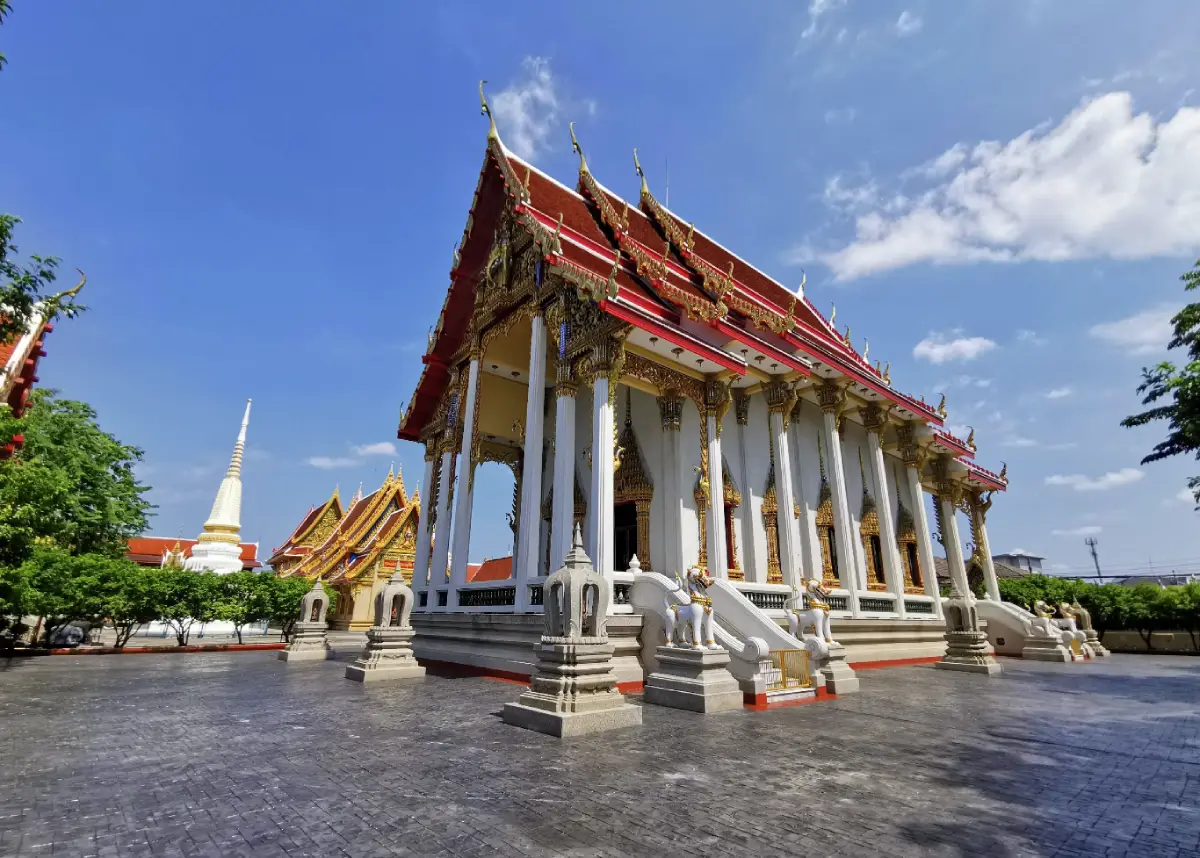
Wat Kaew Phaithun is a private Buddhist temple under the Mahanikaya monastic order, located at 104 Soi Ekkachai 14, Ekkachai Road, Bang Khun Thian Subdistrict, Chom Thong District, Bangkok 10150. The temple stands beside Khlong Bang Prathun, in an old Thonburi-side community that was once known as Bang Prathun. It is an important neighborhood temple in Chom Thong because it combines early Rattanakosin history, canal-side community life, and one of Bangkok’s most remarkable carved wooden sermon halls.
The temple was formerly known as Wat Bang Prathun Nai because of its position deeper inside Khlong Bang Prathun. Another temple near the mouth of the same canal, on the side connected with Khlong Sanam Chai or Khlong Dan, was called Wat Bang Prathun Nok. These names reflect the older canal-based geography of Thonburi. In the past, local people identified places by canals, canal mouths, inner canal areas, gardens, and waterways rather than by roads or modern administrative boundaries.
Wat Kaew Phaithun was founded in the early Rattanakosin period, around 1847. It grew within a landscape of gardens, lowland settlements, and houses along Khlong Bang Prathun. The temple land is low-lying and historically connected with seasonal water. This makes the canal essential to understanding the temple. Khlong Bang Prathun was not only a scenic waterway, but also a route for travel, local trade, merit-making, and community contact before modern roads became dominant.
The greatest highlight of Wat Kaew Phaithun is its carved wooden sermon hall. The hall was built during the time of Luang Pu Bun, or Phra Athikan Bun, one of the temple’s most important former abbots. It is a raised Thai wooden hall with seven bays, built with traditional timber-joining techniques. The roof is a two-tier gable roof covered with rounded tiles and decorated with traditional Thai roof ornaments such as chofa, bai raka, and hang hong. The surrounding wall panels are carved wooden fa pakon panels, making the hall both a functional religious building and an exceptional work of Thai wood craftsmanship.
The artistic value of the hall lies in its carved woodwork. The panels include floral motifs, mythical animals, Himavanta creatures, and auspicious symbols influenced by Chinese culture and Thai Buddhist belief. These details reflect the taste of Thai craftsmanship from the period of King Rama III to King Rama IV, when Chinese-inspired decorative vocabulary had a strong influence on Thai temple art, especially through auspicious motifs, ceramic aesthetics, and symbolic ornamentation.
The most important carved narrative on the sermon hall is the Suthanu Jataka from the Pannasa Jataka tradition. The story is carved around the lower parts of the window frames, known in Thai architectural terminology as song tin chang. The sequence begins at the southwest corner and continues counterclockwise around the hall in 44 panels. The story tells of the Buddha in a previous life as Prince Suthanu, a master archer who suffered separation from his wife, Princess Jirapapha, because of karma from a past action. The story ends with reunion at a Dhamma hall and the return to righteous rule.
The choice of the Suthanu Jataka is deeply meaningful. The narrative includes episodes connected with a Dhamma hall and the creation of religious merit through a public sacred space. This makes it especially suitable for a sermon hall, which functions as a place for listening to Dhamma, gathering the community, performing religious acts, and supporting communal merit-making. The carvings therefore serve not only as decoration, but also as visual teaching about karma, separation, endurance, virtue, and righteous leadership.
The sermon hall had deteriorated severely before its major conservation. Lacquer work had faded, some carved panels had been lost, several wooden posts had decayed, and later concrete work had altered the original raised-house form. A major restoration was later carried out with the Fine Arts Department, scholars, conservation specialists, Matichon, and the local community. Survey work began in 2011, restoration began in 2012, and the hall was eventually revived as both a living religious space and an art-historical landmark.
The restoration of the wooden sermon hall is important because it did not simply make the building look new. It followed conservation principles, retained original materials where possible, repaired damaged parts, strengthened the structure, raised the hall closer to its original elevated form, reduced moisture problems, and created a more suitable circulation area for viewing the carved panels. This allowed the hall to return to use while preserving its artistic identity.
The ordination hall is another important structure in the temple’s sacred zone. Temple history records that it measures approximately 13 meters wide and 21 meters long and was built in 1929. It is used for important monastic ceremonies and religious activities. Visitors also come to pay respect to Luang Pu Bun, the former abbot closely associated with the carved wooden sermon hall.
Luang Pu Bun is the most important figure in the early history of Wat Kaew Phaithun. He governed the temple when it was still known as Wat Bang Prathun Nai and built the carved wooden sermon hall that became the temple’s artistic heart. Local people continue to venerate him, and his image is enshrined for worship inside the temple. His story shows that the temple developed through monastic leadership, local devotion, skilled craftsmanship, and the collective faith of the Bang Prathun canal community.
After Luang Pu Bun moved to Songkhla during the reign of King Rama IV, Wat Bang Prathun Nai was renamed Wat Kaew Phaithun. The present name gives the temple a distinct identity, while the former name still preserves the memory of its canal-side location. Reading both names together reveals the layered history of the temple: the local canal world of Bang Prathun and the later formal identity of the temple in modern Bangkok.
Wat Kaew Phaithun received its Wisungkham Sima, or consecrated boundary for formal monastic acts, on 1 February 1929. The consecrated boundary measures 20 meters wide and 40 meters long. In Thai Buddhism, this boundary is essential for important monastic ceremonies, especially ordination. It confirms the temple’s full religious function as an active Buddhist temple serving the Bang Khun Thian and Chom Thong communities.
The temple compound covers approximately 4 rai, 1 ngan, and 17 square wah, according to historical temple records. The site is low-lying and connected with Khlong Bang Prathun on one side and Ekkachai Road on the other. This makes Wat Kaew Phaithun a clear example of a temple positioned between old and modern Bangkok. The old world is represented by canals, gardens, wooden houses, and boat travel. The modern world is represented by Ekkachai Road, Soi Ekkachai 14, local schools, housing, shops, cars, and public transport.
Main structures inside the temple include the ordination hall, carved wooden sermon hall, Luang Pu Bun viharn, monks’ residences, chanting hall, canal-side area, temple courtyard, meditation space, and areas for religious and community activities. The temple also has facilities connected with funerary rites and community service. Recent Bangkok Metropolitan Administration activity records show the temple participating in local environmental and crematorium-emission control projects, confirming that Wat Kaew Phaithun remains an active community temple.
Wat Kaew Phaithun remains active today, with monks, merit-making, Buddhist observances, Kathin activities, and community religious life. The temple is also used by elderly groups for meditation and walking meditation on weekends. This confirms that the temple is not only a historic monument. It is a living place of Buddhist practice and local community activity.
The contemporary abbot identified in recent public sources is Phra Khru Wimon Rattanathar, also known as Luang Pho Charin Krataikaeo. He played a major role in supporting the conservation of the carved wooden sermon hall and helping the temple regain wider public attention among people interested in old temples, Thai craftsmanship, and Thonburi community history.
A meaningful visit should begin with worship in the ordination hall, followed by paying respect to Luang Pu Bun and viewing the carved wooden sermon hall. If the hall is open, visitors should walk slowly around the structure and observe the carved fa pakon panels, the Suthanu Jataka sequence, auspicious Chinese-inspired motifs, floral patterns, and traditional timber-joining details. These are the features that make Wat Kaew Phaithun different from many other neighborhood temples in Bangkok.
The canal-side area behind the temple is also worth seeing. Khlong Bang Prathun gives the temple its historical setting and explains its former name, Wat Bang Prathun Nai. Visitors should treat the canal area respectfully and help keep it clean, because the waterway is part of the temple’s history and local identity. The canal also connects the temple with other historic waterways such as Khlong Sanam Chai and Khlong Dan.
Getting There is possible via Ekkachai Road and Soi Ekkachai 14. Visitors can take buses along Ekkachai Road or Chom Thong Road, then continue by taxi or motorcycle taxi into the temple lane. Travelers using the BTS can get off at Wutthakat or Talat Phlu Station and continue by road transport toward Ekkachai Road and Soi Ekkachai 14.
Drivers should allow extra time for traffic and parking because the surrounding area includes houses, schools, shops, narrow lanes, and canal-side routes. Morning and late-afternoon periods may be busier due to local commuting. Visitors who want to view the sermon hall quietly should consider arriving in late morning or late afternoon and avoid disturbing ceremonies or community events inside the temple.
Visitors should dress modestly, speak quietly, avoid entering monks’ residential areas without permission, and never touch the carved wooden panels, lacquer work, posts, old wall panels, Buddha images, or preserved architectural details. Photography should be discreet, especially inside religious buildings or when monks and local residents are performing ceremonies. The temple is both a sacred place and a conservation site, so respectful conduct is essential.
A practical half-day route can begin at Wat Kaew Phaithun to see the carved wooden sermon hall and pay respect to Luang Pu Bun. Visitors can then continue to Wat Bang Prathun Nok, Wat Sai Chom Thong, Wat Pho Kaeo, Wat Nak Nimit Rat Bamrung, or the three Bang Khun Thian temples: Wat Bang Khun Thian Nok, Wat Bang Khun Thian Klang, and Wat Bang Khun Thian Nai. This route reveals Chom Thong as a district of old temples, waterways, local faith, and living community heritage.
Wat Kaew Phaithun is worth visiting for travelers who are interested in old temples, wood craftsmanship, canal-side communities, and the local history of Chom Thong. The temple preserves its former identity as Wat Bang Prathun Nai, its rare carved wooden Suthanu Jataka sermon hall, the memory of Luang Pu Bun, the canal landscape of Khlong Bang Prathun, and an active Buddhist role in the present. A visit here is therefore both a merit-making experience and a way to read Thonburi history through woodwork, faith, and waterways that still remain.
| Name | Wat Kaew Phaithun |
| Former Name | Wat Bang Prathun Nai |
| Location | Bang Khun Thian Subdistrict, Chom Thong District, Bangkok, Thailand |
| Travel Address | 104 Soi Ekkachai 14, Ekkachai Road, Bang Khun Thian, Chom Thong, Bangkok 10150, Thailand |
| Coordinates | 13.696766, 100.456639 |
| Place Type | Private Buddhist Temple Under The Mahanikaya Monastic Order |
| Highlights | Carved wooden sermon hall with the Suthanu Jataka, seven-bay raised Thai wooden hall, carved fa pakon panels, Thai-Chinese auspicious motifs, Luang Pu Bun, ordination hall, and the canal-side atmosphere of Khlong Bang Prathun |
| History | Founded in the early Rattanakosin period around 1847. Formerly known as Wat Bang Prathun Nai and later renamed Wat Kaew Phaithun after the time of Luang Pu Bun. |
| Consecrated Boundary | Granted Wisungkham Sima on 1 February 1929, with a consecrated boundary measuring 20 meters wide and 40 meters long |
| Temple Land | Approximately 4 rai, 1 ngan, and 17 square wah |
| Site Character | Low-lying canal-side land beside Khlong Bang Prathun, connected with the old Bang Prathun community, Ekkachai Road, Khlong Sanam Chai, and Khlong Dan |
| Main Areas / Zones | Ordination hall, carved wooden sermon hall, Luang Pu Bun viharn, monks’ residences, chanting hall, canal-side area, temple courtyard, meditation space, and religious activity areas |
| Important Sacred Objects | Principal Buddha image in the ordination hall, Luang Pu Bun image, and other Buddha images and sacred objects inside the temple |
| Important Artworks | Carved wooden sermon hall, 44-panel Suthanu Jataka narrative, fa pakon wall panels, floral motifs, Himavanta creatures, and Thai-Chinese auspicious symbols |
| Art Heritage Status | The carved wooden sermon hall is a major conservation work associated with the Fine Arts Department and appears in Thai historic monument image records |
| Important Activities | Worship, merit-making, Dhamma listening, meditation, weekend meditation and walking meditation for elderly groups, Kathin activities, and community events |
| Travel Information | Access via Ekkachai Road and Soi Ekkachai 14. Public transport users can take buses along Ekkachai Road or Chom Thong Road, or use BTS Wutthakat / BTS Talat Phlu and continue by taxi or motorcycle taxi. |
| Current Status | Open as an active Buddhist temple for worship, merit-making, meditation, Buddhist ceremonies, Kathin activities, and local community use in Chom Thong |
| Open Days | Daily |
| Opening Hours | 08.00 – 17.00 |
| Facilities | Worship areas, sermon hall, chanting hall, restrooms, temple courtyard, canal-side area, meditation space, religious activity areas, and parking spaces provided by the temple where available |
| Abbot / Caretaker | Phra Khru Wimon Rattanathar, also known as Luang Pho Charin Krataikaeo |
| Main Contact Number | 02-416-4244 |
| Nearby Tourist Attractions | 1. Wat Bang Prathun Nok, about 1 km 2. Wat Sai Chom Thong, about 2 km 3. Wat Nak Nimit Rat Bamrung, about 3 km, Tel. 02-476-3342, 02-468-5683 4. Wat Pho Kaeo, about 3 km, Tel. 081-923-0348 5. Wat Bang Khun Thian Nok, about 4 km, Tel. 02-476-4109 6. Wat Bang Khun Thian Klang, about 4 km, Tel. 02-476-2244 |
| Nearby Restaurants | 1. Yam Mamuang Zab Jeed By PuiPui, Ekkachai 14 Wat Kaew Phaithun Branch, about 1 km 2. HanCha Ekkachai 7, about 1 km, Tel. 065-496-1652, 061-826-4564 3. Soei Khao Tom Kui Ekkachai, about 1 km, Tel. 062-952-2012 4. Aroi Station Ekkachai 10/1, about 1 km, Tel. 082-730-1499 5. Five Star 7-Eleven Ekkachai San Thonburi, about 2 km, Tel. 094-342-7433 6. Khao Kai Thot Ban Ekkachai, about 3 km, Tel. 098-646-3641, 098-242-4491 |
| Nearby Accommodations | 1. Mod Inn Hotel, about 2 km, Tel. 02-870-0371 2. The Choice Hotel Rama II Soi 14, about 3 km, Tel. 081-655-7233 3. 14 Avenue, about 3 km, Tel. 02-877-1188 4. 14 Place Rama II Soi 42, about 4 km, Tel. 02-416-3355 5. 45 Resort Suk Sawat, about 5 km, Tel. 086-061-1636 6. Aqua Residences BTS Wutthakat, about 5 km, Tel. 096-891-9063 |
Frequently Asked Questions (FAQ)
Q: Where is Wat Kaew Phaithun located?
A: Wat Kaew Phaithun is located at 104 Soi Ekkachai 14, Ekkachai Road, Bang Khun Thian Subdistrict, Chom Thong District, Bangkok 10150, beside Khlong Bang Prathun.
Q: What was the former name of Wat Kaew Phaithun?
A: The temple was formerly known as Wat Bang Prathun Nai because it stood deeper inside Khlong Bang Prathun, in contrast with Wat Bang Prathun Nok near the canal mouth.
Q: What is the history of Wat Kaew Phaithun?
A: Wat Kaew Phaithun was founded in the early Rattanakosin period, around 1847. Luang Pu Bun was a key former abbot, and the temple received its consecrated boundary on 1 February 1929.
Q: What are the main highlights of Wat Kaew Phaithun?
A: The main highlight is the carved wooden sermon hall with 44 Suthanu Jataka panels, carved fa pakon wall panels, floral motifs, Himavanta creatures, and Thai-Chinese auspicious symbols.
Q: Why is the wooden sermon hall important?
A: The sermon hall is a seven-bay raised Thai wooden hall built with traditional timber-joining techniques. Its carved wooden panels and Suthanu Jataka narrative make it a rare and highly valuable example of Thai wood craftsmanship.
Q: What are the opening days and hours of Wat Kaew Phaithun?
A: Wat Kaew Phaithun is open daily from 08.00 to 17.00.
Q: Who is the abbot of Wat Kaew Phaithun?
A: Recent public sources identify Phra Khru Wimon Rattanathar, also known as Luang Pho Charin Krataikaeo, as the abbot of Wat Kaew Phaithun.
Q: How can travelers get to Wat Kaew Phaithun?
A: Travelers can access the temple via Ekkachai Road and Soi Ekkachai 14. Public transport users can take buses along Ekkachai Road or Chom Thong Road, or use BTS Wutthakat or BTS Talat Phlu and continue by taxi or motorcycle taxi.
 Category: ●Places of Worship
 Group: ●Temple
Last Update : 3 WeekAgo
 Last Update : 3 WeekAgo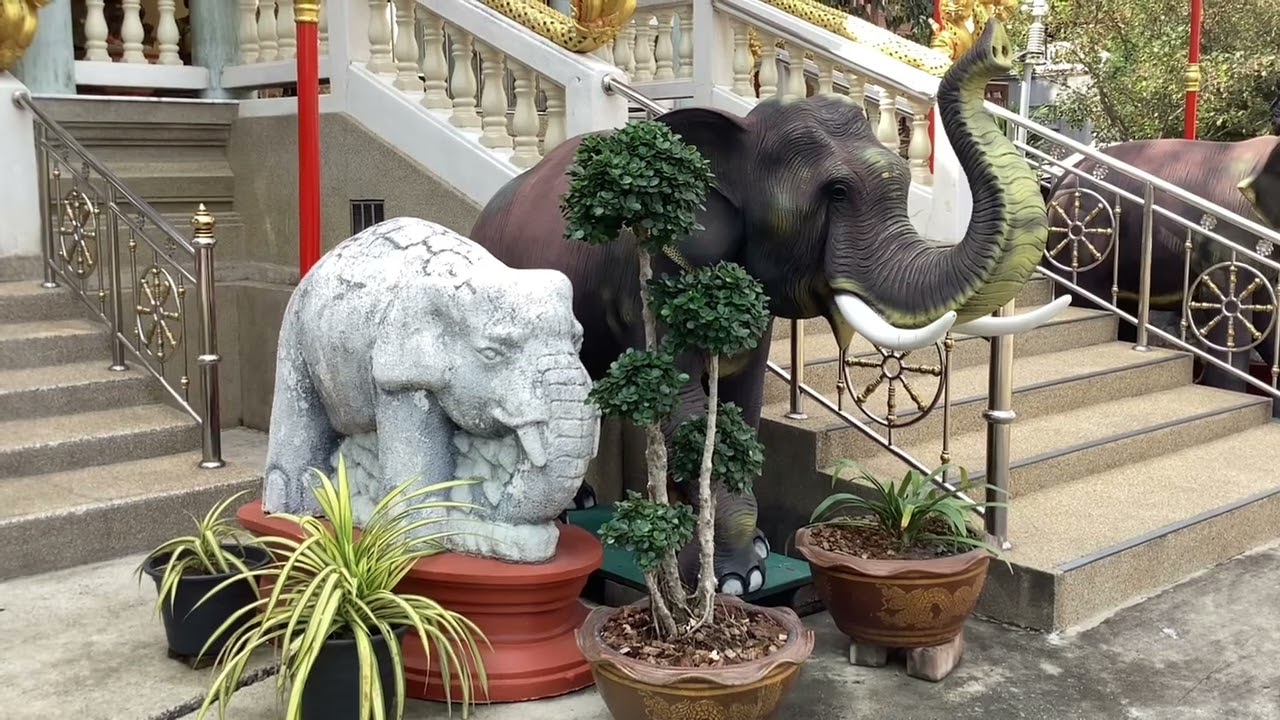
 Click to Access the Navigation Map GPS
Wat Kaew Phaithun Map
Recommend

 Phra Nakhon(24)Dusit(17)Khlong San(7)Khlong Toei(3)Jatujak(2)Don Muang(5)Taling Chan(26)Thon Buri(23)Bangkok Noi(31)Bangkok Yai(13)Bang Kapi(5)Bang Kun Tien(15)Bang Khen(3)Bang Kholam(10)Bang Sue(9)Bang Plad(23)Bang Rak(6)Chom Thong(16)Bung Kum(5)Pra Wet(6)Patum Wan(6)Pom Prap Sattru Phai(11)Paya Thai(1)Pra Kanong(4)Pa Sri Charoen(23)Min Buri(7)Yan Na Wa(8)Ratchathewi(4)Rat Burana(6)Lat Krabang(13)Nong Chok(16)Lat Phrao(4)Sathorn(4)Sam Phan Tha Wong(12)Nong Khaem(7)Huai Khwang(3)Suan Luang(7)Din Daeng(2)Lak Si(1)Sai Mai(8)Khan Na Yao(2)Wang Thong Lang(1)Klong Sam Wa(10)Watthana(2)Bang Na(4)Thawi Watthana(3)Bang Khae(5)Thung Khru(4)Bang Bon(3)


