
lovethailand home >Central Travel Attractions >Bangkok Travel Attractions >Watthana >Phra Khanong Nuea > Wat That Thong
TL;DR: Wat That Thong is located at Sukhumvit Road, Phra Khanong Nuea, Watthana, Bangkok, open Daily, hours 08.00 – 17.00. Highlights include Royal monastery near BTS Ekkamai, formed from the merger of Wat Na Phra That and Wat Thong Lang.
Wat That Thong
Open Days: Daily
Opening Hours: 08.00 – 17.00
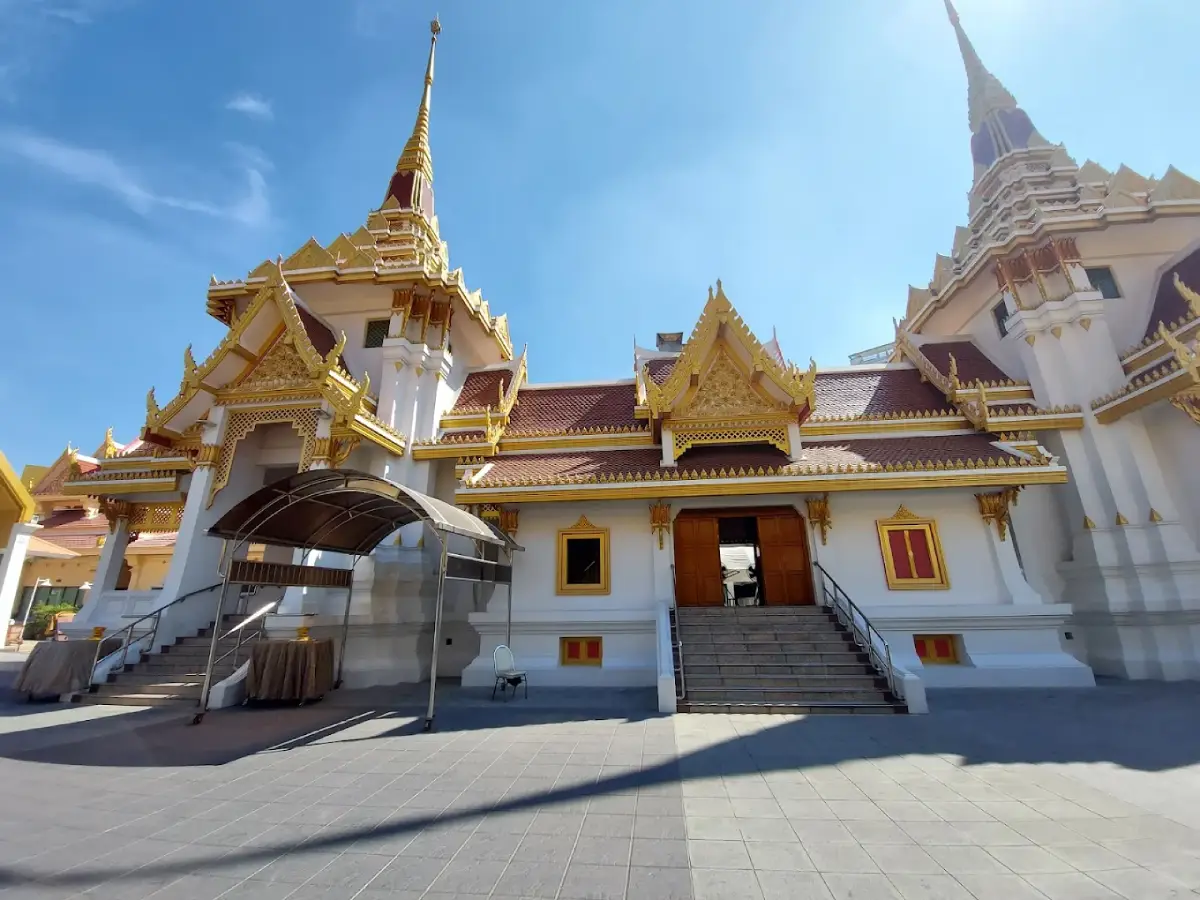
Wat That Thong is a royal Buddhist temple on Sukhumvit Road in Watthana District, Bangkok. Located near BTS Ekkamai Station, it is one of the easiest temples to visit along the Sukhumvit Line. The temple is suitable for merit-making, paying respect to sacred Buddha images, learning about Bangkok’s temple history, and taking a quiet break from the busy Ekkamai area. Its story is distinctive because Wat That Thong was formed from the merger of two older temples, Wat Na Phra That and Wat Thong Lang, before being relocated to its present site and given the name “Wat That Thong”.
Wat That Thong stands at 1325 Sukhumvit Road, Phra Khanong Nuea Subdistrict, Watthana District, Bangkok 10110. The temple covers 54 rai, 3 ngan, and 82 square wah. It belongs to the Dhammayuttika Nikaya and holds the status of a third-class royal monastery of the ordinary type. Its value lies not only in its convenient location beside Ekkamai’s transport network, but also in its layered history, which connects old riverside communities, Buddhist relic worship, urban redevelopment, and the expansion of Sukhumvit into one of Bangkok’s most active districts.
The origin of Wat That Thong begins with two earlier temples: Wat Na Phra That and Wat Thong Lang. Wat Na Phra That was originally located by the Chao Phraya River in the Khlong Toei area of old Phra Khanong. It was known for a large chedi that enshrined Buddha relics. This association with the relic chedi explains the word “That” in the later temple name and remains central to the temple’s identity.
Wat Thong Lang had a different origin. Local tradition links it to the fruit orchard of a man named Thong. A large Bodhi tree grew in the middle of the land, and because the Bodhi tree is strongly associated with Buddhism, Thong donated part of his property to establish a small temple. A Mon monk named Katho later helped develop the temple. In the Mon language, “ka” refers to a carp and “tho” means gold, so Katho carries the meaning of “golden carp”. Local people came to call him Somphan Thong. With both the land donor and the temple monk connected to the name Thong, the temple became known as Wat Pho Suwannaram, or Wat Pho Thong. Over time, people shortened the name to Wat Thong.
Because there were several temples named Wat Thong along the Chao Phraya River, the temple later became known as Wat Thong Lang, or the lower Wat Thong, to distinguish it from other temples with similar names. Its former site was near the riverbank and the mouth of Khlong Phra Khanong. In 1937, the government required land in the Khlong Toei riverside area to develop Bangkok Port. Both Wat Na Phra That and Wat Thong Lang were included in the expropriated area, and compensation was provided so that the monastic community could relocate or establish a new temple.
A monastic committee was appointed to manage the relocation. Phra Maha Ratchamangkhalachan, known as Thet Nithessakatthera, served as committee chairman while he was still holding the ecclesiastical rank of Phra Ratchamongkhon Muni at Wat Samphanthawong. Phra Phrom Muni, known as Phin Suwachathera, then holding the rank of Phra Thep Muni at Wat Bowonniwet Vihara, advised on the selection of the new site. The committee chose land in the Khlong Ban Kluai area, which became the present location of Wat That Thong. The land was formally acquired for the temple on 23 February 1937.
The new temple land covered 54 rai, 3 ngan, and 82 square wah. Historical records state that the land price at the time was 500 baht per rai, or 5 salung per square wah. Religious structures and temple assets from the two former temples were moved to the new site. Somdet Phra Sangharaja Chao Krommaluang Vajirananavongse, the Supreme Patriarch and abbot of Wat Bowonniwet Vihara, supported the relocation and combined the auspicious names of the two older temples. The word “That” came from Wat Na Phra That, and the word “Thong” came from Wat Thong Lang. Together they became “Wat That Thong”.
The official relocation and foundation of Wat That Thong at its present site took place in 1938. Monks and novices began staying at the temple in 1939. Wat That Thong received its Wisungkhamsima, the royal grant of boundary land for an ordination hall, on 24 October 1940. The temple then gradually developed its sacred objects, monastic buildings, and community facilities. The ordination hall took many years to complete, and the consecration of the boundary stones was held from 2 to 8 February 1962. This long development reflects the patience, faith, and cooperation of the monastic community and lay supporters.
Wat That Thong was elevated to the status of a third-class royal monastery of the ordinary type on 29 May 2012. This marked another important stage in the temple’s history, confirming its religious importance within Bangkok. Today, Wat That Thong is not simply a neighborhood temple beside Sukhumvit Road. It is a royal monastery that preserves the memory of older riverside temples while serving a modern urban community.
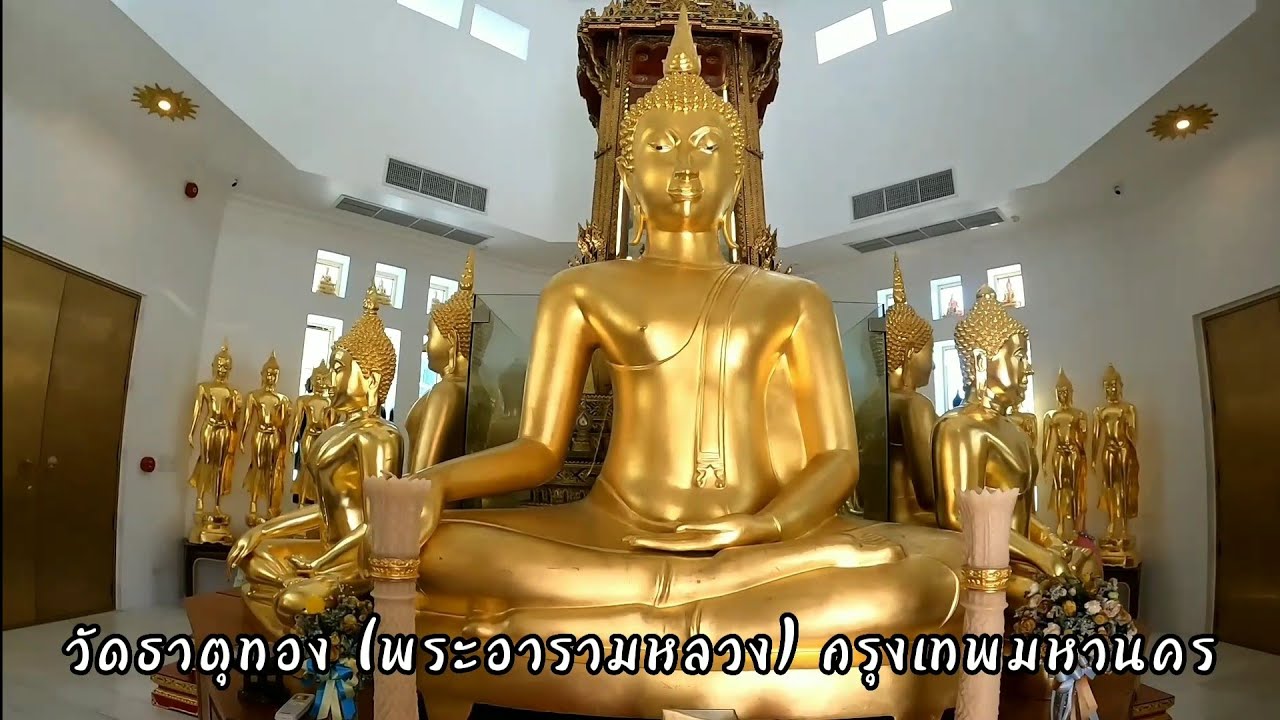
Inside the temple, visitors will find several important sacred objects and religious spaces. The ordination hall is the main area for monastic ceremonies and public worship. It houses Phra Sapphanyu, the principal Buddha image in the subduing Mara posture, together with other revered images and objects associated with the temple’s history. Important sacred objects include Phra Phuttha Chininthon, Phra Phuttha Mon Pricha Sukhothai, Luang Pho Phra Phuttha Aphiban Puangchon, a replica of Phra Phuttha Chinnarat, Buddha relics, a replica of Kyaiktiyo Pagoda, and Viharn Limpaphon.
The relic chedi and the idea of Buddhist relic worship are central to the temple’s name. The word “That” preserves the legacy of Wat Na Phra That, where a chedi enshrining Buddha relics once stood. Visiting Wat That Thong therefore means encountering more than a convenient temple near the Skytrain. It is a place where Buddhist devotion, the memory of old Khlong Toei, the transformation of the Chao Phraya riverside, and the development of modern Sukhumvit meet in one setting.
The atmosphere of Wat That Thong is shaped by the contrast between the calm temple grounds and the busy city outside. From BTS Ekkamai Station or Sukhumvit Road, visitors can reach the temple entrance quickly. Outside the temple are traffic, shopping malls, hospitals, offices, and the Ekkamai Bus Terminal. Inside, the mood becomes quieter, with temple courtyards, prayer areas, religious buildings, and spaces for merit-making. This makes the temple ideal for a short spiritual stop during the day or as part of a Sukhumvit cultural route.
Wat That Thong also plays an important role in education and community life. The temple grounds are connected with Matthayom Wat That Thong School, a well-known local school. The compound also includes community service areas such as the Wat That Thong Recreation Center, funeral halls, and a crematorium for Buddhist rites. These functions show how the temple continues to serve Bangkok residents not only as a place of worship, but also as a social, educational, and ceremonial center.
For visitors interested in Bangkok’s urban history, Wat That Thong is a useful case study in how temples moved with the city. The original temples were relocated because of the Bangkok Port development in Khlong Toei, while the new temple was established in Sukhumvit, a district that later became a major commercial and transport corridor. This story connects religious history, local memory, infrastructure development, and the growth of modern Bangkok during the 20th century.
Architecturally, Wat That Thong has the character of a living urban temple rather than an archaeological site from a single period. Its buildings have developed over time to support Buddhist ceremonies, education, community use, and daily worship. This gives the temple a practical and active atmosphere. Visitors come not only to admire religious architecture, but also to see how a Bangkok temple continues to function in everyday life.
A typical visit can begin at the ordination hall, where travelers pay respect to the principal Buddha image. From there, visitors can walk quietly through the main temple areas, reflect on the history of Wat Na Phra That and Wat Thong Lang, and make merit according to their own practice. A general visit usually takes around 30 minutes to 1 hour. Those who want to study the history in more detail or join Buddhist activities on major religious days should allow more time.
On Buddhist holy days and major Buddhist festivals, Wat That Thong becomes a popular place for local people to make merit, listen to Dhamma teachings, and join religious activities. Its proximity to BTS Ekkamai makes it accessible for visitors from other parts of Bangkok. For travelers who want to visit a meaningful temple in the city without spending much time on transport, Wat That Thong is a strong choice.
Visitors should dress respectfully and behave with care inside the temple grounds. Keep noise low around the ordination hall and ceremonial areas. If a funeral or religious ceremony is taking place, move through the area respectfully and avoid photography that could disturb participants. Wat That Thong is a visitor-friendly site, but it remains an active Buddhist temple and a ceremonial space for the local community.
Getting There is easiest by BTS Skytrain. Take the Sukhumvit Line to Ekkamai Station and walk to the temple entrance. Public buses along Sukhumvit Road also pass the area, including routes 2, 23, 25, 38, 40, 48, 71, 72, 98, 501, 508, 511, and 513. By car, the temple is accessible from Sukhumvit Road near Sukhumvit Soi 63, also known as Ekkamai. Because traffic in this area can be heavy, BTS is the most convenient option for most visitors.
Wat That Thong can be combined with nearby attractions such as the Science Center for Education and Bangkok Planetarium, Gateway Ekamai, Major Cineplex Sukhumvit, theCOMMONS Thonglor, and EmQuartier. This route works well for travelers who want to begin the day with a temple visit, then continue to learning spaces, restaurants, cafés, shopping, or lifestyle destinations in the Ekkamai–Thonglor area.
Wat That Thong remains one of the most accessible and historically meaningful temples in central Bangkok. It combines the legacy of older riverside temples, the symbolism of Buddha relics, the story of relocation from Khlong Toei to Sukhumvit, the status of a royal monastery, and the everyday role of a living temple in the city. For travelers looking for a Bangkok temple that is easy to reach, culturally meaningful, and closely tied to the Sukhumvit area, Wat That Thong is a worthwhile stop.
| Name | Wat That Thong Royal Monastery |
| Location | Sukhumvit Road, Phra Khanong Nuea, Watthana, Bangkok |
| Address | 1325 Sukhumvit Road, Phra Khanong Nuea, Watthana, Bangkok 10110, Thailand |
| Coordinates | 13.7194087, 100.5857861 |
| Highlights | Royal monastery near BTS Ekkamai, formed from the merger of Wat Na Phra That and Wat Thong Lang |
| History | The present temple was founded in 1938 after two older temples were relocated from the Khlong Toei riverside area. It received its Wisungkhamsima in 1940 and was elevated to a third-class royal monastery in 2012. |
| Name Origin | The name combines “That” from Wat Na Phra That and “Thong” from Wat Thong Lang. |
| Distinctive Features | Large urban temple with a peaceful atmosphere, ordination hall, relic chedi, important Buddha images, and community religious facilities |
| Travel Information | Take the BTS Sukhumvit Line to Ekkamai Station and walk to the temple. Public buses on Sukhumvit Road include routes 2, 23, 25, 38, 40, 48, 71, 72, 98, 501, 508, 511, and 513. By car, use Sukhumvit Road near Soi 63. |
| Current Status | Open for visitors, merit-making, and general worship during opening hours |
| Open Days | Daily |
| Opening Hours | 08.00 – 17.00 |
| Fees | No admission fee |
| Facilities | Parking, restrooms, worship areas, funeral halls, and Wat That Thong Recreation Center |
| Main Areas / Zones | Ordination Hall, Buddha Relic Chedi, Viharn Limpaphon, Replica of Kyaiktiyo Pagoda, Funeral Halls, Crematorium, Matthayom Wat That Thong School, and Wat That Thong Recreation Center |
| Abbot / Caretaker | Phra Ratchaworayan Sophon (Chup Khemangkaro) |
| Main Contact Number | 02-391-9616 |
| Official Website / Official Page | https://www.facebook.com/watthatthong/ |
| Nearby Tourist Attractions | 1. Gateway Ekamai, about 0.2 km 2. Science Center for Education and Bangkok Planetarium, about 0.4 km 3. Major Cineplex Sukhumvit, about 0.4 km 4. theCOMMONS Thonglor, about 2.7 km 5. EmQuartier, about 2.4 km |
| Nearby Restaurants | 1. Hom Duan Ekkamai, about 0.5 km, Tel. 085-037-8916 2. Bourbon St. Restaurant & Oyster Bar, about 0.6 km, Tel. 02-381-6801 3. Sabaijai Original, about 1.0 km, Tel. 02-714-2622 4. Khua Kling Pak Sod Thonglor, about 2.2 km, Tel. 086-053-7779 5. TUBA Bar & Restaurant, about 2.5 km, Tel. 02-711-5500 |
| Nearby Accommodations | 1. Civic Horizon Hotel & Residence, about 0.3 km, Tel. 02-116-9000 2. Somerset Ekamai Bangkok, about 1.1 km, Tel. 02-032-1999 3. Jasmine 59 Hotel Bangkok, about 1.2 km, Tel. 02-666-9999 4. Hotel Nikko Bangkok, about 1.5 km, Tel. 02-080-2111 5. Staybridge Suites Bangkok Thonglor, about 2.0 km, Tel. 02-059-8999 |
Frequently Asked Questions (FAQ)
Q: Where is Wat That Thong located?
A: Wat That Thong is located at 1325 Sukhumvit Road, Phra Khanong Nuea, Watthana, Bangkok, near BTS Ekkamai Station.
Q: What are the opening days and hours of Wat That Thong?
A: Wat That Thong is open daily from 08.00 to 17.00 for general visits, merit-making, and worship.
Q: Is there an admission fee for Wat That Thong?
A: No. Wat That Thong does not charge an admission fee.
Q: How do I get to Wat That Thong by BTS?
A: Take the BTS Sukhumvit Line to Ekkamai Station, then walk to the temple entrance. The temple is very close to the station.
Q: Why is Wat That Thong historically important?
A: Wat That Thong was created from the merger of two older temples, Wat Na Phra That and Wat Thong Lang, after their former sites in Khlong Toei were expropriated for the Bangkok Port development.
Q: What important sacred objects can visitors see at Wat That Thong?
A: Important sacred objects include the ordination hall, Buddha Relic Chedi, Phra Sapphanyu, Phra Phuttha Chininthon, a replica of Kyaiktiyo Pagoda, and Viharn Limpaphon.
Q: What type of trip is Wat That Thong suitable for?
A: Wat That Thong is suitable for merit-making, a short temple visit in Bangkok, cultural sightseeing, and a Sukhumvit route combined with Bangkok Planetarium, Gateway Ekamai, and the Ekkamai–Thonglor area.
Q: What is the main contact number of Wat That Thong?
A: The main contact number of Wat That Thong is 02-391-9616.
 Category: ●Places of Worship
 Group: ●Temple
Last Update : 2 MonthAgo
 Last Update : 2 MonthAgo
 Click to Access the Navigation Map GPS
Wat That Thong Map
Recommend

 Phra Nakhon(24)Dusit(17)Khlong San(7)Khlong Toei(3)Jatujak(2)Don Muang(5)Taling Chan(26)Thon Buri(23)Bangkok Noi(31)Bangkok Yai(13)Bang Kapi(5)Bang Kun Tien(15)Bang Khen(3)Bang Kholam(10)Bang Sue(9)Bang Plad(23)Bang Rak(6)Chom Thong(16)Bung Kum(5)Pra Wet(6)Patum Wan(6)Pom Prap Sattru Phai(11)Paya Thai(1)Pra Kanong(4)Pa Sri Charoen(23)Min Buri(7)Yan Na Wa(8)Ratchathewi(4)Rat Burana(6)Lat Krabang(13)Nong Chok(16)Lat Phrao(4)Sathorn(4)Sam Phan Tha Wong(12)Nong Khaem(7)Huai Khwang(3)Suan Luang(7)Din Daeng(2)Lak Si(1)Sai Mai(8)Khan Na Yao(2)Wang Thong Lang(1)Klong Sam Wa(10)Watthana(2)Bang Na(4)Thawi Watthana(3)Bang Khae(5)Thung Khru(4)Bang Bon(3)


