
lovethailand home >Central Travel Attractions >Phranakhon Si Ayutthaya Travel Attractions >Phranakhon Si Ayutthaya >Tha Wasukri > Wat Mae Nang Pluem
TL;DR: Wat Mae Nang Pluem is located at Khlong Sa Bua Subdistrict, Phra Nakhon Si Ayutthaya District, Phra Nakhon Si Ayutthaya Province (along the city canal, opposite the Hua Ro, open Daily, hours 08:00 – 17:00.
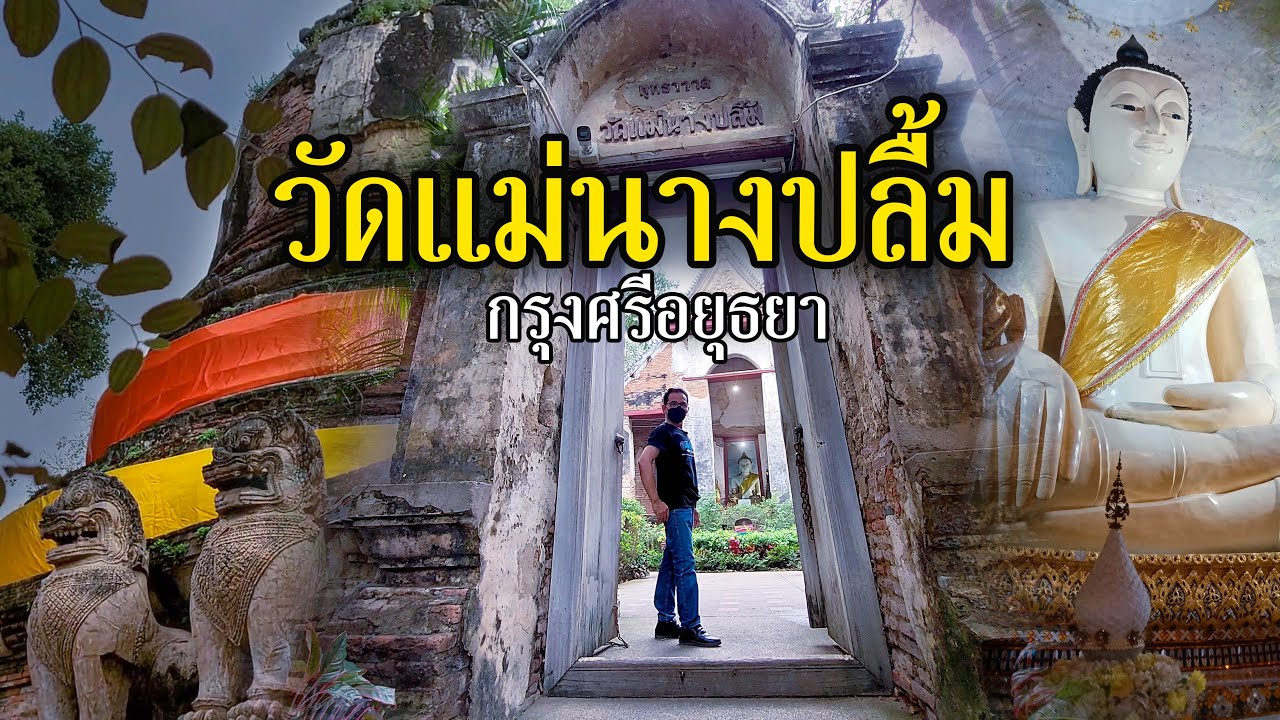
Wat Mae Nang Pluem

Open Days: Daily
Opening Hours: 08:00 – 17:00
Wat Mae Nang Pluem is the kind of temple where people who enjoy “reading evidence” often end up lingering longer than expected. The charm here is not the loud grandeur of the famous headline temples, but the craftsmanship and layers of art-history detail hidden in small elements, from the stupa base to the viharn that enshrines Luang Pho Khao. If you come to Ayutthaya hoping to find a temple that still offers “real, intact details” rather than a quick walk-through, this one quietly delivers.
The temple sits along the city canal on the outer side of the island and in the Hua Ro area, which is easy to reach. This makes Wat Mae Nang Pluem well-suited for a clustered itinerary, because you can move through the Hua Ro-side historic zone and nearby major temples without wasting time circling around by car. If your time is limited, focusing on this one area can still give you a full rhythm of the trip: a calm, lesser-known temple, a landmark-level temple, and a museum within a manageable distance.
One reason Wat Mae Nang Pluem feels different from many Ayutthaya temples is that important historic structures remain clearly visible, because it was not heavily destroyed like some sites during the fall of Ayutthaya. Historical narratives also mention that this area was connected to a Burmese encampment before the 2310 (1767) fall of the city, so locals called it “Khok Phama.” Although no traces of the camp mound are visible today, this layer of local memory helps explain why the temple still retains more tangible features than many visitors expect.
The heart of the temple is its “principal Lankan-style stupa,” standing as the central axis of the grounds. It is not only large but distinctive at its base: built on a high platform and encircled by stucco lions in a repeating rhythm that creates real visual force. Walking around it feels like the craftsmen are guiding your eyes to read the structure layer by layer, from the lower level of lion figures up to lotus-base tiers decorated with pumpkin-seed lotus motifs. This lotus pattern is often explained as linked to the Khmer–Lopburi artistic lineage and continued into early Ayutthaya art, making this stupa feel like a “walkable art-history lesson,” rather than something you simply photograph and move on from.
If you enjoy comparative art viewing, the fun of a lion-base stupa is how it reveals the movement of tastes and workshop models across the region. Many explanations connect it to relationships with the Khmer world and inspirations drawn from older Southeast Asian craftsmanship. This aligns with chronicles that describe campaigns against the Khmer around the late 20th Buddhist century, a period often associated with shifts in belief, style, and artistic models entering Siam. You do not have to accept this as rote fact, but once you stand in front of the lions, the pumpkin-seed lotus motifs, and the proportions of the bell-shaped body, you begin to see why art-history enthusiasts love to pause here for a long time.
Another layer that gives Wat Mae Nang Pluem its “across-eras” character is the viharn. There is information indicating restoration in the early Rattanakosin period, read through the stucco ornament on the front pediment, which shows a clear Chinese influence. The interesting part is that it does not erase the temple’s Ayutthaya personality; instead, it lets you see eras overlapping within a single place. Put simply, the temple does not tell its story in a straight line—it tells it in layers, letting visitors choose what to focus on based on their interests.
Inside the viharn is “Luang Pho Khao,” also known as Phra Phuttha Nimit Mongkhon Si Rattanatrai, a revered sacred Buddha image. People come to pay respects for different reasons: some out of simple faith, some with wishes in mind, some out of artistic curiosity. What feels consistent, though, is the atmosphere that naturally slows the mind down. If you want to pay respects without rushing, it helps to begin by simply looking at the image until it fills your attention, then let your thoughts settle, and only then make a short, clear, meaningful wish. The best way to worship in an ancient temple is to show respect to the place—without turning a sacred space into a content backdrop.
To walk the temple in a way that feels complete, start at the entrance archway or a point where you can first read the layout, then head to the principal stupa and “read the base layers” in full. Walk slowly around it, looking closely at the stucco lions and the pumpkin-seed lotus details, then enter the viharn to shift from observing craftsmanship to experiencing quiet reverence. This sequence gives you both overview and depth without feeling like you ran out of time.
If you want beautiful photos without disturbing others, avoid peak worship hours and try not to use flash inside buildings—especially near stucco surfaces or older elements. Strong light and getting too close can increase the risk of deterioration. Ancient temples that remain in real use rely on small acts of cooperation from visitors so their beauty can last for a long time.
Getting There If you drive, set your pin to “Wat Mae Nang Pluem, Phra Nakhon Si Ayutthaya” and take a route into the Hua Ro / Khlong Sa Bua area. From there, follow the line of the city canal and the point opposite the Hua Ro area, which is the simplest reference locals use. If you come by train, get off at Ayutthaya Railway Station and continue by taxi, local hired transport, or a ride-hailing app. The distance is not far, and it works well as part of a same-day route to nearby major temples. If you stay in the island or Hua Ro area, short ride-hailing trips or limited bicycle segments are possible, but it helps to plan around heat and opening hours so you do not have to rush.
Wat Mae Nang Pluem suits visitors who want Ayutthaya in a “quiet but substantial” way: a Lankan-style stupa with a lion base that can truly be read through art history, a viharn that shows restoration across eras, and Luang Pho Khao as a living center of local devotion. If you are tired of Ayutthaya trips that feel like rapid check-ins, give this place 45–90 minutes, and you may leave with the sense that the old capital still has corners that speak deeply—without needing to be loud.
| Place Name | Wat Mae Nang Pluem |
| Overview | An old temple in the Hua Ro–Khlong Sa Bua area along the city canal, with well-preserved historic structures. Noted for its principal Lankan-style stupa encircled by stucco lions and the viharn of Luang Pho Khao (Phra Phuttha Nimit Mongkhon Si Rattanatrai). Ideal for both worship and in-depth art appreciation. |
| Key Highlights | Principal Lankan-style stupa on a high base – Stucco lion figures encircling the lower tier – Lotus-base details with pumpkin-seed lotus motifs that invite art-historical reading – Luang Pho Khao viharn showing layered restoration across eras and a pediment with Chinese influence – Calm, shady atmosphere suited for slow, detailed viewing |
| Period / Era | An old temple from the Ayutthaya period (with long-standing accounts of its antiquity) and evidence of restoration in the early Rattanakosin period |
| Key Evidence | Lankan-style lion-base stupa – Luang Pho Khao viharn – Pediment stucco ornament – Temple layout and canal-side setting connected to the Hua Ro area |
| Name Origin | The name “Mae Nang Pluem” appears in local narratives associated with a remembered figure linked to the temple (with multiple versions of the story) |
| Address | Khlong Sa Bua Subdistrict, Phra Nakhon Si Ayutthaya District, Phra Nakhon Si Ayutthaya Province (along the city canal, opposite the Hua Ro area) |
| Access | Private car: set navigation to “Wat Mae Nang Pluem” and enter via the Hua Ro / Khlong Sa Bua area – Train: alight at Ayutthaya Railway Station, then continue by taxi/local hired transport/ride-hailing app – If staying on the island, short ride-hailing trips are convenient |
| Facilities | Internal walking area – Worship area for Luang Pho Khao – Historic-structure viewing points – Parking/restrooms (subject to temple management at different times) |
| Fees | Free entry (donations welcomed) |
| Current Status | Open to visitors and active for religious functions (no indication of permanent closure) |
| Nearby Attractions (with Distance) | 1) Wat Ratchaburana – approx. 1 km 2) Wat Mahathat – approx. 1.3 km 3) Wat Na Phra Meru Rachikaram Worawihan – approx. 1.3 km 4) Wat Phra Si Sanphet – approx. 1.8 km 5) Chao Sam Phraya National Museum – approx. 2.1 km |
| Nearby Restaurants (with Distance & Contact) | 1) Kuay Tiew Phak Wan Ayutthaya – approx. 2 km – 035-246-561 2) Jok Je Ni (Hua Ro Market) – approx. 0.2 km – 083-611-3352 3) Salapao A-Ma (Hua Ro Market) – approx. 0.8 km – 092-968-8166 4) Kuay Tiew Je Muay (Hua Ro Market) – approx. 0.7 km – 081-850-5481 5) Mixue (Hua Ro Market) – approx. 0.9 km – 096-697-4113 |
| Nearby Accommodations (with Distance & Contact) | 1) The Old Palace Resort – approx. 0.9 km – 081-855-8868 2) Tharuadaeng Old City Ayutthaya – approx. 0.9 km – 092-594-2961 3) T&N Home Ayutthaya – approx. 1 km – 087-828-7178 4) Luang Chumni Village – approx. 1 km – 081-971-9498 5) Zleepinezz Hostel – approx. 1.2 km – 095-639-9979 |
Frequently Asked Questions (FAQ)
Q: Where is Wat Mae Nang Pluem located, and is it difficult to get there?
A: The temple is in the Hua Ro–Khlong Sa Bua area along the city canal, opposite the Hua Ro area. It is easy to reach; from Ayutthaya Railway Station you can continue by taxi, local hired transport, or a ride-hailing app.
Q: Is Wat Mae Nang Pluem open every day, and what are the opening hours?
A: It is generally open daily from 08:00 to 17:00. Visiting in the morning or late morning is recommended for a more comfortable walk while observing details.
Q: What are the must-see highlights of Wat Mae Nang Pluem?
A: The key highlights are the principal Lankan-style stupa with a lion base and the Luang Pho Khao viharn, which serves as an important worship point and clearly shows craftsmanship and layered restoration across eras.
Q: What is Luang Pho Khao, and how should visitors pay respects politely?
A: Luang Pho Khao is a revered Buddha image enshrined in the temple’s viharn. Visitors should dress modestly, keep noise low, and make a short, clear wish without disturbing others who are worshipping.
Q: If I want to walk the temple properly, where should I start?
A: Start at the principal stupa, walk around to read the lion base and lotus tiers, then enter the Luang Pho Khao viharn to shift from observing art details to quiet worship.
Q: Is this temple suitable for photography?
A: Yes, but visitors should photograph respectfully, avoid flash inside buildings, and avoid blocking worshippers. Mornings and late mornings often offer good light and fewer crowds.
Q: Can I visit without a private car?
A: Yes. Take the train to Ayutthaya Railway Station, then continue by taxi, local hired transport, or a ride-hailing app. The distance is not far and it is easy to connect with nearby temples.
Q: How much time should I plan for a visit to Wat Mae Nang Pluem?
A: If you prefer a relaxed pace, plan about 45–90 minutes to view the stupa, read details, and pay respects to Luang Pho Khao comfortably.
 Category: ●Places of Worship
 Group: ●Temple
Last Update : 10 MonthAgo
 Last Update : 10 MonthAgo
 Click to Access the Navigation Map GPS
Wat Mae Nang Pluem Map
Recommend

 Art, Culture and Heritage
 Historical Sites and Monuments(7)
 Landmarks and Memorials(6)
 Royal Palace(4)
 Art, Craft Centres, Tradition(6)
 Museums(9)
 Educational Places
 Museum for Study(1)
 Educational Gardens, Farm(2)
 Training Center(1)
 University
 Autonomous Universities(2)
 Rajamangala University of Technology(2)
 Rajabhat University(1)
Temple(134)
 Church(2)
 Mosque(2)
 Other Sacred Sites(15)
 Research and Development
 Royal Project(4)
 Suburban Living
 Village, Community(10)
 Local Market(7)
 Floating Market(3)
 Nature and Wildlife
 Dam, Reservoir, Lake(1)
 River, Canal(3)
 Islands(2)
 Other natural attractions(1)
 Entertainment and Agricultural
 Animal camps and shows(2)
 Farms, Parks and Ecotourism(4)
 Waterpark(1)
 Travel Articles, Recipes
 Travel Review, Food Review(3)


