
lovethailand home >Central Travel Attractions >Phranakhon Si Ayutthaya Travel Attractions >Phranakhon Si Ayutthaya >Hua Ro > Wat Senasanaram Ratchaworawihan
TL;DR: Wat Senasanaram Ratchaworawihan is located at Hua Ro Subdistrict, Phra Nakhon Si Ayutthaya District, Phra Nakhon Si Ayutthaya Province (behind Chankasem National Museum), open Daily, hours 08:00 – 16:30.
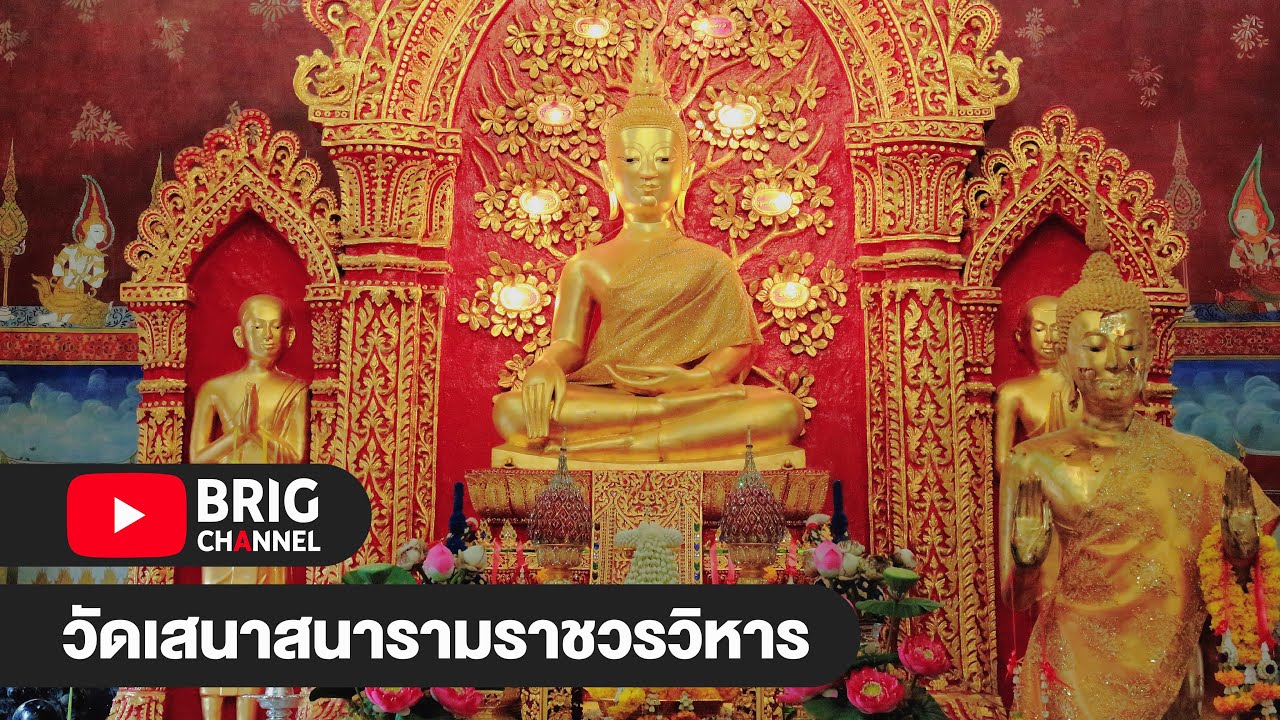
Wat Senasanaram Ratchaworawihan

Open Days: Daily
Opening Hours: 08:00 – 16:30
Wat Senasanaram Ratchaworawihan is one of the significant temples on Ayutthaya Historical Island, especially appreciated by those who have a deep interest in Thai art and architecture. From the moment visitors step inside, it becomes clear that this is a temple where “detail outweighs grandeur.” It may not be the largest or the most famous temple on mainstream tourist routes, but for those who enjoy understanding temples through tangible historical evidence, Wat Senasanaram offers a complete narrative through architecture, mural paintings, and sculpture. These elements clearly reflect transitions from the Ayutthaya period to later Rattanakosin influences, thoughtfully integrated without disrupting the temple’s original identity.
The temple’s location is straightforward and convenient. Wat Senasanaram is situated directly behind the Chankasem National Museum, in an area that is easy to reach and ideal for organizing a compact sightseeing route. Even with limited time, visitors can focus on this single zone and comfortably explore the museum, the temple, and nearby historical sites on foot without repeatedly using transportation. For those who enjoy slow and attentive walking, the strength of this temple lies in its layered experience—there is always something that encourages visitors to pause and observe more closely, rather than simply walk through.
This temple is ancient and is believed to have originally been known as “Wat Suea.” It later became known as Wat Senasanaram Ratchaworawihan. One of its most defining features is the ordination hall (ubosot), which preserves the architectural character of the Ayutthaya period. The building includes both a front and rear porch, giving it a sense of rhythm and symmetry. Walking around the structure reveals that each side was deliberately designed to be appreciated equally, encouraging visitors to “read” the architecture from every angle.
The front of the ubosot faces east and features a standing Buddha figure on the pediment. At the rear of the ubosot is a lacquered and gilded relief of Erawan, the three-headed elephant, flanked by ceremonial horns. Above Erawan appears the royal emblem of King Rama IV. This combination of elements often causes visitors to linger, as it clearly reflects religious belief, symbolism, and historical context, revealing the involvement of royal patronage and the aesthetic preferences of different eras embedded meaningfully within the sacred space.
Inside the ubosot are two important Buddha images. The most widely discussed is “Phra Samphutthamuni,” an Ayutthaya-period bronze Buddha in the subduing Mara posture, lacquered and gilded, enshrined atop an ornate pedestal. This area forms the spiritual heart of the hall. The Buddha image conveys the solid, grounded presence typical of Ayutthaya art, while the surrounding decorative elements enhance the sense of sacredness in a tangible way. Standing close, visitors often realize that spiritual atmosphere in Thai temples emerges not solely from the Buddha image itself, but from the careful spatial design that gradually brings calm to both the eyes and the mind.
Another reason Wat Senasanaram is beloved by art enthusiasts is the mural paintings inside the ubosot. The upper sections depict celestial beings and apsaras paying homage to the principal Buddha image. Between the windows are murals illustrating the “Royal Ceremonies of the Twelve Months,” a subject rarely found elsewhere. These paintings are especially engaging for attentive viewers, as they do not merely convey religious narratives but also portray everyday life, clothing, activities, and the social atmosphere of the period, elevating the temple’s value as a cultural record rather than simply a place of worship.
On the front interior wall of the ubosot is a royal portrait depicting the king in full ceremonial attire beneath the Great Crown of Victory, seated upon a throne within a teakwood frame. This detail adds another interpretive layer, illustrating the fusion of sacred religious space with royal and national memory. In the context of Ayutthaya, it enhances the experience of walking through a living dialogue between earlier and later historical periods.
Adjacent to the ubosot, the Viharn of the Reclining Buddha is another area that deserves unhurried attention. Located beside the large chedi and positioned perpendicular to the ubosot, this hall houses an Ayutthaya-style reclining Buddha constructed from assembled stone segments and carved into form, measuring approximately 14.12 meters in length. This image was originally enshrined at Wat Mahathat before King Rama V ordered the construction of this viharn and relocated the Buddha here. As a result, Wat Senasanaram became a place where an important fragment of the old capital is preserved in a setting that allows closer appreciation of its details.
Another distinctive image is “Phra In Plaeng,” a bronze Buddha in the subduing Mara posture, brought from Vientiane in 1858. It is enshrined in a viharn adjacent to the Reclining Buddha Hall. According to legend, the Buddha image was created by Indra in human form. Behind the image stands a Bodhi tree shrine. This element adds another layer of significance, extending the temple’s narrative beyond Ayutthaya and reflecting historical regional connections and the movement of sacred objects across Southeast Asia.
The interior of the Phra In Plaeng Viharn is rich in visual detail. The floor is paved with marble, with raised platforms on both sides of the Buddha image serving as seating for monks, and two gilded stone preaching thrones. The upper walls depict deities paying homage to Phra In Plaeng, while the areas between windows portray scenes of everyday life connected to Buddhism and temple activities. The window panels are decorated with gilt lacquer designs illustrating ten animals prohibited for monks to consume, offering a vivid visual interpretation of religious teachings grounded in daily life.
Behind the ubosot stands a large bell-shaped chedi, constructed of brick and stucco in the Ayutthaya style, rising to approximately 13 wa in height, with a square base platform. Walking from the ubosot to the chedi and back toward the viharns reveals a thoughtfully planned layout that naturally guides visitors from the main structure to key elements and back again, encouraging both a broad overview and detailed observation.
To experience the temple fully, it is recommended to begin at the ubosot, walking around to examine both the front and rear pediments before entering to spend time with the mural paintings—especially the Twelve Royal Ceremonies, which are often overlooked. Continue to the Reclining Buddha Viharn, then to the Phra In Plaeng Viharn, and conclude at the chedi behind the ubosot. This route provides both depth and completeness without feeling rushed.
As Wat Senasanaram is an active royal monastery, visitors should dress modestly, keep noise to a minimum, and avoid using flash photography inside buildings with murals or delicate artistic surfaces. Visitors are encouraged to follow any posted instructions from temple caretakers and to be mindful of worshippers by maintaining respectful distance and avoiding obstruction of pathways.
Getting There By private car, set your destination to “Wat Senasanaram Ratchaworawihan.” The temple is located behind the Chankasem National Museum on Ayutthaya Historical Island and is easily accessible. By train, disembark at Ayutthaya Railway Station, then take a taxi, local transport, or ride-hailing service to the Chankasem Museum area, and continue a short distance to the temple behind the museum.
If you are looking for a temple in Ayutthaya that offers genuine depth without relying on lengthy explanations, Wat Senasanaram is an excellent choice. With its Ayutthaya-style ubosot and symbolic pediments, rare mural paintings of the Twelve Royal Ceremonies, the Reclining Buddha linked to Wat Mahathat, the Phra In Plaeng Viharn connected to Vientiane, and the bell-shaped chedi behind the ubosot, everything lies within a comfortable walking distance—allowing visitors to leave enriched rather than exhausted.
| Place Name | Wat Senasanaram Ratchaworawihan |
| Overview | An ancient temple on Ayutthaya Historical Island (located behind the Chankasem National Museum), noted for its Ayutthaya-style ordination hall, significant mural paintings, and the Reclining Buddha and Phra In Plaeng viharns. Suitable for both worship and in-depth art appreciation. |
| Key Highlights | Ayutthaya-style ubosot with front and rear porches – Standing Buddha on the front pediment – Gilded Erawan relief with King Rama IV’s royal emblem – Phra Samphutthamuni (Ayutthaya-period, gilded) – Rare mural paintings of the Twelve Royal Ceremonies – Reclining Buddha Viharn (approx. 14.12 m) – Phra In Plaeng Viharn (brought from Vientiane in 1858) – Bell-shaped chedi behind the ubosot |
| Historical Period | Originally an Ayutthaya-period temple (formerly known as “Wat Suea”), with significant additions and restorations extending into the Rattanakosin period, including the reigns of Kings Rama IV and Rama V |
| Important Evidence | Ayutthaya-style ordination hall and pediments – Mural paintings (celestial beings and Twelve Royal Ceremonies) – Reclining Buddha Viharn – Phra In Plaeng Viharn – Bell-shaped chedi |
| Name Origin | Believed to have originally been called “Wat Suea” before later becoming known as Wat Senasanaram Ratchaworawihan |
| Current Abbot / Administrator | Phra Thep Mongkhon Sophon (Sophon Panyasobhono) |
| Address | Hua Ro Subdistrict, Phra Nakhon Si Ayutthaya District, Phra Nakhon Si Ayutthaya Province (behind Chankasem National Museum) |
| Access | Private car: set navigation to “Wat Senasanaram Ratchaworawihan” and enter via the Chankasem Museum area – Train: alight at Ayutthaya Railway Station, then take a taxi or local transport to the Chankasem Museum zone |
| Facilities | Temple grounds suitable for walking – Areas for worship and merit-making – Architectural and mural viewing points (flash photography discouraged) – Parking and restrooms (subject to temple management at different times) |
| Admission Fee | Free admission (donations welcomed) |
| Current Status | Open to visitors and active for religious functions (no indication of permanent closure) |
| Contact Number | +66 35 251 518 |
| Nearby Attractions (with Distance) | 1) Chankasem National Museum – approx. 0.3 km 2) Wat Suwandararam Ratchaworawihan – approx. 0.8 km 3) Pom Phet – approx. 2 km 4) Wat Mahathat – approx. 2 km 5) Wat Phra Si Sanphet / Ancient Royal Palace – approx. 2 km |
| Nearby Restaurants (with Distance & Contact) | 1) Kuay Tiew Phak Wan Ayutthaya – approx. 0.9 km – +66 89 539 9427 2) Pae Krung Kao Restaurant – approx. 2 km – +66 35 241 555 3) Pae Krung Kao Restaurant (Reservation) – approx. 2 km – +66 88 649 1347 4) Coffeenity Coffee Bar & Roaster Ayutthaya – approx. 2 km – +66 81 947 2067 5) Kaffa Bistro Ayutthaya – approx. 2 km – +66 84 040 1818 |
| Nearby Accommodations (with Distance & Contact) | 1) Krungsri River Hotel – approx. 3 km – +66 35 244 333 2) The Avail Hotel Ayutthaya – approx. 3 km – +66 35 244 456 3) Sala Ayutthaya – approx. 4 km – +66 35 242 588 4) Centara Ayutthaya – approx. 5 km – +66 35 243 555 5) Classic Kameo Hotel Ayutthaya – approx. 5 km – +66 35 212 535 |
Frequently Asked Questions (FAQ)
Q: Where is Wat Senasanaram Ratchaworawihan located in Ayutthaya?
A: It is located on Ayutthaya Historical Island, behind the Chankasem National Museum in Hua Ro Subdistrict. The area is easy to access and suitable for planning a connected visit to museums and historical sites.
Q: What are the opening hours of Wat Senasanaram?
A: The temple is generally open daily from 08:00 to 16:30. Visiting in the morning is recommended for a more relaxed walk and better time to appreciate the murals.
Q: What are the must-see highlights of Wat Senasanaram?
A: Key highlights include the Ayutthaya-style ubosot with front and rear porches, symbolic pediments and the Erawan relief, the rare mural paintings of the Twelve Royal Ceremonies, and the Reclining Buddha and Phra In Plaeng viharns, both rich in artistic detail.
Q: What is the background of the Reclining Buddha Viharn?
A: During the reign of King Rama V, the viharn was constructed at Wat Senasanaram, and the Reclining Buddha image was relocated from Wat Mahathat, preserving an important piece of Ayutthaya heritage within this temple.
Q: Can Wat Senasanaram be visited without a private car?
A: Yes. Visitors can take a train to Ayutthaya Railway Station and then continue by taxi, local transport, or a ride-hailing service to the Chankasem Museum area, with the temple located just behind the museum.
Q: How should visitors behave when entering buildings with mural paintings?
A: Visitors should dress modestly, keep noise levels low, avoid using flash photography, refrain from touching painted surfaces, and remain considerate of worshippers performing religious activities.
 Category: ●Places of Worship
 Group: ●Temple
Last Update : 10 MonthAgo
 Last Update : 10 MonthAgo
 Click to Access the Navigation Map GPS
Wat Senasanaram Ratchaworawihan Map
Recommend

 Art, Culture and Heritage
 Historical Sites and Monuments(7)
 Landmarks and Memorials(6)
 Royal Palace(4)
 Art, Craft Centres, Tradition(6)
 Museums(9)
 Educational Places
 Museum for Study(1)
 Educational Gardens, Farm(2)
 Training Center(1)
 University
 Autonomous Universities(2)
 Rajamangala University of Technology(2)
 Rajabhat University(1)
Temple(134)
 Church(2)
 Mosque(2)
 Other Sacred Sites(15)
 Research and Development
 Royal Project(4)
 Suburban Living
 Village, Community(10)
 Local Market(7)
 Floating Market(3)
 Nature and Wildlife
 Dam, Reservoir, Lake(1)
 River, Canal(3)
 Islands(2)
 Other natural attractions(1)
 Entertainment and Agricultural
 Animal camps and shows(2)
 Farms, Parks and Ecotourism(4)
 Waterpark(1)
 Travel Articles, Recipes
 Travel Review, Food Review(3)


