
lovethailand home >North Travel Attractions >Tak Travel Attractions >Sam Ngao >Sam Ngao > Wat Chonprathan Rangsan
TL;DR: Wat Chonprathan Rangsan is located at Moo 3, Ban Jadsan, Sam Ngao Subdistrict, Sam Ngao District, Tak Province, open Daily, hours Open for daytime religious visits and community worship.
Wat Chonprathan Rangsan
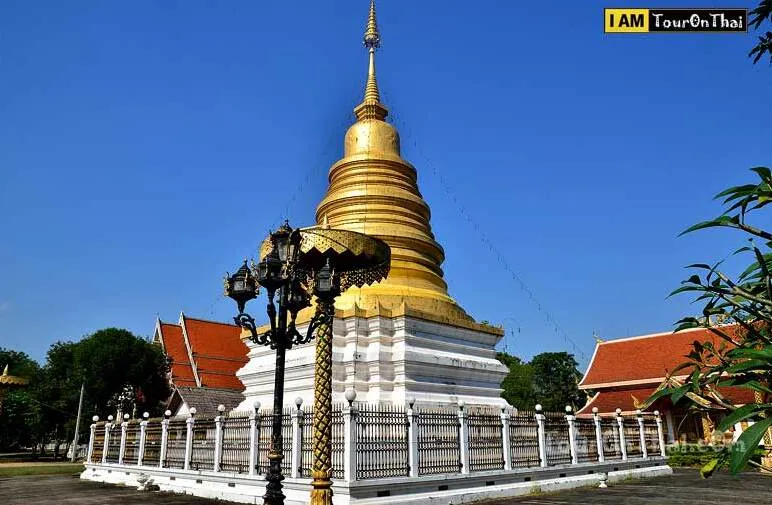
Open Days: Daily
Opening Hours: Open for daytime religious visits and community worship
Wat Chonprathan Rangsan, also known locally as “Wat Jadsan,” is an important community temple in Moo 3, Ban Jadsan, Sam Ngao Subdistrict, Sam Ngao District, Tak Province. Located about 5 km from Bhumibol Dam, the temple is closely connected with one of the most significant changes in the local history of Sam Ngao: the construction of Bhumibol Dam and the relocation of communities from the former Ban Na area. The temple was built by the Royal Irrigation Department to replace 8 old temples that were submerged after the dam began storing water. Today, Wat Chonprathan Rangsan is not only a place of worship but also a living memorial of faith, relocation, and community memory.
The temple stands in Ban Jadsan, a resettled community created for villagers who had to move from their original homes after the construction of Bhumibol Dam. When the reservoir began to fill, residential areas, temples, and sacred places in the former Ban Na Subdistrict were affected by rising water. The Royal Irrigation Department therefore arranged a new settlement area and built Wat Chonprathan Rangsan as a replacement temple for the people. For this reason, the temple represents more than a religious site. It is a symbol of a new beginning for a displaced community that carried its faith, sacred objects, and memories into a new landscape.
Wat Chonprathan Rangsan was established in 1959 as a replacement for 8 older temples: Wat Ban Huai, Wat Si Thaen, Wat Don Kaeo, Wat Luang, Wat Tha Duea, Wat Tha Pong, Wat Um Wap, and Wat Phra That Loi. These temples were submerged due to the creation of the Bhumibol Dam reservoir. Although the original temple sites disappeared beneath the water, their spiritual importance did not vanish. Sacred objects, relics, Buddhist images, and ritual items from the old temples were brought together and preserved at Wat Chonprathan Rangsan, allowing the community’s Buddhist heritage to continue in the new settlement.
Among the important sacred items brought to the temple were relics of the Lord Buddha, the revered Phra That Loi, the top finial of a chedi, bronze Buddha images of various sizes and postures, a gold-patterned scripture chest, wooden cabinets, and other religious objects. These items are valuable not only as sacred objects but also as evidence of a community’s effort to preserve its spiritual identity after relocation. They show how the people of the former Ban Na area refused to let their religious heritage disappear with the submerged landscape.
The most revered object at Wat Chonprathan Rangsan is Luang Pho Than Chai, a group of 3 bronze Buddha images in the Mara Vichai posture, created in the Chiang Saen Sing Sam artistic style. The first image has a lap width of 19 inches and a height of 32 inches. The second has a lap width of 16 inches and a height of 31 inches. The third and smallest image has a lap width of 9 inches and a height of 20 inches. These images are deeply respected by the people of Sam Ngao District and are regarded as sacred Buddha images connected with the identity of the local community.
Luang Pho Than Chai is believed by local people to be more than 1,300 years old and has long been worshipped as a highly sacred Buddha image. Before the construction of Bhumibol Dam, the images were associated with the old community and religious landscape of Ban Na. After the relocation, they were enshrined at Wat Chonprathan Rangsan, becoming a spiritual anchor for villagers who had lost their former homes and temples. In this way, Luang Pho Than Chai became a bridge between the old community and the new settlement.
Local tradition preserves several stories connected with the sacred power of Luang Pho Than Chai. One well-known account refers to an event in 1926, when a police chief named Khun Charun allegedly took the Buddha image and tried to sell it in Rahaeng town. No one dared to buy it, and Khun Charun and his companions eventually returned the image. According to the story, while resting by the temple in the evening, Khun Charun suffered a seizure and later died. This story has been remembered by local people as a warning and as part of the sacred reputation of Luang Pho Than Chai.
Another important event occurred on 2 September 2008, when the smallest Luang Pho Than Chai image was stolen from Wat Chonprathan Rangsan. The theft deeply affected the community because the image was not only an ancient Buddha statue but also a symbol of local faith. On 12 September 2008, the stolen image was returned after being left at Wat Khlong Ranong in Chum Saeng District, Nakhon Sawan Province, and the police were informed so that it could be sent back to Wat Chonprathan Rangsan. For many local believers, the return of the image strengthened their faith in the sacred power of Luang Pho Than Chai.
The temple’s strongest living tradition takes place during the Songkran Festival. Every year, local people in Sam Ngao Municipality invite all 3 Luang Pho Than Chai images to join a procession through nearby villages. Along the route, villagers prepare flowers, incense, candles, and offerings to pay respect. Many people sprinkle water on the Buddha images and scatter flowers and popped rice along the procession route. This ceremony is an important expression of local faith, asking for blessings, prosperity, and peace for families and the community during the Thai New Year.
The Songkran procession of Luang Pho Than Chai is not merely a festive event. It is a community ritual that links generations together. Elderly villagers pass on memories of the former Ban Na area and the old temples to younger family members, while younger generations learn why the Buddha images and the temple are deeply meaningful to the people of Sam Ngao. The procession also brings sacredness out from the temple into the streets and homes of the community, making Buddhism part of everyday village life.
Wat Chonprathan Rangsan is significant on several levels. It is an active Buddhist community temple, a replacement temple for 8 submerged temples, a repository of sacred objects from the former settlement, and the home of Luang Pho Than Chai. For travelers interested in cultural tourism, local history, Buddhist faith, and the social impact of Bhumibol Dam, the temple offers a deeper understanding of Sam Ngao District than a scenic viewpoint alone can provide.
The temple’s location near Bhumibol Dam makes it suitable for a meaningful cultural route. Visitors can begin with a visit to Wat Chonprathan Rangsan to pay respect to Luang Pho Than Chai and learn about the resettled community, then continue to Bhumibol Dam, the dam viewpoints, the commemorative park area, or guesthouse areas within the dam complex. This route allows travelers to see both sides of the local story: the engineering and landscape of the dam, and the cultural memory of the people who had to relocate because of it.
The Ban Jadsan community surrounding the temple is also important. It was formed by people from different former villages who were moved to a newly allocated area. Creating a new community required not only houses and roads but also a temple, shared rituals, and a place where people could rebuild social and spiritual bonds. Wat Chonprathan Rangsan helped the resettled community establish continuity after a major disruption. It became the place where merit-making, Buddhist festivals, local gatherings, and community identity could continue.
For visitors interested in the human side of development, Wat Chonprathan Rangsan provides a clear example of how large infrastructure projects can reshape local life. Bhumibol Dam brought major national benefits in water management, electricity, and development. At the same time, it required communities to leave their original homes and sacred spaces. The temple shows how local people adapted by moving their sacred objects and memories into a new religious center, ensuring that their Buddhist identity continued despite the loss of the old landscape.
Wat Chonprathan Rangsan should therefore be understood together with Bhumibol Dam. The dam tells the story of engineering, hydropower, and modern infrastructure, while the temple tells the cultural and spiritual story of the people affected by the dam. Visiting both places together gives travelers a fuller picture of Sam Ngao District and Tak Province. It transforms a simple trip to the dam into a journey through history, faith, relocation, and community resilience.
Visitors who come to worship Luang Pho Than Chai should do so with respect. The temple is still a functioning religious space for local Buddhists, so modest dress and quiet behavior are appropriate. Visitors should not touch sacred objects without permission and should follow any guidance from temple caretakers or local residents, especially during ceremonies and festival periods. A respectful visit allows travelers to appreciate the temple not just as an attraction, but as a living place of faith.
The temple is especially meaningful for travelers who prefer cultural depth over crowded tourist attractions. Wat Chonprathan Rangsan does not rely on grand architecture or commercial tourism. Its value lies in its story: a community displaced by water, 8 temples remembered through a new temple, sacred objects preserved through faith, and Luang Pho Than Chai continuing to unite the people of Sam Ngao. This makes the temple a distinctive cultural stop in Tak Province.
Getting There is most convenient by private car or rental car. From Tak town, drive toward Sam Ngao District and continue in the direction of Bhumibol Dam. The temple is located in Ban Jadsan, Sam Ngao Subdistrict, about 5 km from the dam area. Because nearby public transportation options may be limited, private transportation is the most practical choice for visitors who want to combine the temple with Bhumibol Dam, local restaurants, viewpoints, and nearby accommodation.
For a half-day itinerary, visitors can start by paying respect to Luang Pho Than Chai at Wat Chonprathan Rangsan, then continue to Bhumibol Dam to enjoy the viewpoint and reservoir scenery. Those with more time can explore the dam area, have a meal at a nearby restaurant, or arrange a longer trip related to religious and natural attractions around the reservoir. During Songkran, visitors may also experience the local procession of Luang Pho Than Chai, one of the most meaningful traditions of Sam Ngao.
In summary, Wat Chonprathan Rangsan is one of the most culturally significant temples in Sam Ngao District. Built in 1959 by the Royal Irrigation Department as a replacement for 8 old temples submerged by the Bhumibol Dam reservoir, it preserves sacred objects from the former community and enshrines the revered Luang Pho Than Chai. The temple is a place of worship, memory, and community identity. For travelers seeking to understand Tak Province beyond scenery, this temple offers a powerful story of faith, adaptation, and continuity.
| Name | Wat Chonprathan Rangsan |
| Local Name | Wat Jadsan |
| Location | Moo 3, Ban Jadsan, Sam Ngao Subdistrict, Sam Ngao District, Tak Province |
| Address | Ban Jadsan, Moo 3, Sam Ngao Subdistrict, Sam Ngao District, Tak Province 63130 |
| Community Coordinates | Latitude 17.214635346530102, Longitude 99.04987397614474 |
| Highlights | A temple built to replace 8 old temples submerged by the Bhumibol Dam reservoir, and the home of the revered Luang Pho Than Chai Buddha images |
| History | Built in 1959 by the Royal Irrigation Department to serve the resettled community from the former Ban Na area after the construction of Bhumibol Dam |
| Name Origin | The name reflects the Royal Irrigation Department’s role in creating the temple for the newly allocated community area |
| Distinctive Features | A Mahanikaya Buddhist temple that preserves sacred objects from several old temples submerged by the reservoir |
| Important Sacred Objects | Luang Pho Than Chai, Buddha relics, Phra That Loi, chedi finial, bronze Buddha images, scripture chest, wooden cabinets, and religious objects from the old temples |
| Old Temples Replaced | Wat Ban Huai, Wat Si Thaen, Wat Don Kaeo, Wat Luang, Wat Tha Duea, Wat Tha Pong, Wat Um Wap, and Wat Phra That Loi |
| Luang Pho Than Chai | Three bronze Buddha images in Mara Vichai posture, Chiang Saen Sing Sam style: 19-inch lap width and 32-inch height, 16-inch lap width and 31-inch height, and 9-inch lap width and 20-inch height |
| Main Tradition | Songkran procession and water-pouring ceremony for all 3 Luang Pho Than Chai images through nearby villages |
| Travel Information | Accessible by private car or rental car from Tak town toward Sam Ngao District and Bhumibol Dam; the temple is about 5 km from the dam |
| Current Status | Active Mahanikaya Buddhist temple and community faith center in Sam Ngao District |
| Open Days | Daily |
| Opening Hours | Open for daytime religious visits and community worship |
| Facilities | Religious activity areas, temple courtyard, Luang Pho Than Chai worship area, and parking space according to local temple conditions |
| Main Areas / Zones | Luang Pho Than Chai worship area, sacred objects from the old temples, temple courtyard, and community religious activity area |
| Tourism Information Contact | Tourism Authority of Thailand, Tak Office, Tel. 055-514341 |
| Official Website / Official Page | Tourism information is published by the Tourism Authority of Thailand and Sam Ngao Municipality |
| Nearby Tourist Attractions | 1. Bhumibol Dam, about 5 km 2. Bhumibol Dam Commemorative Park, about 5 km 3. Bhumibol Dam Guesthouse And Tourism Area, about 6 km 4. Wat Phra Borommathat Kaeng Soi, about 20 km by boat or raft route from Bhumibol Dam 5. Bhumibol Dam Viewpoint, about 5 km 6. Wat Phra Borommathat Ban Tak, about 45 km |
| Nearby Restaurants | 1. Krua Marum Somphon Sam Ngao, about 1 km, Tel. 090-681-0799 2. Huen Phu Kaeo Restaurant, Bhumibol Dam, about 5 km, Tel. 089-961-6572 3. Khun Sai Chon Coffee, Bhumibol Dam, about 5 km, Tel. 055-881-211 ext. 4436 4. Krua 3 M Restaurant, Bhumibol Dam Entrance Area, about 8 km, Tel. 081-888-7694 5. Caffeine Cafe, about 38 km, Tel. 095-353-4030, 096-860-2807 |
| Nearby Accommodations | 1. Bhumibol Dam Guesthouse, about 6 km, Tel. 055-881-237 2. Bhumibol Dam Guesthouse via EGAT Bhumibol Dam, about 6 km, Tel. 055-881-237, 055-881-211 to 5 ext. 4002, 4009 3. Sooksabai Resort Sam Ngao Tak, about 8 km, Tel. 089-166-7368 4. Poonthip Daily And Monthly Rooms Sam Ngao, about 8 km, Tel. 080-565-9888, 082-035-1756 5. Rim Thara Resort Tak, about 10 km, Tel. 064-419-9155 6. Baan Suan Resort Sam Ngao, about 9 km, Tel. 086-679-2759 |
Frequently Asked Questions (FAQ)
Q: Where is Wat Chonprathan Rangsan located?
A: Wat Chonprathan Rangsan is located in Moo 3, Ban Jadsan, Sam Ngao Subdistrict, Sam Ngao District, Tak Province, about 5 km from Bhumibol Dam.
Q: Why was Wat Chonprathan Rangsan built?
A: It was built by the Royal Irrigation Department in 1959 to replace 8 old temples submerged by the Bhumibol Dam reservoir and to serve the resettled community from the former Ban Na area.
Q: Why is Luang Pho Than Chai important?
A: Luang Pho Than Chai consists of 3 revered bronze Buddha images in Chiang Saen Sing Sam style, deeply respected by the people of Sam Ngao as sacred images connected with local identity and faith.
Q: Which 8 old temples were replaced by Wat Chonprathan Rangsan?
A: The 8 temples were Wat Ban Huai, Wat Si Thaen, Wat Don Kaeo, Wat Luang, Wat Tha Duea, Wat Tha Pong, Wat Um Wap, and Wat Phra That Loi.
Q: What is the main annual tradition at Wat Chonprathan Rangsan?
A: The main tradition is the Songkran procession and water-pouring ceremony for all 3 Luang Pho Than Chai images, when local villagers invite the images through nearby communities for worship and blessing.
Q: What nearby attractions can be visited with Wat Chonprathan Rangsan?
A: Visitors can combine the temple with Bhumibol Dam, Bhumibol Dam Viewpoint, Bhumibol Dam Commemorative Park, Wat Phra Borommathat Kaeng Soi, and Wat Phra Borommathat Ban Tak.
Q: How can visitors travel to Wat Chonprathan Rangsan?
A: The most convenient way is by private car or rental car from Tak town toward Sam Ngao District and Bhumibol Dam, then continuing to Ban Jadsan in Sam Ngao Subdistrict.
Q: Is Wat Chonprathan Rangsan suitable for foreign travelers?
A: Yes. It is suitable for travelers interested in Buddhist culture, local history, Bhumibol Dam, resettled communities, sacred Buddha images, and meaningful cultural routes in Tak Province.
 Category: ●Places of Worship
 Group: ●Temple
Last Update : 3 MonthAgo
 Last Update : 3 MonthAgo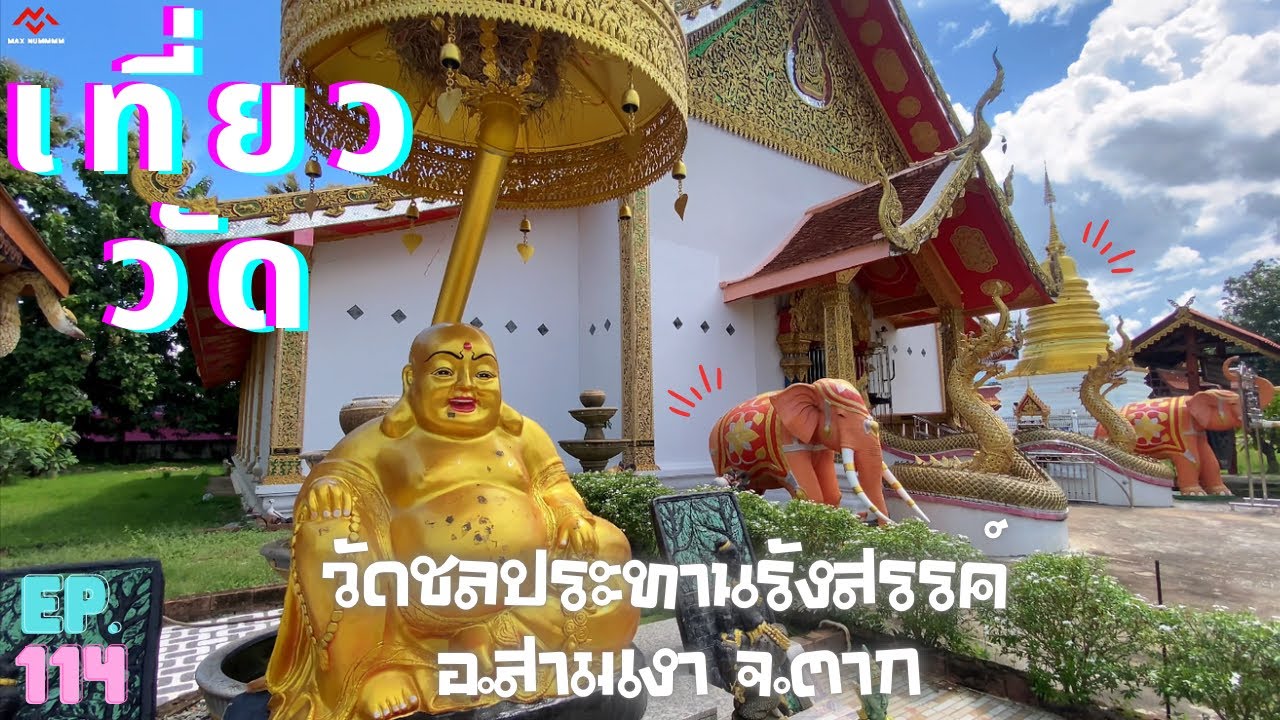
 Click to Access the Navigation Map GPS
Wat Chonprathan Rangsan Map
Recommend

 Art, Culture and Heritage
 Historical Sites and Monuments(2)
 Landmarks and Memorials(3)
 Art, Craft Centres, Tradition(6)
 Historic Homes and Cities(2)
 Educational Places
 Educational Gardens, Farm(2)
Temple(22)
Educational Gardens, Farm(2)
Temple(22)
 Other Sacred Sites(9)
 Suburban Living
 Village, Community(5)
 Local Market(3)
 Nature and Wildlife
 National Parks and Marine Reserves(9)
 Mountain (Doi)(9)
 Dam, Reservoir, Lake(14)
 Waterfalls(23)
 Hot Springs(2)
 Caves(6)
 River, Canal(1)
 Bays and Beaches(1)
 Islands(1)
 Other natural attractions(1)
 Entertainment and Agricultural
 Farms, Parks and Ecotourism(5)
 Outdoor and Adventure Activities(4)


