
lovethailand home >North Travel Attractions >Tak Travel Attractions >Ban Tak >Tak Ok > Khao Phra Bat National Park
TL;DR: Khao Phra Bat National Park is located at Village No. 7, Tak Ok Subdistrict, Ban Tak District, Tak Province, within Mae Salit–Pong Daeng National Reserved Forest, open Daily, hours 09.00 – 17.00.

Khao Phra Bat National Park
Open Days: Daily
Opening Hours: 09.00 – 17.00
Doi Soi Malai – Petrified Wood National Park (Preparatory Area) in Tak Province, also known locally by its former names Khao Phrabat Forest Park and Petrified Wood Forest Park, is one of Thailand’s most important geological attractions. It is located in Village No. 7, Tak Ok Subdistrict, Ban Tak District, Tak Province, within the Mae Salit–Pong Daeng National Reserved Forest. The entrance is near kilometer marker 443 on Highway 1, or Phahonyothin Road, opposite Ban Tak Hospital. From the main road, visitors continue along a local access road for about 2.5 kilometers to reach the petrified wood site, a place now recognized for its outstanding natural, scientific, and educational value.
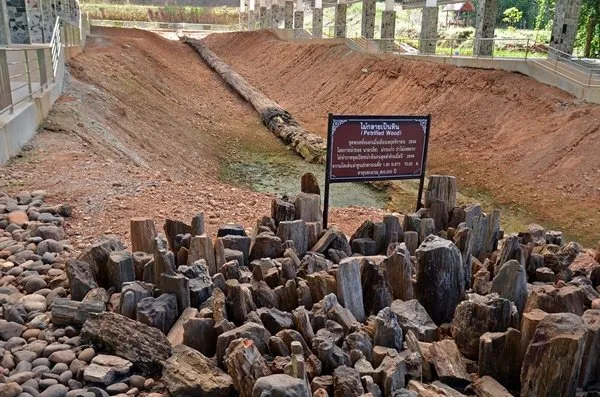
The main significance of this site lies in the discovery of several large petrified tree trunks in the same area. The most important specimen is the petrified wood in excavation pit No. 1, which was recorded by Guinness World Records as the longest petrified wood in the world. It measures 69.70 meters in length, has a diameter of around 1.8 meters, and is estimated to be about 120,000 years old. Its scale is extraordinary. If placed upright, the trunk would be comparable in height to a very tall building, making it one of the clearest natural records of an ancient forest environment ever found in Thailand.
Older travel information about the area described a petrified log approximately 20 meters long and about 2 meters in diameter, which was already considered one of the largest petrified woods found in Asia at that time. Later surveys and excavations, especially from around 2003–2004 onward, revealed more large petrified wood specimens. In total, the area has yielded several major fossilized trunks, including 8 large petrified wood specimens in 7 excavation pits. As a result, the site developed from a local geological point of interest into a nationally important fossil site and later gained global recognition through the world-record specimen.
Petrified wood is a type of fossil formed naturally over a very long period. The process begins when a fallen tree is quickly buried in sediment, reducing exposure to oxygen and slowing decay. Groundwater rich in dissolved silica then seeps through the wood’s internal structure. Over time, the silica gradually replaces the original organic material at a very fine level. The wood becomes mineralized and turns into stone, while its original shape, growth structure, grain pattern, and trunk form remain visible. This is why petrified wood can look like a tree trunk but feel and behave like stone.
The petrified wood in Tak is especially valuable because several trunks remain large and well preserved. Visitors can see the shape of the ancient tree, the direction in which it lies, the stone-like surface that still resembles wood, and the impressive size of the fossilized trunk. Standing beside a tree that once grew in an ancient forest more than 100,000 years ago gives visitors a direct sense of geological time. It is a reminder that the natural history of the Earth is far older and deeper than human history.
The site is closely related to the ancient Ping River system. Gravel, sand, and terrace deposits in the area indicate that this landscape was once influenced by old river channels before the Ping River shifted toward its present course. Large trees may have been transported, buried, or preserved within river sediments during floods or major environmental changes. These fossilized trunks are therefore important evidence for understanding ancient river systems, sediment accumulation, flood events, and the environmental conditions of the Ping River basin in the past.
Some studies of the petrified wood in Tak identify certain specimens as belonging to tree types such as thong bueng and makha mong. Thong bueng is especially interesting because it is not commonly found in northern Thailand today and is more associated with humid forest environments farther south and in the Malay Peninsula. This suggests that the ancient environment around Ban Tak may once have been much more humid than it is today. The present-day landscape, which includes dry dipterocarp and mixed deciduous forest, may have been very different during the time when these massive ancient trees were growing.
Doi Soi Malai – Petrified Wood National Park is therefore not merely a place for taking photographs beside a large fossil. It is an outdoor classroom for understanding the natural history of Thailand. Students, researchers, geologists, naturalists, families, and general travelers can learn about fossil formation, ancient river deposits, climate change, the evolution of landscapes, and the need to conserve geological resources that cannot be recreated once damaged.
The petrified wood area has been developed with excavation pits that can be visited. Some pits are protected by roof structures to reduce exposure to rain, sunlight, and temperature changes. Walkways and viewing areas allow visitors to observe the fossilized trunks without stepping on or touching them directly. These protective measures are essential because once fossil wood is exposed from the ground, it becomes vulnerable to weathering, moisture, temperature change, and human disturbance. Conservation must therefore continue long after excavation.
Visitors should understand that petrified wood is a fossil of scientific importance, not an ordinary rock. It should not be touched, climbed on, knocked, scratched, or damaged. No stone fragments, sediment, or fossil material should be removed from the site. Walking only on designated paths and respecting barriers around excavation pits are simple but important ways to protect this natural heritage. If visitors follow these rules, the Tak petrified wood site can remain a valuable learning resource for future generations.
The surrounding landscape also adds value to the experience. The area includes dry dipterocarp and mixed deciduous forest, allowing visitors to compare the present-day forest with the ancient forest represented by the fossilized trunks. This contrast helps explain how environments change over time. The fossilized trees record a past climate and ecosystem, while the living forest around the site shows the current ecological condition of the Ban Tak landscape.
The site is relatively easy to access compared with many mountainous attractions in Tak Province. From Phahonyothin Road, visitors drive only about 2.5 kilometers from the entrance opposite Ban Tak Hospital. Because the site is not far from the main highway, it is suitable for families, students, older visitors who can walk comfortably, and travelers looking for an educational stop while driving through Tak Province. Daytime travel is recommended because the entrance road and signs are easier to see.
Getting There is straightforward. Use Highway 1, also known as Phahonyothin Road, and look for the area around kilometer marker 443 in Ban Tak District. The entrance is opposite Ban Tak Hospital. From there, continue along the access road for about 2.5 kilometers to the petrified wood site. From Tak town, the site can be visited as a half-day trip and can be combined with nearby attractions such as Wat Phra Borommathat Ban Tak, the Yutthahatthi Chedi, or other places in Ban Tak District.
For travelers coming from Bangkok or the central region, the site is conveniently located along the main northbound route before entering Tak town or continuing toward Mae Sot. It does not require a major detour from Highway 1. With good planning, visitors can spend around 1–2 hours at the site, learn about the excavation pits and the fossilized wood, then continue to Tak town, Mae Sot, or other destinations in Tak Province.
The best time to visit is from morning to afternoon, when the light is good and the weather is more comfortable for walking around the site. The cool season is especially pleasant. During the hot season, visitors should bring drinking water, a hat, or an umbrella because some walking areas may be exposed to sunlight even though the main excavation pits have protective roofs. During the rainy season, visitors should be careful of slippery surfaces and check local road conditions before traveling.
Useful items to bring include comfortable walking shoes, drinking water, a camera, and a notebook for visitors interested in geology. This site is more rewarding when visitors take time to read information boards, observe the fossil surface, study the shape and direction of the trunks, and understand how sediments helped preserve the ancient wood. A slower visit provides much more value than simply walking through quickly for photographs.
The petrified wood site is also connected with the concept of the Tak Petrified Wood Geopark, a local geopark covering several districts, including Sam Ngao, Ban Tak, Mueang Tak, and Wang Chao. The geopark covers more than 5,691 square kilometers and includes geological sites, ecological sites, archaeological sites, cultural sites, and historical locations. Visiting the petrified wood site is therefore a good starting point for understanding Tak Province’s broader geological landscape and natural history.
In travel planning, the petrified wood site can be combined with Wat Phra Borommathat Ban Tak, one of the important temples of Ban Tak District, as well as the Yutthahatthi Chedi, Ban Tak town, and Tak city. These places can be visited within the same day. Travelers interested in nature, geology, temples, local history, and cultural heritage can use Ban Tak as a compact but meaningful route with varied content and comfortable travel distances.
For families traveling with children, this site is an excellent place to encourage interest in science. Children can see a real fossil formed by a natural process that took far longer than human lifetimes. They can learn how a tree becomes stone, why the shape of the trunk remains visible, why the fossil is so large, and how the ancient environment differed from the present. With simple explanation from parents or teachers, the visit can become a memorable field lesson.
The Tak petrified wood site is also important for conservation. Fossils cannot be recreated. Once damaged, they cannot be restored to their original condition in the same way as ordinary tourist facilities. Protecting the site requires cooperation among the Department of National Parks, Wildlife and Plant Conservation, the Department of Mineral Resources, local administrative organizations, Tak Province, academic institutions, local communities, and visitors. The world-record recognition has made the site more widely known, but it also increases the need for careful management and responsible tourism.
Visitors should behave respectfully within the site. Do not make loud noises, litter, damage information signs, enter restricted areas, or remove any stone, sediment, or fossil material from the area. Even though the wood has turned into stone, exposure to air, humidity, sunlight, and repeated human contact can still cause deterioration over time. Visitor discipline is therefore part of the conservation process.
Facilities at the site include parking areas, walking paths around excavation pits, protective roof structures over important fossil areas, interpretation points, and basic visitor services. Because it is a semi-natural fossil conservation area rather than a large commercial tourist complex, visitors should prepare accordingly. For more restaurants, cafés, fuel stops, or accommodation options, Ban Tak District and Tak town are the most convenient bases.
Food options can be found in Ban Tak District, where local restaurants, noodle shops, cafés, and simple eateries are available before or after visiting the petrified wood site. Travelers looking for a wider range of restaurants can continue to Tak town, where there are riverside restaurants, local Thai food shops, and cafés. Planning meals in advance is useful, especially when traveling with family members or older visitors.
For accommodation, visitors can stay in Ban Tak District or Tak town. Staying in Ban Tak is convenient for travelers who want to remain close to the petrified wood site, while Tak town offers more hotel choices, restaurants, and access to other attractions. A stay in Tak town also makes it easy to combine the trip with King Taksin the Great Shrine, the 200-Year Rattanakosin Memorial Bridge, the Ping River area, and other city attractions.
Overall, Doi Soi Malai – Petrified Wood National Park (Preparatory Area) is one of Tak Province’s most valuable learning destinations. It combines world-class fossil evidence, geological interpretation, ancient Ping River history, conservation value, and accessible travel. Visitors come not only to see a large petrified tree, but also to understand how nature records the past in soil layers, stone, and fossilized remains. A visit here is therefore both a journey and a lesson in the deep history of the natural world.
| Name | Doi Soi Malai – Petrified Wood National Park (Preparatory Area) |
| Former Names / Other Names | Khao Phrabat Forest Park, Petrified Wood Forest Park, Petrified Wood National Park, Ban Tak Petrified Wood Site |
| Location | Village No. 7, Tak Ok Subdistrict, Ban Tak District, Tak Province, within Mae Salit–Pong Daeng National Reserved Forest |
| Address | Village No. 7, Tak Ok Subdistrict, Ban Tak District, Tak Province 63120 |
| Approximate Landmark | Near Highway 1 at kilometer marker 443, opposite Ban Tak Hospital |
| Highlights | The world’s longest petrified wood, measuring 69.70 meters, recorded by Guinness World Records on July 8, 2022, together with several large petrified wood excavation pits |
| Distinctive Features | A major petrified wood fossil site in the ancient Ping River basin, with dozens of petrified wood specimens and 8 large specimens in 7 excavation pits |
| Geological Age | The world-record specimen is estimated to be about 120,000 years old. Older site information links the deposits with the Quaternary period and the ancient Ping River system. |
| Wood Types Found | Petrified thong bueng and makha mong wood have been identified in important excavation pits |
| Importance | A learning site for geology, fossils, the ancient Ping River basin, climate change, and part of the Tak Petrified Wood Geopark concept |
| Travel Information | Use Highway 1, Phahonyothin Road, to kilometer marker 443. The entrance is opposite Ban Tak Hospital. Continue along the access road for about 2.5 km to reach the site. |
| Current Status | Open as a geological tourism site and fossil learning area under the name Doi Soi Malai – Petrified Wood National Park (Preparatory Area) |
| Open Days | Daily |
| Opening Hours | 09.00 – 17.00 |
| Facilities | Parking area, walkways around excavation pits, protective roof structures, geological interpretation points, visitor service area, and access road from Phahonyothin Road |
| Main Areas / Zones | Petrified wood excavation pit No. 1, excavation pit No. 7, other fossil pits, geological learning area, fossil viewing walkways, and surrounding dry dipterocarp forest |
| Caretaker / Information Contact | Doi Soi Malai – Petrified Wood National Park (Preparatory Area), Tel. 096-402-9013 (Office), 085-871-3306 (Tourism Section) |
| Local Information | Tak Ok Subdistrict Administrative Organization, Tel. 055-591-401 |
| Nearby Tourist Attractions | 1. Ban Tak Hospital / Entrance Landmark, about 2.5 km 2. Wat Phra Borommathat Ban Tak, about 12 km 3. Yutthahatthi Chedi, Ban Tak, about 14 km 4. Doi Soi Malai, about 30 km 5. King Taksin The Great Shrine, Tak Town, about 35 km 6. 200-Year Rattanakosin Memorial Bridge, about 36 km 7. Lan Sang National Park, about 45 km |
| Nearby Restaurants | 1. Khrua Yui Ban Tak, about 10 km, Tel. 089-272-5944 2. INNA Café Tak, about 25 km, Tel. 062-893-6166 3. Ban Kiang Nam Restaurant, Tak, about 35 km, Tel. 055-894-069, 081-953-9441 4. Pridi Phochana, about 36 km, Tel. 081-707-3800, 082-595-8145 5. Restaurants and cafés in Tak town, about 35 km |
| Nearby Accommodations | 1. Phongphak Resort, Ban Tak District, about 12 km, Tel. 081-290-9956 2. Viang Tak Riverside Hotel, about 35 km, Tel. 055-512-507 to 055-512-508, 081-887-2905 3. SOHO Boutique Hotel Tak, about 36 km, Tel. 055-039-988, 095-939-2871 4. Berich Hotel, about 36 km, Tel. 055-516-444, 082-444-6242 5. Silayok Grand Hotel, about 37 km, Tel. 055-515-555 |
Frequently Asked Questions (FAQ)
Q: Where is Doi Soi Malai – Petrified Wood National Park located?
A: It is located in Village No. 7, Tak Ok Subdistrict, Ban Tak District, Tak Province, within Mae Salit–Pong Daeng National Reserved Forest. The entrance is near kilometer marker 443 on Phahonyothin Road, opposite Ban Tak Hospital.
Q: What was this place formerly called?
A: The site was formerly known as Khao Phrabat Forest Park and later as Petrified Wood Forest Park. It is now under the name Doi Soi Malai – Petrified Wood National Park (Preparatory Area).
Q: Why is the Tak petrified wood site important?
A: The site contains the world’s longest petrified wood, measuring 69.70 meters in length and about 1.8 meters in diameter. It is estimated to be around 120,000 years old and was recorded by Guinness World Records on July 8, 2022.
Q: How does wood become petrified?
A: Petrified wood forms when a buried tree trunk is gradually replaced by minerals from silica-rich groundwater. Over a very long period, the organic wood material turns into stone while preserving the original shape and structure of the tree.
Q: How can visitors get to the Ban Tak petrified wood site?
A: Use Highway 1, Phahonyothin Road, to the area around kilometer marker 443. The entrance is opposite Ban Tak Hospital. From there, continue along the access road for about 2.5 kilometers to reach the site.
Q: Who is this attraction suitable for?
A: It is suitable for general travelers, families, students, researchers, geology enthusiasts, fossil learners, natural history visitors, and travelers looking for an educational stop along Highway 1 in Tak Province.
Q: What nearby places can be visited with this site?
A: Nearby places include Wat Phra Borommathat Ban Tak, Yutthahatthi Chedi, Doi Soi Malai, King Taksin The Great Shrine, Tak town, and Lan Sang National Park.
Q: What should visitors avoid when viewing petrified wood?
A: Visitors should not touch, knock, climb on, scratch, or remove any fossil, stone, or sediment from the site. Petrified wood is a scientific fossil resource and cannot be replaced once damaged.
 Category: ●Nature and Wildlife
 Group: ●National Parks and Marine Reserves
Last Update : 2 MonthAgo
 Last Update : 2 MonthAgo
 Click to Access the Navigation Map GPS
Khao Phra Bat National Park Map
Recommend

 Art, Culture and Heritage
 Historical Sites and Monuments(2)
 Landmarks and Memorials(3)
 Art, Craft Centres, Tradition(6)
 Historic Homes and Cities(2)
 Educational Places
 Educational Gardens, Farm(2)
 Places of Worship
 Temple(22)
 Other Sacred Sites(9)
 Suburban Living
 Village, Community(5)
 Local Market(3)
National Parks and Marine Reserves(9)
Local Market(3)
National Parks and Marine Reserves(9)
 Mountain (Doi)(9)
 Dam, Reservoir, Lake(14)
 Waterfalls(23)
 Hot Springs(2)
 Caves(6)
 River, Canal(1)
 Bays and Beaches(1)
 Islands(1)
 Other natural attractions(1)
 Entertainment and Agricultural
 Farms, Parks and Ecotourism(5)
 Outdoor and Adventure Activities(4)


