
lovethailand home >North Travel Attractions >Tak Travel Attractions >Sam Ngao >Yan Ri > Pha Sam Ngao (Phra Sam Ngao)
TL;DR: Pha Sam Ngao (Phra Sam Ngao) is located at Yan Ri Subdistrict, Sam Ngao District, Tak Province, open Please contact local authorities before traveling, hours Please confirm with local authorities before traveling.
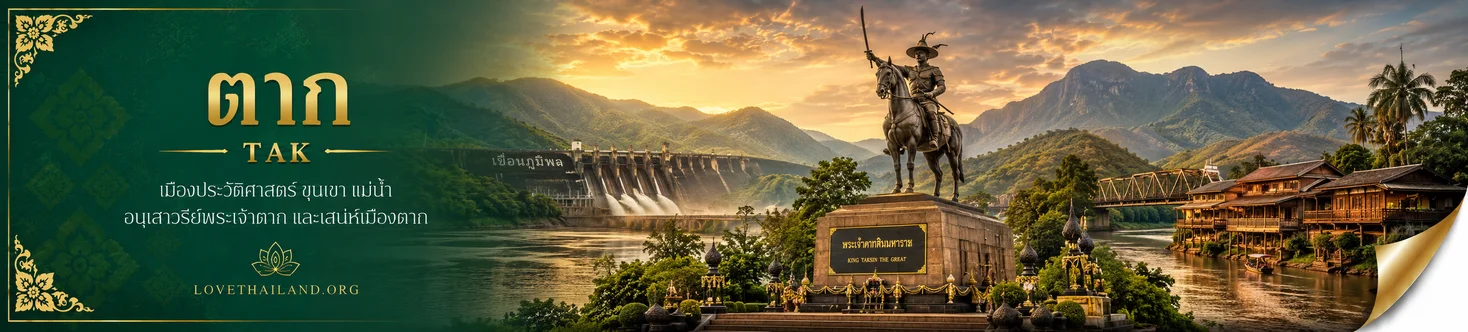
Pha Sam Ngao (Phra Sam Ngao)
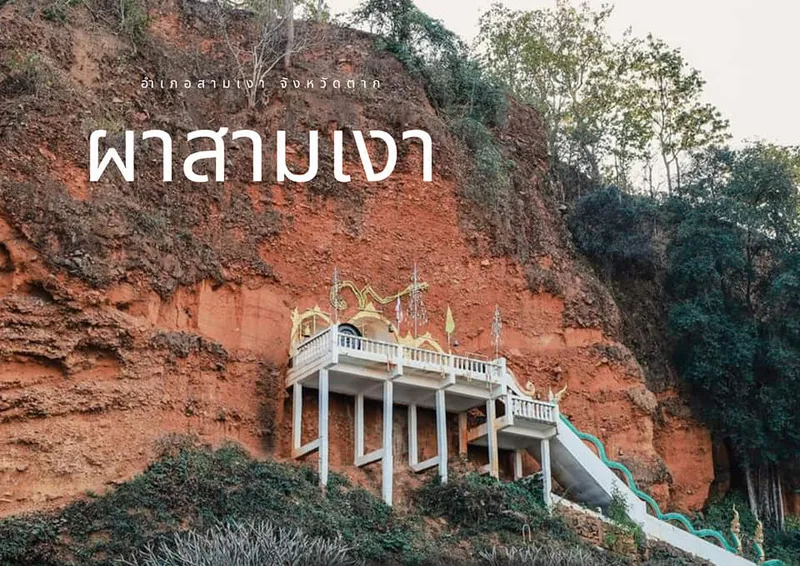
Open Days: Please contact local authorities before traveling
Opening Hours: Please confirm with local authorities before traveling
Pha Sam Ngao, also known as Phra Sam Ngao, is an important Buddhist and cultural site in Sam Ngao District, Tak Province. Located in Yan Ri Subdistrict along the Ban Tak – Bhumibol Dam route, the site is known for a steep rock cliff with 3 recessed chambers, each housing a gilded Buddha image. These 3 Buddha images, placed in 3 separate cliff niches, are the origin of the name “Sam Ngao,” which is closely connected with the local legend of Queen Chamadevi and her journey along the Ping River toward Hariphunchai.
Pha Sam Ngao is different from many temples and Buddhist sites because the Buddha images are not enshrined inside a conventional chapel or viharn. Instead, they are set into a natural cliff, creating a striking combination of rock formation, faith, and local legend. When viewed from below, the 3 images appear solemn and distinctive against the reddish-brown cliff face. The atmosphere is quiet and reverent, making it a meaningful stop for visitors interested in culture, history, and sacred landscapes.
The significance of Pha Sam Ngao lies not only in the 3 Buddha images but also in the legend that connects the site with Queen Chamadevi, one of the most important figures in the history of Hariphunchai and northern Thailand. According to local tradition, the hermits Vasudeva and Sukkadanta had completed the founding of Hariphunchai, present-day Lamphun. They then sent envoys to request Queen Chamadevi, daughter of King Nopparat of Lavo, to travel north and rule the new city.
After King Nopparat granted permission, Queen Chamadevi traveled by water along the Ping River, accompanied by royal attendants and followers. When her procession reached the area now known as Phra Sam Ngao, a sudden and violent storm arose. Strong winds struck the river, and the boats could no longer continue. Seeing this, Queen Chamadevi raised her hands and made a solemn vow: if she truly possessed the merit and destiny to rule Hariphunchai as intended, may all disturbances disappear at once.
As the vow ended, thunder sounded loudly, and the storm suddenly calmed. The sky gradually cleared, and 3 shadows of Buddha images appeared on the cliff. Queen Chamadevi was deeply moved by the auspicious vision. She ordered the creation of Buddha images according to the sacred signs she had seen on the cliff and arranged a celebration for 3 nights before continuing her journey toward Hariphunchai.
This legend makes Pha Sam Ngao a place where geography, faith, and memory come together. The site is linked with the Ping River, which historically served as an important water route connecting central and northern Thailand. In this sense, Pha Sam Ngao is not only a sacred cliff but also a cultural marker along an old river route. The story of Queen Chamadevi gives the place a wider historical imagination, connecting Tak, Lavo, and Hariphunchai through one continuous narrative.
The name “Sam Ngao” is also associated with the identity of Sam Ngao District. Local traditions connect the name with the 3 shadows of Buddha images that appeared on the cliff and with the 3 Buddha images now enshrined in the cliff niches. Although details of the legend may vary from one telling to another, the core story remains the same: Queen Chamadevi, a river journey, a storm, a sacred vow, and the appearance of 3 Buddha shadows.
Physically, Pha Sam Ngao is a steep rock cliff with a reddish-brown surface. The 3 recessed chambers are cut into the cliff and arranged side by side, each containing a gilded Buddha image. The placement gives the site a strong visual identity. The cliff itself becomes part of the sacred setting, making the Buddha images appear both protected by and integrated into the natural rock formation.
Pha Sam Ngao is also recognized as an archaeological and cultural heritage site under the care of heritage-related authorities. This status reinforces the importance of the site beyond local tourism. Visitors should treat it as a sacred and historical place. Proper behavior includes dressing respectfully, avoiding loud noise, not climbing on restricted structures, not touching or damaging the cliff surface, and not leaving litter around the site.
The atmosphere of Pha Sam Ngao is best appreciated slowly. It is not a place for many activities but a place for quiet worship, observation, and reflection. Visitors can pay respect to the 3 Buddha images, look at the cliff formation, and learn about the Chamadevi legend that gives the site its meaning. The stillness of the place helps visitors sense its role as both a Buddhist site and a local cultural memory.
For travelers interested in Queen Chamadevi, Pha Sam Ngao adds an important dimension to the broader story of Hariphunchai. Her legend is not limited to Lamphun alone. It extends along the routes of travel, water, and cultural memory. The connection between Pha Sam Ngao and the Ping River helps visitors understand how rivers, cliffs, and sacred stories shaped local identities in northern and upper central Thailand.
In a Tak travel itinerary, Pha Sam Ngao can be combined with Bhumibol Dam and other attractions in Sam Ngao District. Visitors can travel from Tak city to Pha Sam Ngao, pay respect to the Buddha images, learn the legend, and continue to Bhumibol Dam for reservoir scenery. This route offers a quieter side of Tak Province, combining spirituality, legend, river landscapes, and mountain scenery.
Getting to Pha Sam Ngao is relatively convenient by private car. From Tak city, travelers can take Highway 1107 toward the Sam Ngao and Bhumibol Dam route, a distance of about 25 km. Another route is via Highway 1 to around kilometer marker 463, then turning left toward Bhumibol Dam. From Sam Ngao District, the site is about 10 km along the route toward the dam.
Getting There is easiest by private car. Visitors starting from Tak city can follow Highway 1107 in the direction of Chedi Yutthahatthi and Bhumibol Dam, stopping at Pha Sam Ngao before continuing to the dam or nearby attractions. Travelers arriving via Highway 1 can turn toward the Bhumibol Dam route near Sam Ngao District. Checking the route in advance is recommended, especially for first-time visitors.
The best time to visit is generally in the morning or late afternoon, when the weather is cooler and the light is softer. These times are also better for photography because the cliff surface and Buddha images are more pleasant to view. During the hot season, midday temperatures can be strong, so visitors should bring drinking water, a hat, or sun protection. After rainfall, visitors should walk carefully on steps or sloping surfaces.
Visitors should observe proper etiquette. Since Pha Sam Ngao is both a sacred site and an archaeological place, respectful dress and behavior are important. Do not climb onto restricted areas, write on the rock surface, touch the Buddha images unnecessarily, use fire carelessly, or leave trash behind. Maintaining cleanliness and quietness helps preserve the dignity of the site for future visitors.
For photography, Pha Sam Ngao offers several memorable angles: the 3 Buddha images in the cliff niches, the stairway leading to the worship area, the reddish-brown cliff wall, and the surrounding atmosphere. Visitors should avoid blocking worshippers and should not use drones without permission, as this may disturb the sacred atmosphere and other people at the site.
Pha Sam Ngao is also valuable as an example of how local legends give meaning to landscapes. The Chamadevi story contains several important elements: a journey, a storm, a vow, a sacred vision, the creation of Buddha images, and a 3-night celebration. Through this story, a natural cliff becomes a sacred and memorable place. This is why Pha Sam Ngao remains important not only as a physical site but also as part of the cultural identity of Sam Ngao District.
Most visitors can spend about 30 minutes to 1 hour at Pha Sam Ngao. This is enough time to pay respect, walk around the main area, read or reflect on the legend, and take photographs. If combined with nearby attractions such as Bhumibol Dam, the Petrified Wood Forest Park area, or cultural sites in Ban Tak and Sam Ngao, the trip can easily become a meaningful half-day or full-day itinerary.
Nearby attractions include Bhumibol Dam, one of the major landmarks of Sam Ngao District, the Bhumibol Dam royal residence museum area, the Petrified Wood Forest Park area, Wat Phra Borommathat Ban Tak, and Tak city. Together, these places create a route that combines Buddhist heritage, local legend, geology, river landscapes, and reservoir scenery.
Restaurants and accommodations near Pha Sam Ngao are more limited than in Tak city, but options can be found around Sam Ngao District, Bhumibol Dam, and the dam route. Travelers who prefer convenience may stay in Tak city and visit Pha Sam Ngao as a day trip. Those who want a quieter stay near the reservoir can consider accommodation around Bhumibol Dam or Sam Ngao.
Overall, Pha Sam Ngao is one of Tak Province’s meaningful cultural and spiritual sites. It combines a natural cliff, 3 Buddha images, the legend of Queen Chamadevi, and the historical memory of the Ping River route. Visitors who come with respect and curiosity will find that this small cliffside site carries a much larger story about faith, travel, landscape, and local identity in Sam Ngao District.
| Name | Pha Sam Ngao / Phra Sam Ngao |
| Location | Yan Ri Subdistrict, Sam Ngao District, Tak Province |
| Address | Ban Tak – Bhumibol Dam Road, Yan Ri Subdistrict, Sam Ngao District, Tak Province |
| Highlights | A cliff with 3 recessed chambers containing 3 gilded Buddha images, connected with the legend of Queen Chamadevi and the Ping River journey |
| History | An important Buddhist and archaeological site in Sam Ngao District, associated with Queen Chamadevi’s legendary journey by water to rule Hariphunchai, and recognized in heritage-related records connected with the Fine Arts Department |
| Name Origin | The name is associated with the legend of 3 Buddha shadows appearing on the cliff after Queen Chamadevi made a sacred vow and the storm calmed |
| Distinctive Features | A steep rock cliff with 3 Buddha images enshrined in cliff niches, serving as a sacred site and a place to learn local legend along the Ban Tak – Bhumibol Dam route |
| Travel Information | From Tak city, take Highway 1107 for about 25 km. Alternatively, use Highway 1 to around kilometer marker 463, then turn left toward Bhumibol Dam; from Sam Ngao District, continue about 10 km |
| Current Status | A sacred archaeological and Buddhist site in Sam Ngao District. Visitors should behave respectfully and follow local site rules |
| Open Days | Please contact local authorities before traveling |
| Opening Hours | Please confirm with local authorities before traveling |
| Facilities | Access path to the Buddha images, roadside parking area, and basic worship area around the archaeological site |
| Main Areas / Zones | Pha Sam Ngao cliff, 3 Buddha-image niches, worship access route, and surrounding viewing area |
| Caretaker | Fine Arts Department for archaeological heritage supervision and local authorities in Yan Ri Subdistrict, Sam Ngao District |
| Main Contact Number | Yan Ri Subdistrict Administrative Organization Tel. 055-508832 / TAT Tak Office Tel. 055-514341 |
| Official Website / Official Page | Tourism Authority of Thailand, Yan Ri Subdistrict Administrative Organization, Fine Arts Department |
| Nearby Tourist Attractions | 1. Bhumibol Dam, about 10 km 2. Bhumibol Dam Royal Residence Museum Area, about 10 km 3. Petrified Wood Forest Park / Petrified Wood Museum Area, about 35 km 4. Wat Phra Borommathat Ban Tak, about 40 km 5. Ban Tak Rattanakosin 200-Year Bridge, about 42 km 6. Tak City, about 25 km |
| Nearby Restaurants | 1. Local Restaurants around Bhumibol Dam, about 10 km 2. Sai Nam Ping Restaurant, Sam Ngao District, about 12 km 3. Suan Nuea Coffee, Sam Ngao District, about 12 km 4. Khrua Ban Tong, Sam Ngao District, about 12 km 5. Local Restaurants around Sam Ngao Market, about 10 km 6. Restaurants in Tak City, about 25 km |
| Nearby Accommodations | 1. Bhumibol Dam Guest House, about 10 km, Tel. 055-881237, 055-8812117 ext. 4002, 4003 2. Pae Thada Tour, Bhumibol Dam, about 12 km, Tel. 081-9724082 3. Rim Thara Resort Sam Ngao, about 12 km 4. Sooksabai Resort Samngao Tak, about 12 km 5. Bed Bar Resort Sam Ngao, about 12 km 6. Kiang Tawan Resort Sam Ngao, about 15 km |
Frequently Asked Questions (FAQ)
Q: Where is Pha Sam Ngao located?
A: Pha Sam Ngao, also known as Phra Sam Ngao, is located in Yan Ri Subdistrict, Sam Ngao District, Tak Province, along the Ban Tak – Bhumibol Dam route.
Q: Why is Pha Sam Ngao important?
A: It is an important Buddhist and archaeological site with 3 Buddha images enshrined in cliff niches, and it is associated with the legend of Queen Chamadevi’s river journey to Hariphunchai.
Q: Why is it called Pha Sam Ngao?
A: The name is linked with the legend of 3 Buddha shadows appearing on the cliff after Queen Chamadevi made a sacred vow and the storm disappeared.
Q: How can travelers get to Pha Sam Ngao from Tak city?
A: From Tak city, take Highway 1107 for about 25 km. Another route is via Highway 1 to around kilometer marker 463, then turning toward Bhumibol Dam and continuing from Sam Ngao District for about 10 km.
Q: What type of trip is Pha Sam Ngao suitable for?
A: It is suitable for cultural, historical, and spiritual travel. Visitors can pay respect to the Buddha images, view the cliff, and learn about the Queen Chamadevi legend.
Q: What nearby attractions can be visited with Pha Sam Ngao?
A: Nearby attractions include Bhumibol Dam, the Bhumibol Dam Royal Residence Museum Area, the Petrified Wood Forest Park area, Wat Phra Borommathat Ban Tak, and Tak city.
Q: How should visitors dress when visiting Pha Sam Ngao?
A: Visitors should dress respectfully because Pha Sam Ngao is a sacred and archaeological site. Loud noise, climbing on restricted areas, and damaging the cliff or Buddha images should be avoided.
 Category: ●Nature and Wildlife
 Group: ●Mountain (Doi)
Last Update : 4 MonthAgo
 Last Update : 4 MonthAgo
 Click to Access the Navigation Map GPS
Pha Sam Ngao (Phra Sam Ngao) Map
Recommend

 Art, Culture and Heritage
 Historical Sites and Monuments(2)
 Landmarks and Memorials(3)
 Art, Craft Centres, Tradition(6)
 Historic Homes and Cities(2)
 Educational Places
 Educational Gardens, Farm(2)
 Places of Worship
 Temple(22)
 Other Sacred Sites(9)
 Suburban Living
 Village, Community(5)
 Local Market(3)
 National Parks and Marine Reserves(9)
Mountain (Doi)(9)
National Parks and Marine Reserves(9)
Mountain (Doi)(9)
 Dam, Reservoir, Lake(14)
 Waterfalls(23)
 Hot Springs(2)
 Caves(6)
 River, Canal(1)
 Bays and Beaches(1)
 Islands(1)
 Other natural attractions(1)
 Entertainment and Agricultural
 Farms, Parks and Ecotourism(5)
 Outdoor and Adventure Activities(4)


