
lovethailand home >North Travel Attractions >Tak Travel Attractions >Muang Tak >Rahaeng > Trok Ban Chin
TL;DR: Trok Ban Chin is located at Taksin Road, Rahaeng Subdistrict, Mueang Tak District, Tak Province, near Wat Sitalaram, open The community area can be visited daily, hours The community area can be walked through during the day; visitors should.

Trok Ban Chin
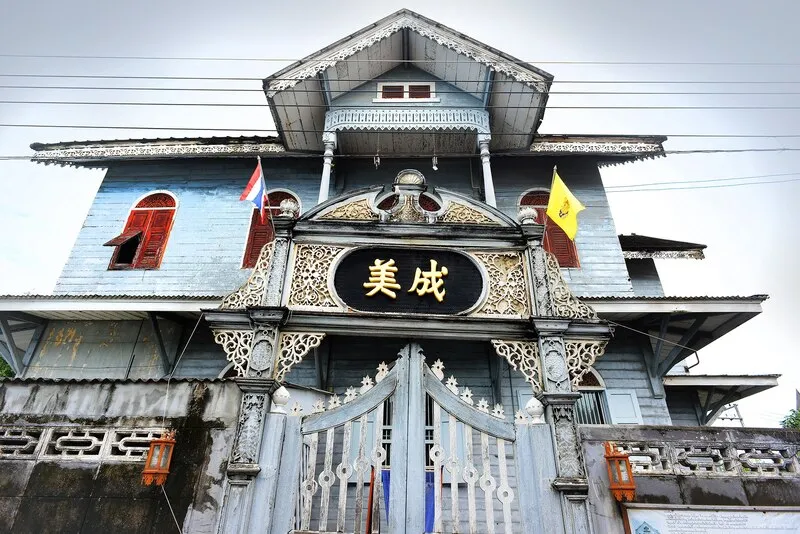
Open Days: The community area can be visited daily
Opening Hours: The community area can be walked through during the day; visitors should contact in advance for the community information center and Trok Ban Chin Museum
Trok Ban Chin in Tak Province is a historic Thai-Chinese community located on Taksin Road in Rahaeng Subdistrict, Mueang Tak District. It is close to Wat Sitalaram and the old urban area near the Ping River. This small historic lane is one of the best places in Tak town for travelers who want to understand the city through its old wooden houses, river trade history, and Thai-Chinese merchant community. Trok Ban Chin is not merely an old alley. It is a living reminder of Tak’s past as a trading town connected to the Ping River, Pak Nam Pho in Nakhon Sawan, Chiang Mai, Bangkok, and other important commercial routes.
For travelers who want to explore Tak beyond natural attractions and border routes, Trok Ban Chin offers a slower and more meaningful experience. The area can be visited on foot, and its charm lies in details rather than size. Old teak houses, wooden walls, carved ventilation panels, traditional windows, and the quiet rhythm of the community reveal how people lived and traded in the past. The lane is suitable for cultural travelers, photographers, architecture lovers, and anyone interested in the history of Chinese merchants in northern Thailand.
The history of Trok Ban Chin is closely linked with river trade along the Ping River. In the past, this community was a prosperous commercial area. One of the key figures in its story was a Chinese merchant named Chin Teng, who migrated to Bangkok and later expanded his trading business toward Chiang Mai. He then extended his business activities to Tak and entered into partnership with two other Chinese merchants named Chin Boonyen and Chin Thongyu. Their commercial network helped make the area an important trading neighborhood in old Tak.
Goods and daily necessities were transported from Pak Nam Pho in Nakhon Sawan and brought up to Ban Tha Chin in Tak before being distributed into the town and surrounding areas. This shows how important the Ping River was to the local economy. The river was not simply a scenic feature of the city; it was a transportation route that connected people, goods, and markets. Trok Ban Chin therefore developed as a community where merchants, boatmen, local traders, families, and workers interacted through trade and daily life.
The name “Trok Ban Chin” reflects the presence of Chinese settlers and merchants in this area, while the local name “Trok Rahaeng” connects the community to Rahaeng, the old urban area of Tak. These two names help explain the identity of the place. It is both a Thai-Chinese merchant community and part of the old townscape of Tak. Walking through the lane gives visitors a sense of how trade, settlement, religion, and river transport once came together in one compact neighborhood.
The most distinctive feature of Trok Ban Chin is its old wooden architecture. Some houses are built from teak and still preserve traditional Thai and Thai-Chinese design elements. Visitors can observe wooden columns, floors, windows, doors, rooflines, carved panels, and ventilation details that reflect craftsmanship from earlier periods. These buildings were not created as tourist displays. They were real homes and trading houses shaped by the needs of families and merchants, which makes them especially valuable as cultural evidence.
Many of the houses in Trok Ban Chin were designed for practical living. The lower areas of some houses were connected to commercial activities, storage, or receiving customers, while the upper floors were used as living spaces. The design responded to the climate, airflow, shade, and daily routines of people in the past. This gives the community a strong sense of authenticity. The beauty of the houses comes not only from their appearance, but from the way they reveal how people once lived and worked in a riverside trading town.
Walking into Trok Ban Chin feels different from walking along a main road. The lane is quiet, compact, and atmospheric. It does not take long to walk through, but it rewards close observation. Visitors can take photographs of the old alley, wooden houses, signboards, and traditional details. Those interested in history can imagine the time when goods from the river were brought into the community and distributed to other areas. This is why Trok Ban Chin should be experienced slowly, not rushed through as a quick stop.
The community is also closely connected with Wat Sitalaram, a nearby temple that has long served as an important spiritual site for local residents. In many old Thai towns, temples, markets, houses, and waterways formed the core of community life. The location of Trok Ban Chin near Wat Sitalaram reflects this traditional pattern. Travelers can combine the lane with the temple and nearby riverside areas to better understand the structure of old Tak town.
Historically, Tak was important because it linked the central plains with the northern region. Before modern road transport became dominant, river routes and overland trade paths were essential. Trok Ban Chin is a physical reminder of this period. The movement of goods from Pak Nam Pho to Ban Tha Chin, then into Tak and onward to other areas, shows that Tak was once an active commercial connector. The old houses in the lane are part of that story.
The names Chin Teng, Chin Boonyen, and Chin Thongyu make the history of the place more personal. They remind visitors that commercial history is not only about routes and goods, but also about individuals who traveled, invested, partnered with others, and built new lives in different towns. Their story reflects the wider movement of Chinese migrants in Thailand, many of whom became important contributors to local economies. Trok Ban Chin therefore offers insight into both Tak’s local history and the broader story of Thai-Chinese communities.
One of the pleasures of visiting Trok Ban Chin is that it does not require complicated planning. Visitors can simply walk through the community, observe the houses, read local information, and enjoy the atmosphere. The area is suitable for a half-day cultural walk in Tak town. It is especially recommended for travelers who prefer slow travel, heritage neighborhoods, local food, and small historic communities rather than large commercial attractions.
For visitors who want more detailed information, the Trok Ban Chin Community Information Center and museum are located at 764 Taksin Road, Rahaeng Subdistrict, Mueang Tak District, Tak 63000. Visits to the museum or exhibition area should be arranged in advance because parts of the community remain residential and are not always open like a commercial attraction. Planning ahead helps visitors gain a fuller understanding while respecting the daily life of local residents.
The best time to visit Trok Ban Chin is in the morning or late afternoon. The light is softer, the weather is more comfortable, and the atmosphere is better for walking and photography. Visitors should avoid disturbing residents, taking intrusive photographs into private homes, or blocking entrances. Since this is a living community, respectful behavior is essential. The value of the visit depends not only on what travelers see, but also on how carefully they treat the place.
Visitors should walk slowly, observe architectural details, support local shops when possible, and keep the area clean. Buying food or drinks from nearby local businesses is a simple way to support the community. Travelers should avoid littering, making loud noise, or treating private homes as public exhibits. Trok Ban Chin is a cultural attraction, but it is also a neighborhood where people continue to live.
Getting There is convenient because Trok Ban Chin is located in Tak town. Travelers can use Taksin Road as the main route and look for the area near Wat Sitalaram. Private cars, rental cars, and local transport can all be used. Because the lane is narrow and part of a historic community, it is better to park in a suitable nearby area and explore on foot. Walking allows visitors to appreciate the old houses and community layout more clearly than driving through.
Travelers staying in central Tak can include Trok Ban Chin in a short walking route. A half-day plan can begin at the community, continue to Wat Sitalaram, then move toward the riverside and the Rattanakosin 200 Years Bridge area. Visitors can also combine the route with King Taksin the Great Shrine, Wat Bot Mani Si Bunrueang, and local restaurants in town. This makes Trok Ban Chin a practical starting point for exploring the cultural side of Tak.
If visitors have only 30 minutes, they can still see the entrance sign, the old houses, and the general atmosphere of the lane. With 1 to 2 hours, they can walk more slowly, read information, take photographs respectfully, and stop for food or coffee nearby. Those who are particularly interested in history should contact the information center or local tourism office in advance to ask about the best time to visit the museum area.
Trok Ban Chin presents Tak as a trading town, not only as a province of waterfalls, mountains, dams, and routes to Mae Sot. This is what makes the community important. It helps visitors understand that Tak was once part of a wider commercial network, and that Thai-Chinese communities played a meaningful role in shaping the city. The wooden houses and old lane preserve traces of this economic and social history.
The preservation of Trok Ban Chin is not only about saving wooden buildings. It is also about preserving stories, memory, and community identity. A single old house may be beautiful, but the true value of the area comes from the relationship between houses, lanes, the temple, the river, and the people who lived there. Walking through the actual community helps travelers understand why this small area was once important to the economy of Tak.
The Thai-Chinese character of the community can be seen through daily life rather than only through formal rituals. Trade networks, wooden houses, family names, local food, and the location near a temple all show how Chinese settlers became part of the local fabric of Tak. Travelers interested in Chinese heritage in Thailand should therefore see Trok Ban Chin as a merchant community, not only as a photogenic old alley.
Compared with larger old-town districts in other provinces, Trok Ban Chin is small, but it contains a dense concentration of history. Within a short walking distance, visitors can encounter stories of Chinese merchants, river transport, Ban Tha Chin, the Ping River, Wat Sitalaram, and old teak houses. Its compact size makes it easy to visit, especially for families, older travelers, and those who want a cultural stop without a long or difficult walk.
Trok Ban Chin also works well as the first stop on a Tak town itinerary. After walking through the community, travelers can continue to other cultural sites, eat at local restaurants, or stay overnight in the city before traveling to Bhumibol Dam, Lan Sang National Park, Mae Sot, or other destinations in Tak Province. This makes the lane a small but useful anchor for understanding the town before exploring the wider province.
Local food can make the visit more enjoyable. The well-known Pad Thai Trok Ban Chin is located in the area, and there are cafés and restaurants nearby in Tak town. Combining a heritage walk with a local meal gives the trip a stronger sense of place. Visitors can experience not only old houses and history, but also the everyday food culture of Tak.
For photographers and cultural travelers, Trok Ban Chin should be approached with respect. Exterior architecture, street views, signs, and general community scenes are good subjects, but private spaces should not be photographed without permission. Responsible photography helps protect the privacy of residents and maintains a positive relationship between the community and visitors.
Today, Trok Ban Chin remains a quiet but meaningful place. The busy river trade of the past has changed, but the old houses, Taksin Road, Wat Sitalaram, and stories of Chinese merchants still allow visitors to imagine the area’s former importance. The community shows that the history of a town does not exist only in books. It can still be seen in lanes, houses, names, and memories that survive within the urban fabric.
The strongest appeal of Trok Ban Chin is its quiet depth. A quick visitor may see only a small old alley, but a careful traveler will notice a layered story of trade, migration, architecture, religion, river transport, and local identity. This makes Trok Ban Chin one of the most meaningful cultural attractions in Tak town and a valuable stop for anyone who wants to understand the province beyond its famous natural landscapes.
A visit to Trok Ban Chin is therefore a walk into the memory of Tak. Before modern highways became dominant, the Ping River carried goods, people, and culture into the town. The remaining wooden houses are witnesses to that era. Preserving and visiting this community with respect helps keep alive the understanding of Tak as a riverside trading town shaped by Thai and Chinese lives over generations.
| Name | Trok Ban Chin |
| Local Name | Trok Rahaeng |
| Location | Taksin Road, Rahaeng Subdistrict, Mueang Tak District, Tak Province, near Wat Sitalaram |
| Address | Trok Ban Chin Community Information Center, 764 Taksin Road, Rahaeng Subdistrict, Mueang Tak District, Tak Province 63000 |
| Highlights | Historic riverside trading community, old teak houses, Thai-Chinese architecture, and the story of Chinese merchants in Tak |
| History | The community was once a prosperous trading area. A Chinese merchant named Chin Teng expanded his trade from Bangkok to Chiang Mai and Tak, then partnered with Chin Boonyen and Chin Thongyu. Goods and daily necessities were transported from Pak Nam Pho in Nakhon Sawan to Ban Tha Chin in Tak before being distributed into the area. |
| Name Origin | The name Trok Ban Chin reflects the Chinese merchant community that settled and traded in this area, while Trok Rahaeng connects the lane to Rahaeng, the old town area of Tak. |
| Distinctive Features | Old wooden houses, teak houses, Thai-Chinese architectural details, a historic alley, and the atmosphere of old Tak near the Ping River |
| Travel Information | Travel by private car, rental car, or local transport within Tak town. Use Taksin Road as the main route and look for the area near Wat Sitalaram. Park nearby and explore the community on foot. |
| Current Status | A historic community and cultural attraction in Tak town where visitors can walk through and see old houses and local heritage |
| Open Days | The community area can be visited daily |
| Opening Hours | The community area can be walked through during the day; visitors should contact in advance for the community information center and museum |
| Fees | No admission fee |
| Facilities | Community information center, walking area, nearby restaurants, cafés, and accommodations in Tak town |
| Main Areas / Zones | Trok Ban Chin lane, old wooden houses, Trok Ban Chin Community Information Center, area near Wat Sitalaram, and Taksin Road old-town area |
| Caretaker / Information Contact | Tourism Authority of Thailand, Tak Office, Tel. 055-514-341 |
| Official Website / Official Page | Trog Baan Chin Historical Thai-Chinese Community Tak Facebook page |
| Nearby Tourist Attractions | 1. Wat Sitalaram, about 0.2 km 2. Rattanakosin 200 Years Bridge, about 0.5 km 3. King Taksin the Great Shrine, about 1 km 4. Wat Bot Mani Si Bunrueang, about 1 km 5. Nong Luang, Tak Town, about 2 km 6. Wat Phra Borommathat, Tak Province, about 25 km |
| Nearby Restaurants | 1. Pad Thai Trok Ban Chin, about 0.1 km 2. Han Cafe, about 0.2 km, Tel. 093-236-6283 3. Dibdee Sushi Café, about 1 km, Tel. 088-424-3265 4. Ban Kiang Nam Restaurant, Tak, about 2 km, Tel. 055-894-069, 081-953-9441 5. Pridi Phochana, about 4 km, Tel. 081-707-3800, 082-595-8145 |
| Nearby Accommodations | 1. Viang Tak Riverside Hotel, about 1 km, Tel. 055-512-507 to 055-512-508, 081-887-2905 2. SOHO Boutique Hotel Tak, about 2 km, Tel. 055-039-988, 095-939-2871 3. Berich Hotel, about 2 km, Tel. 055-516-444, 082-444-6242 4. Silayok Grand Hotel, about 2 km, Tel. 055-515-555 5. Tak Andaman Hotel and Resort, about 5 km, Tel. 055-030-069, 055-517-566, 081-095-006-2888 |
Frequently Asked Questions (FAQ)
Q: Where is Trok Ban Chin located?
A: Trok Ban Chin is located on Taksin Road in Rahaeng Subdistrict, Mueang Tak District, Tak Province, near Wat Sitalaram and the old town area by the Ping River.
Q: Why is Trok Ban Chin important?
A: Trok Ban Chin was an important historic trading community in Tak, connected with river transport, Chinese merchants, and the movement of goods along the Ping River.
Q: Who were Chin Teng, Chin Boonyen, and Chin Thongyu?
A: Chin Teng was a Chinese merchant who expanded his trade from Bangkok toward Chiang Mai and Tak. He later partnered with Chin Boonyen and Chin Thongyu, helping the area become an important commercial community.
Q: What can visitors see at Trok Ban Chin?
A: Visitors can see old teak houses, Thai-Chinese architectural details, a historic alley, community heritage, and traces of Tak’s former river-trade economy.
Q: Is there an admission fee for Trok Ban Chin?
A: There is no admission fee. However, visitors who want to see the community information center or museum area should contact in advance.
Q: How can travelers get to Trok Ban Chin?
A: Travelers can use Taksin Road in Tak town as the main route. The community is near Wat Sitalaram and can be reached by private car, rental car, or local transport. It is best to park nearby and walk through the lane.
Q: When is the best time to visit Trok Ban Chin?
A: Morning and late afternoon are the best times because the weather is more comfortable, the light is good for photography, and the wooden-house details are easier to enjoy.
Q: What nearby places can be visited with Trok Ban Chin?
A: Nearby places include Wat Sitalaram, Rattanakosin 200 Years Bridge, King Taksin the Great Shrine, Wat Bot Mani Si Bunrueang, and Nong Luang in Tak town.
 Category: ●Suburban Living
 Group: ●Village, Community
Last Update : 4 MonthAgo
 Last Update : 4 MonthAgo
 Click to Access the Navigation Map GPS
Trok Ban Chin Map
Recommend

 Art, Culture and Heritage
 Historical Sites and Monuments(2)
 Landmarks and Memorials(3)
 Art, Craft Centres, Tradition(6)
 Historic Homes and Cities(2)
 Educational Places
 Educational Gardens, Farm(2)
 Places of Worship
 Temple(22)
 Other Sacred Sites(9)
Village, Community(5)
Other Sacred Sites(9)
Village, Community(5)
 Local Market(3)
 Nature and Wildlife
 National Parks and Marine Reserves(9)
 Mountain (Doi)(9)
 Dam, Reservoir, Lake(14)
 Waterfalls(23)
 Hot Springs(2)
 Caves(6)
 River, Canal(1)
 Bays and Beaches(1)
 Islands(1)
 Other natural attractions(1)
 Entertainment and Agricultural
 Farms, Parks and Ecotourism(5)
 Outdoor and Adventure Activities(4)


