
lovethailand home >North Travel Attractions >Chiang Mai Travel Attractions >Muang Chiang Mai >Chang Phueak > Chiang Mai Rajabhat University (CMRU)
TL;DR: Chiang Mai Rajabhat University (CMRU), open Monday–Friday (University Administrative and Office Services), hours 08:30–16:30 (Administrative Office Hours, Not the Visiting Hours of Every.

Chiang Mai Rajabhat University (CMRU)
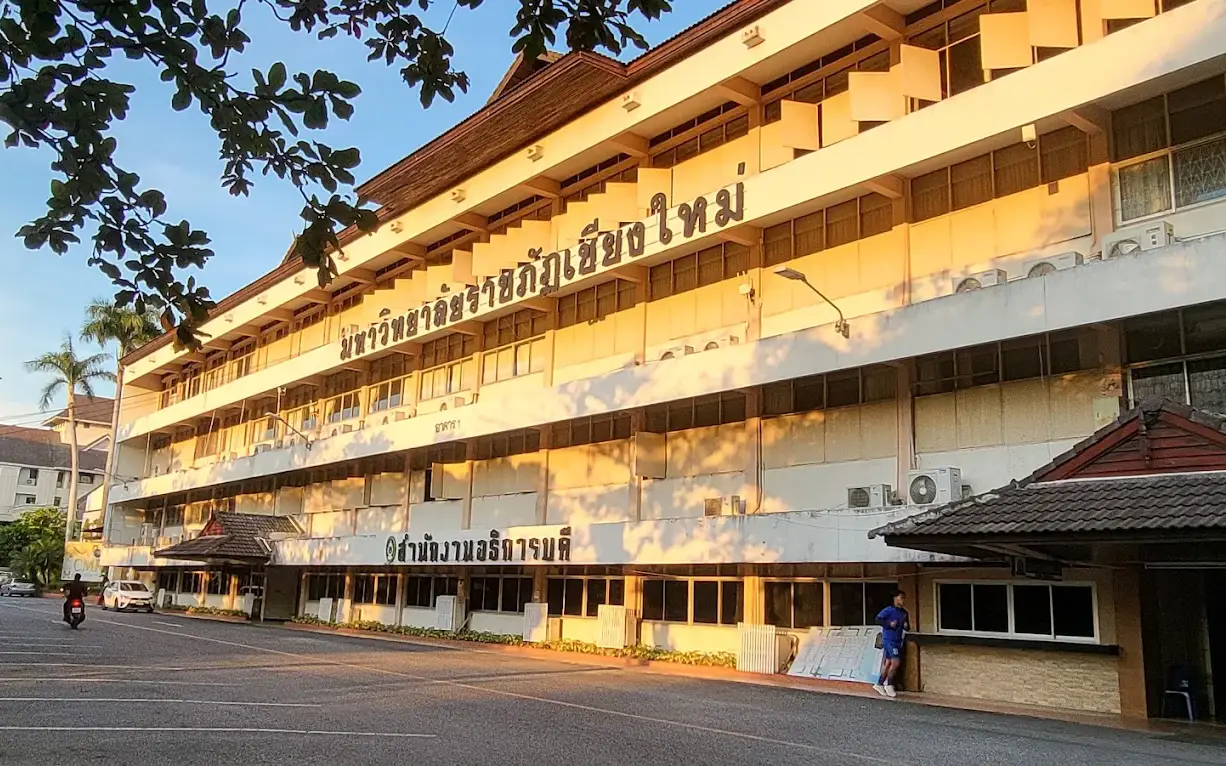
Open Days: Monday–Friday (University Administrative and Office Services)
Opening Hours: 08:30–16:30 (Administrative Office Hours, Not the Visiting Hours of Every Building or the Class Schedule of Every Program)
Chiang Mai Rajabhat University (CMRU) is a public higher education institution with more than 102 years of history, located at 202 Chang Phueak Road, Chang Phueak Subdistrict, Mueang Chiang Mai District, Chiang Mai Province, northern Thailand. Its origins can be traced to the Payap Provincial Agricultural Teacher Training School, established on May 1, 1924, with teaching beginning on May 19 of the same year. The institution subsequently developed through several stages, becoming Chiang Mai Teacher Training School, Chiang Mai Teachers College, and Chiang Mai Rajabhat Institute before attaining university status under the Rajabhat University Act of 2004. Today, Chiang Mai Rajabhat University provides education across a wide range of disciplines, including Education, Science, Agricultural Technology, Humanities, Social Sciences, Management, Business, Languages, and Health Sciences. Its principal educational locations include Wiang Bua Campus, Mae Rim Center, and Mae Hong Son Campus. The university maintains a strong identity as a higher education institution for local development, emphasizing teacher preparation, quality education, research, innovation, and the preservation of Lanna cultural heritage.
Chiang Mai Rajabhat University occupies an important place in the history of education in northern Thailand because it was established during a period when the country was expanding its school system and developing teacher training to meet the needs of provincial communities. The creation of the Payap Provincial Agricultural Teacher Training School was more than the establishment of another educational institution. It represented an effort to prepare teachers who understood both classroom instruction and agricultural practices so that they could share their knowledge with rural communities whose livelihoods depended largely on farming and natural resources.
The original institution was established in the Wiang Bua area of Chang Phueak, Mueang Chiang Mai District. At that time, the location was well suited to agricultural instruction and teacher training. The historical significance of Wiang Bua extends beyond its function as a school site. Over more than a century, the surrounding area has witnessed Chiang Mai's transformation from a provincial town with agricultural land and scattered settlements into a major center of education, commerce, services, and urban development. The university's development is closely connected with these changes in the city.
Preparations for the school began in 1923 through the cooperation of important regional administrators and education officials, including Phraya Surabodin Surintharaphachai, Phraya Phayap Phiriyakit, and Luang Witsan Darunakan. They worked to establish a provincial agricultural teacher training school under the educational policies of the Ministry of Education, then known as the Ministry of Dhammakan. Their efforts were intended to create teachers with agricultural knowledge who could return to northern communities and contribute to local education and development.
During the preparations, a plot of approximately 15 rai in Ban Wiang Bua, Chang Phueak Subdistrict, was purchased together with a wooden house, using funds associated with the provincial government school system. In 1924, Chao Ratchaphatikawong, also known as Khamtan Na Chiang Mai, contributed additional land adjoining the original property to support the school's establishment. This assistance demonstrated the importance that regional leaders and local supporters placed on improving educational opportunities in northern Thailand.
Following the preparation of the site and the appointment of the first teachers, the institution was established as the Payap Provincial Agricultural Teacher Training School, with Chuen Sirorot serving as its first headmaster. May 1, 1924, is officially recognized as the university's founding date, while instruction began on May 19, 1924. The first intake consisted of 28 students from Chiang Mai, Chiang Rai, Lamphun, and Mae Hong Son. The admission of students from several provinces demonstrates that the institution had a regional educational mission from its earliest years.
The first school buildings were simple structures made from locally available materials. They served both as classrooms and accommodation for students. Construction involved the joint efforts of teachers and students, beginning in April 1924 and concluding in June of the same year. These modest beginnings contrast sharply with the modern university, which now includes academic buildings, laboratories, libraries, digital information systems, and extensive facilities for teaching and research.
The original purpose of the school was to prepare teachers who could teach general subjects and share practical agricultural knowledge. Agriculture was regarded not simply as a vocational skill but as an important means of improving living conditions in northern communities. When graduates returned to teach in their home areas, they could pass on knowledge about cultivation and agricultural management alongside basic education. The training model therefore connected schools with community livelihoods and local economic development.
In 1927, the provincial lower-level general teacher training program for male students was merged with the agricultural teacher training school, which was renamed the Payap Provincial Certificate Teacher Training School. This change reflected the expansion of the institution's mission from agricultural teacher preparation to broader general teacher education. Agricultural instruction remained an important component, however, and the institution continued to be popularly known as the Chang Phueak Agricultural School.
The school continued its development under Luang Phiphat Khurukit, who played an important role in improving instruction and administration. During this period, teachers and students continued to work together on the construction and maintenance of school facilities. Such activities encouraged responsibility, cooperation, and practical problem-solving alongside classroom learning. They also reflected an educational culture in which hands-on work was considered part of students' personal and professional development.
The school's agricultural activities were also associated with exhibitions and annual events that displayed local products and farming achievements. Such events offered opportunities for students and members of the public to exchange ideas about agricultural production, craftsmanship, and community activities. They demonstrate that the early institution already had an important role in connecting formal education with the economy and everyday life of the Payap region.
In 1942, the school was reorganized and renamed the Chiang Mai Elementary Teacher Training School, placing greater emphasis on preparing general education teachers to address shortages in provincial schools and rural communities. Thawee Porananon played an important role in the school's administration during this period. Teacher preparation became increasingly systematic, incorporating general academic subjects, teaching methods, and the development of professional knowledge necessary for classroom instruction.
In the 1947 academic year, the institution adopted the name Chiang Mai Teacher Training School to reflect its increasingly broad educational responsibilities. During this period, black and yellow were adopted as the institution's colors, while the image of Ganesha, a traditional symbol associated with wisdom and learning, became an important emblem of the school. The institution also adopted the Pali motto “Natthi Pannasama Abha”, meaning that no light is equal to the light of wisdom. The motto expresses the belief that knowledge and wisdom are essential foundations for personal growth and human development.
The school expanded significantly in the years following the Second World War as more students from northern provinces sought professional teacher training. Increasing enrollment required improvements in classrooms, dormitories, dining facilities, and practical training areas. The wooden student residences and workshops constructed during these years became part of the shared memories of teachers and alumni from several generations. Their history illustrates the gradual development of a more organized residential educational environment.
During the middle decades of the twentieth century, the institution developed into Chiang Mai Teachers College and took on a greater role in higher-level teacher preparation. Teacher education expanded in response to the increasing number of primary and secondary schools across northern Thailand. Academic programs were developed to meet different educational requirements, while professional qualifications became more advanced. The transformation from a training school to a teachers college marked an important step toward the establishment of a comprehensive higher education institution.
In the 1974 academic year, Chiang Mai Teachers College began offering degree-level studies in selected fields, including English, Chemistry, and General Science. Another major transition followed the enactment of the Teachers College Act of 1975, which affected the administration and academic organization of teacher education institutions throughout Thailand. Subsequent curriculum developments strengthened the Bachelor of Education pathway and created opportunities for existing teachers to improve their professional qualifications.
The expansion of degree-level education gradually broadened the role of Chiang Mai Teachers College beyond the preparation of new schoolteachers. It increasingly supported academic development, in-service teacher training, continuing education, and professional advancement for people already working in educational institutions. These responsibilities helped establish the foundations for the institution's eventual transformation into a multidisciplinary university.
February 14, 1992, became an important date for Thailand's teachers colleges when King Bhumibol Adulyadej, Rama IX, graciously bestowed the name “Rajabhat Institute” upon the group of institutions. The name Rajabhat is associated with those who are close to the King and carries an ideal of educated individuals using their knowledge to benefit the nation and its people. This change represented an important development in institutional identity and the broader public responsibilities of teacher education institutions.
The institution subsequently entered the era of Chiang Mai Rajabhat Institute, with an increasingly strong commitment to serving local communities. The Rajabhat Institute Act of 1995 further established its responsibilities in higher education, research, academic services, technology transfer, and cultural preservation. These changes allowed the institute to expand into disciplines beyond Education while maintaining teacher preparation and professional development as central responsibilities.
On June 10, 2004, King Bhumibol Adulyadej signed the Rajabhat University Act of 2004, which was published in the Royal Gazette on June 14, 2004. The legislation transformed Rajabhat institutes into universities and provided a new legal framework for their operations. For Chiang Mai Rajabhat University, this marked the formal transition from a teacher education institution and regional institute into a university with broader responsibilities for teaching, research, professional development, and local advancement.
On June 15, 2004, celebrations marking the new Rajabhat university status were held throughout Thailand. At Chiang Mai Rajabhat University, administrators, senior teachers, faculty members, employees, students, and alumni gathered to commemorate the occasion. The transition involved much more than a change of name. It marked the development of university-level administrative systems, academic programs, research activities, and partnerships with different sectors of society.
On May 1, 2024, Chiang Mai Rajabhat University celebrated the centenary of its foundation with academic conferences, exhibitions, research presentations, teacher development activities, cultural programs, and alumni events. These celebrations highlighted the institution's evolution across a century of educational change. On May 1, 2026, the university marked its 102nd anniversary, continuing the tradition of recognizing its long-term contribution to education and local development.
The university's institutional identity remains closely connected with its origins in teacher education and its wider mission of local development. The phrase “A Higher Education Institution for Local Development” expresses its commitment to applying knowledge to improve people's lives. This includes preparing teachers, developing occupational skills, conducting community-oriented research, supporting local economic development, and preserving cultural heritage. The university's role consequently extends far beyond classroom teaching and degree qualifications.
The university's traditional colors are black and yellow, inherited from the Chiang Mai Teacher Training School period. They remain familiar symbols of identity to generations of alumni and students. Ganesha was historically used by the teacher training school as a symbol of wisdom, while the present university emblem follows the Rajabhat identity associated with royal symbolism and the values of scholarship, nature, cultural heritage, and purity of thought.
The colors of the Rajabhat emblem have particular meanings. Blue represents the monarchy; green reflects natural surroundings and the environment; gold represents intellectual prosperity; orange symbolizes the flourishing of local arts and culture; and white represents the purity of scholarly thought. Together, these elements express the educational ideals of the Rajabhat institutions and their commitment to connecting knowledge with local development, cultural preservation, and public service.
The Pali motto “Natthi Pannasama Abha”, commonly translated as “There Is No Light Equal to Wisdom,” has historical associations with the university dating back to its teacher training school years. It expresses the belief that wisdom enables individuals to understand problems, improve themselves, and contribute to society. This principle remains relevant not only to teacher education but also to the sciences, humanities, social sciences, and professional disciplines represented within the modern university.
In 2026, Chiang Mai Rajabhat University is led by Associate Professor Dr. Chatree Maneekosol, who was appointed University President effective March 20, 2025. The university's contemporary administration focuses on educational quality, partnerships with external organizations, student development, research and innovation, and cooperation with communities and institutions across northern Thailand.
Chiang Mai Rajabhat University has two major educational locations within Chiang Mai Province: Wiang Bua Campus on Chang Phueak Road in Mueang Chiang Mai District, and the Mae Rim Center in Mae Rim District. Both locations support teaching and academic activities according to the needs of their faculties and administrative units. Wiang Bua is historically significant as the institution's original site and is closely connected with urban Chiang Mai, whereas Mae Rim offers a larger educational environment with facilities suited to teaching, research, and academic events.
Wiang Bua is the historical heart of Chiang Mai Rajabhat University because it was the location of the original agricultural teacher training school established in 1924. Today, the campus includes academic buildings, administrative offices, student facilities, and cultural learning spaces. The surrounding neighborhood is a developed urban district containing restaurants, accommodation, businesses, and transportation routes connecting the university with Chiang Mai's historic center. Its location has helped the institution remain part of the social and economic life of the city for generations.
The Mae Rim Center, located at 180 Moo 7, Chotana Road, Khilek Subdistrict, Mae Rim District, Chiang Mai Province, was developed to support the university's academic expansion. It contains substantial academic and administrative facilities within a spacious environment connected with the natural landscape of Mae Rim. The university's 2026 undergraduate admissions information identifies Mae Rim as an important teaching location for the Faculty of Education, Faculty of Agricultural Technology, and Faculty of Science and Technology.
Beyond Chiang Mai Province, the university also operates Mae Hong Son Campus, which contributes to expanding educational access in the mountainous and remote communities of northern Thailand. This campus helps local residents pursue higher education while supporting the development of teachers and professionals in community development, business, education, and public health. Academic programs at Mae Hong Son are identified separately from those delivered at the Chiang Mai locations in the university's admissions information.
The university's academic organization includes several faculties and colleges: the Faculty of Education, Faculty of Agricultural Technology, Faculty of Humanities and Social Sciences, Faculty of Management Science, Faculty of Science and Technology, Faculty of Nursing Science, International College, Asian Development College for Community Economy and Technology, Mae Hong Son College, and the Graduate School. Each has its own academic specializations, but all contribute to the common mission of generating knowledge and preparing graduates who can benefit local communities.
The Faculty of Education is the academic unit most directly connected with the institution's historical origins. Its programs cover Early Childhood Education, Elementary Education, Special Education, the teaching of different academic subjects, and professional teacher development. Students study subject knowledge, instructional planning, assessment, educational psychology, and professional ethics. A particular priority is preparing teachers to work effectively in schools across northern Thailand, where social, linguistic, and cultural conditions vary considerably.
The strength of teacher education at Chiang Mai Rajabhat University lies not only in the range of Bachelor of Education programs but also in the importance placed on understanding local schools and communities. Schools in mountain areas, rural settlements, and multilingual communities may encounter challenges different from those of urban institutions. Preparing effective teachers therefore requires academic competence, communication skills, cultural understanding, and sensitivity to students' backgrounds and needs.
The Faculty of Agricultural Technology maintains a meaningful connection with the university's origins in agricultural teacher training. Programs in Agriculture, Food Science and Technology, and Animal Science prepare students for work involving agricultural production, management, and product development. These disciplines are particularly relevant to northern Thailand, where agricultural systems vary across lowland farming areas and mountainous landscapes, and where local communities maintain diverse agricultural traditions.
The Faculty of Humanities and Social Sciences supports education in languages, culture, law, society, tourism, and public administration. Its programs include Thai, English, Chinese, Japanese, Korean, History and Cultural Heritage, Community Development, Tourism and Hospitality, Geography and Geoinformatics, Law, Public Administration, and the arts. These subjects are closely connected with Chiang Mai's status as a major center of culture, education, and tourism in northern Thailand.
Language and cultural education also play an important role in preparing graduates for international environments. Chiang Mai regularly receives visitors, students, researchers, and businesspeople from different countries, making foreign-language communication valuable to local industries and service providers. Meanwhile, the study of history and cultural heritage strengthens understanding of Lanna society and supports professional activities in conservation, cultural interpretation, and educational tourism.
The Faculty of Management Science provides education in Business Administration, Management, Marketing, Accounting, Entrepreneurship, Digital Business, International Business, Communication Arts, and Economics. These disciplines respond to the changing regional economy, which includes tourism businesses, commercial services, small enterprises, and digital industries. Management education develops students' abilities in analysis, planning, resource management, communication, and responsible business practice.
The Faculty of Science and Technology prepares students in scientific and applied professional fields. Its areas include Mathematics, Chemistry, Biology, Computer Science, Information Technology, Data Science, Civil Engineering, Construction Engineering Technology, Creative Design, Food and Nutrition, Environmental Science, and selected health sciences. Education in these subjects supports the development of technical skills, information systems, research competence, and the ability to address environmental and public-health challenges.
Science and technology education at a university dedicated to local development is particularly valuable because it connects research with problems experienced by communities. Relevant areas include natural resource management, improvements in production efficiency, digital skills, and adaptation to economic or environmental change. The availability of scientific expertise within the region also benefits government agencies, schools, businesses, and community organizations seeking evidence-based solutions.
The International College supports education in languages and international management. Undergraduate fields advertised in the 2026 academic year include Aviation Business Management, International Business Management, Business Chinese, and English for International Communication. These subjects are relevant to international commerce, aviation services, cross-cultural communication, and the tourism-related economy of Chiang Mai.
The Asian Development College for Community Economy and Technology, widely known as adiCET, focuses on connecting research with technologies suitable for community development. Its academic and professional activities include energy, environmental management, and community economic development. The college supports the university's objective of producing innovations that address real social needs through research, training, and knowledge transfer to interested organizations and communities.
Postgraduate education is another important part of the university's academic responsibilities. It allows teachers, educational administrators, researchers, professionals, and other graduates to deepen their expertise through master's and doctoral studies. For the 2026 academic year, the university announced postgraduate admissions in fields including Educational Administration, Learning Management Science, Science Teaching, English Studies, Sciences for Sustainable Local Development, Business Administration, Community Health Systems Management, and Community Energy and Environment, at the relevant degree levels.
A diverse range of postgraduate programs helps the university develop advanced research expertise and professionals capable of examining local development from different perspectives. Sustainable local development requires an understanding of economic, social, cultural, environmental, and administrative factors. Higher-level study therefore contributes to the generation of knowledge that can support education policies, public administration, research projects, and community development initiatives.
Research is a central responsibility of Chiang Mai Rajabhat University, supported by its Research and Development Institute. Academic work covers education, science, agricultural technology, management, social sciences, culture, and subjects connected with quality of life. The university also maintains academic journals and systems for disseminating research, enabling scholarly work produced by faculty members, researchers, and students to reach wider audiences and contribute to further academic development.
The university also encourages research outcomes with practical applications and intellectual-property potential. During its 102nd anniversary celebrations on May 1, 2026, Chiang Mai Rajabhat University recognized researchers who had produced notable intellectual-property achievements. Such activities demonstrate how the institution has developed beyond its original teacher-training mission to become a source of research and innovation serving both regional and wider social needs.
Community development and the strengthening of local economies remain essential to the university's mission. Knowledge from different faculties can support farmers, community enterprises, schools, local administrative organizations, and small businesses. Relevant work includes business management, product development, technology adoption, tourism improvement, and cultural preservation. Through these activities, academic resources are connected with practical community needs rather than remaining within the university alone.
Chiang Mai Rajabhat University has a particularly important role in preserving and promoting Lanna arts and culture. Its Arts and Culture Institute studies, preserves, and shares knowledge about northern Thai history, art, literature, ancient documents, and local wisdom. The institute supports research and organizes activities for students, university personnel, and members of the public, using Lanna cultural heritage as a foundation for education and community development.
Among the university's important cultural learning spaces are the Lanna Studies facilities and exhibition areas in the Theppharat Ratchasuda Building at Wiang Bua Campus. These facilities are associated with the study of ancient documents, Lanna knowledge, and the cultural traditions of northern Thailand's different ethnic groups. They provide opportunities to explore relationships among language, beliefs, rituals, and everyday community life while examining the ways local culture has evolved over time.
The university also develops digital cultural information resources and collections, including archives of historical documents and photographs, museum object databases, records of palm-leaf manuscripts and plants, and the Tai Studies Center. These resources contribute to the preservation of linguistic, historical, and cultural knowledge associated with Tai-speaking communities. Digital preservation makes historical materials more accessible for research, comparison, and future educational use.
University traditions are closely connected with the preservation of Lanna cultural heritage. Important activities include Wai Khru teacher appreciation ceremonies, university foundation celebrations, Buddhist cultural events, training in traditional rituals, artistic performances, and projects concerned with community knowledge. By incorporating cultural activities into student life, the university encourages learning through direct experience rather than relying exclusively on textbooks or classroom lectures.
In September 2026, the Arts and Culture Institute organized training in Lanna Buddhist rituals under the policy “One Student, One Cultural Heritage Activity.” The program introduced students to the practices and meanings of ceremonies associated with northern Thai Buddhist life. It illustrates an approach to cultural preservation that goes beyond exhibitions, encouraging students to understand, communicate, and appropriately apply cultural knowledge within their communities.
Respect for teachers also carries special significance at an institution with its origins in teacher training. The Wai Khru ceremony expresses gratitude toward those who share knowledge and help shape students' development. For future teachers and other graduates, the ceremony reinforces values associated with the teaching profession, including responsibility, dedication to learning, and the importance of using knowledge for the benefit of others.
May 1, the annual university foundation day, offers an opportunity to commemorate the institution's history and the contributions of those who helped develop it. Anniversary activities strengthen connections between current staff, senior teachers, and alumni who studied during different institutional eras. The continuity linking the teacher training school, teachers college, Rajabhat institute, and present university remains an important element of Chiang Mai Rajabhat University's shared identity.
In addition to Wiang Bua Campus, the university has substantial facilities at Mae Rim Center, including the Dipangkorn Rasmijoti Auditorium, which accommodates important university ceremonies, conferences, and events. The larger campus environment supports educational activities involving significant numbers of participants, as well as the development of academic buildings and teaching facilities suited to changing institutional needs.
The university's interest in environmental sustainability and energy technology is also reflected in its community-technology initiatives and campus energy management projects. Improving energy efficiency and infrastructure provides an example of academic knowledge being applied to university operations. Such developments are consistent with the wider role of educational institutions as places where sustainable resource-management methods can be tested, studied, and communicated to society.
For prospective students, one of the university's strengths is the diversity of academic programs and educational locations. Important undergraduate programs in Education, Agricultural Technology, and Science and Technology are taught at Mae Rim Center, while Humanities and Social Sciences, Management Science, and International College programs have significant teaching operations at Wiang Bua. Confirming the correct campus is therefore an important part of planning transportation, accommodation, and daily student life.
During the 2026 academic year, Chiang Mai Rajabhat University offered several undergraduate admission rounds through the TCAS CMRU system. The official admissions information identifies programs and fields of study by faculty and includes selected credit-transfer pathways for holders of Higher Vocational Certificates or equivalent qualifications. These options support access to higher education for students from both general and vocational educational backgrounds.
The undergraduate admissions information also distinguishes degree programs from their majors and admission routes. A credit-transfer option does not automatically represent an entirely separate degree program. Applicants should therefore examine the degree title, field of study, major, program duration, teaching location, and admissions requirements before deciding which option best matches their academic preparation and career goals.
For people interested in Thai educational history and Lanna culture, Chiang Mai Rajabhat University offers a valuable example of an institution that has developed alongside Chiang Mai for more than a century. Visitors can learn about the historical teacher-training school, the university's symbols, and the cultural knowledge preserved through its Arts and Culture Institute. Public exhibitions and educational activities announced by the relevant departments provide opportunities to engage with the institution's heritage.
A visit to the university can also be combined with exploration of historic Chiang Mai. Attractions around Wiang Bua include Chang Phueak Gate, Wat Lok Moli, Wat Chiang Man, Chiang Mai City Arts and Cultural Center, and Lanna Folklife Museum. These sites introduce different aspects of Chiang Mai's history, including the ancient city's fortifications, Buddhist architecture, local beliefs, and community heritage. Together, they provide a wider cultural context for understanding the university's long development within the city.
The Wiang Bua neighborhood also offers opportunities to experience everyday life in Chang Phueak, where local restaurants, traditional food stalls, markets, and accommodation cater to students and visitors. The university has been an important part of the area's social and economic activity for generations, supporting local businesses through the continued presence of students, teachers, staff, and visitors.
Visitors to Mae Rim Center will encounter a different environment from the more urban Wiang Bua campus. Mae Rim offers a spacious setting with facilities for classrooms, laboratories, group activities, and practical education. Visitors should check the building and activity venue before traveling because the campus has several internal areas and routes that differ from those of the university's central-city location.
Access to university buildings and facilities should respect campus regulations and ongoing academic activities. Some classrooms, laboratories, libraries, and administrative areas primarily serve students and employees. Visitors interested in educational tours or cultural resources should contact the responsible university department in advance, especially when planning to consult ancient manuscripts, museum objects, or other collections subject to specific access arrangements.
Getting There: Wiang Bua Campus is located at 202 Chang Phueak Road, Chang Phueak Subdistrict, Mueang Chiang Mai District, Chiang Mai 50300. From Chiang Mai's Old City, visitors can travel north through the Chang Phueak Gate area and continue along Chang Phueak Road toward the university. Private cars, taxis, ride-hailing services, and other local transportation options can be used. Visitors should consider traffic during busy periods and use parking areas designated by the university.
To reach Mae Rim Center, follow Chotana Road north from Chiang Mai toward Mae Rim District. The center's address is 180 Moo 7, Chotana Road, Khilek Subdistrict, Mae Rim District, Chiang Mai 50180. Visitors attending academic activities, appointments, or events should enter the correct campus and destination building into their navigation system, as Wiang Bua and Mae Rim are located in different districts.
Those contacting university administrative offices should generally visit Monday through Friday, between 08:30 and 16:30. The university's main telephone numbers are +66 53 412 151 through +66 53 412 155. The President's Office and individual departments may have additional direct lines or extensions. Academic schedules, weekend classes, library services, and access to specialized facilities follow the arrangements published by their respective units.
Chiang Mai Rajabhat University illustrates the long transformation of Thai education from agricultural teacher training into multidisciplinary university-level learning. From the first class of only 28 students in 1924, the institution has developed its academic organization, personnel, facilities, and educational network to serve students from across northern Thailand. Despite substantial changes in academic programs and institutional status, the preparation of teachers and the development of local communities remain central to its mission.
The university's 102nd anniversary in 2026 represents an opportunity to remember the people and developments that shaped it over more than a century. These include the regional leaders who initiated the original school, those who contributed land, early headmasters, university administrators, teachers, staff, alumni, and generations of students. Each period contributed to the institution's academic foundations and the social values that continue to influence Chiang Mai Rajabhat University today.
Chiang Mai Rajabhat University is therefore much more than a place to pursue a degree. It is part of the history of teacher education and local development in northern Thailand. Its importance is reflected in graduate preparation, research, academic services, community development, and the preservation of Lanna cultural heritage. The enduring belief in wisdom and the application of knowledge for the benefit of society continues to connect the university's past, present, and future.
| Name | Chiang Mai Rajabhat University |
| Abbreviation | CMRU |
| Institution Type | Public Rajabhat University with Missions in Education, Teacher Development, Research, and Local Development |
| Wiang Bua Address | 202 Chang Phueak Road, Chang Phueak Subdistrict, Mueang Chiang Mai District, Chiang Mai 50300, Thailand |
| Mae Rim Center Address | 180 Moo 7, Chotana Road, Khilek Subdistrict, Mae Rim District, Chiang Mai 50180, Thailand |
| Institutional Founding Date | May 1, 1924 |
| First Day of Teaching | May 19, 1924 |
| Institutional Age | 102 Years in 2026 |
| Original Institution | Payap Provincial Agricultural Teacher Training School |
| Historical Name Changes | 1. 1924: Payap Provincial Agricultural Teacher Training School 2. 1927: Payap Provincial Certificate Teacher Training School 3. 1942: Chiang Mai Elementary Teacher Training School 4. 1947: Chiang Mai Teacher Training School 5. Chiang Mai Teachers College Period 6. 1992: Chiang Mai Rajabhat Institute 7. 2004: Chiang Mai Rajabhat University |
| Important Founding Figures | Phraya Surabodin Surintharaphachai, Phraya Phayap Phiriyakit, Luang Witsan Darunakan, and Chao Ratchaphatikawong (Khamtan Na Chiang Mai), Who Contributed Land for the School |
| First Headmaster | Chuen Sirorot |
| University President in 2026 | Associate Professor Dr. Chatree Maneekosol |
| University Status | Established as a Rajabhat University in June 2004 Under the Rajabhat University Act of 2004 |
| University Colors | Black and Yellow |
| Motto | Natthi Pannasama Abha — There Is No Light Equal to Wisdom |
| Official Emblem | The Rajabhat University Emblem, Featuring Royal Symbolism and Colors Associated with Knowledge, Nature, Culture, and Purity of Thought |
| Institutional Identity | A Higher Education Institution for Local Development |
| Faculties and Colleges | 1. Faculty of Education 2. Faculty of Agricultural Technology 3. Faculty of Humanities and Social Sciences 4. Faculty of Management Science 5. Faculty of Science and Technology 6. Faculty of Nursing Science 7. International College 8. Asian Development College for Community Economy and Technology (adiCET) 9. Mae Hong Son College 10. Graduate School |
| Educational Locations | 1. Wiang Bua Campus, Mueang Chiang Mai District 2. Mae Rim Center, Mae Rim District 3. Mae Hong Son Campus, Mae Hong Son Province |
| Academic Strengths | Teacher Education and Professional Development, Agricultural Technology, Science and Technology, Languages and Culture, Business Management, Research, and Community Innovation |
| Important Campus Facilities | 1. Rajabhat Chaloem Phrakiat Building, Wiang Bua 2. Theppharat Ratchasuda Building and Lanna Studies Facilities 3. University Library 4. Central Administration Building, Mae Rim 5. Dipangkorn Rasmijoti Auditorium, Mae Rim 6. Academic Learning Spaces and Faculty Facilities |
| Traditions and Activities | Wai Khru Teacher Appreciation Ceremonies, University Foundation Day on May 1, Lanna Cultural Activities, One Student One Cultural Heritage Activity, and Alumni Events |
| Administrative Office Days | Monday–Friday |
| Administrative Office Hours | 08:30–16:30 |
| Visitor Access | Study Visits and Access to Specialized Facilities Are Subject to University Regulations and Arrangements with the Responsible Department |
| Facilities | Academic Buildings, Administrative Offices, Library, Laboratories, Conference Facilities, Student Activity Areas, and Designated Parking Spaces |
| Getting There | Wiang Bua: Follow Chang Phueak Road from Chiang Mai City Center Mae Rim: Follow Chotana Road North toward Mae Rim District |
| Nearby Attractions — Wiang Bua | 1. Chang Phueak Gate 2. Wat Lok Moli 3. Wat Chiang Man 4. Chiang Mai City Arts and Cultural Center 5. Lanna Folklife Museum |
| Nearby Restaurants — Wiang Bua | 1. Chun Chicken Rice, Rajabhat Branch, Tel. +66 81 153 4388 2. Rad Na Chet Yot, Tel. +66 81 784 2397 3. Chaiyaphum Isan Restaurant, Tel. +66 81 783 4151 4. Chuan Chim, Tel. +66 53 222 729 5. A.T. Thaifoods, Tel. +66 81 885 3763 |
| Nearby Accommodations — Wiang Bua | 1. Mercure Chiang Mai, Tel. +66 53 225 500 2. The Echo Hotel Chiang Mai, Tel. +66 63 525 5656 3. Saeng Panya Home, Tel. +66 80 135 7117 4. Chor Chang House, Tel. +66 53 406 497 5. C YOU HOME @CNX, Tel. +66 93 193 6500 |
| University Telephone | +66 53 412 151 to +66 53 412 155 |
| President's Office Contact | +66 61 267 4455 (Wiang Bua) +66 53 412 151 Ext. 2102 (Mae Rim) |
| Official Website | https://www.cmru.ac.th/ |
| Admissions Website | https://tcas.cmru.ac.th/ |
| Current Status | Operating and Providing Education, Research, and Academic Services During the 2026 Academic Year |
Chiang Mai Rajabhat University — Academic Programs and Fields of Study, Academic Year 2026 Chiang Mai Rajabhat University offered undergraduate admission opportunities in numerous fields during the 2026 academic year, with teaching locations identified by faculty and college. The following table brings together undergraduate programs and fields listed in the official CMRU Model Round 2 and Quota Round 2 admissions information, together with master's and doctoral programs listed in the university's announcement for the first semester of the 2026 academic year. Majors are grouped under their corresponding degree programs, and credit-transfer admission routes are not counted as separate degree programs.
| Faculty / College / Teaching Location | Academic Programs and Fields of Study |
| 1. Faculty of Education Mae Rim Center | Bachelor's Degree 1. Bachelor of Education in Elementary Education 2. Bachelor of Education in Early Childhood Education 3. Bachelor of Education in Special Education 4. Bachelor of Education in Agriculture 5. Bachelor of Education in Mathematics 6. Bachelor of Education in Computer Education 7. Bachelor of Education in Chemistry 8. Bachelor of Arts in Psychology (Majors: Counseling Psychology and Organizational Psychology) 9. Bachelor of Education in Educational Psychology and Guidance 10. Bachelor of Education in Biology 11. Bachelor of Education in Music Education 12. Bachelor of Education in Dance Education 13. Bachelor of Education in Physical Education 14. Bachelor of Education in Physics 15. Bachelor of Education in Chinese 16. Bachelor of Education in Thai 17. Bachelor of Education in English 18. Bachelor of Education in General Science 19. Bachelor of Education in Art Education 20. Bachelor of Education in Social Studies 21. Bachelor of Education in Industrial Arts |
| 2. Faculty of Agricultural Technology Mae Rim Center | Bachelor's Degree 1. Bachelor of Science in Agriculture 2. Bachelor of Science in Food Science and Technology 3. Bachelor of Science in Animal Science |
| 3. Faculty of Humanities and Social Sciences Wiang Bua Campus | Bachelor's Degree 1. Bachelor of Arts in Tourism and Hospitality 2. Bachelor of Arts in Community Development 3. Bachelor of Fine Arts in Western Music 4. Bachelor of Laws in Law 5. Bachelor of Arts in History and Cultural Heritage 6. Bachelor of Arts in Korean 7. Bachelor of Arts in Chinese 8. Bachelor of Arts in Japanese 9. Bachelor of Arts in Thai 10. Bachelor of Arts in English 11. Bachelor of Arts in English for Service Business 12. Bachelor of Science in Geography and Geoinformatics 13. Bachelor of Public Administration in Public Administration 14. Bachelor of Fine Arts in Performing Arts 15. Bachelor of Fine Arts in Art and Design 16. Bachelor of Arts in Information Science |
| 4. Faculty of Management Science Wiang Bua Campus | Bachelor's Degree 1. Bachelor of Business Administration in Management 2. Bachelor of Business Administration in Human Resource Management 3. Bachelor of Business Administration in Marketing 4. Bachelor of Accountancy in Accounting 5. Bachelor of Business Administration in Entrepreneurship 6. Bachelor of Business Administration in Digital Business (Majors: Digital Business Technology and Digital Commerce) 7. Bachelor of Business Administration in International Business 8. Bachelor of Communication Arts in Communication Arts 9. Bachelor of Economics in Economics Admission Arrangements Credit-Transfer Pathways Are Available for Management, Accounting, and Selected Digital Business Programs as Specified in the Official Admissions Information |
| 5. Faculty of Science and Technology Mae Rim Center | Bachelor's Degree 1. Bachelor of Thai Traditional Medicine in Thai Traditional Medicine 2. Bachelor of Science in Creative Design 3. Bachelor of Science in Mathematics 4. Bachelor of Science in Home Economics (Majors: Fashion and Textile Design; Food and Nutrition) 5. Bachelor of Science in Chemistry 6. Bachelor of Science in Biology 7. Bachelor of Science in Computer and Digital Technology 8. Bachelor of Science in Construction Engineering Technology 9. Bachelor of Science in Architectural Technology 10. Bachelor of Science in Information Technology 11. Bachelor of Technology in Industrial Technology 12. Bachelor of Science in Statistical Data Science 13. Bachelor of Science in Computer Science 14. Bachelor of Science in Environmental Science 15. Bachelor of Engineering in Civil Engineering 16. Bachelor of Public Health in Public Health 17. Bachelor of Science in Occupational Health and Safety Admission Arrangements Credit-Transfer Routes Are Listed for Selected Programs in Creative Design, Home Economics, Construction Engineering Technology, Architectural Technology, and Civil Engineering |
| 6. International College Wiang Bua Campus | Bachelor's Degree 1. Bachelor of Business Administration in Aviation Business Management 2. Bachelor of Business Administration in International Business Management 3. Bachelor of Arts in Business Chinese 4. Bachelor of Arts in English for International Communication |
| 7. Mae Hong Son College Mae Hong Son Campus | Bachelor's Degree 1. Bachelor of Business Administration in Management 2. Bachelor of Arts in Tourism and Hospitality 3. Bachelor of Education in Elementary Education 4. Bachelor of Education in Early Childhood Education 5. Bachelor of Education in Computer Education 6. Bachelor of Education in English 7. Bachelor of Public Health in Community Public Health |
| 8. Graduate School and Associated Faculties Postgraduate Admissions, 2026 | Master's Degree 1. Master of Education in Educational Administration 2. Master of Education in Learning Management Science 3. Master of Science in Science Teaching 4. Master of Arts in English Studies 5. Master of Arts in Sciences for Sustainable Local Development 6. Master of Business Administration in Business Administration 7. Master of Public Health in Community Health Systems Management Doctoral Degree 1. Doctor of Philosophy in Sciences for Sustainable Local Development 2. Doctor of Philosophy in Community Energy and Environment 3. Doctor of Philosophy in Business Administration 4. Doctor of Education in Educational Administration |
Frequently Asked Questions (FAQ)
Q: Where is Chiang Mai Rajabhat University located?
A: Wiang Bua Campus is located at 202 Chang Phueak Road, Chang Phueak Subdistrict, Mueang Chiang Mai District, Chiang Mai 50300, Thailand. The university also operates Mae Rim Center in Mae Rim District and Mae Hong Son Campus in Mae Hong Son Province.
Q: What are the opening days and hours of Chiang Mai Rajabhat University?
A: Administrative offices generally operate Monday to Friday from 08:30 to 16:30. Academic schedules, library services, and access to specialized buildings or cultural learning facilities may follow separate arrangements published by the relevant departments.
Q: When was Chiang Mai Rajabhat University founded?
A: The university recognizes May 1, 1924, as its founding date. It began as the Payap Provincial Agricultural Teacher Training School, with teaching commencing on May 19, 1924.
Q: How old is Chiang Mai Rajabhat University in 2026?
A: Chiang Mai Rajabhat University celebrated its 102nd anniversary on May 1, 2026, marking 102 years since the foundation of its original teacher training institution.
Q: What is Chiang Mai Rajabhat University known for?
A: The university is known for teacher education and professional development, community-oriented research and innovation, agricultural technology, languages and culture, science, business education, and the preservation of Lanna cultural heritage.
Q: Which faculties and academic programs does Chiang Mai Rajabhat University offer in 2026?
A: The 2026 admissions information covers fields offered by the Faculties of Education, Agricultural Technology, Humanities and Social Sciences, Management Science, and Science and Technology, together with International College, Mae Hong Son College, and postgraduate programs. The academic programs table lists the relevant fields of study and teaching locations.
Q: What is the difference between Wiang Bua Campus and Mae Rim Center?
A: Wiang Bua is the historic university location on Chang Phueak Road in central Chiang Mai. Mae Rim Center is a larger educational location in Mae Rim District where several academic programs are taught. Students should confirm their assigned campus through the relevant admissions announcement.
Q: Can members of the public visit Chiang Mai Rajabhat University?
A: Members of the public may contact university departments and attend public activities according to the university's published arrangements. Visits to academic buildings, laboratories, and specialist learning facilities should be coordinated with the responsible department in advance.
Q: How can visitors get to Chiang Mai Rajabhat University?
A: For Wiang Bua Campus, travel along Chang Phueak Road to 202 Chang Phueak Road in Mueang Chiang Mai District. For Mae Rim Center, follow Chotana Road north toward Mae Rim District. Confirm the correct campus and destination building before traveling.
 Category: ●University
 Group: ●Rajabhat University
Last Update : 1 WeekAgo
 Last Update : 1 WeekAgo
 Click to Access the Navigation Map GPS
Chiang Mai Rajabhat University (CMRU) Map
Recommend

 Art, Culture and Heritage
 Historical Sites and Monuments(8)
 Landmarks and Memorials(5)
 Royal Palace(2)
 Art, Craft Centres, Tradition(43)
 Museums(24)
 Educational Places
 Museum for Study(2)
 Educational Gardens, Farm(5)
 Training Center(1)
 Public university(3)
 Autonomous Universities(3)
 Rajamangala University of Technology(1)
Rajabhat University(1)
 Private University(5)
 Places of Worship
 Temple(79)
 Mosque(2)
 Other Sacred Sites(17)
 Research and Development
 Royal Project(45)
 Suburban Living
 Village, Community(41)
 Local Market(14)
 Nature and Wildlife
 National Parks and Marine Reserves(18)
 Mountain (Doi)(21)
 Dam, Reservoir, Lake(26)
 Waterfalls(43)
 Hot Springs(12)
 Caves(11)
 River, Canal(6)
 Other natural attractions(14)
 Entertainment and Agricultural
 Zoos and Aquariums(3)
 Animal camps and shows(3)
 Stadium(1)
 Farms, Parks and Ecotourism(19)
 Waterpark(2)
 Theater(1)
 Outdoor and Adventure Activities(10)
 Shopping
 Shopping and Night Market(6)
 Restaurant
 Michelin Star(1)
 Michelin Guide(23)
 Call Customer Service in Tourism
 Call Customer Service in Tourism(1)
 Travel Articles, Recipes
 Travel Review, Food Review(26)
 Food Menu, North Recipes(30)
 Thai Desserts, North Recipes(17)


