
lovethailand home >North Travel Attractions >Chiang Mai Travel Attractions >Muang Chiang Mai >Chang Phueak > Rajamangala University of Technology Lanna (Chiang..
TL;DR: Rajamangala University of Technology Lanna (Chiang Mai Campus), Chiang Mai attractions : University, Rajamangala University of Technology.

Rajamangala University of Technology Lanna (Chiang Mai Campus)
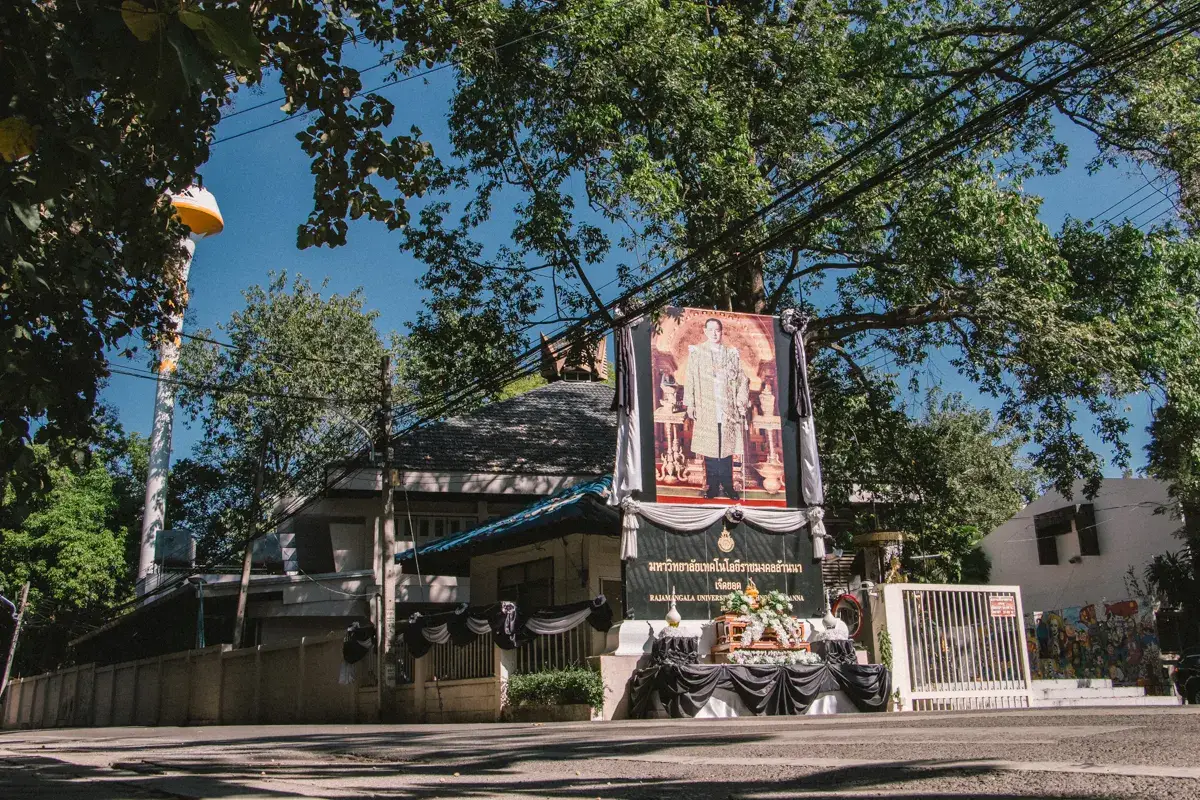
Open Days: Monday–Friday (Administrative Offices and Academic Services)
Opening Hours: 08:30–16:30 (General Administrative and Registration Office Hours; Library and Learning Facilities May Have Different Service Hours)
Rajamangala University of Technology Lanna, Chiang Mai (Formerly Payap Technical Campus), located at 128 Huay Kaew Road, Chang Phueak Subdistrict, Mueang Chiang Mai District, Chiang Mai Province, is a public university specializing in applied professional education, engineering, technology, business administration, fine arts, and architecture. Its historical foundations can be traced to Payap Technical College, established on August 8, 1957. The institution subsequently developed through the College of Technology and Vocational Education and the Rajamangala Institute of Technology before becoming part of Rajamangala University of Technology Lanna on January 18, 2005. Today, the Chiang Mai campus serves as an important center of a university with educational operations across northern Thailand. Its principal mission is to produce skilled graduates capable of applying scientific knowledge and technological expertise to professional practice, industrial development, and community improvement. In 2026, the original Chiang Mai institution marks 69 years of educational history and continues to serve as an important center for applied sciences, technology, innovation, and Lanna cultural heritage.
One of the university's most distinctive characteristics is its longstanding commitment to practical vocational education. Teaching has traditionally emphasized not only theoretical knowledge but also the ability to use tools, solve technical problems, design and create products, work effectively with others, and adapt professional expertise to real working environments. This educational approach forms the foundation of the university's identity as an institution producing hands-on graduates who possess both academic understanding and practical competence.
The Chiang Mai campus is situated on Huay Kaew Road in the northwestern part of the city, close to the foothills of Doi Suthep and several important educational communities. Its environment includes academic buildings, engineering workshops, science laboratories, fine arts and design facilities, a university library, and student activity spaces. The campus combines an urban university atmosphere with the natural landscape of the surrounding foothills, giving it a distinctive setting within Chiang Mai's educational and cultural environment.
The university's location is also associated with the ancient settlement of Wiang Chet Lin, also known as Chet Buri, an area connected with the historical development of communities around the foothills of Doi Suthep. The name is associated with the historical landscape and the importance of water resources in the surrounding area. Natural streams and water systems from the mountains historically supported settlements and agricultural activities. The university's presence in this environment provides an interesting connection between modern technological education and the region's older traditions of settlement, resource management, and cultural development.
During the middle of the twentieth century, Thailand was expanding its system of vocational education to support economic development and changing social needs. The demand for skilled technicians, industrial workers, and personnel capable of operating modern equipment was increasing. Establishing technical and vocational institutions in provincial regions helped young people access professional education closer to their homes while providing skilled labor for construction, transportation, manufacturing, electrical systems, and local businesses.
August 8, 1957, marked the beginning of the institution's history with the establishment of Payap Technical College, a regional vocational education institution under the Department of Vocational Education, Ministry of Education. The term Payap traditionally refers to the northwestern or northern region of Thailand and reflects the college's original responsibility to support the development of technical personnel in the region. Its establishment helped create educational opportunities for students interested in engineering-related skills and applied technology without requiring them to pursue all professional training in Bangkok.
During its early years, Payap Technical College operated according to an educational approach emphasizing practical skills developed through regular training. Students needed to understand the foundations of science, mathematics, and technical principles before applying them to machinery, materials, equipment, and workshop activities. Vocational education was therefore closely associated with safety, responsibility, precision, and product quality. These characteristics were particularly important for industrial employment and the development of independent technical occupations.
The expansion of technical education in Chiang Mai occurred alongside the transformation of northern Thailand's economy. Chiang Mai gradually developed from a regional center of administration and commerce into a city with expanding construction, transportation infrastructure, electrical systems, tourism, and service industries. Knowledge of mechanics, electrical engineering, civil construction, and management became increasingly relevant to regional development. Preparing skilled personnel helped support government agencies, private businesses, and local entrepreneurs.
An important institutional transition occurred on February 27, 1975, with the enactment of the College of Technology and Vocational Education Act. Payap Technical College became part of the College of Technology and Vocational Education system under the name College of Technology and Vocational Education, Payap Technical Campus. This change formed part of a national effort to expand vocational education across several academic levels and strengthen the relationship between professional technical training and degree-level higher education.
The College of Technology and Vocational Education was responsible for preparing vocational teachers, providing specialized technical education, conducting research related to vocational and technological development, and delivering academic services to society. This represented a broadening of the institution's role from technical training toward professional education, educational development, and technological research. It also helped establish the foundations for future university-level academic programs.
September 15, 1988, became another important milestone when King Bhumibol Adulyadej, Rama IX, graciously bestowed the name Rajamangala Institute of Technology upon the institution. The name conveys the idea of a technological institution blessed by the King. Administrative structures and legislation were subsequently adjusted to reflect the new identity, and the former Payap Technical Campus continued its educational development within the Rajamangala Institute of Technology.
The adoption of the Rajamangala name was meaningful to students, teachers, staff, and alumni because it connected professional education with a nationwide network of technological higher education institutions. It also became a lasting source of institutional pride. The name expressed the commitment to preparing graduates with technical knowledge, professional skills, and ethical responsibility, values that continued to shape the Rajamangala universities in later decades.
As Thailand entered an era of accelerating scientific and technological development, vocational higher education needed to respond to increasingly complex labor market requirements. Academic curricula, research activities, and administrative structures were therefore developed to support the growth of technology-oriented higher education. The establishment of the Rajamangala Universities of Technology formed part of this restructuring process and allowed former technical campuses to take on expanded responsibilities in teaching, research, and academic services.
On January 18, 2005, the Rajamangala University of Technology Act of 2005 was published in the Royal Gazette, establishing nine Rajamangala Universities of Technology throughout Thailand. Rajamangala University of Technology Lanna became one of these institutions. The transition from a technological institute to a university expanded opportunities for higher-level education, research, institutional development, and the preparation of professionals capable of supporting industrial and community needs.
Rajamangala University of Technology Lanna brought together former educational campuses and research institutions in northern Thailand. Important educational locations include Chiang Mai, Chiang Rai, Lampang, Nan, Tak, and Phitsanulok, together with agricultural technology research units. This structure allows the university to serve communities with different economic and geographical characteristics, offering expertise in engineering, industrial technology, business, design, and agricultural development.
The former Payap campus in Chiang Mai played a significant role as the university's administrative center during the transition to Rajamangala University of Technology Lanna. The development of central administrative units strengthened coordination in academic affairs, registration, planning, and university management. At the same time, the Chiang Mai campus continued to provide academic programs through its faculties and professional training units.
In 2026, the Chiang Mai institution completes 69 years of history from the founding of Payap Technical College in 1957. Rajamangala University of Technology Lanna itself completes 21 years from its legal establishment in 2005. These two historical dates should be distinguished because the earlier date represents the roots of the original technical college, while the later date represents the formal establishment of the present university.
The university's institutional identity is closely associated with the concept of hands-on graduates, meaning graduates who can apply their knowledge to practical tasks, solve real problems, and develop professional work effectively. Achieving this objective requires academic understanding, technical competence, creativity, communication, teamwork, and familiarity with the realities of professional employment. These qualities are central to the institution's approach to higher education.
Rajamangala University of Technology Lanna emphasizes science- and technology-based education together with Work Integrated Learning (WIL), an approach that connects academic teaching with practical professional experience. Students are encouraged to apply classroom knowledge through laboratory work, projects, workplace training, and activities addressing community needs. Work-integrated learning also helps prepare students to respond to changing technologies and expectations in modern industries.
The university's strategic direction emphasizes its development as a university of technology and innovation for sustainable communities. This reflects an institutional commitment to using science, technology, and professional knowledge to strengthen regional economic and social development. Education and research are intended not only to meet labor market demand but also to generate innovations appropriate to local conditions and capable of producing long-term benefits for communities.
The university's official emblem is the Rajamangala symbol. Its principal elements include an eight-petaled lotus, a royal insignia in the center, and the Great Crown of Victory above the circular emblem. The lotus is associated with wisdom and the pursuit of successful understanding, while the royal insignia reflects the institution's historical connection with the royal bestowal of the Rajamangala name. The emblem therefore carries meanings associated with educational achievement, historical identity, and institutional pride.
The official university color is golden brown, symbolizing lasting prosperity and progress. The color reflects the university's association with northern Thailand, a region known for its cultural traditions and accumulated local knowledge. It also expresses the institution's commitment to advancing education, technology, and innovation while maintaining continuity with its cultural foundations.
The university's symbolic tree is Kasalong, also known as the Indian cork tree or Millingtonia hortensis. This tall flowering tree is well known in northern Thailand for its clusters of fragrant white blossoms. Its strength and graceful appearance symbolize graduates who combine knowledge, professional ability, morality, and ethical responsibility. Kasalong therefore represents the relationship between Lanna cultural identity and the university's educational ideals.
September 15 is significant in the Rajamangala institutional calendar because it commemorates the royal bestowal of the Rajamangala name in 1988. Known as Rajamangala Day, the occasion is associated with reflection on the institution's history and the importance of professional education. Commemorating the day also strengthens relationships among students, university personnel, and alumni from different generations of the former technical college, technological institute, and present university.
The Wai Khru or Teacher Appreciation Ceremony is another important tradition. On July 9, 2026, Rajamangala University of Technology Lanna organized a ceremony under the theme “Khuru Bucha Or Phaya 69”, incorporating a traditional Lanna practice associated with the symbolic promotion of wisdom and learning. The event reflected efforts to preserve local knowledge while strengthening the values of gratitude, perseverance, and respect for teachers among contemporary university students.
The Lanna tradition of Kin Or Phaya is associated with the pursuit of wisdom, knowledge, and intellectual ability. In the northern Thai language, the term phaya relates to wisdom or understanding. Its inclusion in a teacher appreciation ceremony expresses the desire for students to develop knowledge and insight throughout their education. Bringing this local tradition into university activities also helps younger generations become familiar with the cultural heritage associated with learning and personal development in Lanna society.
The university also organizes cultural and Buddhist-related activities, including candle-making and offering ceremonies for Buddhist Lent, local cultural preservation projects, and educational activities concerning the traditional pilgrimage to Doi Suthep around Visakha Bucha Day. These programs are supported by academic and cultural units such as the university's Cultural Studies Center. Their importance lies in connecting technological education with the preservation of regional culture and demonstrating that a modern technical university can contribute to sustaining traditional knowledge.
Student development activities in Chiang Mai also encourage teamwork, leadership, and responsibility toward others. Student clubs and representative organizations support orientation activities, volunteering, and extracurricular learning. Through these experiences, students develop project management, communication, problem-solving, and organizational skills that complement their academic training and prepare them for professional responsibilities after graduation.
Rajamangala University of Technology Lanna is organized around major academic units, including the Faculty of Business Administration and Liberal Arts, Faculty of Science and Agricultural Technology, Faculty of Engineering, Faculty of Fine Arts and Architecture, and College of Integrated Science and Technology. Each unit has its own professional and academic specializations, but all contribute to the university's shared goal of preparing graduates whose knowledge can be applied in practical settings.
The Faculty of Business Administration and Liberal Arts develops graduates in management, accounting, marketing, languages, and service industries, connecting business knowledge with digital technology and contemporary communication. Undergraduate programs advertised for the Chiang Mai city area in the 2026 academic year include Business Management, Marketing and Digital Marketing, Accounting, Business Information Systems, Business English, English for International Communication, International Business Management, and Tourism and Hospitality. These fields are particularly relevant to Chiang Mai's role as a major center of commerce, tourism, education, and professional services in northern Thailand.
The Faculty of Science and Agricultural Technology connects scientific knowledge with food production, agricultural development, and applied technologies. Food Business and Nutrition appears among the undergraduate programs advertised for Chiang Mai in the 2026 academic year, reflecting the importance of developing graduates who understand food materials, nutritional principles, and business operations. Across the university's regional network, the faculty also contributes to agricultural science, research, and product development suited to local economic conditions.
The Faculty of Engineering is one of the academic units most directly connected with the institution's original technical education mission. Its fields include Mechanical Engineering, Electrical Engineering, Computer Engineering, Civil Engineering, Industrial Engineering, Environmental Engineering, Mining Engineering, and specializations related to agricultural machinery and manufacturing. Students develop the ability to apply mathematics, science, technical design, and experimentation to engineering challenges, closely reflecting the university's hands-on educational philosophy.
Modern engineering education at the university has also expanded into automation, robotics, software engineering, unmanned aircraft systems, and modern automotive technology. Some of these programs are delivered in Doi Saket District rather than at the central Huay Kaew Road campus. The location of different programs reflects the need for specialized laboratories, equipment, training facilities, and suitable practical environments. Prospective students should therefore confirm both the program title and the actual teaching location before applying.
The Faculty of Fine Arts and Architecture demonstrates the relationship between technology, artistic expression, and professional design. Programs advertised in the Chiang Mai city area include Architecture, Interior Architecture, Visual Arts, Packaging Design, Communication Design, Industrial Design, Fashion, Textiles and Jewelry Design, Ceramic Technology, and Digital Print Media. These disciplines develop creativity while emphasizing function, materials, production methods, visual communication, and the needs of users.
Studying fine arts, architecture, and design in Chiang Mai also creates opportunities to explore the cultural heritage of Lanna. The region is known for distinctive architecture, woodcraft, silverwork, textiles, ceramics, and decorative patterns. Connecting contemporary design methods with traditional craftsmanship may create opportunities to develop products and creative works expressing local identity. Education and design research can also support the preservation and adaptation of regional cultural knowledge.
The College of Integrated Science and Technology provides educational pathways connecting vocational preparation with higher education. Programs associated with the Doi Saket educational area include pre-engineering, pre-architecture, pre-art and design, pre-business education, and Mechatronics Engineering. These pathways help students strengthen the scientific, technical, and creative foundations needed for advanced study and professional specialization.
The university's education system extends beyond bachelor's degrees to include Vocational Certificates, Higher Vocational Certificates, master's degrees, and doctoral studies offered by the relevant academic units. Providing multiple educational levels creates opportunities for learners from different backgrounds to develop their skills progressively, including students entering vocational education after lower secondary school, graduates of technical colleges, and professionals seeking advanced engineering or research qualifications.
For the 2026 academic year, Rajamangala University of Technology Lanna announced graduate admissions in Mechanical Engineering, Electrical Engineering, Fine Arts and Creative Design, and doctoral studies in Electrical Engineering in Chiang Mai. Other graduate programs in Plant Science and Agricultural Technology were listed for locations in different provinces. These arrangements demonstrate why it is important to distinguish university-wide program lists from programs delivered at a particular campus or educational site.
Research and innovation are central to the university's wider mission. Academic work encompasses engineering, science, production technology, design, and business management, with an emphasis on practical application. Faculty members, researchers, and students contribute knowledge that can support the development of equipment, production systems, products, and management processes. Such work helps connect university expertise with the needs of businesses, professional organizations, and local communities.
The concept of a university of technology and innovation for sustainable communities encourages the use of technical expertise to address local challenges. Relevant activities may include improving community products, developing manufacturing processes, adapting machinery for small businesses, adding value to agricultural materials, and promoting digital skills among community enterprises. Through this approach, technology becomes a practical tool for improving livelihoods and strengthening local economic development rather than remaining knowledge confined to laboratories.
Collaboration with government agencies, private organizations, and businesses is also important to the university's educational development. Workplace projects, internships, and professional training allow students to engage with real problems involving costs, quality, safety, schedules, and resource limitations. These experiences reinforce technical knowledge while helping students understand the expectations and responsibilities they will encounter in their future careers.
The Chiang Mai campus contains facilities supporting both academic research and professional training, including engineering lecture buildings, a science and academic services building, the Rajamangala Library, and the Rajamangala Pavilion. These facilities serve different purposes, from lectures and practical work to research, meetings, and cultural activities. Together, they provide an environment supporting the university's diverse academic programs.
Rajamangala Library is an important academic resource for students and staff, providing access to printed materials, research information, search systems, and digital educational resources. Combining library services with online information technology enables students to explore academic literature, develop independent research skills, and support their coursework and projects using a variety of sources.
On February 20, 2026, the university opened a new Learning Space on the ground floor of the library building in Chiang Mai. Designed to support contemporary learning and collaborative activities, the facility includes six co-working rooms, meeting rooms accommodating 12 and 14 people, and a 30-seat presentation room. Students and staff can check availability and reserve rooms through the university's online booking system. The facility demonstrates the university's commitment to learning environments that support teamwork, creativity, and the presentation of academic work.
The Learning Space operates under its own published service schedule: Monday to Friday from 08:30 to 18:30, and Saturday and Sunday from 08:30 to 16:30, subject to university announcements and reservation rules. Providing study facilities outside ordinary classroom hours creates additional opportunities for group assignments, project development, and collaboration between students from different disciplines.
The university's Cultural Studies Center also contributes to preserving and communicating Lanna heritage through activities involving students and university personnel. These include traditional teacher appreciation ceremonies, Buddhist cultural events, and activities exploring local customs. The cultural work of a technological university is important because it balances the development of scientific and professional skills with an understanding of the social and cultural values of the region.
The campus also contains the Rajamangala Pavilion and other activity spaces used for university ceremonies and cultural programs. These places contribute to the shared experiences of students and staff, helping build an institutional identity that extends beyond academic curricula. University traditions and ceremonial spaces create connections between different generations and preserve memories of student life.
The relationship between the university and communities along Huay Kaew Road has influenced the surrounding area for many years. The presence of a major educational institution supports local restaurants, accommodation, bookstores, technology-related services, transportation businesses, and other economic activities. At the same time, the university provides professional expertise and academic resources that can support government organizations, enterprises, and communities throughout Chiang Mai and northern Thailand.
The campus location also provides opportunities to explore Chiang Mai's local history. Its association with the Wiang Chet Lin historical landscape and the routes leading toward Doi Suthep connects modern education with older patterns of settlement, water management, and relationships between communities and the natural environment. Students and visitors interested in architecture and design can complement their university-related activities with visits to historic temples and museums showcasing Lanna cultural heritage.
Visitors interested in the university may begin by learning about the history of Payap Technical College and the meaning of the Rajamangala emblem. The Rajamangala Library, Academic Services Building, and university cultural activity areas illustrate the institution's transformation from a technical college into a comprehensive technological university. However, classrooms, laboratories, and specialized research facilities are active educational spaces and may require authorization before visitors can enter them.
Several well-known Chiang Mai attractions are located within the wider area surrounding the university, including Huai Kaeo Arboretum, Chiang Mai Zoo, Chiang Mai National Museum, Wat Chet Yot, and the Lanna Traditional House Museum. These places offer different educational experiences related to nature, local history, religious architecture, and cultural preservation. They can be incorporated into an itinerary for visitors who wish to explore the city beyond their university appointment or campus-related activity.
Huai Kaeo Arboretum is an important green space near the foothills of Doi Suthep, containing a variety of trees and plants suitable for nature study and relaxation. Chiang Mai Zoo, also located along Huay Kaew Road, provides educational experiences related to animals and the natural environment. Visiting these places offers opportunities to connect classroom knowledge concerning ecology, environmental management, and conservation with real-world locations.
For visitors interested in northern Thai history and culture, Chiang Mai National Museum presents archaeological objects and exhibitions relating to the region's past. Wat Chet Yot is an important Buddhist temple known for its historical architecture and connections with the religious heritage of the Lanna Kingdom. The Lanna Traditional House Museum preserves examples of traditional northern Thai buildings and offers insights into the region's historic way of life. These sites are particularly interesting to students of fine arts, architecture, design, and local cultural history.
Huay Kaew Road also connects the university with commercial and residential districts such as Nimmanhaemin and surrounding student neighborhoods. The area contains a wide range of restaurants, cafés, hotels, and service businesses supporting students, university personnel, families, and visitors. Its mixture of local Thai food, northern cuisine, international restaurants, and contemporary cafés reflects Chiang Mai's development as a regional center of education and tourism.
Prospective students should carefully check academic program announcements and confirm the correct teaching location. Not every program advertised under the Chiang Mai area is delivered at the central Huay Kaew campus. Certain engineering and interdisciplinary technology programs are conducted in Doi Saket District, while other programs operate in Mueang Chiang Mai District. Confirming the teaching location during the application process is essential for planning accommodation, transportation, and daily student life.
Getting There: Rajamangala University of Technology Lanna's central Chiang Mai campus is located at 128 Huay Kaew Road, Chang Phueak Subdistrict, Mueang Chiang Mai District, Chiang Mai 50300. From central Chiang Mai, visitors can follow Huay Kaew Road toward the university and the Doi Suthep foothill area. Private vehicles and local hired transportation can be used. Visitors traveling from Chiang Mai International Airport or the city's transport terminals should consult current navigation services and allow for congestion during peak traffic periods.
Visitors attending appointments at specific university faculties or offices should confirm the destination building and appropriate entrance in advance. The campus contains multiple academic and administrative buildings as well as specialist laboratories. Those attending programs or activities in Doi Saket District should clearly distinguish their destination from the main Huay Kaew campus to avoid traveling to the wrong location.
University registration and academic service offices generally operate on weekdays during standard administrative hours, with 08:30–16:30 used for educational service appointments. The main university contact number is +66 53 921 444. The library and Learning Space have separate operating arrangements, so visitors should confirm the relevant department's schedule before traveling.
Rajamangala University of Technology Lanna, Chiang Mai, is significant for its contributions to vocational education, technological development, and professional training in northern Thailand. Beginning as Payap Technical College in 1957, the institution passed through several stages of academic and administrative development before becoming part of Rajamangala University of Technology Lanna in 2005. Its history reflects the wider transformation of technical and vocational education in Thailand.
Throughout 69 years, practical education has remained a defining characteristic of the institution. Although technology, equipment, and economic conditions have changed substantially, the importance of useful knowledge, professional responsibility, and service to society continues to connect generations of Rajamangala students and alumni. The university's commitment to Lanna cultural heritage and community-oriented innovation further strengthens its relationship with the region.
Rajamangala University of Technology Lanna, Chiang Mai, is therefore more than an institution specializing in engineering and technical education. It represents an important part of the history of professional education and workforce development in Thailand. For those interested in educational history, it illustrates the transition from vocational training to university-level studies. For visitors interested in technology, creative design, and regional culture, the campus demonstrates how modern scientific knowledge can coexist with Lanna heritage and contribute to sustainable economic and social development.
| Name | Rajamangala University of Technology Lanna, Chiang Mai (Formerly Payap Technical Campus) |
| Abbreviation | RMUTL |
| Institution Type | Public University Specializing in Technology, Applied Professional Education, and Hands-On Learning |
| Location | Huay Kaew Road, Chang Phueak Subdistrict, Mueang Chiang Mai District, Chiang Mai Province |
| Address | 128 Huay Kaew Road, Chang Phueak Subdistrict, Mueang Chiang Mai District, Chiang Mai 50300, Thailand |
| Original Institution | Payap Technical College |
| Original Foundation Date | August 8, 1957 |
| University Establishment Date | January 18, 2005 |
| Institutional History | 69 Years in 2026, Calculated from the Establishment of Payap Technical College in 1957 |
| Historical Development | 1. 1957: Payap Technical College 2. 1975: College of Technology and Vocational Education, Payap Technical Campus 3. 1988: Royal Bestowal of the Rajamangala Institute of Technology Name 4. 2005: Rajamangala University of Technology Lanna |
| University Leadership in 2026 | Associate Professor Wichet Thipprasert, Acting President, Appointed from May 17 to November 12, 2026, Under the University Council Order |
| Origin of the Rajamangala Name | Royal Name Bestowed by King Bhumibol Adulyadej, Rama IX, on September 15, 1988 |
| University Color | Golden Brown |
| Symbolic Tree | Kasalong (Indian Cork Tree, Millingtonia Hortensis) |
| Official Emblem | Rajamangala Emblem Featuring the Great Crown of Victory, Eight-Petaled Lotus, and Royal Insignia |
| Educational Philosophy and Direction | A University of Technology and Innovation for Sustainable Communities |
| Academic Highlights | Hands-On Professional Education, Work Integrated Learning, Engineering, Science, Technology, Business Administration, Fine Arts, Architecture, and Community-Oriented Innovation |
| Faculties and College | 1. Faculty of Business Administration and Liberal Arts 2. Faculty of Science and Agricultural Technology 3. Faculty of Engineering 4. Faculty of Fine Arts and Architecture 5. College of Integrated Science and Technology |
| Chiang Mai Educational Locations | Mueang Chiang Mai District, Including the Huay Kaew Campus, and Selected Academic Programs in Doi Saket District |
| University Regional Network | Chiang Mai, Chiang Rai, Tak, Nan, Phitsanulok, and Lampang, Together with Agricultural Technology Research Units |
| Important Campus Facilities | 1. Rajamangala Library 2. Learning Space on the Library Ground Floor 3. Academic Services Building 4. Faculty of Engineering Lecture Building 5. Rajamangala Pavilion 6. Faculty Academic Buildings and Student Activity Areas |
| Traditions and Activities | Rajamangala Day on September 15, Teacher Appreciation Ceremonies, Khuru Bucha Or Phaya, Buddhist Lent Candle Activities, and Lanna Cultural Preservation Programs |
| Administrative Office Days | Monday–Friday |
| Administrative Service Hours | 08:30–16:30 for Registration and Standard Academic Services |
| Learning Space Hours | Monday–Friday: 08:30–18:30 Saturday–Sunday: 08:30–16:30 Subject to the Published Service and Reservation Rules |
| Visitor Access | Academic Buildings, Laboratories, Research Facilities, and Restricted Areas Are Subject to University and Departmental Regulations |
| Facilities | Academic Buildings, Engineering Laboratories, Library, Co-Working Areas, Meeting Rooms, Presentation Rooms, Activity Spaces, and Designated Parking Areas |
| Getting There | Travel along Huay Kaew Road in Chiang Mai toward the Main Campus at 128 Huay Kaew Road, Chang Phueak Subdistrict. Confirm the Specific Academic Location Before Traveling. |
| Nearby Tourist Attractions | 1. Chiang Mai Zoo 2. Huai Kaeo Arboretum 3. Chiang Mai National Museum 4. Wat Chet Yot 5. Lanna Traditional House Museum, Chiang Mai University |
| Nearby Restaurants | 1. Royal Project Restaurant (Khrua Silapacheep), Huay Kaew Road, Tel. +66 53 226 853 2. Lemontree F&B, Huay Kaew Road, Tel. +66 53 222 009 3. Dao Chinese Restaurant, Huay Kaew Road, Tel. +66 64 971 1988 4. Tawansy Restaurant & Cafe, Huay Kaew Road, Tel. +66 80 391 3698 5. SHINE ON Mediterranean Restaurant, Huay Kaew Road, Tel. +66 90 891 8897 |
| Nearby Accommodations | 1. The Core Gallery Hotel, Tel. +66 53 218 163 2. Get Zleep Premium Budget Hotel, Tel. +66 95 453 5221 3. Holiday Garden Resort, Tel. +66 53 211 333 4. Puwanon Place, Tel. +66 99 759 0059 5. The Cosy Huay Kaew, Tel. +66 81 950 5214 |
| Main Telephone Number | +66 53 921 444 |
| Registration Office | +66 53 921 444 Ext. 1167 |
| Official Website | https://www.rmutl.ac.th/ |
| Academic Affairs and Registration Website | https://academic.rmutl.ac.th/ |
| Current Status | Operating as an Active University Campus Providing Education, Research, and Academic Services in the 2026 Academic Year |
Rajamangala University of Technology Lanna, Chiang Mai — Academic Programs and Fields of Study, Academic Year 2026 Rajamangala University of Technology Lanna provides educational pathways ranging from Vocational Certificates and Higher Vocational Certificates to bachelor's and postgraduate degrees. The following table presents the academic programs and fields of study advertised for the Chiang Mai educational areas in the university's 2026 admissions announcements, distinguishing Mueang Chiang Mai District from Doi Saket District. Master's and doctoral programs advertised in the same academic year are also included. Regular programs, special programs, and industry-partnership arrangements based on the same degree program are grouped under their corresponding academic fields.
| Faculty / Educational Location | Academic Programs and Fields of Study in 2026 |
| 1. Faculty of Business Administration and Liberal Arts Mueang Chiang Mai District | Bachelor's Degree 1. Bachelor of Arts in Tourism and Hospitality 2. Bachelor of Business Administration in Business Administration, Major in Business Management 3. Bachelor of Business Administration in Business Administration, Major in Marketing and Digital Marketing 4. Bachelor of Accountancy in Accounting 5. International Business Management 6. Bachelor of Business Administration in Business Administration, Major in Business English 7. Bachelor of Business Administration in Business Information Systems 8. Bachelor of Arts in English for International Communication 9. Bachelor of Business Administration in Business Administration, Major in Trade and Service Business Study Arrangements Listed in Admissions Regular Programs, Selected Special Programs, and Industry-Partnership Arrangements Depending on the Program and Admissions Round |
| 2. Faculty of Science and Agricultural Technology Mueang Chiang Mai District | Bachelor's Degree 1. Bachelor of Science in Food Business and Nutrition |
| 3. Faculty of Engineering Mueang Chiang Mai District | Bachelor's Degree 1. Bachelor of Engineering in Mechanical Engineering 2. Bachelor of Engineering in Agricultural and Biological Engineering, Major in Biological Engineering 3. Bachelor of Engineering in Mining Engineering 4. Bachelor of Engineering in Electrical Engineering, Major in Electrical Engineering 5. Bachelor of Engineering in Computer Engineering 6. Bachelor of Engineering in Electrical Engineering, Major in Telecommunications Engineering 7. Bachelor of Engineering in Civil Engineering 8. Bachelor of Engineering in Environmental Engineering 9. Bachelor of Engineering in Industrial Engineering, Major in Industrial Engineering 10. Bachelor of Engineering in Industrial Engineering, Major in Manufacturing Engineering 11. Bachelor of Engineering in Tool and Die Engineering 12. Bachelor of Science in Technical Education, Electrical Engineering, Major in Electronics and Telecommunications Engineering 13. Bachelor of Science in Technical Education in Industrial Engineering 14. Bachelor of Science in Technical Education in Civil Engineering 15. Bachelor of Engineering in Agricultural and Biological Engineering, Major in Modern Agricultural Machinery Engineering Higher Vocational Certificate 1. Automatic Electronics 2. Automotive Technology Study Arrangements Selected Programs Offer Regular and Special Study Arrangements According to the Official Admissions Announcements |
| 4. Faculty of Fine Arts and Architecture Mueang Chiang Mai District | Bachelor's Degree 1. Bachelor of Architecture in Architecture 2. Bachelor of Architecture in Interior Architecture 3. Bachelor of Fine Arts in Visual Arts 4. Bachelor of Arts in Packaging Design 5. Bachelor of Arts in Communication Design 6. Bachelor of Technology in Ceramic Technology 7. Bachelor of Arts in Industrial Design 8. Bachelor of Arts in Fashion, Textiles and Jewelry Design 9. Bachelor of Arts in Digital Print Media |
| 5. College of Integrated Science and Technology Doi Saket District, Chiang Mai | Vocational Certificate 1. Preparatory Arts and Design 2. Preparatory Engineering, English-Language Program 3. Preparatory Architecture 4. Preparatory Engineering 5. Preparatory Business Administration Bachelor's Degree 1. Bachelor of Engineering in Mechatronics Engineering |
| 6. Faculty of Engineering Doi Saket District, Chiang Mai | Bachelor's Degree 1. Bachelor of Engineering in Unmanned Aircraft Systems Engineering 2. Bachelor of Engineering in Electronics and Automatic Control Engineering, Major in Medical Electronics Engineering 3. Bachelor of Engineering in Software Engineering 4. Bachelor of Engineering in Robotics and Automation Engineering 5. Bachelor of Engineering in Modern Automotive Engineering 6. Bachelor of Engineering in Agricultural and Biological Engineering, Major in Modern Agricultural Machinery Engineering (Industry Partnership) Higher Vocational Certificate 1. Mechatronics and Robotics (Special Program, Industry Partnership) 2. Industrial Technology (Special Program, Industry Partnership) Study Arrangements Regular, Special, and Industry-Partnership Programs as Specified in the Official Admissions Documents |
| 7. Faculty of Engineering Postgraduate Studies, Chiang Mai | Master's Degree 1. Master of Engineering in Mechanical Engineering 2. Master of Engineering in Electrical Engineering Doctoral Degree 1. Doctor of Engineering in Electrical Engineering Study Arrangements Regular and Special Study Plans Offered According to the University 2026 Postgraduate Admissions Announcement |
| 8. Faculty of Fine Arts and Architecture Postgraduate Studies, Chiang Mai | Master's Degree 1. Master of Fine Arts in Fine Arts and Creative Design |
Frequently Asked Questions (FAQ)
Q: Where is Rajamangala University of Technology Lanna, Chiang Mai, located?
A: The central Chiang Mai campus is located at 128 Huay Kaew Road, Chang Phueak Subdistrict, Mueang Chiang Mai District, Chiang Mai 50300, Thailand. It also serves as an important administrative and academic center of Rajamangala University of Technology Lanna.
Q: What are the opening days and hours of Rajamangala University of Technology Lanna, Chiang Mai?
A: Registration and standard academic service offices generally operate Monday to Friday from 08:30 to 16:30. The Learning Space in the university library has separate service hours: Monday to Friday, 08:30–18:30, and Saturday to Sunday, 08:30–16:30, subject to its published service rules.
Q: When was Rajamangala University of Technology Lanna, Chiang Mai, founded?
A: The original institution was founded as Payap Technical College on August 8, 1957. It became part of Rajamangala University of Technology Lanna when the university was established on January 18, 2005.
Q: What is the origin of the Rajamangala name?
A: The name Rajamangala was bestowed by King Bhumibol Adulyadej, Rama IX, on September 15, 1988, upon the Rajamangala Institute of Technology, the predecessor of the present Rajamangala Universities of Technology.
Q: What are the academic strengths of Rajamangala University of Technology Lanna, Chiang Mai?
A: The university specializes in practical professional education, engineering, science and technology, business administration, fine arts, architecture, and community-oriented innovation. Its educational approach emphasizes hands-on experience and work-integrated learning.
Q: Which faculties and colleges are associated with Rajamangala University of Technology Lanna, Chiang Mai?
A: Important academic units include the Faculty of Business Administration and Liberal Arts, Faculty of Science and Agricultural Technology, Faculty of Engineering, Faculty of Fine Arts and Architecture, and College of Integrated Science and Technology. Individual programs are delivered at different educational locations.
Q: What academic levels are offered in Chiang Mai in the 2026 academic year?
A: The university's 2026 admissions announcements include Vocational Certificates, Higher Vocational Certificates, bachelor's degrees, master's degrees, and doctoral degrees in the Chiang Mai educational areas. Programs are located in both Mueang Chiang Mai and Doi Saket districts.
Q: Can members of the public visit Rajamangala University of Technology Lanna?
A: Access to academic buildings, laboratories, research facilities, and specialized areas depends on university regulations and departmental permission. Visitors interested in study tours or university activities can contact the institution at +66 53 921 444 to request further information.
Q: How can visitors travel to Rajamangala University of Technology Lanna, Chiang Mai?
A: Follow Huay Kaew Road toward the university's central campus at 128 Huay Kaew Road in Chang Phueak Subdistrict, Mueang Chiang Mai. Private cars and local hired transport services are practical options. For programs conducted in Doi Saket District, confirm the exact educational site before traveling.
 Category: ●University
 Group: ●Rajamangala University of Technology
Last Update : 7 DayAgo
 Last Update : 7 DayAgo
 Click to Access the Navigation Map GPS
Rajamangala University of Technology Lanna (Chiang Mai Campus) Map
Recommend

 Art, Culture and Heritage
 Historical Sites and Monuments(8)
 Landmarks and Memorials(5)
 Royal Palace(2)
 Art, Craft Centres, Tradition(43)
 Museums(24)
 Educational Places
 Museum for Study(2)
 Educational Gardens, Farm(5)
 Training Center(1)
 Public university(1)
 Autonomous Universities(2)
Rajamangala University of Technology(1)
 Rajabhat University(1)
 Private University(5)
 Places of Worship
 Temple(79)
 Mosque(2)
 Other Sacred Sites(17)
 Research and Development
 Royal Project(45)
 Suburban Living
 Village, Community(41)
 Local Market(14)
 Nature and Wildlife
 National Parks and Marine Reserves(18)
 Mountain (Doi)(21)
 Dam, Reservoir, Lake(26)
 Waterfalls(43)
 Hot Springs(12)
 Caves(11)
 River, Canal(6)
 Other natural attractions(14)
 Entertainment and Agricultural
 Zoos and Aquariums(3)
 Animal camps and shows(3)
 Stadium(1)
 Farms, Parks and Ecotourism(19)
 Waterpark(2)
 Theater(1)
 Outdoor and Adventure Activities(10)
 Shopping
 Shopping and Night Market(6)
 Restaurant
 Michelin Star(1)
 Michelin Guide(23)
 Call Customer Service in Tourism
 Call Customer Service in Tourism(1)
 Travel Articles, Recipes
 Travel Review, Food Review(25)
 Food Menu, North Recipes(30)
 Thai Desserts, North Recipes(17)


