
lovethailand home >North Travel Attractions >Chiang Mai Travel Attractions >Hot >Hang Dong > Wat Silanimit
TL;DR: Wat Silanimit is located at Ban Kong Hin, Moo 6, Hang Dong Subdistrict, Hot District, Chiang Mai Province, open Daily, hours Daytime Visit Recommended.

Wat Silanimit
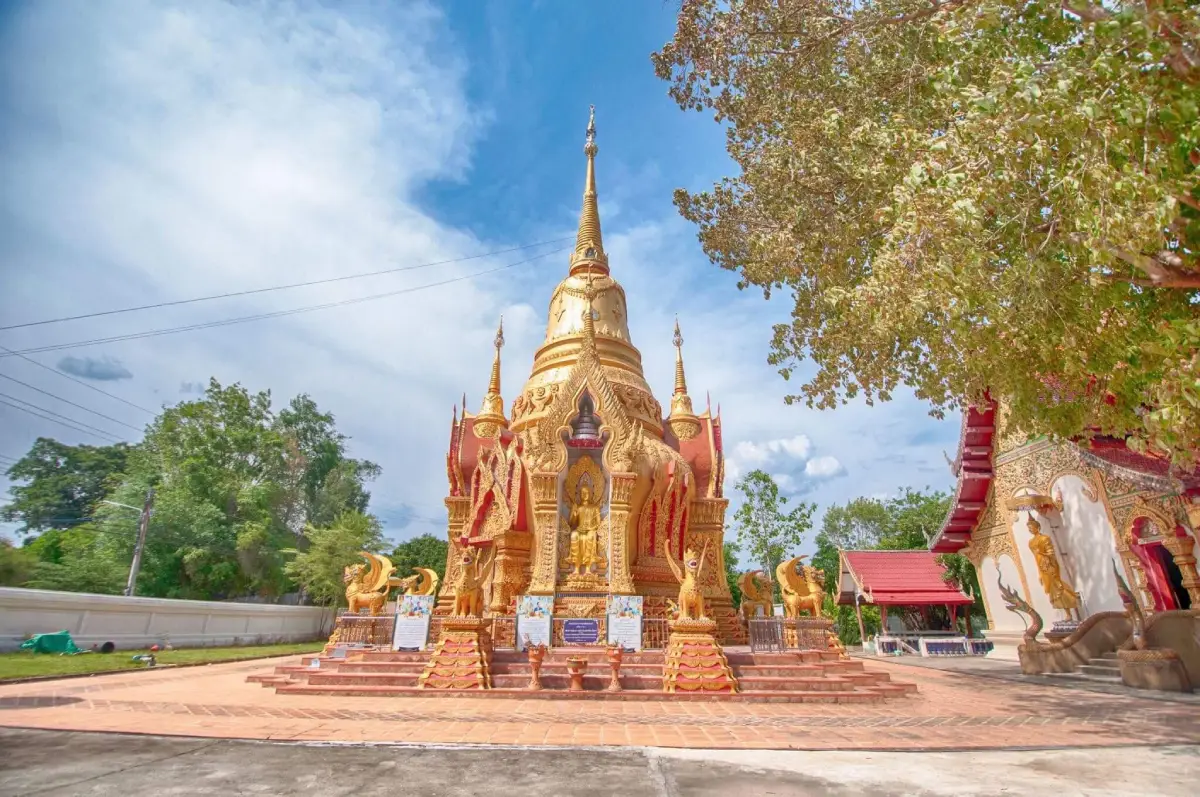
Open Days: Daily
Opening Hours: Daytime Visit Recommended
Wat Silanimit is located at No. 151, Moo 6, Ban Kong Hin, on the Chiang Mai–Doi Tao road, Hang Dong Subdistrict, Hot District, Chiang Mai Province 50240. It is a local Buddhist temple under the Mahanikaya order. The temple was officially established in 1940 and received its Wisungkhamsima on 13 January 1995. Wat Silanimit is an important community temple of Ban Kong Hin, serving as a place for worship, merit-making, local ceremonies, Lanna traditions, and community activities.
Wat Silanimit is closely connected with Ban Kong Hin, Moo 6 of Hang Dong Subdistrict. The word “sila” means stone, and the village name Kong Hin also refers to stone. This gives the temple a name that reflects both its local identity and the landscape memory of the community. The temple is therefore not only a religious site but also a cultural marker of Ban Kong Hin.
The origin of Wat Silanimit began with a monastic residence near Ban Kong Hin School. In the past, monks also served as teachers for students in the local public school. Local villagers therefore built a place for monks near the school, allowing the area to support both Buddhist practice and community education. This early history shows how religion and education were closely connected in Ban Kong Hin.
The temple was first built in 1940, with Phra In Kaeo Kaeo Thep as the first abbot. Later, the original temple area faced two problems: a fire damaged the monks’ residence, and the location was far from a water source. The villagers then agreed to move the temple to its present site. The new area included empty land and garden land belonging to local people. This relocation helped the temple become more stable as the main Buddhist center of Ban Kong Hin.
Construction at the present site began on 14 February 1946. Pho Khamchan and Mae Kom Udnō donated part of their garden land for the new temple. Donating land for a Buddhist temple is a significant act of merit in Lanna culture because the land becomes a religious asset and a shared sacred space for the community.
The temple was originally called Wat Kong Hin after the village. Later, Phra Khru Khamphi Tham, ecclesiastical district head of Hot and monk of Wat Chai Phra Kiat in Chiang Mai city, gave the temple its new name, Wat Silanimit. The new name preserved the symbolic meaning of stone while giving the temple a formal and auspicious identity.
The temple land is recorded as 4 rai, 1 ngan, and 50 square wah in the source information. Some local information gives a broader land figure with two title-deed plots. The key consistent point is that Wat Silanimit is located at No. 151, Moo 6, Ban Kong Hin, Hang Dong Subdistrict, Hot District, Chiang Mai Province, and serves as the main Buddhist temple of Ban Kong Hin.
Wat Silanimit received Wisungkhamsima on 13 January 1995. Its consecrated boundary measures 10 meters wide and 20 meters long. Receiving Wisungkhamsima is important because it gives the temple a formal monastic boundary for important Sangha acts, including ordination and other monastic ceremonies.
Temple registration records identify Wat Silanimit as a Mahanikaya temple with registration code 350160109, located in Hang Dong Subdistrict, Hot District, Chiang Mai Province, Moo 6 Ban Kong Hin. This confirms its status as a registered local Buddhist temple within the Thai Sangha system.
Phra Khru Prayut Khanti Khun Khatibalo is the abbot of Wat Silanimit and also serves as deputy ecclesiastical district head of Hot. His role is important because Wat Silanimit functions not only as a religious site but also as a center for community traditions, including the iron Bodhi-tree support procession and the relic-bathing ceremony.
Important areas at Wat Silanimit include the worship area, viharn, temple grounds, community religious activity space, and the Chedi Chaturaphutthasada, which is connected with the temple’s relic-bathing tradition. These areas allow the temple to support worship, merit-making, cultural events, and community gatherings.
The most distinctive contemporary tradition of Wat Silanimit is the iron Bodhi-tree support procession of Ban Kong Hin. It developed from the traditional Lanna custom of offering wooden supports to the Bodhi tree. Instead of cutting wood from nature, the community now uses iron supports. These are stronger, reusable, and can later be used for construction or restoration work at the temple, such as gates, salas, kitchens, and other religious structures.
The iron support tradition is colorful and highly community-based. Processions include Lanna offerings, traditional dance, sabadchai drums, folk music, flower trees, candle trees, wax offering trees, mak-sum, phlu-sum, and decorative elements prepared by villagers, women’s groups, elders, youths, artists, and local organizations. The procession ends with the offering ceremony at Wat Silanimit, turning the temple into the center of faith, art, and environmental awareness.
Another important tradition is the relic-bathing ceremony at the Chedi Chaturaphutthasada. The ceremony honors the Buddha relics and preserves Lanna Buddhist culture. It includes a procession around the chedi, Buddhist chanting, offerings to monks, community food-sharing, and local performances. The event reflects the strong faith of Ban Kong Hin and nearby villages.
The relic-bathing ceremony has both religious and social meaning. Religiously, it expresses reverence for the Buddha relics and the Triple Gem. Socially, it brings families and villagers together to make merit, pay respect, and take part in a shared community ritual. This makes Wat Silanimit a living cultural center rather than simply a temple building.
Wat Silanimit also plays an active role during Buddhist Lent and Buddhist holy days. Tha Kham Municipality has organized activities at the temple to encourage local people, youth, and officials to attend temple, make merit, and practice Dhamma during Buddhist Lent. These activities confirm the temple’s continuing role in current community life.
In addition to its distinctive traditions, Wat Silanimit supports ordinary village Buddhist activities such as Buddhist holy days, Kathin, Pha Pa, Buddhist Lent, the end of Buddhist Lent, Songkran, Lanna New Year traditions, and community merit-making. These events allow villagers to gather, listen to Dhamma, support monks, and maintain the temple.
The temple’s role has several layers. Religiously, it is a place for worship, merit-making, sermons, and ceremonies. Culturally, it preserves the iron Bodhi-tree support tradition and the relic-bathing ceremony. Socially, it brings together villagers, the school community, youths, elders, local leaders, and public organizations in shared activities.
Hang Dong Subdistrict is located in southern Chiang Mai, about 91 km from Chiang Mai city. It covers around 124.45 square kilometers and is connected by major routes, including Highway 108 from Chiang Mai to Hot and Mae Sariang, and Provincial Highway 1103 from Hot to Li. Wat Silanimit therefore stands in an area where village temples, transport routes, and natural attractions of Hot District are closely connected.
Ban Kong Hin is part of Hang Dong Subdistrict and is connected with Tha Kham Municipality through local community activities. The temple’s early connection with Ban Kong Hin School gives it a distinctive community memory: religion and education once supported each other in the same village space.
The atmosphere of Wat Silanimit is suitable for visitors who want to experience a local Lanna community temple with strong traditions. It is not a large commercial sightseeing temple. Its value comes from its village history, its relocation story, the land donation by local residents, its Buddhist role, and the creative contemporary traditions of Ban Kong Hin.
Visitors should pay attention to the worship area, viharn, temple grounds, Chedi Chaturaphutthasada, and the community setting of Ban Kong Hin. During the iron Bodhi-tree support procession, visitors can see faith, folk art, and environmental awareness combined in one event. During the relic-bathing ceremony, visitors can see the community’s devotion to Buddha relics and Lanna Buddhist culture.
Wat Silanimit is suitable for cultural travelers, visitors interested in Lanna village temples, people interested in the Lanna New Year and Bodhi-tree support traditions, travelers studying environmentally conscious cultural adaptation, and those who want to combine temple visits in Hot District with nearby natural sites such as Ob Luang National Park and Mae Bua Kham Waterfall.
Nearby places can be combined into several routes. Cultural travelers can visit Wat Wang Lung, Wat Rattanaworaram, Wat Hang Dong, Wat Panyawuttharam, and Wat Tha Kham. Nature-focused travelers can continue to Ob Luang National Park or Mae Bua Kham Waterfall, creating a route that combines village Buddhism, local tradition, and natural scenery in Hot District.
Getting There from Chiang Mai city, take Highway 108 toward Hot and Mae Sariang, then continue into Ban Kong Hin, Moo 6, Hang Dong Subdistrict. The temple is located on the Chiang Mai–Doi Tao route. A private car is the most convenient option because it allows travelers to visit Wat Silanimit and continue to Hot District, Doi Tao, Ob Luang, or Mae Hong Son routes.
From central Hot District, travelers can use the main road network to reach Ban Kong Hin. Public transport users should first reach Hot District, then arrange local transport to the village. During the iron support or relic-bathing festivals, travelers should allow extra time because the area around the temple may have processions, ceremonies, and many participants.
Visitors should dress modestly, speak quietly, avoid disturbing monks and villagers, avoid entering monks’ private areas without permission, and keep the temple grounds clean. During festivals, visitors should respect processions, offerings, elders, youth participants, monks, and all community members involved in the ceremony.
In summary, Wat Silanimit is a local Mahanikaya temple of Ban Kong Hin, Moo 6, Hang Dong Subdistrict, Hot District, Chiang Mai Province. It was officially established in 1940 and received Wisungkhamsima on 13 January 1995. Its key identity lies in its origin as a monastic residence near Ban Kong Hin School, its relocation to the present site through local land donation, the leadership of Phra Khru Prayut Khanti Khun Khatibalo, and its distinctive traditions of iron Bodhi-tree supports and relic bathing, which make it one of the most culturally vibrant community temples in Hot District.
| Name | Wat Silanimit |
| Former Local Name | Wat Kong Hin |
| Location | Ban Kong Hin, Moo 6, Hang Dong Subdistrict, Hot District, Chiang Mai Province |
| Address | No. 151, Moo 6, Ban Kong Hin, Chiang Mai–Doi Tao Road, Hang Dong Subdistrict, Hot District, Chiang Mai 50240, Thailand |
| Temple Type | Local Buddhist temple under the Mahanikaya order |
| Temple Registration Code | 350160109 |
| Temple Area | 4 rai, 1 ngan, and 50 square wah |
| Highlights | Community temple of Ban Kong Hin, known for the iron Bodhi-tree support procession and the relic-bathing ceremony at the Chedi Chaturaphutthasada |
| History | Started as a monastic residence near Ban Kong Hin School, built in 1940, moved to the present site on 14 February 1946, and received Wisungkhamsima on 13 January 1995 |
| Founding Figures | Phra In Kaeo Kaeo Thep was the first abbot; Pho Khamchan and Mae Kom Udnō donated part of their garden land for the present temple site |
| Temple Name Given By | Phra Khru Khamphi Tham, ecclesiastical district head of Hot and monk of Wat Chai Phra Kiat, Chiang Mai city |
| Wisungkhamsima Boundary | 10 meters wide and 20 meters long |
| Abbot | Phra Khru Prayut Khanti Khun Khatibalo, abbot of Wat Silanimit and deputy ecclesiastical district head of Hot |
| Important Areas | Viharn, temple grounds, worship area, community religious activity space, Chedi Chaturaphutthasada, and festival area |
| Important Religious Events | Iron Bodhi-tree support procession, relic-bathing ceremony, Buddhist holy days, Kathin, Pha Pa, Buddhist Lent, end of Buddhist Lent, Songkran, and Lanna New Year traditions |
| Distinctive Features | Lanna village temple connected with Ban Kong Hin School history, temple relocation, community land donation, and an environmentally conscious iron support tradition |
| Community Role | Spiritual center of Ban Kong Hin, supporting worship, sermons, meditation, local festivals, school-community ties, youth participation, elders’ groups, and local administrative activities |
| Travel Information | Take Highway 108 from Chiang Mai toward Hot and Mae Sariang, then continue to Ban Kong Hin, Moo 6, Hang Dong Subdistrict, on the Chiang Mai–Doi Tao route |
| Current Status | Open as a community Buddhist temple, religious site, and cultural activity space of Ban Kong Hin |
| Open Days | Daily |
| Recommended Visiting Time | Daytime |
| Ban Kong Hin Contact | 053-831-193 |
| Local Administrative Contact | Tha Kham Municipality, Tel. 053-461114 |
| Nearby Tourist Attractions | 1. Wat Wang Lung, about 5 km 2. Wat Rattanaworaram, Ban Huai Som Poi, about 5 km 3. Wat Hang Dong, about 6 km 4. Wat Panyawuttharam, about 8 km 5. Ob Luang National Park, about 18 km |
| Nearby Restaurants | 1. Good Morning Hod, about 7 km, Tel. 091-853-7308 2. Denchai Hod Fresh Coffee, about 7 km, Tel. 083-301-2565 3. Moo Inter Hod, about 7 km, Tel. 061-271-8118 4. Wilai Porn Restaurant & Hod Coffee, about 8 km, Tel. 084-222-2421 5. Aunt Pen’s Larb Hot, about 8 km |
| Nearby Accommodations | 1. Huen Hug Hod The Resort, about 7 km, Tel. 085-030-7356 2. Gardum House, about 8 km, Tel. 063-119-4959 3. Kiss Hod Resort, about 9 km, Tel. 080-135-2992 4. Hod Resort, about 9 km, Tel. 053-460-170 5. Rose House Hot, about 10 km |
Frequently Asked Questions (FAQ)
Q: Where is Wat Silanimit located?
A: Wat Silanimit is located at No. 151, Moo 6, Ban Kong Hin, on the Chiang Mai–Doi Tao road, Hang Dong Subdistrict, Hot District, Chiang Mai Province 50240.
Q: When was Wat Silanimit officially established?
A: Wat Silanimit was officially established as a Buddhist temple in 1940.
Q: When did Wat Silanimit receive Wisungkhamsima?
A: Wat Silanimit received Wisungkhamsima on 13 January 1995, with a consecrated boundary measuring 10 meters wide and 20 meters long.
Q: Who is the abbot of Wat Silanimit?
A: The abbot is Phra Khru Prayut Khanti Khun Khatibalo, who also serves as deputy ecclesiastical district head of Hot.
Q: What important traditions is Wat Silanimit known for?
A: The temple is known for the iron Bodhi-tree support procession of Ban Kong Hin and the relic-bathing ceremony at the Chedi Chaturaphutthasada.
Q: What type of traveler is Wat Silanimit suitable for?
A: It is suitable for cultural travelers, visitors interested in Lanna village temples, Lanna New Year traditions, the Bodhi-tree support custom, relic-bathing ceremonies, and cultural routes in Hot District.
Q: What nearby attractions can be visited with Wat Silanimit?
A: Nearby places include Wat Wang Lung, Wat Rattanaworaram, Wat Hang Dong, Wat Panyawuttharam, and Ob Luang National Park.
 Category: ●Places of Worship
 Group: ●Temple
Last Update : 2 MonthAgo
 Last Update : 2 MonthAgo
 Click to Access the Navigation Map GPS

 Muang Chiang Mai(121)Chom Thong(47)Mae Chaem(25)Chiang Dao(33)Doi Saket(68)Mae Taeng(85)Mae Rim(69)Samoeng(29)Fang(71)Mae Ai(59)Phrao(70)San Pa Tong(103)San Kamphaeng(66)San Sai(73)Hang Dong(73)Hot(32)Doi Tao(22)Omkoi(11)Saraphi(74)Wiang Haeng(15)Chai Prakan(28)Mae Wang(32)Mae On(22)Doi Lo(33)Galyani Vadhana(1)


