
lovethailand home >North Travel Attractions >Chiang Mai Travel Attractions >Hot >Bo Luang > Wat Bo Luang
TL;DR: Wat Bo Luang is located at Ban Bo Luang, Moo 1, Bo Luang Subdistrict, Hot District, Chiang Mai Province, open Daily, hours 08.00 – 17.00.

Wat Bo Luang
Open Days: Daily
Opening Hours: 08.00 – 17.00
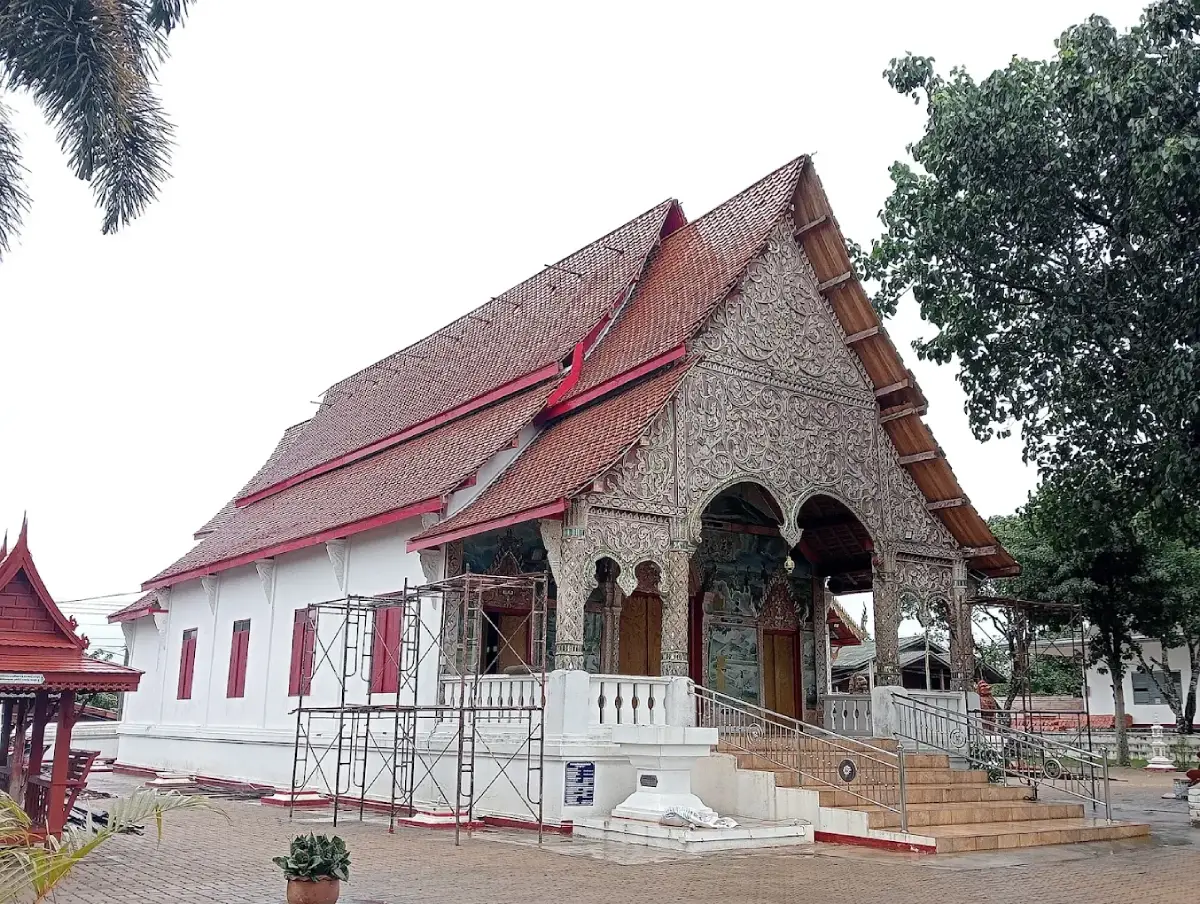
Wat Bo Luang is located in Ban Bo Luang, Moo 1, Bo Luang Subdistrict, Hot District, Chiang Mai Province. It is a local Buddhist temple under the Mahanikaya order. The temple was officially permitted to be established in 1849 and received its Wisungkhamsima in 1973. This makes Wat Bo Luang one of the oldest community temples in Bo Luang Subdistrict and an important spiritual center for the village.
Ban Bo Luang is the first village of Bo Luang Subdistrict and has a strong connection with the origin of the subdistrict’s name. The word “bo” refers to a water source or well, while “luang” means large or great. The name therefore refers to a large water source remembered by the community. Wat Bo Luang stands within this meaningful local setting and is closely connected with the identity of the village.
The long history of Wat Bo Luang gives the temple strong cultural importance. Its establishment in 1849 shows that Buddhism has been part of Ban Bo Luang for generations. In a highland community far from Chiang Mai city, a temple was essential as a place for worship, merit-making, sermons, Buddhist ceremonies, and community gatherings. Wat Bo Luang continues to carry this role today.
The temple received its Wisungkhamsima in 1973. Wisungkhamsima is the consecrated boundary used for important monastic acts. This confirms the temple’s complete religious status in Thai Buddhism and strengthens its role as the central Buddhist site of Ban Bo Luang.
Bo Luang Subdistrict is located in the mountainous southern part of Chiang Mai Province. The area is shaped by forests, high mountains, limited agricultural land, and the important Hot – Mae Sariang route. This landscape gives Wat Bo Luang a distinct highland character. The temple belongs to a cultural route where village life, Buddhism, forests, mountains, and local travel are closely connected.
Ban Bo Luang is also associated with the Lua or Lawa community and highland settlement history. The community has long been connected with local resources, agriculture, and mountain life. Wat Bo Luang therefore reflects more than religious history. It also helps visitors understand how Buddhism, local ethnic memory, and rural highland culture exist together in southern Chiang Mai.
Bo Luang Subdistrict includes several villages, including Ban Bo Luang, Ban Wang Kong, Ban Khun, Ban Na Fon, Ban Mae Lai, Ban Phui, Ban Kio Lom, Ban Mae Sanam, Ban Tian Ang, Ban Bo Sa-Ngae, Ban Bo Pha Waen, and Ban Mae Huet. Wat Bo Luang is part of this wider network of village temples, but it stands out because of its age and its location in the village that gives the subdistrict its name.
Wat Bo Luang continues to serve as a living community temple. The temple area has been used for moral education activities and local community programs with Bo Luang Municipality. This shows that the temple is not only a historic site but also an active social and spiritual space where monks, villagers, youth, and local organizations can participate together.
The temple is suitable for travelers who want a quiet Buddhist visit and a deeper understanding of Bo Luang. Its main appeal lies in its long history, community atmosphere, Mahanikaya status, Wisungkhamsima, and role as the spiritual center of the first village of Bo Luang Subdistrict. It is not a large commercial sightseeing temple, but a meaningful local temple rooted in village life.
Visitors should pay attention to the temple grounds, worship area, and the relationship between the temple and the surrounding village. Wat Bo Luang is best experienced slowly and respectfully. Its value is not in grand scale, but in its calm atmosphere, historic role, and close connection with the people of Ban Bo Luang.
Seasonal Buddhist events such as Buddhist holy days, Kathin, Pha Pa, Buddhist Lent, the end of Buddhist Lent, Makha Bucha, Visakha Bucha, and Asalha Bucha are meaningful for community temples in northern Thailand. Wat Bo Luang provides a place where villagers gather to make merit, offer food to monks, listen to sermons, and support the temple. These activities help maintain community unity and Lanna Buddhist tradition.
Wat Bo Luang can also be combined with natural and cultural attractions in Bo Luang. Nearby places include Bo Kaeo Pine Garden, Doi Bo Luang Forest Park, Wat Bo Sa-Ngae, Wat Bo Pha Waen, Wat Na Fon, and Wat Phra That Doi Liam. A visit to Wat Bo Luang can therefore become part of a route that combines village Buddhism, highland culture, pine forests, and mountain scenery.
Getting There from Chiang Mai city, take Highway 108 toward Hot District and continue along the Chiang Mai – Hot – Mae Sariang route. From Hot, proceed into Bo Luang Subdistrict and Ban Bo Luang, Moo 1. The route includes mountain sections, curves, and slopes, so drivers should check brakes, tires, fuel, and lights before traveling. Extra time should be allowed, especially during foggy or rainy periods.
Travelers using public transport should first reach Hot District or use transport that passes along the Hot – Mae Sariang route, then arrange local transport into Ban Bo Luang. A private car is the most convenient option because visitors can stop at the temple and continue to nearby attractions in the same day.
A suitable route is to start from central Hot, travel into Bo Luang, pay respect at Wat Bo Luang, and continue to Bo Kaeo Pine Garden and Doi Bo Luang Forest Park. Travelers interested in local Buddhist sites can also include Wat Bo Sa-Ngae, Wat Bo Pha Waen, Wat Na Fon, and Wat Phra That Doi Liam in the same route.
Visitors should dress modestly, speak quietly, avoid entering monks’ private areas without permission, and keep the temple grounds clean. Photography should be done respectfully, especially during ceremonies or community activities. Since Wat Bo Luang is a village temple, respectful behavior toward monks and local residents is important.
In summary, Wat Bo Luang is a historic community temple of Ban Bo Luang, Moo 1, Bo Luang Subdistrict, Hot District, Chiang Mai Province. Established in 1849 and granted Wisungkhamsima in 1973, the temple remains a spiritual center for the village and an important Buddhist landmark of the subdistrict. For travelers seeking a quiet, culturally grounded, and locally meaningful route through Hot District, Wat Bo Luang is a suitable stop.
| Name | Wat Bo Luang |
| Location | Ban Bo Luang, Moo 1, Bo Luang Subdistrict, Hot District, Chiang Mai Province |
| Address | Moo 1, Ban Bo Luang, Bo Luang Subdistrict, Hot District, Chiang Mai 50240, Thailand |
| Temple Type | Local Buddhist temple under the Mahanikaya order |
| Temple Registration Code | 03501604001 |
| Highlights | Historic temple of Ban Bo Luang, the first village of Bo Luang Subdistrict and a spiritual center of the highland community |
| History | Officially permitted to be established in 1849 and granted Wisungkhamsima in 1973 |
| Name Origin | Named after Ban Bo Luang, a village name associated with a large water source in local community memory |
| Distinctive Features | Quiet Lanna village temple in the highland area of Hot District, suitable for worship, merit-making, and learning about Bo Luang local history |
| Community Role | Religious and community space for Buddhist ceremonies, holy days, Kathin, Pha Pa, moral education, and village activities |
| Travel Information | Take Highway 108 from Chiang Mai toward Hot and Mae Sariang, then continue to Ban Bo Luang, Moo 1, Bo Luang Subdistrict |
| Current Status | Open as a community Buddhist temple and religious site of Ban Bo Luang |
| Open Days | Daily |
| Opening Hours | 08.00 – 17.00 |
| Local Administrative Contact | Bo Luang Municipality, Tel. 0-5208-1663 |
| Nearby Tourist Attractions | 1. Bo Kaeo Pine Garden, about 6 km 2. Doi Bo Luang Forest Park, about 8 km 3. Wat Bo Sa-Ngae, about 8 km 4. Wat Bo Pha Waen, about 9 km 5. Wat Na Fon, about 12 km |
| Nearby Restaurants | 1. Rabeang Son Cafe, about 6 km, Tel. 062-079-9411 2. Suanson Coffee&rest, about 6 km 3. Na Samoeng Bo Kaeo Coffee, about 7 km, Tel. 097-165-7479 4. Nueng Diao Restaurant, about 15 km, Tel. 086-915-3716 5. Good Morning Hod, about 40 km, Tel. 091-853-7308 |
| Nearby Accommodations | 1. Tiw Son Resort Hot, about 1 km, Tel. 080-845-1167 2. Doi Bo Luang Forest Park by the Forest Industry Organization, about 8 km, Tel. 092-586-9215 3. Huen Hug Hod The Resort, about 40 km, Tel. 085-030-7356 4. Kiss Hod Resort, about 40 km, Tel. 080-135-2992 5. Gardum House, about 42 km |
Frequently Asked Questions (FAQ)
Q: Where is Wat Bo Luang located?
A: Wat Bo Luang is located in Ban Bo Luang, Moo 1, Bo Luang Subdistrict, Hot District, Chiang Mai Province 50240.
Q: What is the history of Wat Bo Luang?
A: Wat Bo Luang is a local Buddhist temple under the Mahanikaya order. It was officially established in 1849 and received Wisungkhamsima in 1973.
Q: What does the name Bo Luang mean?
A: The name Bo Luang is associated with a large water source in local memory. Ban Bo Luang is the first village of Bo Luang Subdistrict.
Q: What are the opening hours of Wat Bo Luang?
A: The temple is open daily from 08.00 to 17.00.
Q: How can travelers get to Wat Bo Luang?
A: Travelers can take Highway 108 from Chiang Mai toward Hot and Mae Sariang, then continue into Ban Bo Luang, Moo 1. A private car is the most convenient option.
Q: What type of traveler is Wat Bo Luang suitable for?
A: It is suitable for cultural travelers, visitors interested in old Chiang Mai temples, Lanna community temples, local history, and quiet travel in Hot District.
Q: What nearby attractions can be visited with Wat Bo Luang?
A: Nearby attractions include Bo Kaeo Pine Garden, Doi Bo Luang Forest Park, Wat Bo Sa-Ngae, Wat Bo Pha Waen, and Wat Na Fon.
 Category: ●Places of Worship
 Group: ●Temple
Last Update : 2 MonthAgo
 Last Update : 2 MonthAgo
 Click to Access the Navigation Map GPS

 Muang Chiang Mai(121)Chom Thong(47)Mae Chaem(25)Chiang Dao(33)Doi Saket(68)Mae Taeng(85)Mae Rim(69)Samoeng(29)Fang(71)Mae Ai(59)Phrao(70)San Pa Tong(103)San Kamphaeng(66)San Sai(73)Hang Dong(73)Hot(32)Doi Tao(22)Omkoi(11)Saraphi(74)Wiang Haeng(15)Chai Prakan(28)Mae Wang(32)Mae On(22)Doi Lo(33)Galyani Vadhana(1)


