
lovethailand home >North Travel Attractions >Chiang Mai Travel Attractions >Omkoi >Mae Tuen > Wat Pa Kha
TL;DR: Wat Pa Kha is located at No. 1, Moo 3, Ban Pa Kha, Mae Tuen Subdistrict, Omkoi District, Chiang Mai Province 50310, open Community temple; contact the temple or Mae Tuen Subdistrict Municipality, hours Daytime travel is recommended.

Wat Pa Kha
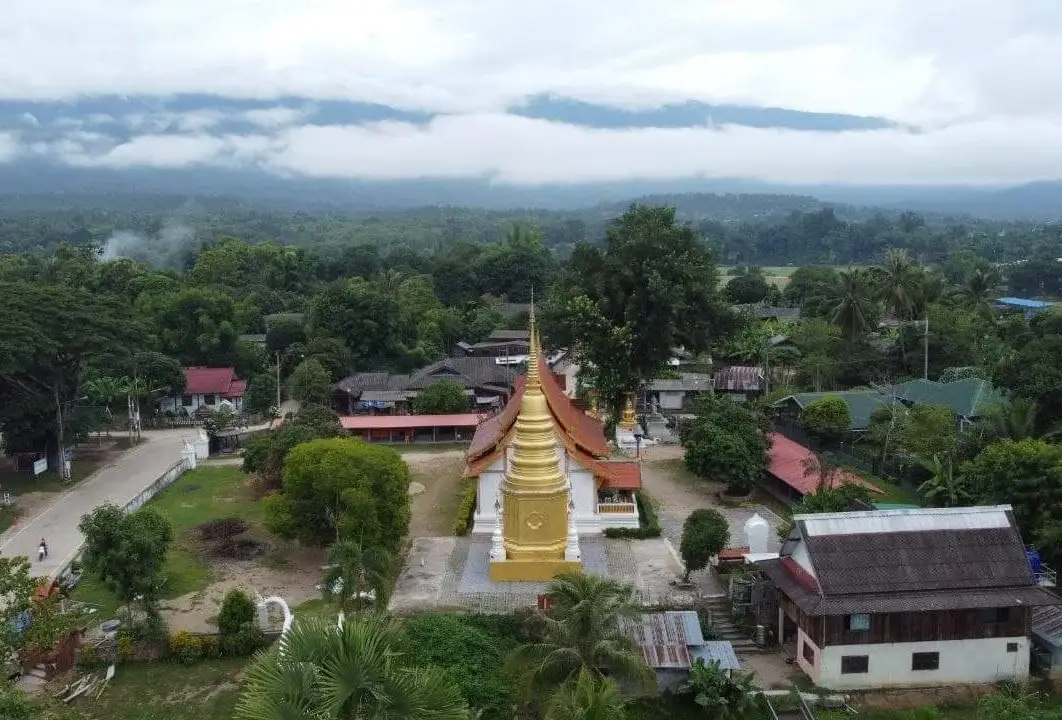
Open Days: Community temple; contact the temple or Mae Tuen Subdistrict Municipality before travelling
Opening Hours: Daytime travel is recommended
Wat Pa Kha is located at No. 1, Moo 3, Ban Pa Kha, Mae Tuen Subdistrict, Omkoi District, Chiang Mai Province 50310. It is a local Buddhist temple under the Mahanikaya sect. The temple was officially permitted to be established in 1913, and Phra Somkiat Dhammavaro is the abbot. Wat Pa Kha is an important community temple in Mae Tuen, a highland area in southern Chiang Mai where village temples remain closely connected with merit-making, Buddhist ceremonies, community gatherings, and local identity.
Wat Pa Kha is best understood as a living community temple rather than a commercial tourist attraction. Its importance lies in its role as a spiritual center for Ban Pa Kha and nearby communities. For travelers, the temple offers a deeper view of Omkoi beyond waterfalls, mountain routes, and nature destinations. It shows how Buddhism continues to support daily life in highland villages far from Chiang Mai city.
Ban Pa Kha is Moo 3 of Mae Tuen Subdistrict in Omkoi District. Mae Tuen is a mountainous subdistrict with villages spread across valleys, slopes, and local road networks. Several community temples in the area, including Wat Chom Chaeng, Wat Doi Chai Mongkhon, Wat Mae Tuen Noi, and Wat Pa Kha, form a religious network that supports Buddhist life across the subdistrict. Wat Pa Kha should therefore be seen as part of a wider local cultural landscape.
The key historical point of Wat Pa Kha is its official establishment in 1913. This gives the temple more than a century of community significance. In a highland village, a temple is more than a place of worship. It supports ceremonies, moral learning, seasonal merit-making, and cooperation among villagers. Wat Pa Kha therefore represents the continuity of Buddhist faith in Mae Tuen and the long relationship between the temple and Ban Pa Kha.
The name “Pa Kha” reflects the natural setting of the community. “Pa” means forest, while “kha” refers to cogon grass, a plant commonly associated with rural and upland landscapes. The name evokes a simple village environment shaped by nature. This meaning fits the character of Wat Pa Kha as a local temple connected with its surrounding community and landscape.
Wat Pa Kha is a local temple, not a large-scale sightseeing site. Its value is found in simplicity, continuity, and its relationship with the local community. Visitors who appreciate quiet temples, rural Buddhist culture, and local Chiang Mai will find the temple meaningful. It is a place for merit-making, respectful worship, and understanding how a community temple continues to serve people in a remote district.
Important features to observe at Wat Pa Kha include the atmosphere of a village temple, the temple yard, religious activity spaces, and the relationship between the temple and the surrounding community. The appeal of the visit is not architectural spectacle, but the chance to see a living Buddhist temple that continues to serve Ban Pa Kha. Visitors should move through the temple respectfully and remember that this is an active religious space.
Phra Somkiat Dhammavaro is the abbot of Wat Pa Kha. In a highland community temple, the abbot’s role is important not only for monastic life but also for guiding ceremonies, teaching Dhamma, receiving religious invitations, and maintaining the temple as a peaceful place for villagers. Visitors should behave respectfully and avoid disturbing monks or local residents.
Wat Pa Kha functions as a spiritual center for Ban Pa Kha. On Buddhist holy days and during merit-making occasions, villagers can gather at the temple to make offerings, listen to Dhamma teachings, and join religious activities. These gatherings help connect elders, families, young people, and local leaders. In this way, the temple is both a religious place and a social anchor for the village.
Buddhist activities connected with Wat Pa Kha follow the general rhythm of community temple life in northern Thailand. These include Buddhist holy day observances, Buddhist Lent, the end of Buddhist Lent, Kathin, robe-offering ceremonies, candle offerings, and community support for temple maintenance. In Mae Tuen, local candle-offering activities during Buddhist Lent show how temples remain linked with local authorities and village residents through the annual Buddhist calendar.
The atmosphere of Wat Pa Kha is quiet and local. Visitors should dress modestly, speak politely, avoid disturbing monks or villagers, ask permission before photographing people, and keep the temple clean. This is an active religious space for the community, not a staged attraction. A respectful visit allows travelers to appreciate the temple’s meaning without disrupting local life.
Getting There requires travelling from Omkoi District toward Mae Tuen Subdistrict and Ban Pa Kha. The route passes through mountainous terrain, so visitors should use a well-maintained vehicle and check road and weather conditions before departure. During or after heavy rain, highland roads can become more difficult. Daytime travel is recommended, and night driving should be avoided by visitors unfamiliar with the area.
Travelers coming from Chiang Mai city should allow plenty of time. Omkoi is far from the provincial city, and the onward journey into Mae Tuen adds more travel time. A same-day trip from Chiang Mai city is not ideal for visitors who want a safe and meaningful experience. A better plan is to stay overnight in Omkoi or Mae Tuen, then continue the visit during daylight.
Wat Pa Kha can be combined with nearby temples and community places in Mae Tuen, such as Wat Doi Chai Mongkhon, Wat Chom Chaeng, Wat Mae Tuen Noi, Mae Tuen Noi Waterfall, Mae Tuen Noi Orchid Propagation Station, Mae Ra A National Park, and nature routes along the Mae Tuen River. This creates a balanced itinerary that includes community faith, village life, and the natural landscape of Omkoi.
Mae Tuen Noi Waterfall adds an important nature-based dimension to the route. It is located in Mae Tuen Subdistrict and reflects Omkoi’s mountain geography. A trip can begin with a respectful visit to Wat Pa Kha, then continue to local natural attractions. This approach helps visitors understand Mae Tuen as a place where temples, villages, streams, waterfalls, and highland landscapes are connected.
Restaurants and accommodations near Wat Pa Kha are more limited than in Chiang Mai city or central tourist areas. Visitors should carry drinking water, snacks, and essential supplies. Local cafés, small restaurants, and accommodations are available in Mae Tuen and Omkoi, but advance contact is recommended, especially on weekends or during local travel seasons. Some accommodations are small community-style resorts, so availability should be checked before arrival.
The main appeal of Wat Pa Kha is its authenticity as an old local temple in Mae Tuen. It shows that Chiang Mai’s religious landscape is not limited to famous city temples or major pilgrimage sites. It also includes highland community temples that quietly support Buddhist life every day. For travelers interested in culture, Omkoi, and Mae Tuen, Wat Pa Kha is a meaningful stop.
Wat Pa Kha is suitable for travelers interested in local temples, community history, highland life, and routes that combine Buddhist culture with nature. A visit should be slow, respectful, and well planned. With proper preparation, the temple can become part of a thoughtful journey through Omkoi’s mountain communities, where faith and landscape remain closely connected.
In summary, Wat Pa Kha is a Mahanikaya community temple at No. 1, Moo 3, Ban Pa Kha, Mae Tuen Subdistrict, Omkoi District, Chiang Mai Province. Established in 1913, with Phra Somkiat Dhammavaro as abbot, the temple remains an important spiritual place for the Mae Tuen community and a worthwhile stop for travelers who want to understand the cultural depth of Omkoi.
| Name | Wat Pa Kha |
| Type | Local Buddhist temple under the Mahanikaya sect |
| Location | No. 1, Moo 3, Ban Pa Kha, Mae Tuen Subdistrict, Omkoi District, Chiang Mai Province 50310 |
| Address | No. 1, Moo 3, Ban Pa Kha, Mae Tuen Subdistrict, Omkoi District, Chiang Mai 50310, Thailand |
| Highlights | Old community temple in Ban Pa Kha and a spiritual center for Omkoi’s highland Buddhist community |
| History | Officially permitted to be established as a temple in 1913 |
| Name Origin | The name combines “pa,” meaning forest, with “kha,” referring to cogon grass and the natural rural setting |
| Distinctive Features | A local mountain village temple suitable for merit-making, quiet worship, and learning about Buddhist community life in Omkoi |
| Travel Information | Travel from Omkoi District into Mae Tuen Subdistrict and Ban Pa Kha. Use a well-maintained vehicle, check local road conditions, and avoid heavy rain or night driving. |
| Current Status | Still listed as a temple in Mae Tuen Subdistrict, Omkoi District, Chiang Mai Province |
| Facilities | As a highland community temple, visitors should bring drinking water, snacks, and basic personal supplies |
| Main Areas / Zones | Religious activity area, temple yard, and community-use temple grounds in Ban Pa Kha |
| Abbot / Caretaker | Phra Somkiat Dhammavaro |
| Local Contact | Mae Tuen Subdistrict Municipality, Tel. 052-001590 |
| Nearby Tourist Attractions | 1. Wat Doi Chai Mongkhon, about 3 km 2. Wat Chom Chaeng (Mae Tuen), about 3–5 km 3. Mae Tuen Noi Waterfall, about 15–20 km 4. Mae Tuen Noi Orchid Propagation Station, about 20–25 km 5. Mae Ra A National Park, about 35–45 km 6. Mae Tuen River and Mae Tuen Nature Route, about 10–30 km 7. Doi Mon Chong, about 80–90 km, Tel. 092-559-7201, 093-731-0626 |
| Nearby Restaurants / Mae Tuen and Omkoi Route | 1. Mae Tuen Cafe, about 2–5 km 2. PizzaDoi, about 20 km, Tel. 092-404-0094 3. Good Morning Omkoi, about 45–60 km 4. Dong Coffee De Omkoi, about 45–60 km, Tel. 086-191-2119 5. Ae Na Na Omkoi, about 45–60 km, Tel. 082-648-5778 6. Muan Kha Nat at Omkoi, about 45–60 km, Tel. 089-850-7182, 084-378-1567 |
| Nearby / Mae Tuen and Omkoi Accommodations | 1. Mae Tuen Resort House, about 2–5 km, Tel. 093-276-6287 2. Ban Saeng Chan Resort, about 2–5 km, Tel. 064-994-4977, 093-212-4123 3. Natpanee Resort, about 2–5 km, Tel. 061-424-1662 4. Phing Thara Omkoi, about 45–60 km, Tel. 062-308-6178 5. Chalermphon Resort, about 45–60 km, Tel. 082-888-1919 |
Frequently Asked Questions (FAQ)
Q: Where is Wat Pa Kha located?
A: Wat Pa Kha is located at No. 1, Moo 3, Ban Pa Kha, Mae Tuen Subdistrict, Omkoi District, Chiang Mai Province 50310.
Q: What type of temple is Wat Pa Kha?
A: It is a local Buddhist temple under the Mahanikaya sect and serves the Ban Pa Kha community in Mae Tuen.
Q: When was Wat Pa Kha established?
A: Wat Pa Kha was officially permitted to be established as a temple in 1913.
Q: Who is the abbot of Wat Pa Kha?
A: The abbot is Phra Somkiat Dhammavaro.
Q: Who should visit Wat Pa Kha?
A: It is suitable for travelers interested in local temples, highland communities, Omkoi culture, and routes that combine Buddhist heritage with Mae Tuen’s natural attractions.
Q: How should visitors prepare for the trip?
A: Visitors should use a well-maintained vehicle, bring water and essential supplies, check the weather, and confirm local road conditions before travelling into Mae Tuen.
Q: What nearby places can be combined with this visit?
A: Nearby route options include Wat Doi Chai Mongkhon, Wat Chom Chaeng, Mae Tuen Noi Waterfall, Mae Tuen Noi Orchid Propagation Station, Mae Ra A National Park, the Mae Tuen River route, and Doi Mon Chong.
Q: Who should visitors contact before travelling?
A: Visitors can contact Mae Tuen Subdistrict Municipality to ask about local information, road conditions, and travel readiness before entering the area.
 Category: ●Places of Worship
 Group: ●Temple
Last Update : 2 MonthAgo
 Last Update : 2 MonthAgo
 Click to Access the Navigation Map GPS

 Muang Chiang Mai(121)Chom Thong(47)Mae Chaem(25)Chiang Dao(33)Doi Saket(68)Mae Taeng(85)Mae Rim(69)Samoeng(29)Fang(71)Mae Ai(59)Phrao(70)San Pa Tong(103)San Kamphaeng(66)San Sai(73)Hang Dong(73)Hot(32)Doi Tao(22)Omkoi(11)Saraphi(74)Wiang Haeng(15)Chai Prakan(28)Mae Wang(32)Mae On(22)Doi Lo(33)Galyani Vadhana(1)


