
lovethailand home >North Travel Attractions >Chiang Mai Travel Attractions >Hang Dong >Ban Waen > Wat Thao Bun Rueang
TL;DR: Wat Thao Bun Rueang is located at Ban Thao Bun Rueang, Ban Waen Subdistrict, Hang Dong District, Chiang Mai Province, open Daily, hours 24 Hours.

Wat Thao Bun Rueang
Open Days: Daily
Opening Hours: 24 Hours
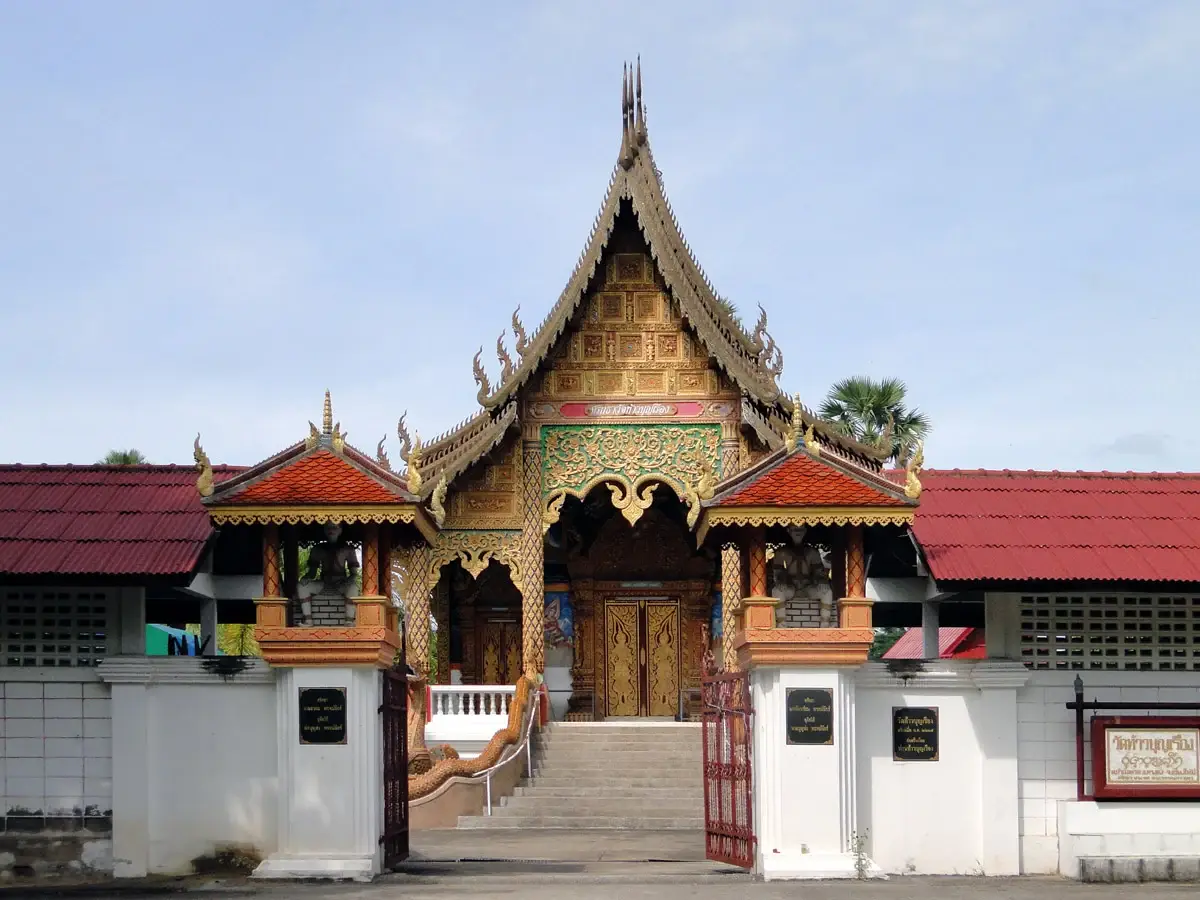
Wat Thao Bun Rueang in Ban Thao Bun Rueang, Ban Waen Subdistrict, Hang Dong District, Chiang Mai Province, is a community Buddhist temple under the Mahanikaya order. It is an important religious and cultural landmark for the Ban Waen area, serving as a place of worship, a community spiritual center, and a learning site connected with Lanna Buddhist manuscripts, local history, and traditional temple architecture. Located south of Chiang Mai city along the Hang Dong route, the temple can be combined easily with Wat Ton Kwen, Baan Tawai Handicraft Village, Kad Farang Village, and other attractions in Hang Dong.
The value of Wat Thao Bun Rueang lies not only in its age, but also in its deep connection with the local community. The temple has long supported merit-making, Buddhist ceremonies, local gatherings, and religious education for Ban Thao Bun Rueang and the wider Ban Waen area. Its name is tied to local memory and to the story of Thao Bun Rueang, a figure associated with the settlement history of the village. For visitors, the temple offers a quiet, meaningful alternative to the more crowded attractions of Chiang Mai, especially for those interested in Lanna culture, temple craftsmanship, and community-based heritage.
Wat Thao Bun Rueang was officially permitted to be established in 1692. Another historical record associated with the temple states that it was founded around 1814, with Thao Bun Rueang as the initiator of the temple’s construction. These two layers of history show how the temple preserves both formal temple records and local community memory. In traditional Lanna society, a settled village needed a temple as its spiritual center. Wat Thao Bun Rueang therefore grew alongside the village, becoming a place where faith, education, ritual life, and local identity were gathered in one space.
The origin of the temple’s name is closely linked to the name of Ban Thao Bun Rueang. Local accounts mention 3 figures whose names begin with the title “Thao”: Thao Bun Rueang, Thao Phayu, and Thao Kham Wang. They are remembered as early settlers who established communities in the Lanna region. The area now known as Ban Thao Bun Rueang is associated with Thao Bun Rueang, and the temple inherited that name as the religious center of the village. This makes the temple name more than a geographical label; it carries the memory of settlement, leadership, and local belief.
The temple compound includes several important religious structures and sacred objects, including the main viharn, a Lanna-style chedi, a scripture hall, a sermon hall, monks’ residences, Buddha images, and communal religious areas. Together, these features make Wat Thao Bun Rueang a living temple with both spiritual and historical value. The atmosphere is calm and local rather than commercial, making it suitable for respectful worship, slow observation, and learning about Lanna temple culture through architecture and ritual space.
The main viharn is one of the most important structures to observe. It is an enclosed viharn with walls on all four sides, windows, and light openings around the building. Inside, the walls contain mural paintings. The building plan is rectangular with stepped architectural projections, and the structure combines masonry with timber construction. The upper roof structure uses wooden posts and beams, while the gabled roof has layered tiers at the front. These elements reflect the craftsmanship and spatial logic of northern Thai temple architecture, especially the relationship between proportion, light, and sacred interior space.
In front of the viharn stands an image of Thao Wessuwan, also known as Kubera, a guardian figure respected in Buddhist and Brahmanical traditions. Thao Wessuwan is one of the Four Heavenly Kings in Buddhist cosmology and is widely revered as a protective deity. Many visitors begin by paying respect inside the viharn before offering prayers at the Thao Wessuwan image. This area gives the front of the temple a strong ritual presence and makes it one of the most visited points in the compound.
Behind the viharn is a golden Lanna-style chedi. Its form reflects the northern Thai tradition of adapting artistic influences from Sukhothai, Pagan, and local Lanna craftsmanship into a distinctive architectural expression. Key features include a raised square base with indented corners, enlarged lotus-moulding tiers, a smaller bell-shaped element, decorative bands around the bell, and a stepped upper throne section. Walking from the viharn to the chedi allows visitors to understand the temple layout as a sequence of worship: the viharn as a devotional hall and the chedi as a central sacred monument.
One of the most culturally significant features of Wat Thao Bun Rueang is its water-surrounded scripture hall, known in Thai as a ho tham klang nam. This structure is especially important because it preserves thousands of palm-leaf manuscripts. The temple was once recognized as a center for learning local Buddhist teachings, particularly during the period when Khruba Intha Ariya served as abbot. Many monks studied under respected teachers at the temple, making it an important place for Lanna Buddhist education, manuscript culture, and the transmission of traditional knowledge.
The water-surrounded scripture hall also reflects practical Lanna wisdom. Building a scripture hall over or within water helped protect palm-leaf manuscripts from insects and termites. Palm-leaf manuscripts were essential records of Buddhist teachings, local narratives, ritual knowledge, and community wisdom. For this reason, Wat Thao Bun Rueang should be understood not only as a place of worship, but also as a cultural archive. Its manuscript heritage gives the temple an academic and historical significance beyond its role as a village temple.
The temple also contains several Buddha images and sacred objects. A registration project for ancient Buddha images at Wat Thao Bun Rueang has helped document its religious art for education and conservation. Some bronze Buddha images are connected with Lanna artistic characteristics, including the Mara-vijaya posture, a lotus-bud ushnisha, and lotus-based pedestals. These sacred images are important for both devotion and art-historical study, allowing visitors and researchers to understand how local Buddhist art was preserved in temple communities outside the old city center of Chiang Mai.
The sequence of abbots associated with Wat Thao Bun Rueang shows the continuity of religious leadership at the temple. Earlier abbots include Khruba Kantha, Khruba Suwan, Chao Athikan Intha Ariya, and Phra Khru Prachot Bunyarak. Khruba Intha Ariya is especially significant because the temple’s role as a learning center for local Buddhist teachings is strongly associated with his period of leadership. The current abbot information verified for this article lists Phra Khru Kittiphatthana Sophon Niphatharo as the abbot of Wat Thao Bun Rueang.
Wat Thao Bun Rueang continues to support Buddhist ceremonies and community merit-making. These include regular Buddhist holy day observances, kathin, pha pa merit-making, sermons, memorial rituals, and ceremonies connected with the conservation of temple structures. In 2019, the temple held a merit-making celebration for the restoration of its 142-year-old water-surrounded scripture hall. That ceremony showed the continuing respect of monks and local residents for the temple’s heritage, former teachers, founders, and guardian spirits connected with the temple.
The temple’s role in the Ban Waen community remains strong. It serves as a place for local religious activities, a community gathering point, and a spiritual anchor for residents. It also functions as a site of local learning and public training. For travelers, this means that a visit to Wat Thao Bun Rueang is not simply a stop at an old temple; it is an opportunity to see how a northern Thai village temple continues to shape community life, preserve memory, and support local Buddhist culture.
The atmosphere of Wat Thao Bun Rueang is best suited to travelers who enjoy quiet temples, Lanna architecture, historical depth, and community heritage. A meaningful visit should include the viharn, mural details, timber and masonry structure, the golden chedi behind the viharn, the Thao Wessuwan image, and the water-surrounded scripture hall. Visitors should allow at least 30 to 60 minutes to appreciate the temple properly. The experience is not about rushing through a checklist, but about noticing layers of faith, craftsmanship, and local history.
For a cultural route in Hang Dong, Wat Thao Bun Rueang can be combined with Wat Ton Kwen, one of the finest surviving examples of traditional Lanna temple architecture, Baan Tawai Handicraft Village, Kad Farang Village, Khaomao-Khaofang Imaginary Jungle Restaurant, Grand Canyon Water Park Chiang Mai, and Royal Park Rajapruek. This makes the temple a useful anchor point for travelers who want to explore the southern side of Chiang Mai beyond the old city.
Getting There is most convenient by private car, rental car, or hired transport from Chiang Mai city. Take the Chiang Mai–Hang Dong Road, also known as Route 108, toward Hang Dong District, then continue into Ban Waen Subdistrict and Ban Thao Bun Rueang. The drive from central Chiang Mai usually takes around 25 to 40 minutes depending on traffic. Nearby landmarks include Kad Farang Village, Baan Tawai, and the Thao Bun Rueang intersection. Travelers using public transport can take a Chiang Mai–Hang Dong route vehicle and continue by local transport or ride-hailing service to the temple.
Visitors should dress respectfully, keep noise low, and ask for permission before photographing monks, ceremonies, or sacred objects. The temple is a living religious site, so the best way to appreciate it is to visit with patience and respect. Wat Thao Bun Rueang is suitable for merit-making, quiet worship, learning about Lanna manuscript culture, and building a deeper understanding of Hang Dong’s local Buddhist heritage.
| Name | Wat Thao Bun Rueang |
| Type | Private Buddhist temple under the Mahanikaya order |
| Location | Ban Thao Bun Rueang, Ban Waen Subdistrict, Hang Dong District, Chiang Mai Province |
| Address | 161 Moo 3, Ban Thao Bun Rueang, Ban Waen Subdistrict, Hang Dong District, Chiang Mai 50230, Thailand |
| Coordinates | 18.70394, 98.93544 |
| Highlights | Historic community temple with a Lanna viharn, Lanna-style chedi, water-surrounded scripture hall, and a large palm-leaf manuscript heritage |
| History | Officially permitted as a temple in 1692; another temple history record states that it was founded around 1814 by Thao Bun Rueang |
| Name Origin | Connected with Ban Thao Bun Rueang and the local memory of Thao Bun Rueang, an important figure in the community’s settlement story |
| Distinctive Features | A Lanna community temple with religious, educational, manuscript, and local heritage significance |
| Main Areas / Zones | Main viharn, Lanna-style chedi, water-surrounded scripture hall, Tripitaka hall, sermon hall, monks’ residences, and community religious areas |
| Important Structures | Enclosed viharn with windows and light openings, murals, masonry and timber structure, layered gabled roof, and a Lanna-style chedi behind the viharn |
| Sacred Objects | Buddha images, bronze Lanna-style Buddha images, palm-leaf manuscripts, and sacred objects connected with local Buddhist learning |
| Abbot / Caretaker | Phra Khru Kittiphatthana Sophon Niphatharo |
| Current Status | Active community temple and Buddhist religious site for Ban Thao Bun Rueang |
| Open Days | Daily |
| Opening Hours | 24 Hours |
| Travel Information | From Chiang Mai city, take the Chiang Mai–Hang Dong Road or Route 108 toward Hang Dong, then continue into Ban Waen Subdistrict and Ban Thao Bun Rueang. Private car, rental car, and hired transport are the most convenient options. |
| Main Contact Number | 053-431-513 |
| Official Website / Official Page | Information published by Ban Waen Subdistrict Municipality |
| Nearby Tourist Attractions | 1. Wat Ton Kwen / Wat Intharawat, about 2.5 km 2. Kad Farang Village, about 1 km 3. Baan Tawai Handicraft Village, about 4 km 4. Khaomao-Khaofang Imaginary Jungle Restaurant, about 3 km 5. Grand Canyon Water Park Chiang Mai, about 9 km 6. Royal Park Rajapruek, about 7 km |
| Nearby Restaurants | 1. Khaomao-Khaofang Chiang Mai, about 3 km, Tel. 063-665-5838 2. North Hill’s Mix Restaurant & Bar, about 2 km, Tel. 053-908-999 3. Pongsathorn Salapao Savoy Hang Dong Branch, about 1.5 km, Tel. 097-951-7889 4. Sathani Khao Kaeng Lae Khanom Chin Baan Tawai, about 4 km, Tel. 092-527-8191 5. Krua Mae Ann Ban Waen Hang Dong, about 2 km, Tel. 080-131-1738 6. Million Larb Kad Hang Dong, about 2 km, Tel. 099-296-2242 |
| Nearby Accommodations | 1. North Hill City Resort, about 2.5 km, Tel. 053-908-999 2. Baan Tawai Lanna Resort, about 4 km, Tel. 063-654-7997 3. Content Villa Chiang Mai, about 6 km, Tel. 062-439-9799 4. The Lilly Hotel Chiang Mai, about 8 km, Tel. 053-275557, 095-6872657 5. Veranda High Resort Chiang Mai, about 12 km, Tel. 061-273-4888, 053-249-823 |
Frequently Asked Questions (FAQ)
Q: Where is Wat Thao Bun Rueang located?
A: Wat Thao Bun Rueang is located at 161 Moo 3, Ban Thao Bun Rueang, Ban Waen Subdistrict, Hang Dong District, Chiang Mai 50230, Thailand.
Q: Why is Wat Thao Bun Rueang important?
A: It is an old community temple in Ban Waen with religious, educational, and cultural value. It is especially significant for its water-surrounded scripture hall and its palm-leaf manuscript heritage.
Q: What should visitors see at Wat Thao Bun Rueang?
A: Visitors should see the Lanna viharn, mural paintings, Lanna-style chedi, Thao Wessuwan image, water-surrounded scripture hall, bronze Buddha images, and palm-leaf manuscript heritage.
Q: Is Wat Thao Bun Rueang open daily?
A: Yes. The temple is listed as open daily and 24 hours, although daytime visits are more suitable for respectful temple sightseeing.
Q: Is there an admission fee?
A: No confirmed admission fee is listed. Visitors who wish to support the temple may make a donation according to their faith.
Q: How do travelers get to Wat Thao Bun Rueang from Chiang Mai city?
A: Take the Chiang Mai–Hang Dong Road or Route 108 toward Hang Dong, then continue into Ban Waen Subdistrict and Ban Thao Bun Rueang. Private car, rental car, or hired transport is the most convenient option.
Q: What nearby places can be combined with Wat Thao Bun Rueang?
A: Nearby places include Wat Ton Kwen, Kad Farang Village, Baan Tawai Handicraft Village, Khaomao-Khaofang Imaginary Jungle Restaurant, Grand Canyon Water Park Chiang Mai, and Royal Park Rajapruek.
 Category: ●Places of Worship
 Group: ●Temple
Last Update : 1 WeekAgo
 Last Update : 1 WeekAgo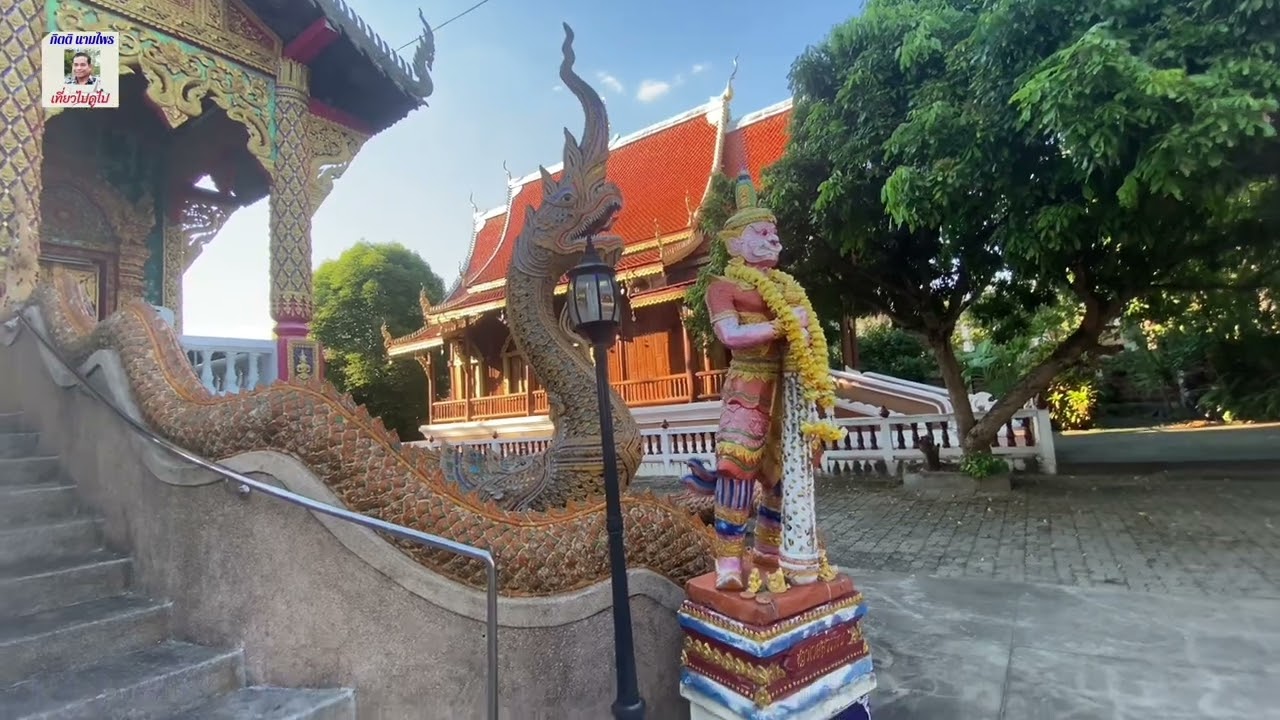
 Click to Access the Navigation Map GPS
Wat Thao Bun Rueang Map
Recommend

 Muang Chiang Mai(121)Chom Thong(47)Mae Chaem(25)Chiang Dao(33)Doi Saket(68)Mae Taeng(85)Mae Rim(69)Samoeng(29)Fang(71)Mae Ai(59)Phrao(70)San Pa Tong(103)San Kamphaeng(66)San Sai(73)Hang Dong(73)Hot(32)Doi Tao(22)Omkoi(11)Saraphi(74)Wiang Haeng(15)Chai Prakan(28)Mae Wang(32)Mae On(22)Doi Lo(33)Galyani Vadhana(1)


