
lovethailand home >North Travel Attractions >Chiang Mai Travel Attractions >Hang Dong >Nam Phrae > Wat Sala
TL;DR: Wat Sala is located at Ban Sala, Nam Phrae Subdistrict, Hang Dong District, Chiang Mai Province, open Daily, hours 08.00 – 17.00.

Wat Sala
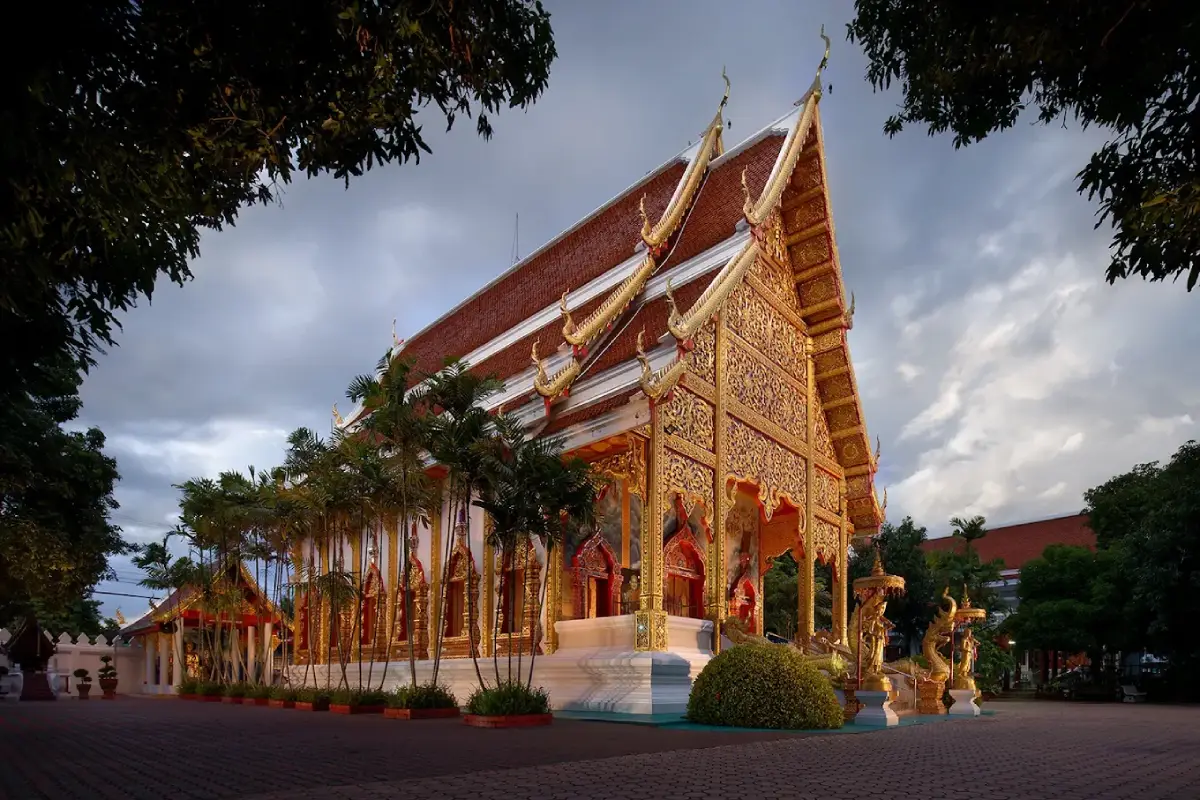
Open Days: Daily
Opening Hours: 08.00 – 17.00
Wat Sala is an old community temple located at No. 80, Moo 2, Ban Sala, Nam Phrae Subdistrict, Hang Dong District, Chiang Mai Province. It is a local Buddhist temple under the Mahanikaya order, with a history dating back to 1757. The temple is closely connected with the origin of Ban Sala, the journey of King Kawila to worship Phra Borommathat Chom Thong, the old teak forest, the Mae Tha Chang watercourse, and the memory of a resting pavilion that later gave the village its name.
Wat Sala stands in a quiet local community in southern Chiang Mai. The temple covers an area of 8 rai and 40 square wa and serves as an important spiritual center for Ban Sala. Unlike large tourist temples in central Chiang Mai, Wat Sala is valued for its local history, village atmosphere, Buddhist heritage, old sacred objects, and its role in preserving community memory. It is suitable for travelers who want to understand a quieter side of Chiang Mai through local temples, village stories, and Lanna cultural traces.
The history of Wat Sala begins with a story from the time of King Kawila. During a journey to worship Phra Borommathat Chom Thong in present-day Chom Thong District, King Kawila traveled with a royal procession of elephants, horses, and attendants. Travel in the past was slow and difficult, often requiring overnight stops along the way. When the procession reached the area that is now Ban Sala, they found a cool and shaded place with large teak trees, mixed forest, and the Mae Tha Chang stream flowing nearby.
King Kawila stopped to rest at this place. A royal seat was carved into a large teak tree, and a pavilion was built as a resting place for the royal party and for travelers passing through the area. Over time, the old teak forest and resting pavilion became the nucleus of a settlement. Local people referred to the area as Ban Sala Hua Dong Phra Chao Nang Kon, before the name gradually shortened to Ban Sala. This name has remained in use until the present day.
This origin gives Wat Sala a distinctive cultural depth. The name of the village and the temple is not accidental. It is tied to landscape, travel, royal history, a place of rest, and the memory of a route once used by people traveling across the region. Visiting Wat Sala therefore helps travelers understand how a small village name can preserve a much older historical memory.
Wat Sala was founded in 1757 and later received its Wisungkham Sima in 1990. The granting of Wisungkham Sima is important because it officially defines the consecrated boundary for monastic acts, especially those performed in the ordination hall. This gives the temple both historical depth and formal religious significance within the Thai Buddhist monastic system.
Important evidence of the temple’s age and cultural value includes ancient Buddha images made from cast silver, bronze, silver-covered and gold-covered forms, carved ivory, carved wood, an old dhammasana or preaching seat, and palm-leaf manuscripts preserved at the temple. These objects are important because they reflect local craftsmanship, Buddhist devotion, and the temple’s role as a keeper of religious knowledge and Lanna cultural memory.
The old Buddha images at Wat Sala are not only sacred objects for worship. They also reveal how villagers and patrons offered valuable materials to Buddhism. Silver, bronze, gold covering, carved ivory, and carved wood all point to different layers of faith, craftsmanship, and local artistic practice. The old dhammasana reflects the culture of sermons and Dhamma learning, while the palm-leaf manuscripts show that the temple once functioned as a repository of religious and local knowledge.
Palm-leaf manuscripts are especially meaningful in Lanna culture. They were used to record Buddhist teachings, ritual texts, local narratives, and traditional knowledge. A temple that preserves such manuscripts is more than a place of worship. It is also a memory house for language, script, belief, and community learning. Wat Sala therefore carries both spiritual and documentary value.
The temple has had a long succession of abbots, including Khruba Munin, Khruba Panya Wilaso, Khruba Inchai, Khruba Thanan Chai, Khruba Duang, Khruba China, Khruba Tai, Phra Athikan Un, Phra Athikan Mun, Phra Athikan Tip, Phra Athikan Tham, Phra Athikan Kham Chanthawaso, Phra Khru Phiphit Punyaphirat, and Phra Khru Choti Suwannason. This long list shows the continuity of the temple as a religious institution serving the Ban Sala community over many generations.
Phra Khru Phiphit Punyaphirat Katapunyo is remembered as an important former abbot of Wat Sala, serving the temple for many decades. Current local temple information lists Phra Khru Choti Suwannason as the present abbot from 2019 onward. The continuity between former and current abbots reflects how Wat Sala has remained active through changing social conditions in Ban Sala and Nam Phrae.
Key sacred and cultural points to see at Wat Sala include the old Buddha images, Phra Chao Than Jai, the preserved ancient objects, the old preaching seat, and the main temple worship areas. Publicly available information does not provide full details of every building within the temple grounds, but the temple’s long history, old sacred objects, and consecrated status make it a significant community temple in Nam Phrae.
Phra Chao Than Jai is an important object of local devotion at Wat Sala. Local municipal records mention an area related to Phra Chao Than Jai at the temple, showing that it remains meaningful to the community. Visitors should approach this sacred area respectfully and avoid disturbing worshippers or temple activities.
The atmosphere of Wat Sala is calm and modest. It is not a crowded attraction, and its value lies in its history, village identity, connection with King Kawila, old Buddhist objects, and community role. It is ideal for travelers interested in Lanna temples, local stories, old village names, and cultural routes in Hang Dong.
Wat Sala continues to serve Ban Sala as a spiritual and social center. The temple supports Buddhist observances, merit-making, sermons, community gatherings, and seasonal religious activities such as Buddhist holy days, Buddhist Lent, the end of Buddhist Lent, Lanna Songkran, Kathin, robe-offering ceremonies, and other local merit-making events. These practices help maintain the living relationship between villagers and the temple.
For cultural travelers, Wat Sala adds depth to the wider story of Nam Phrae. The subdistrict is not only known for natural attractions and leisure activities, but also for old temples, village histories, local legends, and traditional knowledge. Ban Sala is Moo 2 of Nam Phrae and remains a community where the temple continues to function as a center of faith and identity.
Nam Phrae is located west of Hang Dong District, about 4 kilometers from Hang Dong town and about 16 kilometers south of Chiang Mai city via the canal road. The area includes plains, foothills, forests, mountains, and agricultural land. Many local residents have traditionally worked in agriculture, including rice farming, soybean cultivation, and longan orchards. This rural setting helps explain why Wat Sala has the character of a village temple deeply tied to the everyday life of the community.
Wat Sala can be combined with several nearby attractions. Travelers can visit Grand Canyon Chiang Mai, Wat Phra That Doi Tham, Wat Phra That Wiang Dong, the Monument of Pho Khun Muen Dong Nakhon, and Ob Khan National Park in the same route. A good itinerary is to begin with Wat Sala for temple history and local worship, then continue to nearby natural or cultural sites in Nam Phrae, and end with a local restaurant or café in Hang Dong.
Grand Canyon Chiang Mai is located in Nam Phrae and is known for its canyon-like landscape and water activities. Wat Phra That Doi Tham is an old hill temple with scenic views and a local legend connected with Pho Khun Muen Dong Nakhon. Wat Phra That Wiang Dong and the Monument of Pho Khun Muen Dong Nakhon add another layer of local history, while Ob Khan National Park offers river scenery and forest landscapes on the western side of Hang Dong.
Getting There is convenient by private car or rental car. From Chiang Mai city, take the canal road toward Hang Dong District, then continue into Nam Phrae Subdistrict and Ban Sala. The route is suitable for travelers who want to visit several temples and natural attractions in one day. If using public transport, travel first to Hang Dong, then continue by local transport or hired vehicle to Ban Sala.
Visitors should dress modestly, speak quietly, and avoid disturbing monks or community activities. Wat Sala is an active local temple, not only a tourist stop. Respectful behavior helps preserve the peaceful atmosphere and supports meaningful cultural tourism in the local community.
Wat Sala is suitable for travelers interested in old Lanna temples, King Kawila, village-name origins, Buddhist heritage, and quiet cultural routes in Hang Dong. It may not be a loud or highly commercial attraction, but it gives travelers a deeper understanding of Nam Phrae through religion, history, landscape, and the memory of Ban Sala.
| Name | Wat Sala |
| Location | Ban Sala, Nam Phrae Subdistrict, Hang Dong District, Chiang Mai Province |
| Address | No. 80, Moo 2, Ban Sala, Nam Phrae Subdistrict, Hang Dong District, Chiang Mai 50230, Thailand |
| Type | Local Buddhist temple under the Mahanikaya order |
| Temple Area | 8 rai and 40 square wa |
| History | Founded in 1757 and granted Wisungkham Sima in 1990 |
| Name Origin | The name comes from a resting pavilion built during King Kawila’s journey through the old teak forest area, later forming the community known as Ban Sala |
| Highlights | Old community temple linked with King Kawila, ancient Buddha images, an old preaching seat, and palm-leaf manuscripts |
| Distinctive Features | A quiet Lanna community temple suitable for worship, local history learning, and cultural travel in Nam Phrae |
| Key Evidence | Ancient Buddha images made of cast silver, bronze, silver-covered and gold-covered forms, carved ivory, carved wood, an old dhammasana, and palm-leaf manuscripts |
| Sacred Objects / Worship Points | Old Buddha images, Phra Chao Than Jai, and sacred worship areas within the temple |
| Abbot / Caretaker | Phra Khru Choti Suwannason |
| Important Former Abbot | Phra Khru Phiphit Punyaphirat Katapunyo, an important former abbot serving from 1947 to 2019 |
| Traditions / Merit-Making | Buddhist holy days, Buddhist Lent, the end of Buddhist Lent, Lanna Songkran, Kathin, robe-offering ceremonies, and local community merit-making activities |
| Travel Information | From Chiang Mai city, take the canal road toward Hang Dong, then continue into Nam Phrae and Ban Sala. Private car or rental car is recommended. |
| Current Status | An old community temple and cultural attraction of Nam Phrae Subdistrict |
| Open Days | Daily |
| Opening Hours | 08.00 – 17.00 |
| Main Contact Number | 053-430-732 |
| Local Authority | Nam Phrae Phattana Municipality, Tel. 052-080792 |
| Nearby Tourist Attractions | 1. Grand Canyon Chiang Mai, about 3 km 2. Ban Klong Sabadchai Learning Center of Pho Khru Kham Kawai, about 5 km 3. Wat Phra That Doi Tham, about 8 km 4. Wat Phra That Wiang Dong and Pho Khun Muen Dong Nakhon Monument, about 8 km 5. Ob Khan National Park, about 12 km |
| Nearby Restaurants | 1. The Hope Nam Phrae, about 4 km, Tel. 065-406-4514 2. Hop Chafe' Ban Nam Phrae Hang Dong, about 4 km, Tel. 064-234-5047 3. Tuang Tong Canyon View, about 4 km 4. Im Aroi Nam Phrae, about 5 km, Tel. 062-882-3556, 091-818-3890 5. Pad Toh Grill and Mala Nam Phrae, about 5 km, Tel. 084-373-2794 |
| Nearby Accommodations | 1. SELA, about 4 km, Tel. 053-111-831 2. Bamboo Garden Resort and Restaurant, about 5 km, Tel. 062-037-3620 3. Rice Barn and Rooms, about 6 km, Tel. 081-960-3997 4. Hideaway, about 8 km, Tel. 081-952-5687 5. The Heritage House & Garden, about 8 km |
Frequently Asked Questions (FAQ)
Q: Where is Wat Sala located?
A: Wat Sala is located at No. 80, Moo 2, Ban Sala, Nam Phrae Subdistrict, Hang Dong District, Chiang Mai 50230, Thailand.
Q: When was Wat Sala founded?
A: Wat Sala was founded in 1757 and received its Wisungkham Sima in 1990.
Q: What is the origin of the name Ban Sala and Wat Sala?
A: The name comes from a resting pavilion built during King Kawila’s journey through the old teak forest area. Over time, the area became a village known as Ban Sala.
Q: What important historical objects are preserved at Wat Sala?
A: The temple preserves ancient Buddha images, silver and bronze objects, carved ivory, carved wood, an old dhammasana, and palm-leaf manuscripts.
Q: What type of traveler is Wat Sala suitable for?
A: It is suitable for travelers interested in Lanna community temples, King Kawila, local village history, and cultural travel in Hang Dong.
Q: How can travelers get to Wat Sala?
A: From Chiang Mai city, take the canal road toward Hang Dong, then continue into Nam Phrae and Ban Sala. A private car or rental car is recommended.
Q: What nearby places can be visited with Wat Sala?
A: Nearby places include Grand Canyon Chiang Mai, Wat Phra That Doi Tham, Wat Phra That Wiang Dong, Pho Khun Muen Dong Nakhon Monument, and Ob Khan National Park.
 Category: ●Places of Worship
 Group: ●Temple
Last Update : 2 MonthAgo
 Last Update : 2 MonthAgo
 Click to Access the Navigation Map GPS

 Muang Chiang Mai(121)Chom Thong(47)Mae Chaem(25)Chiang Dao(33)Doi Saket(68)Mae Taeng(85)Mae Rim(69)Samoeng(29)Fang(71)Mae Ai(59)Phrao(70)San Pa Tong(103)San Kamphaeng(66)San Sai(73)Hang Dong(73)Hot(32)Doi Tao(22)Omkoi(11)Saraphi(74)Wiang Haeng(15)Chai Prakan(28)Mae Wang(32)Mae On(22)Doi Lo(33)Galyani Vadhana(1)


