
lovethailand home >North Travel Attractions >Chiang Mai Travel Attractions >Hang Dong >Khun Khong > Wat Ton Kaew (Khun Khong)
TL;DR: Wat Ton Kaew (Khun Khong) is located at Ban Ton Kaew, Khun Khong Subdistrict, Hang Dong District, Chiang Mai, open Daily, hours 08.00 – 17.00.

Wat Ton Kaew (Khun Khong)
Open Days: Daily
Opening Hours: 08.00 – 17.00
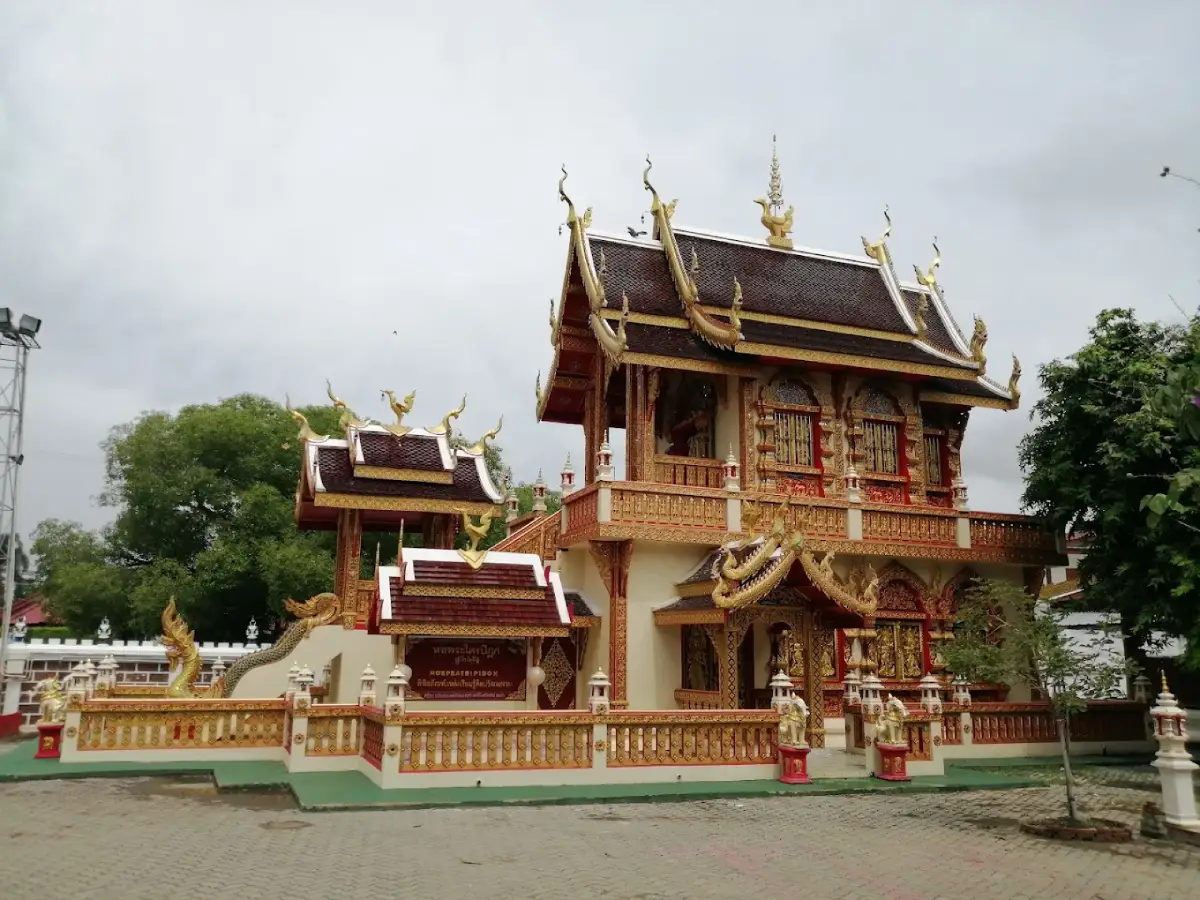
Wat Ton Kaew (Khun Khong) is a local Maha Nikaya Buddhist temple in Ban Ton Kaew, Khun Khong Subdistrict, Hang Dong District, Chiang Mai. It is known for its revival from an old abandoned temple site, an ancient Lanna-style chedi about 8 meters high, and a small community collection of antiques, old tools, household objects, and vintage sound equipment.
Wat Ton Kaew (Khun Khong) is located at 51 Moo 1, Ban Ton Kaew, Khun Khong Subdistrict, Hang Dong District, Chiang Mai 50230. It is a local Buddhist temple under the Maha Nikaya order, with a temple area of about 4 rai. Although it is not a large or heavily commercialized attraction, the temple offers a meaningful look at Lanna community history, religious revival, old temple ruins, and the relationship between a village temple and local life in Hang Dong.
The value of Wat Ton Kaew lies in its quiet and grounded character. Visitors come here not for grand architecture, but for the atmosphere of a living community temple that still preserves traces of the past. Inside the temple compound are an old chedi, a viharn, a sermon hall, a newer well, and a small display area for antiques and old objects donated by local devotees. Together, these elements make Wat Ton Kaew a worthwhile stop for travelers interested in Lanna culture beyond the main tourist circuit of Chiang Mai city.
Historically, Wat Ton Kaew is associated with an abandoned temple site believed by the local community to have remained deserted for about 700 years before being revived. The temple was permitted to be built in 1978 and was officially established as a temple in 2002. Its revival from an abandoned temple into a temple with resident monks is an important part of its identity, showing how local faith and community support can bring an old sacred place back into active religious life.
The temple was recognized as a model development temple in 1997 and as an outstanding development temple in 1998. These recognitions reflect the effort of the local community to improve and maintain the temple grounds before the site was officially re-established as a temple in 2002. Wat Ton Kaew is therefore best understood as a temple shaped by long-term local devotion rather than by mass tourism or large-scale institutional promotion.
The most important historical structure at Wat Ton Kaew is the old chedi, approximately 8 meters high. The chedi remains in a partially ruined condition and has not been rebuilt into a fully restored modern structure. This gives the site a strong sense of age and authenticity. Its form reflects early Lanna artistic features mixed with Burmese influence, making it an important visual reminder of the cultural networks that once shaped religious art across northern Thailand and neighboring regions.
The old chedi should be viewed with respect and care. Its value comes from the surviving traces of its original form, not from polished restoration. Travelers interested in Lanna architecture can observe the proportions of the base, the vertical structure, and the weathered surface that reveals the passage of time. Unlike major restored temples in the old city of Chiang Mai, Wat Ton Kaew allows visitors to experience a more local and less staged form of heritage.
The temple’s setting in Khun Khong Subdistrict is also significant. The nearby Baan Tawai area is known for woodcarving and Lanna handicrafts, while Ban Ton Kaew remains part of a broader local landscape of old villages, temples, agriculture, and craft traditions. A visit to Wat Ton Kaew helps travelers understand Hang Dong not only as a suburban district outside Chiang Mai, but as a cultural area with deep links to local faith, village life, and Lanna craftsmanship.
Within the temple compound, the viharn and sermon hall continue to support religious practice and community activities. The viharn is the main space for paying respect and making merit, while the sermon hall functions as a gathering place for Buddhist events and village activities. In a community temple like Wat Ton Kaew, these buildings are important because they serve the everyday spiritual life of local residents, not only the visual expectations of visitors.
Another distinctive feature of Wat Ton Kaew is its collection of old objects, including antiques, traditional tools, household items, and vintage sound equipment donated by local people. These objects give the temple the character of a small community museum. They preserve memories of older ways of living and allow younger generations and visitors to see how people in the community once worked, lived, and used everyday technology.
The temple’s strength is its authenticity. Visitors will find an old chedi that still carries visible traces of age, a living temple maintained by local faith, and a collection of objects connected to village memory. For travelers who prefer quiet cultural sites over crowded landmark temples, Wat Ton Kaew offers a more intimate understanding of Lanna Buddhist life in a rural Chiang Mai community.
The abbot of Wat Ton Kaew is Phra Athikan Phromwat Dhammavuddho, who oversees the temple and supports its ongoing religious role in the community. The presence of resident monks gives the temple continuity as a living Buddhist site. It remains a place for merit-making, Buddhist ceremonies, local gatherings, and spiritual support for residents of Ban Ton Kaew and nearby villages.
As with many local temples in northern Thailand, Wat Ton Kaew is connected to the annual rhythm of Buddhist merit-making. Activities such as Buddhist holy day observances, offerings to monks, Kathin, Pha Pa, and other temple-based merit-making events are part of the broader role of a village temple. Specific annual festival details for Wat Ton Kaew are not widely published, so visitors should contact the temple directly when planning to attend any special event.
For a meaningful visit, travelers should begin by paying respect inside the viharn, then walk quietly around the old chedi and the display area. The temple is a religious site and a heritage space, so visitors should dress modestly, avoid climbing or touching fragile structures, and refrain from moving any objects in the display area. Respectful behavior helps preserve the temple’s cultural and spiritual value for the local community.
Wat Ton Kaew is suitable for a slow visit rather than a quick photo stop. The best way to experience the temple is to take time to observe the old chedi, the temple compound, the antique collection, and the village atmosphere around Ban Ton Kaew. The site is especially suitable for travelers interested in small temples, Lanna community history, abandoned temple revival, and local heritage that remains outside the busiest tourist routes.
A useful travel route is to combine Wat Ton Kaew with Baan Tawai Handicraft Village, Wat Tawai, Wat Khun Khong, Wat Ton Kwen, and Royal Park Rajapruek. This route gives visitors a fuller picture of Hang Dong through temples, handicrafts, old village culture, and landscaped gardens. With half a day, travelers can visit Wat Ton Kaew and Baan Tawai. With a full day, the route can be extended to Wat Ton Kwen or Royal Park Rajapruek.
Getting There from Chiang Mai city is most convenient by private car, rental car, or local hired transport. Take the Chiang Mai–Hang Dong road, then continue onto local roads toward Khun Khong Subdistrict, Baan Tawai, and Ban Ton Kaew. Baan Tawai is a useful local landmark because it is well known and located within the same connected area.
Visitors should allow extra travel time for local roads within the community, especially if they are not familiar with the area. Morning or late afternoon is usually more comfortable for walking around the temple compound. After visiting the temple, travelers can continue to nearby restaurants and cafes in the Baan Tawai and Hang Dong area, making Wat Ton Kaew a practical stop on a cultural route outside Chiang Mai city.
Wat Ton Kaew (Khun Khong) deserves a place in a cultural travel route through Hang Dong because it brings together several layers of local heritage: an old abandoned temple site, a Lanna-Burmese-influenced chedi, a living village temple, a small collection of old community objects, and a close relationship with Ban Ton Kaew. It is not a large tourist temple, but its depth and local character make it valuable for travelers who want to understand Chiang Mai through its village temples and community history.
| Name | Wat Ton Kaew (Khun Khong) |
| Location | Ban Ton Kaew, Khun Khong Subdistrict, Hang Dong District, Chiang Mai |
| Address | 51 Moo 1, Ban Ton Kaew, Khun Khong Subdistrict, Hang Dong District, Chiang Mai 50230 |
| Temple Type | Local Buddhist temple under the Maha Nikaya order |
| Highlights | Ancient chedi, quiet Lanna community temple atmosphere, and a display area for antiques, old tools, household objects, and vintage sound equipment |
| History | Associated with an old abandoned temple site believed locally to be about 700 years old; permitted to be built in 1978 and officially established as a temple in 2002 |
| Development Recognition | Model development temple in 1997 and outstanding development temple in 1998 |
| Distinctive Features | An old chedi about 8 meters high with early Lanna artistic features mixed with Burmese influence |
| Main Areas / Zones | 1. Old chedi 2. Viharn 3. Sermon hall 4. Newer well 5. Display area for antiques, old tools, household objects, and vintage sound equipment |
| Abbot / Caretaker | Phra Athikan Phromwat Dhammavuddho |
| Travel Information | From Chiang Mai city, take the Chiang Mai–Hang Dong road and continue onto local roads toward Khun Khong, Baan Tawai, and Ban Ton Kaew. Best reached by private car, rental car, or local hired transport |
| Current Status | Active community temple with resident monks and open to visitors during operating hours |
| Open Days | Daily |
| Opening Hours | 08.00 – 17.00 |
| Main Contact Number | 053-441-087 |
| Nearby Tourist Attractions | 1. Baan Tawai Handicraft Village, about 3 km 2. Wat Tawai, about 3 km 3. Wat Khun Khong, about 4 km 4. Wat Ton Kwen or Wat Intharawat, about 8 km 5. Royal Park Rajapruek, about 10 km |
| Nearby Restaurants | 1. Heng Dee Grocery & Bar, about 1 km, Tel. 082-387-8833 2. Sathani Khao Kaeng Lae Khanom Chin Baan Tawai, about 3 km, Tel. 092-527-8191 3. Food Vegetarian-Hang Dong, about 3 km, Tel. 083-063-8772, 097-653-7772 4. Baan Nong Kan Kan Baan Tawai, about 3 km, Tel. 083-908-2686 5. Jungle De Cafe Hang Dong Baan Tawai By Tongna Cottage, about 5 km, Tel. 089-262-3939 |
| Nearby Accommodations | 1. Baan Tonglong Homestay 2, about 3 km, Tel. 086-185-8796 2. Baan Tawai Lanna Resort, about 3 km, Tel. 063-654-7997 3. Tongna Cottage Natural Resort, about 5 km, Tel. 061-154-5053 4. Homerent ChiangMai, about 5 km, Tel. 095-057-5272 5. North Hill City Resort, about 11 km, Tel. 053-333-111, 093-131-0277 |
Frequently Asked Questions (FAQ)
Q: Where is Wat Ton Kaew (Khun Khong) located?
A: Wat Ton Kaew (Khun Khong) is located at 51 Moo 1, Ban Ton Kaew, Khun Khong Subdistrict, Hang Dong District, Chiang Mai 50230.
Q: What are the opening days and hours of Wat Ton Kaew (Khun Khong)?
A: The temple is open daily from 08.00 to 17.00.
Q: What is Wat Ton Kaew (Khun Khong) known for?
A: The temple is known for its old chedi about 8 meters high, its revival from an abandoned temple site, and its small community display of antiques, old tools, household objects, and vintage sound equipment.
Q: Is Wat Ton Kaew (Khun Khong) an old temple?
A: Yes. It is associated with an old abandoned temple site believed locally to have a history of about 700 years, before being revived and officially established as a temple in 2002.
Q: What should visitors see inside the temple?
A: Visitors should see the old chedi, the viharn, the sermon hall, the newer well, and the display area of old community objects.
Q: Who is Wat Ton Kaew (Khun Khong) suitable for?
A: It is suitable for travelers interested in small community temples, Lanna heritage, local Buddhist life, old temple ruins, and cultural routes around Hang Dong.
Q: How can travelers get to Wat Ton Kaew (Khun Khong)?
A: The most convenient way is by private car, rental car, or local hired transport from Chiang Mai city via the Chiang Mai–Hang Dong road toward Khun Khong and Ban Ton Kaew.
Q: What nearby places can be visited with Wat Ton Kaew (Khun Khong)?
A: Travelers can combine the visit with Baan Tawai Handicraft Village, Wat Tawai, Wat Khun Khong, Wat Ton Kwen, and Royal Park Rajapruek.
 Category: ●Places of Worship
 Group: ●Temple
Last Update : 2 MonthAgo
 Last Update : 2 MonthAgo
 Click to Access the Navigation Map GPS
Wat Ton Kaew (Khun Khong) Map
Recommend

 Muang Chiang Mai(121)Chom Thong(47)Mae Chaem(25)Chiang Dao(33)Doi Saket(68)Mae Taeng(85)Mae Rim(69)Samoeng(29)Fang(71)Mae Ai(59)Phrao(70)San Pa Tong(103)San Kamphaeng(66)San Sai(73)Hang Dong(73)Hot(32)Doi Tao(22)Omkoi(11)Saraphi(74)Wiang Haeng(15)Chai Prakan(28)Mae Wang(32)Mae On(22)Doi Lo(33)Galyani Vadhana(1)


