
lovethailand home >North Travel Attractions >Chiang Mai Travel Attractions >Saraphi >Yang Noeng > Wat Weluwan (Yang Noeng)
TL;DR: Wat Weluwan (Yang Noeng) is located at Ban Weluwan, Moo 2, Yang Noeng Subdistrict, Saraphi District, Chiang Mai Province, open Daily, hours 08.00 – 17.00.

Wat Weluwan (Yang Noeng)
Open Days: Daily
Opening Hours: 08.00 – 17.00
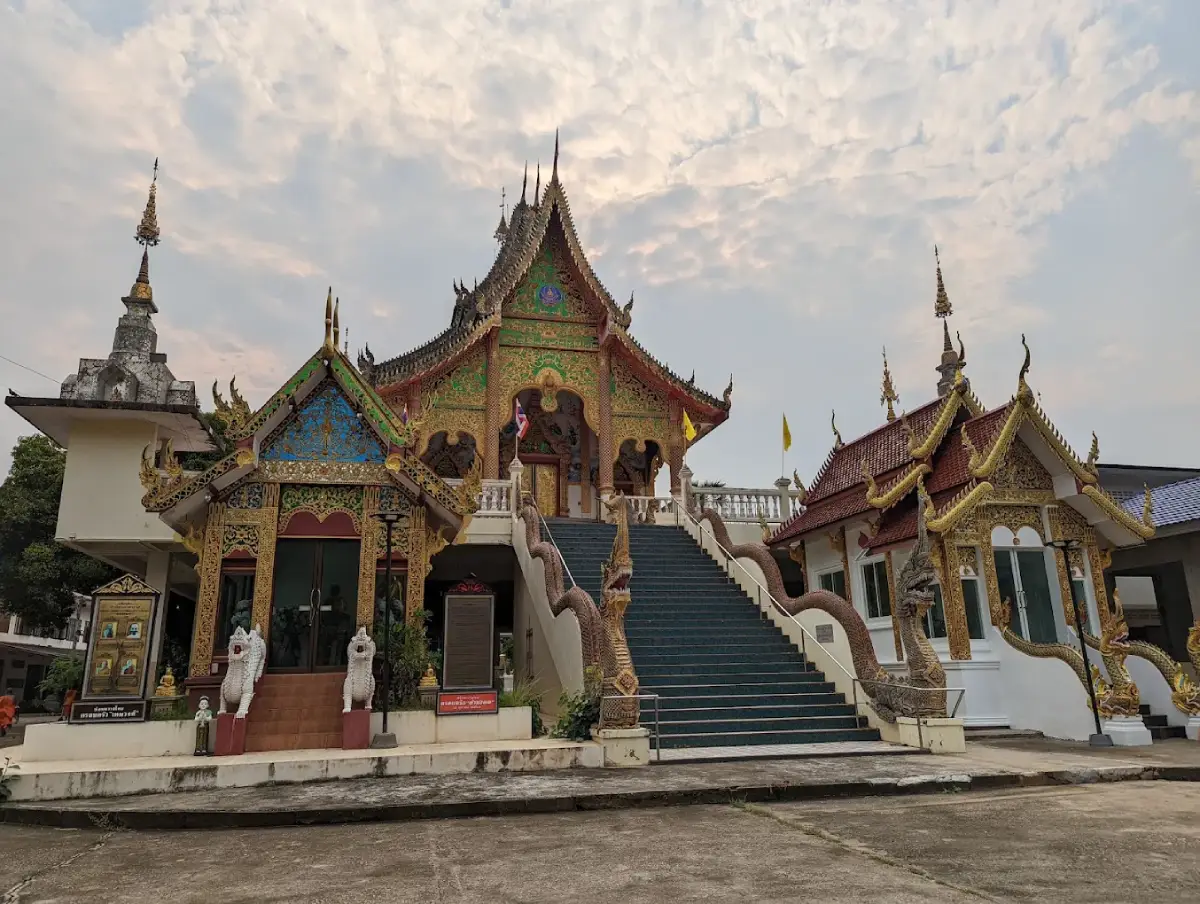
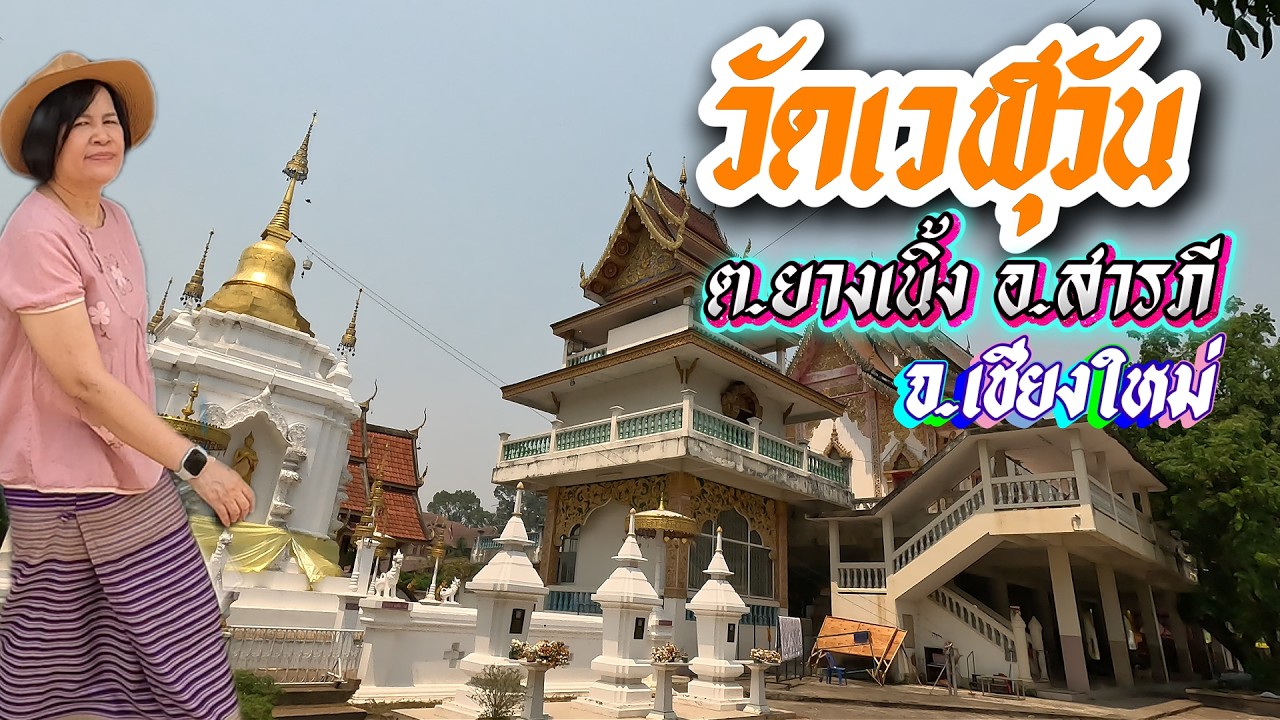
Wat Weluwan (Yang Noeng) is a local Buddhist temple under the Mahanikaya monastic order, located at No. 114, Moo 2, Chiang Mai – Lamphun Road, Yang Noeng Subdistrict, Saraphi District, Chiang Mai Province 50140. The temple was officially established in 1908 and received its Wisungkhamsima in 1958. It is one of the notable community temples along the old Chiang Mai – Lamphun route, a culturally important road in Saraphi District. The temple compound includes an ordination hall, viharn, sermon hall, monks’ residences, alms hall, Ho Trai scripture hall, kitchen pavilion, important Buddha images, and a Chiang Saen-style pagoda.
Wat Weluwan is more than a small temple beside Route 106. It preserves the identity of Ban Weluwan and Yang Noeng through Buddhist architecture, community memory, religious education, and local faith. The temple was formerly known as Wat Wehuwan Duang Dee and is also remembered locally as Wat Pan Chiang. Its story connects with other important temples in the same cultural route, including Wat Phra Non Pa Ket Thi, Wat Ton Hiew, and Wat Ku Suea. For travelers who want to explore Saraphi through local temples rather than only through major Chiang Mai landmarks, Wat Weluwan is a meaningful place to visit.
The temple stands in Ban Weluwan, Moo 2, Yang Noeng Subdistrict, an area closely linked with the Chiang Mai – Lamphun Road. This old route connects Chiang Mai and Lamphun and is famous for sections lined with mature yang na trees. Wat Weluwan belongs to this cultural landscape, where temples, villages, roads, canals, schools, and local markets form one continuous community environment.
The temple was established in 1908, making it more than a century old. Its development reflects the growth of the local community and the continuing support of villagers. The granting of Wisungkhamsima in 1958 was an important milestone because this boundary allows the temple to conduct formal Sangha rites, including ordination and other ecclesiastical ceremonies. This confirms Wat Weluwan’s role as a formal and active Buddhist temple in Saraphi.
The temple’s main structures include the ordination hall, viharn, sermon hall, monks’ residences, alms hall, Ho Trai scripture hall, and kitchen pavilion. The ordination hall is used for monastic rites, while the viharn supports worship and devotional activities. The sermon hall functions as a gathering place for merit-making and Dhamma listening. The Ho Trai stores Buddhist scriptures and religious texts, while the kitchen pavilion reflects the community-based character of Lanna temple festivals, where villagers often help prepare food and offerings together.
The sacred objects of Wat Weluwan include a brick-and-stucco Buddha image modeled after Phra Chao Kao Tue in Wat Suan Dok, brass Buddha images in Sukhothai style, a brass Buddha image in the Chiang Saen diamond meditation posture, other brass Buddha images, and a Chiang Saen-style pagoda. These objects give the temple cultural depth because they reflect multiple artistic influences within northern Thai Buddhist devotion.
The Buddha image modeled after Phra Chao Kao Tue is especially meaningful because Phra Chao Kao Tue at Wat Suan Dok is one of Chiang Mai’s important Buddha images. Its presence in modeled form at Wat Weluwan connects a local Saraphi temple with the wider sacred geography of Chiang Mai. The Sukhothai-style and Chiang Saen-style Buddha images also allow visitors to observe different Buddhist artistic traditions within one community temple.
The Chiang Saen-style pagoda is another feature worth observing respectfully. Chiang Saen-style religious architecture is linked with the artistic heritage of northern Thailand and the upper Mekong region. Visitors should walk calmly around the pagoda area, avoid touching or climbing sacred structures, and take time to see how the pagoda, viharn, and courtyard form the sacred layout of the temple compound.
The Ho Trai scripture hall gives Wat Weluwan an educational dimension. In Lanna temple culture, a Ho Trai or scripture hall is used to preserve Buddhist texts, palm-leaf manuscripts, and Dhamma materials. Wat Weluwan also has a connection with Buddhist education, as records mention a Pali section of a Phra Pariyatti Dhamma school that began in 1980. This shows that the temple has served not only as a place of worship but also as a center of religious learning.
The history of Wat Weluwan includes several important monks. Phra Samuh Kaeo Kunadhammo is associated with the founding period in 1908. Phra Athikan Konkaeo Khattiyo later played a role in the temple’s development. Phra Khru Sattha Sophon, also known as Khruba Ai Sophano, became one of the most respected former abbots of the temple and is remembered by the Saraphi community for his discipline, preaching, and development work.
Khruba Ai Sophano remains a major figure in the memory of Wat Weluwan. He was widely respected as a practicing monk, a strong preacher, and a community developer. His role helped shape Wat Weluwan as a spiritual center, not only as a site for rituals. The respect for Khruba Ai continues to be part of the temple’s identity and explains why Wat Weluwan holds special meaning for many people in Saraphi.
Current Kathin information for 2025 lists Wat Weluwan as an active local temple in Yang Noeng Subdistrict, Saraphi District, Chiang Mai Province, with 5 resident monks and Phra Khru Siri Pariyattaphirat as the current abbot. This confirms that the temple remains active as a Buddhist community temple and continues to support religious activities.
Wat Weluwan plays an important role in community life. It serves as a place for Buddhist holy day observances, Kathin, robe-offering ceremonies, Buddhist Lent, the end of Buddhist Lent, candle offering ceremonies, and local merit-making events. The surrounding area is also connected with Wat Weluwan School, showing the close relationship between temple, education, and village life in Yang Noeng.
The temple has also continued to function as a venue for public Buddhist activities. The Chiang Mai University Council Office has organized a Buddhist Lent candle offering activity at Wat Weluwan, reflecting the temple’s continuing role as a respected religious site for both local communities and educational institutions. Such activities keep the connection between the temple, monks, laypeople, and institutions alive.
Wat Weluwan is ideal for visitors who prefer calm community temples rather than crowded tourist landmarks. The atmosphere is quiet and local. Travelers can pay respect to the Buddha images, observe the ordination hall, viharn, pagoda, Ho Trai, and other temple structures, and experience a living Lanna temple that still serves villagers in everyday religious life.
A visit to Wat Weluwan is best enjoyed slowly. Allow around 30 to 60 minutes to walk through the compound, pay respect, and observe the temple’s main structures. Visitors should dress modestly, speak softly, remove shoes before entering required buildings, avoid touching sacred objects unnecessarily, and respect any ceremonies taking place during the visit.
Getting There is convenient from Chiang Mai city. Take Route 106, the Chiang Mai – Lamphun Road, toward Saraphi District. Continue into Yang Noeng Subdistrict and Ban Weluwan, Moo 2. The temple is easiest to reach by private car, rental car, or local hired transport. Travelers without their own vehicle should arrange a return pickup in advance.
A practical cultural route can begin at Wat Weluwan and continue to Wat Phra Non Pa Ket Thi, Wat Ton Hiew, Wat Ku Suea, the Chiang Mai – Lamphun tree-lined road, and Wiang Kum Kam. This half-day or full-day route helps visitors understand Saraphi through old temples, community history, Lanna religious art, historic roads, and the ancient city landscape south of Chiang Mai.
Wat Weluwan deserves a place in a cultural itinerary of Saraphi because it combines temple history, Buddhist structures, sacred images, respected monks, religious education, and living community traditions. It shows that Chiang Mai’s cultural value is not limited to famous temples inside the old city. Local temples in Saraphi also hold deep stories and continue to shape the spiritual life of their communities.
| Name | Wat Weluwan (Yang Noeng) |
| Known As | Wat Weluwan, Wat Wehuwan Duang Dee, Wat Pan Chiang |
| Location | Ban Weluwan, Moo 2, Yang Noeng Subdistrict, Saraphi District, Chiang Mai Province |
| Address | No. 114, Moo 2, Chiang Mai – Lamphun Road, Yang Noeng Subdistrict, Saraphi District, Chiang Mai Province 50140, Thailand |
| Coordinates / Map Code | P28H+X5W, Yang Noeng, Saraphi District, Chiang Mai 50140, Thailand |
| Temple Type | Local Buddhist temple under the Mahanikaya monastic order |
| Highlights | Historic community temple in Yang Noeng with an ordination hall, viharn, Ho Trai, Chiang Saen-style pagoda, important Buddha images, and a strong connection with Khruba Ai Sophano |
| History | Established in 1908 and granted Wisungkhamsima in 1958 |
| Name Origin | Formerly known as Wat Wehuwan Duang Dee; also locally remembered as Wat Pan Chiang |
| Temple Land | About 8 rai, with one monastic land plot measuring 6 rai, 1 ngan, and 77 square wah, title deed No. 9727 |
| Boundaries | North: public road; South: public road; East: public irrigation canal; West: public road |
| Main Areas / Zones | Ordination hall, viharn, sermon hall, monks’ residences, alms hall, Ho Trai scripture hall, and kitchen pavilion |
| Sacred Objects | Brick-and-stucco Buddha image modeled after Phra Chao Kao Tue at Wat Suan Dok, brass Buddha images in Sukhothai style, brass Buddha image in Chiang Saen diamond meditation posture, other brass Buddha images, and a Chiang Saen-style pagoda |
| Abbot / Important Monk | Current abbot: Phra Khru Siri Pariyattaphirat Important former abbot: Phra Khru Sattha Sophon, also known as Khruba Ai Sophano |
| Open Days | Daily |
| Opening Hours | 08.00 – 17.00 |
| Important Religious Activities | Kathin, Buddhist Lent candle offering, Buddhist Lent, end of Buddhist Lent, robe offering ceremonies, Buddhist holy days, and community merit-making events |
| Travel Information | From Chiang Mai city, take Route 106, the Chiang Mai – Lamphun Road, toward Saraphi District. Continue into Yang Noeng Subdistrict and Ban Weluwan, Moo 2. Private car, rental car, or local hired transport is the most convenient option |
| Current Status | Active community temple in Yang Noeng Subdistrict with ongoing Buddhist activities |
| Nearby Tourist Attractions | 1. Chiang Mai – Lamphun Tree-Lined Road, about 1 km 2. Wat Phra Non Pa Ket Thi, about 2 km 3. Wat Ton Hiew, about 3 km 4. Wat Ku Suea, about 4 km 5. Wiang Kum Kam, about 8 km |
| Nearby Restaurants | 1. Nai Ya Kitchen Yang Noeng Saraphi, about 2 km, Tel. 095-830-4248 2. Nuea Tun Yang Noeng, about 2 km, Tel. 092-656-4598, 061-654-1955 3. Vietnamese Noodles Longevity Saraphi Yang Noeng Branch, about 2 km, Tel. 094-407-3996 4. Khao Man Kai Yang Noeng Saraphi, about 3 km, Tel. 097-976-4819 5. Siriwaranya Steamed Tilapia Saraphi Yang Noeng, about 3 km, Tel. 092-694-9958 |
| Nearby Accommodations | 1. 9Roomz, about 2 km, Tel. 095-446-0758 2. Ruean Thip Resort, about 4 km, Tel. 098-556-6291 3. Relax Garden House, about 6 km, Tel. 090-326-6108 4. Baan Nam Ping Riverside Village, about 8 km, Tel. 053-439040 5. Tassana Garden Saraphi Chiangmai, about 9 km, Tel. 081-441-6644 |
Frequently Asked Questions (FAQ)
Q: Where is Wat Weluwan located?
A: Wat Weluwan is located at No. 114, Moo 2, Chiang Mai – Lamphun Road, Yang Noeng Subdistrict, Saraphi District, Chiang Mai Province 50140.
Q: What is the history of Wat Weluwan?
A: Wat Weluwan was established in 1908, was formerly known as Wat Wehuwan Duang Dee, and received its Wisungkhamsima in 1958.
Q: What can visitors see at Wat Weluwan?
A: Visitors can see the ordination hall, viharn, sermon hall, Ho Trai scripture hall, Chiang Saen-style pagoda, Buddha image modeled after Phra Chao Kao Tue, Sukhothai-style brass Buddha images, and Chiang Saen-style Buddha images.
Q: Who is the current abbot of Wat Weluwan?
A: The current abbot is Phra Khru Siri Pariyattaphirat. Phra Khru Sattha Sophon, also known as Khruba Ai Sophano, is an important former abbot remembered by the Saraphi community.
Q: What are the opening hours of Wat Weluwan?
A: Wat Weluwan is open daily from 08.00 to 17.00.
Q: How can travelers get to Wat Weluwan from Chiang Mai city?
A: Take Route 106, the Chiang Mai – Lamphun Road, toward Saraphi District, then continue into Yang Noeng Subdistrict and Ban Weluwan, Moo 2. Private car, rental car, or local hired transport is the most convenient option.
Q: What nearby places can be visited with Wat Weluwan?
A: Nearby places include Wat Phra Non Pa Ket Thi, Wat Ton Hiew, Wat Ku Suea, the Chiang Mai – Lamphun tree-lined road, and Wiang Kum Kam.
 Category: ●Places of Worship
 Group: ●Temple
Last Update : 2 MonthAgo
 Last Update : 2 MonthAgo
 Click to Access the Navigation Map GPS
Wat Weluwan (Yang Noeng) Map
Recommend

 Muang Chiang Mai(121)Chom Thong(47)Mae Chaem(25)Chiang Dao(33)Doi Saket(68)Mae Taeng(85)Mae Rim(69)Samoeng(29)Fang(71)Mae Ai(59)Phrao(70)San Pa Tong(103)San Kamphaeng(66)San Sai(73)Hang Dong(73)Hot(32)Doi Tao(22)Omkoi(11)Saraphi(74)Wiang Haeng(15)Chai Prakan(28)Mae Wang(32)Mae On(22)Doi Lo(33)Galyani Vadhana(1)


