
lovethailand home >North Travel Attractions >Chiang Mai Travel Attractions >Saraphi >Don Kaeo > Wat Chang Kham
TL;DR: Wat Chang Kham is located at Ban Chang Kham, Village No. 11, Tha Wang Tan Subdistrict, Saraphi District, Chiang Mai Province, open Daily, hours 08.00 – 17.00.

Wat Chang Kham
Open Days: Daily
Opening Hours: 08.00 – 17.00
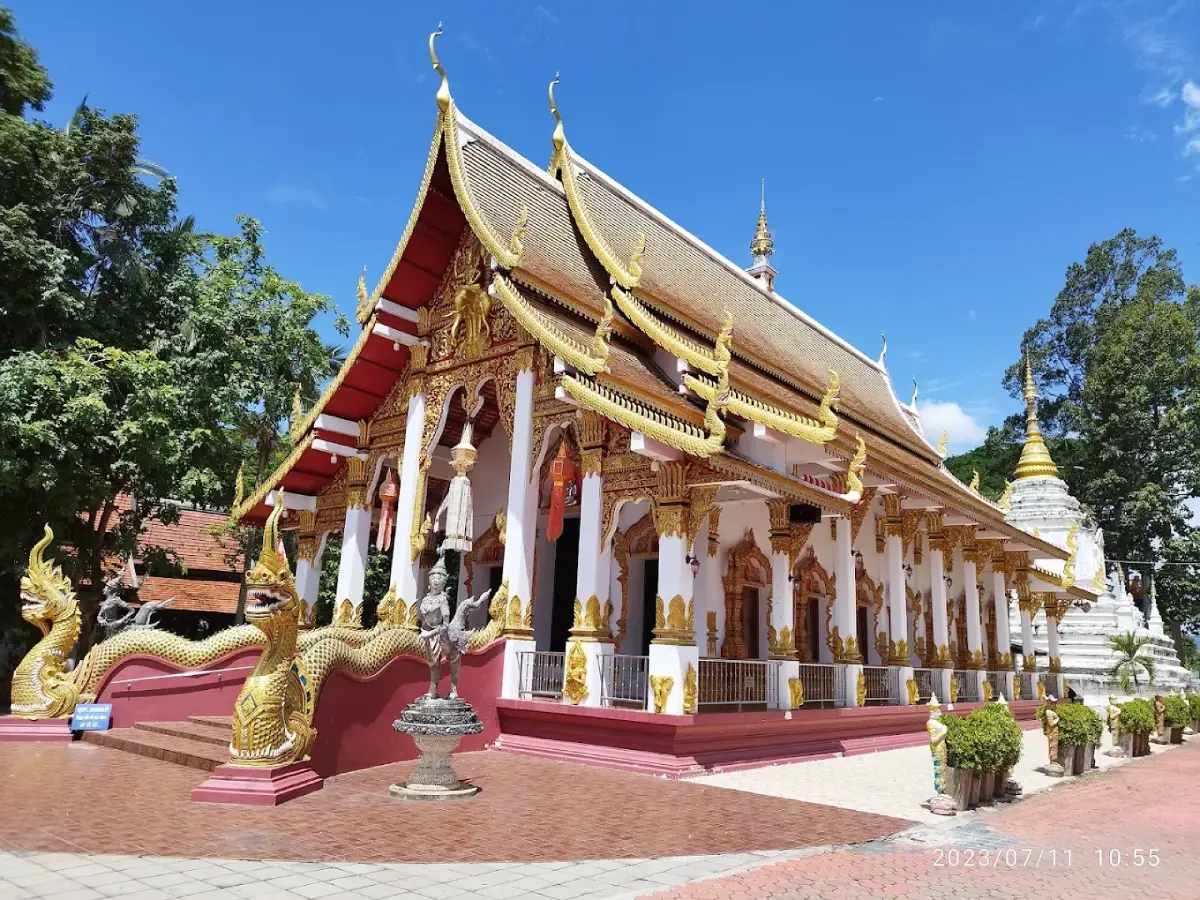
Wat Chang Kham, officially known as Wat Kan Thom Kumkam Phirom, is located at No. 60, Village No. 11, Tha Wang Tan Subdistrict, Saraphi District, Chiang Mai Province. It is a local Buddhist temple under the Mahanikaya sect, covering 9 rai, 3 ngan, and 30 square wah. The temple is one of the most important sacred and historical sites in Wiang Kum Kam, the ancient city associated with King Mangrai and the early formation of Lanna. Wat Chang Kham remains an active community temple, a place of worship, and a major historical learning site within the Wiang Kum Kam cultural route.
The temple is widely known as Wat Chang Kham, while its official name, Wat Kan Thom Kumkam Phirom, preserves an older historical layer. “Kan Thom” refers to the royal craftsman associated with the temple’s foundation story, and “Kum Kam” connects the temple directly with Wiang Kum Kam, the ancient Ping River settlement established before Chiang Mai became the capital in its present location. The name therefore brings together the memory of a craftsman, a ruler, a city, and a Buddhist community.
Wat Chang Kham is important for understanding Wiang Kum Kam because it was one of the key places that brought attention to the ancient city through archaeological excavation and local historical study. The temple area preserves remains of foundations, monuments, inscriptions, and artifacts that show the area was occupied before and during the formation of Wiang Kum Kam. These remains link the temple with Hariphunchai culture, early Lanna history, Buddhist devotion, and later restoration activity.
Wiang Kum Kam was an ancient city in the lowland area near the Ping River. It had moats, embankments, temples, settlements, and religious monuments spread across what is now Tha Wang Tan and nearby communities. The city played an important role before the establishment of Chiang Mai in its present location. Wat Chang Kham therefore is not merely a village temple. It stands at the center of multiple historical layers: ancient settlement, Buddhist worship, royal patronage, archaeology, and living community life.
Local chronicles and traditions connect Wat Chang Kham with King Mangrai. During the period when King Mangrai resided in Wiang Kum Kam, he is said to have ordered a craftsman named Kan Thom to prepare timber from Chiang Saen and build a viharn at this site. Another tradition describes a sacred fig tree once worshipped by local people. When King Mangrai met a group of 5 senior monks led by Maha Kassapa practicing in the area, he was inspired to commission Buddha images. This story gives Wat Chang Kham religious, royal, and community significance.
The temple is revered as the site of a chedi enshrining relics of the Buddha. This makes the temple a major sacred site, not only an archaeological landmark. The chedi and related monuments should be approached with respect because they represent centuries of devotion, the sacred geography of Wiang Kum Kam, and the continuing Buddhist faith of the local community.
Wat Chang Kham is also associated with a seated bronze Buddha image linked to King Mangrai. The image was damaged from the navel downward and was later repaired with stucco. Its connection with King Mangrai makes it one of the temple’s most meaningful sacred objects. For visitors interested in Lanna history and Buddhist art, this image helps illustrate the relationship between royal authority, city-building, and Buddhist patronage in the early Lanna period.
Another major highlight is the ancient Sri Maha Bodhi tree, traditionally believed to have grown from a seed brought from Lanka in the distant past. The presence of this Bodhi tree links Wat Chang Kham with the wider Theravada Buddhist world and gives the temple a deep devotional dimension. It remains a point of worship and reverence for local residents and visitors.
The Kan Thom Viharn and the Ho Phra Chedi Chao Mangrai are key structures within the temple compound. The Kan Thom Viharn preserves the memory of the craftsman Kan Thom and the foundation story of the temple, while the Ho Phra Chedi Chao Mangrai is associated with reverence for King Mangrai. These areas were excavated and restored by the Fine Arts Department, making them valuable both as sacred spaces and as archaeological remains.
The archaeological importance of Wat Chang Kham became especially clear after excavation and restoration work in B.E. 2527. Archaeologists found remains of building foundations, a viharn, chedi structures, and a rear mandapa. Finds included Hariphunchai-style clay votive tablets, pottery, Mon inscriptions, Fak Kham inscriptions, a Hariphunchai-style gold-covered Buddha image fragment, stucco Buddha-image fragments, San Kamphaeng ceramics, a gold ring set with gems, and ancient Lanna silver currency. These objects show that the area has deep cultural layers and was significant long before modern tourism developed.
One unusual feature of the archaeological remains is the orientation of the viharn, which faces west. This differs from many other temples in Wiang Kum Kam, which commonly face east or orient toward the old course of the Ping River. The excavated viharn is a rectangular open hall with evidence of 2 construction phases. Its rear section connects to a mandapa, showing that the temple’s ritual layout was more complex than a simple viharn-and-chedi arrangement.
The rear mandapa is another meaningful element. Inside it is an octagonal brick base, likely supporting a tall structure for Buddha images facing 4 directions. This makes the site valuable for understanding the ritual architecture of Wiang Kum Kam. Wat Chang Kham reveals how viharn, mandapa, chedi, and sacred images were arranged as a connected religious landscape.
The chedi at Wat Chang Kham is important both as a sacred object and as architectural evidence. The current form of the principal chedi shows Burmese artistic influence from a later restoration, while the archaeological finds around the temple point to older Hariphunchai and early Lanna layers. The temple should therefore be understood as a place where many historical periods meet: Hariphunchai, King Mangrai’s Wiang Kum Kam, later restorations, and modern conservation.
Wat Chang Kham is also significant because the local community has played a central role in keeping the site alive. The temple was selected as a model community for Wiang Kum Kam cultural tourism because it includes restored monuments, an active temple community, an ancient Bodhi tree, and places where people continue to come for worship. This makes it a gateway for understanding the ancient city as a living cultural landscape rather than a collection of disconnected ruins.
The atmosphere of Wat Chang Kham blends the character of a village temple with that of an archaeological learning site. Visitors will see worship areas, ancient foundations, a sacred Bodhi tree, temple buildings, and the life of Ban Chang Kham community in the same compound. A visit should be slow and respectful. Each part of the temple tells a different story: King Mangrai, archaeology, Buddhist devotion, community memory, and the rediscovery of Wiang Kum Kam.
The current abbot is Phra Athikan Weeradech Santikaro, who oversees the temple’s religious life and its relationship with the local community. His role is important because Wat Chang Kham is not only a tourist site. It is an active monastery where monks continue to reside and where residents take part in Buddhist ceremonies and community activities.
Important religious activities at Wat Chang Kham include Buddhist holy days, Buddhist Lent, the end of Lent, Kathin, robe-offering events, memorial merit-making, and community ceremonies. Activities associated with the ancient Bodhi tree, including ceremonial ordination of the tree, also reflect the community’s effort to preserve religion, nature, culture, and historical tourism together.
For Ban Chang Kham, the temple remains a spiritual and social center. Residents come here to make merit, listen to sermons, take part in ceremonies, welcome visitors, and preserve local memory. Wat Chang Kham therefore is not an isolated ruin. It is a living cultural space where history continues through worship, community participation, and heritage tourism.
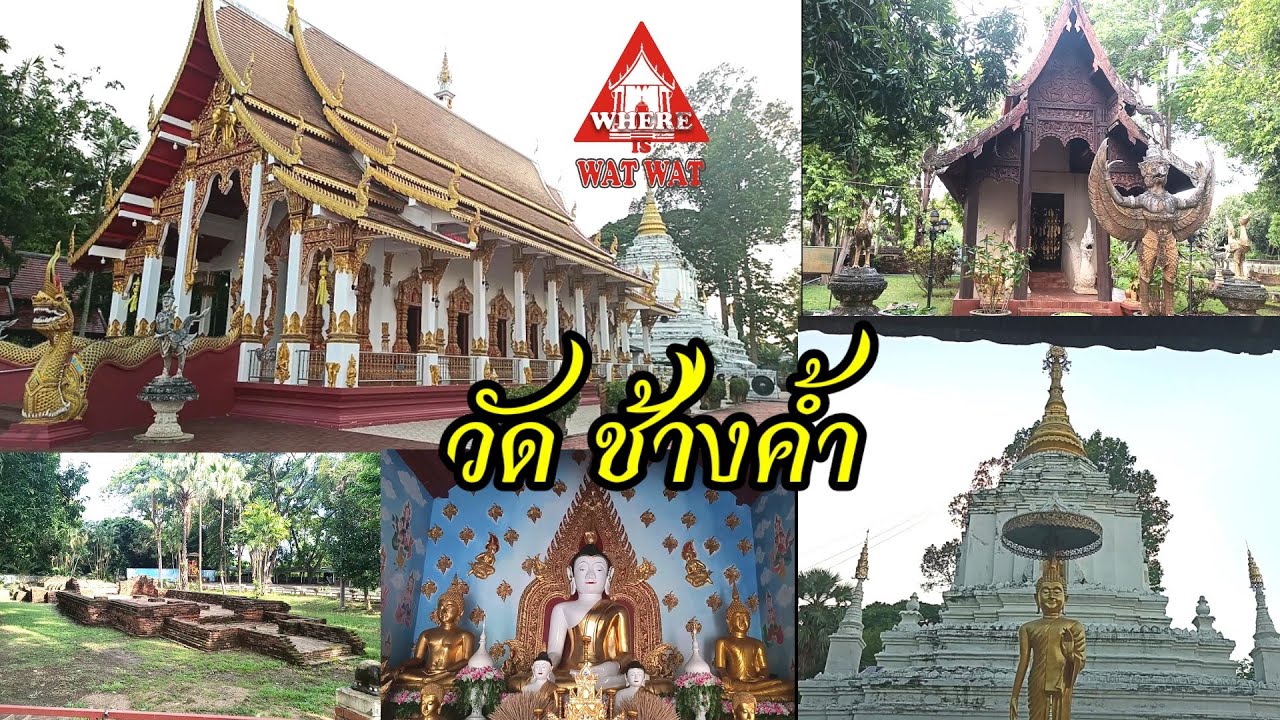
Key places to see at Wat Chang Kham include the relic chedi, Kan Thom Viharn, Ho Phra Chedi Chao Mangrai, ancient Bodhi tree, seated bronze Buddha image, excavated foundations, and the surrounding temple grounds. Visitors should allow enough time to observe each area. Some parts tell the story of King Mangrai, some reveal archaeological evidence, and others show the continuing faith of the community.
Wat Chang Kham is suitable for travelers interested in Lanna history, archaeology, Hariphunchai culture, Wiang Kum Kam, King Mangrai, and old temples around Chiang Mai. Families and elderly visitors can come for a peaceful merit-making visit, while history-focused travelers should study the archaeological remains and nearby monuments in detail. Photographers will find meaningful scenes in the combination of viharn, chedi, Bodhi tree, and ancient-city atmosphere.
A good cultural route begins at Wat Chang Kham and continues to the Wiang Kum Kam Information Center, Wat Chedi Liam, Wat That Khao, Wat E-Kang, Wat Pu Pia, Wat Kum Kam, Wat Hua Nong, and the Phaya Mangrai ancient monument group. This route helps visitors understand Wiang Kum Kam as a whole, including active temples, deserted ruins, ancient foundations, and historical interpretation sites.
Getting There is easiest by private car, rental car, motorbike, taxi, or ride-hailing service from Chiang Mai city. Travel south toward Saraphi District, enter Tha Wang Tan Subdistrict, and continue into the Wiang Kum Kam area and Ban Chang Kham. The temple is close to several ancient monuments. Visitors who want a structured itinerary can start at the Wiang Kum Kam Information Center and continue to Wat Chang Kham and other nearby sites.
Visitors without their own vehicle should arrange a return trip or hire transport for several hours because the monuments of Wiang Kum Kam are spread across several community areas. Although many sites are close to one another, traveling by vehicle is more practical in the heat of the day. Horse-cart and tram routes in the Wiang Kum Kam area are also suitable for visitors who prefer a slower cultural experience.
The best time to visit is in the morning or late afternoon. Morning light helps reveal details of the archaeological remains, while late afternoon offers softer light for photography and a calmer atmosphere. Visitors who prefer a quiet experience should choose a weekday outside major Buddhist events.
Visitors should follow standard temple and archaeological-site etiquette: dress modestly, speak quietly, do not climb on ancient remains, do not touch Buddha images or ancient stucco, remove shoes where required, avoid disturbing ceremonies, and respect monks and local residents. Wat Chang Kham is both a sacred temple and an important archaeological site, so careful behavior helps preserve the heritage of Wiang Kum Kam.
In summary, Wat Chang Kham, or Wat Kan Thom Kumkam Phirom, is one of the most important temples in Tha Wang Tan Subdistrict, Saraphi District, Chiang Mai. It is a key site in Wiang Kum Kam, preserving a relic chedi, a bronze Buddha image linked with King Mangrai, the ancient Sri Maha Bodhi tree, Kan Thom Viharn, Ho Phra Chedi Chao Mangrai, and excavated archaeological remains. It is an essential destination for travelers who want to understand Chiang Mai’s deeper Lanna history and experience a living temple within an ancient city landscape.
| Name | Wat Chang Kham |
| Official / Alternative Names | Wat Kan Thom Kumkam Phirom, Wat Kan Thom |
| Location | Ban Chang Kham, Village No. 11, Tha Wang Tan Subdistrict, Saraphi District, Chiang Mai Province |
| Address | No. 60, Village No. 11, Tha Wang Tan Subdistrict, Saraphi District, Chiang Mai 50140, Thailand |
| Coordinates | 18.74758, 99.00189 |
| Temple Type | Local Buddhist temple under the Mahanikaya sect and an important archaeological site in Wiang Kum Kam |
| Temple Code | 350191002 |
| Area | 9 rai, 3 ngan, 30 square wah |
| Highlights | Relic chedi, seated bronze Buddha image linked with King Mangrai, ancient Sri Maha Bodhi tree, Kan Thom Viharn, and Ho Phra Chedi Chao Mangrai |
| History | Associated with Wiang Kum Kam and King Mangrai; local traditions say King Mangrai commissioned the craftsman Kan Thom to build a viharn and Buddha images at this site |
| Key Historical Figures | King Mangrai Craftsman Kan Thom Maha Kassapa and 5 senior monks in the temple’s foundation tradition |
| Community Context | Located in Ban Chang Kham within Wiang Kum Kam, an ancient Ping River settlement connected with the early development of Lanna and Chiang Mai history |
| Archaeological Features | Excavated remains of a viharn, chedi, rear mandapa, Hariphunchai-style votive tablets, Mon inscriptions, Fak Kham inscriptions, Hariphunchai-style gold-covered Buddha image fragment, pottery, Lanna silver currency, and related artifacts |
| Important Zones And Structures | Relic Chedi Kan Thom Viharn Ho Phra Chedi Chao Mangrai Rear Mandapa Ancient Viharn Foundation Ancient Sri Maha Bodhi Tree Temple Grounds And Community Religious Activity Area |
| Sacred Objects | Relic chedi, seated bronze Buddha image linked with King Mangrai, and important Buddha images within the temple compound |
| Important Ceremonies | Kathin, robe-offering events, Buddhist Lent, the end of Lent, Buddhist holy days, memorial merit-making, and devotional activities related to the ancient Bodhi tree |
| Travel Information | Accessible from Chiang Mai city toward Saraphi District, then Tha Wang Tan Subdistrict and Wiang Kum Kam; best reached by private car, rental car, motorbike, taxi, or ride-hailing service |
| Current Status | Open as an active community temple, tourist attraction, and historical learning site within Wiang Kum Kam |
| Open Days | Daily |
| Opening Hours | 08.00 – 17.00 |
| Abbot / Caretaker | Phra Athikan Weeradech Santikaro |
| Nearby Tourist Attractions | 1. Wat E-Kang, about 0.5 km 2. Wiang Kum Kam Information Center, about 1 km 3. Wat Chedi Liam, about 1 km 4. Wat That Khao, about 1.5 km 5. Wat Pu Pia, about 2 km 6. Wat Hua Nong, about 2 km 7. Chiang Mai–Lamphun Rubber Tree Road, about 6 km |
| Nearby Restaurants | 1. The Pagoda Café, about 2 km, Tel. 061-410-4435 2. Kaffeinecoffee Wiang Kum Kam, about 2 km, Tel. 080-724-5664 3. Kuai Tiao Ruea Rim Ping Pa Daet Branch, about 4 km, Tel. 093-510-1123 4. Baan Rimnam Restaurant Chiang Mai, about 5 km, Tel. 053-272-968 5. Paak Dang Riverside Restaurant, about 6 km, Tel. 094-994-9353 |
| Nearby Accommodations | 1. De Wiangkumkam, about 0.5 km, Tel. 094-471-0117 2. Wiang Kum Kam Resort, about 1 km, Tel. 097-949-4227 3. Maraya Hotel & Resort, about 2 km, Tel. 053-812-121 4. The Adventure Hotel Chiang Mai, about 5 km, Tel. 053-802-444, 090-330-0740, 080-350-3024 5. Chiang Mai Garden Bungalows, about 6 km, Tel. 083-272-6681 |
Frequently Asked Questions (FAQ)
Q: Where is Wat Chang Kham located?
A: Wat Chang Kham is located at No. 60, Village No. 11, Tha Wang Tan Subdistrict, Saraphi District, Chiang Mai Province 50140, within the Wiang Kum Kam area.
Q: What are the opening days and hours of Wat Chang Kham?
A: The temple is open daily from 08.00 to 17.00.
Q: What is the official name of Wat Chang Kham?
A: The official name is Wat Kan Thom Kumkam Phirom, and it is also known as Wat Kan Thom.
Q: Why is Wat Chang Kham important?
A: Wat Chang Kham is an important sacred site in Wiang Kum Kam, with a relic chedi, a seated bronze Buddha image linked with King Mangrai, an ancient Sri Maha Bodhi tree, and archaeological remains connected with early Lanna history.
Q: What should visitors see at Wat Chang Kham?
A: Key highlights include the relic chedi, Kan Thom Viharn, Ho Phra Chedi Chao Mangrai, the ancient Bodhi tree, the bronze Buddha image, excavated foundations, and the wider Wiang Kum Kam community setting.
Q: How is Wat Chang Kham connected with King Mangrai?
A: Local tradition says King Mangrai commissioned the craftsman Kan Thom to build a viharn and Buddha images at this site during the Wiang Kum Kam period.
Q: What nearby places can be visited with Wat Chang Kham?
A: Nearby places include the Wiang Kum Kam Information Center, Wat Chedi Liam, Wat That Khao, Wat E-Kang, Wat Pu Pia, Wat Hua Nong, and the Chiang Mai–Lamphun rubber tree road.
Q: How can travelers get to Wat Chang Kham?
A: The easiest way is to travel from Chiang Mai city toward Saraphi District, then continue into Tha Wang Tan Subdistrict and Wiang Kum Kam by private car, rental car, motorbike, taxi, or ride-hailing service.
 Category: ●Places of Worship
 Group: ●Temple
Last Update : 2 MonthAgo
 Last Update : 2 MonthAgo
 Click to Access the Navigation Map GPS
Wat Chang Kham Map
Recommend

 Muang Chiang Mai(121)Chom Thong(47)Mae Chaem(25)Chiang Dao(33)Doi Saket(68)Mae Taeng(85)Mae Rim(69)Samoeng(29)Fang(71)Mae Ai(59)Phrao(70)San Pa Tong(103)San Kamphaeng(66)San Sai(73)Hang Dong(73)Hot(32)Doi Tao(22)Omkoi(11)Saraphi(74)Wiang Haeng(15)Chai Prakan(28)Mae Wang(32)Mae On(22)Doi Lo(33)Galyani Vadhana(1)


