
lovethailand home >North Travel Attractions >Chiang Mai Travel Attractions >Saraphi >Don Kaeo > Wat Tamnak (Don Kaew)
TL;DR: Wat Tamnak (Don Kaew) is located at Ban Tamnak, Village No. 2, Don Kaew Subdistrict, Saraphi District, Chiang Mai Province, open Daily, hours 08.00 – 17.00.

Wat Tamnak (Don Kaew)
Open Days: Daily
Opening Hours: 08.00 – 17.00
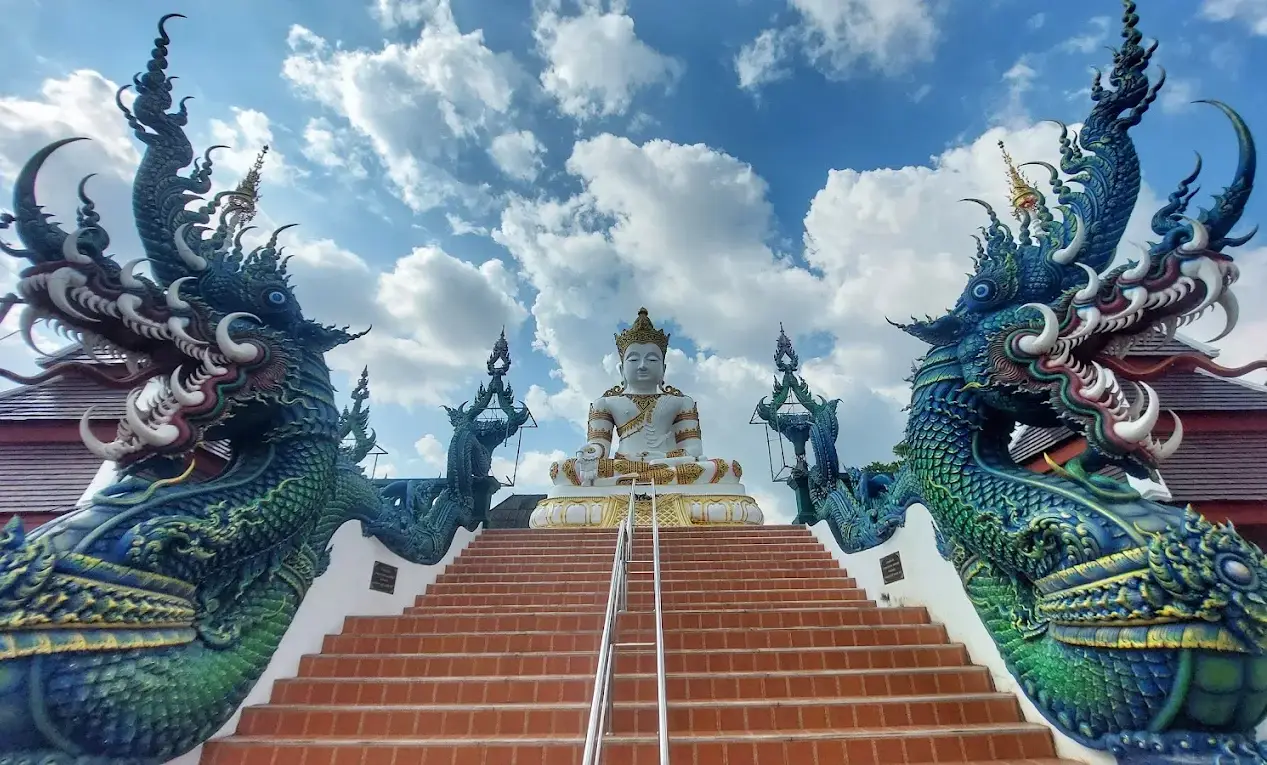
Wat Tamnak (Don Kaew) is located at No. 29, Village No. 2, Ban Tamnak, Don Kaew Subdistrict, Saraphi District, Chiang Mai Province 50140. It is a local Buddhist temple under the Mahanikaya sect. The temple covers 4 rai, 1 ngan, and 85 square wah and was officially established in B.E. 2340. Wat Tamnak is an old community temple of Ban Tamnak and is closely connected with the historical memory of Phraya Kawila, one of the most important figures in Lanna history.
The value of Wat Tamnak lies in the way its name connects the temple, the village, and local history. The word “tamnak” means a royal or noble residence. This corresponds with the local history that Phraya Kawila once led his army from Pa Sang District in Lamphun toward Chiang Mai and reached the area now known as Ban Tamnak. He found the area peaceful and shaded by mixed woodland, so he ordered Chao Pho Phraya Sitthi, his military officer, together with attendants and officials, to clear part of the forest and build a temporary residence for rest and work.
This story makes Wat Tamnak more than an ordinary village temple. It links the site with the restoration period of Chiang Mai and the wider historical movement of Lanna. Phraya Kawila played an important role in reviving Chiang Mai after a long period of political change and warfare. His temporary stay at this location became the foundation of the local memory preserved in the names Wat Tamnak and Ban Tamnak.
During his stay, Phraya Kawila is said to have told Phraya Sitthi that this area would prosper in the future and that a village and temple would arise here. He then initiated the construction of one Buddha image in the Maravijaya posture for worship and had a viharn built to enshrine it. The temple was named Wat Tamnak, and the name later became attached to the surrounding community as Ban Tamnak.
The Buddha image in the Maravijaya posture has important religious meaning. This posture represents the Buddha’s victory over Mara before enlightenment. It symbolizes firmness, inner strength, and triumph over obstacles. Because the origin story of Wat Tamnak is connected with the creation of this image, it remains central to the temple’s identity and to the faith of the local community.
Wat Tamnak was officially established in B.E. 2340, giving it more than 200 years of history. This long history makes the temple an important marker of settlement and community development in Don Kaew Subdistrict. Although the surrounding area has changed from forest and agricultural land into a more connected residential community, the temple continues to preserve the older roots of Ban Tamnak through faith, local traditions, and community memory.
Don Kaew Subdistrict covers about 6.92 square kilometers, or approximately 4,325 rai. Its landscape is generally lowland and is suitable for settlement and agriculture. Irrigation channels, a main irrigation canal, and the Ping River are important elements of the local environment. Wat Tamnak therefore stands within a community landscape shaped by water, roads, farmland, and everyday village life.
Don Kaew Subdistrict consists of 7 villages: Ban Tamnak Nuea, Ban Tamnak Tai, Ban San Ton Kok, Ban Don Kaew Village No. 4, Ban Don Kaew Village No. 5, Ban Nam Cho, and Ban San Klang. Wat Tamnak is located in Village No. 2, Ban Tamnak Tai, and is one of the 5 main Buddhist temples of Don Kaew Subdistrict, together with Wat San Ton Kok, Wat Don Kaew, Wat Nam Cho, and Wat San Klang. This pattern reflects the traditional northern Thai village structure in which temples serve as spiritual and social centers for local communities.
The temple land covers 4 rai, 1 ngan, and 85 square wah. This is an appropriate size for a local community temple, allowing the temple to support worship, merit-making, ceremonies, and village activities. Although full current architectural details for every structure are not publicly confirmed, the temple’s historical core is clear: the origin story centers on the construction of the Maravijaya Buddha image and the viharn that sheltered it.
The best way to appreciate Wat Tamnak is to understand the atmosphere of a living village temple. Visitors should observe the relationship between the temple and Ban Tamnak, pay respect within the temple compound, and reflect on the story of Phraya Kawila. The temple’s value does not depend on monumental architecture or tourism facilities. Its importance lies in its history, its name, and its continuing role in community life.
The abbot of Wat Tamnak is Phra Khru Kamon Wihankan Kamalo. In a village temple, the abbot’s role extends beyond the temple compound. The abbot supports Buddhist practice, conducts ceremonies, coordinates with local residents, and helps preserve the temple as a shared spiritual space. Wat Tamnak therefore remains a living community temple rather than a purely historical site.
Buddhist activities at Wat Tamnak follow the rhythm of local religious life. These include Buddhist holy days, Buddhist Lent, the end of Lent, Kathin, robe-offering events, memorial merit-making, and community ceremonies. Don Kaew Subdistrict also preserves local traditions such as Fon Phi Meng, the Song Satong ritual during the Northern Thai New Year period, the fourth lunar month Peng new rice merit-making tradition, the ninth northern lunar month tradition, candle processions for Buddhist Lent, and Loy Krathong.
These traditions show that temples in Don Kaew Subdistrict are not only places of worship but also centers of local culture, memory, and cooperation. During merit-making events, residents gather to prepare the temple grounds, offer food, listen to sermons, and take part in shared rituals. Wat Tamnak therefore supports both religious practice and community cohesion.
The main highlight of Wat Tamnak is its connection with Phraya Kawila and the naming of Ban Tamnak. The story of the temporary residence, the Maravijaya Buddha image, and the prediction that the area would prosper gives the temple a strong historical identity. For travelers interested in Lanna history and local Buddhist communities, Wat Tamnak offers a quiet but meaningful perspective on Saraphi’s cultural landscape.
Wat Tamnak is suitable for travelers who prefer peaceful community temples, old temples in Chiang Mai, Lanna history, and cultural routes outside the main tourist circuit of Chiang Mai city. Visitors should take time to understand the temple through its name, setting, and relationship with the village. Its appeal lies in context rather than spectacle.
A cultural route in Don Kaew Subdistrict can begin at Wat Tamnak and continue to Wat San Ton Kok, Wat Don Kaew, Wat Nam Cho, and Wat San Klang. Wat Nam Cho is promoted by the local municipality as a temple attraction, while Wat Don Kaew preserves its own story of a sacred village gem. Visiting these temples together gives travelers a broader view of Don Kaew’s temple network and local Buddhist culture.
Wat Tamnak can also be combined with Wiang Kum Kam, one of the most important ancient sites in the Chiang Mai area, and the Chiang Mai–Lamphun rubber tree road in Saraphi. A half-day route can begin at Wat Tamnak, continue to nearby temples in Don Kaew, and end at Wiang Kum Kam or a local restaurant. A full-day route can extend into neighboring subdistricts and other village temples in Saraphi.
Getting There is easiest by private car, rental car, motorbike, taxi, or ride-hailing service from Chiang Mai city. Travel south toward Saraphi District, enter Don Kaew Subdistrict, and continue to Ban Tamnak, Village No. 2. The temple is located within a community area, so visitors without their own vehicle should arrange a return trip or hire a vehicle for several hours if they plan to visit nearby temples, restaurants, and accommodations.
The best time to visit is in the morning or late afternoon when the weather is more comfortable and the temple atmosphere is peaceful. During Buddhist festivals such as Kathin, robe-offering events, Buddhist Lent, and local traditions, the temple may become livelier with community participation. Visitors seeking a quiet visit should choose a weekday outside major ceremonies.
Visitors should follow standard Thai temple etiquette: dress modestly, speak softly, remove shoes where required, avoid entering private monastic areas, do not disturb ceremonies, and ask permission before taking close-up photos of people or religious activities. Respectful behavior is especially important because this is an active village temple and a living religious space for the local community.
In summary, Wat Tamnak (Don Kaew) is a historic village temple in Ban Tamnak, Don Kaew Subdistrict, Saraphi District, Chiang Mai. Officially established in B.E. 2340, the temple is connected with Phraya Kawila, the building of a temporary residence, the creation of a Maravijaya Buddha image, and the origin of the name Ban Tamnak. It is a meaningful stop for travelers who want to understand local Lanna Buddhism, village history, and the quieter cultural side of Saraphi.
| Name | Wat Tamnak (Don Kaew) |
| Location | Ban Tamnak, Village No. 2, Don Kaew Subdistrict, Saraphi District, Chiang Mai Province |
| Address | No. 29, Village No. 2, Ban Tamnak, Don Kaew Subdistrict, Saraphi District, Chiang Mai 50140, Thailand |
| Temple Type | Local Buddhist temple under the Mahanikaya sect |
| Temple Code | 350190902 |
| Area | 4 rai, 1 ngan, 85 square wah |
| Highlights | Historic community temple of Ban Tamnak, connected with Phraya Kawila, his temporary residence, and the creation of a Maravijaya Buddha image |
| History | Officially established as a temple in B.E. 2340 and associated with Phraya Kawila’s movement from Pa Sang toward Chiang Mai |
| Community Context | Located in Ban Tamnak, Village No. 2, one of the 7 villages of Don Kaew Subdistrict, a lowland area connected with irrigation channels, agriculture, and settlement |
| Name Origin | The temple and village name are connected with the temporary residence of Phraya Kawila during his movement toward Chiang Mai |
| Distinctive Features | A local Lanna village temple linking Phraya Kawila, Ban Tamnak, a Maravijaya Buddha image, and the spiritual life of the community |
| Sacred Object | Maravijaya Buddha image connected with the temple’s foundation story |
| Important Structures | Viharn enshrining the Maravijaya Buddha image according to the temple’s foundation history, and temple grounds used for community Buddhist activities |
| Travel Information | Accessible from Chiang Mai city toward Saraphi District, then Don Kaew Subdistrict and Ban Tamnak; best reached by private car, rental car, motorbike, taxi, or ride-hailing service |
| Current Status | Open as an active community temple used for Buddhist ceremonies, merit-making, and local village activities |
| Open Days | Daily |
| Opening Hours | 08.00 – 17.00 |
| Abbot / Caretaker | Phra Khru Kamon Wihankan Kamalo |
| Nearby Tourist Attractions | 1. Wat Don Kaew, about 2 km 2. Wat San Ton Kok, about 3 km 3. Wat Nam Cho, about 4 km 4. Wat San Klang, about 5 km 5. Wiang Kum Kam, about 8 km 6. Chiang Mai–Lamphun Rubber Tree Road, about 10 km |
| Nearby Restaurants | 1. Tokyo & Fruit Smoothie Tamnak, about 1 km, Tel. 062-958-5669 2. Baan Ta Tamnak Chiang Mai, about 1 km, Tel. 086-688-8066, 089-782-6985, 090-258-9665 3. Wae Nae Saraphi Don Kaew, about 2 km, Tel. 093-442-8253 4. BBQ Na 7 Don Kaew Saraphi, about 2 km, Tel. 092-329-4508 5. Larb Ubon Don Kaew, about 3 km, Tel. 088-251-8742, 089-997-2073, 095-453-6800 |
| Nearby Accommodations | 1. Chiang Mai Garden Bungalows, about 2 km, Tel. 083-272-6681 2. Parichai Home Stay, about 3 km 3. Lang Suan Resort Saraphi, about 3 km, Tel. 093-469-3555 4. Patarada Boutique House, about 4 km, Tel. 081-885-2513 5. Relax Garden House, about 5 km, Tel. 090-326-6108 |
Frequently Asked Questions (FAQ)
Q: Where is Wat Tamnak (Don Kaew) located?
A: Wat Tamnak is located at No. 29, Village No. 2, Ban Tamnak, Don Kaew Subdistrict, Saraphi District, Chiang Mai Province 50140.
Q: What are the opening days and hours of Wat Tamnak?
A: The temple is open daily from 08.00 to 17.00.
Q: Why is Wat Tamnak historically important?
A: Wat Tamnak was officially established in B.E. 2340 and is connected with Phraya Kawila, who is said to have built a temporary residence in the area while moving toward Chiang Mai.
Q: What does the name Wat Tamnak mean?
A: The name is connected with the temporary residence, or tamnak, of Phraya Kawila, and the name later became associated with both the temple and Ban Tamnak.
Q: What sacred object is important at Wat Tamnak?
A: The important sacred object in the temple’s foundation story is a Buddha image in the Maravijaya posture built for worship under the direction of Phraya Kawila.
Q: What is the main highlight of Wat Tamnak?
A: Its highlight is its identity as an old Lanna village temple connected with Phraya Kawila, Ban Tamnak, a Maravijaya Buddha image, and the spiritual life of the local community.
Q: How can travelers get to Wat Tamnak?
A: The easiest way is to travel from Chiang Mai city toward Saraphi District, then continue into Don Kaew Subdistrict and Ban Tamnak by private car, rental car, motorbike, taxi, or ride-hailing service.
Q: What nearby places can be visited with Wat Tamnak?
A: Nearby places include Wat Don Kaew, Wat San Ton Kok, Wat Nam Cho, Wat San Klang, Wiang Kum Kam, and the Chiang Mai–Lamphun rubber tree road.
 Category: ●Places of Worship
 Group: ●Temple
Last Update : 1 MonthAgo
 Last Update : 1 MonthAgo
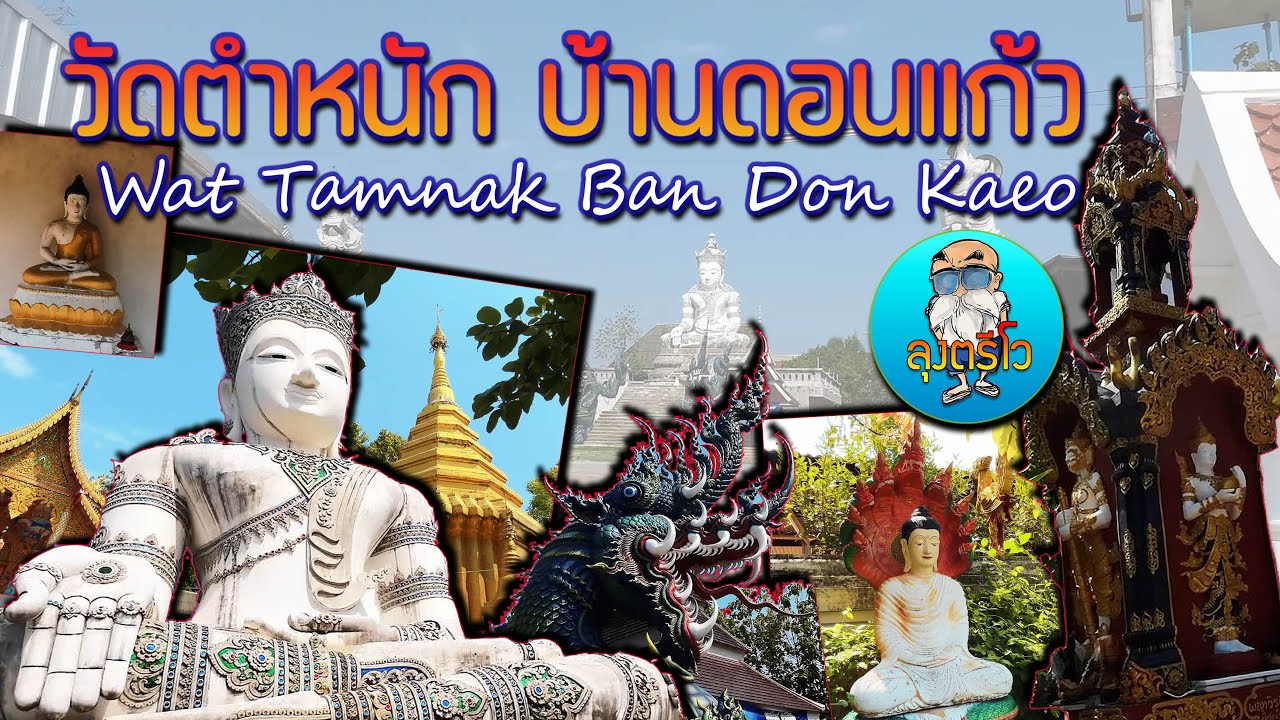
 Click to Access the Navigation Map GPS
Wat Tamnak (Don Kaew) Map
Recommend

 Muang Chiang Mai(121)Chom Thong(47)Mae Chaem(25)Chiang Dao(33)Doi Saket(68)Mae Taeng(85)Mae Rim(69)Samoeng(29)Fang(71)Mae Ai(59)Phrao(70)San Pa Tong(103)San Kamphaeng(66)San Sai(73)Hang Dong(73)Hot(32)Doi Tao(22)Omkoi(11)Saraphi(74)Wiang Haeng(15)Chai Prakan(28)Mae Wang(32)Mae On(22)Doi Lo(33)Galyani Vadhana(1)


