
lovethailand home >North Travel Attractions >Chiang Mai Travel Attractions >Saraphi >Chai Sathan > Wat Ton Chok Luang
TL;DR: Wat Ton Chok Luang is located at Ban Ton Chok Luang, Village No. 1, Chai Sathan Subdistrict, Saraphi District, Chiang Mai Province, open Daily, hours 08.00 – 17.00.

Wat Ton Chok Luang
Open Days: Daily
Opening Hours: 08.00 – 17.00
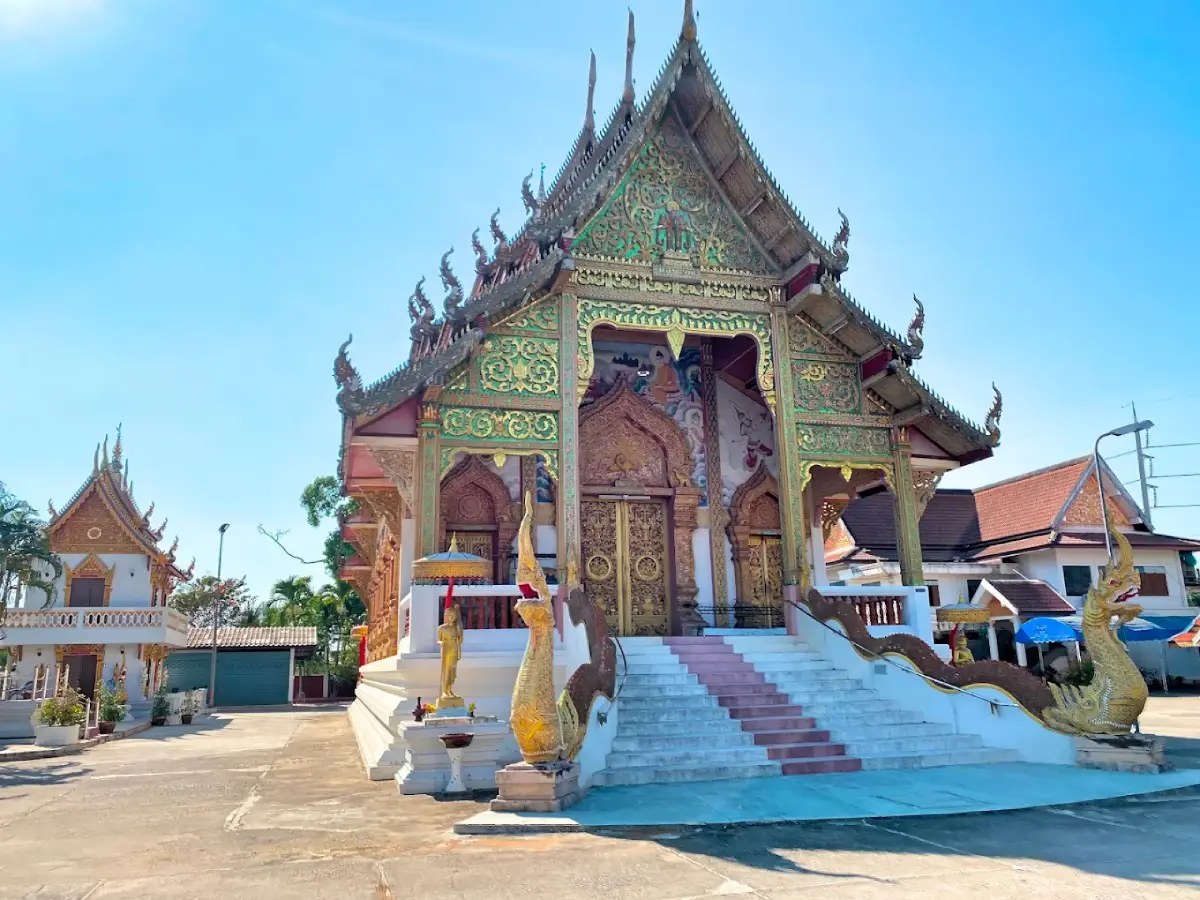
Wat Ton Chok Luang is located at No. 143, Village No. 1, Ban Ton Chok Luang, Chai Sathan Subdistrict, Saraphi District, Chiang Mai Province. It is a local Buddhist temple under the Mahanikaya sect and an important spiritual center of Ban Ton Chok Luang. Officially established in B.E. 2375, the temple is a meaningful stop for travelers who want to visit a quiet community temple, make merit, learn about local Lanna culture, and connect the trip with nearby cultural sites in Saraphi such as Wat Si Song Mueang, Wat Chai Sathan, Wat Nantararam, Wat Phothi Mongkhon, the Chiang Mai–Lamphun rubber tree road, and Wiang Kum Kam.
Wat Ton Chok Luang is closely tied to Ban Ton Chok Luang, Village No. 1 of Chai Sathan Subdistrict. The temple has served as a spiritual and social center of the village for generations. Its establishment in B.E. 2375 gives it a history of nearly 200 years, making it one of the older community temples in the Saraphi area. The temple reflects the long relationship between Buddhism, village settlement, agricultural life, and local identity in southern Chiang Mai.
The name “Ton Chok Luang” is connected with the local village name. Community history explains that Ban Ton Chok Luang was named after the ton chok tree, also known locally as a sacred or auspicious tree that once grew in the area. The word “luang” suggests size, importance, or a distinguished form of the tree. The temple name therefore preserves both the village identity and the local belief in auspicious natural elements.
Chai Sathan Subdistrict consists of 8 villages: Ban Ton Chok Luang, Ban Si Song Mueang, Ban Si Bun Rueang, Ban Nantararam, Ban Yuam, Ban Phothi Mongkhon, Ban Chiang Khang, and Ban Ton Yang Luang. Wat Ton Chok Luang stands in the first village of the subdistrict and belongs to a wider network of community temples that continue to shape religious and social life in this part of Saraphi.
The temple stands on 3 rai, 1 ngan, and 2 square wah of land. Its northern boundary extends approximately 27 wah to rice fields, its southern boundary approximately 42 wah to a public road, its eastern boundary approximately 51 wah to rice fields, and its western boundary approximately 35 wah to land owned by local residents. These boundaries show the character of a village temple surrounded by farmland, community roads, and residential areas.
The confirmed monastic structures at Wat Ton Chok Luang include a viharn, a sala bat, and monks’ residences. The viharn is the main worship hall used for paying respect to Buddha images, listening to sermons, and holding Buddhist activities. The sala bat is connected with merit-making and food offerings, while the monks’ residences support the daily life of the monastic community.
Wat Ton Chok Luang was founded through the cooperation of Khruba Kham Ban Aphiwong and local residents in B.E. 2375. This pattern is typical of many Lanna village temples, where a temple is not created by religious authority alone but by the shared faith of monks and villagers. The temple became a place for worship, merit-making, moral learning, and community gatherings.
Historical records mention several past abbots of Wat Ton Chok Luang, including Khruba Kham Ban Aphiwong, Phra Athikan Phromma Techapanyo, Phra Athikan In Chai Katsaro, Phra Athikan Intha Intawanno, and Phra Athikan In Ban Ramumthinno. These names reflect the continuity of temple administration and the role of monks in preserving Buddhist practice in Ban Ton Chok Luang over time.
Current abbot information differs across sources. The user-provided source and the LoveThailand page list Phra Khru Mongkhon Thammathin Thammathinno, while a local municipal development document and current temple activity listings identify Phra Chinphong Chinwangso. This article uses the more recent local administrative and activity-based information, listing Phra Chinphong Chinwangso as the current abbot or caretaker of the temple.
The atmosphere of Wat Ton Chok Luang is calm, modest, and deeply connected with village life. It is not a large commercial tourist temple. Its value lies in its identity as a functioning local Lanna temple where villagers still make merit, join Buddhist ceremonies, and use the temple grounds for community activities. Visitors can observe the relationship between the viharn, the open temple grounds, monks’ quarters, village roads, and the surrounding agricultural landscape.
The main highlight of Wat Ton Chok Luang is its identity as an old community temple whose name is inseparable from the village. For travelers interested in local culture, the temple shows how Lanna place names often grow from trees, landscapes, local beliefs, and community memory. It offers a quieter and more grounded experience than major urban temples in Chiang Mai.
Wat Ton Chok Luang also continues to function as a social space. Local records show the temple grounds being used for village meetings and community participation activities, while recent temple activity pages mention Kathin merit-making and public welfare work. These activities show that the temple is still active and remains a living center of Ban Ton Chok Luang.
Annual Buddhist activities at Wat Ton Chok Luang include observances related to Buddhist holy days, Buddhist Lent, the end of Lent, Kathin, robe offerings, memorial merit-making, and other village ceremonies. In a Lanna community, these occasions are more than rituals. They bring residents together, reinforce social bonds, and pass local traditions from one generation to the next.
Visitors should begin with the viharn, then observe the sala bat, monks’ residences, and the temple grounds. The temple is best appreciated slowly and respectfully. Its value does not come from monumental architecture, but from its history, quiet atmosphere, and continuing role in community life. Visitors should dress politely, speak softly, and avoid disturbing monks or local residents during ceremonies.
Wat Ton Chok Luang is suitable for travelers interested in local temples, Lanna village culture, Buddhist community life, and slow cultural routes in Saraphi District. It is not designed as a commercial tourist attraction. Instead, it is best for those who want to understand how a village temple works as a spiritual center, social gathering place, and cultural landmark.
A half-day route can begin at Wat Ton Chok Luang in the morning, then continue to Wat Si Song Mueang, Wat Chai Sathan, Wat Nantararam, or Wat Phothi Mongkhon. Travelers can also extend the trip to the Chiang Mai–Lamphun rubber tree road and Wiang Kum Kam. This route gives a strong overview of local temples, village history, and the cultural landscape of southern Chiang Mai.
Getting There is easiest by private car, rental car, motorbike, taxi, or ride-hailing service from Chiang Mai city. Travel south toward Saraphi District, enter Chai Sathan Subdistrict, and continue to Ban Ton Chok Luang, Village No. 1. The temple is located within a community area, so travelers who do not drive should arrange a return trip or hire a vehicle for several hours if they plan to visit multiple nearby places.
The best time to visit is in the morning or late afternoon when the weather is more comfortable and the temple atmosphere is quiet. During Buddhist festivals such as Kathin, robe-offering events, Buddhist Lent, and the end of Lent, visitors may see a livelier community atmosphere. Those who prefer a peaceful visit should choose a weekday outside major ceremonies.
Visitors should follow standard etiquette for Thai temples: dress modestly, remove shoes where required, avoid loud noise, do not enter private monastic areas, and ask before taking close-up photos of people or ceremonies. Respectful behavior allows visitors to experience the temple without disrupting local religious life.
In summary, Wat Ton Chok Luang is a historic village temple in Ban Ton Chok Luang, Chai Sathan Subdistrict, Saraphi District, Chiang Mai. Established in B.E. 2375, it has confirmed monastic structures including a viharn, sala bat, and monks’ residences. Its name, history, and continuing community role make it a meaningful stop for travelers who want to understand local Lanna Buddhism and the quieter cultural side of Saraphi.
| Name | Wat Ton Chok Luang |
| Location | Ban Ton Chok Luang, Village No. 1, Chai Sathan Subdistrict, Saraphi District, Chiang Mai Province |
| Address | No. 143, Village No. 1, Ban Ton Chok Luang, Chai Sathan Subdistrict, Saraphi District, Chiang Mai 50140, Thailand |
| Coordinates | 18.727448, 99.045441 |
| Temple Type | Local Buddhist temple under the Mahanikaya sect |
| Area | 3 rai, 1 ngan, 2 square wah |
| Boundaries | North: about 27 wah, adjoining rice fields South: about 42 wah, adjoining a public road East: about 51 wah, adjoining rice fields West: about 35 wah, adjoining local residents’ garden land |
| Highlights | Historic community temple of Ban Ton Chok Luang, established in B.E. 2375 and still serving as a spiritual center of the village |
| History | Officially established as a temple in B.E. 2375 by Khruba Kham Ban Aphiwong together with local residents |
| Name Origin | Connected with Ban Ton Chok Luang, named after the auspicious ton chok tree once found in the area |
| Distinctive Features | A quiet local Lanna temple connected with village faith, community activities, and the cultural identity of Chai Sathan Subdistrict |
| Important Structures | Viharn, sala bat, and monks’ residences |
| Travel Information | Accessible from Chiang Mai city toward Saraphi District, then Chai Sathan Subdistrict and Ban Ton Chok Luang; best reached by private car, rental car, motorbike, taxi, or ride-hailing service |
| Current Status | Open as an active community temple used for Buddhist ceremonies, merit-making, and local village activities |
| Open Days | Daily |
| Opening Hours | 08.00 – 17.00 |
| Abbot / Caretaker | Phra Chinphong Chinwangso |
| Main Contact Number | 081-165-6969 |
| Nearby Tourist Attractions | 1. Suan Pu Nan Sufficiency Economy Learning Center, about 1 km 2. Wat Si Song Mueang, about 3 km 3. Wat Chai Sathan, about 4 km 4. Wat Nantararam, about 5 km 5. Wiang Kum Kam, about 10 km |
| Nearby Restaurants | 1. Chai See Bamee Kiao Ban Ton Chok, about 1 km, Tel. 080-060-0966 2. SPAghettO, about 2 km, Tel. 095-346-9511 3. 51 Café @Saraphi, about 3 km, Tel. 085-878-8220 4. Five Star Saraphi, about 3 km, Tel. 097-937-8355, 062-387-5535 5. Miracle Coffee Chai Sathan Saraphi Branch, about 4 km, Tel. 096-115-4102 |
| Nearby Accommodations | 1. Chaisathan Cottage, about 3 km, Tel. 086-856-4152 2. Bua Saree Resort, about 3 km 3. Kham Mon Lanna Resort Chiang Mai, about 6 km 4. Saku Boutique Homestay, about 7 km, Tel. 085-128-7748 5. De Wiangkumkam, about 10 km, Tel. 094-471-0117 |
Frequently Asked Questions (FAQ)
Q: Where is Wat Ton Chok Luang located?
A: Wat Ton Chok Luang is located at No. 143, Village No. 1, Ban Ton Chok Luang, Chai Sathan Subdistrict, Saraphi District, Chiang Mai Province 50140.
Q: What are the opening days and hours of Wat Ton Chok Luang?
A: The temple is open daily from 08.00 to 17.00.
Q: Why is Wat Ton Chok Luang historically important?
A: Wat Ton Chok Luang was officially established in B.E. 2375 and remains an important community temple of Ban Ton Chok Luang in Chai Sathan Subdistrict.
Q: What important structures are found at Wat Ton Chok Luang?
A: Confirmed structures include a viharn, a sala bat, and monks’ residences.
Q: What does the name Ton Chok Luang mean?
A: The name is connected with the local ton chok tree, regarded as an auspicious tree that was once found in the area and became part of the village identity.
Q: How can travelers get to Wat Ton Chok Luang?
A: The easiest way is to travel from Chiang Mai city toward Saraphi District, then continue into Chai Sathan Subdistrict and Ban Ton Chok Luang by private car, rental car, motorbike, taxi, or ride-hailing service.
Q: What nearby places can be visited with Wat Ton Chok Luang?
A: Nearby places include Suan Pu Nan, Wat Si Song Mueang, Wat Chai Sathan, Wat Nantararam, the Chiang Mai–Lamphun rubber tree road, and Wiang Kum Kam.
 Category: ●Places of Worship
 Group: ●Temple
Last Update : 2 MonthAgo
 Last Update : 2 MonthAgo
 Click to Access the Navigation Map GPS

 Muang Chiang Mai(121)Chom Thong(47)Mae Chaem(25)Chiang Dao(33)Doi Saket(68)Mae Taeng(85)Mae Rim(69)Samoeng(29)Fang(71)Mae Ai(59)Phrao(70)San Pa Tong(103)San Kamphaeng(66)San Sai(73)Hang Dong(73)Hot(32)Doi Tao(22)Omkoi(11)Saraphi(74)Wiang Haeng(15)Chai Prakan(28)Mae Wang(32)Mae On(22)Doi Lo(33)Galyani Vadhana(1)


