
lovethailand home >North Travel Attractions >Chiang Mai Travel Attractions >Saraphi >Chom Phu > Wat Phaya Chomphu
TL;DR: Wat Phaya Chomphu is located at No. 83, Moo 2, Ban Phaya Chomphu, Chomphu Subdistrict, Saraphi District, Chiang Mai Province 50140, open Daily, hours 08.00 – 17.00.

Wat Phaya Chomphu
Open Days: Daily
Opening Hours: 08.00 – 17.00
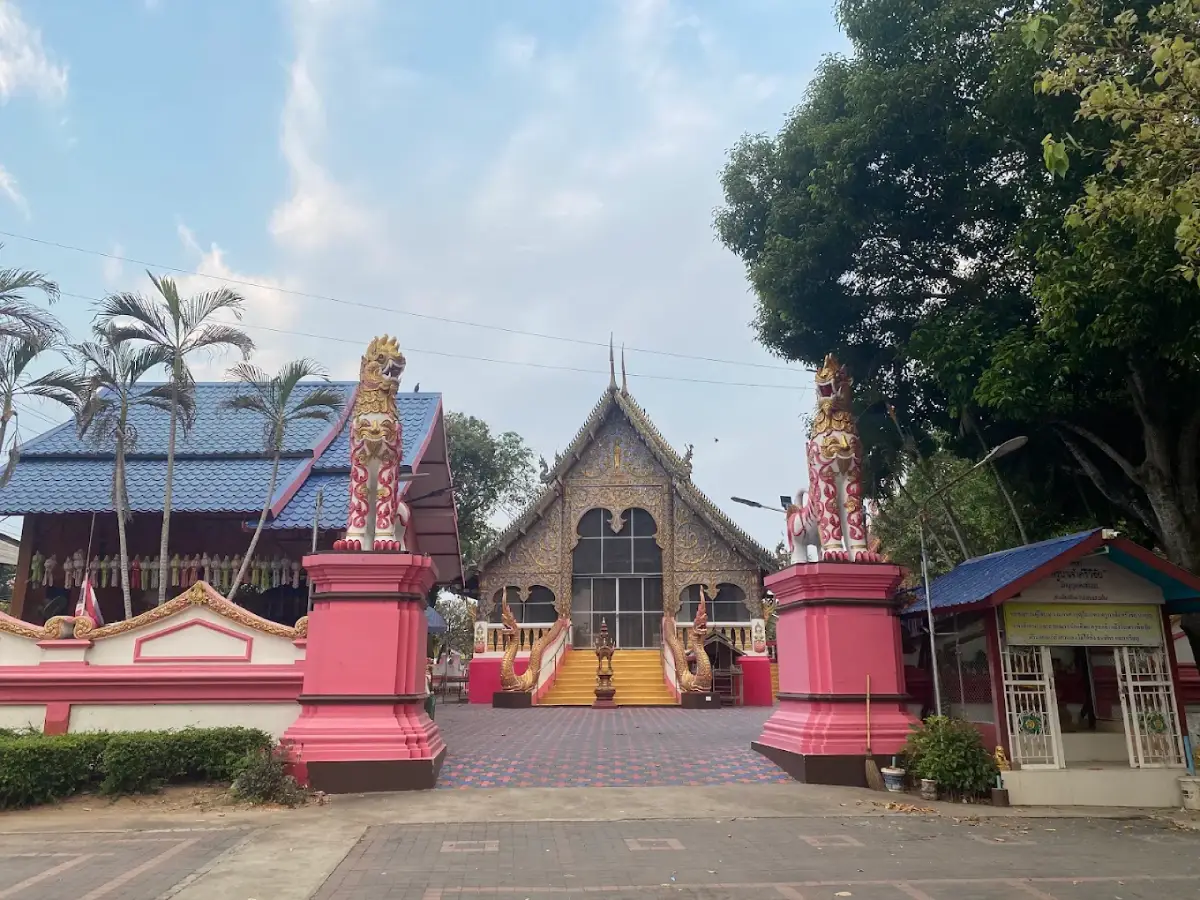
Wat Phaya Chomphu is located at No. 83, Moo 2, Ban Phaya Chomphu, Chomphu Subdistrict, Saraphi District, Chiang Mai Province 50140. It is a local Buddhist temple under the Mahanikaya sect. The temple was officially established in 1803 and received its royal consecrated boundary, or Wisungkhamsima, in 1807. The current abbot is Phra Khru Phithak Weerakhun Attawiro. Wat Phaya Chomphu is one of the most important old temples of Chomphu Subdistrict, combining Buddhist worship, local legend, temple museum collections, the Phaya Chomphu monument, and the Wang Matcha Phaya Chomphu freshwater fish sanctuary.
Wat Phaya Chomphu is suitable for visitors who want to understand Saraphi through a temple that is both a living place of worship and a community cultural landmark. Ban Phaya Chomphu is an old village in Chomphu Subdistrict. The temple stands within a landscape of village roads, a school, irrigation canals, community houses, and local religious life. It is not only a place for merit-making but also a center of memory, identity, and cultural learning for the people of Chomphu.
The history of the temple is closely connected with the story of Chao Pho Phaya Chomphu, an important figure in local memory. Local tradition tells that Phaya Chomphu and his family eventually settled in the area that became Ban Phaya Chomphu. He found an old abandoned temple where a large Buddha image in the Mara-subduing posture remained in the viharn. The site was then restored and developed as a Buddhist temple. The name Wat Phaya Chomphu therefore connects the temple with local settlement, community identity, and Buddhist devotion.
The temple’s official establishment in 1803 gives Wat Phaya Chomphu more than 220 years of history. Its Wisungkhamsima was granted in 1807, confirming the temple’s formal religious status and its ability to support important monastic ceremonies. Within Saraphi District, Wat Phaya Chomphu is significant because it helps tell the story of Chomphu Subdistrict through religion, community memory, and local cultural heritage.
The temple land covers 5 rai and 85 square wah under land title deed No. 12522. Its boundaries reflect the temple’s close relationship with the village: the north adjoins school land, the south adjoins a public road, the east adjoins a public irrigation canal, and the west adjoins a public road. The temple also has three monastic land plots totaling 1 rai and 39 square wah. This setting places the temple at the center of village movement, education, water routes, and everyday community life.
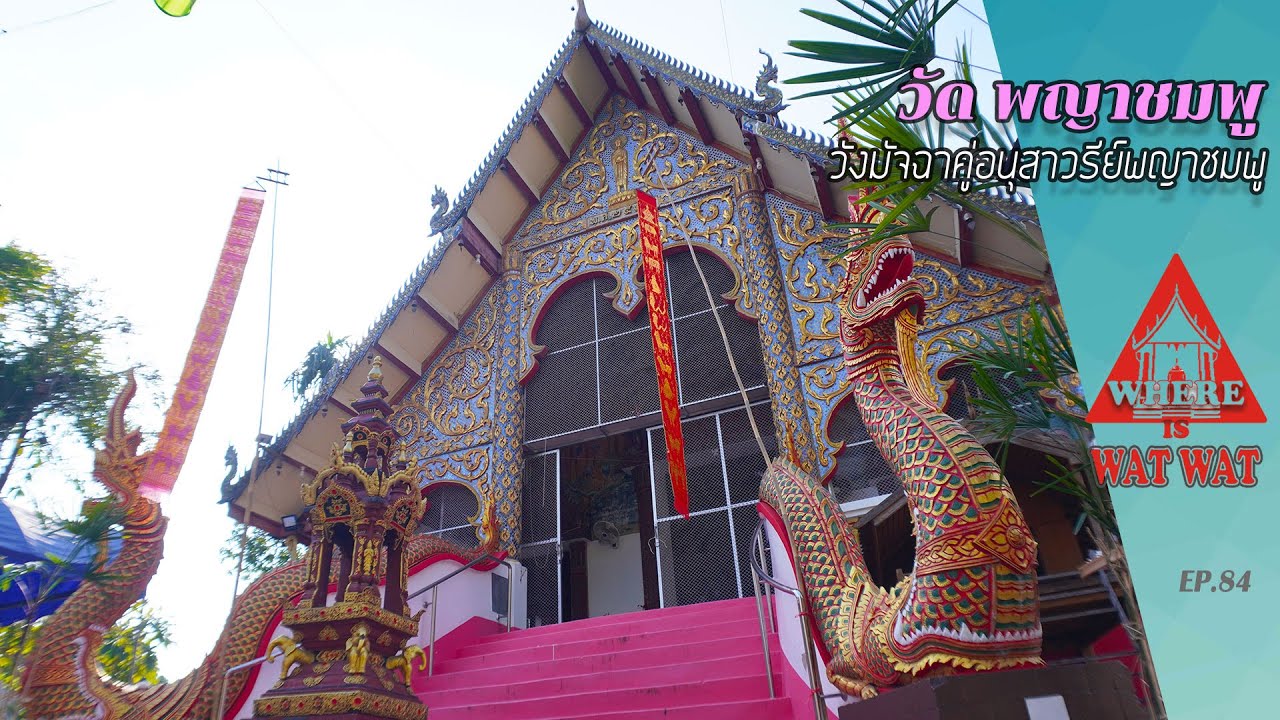
Important structures at Wat Phaya Chomphu include the ubosot, sermon hall, monks’ residences, viharn, and kitchen. The viharn is especially important because it enshrines the Buddha image in the Mara-subduing posture associated with the temple’s origin story. The ubosot supports monastic ceremonies, the sermon hall supports Dhamma listening and community gatherings, the monks’ residences support monastic life, and the kitchen supports merit-making events.
The Buddha image in the Mara-subduing posture is the main devotional focus of the temple. This posture symbolizes the Buddha’s victory over Mara and inner obstacles. Visitors should begin by paying respect in the viharn, as this image is closely tied to the temple’s history and to the faith of the community.
Wat Phaya Chomphu also preserves temple art objects and antiquities handed down through generations. The Wat Phaya Chomphu Museum displays old temple objects and cultural items. In Sala Bunmi, visitors can see old temple belongings such as image chests, roof ornaments, wooden architectural pieces, khan tok trays, buffalo-horn candle holders, and Lanna-style wooden Buddha images. Another display area in the abbot’s residence preserves objects such as an eight-sided wooden pulpit. These collections make the temple a valuable cultural learning site.
The museum gives Wat Phaya Chomphu a distinctive role beyond ordinary worship. It allows visitors to understand how temple objects, wooden craftsmanship, ritual tools, and old religious items reflect the everyday Buddhist culture of the community. These objects are not merely decorative; they are evidence of how the temple functioned in ceremonies, teaching, and village life over many generations.
The monument of Chao Pho Phaya Chomphu stands in front of the temple and is an important devotional landmark for people of Chomphu Subdistrict. Visitors often pay respect and ask for blessings. The monument connects local legend with the temple grounds, making Wat Phaya Chomphu a place where community history, ancestral respect, and Buddhism come together.
Wang Matcha Phaya Chomphu is another major highlight. Located in front of the temple, it is a freshwater fish sanctuary set along a continuously flowing canal. The area is home to many freshwater fish, including large striped catfish. Local cultural sources describe the fish sanctuary as a place where fish have been released since 1997 and have continued to live there. Visitors can watch and feed the fish using the food provided by the temple, while avoiding bread or unsuitable food that may damage water quality.
The appeal of Wang Matcha is not only the number of fish but also its meaning as a protected, merit-making space. It shows how a temple, community, and natural waterway can coexist. Families, children, elders, and travelers can spend time here in a calm environment while respecting the idea of sanctuary and compassion toward living beings.
Phra Khru Phithak Weerakhun Attawiro, the abbot of Wat Phaya Chomphu, plays an important role in caring for the temple, guiding ceremonies, preserving the temple’s cultural objects, and coordinating with the Chomphu community. A temple with a museum, monument, fish sanctuary, and regular religious activity requires careful stewardship to maintain both spiritual meaning and public access.
Wat Phaya Chomphu serves the community through Buddhist holy day merit-making, food offerings, Dhamma listening, Buddhist Lent, the end of Buddhist Lent, Kathin, robe-offering activities, Songkran, water-pouring ceremonies for elders, and Yi Peng. It also serves as a cultural learning space where visitors can understand the history of Chomphu, local faith in Chao Pho Phaya Chomphu, and the living Buddhist traditions of Saraphi.
Songkran, water-pouring ceremonies, and Yi Peng are especially important in northern Thai culture. They connect family reunion, merit-making, respect for elders, candlelight offerings, and Buddhist devotion. As an old temple and cultural landmark of the subdistrict, Wat Phaya Chomphu helps keep these traditions rooted in community life.
The main appeal of Wat Phaya Chomphu is the completeness of the experience. Visitors can pay respect to the Buddha image in the viharn, worship at the Chao Pho Phaya Chomphu monument, visit the fish sanctuary, and learn from the temple museum collections. This makes the temple suitable for merit-makers, cultural travelers, families with children, and anyone interested in old temples near Chiang Mai city.
Getting There is convenient because the temple is located in Saraphi District, not far from Chiang Mai city. Visitors can travel from Chiang Mai city toward Saraphi and Chomphu Subdistrict, then continue to Ban Phaya Chomphu, Moo 2. Private car, motorcycle, or local transport can be used. The temple can be planned as the main stop in a half-day cultural route through Chomphu.
Wat Phaya Chomphu can be combined with nearby attractions such as Wang Matcha Phaya Chomphu, Wat Tha Ton Kwao, Wat Thung Khi Suea, Lan Sai Fai Hin, Wat Buppharam, Wat Si Don Mun, Wat Mae Salap, and Wiang Kum Kam. A meaningful route can begin at Wat Phaya Chomphu to understand the central community story, continue to Wat Tha Ton Kwao for Kuang River history, and then visit Wat Thung Khi Suea or Lan Sai Fai Hin for community-based tourism in the same subdistrict.
Restaurants around Wat Phaya Chomphu include local eateries in Chomphu, Isan food shops, tea and coffee shops, northern Thai restaurants, and restaurants in Saraphi. Accommodations can be found in Saraphi and nearby Chiang Mai areas, making the temple easy to include in a cultural route that also covers Wiang Kum Kam, Chiang Mai city, or Lamphun.
Visitors should dress modestly, speak quietly, avoid disturbing monks or local residents, and respect the temple’s religious areas. Museum objects and antiquities should not be touched without permission. At Wang Matcha, visitors should feed fish only in a way allowed by the temple and avoid bread or inappropriate food that may harm the water. A respectful visit allows travelers to appreciate the temple’s religious, cultural, and community value.
In summary, Wat Phaya Chomphu is a Mahanikaya community temple in Ban Phaya Chomphu, Moo 2, Chomphu Subdistrict, Saraphi District, Chiang Mai Province. It is open daily from 08.00 to 17.00. Officially established in 1803 and granted its Wisungkhamsima in 1807, the temple is notable for its Buddha image in the Mara-subduing posture, temple museum collections, Chao Pho Phaya Chomphu monument, and Wang Matcha Phaya Chomphu fish sanctuary. It is one of the most meaningful cultural and religious stops in Saraphi.
| Name | Wat Phaya Chomphu |
| Type | Local Buddhist temple under the Mahanikaya sect |
| Location | No. 83, Moo 2, Ban Phaya Chomphu, Chomphu Subdistrict, Saraphi District, Chiang Mai Province 50140 |
| Address | Ban Phaya Chomphu, Moo 2, Chomphu Subdistrict, Saraphi District, Chiang Mai 50140, Thailand |
| Highlights | Old temple of Chomphu Subdistrict with a Buddha image in the Mara-subduing posture, temple museum, Chao Pho Phaya Chomphu monument, and Wang Matcha Phaya Chomphu fish sanctuary |
| History | Officially established in 1803, with more than 220 years of temple history linked to the story of Chao Pho Phaya Chomphu |
| Wisungkhamsima | Granted in 1807 |
| Temple Land | 5 rai and 85 square wah under land title deed No. 12522, with three monastic land plots totaling 1 rai and 39 square wah |
| Boundaries | North: school land South: public road East: public irrigation canal West: public road |
| Important Structures | Ubosot, sermon hall, monks’ residences, viharn, and kitchen |
| Main Devotional Points | Buddha image in the Mara-subduing posture, Chao Pho Phaya Chomphu monument, and worship areas inside the temple |
| Key Zones | 1. Viharn and Buddha image in the Mara-subduing posture 2. Ubosot and monastic ceremony area 3. Wat Phaya Chomphu Museum 4. Chao Pho Phaya Chomphu Monument 5. Wang Matcha Phaya Chomphu fish sanctuary |
| Temple Museum | Displays old temple objects, temple art, antiquities, Lanna-style wooden Buddha images, and an eight-sided wooden pulpit |
| Wang Matcha Phaya Chomphu | Freshwater fish sanctuary in front of the temple, set along a continuously flowing canal with many fish and a calm community atmosphere |
| Abbot / Caretaker | Phra Khru Phithak Weerakhun Attawiro |
| Open Days | Daily |
| Opening Hours | 08.00 – 17.00 |
| Temple Contact | 053-420-585 |
| Local Contact | Chomphu Subdistrict Municipality, Tel. 053-420-779 |
| Community Role | Spiritual center of Ban Phaya Chomphu and Chomphu Subdistrict, place for merit-making, Dhamma listening, local history learning, and cultural tourism |
| Merit Events / Traditions | Buddhist holy day merit-making, Buddhist Lent, end of Buddhist Lent, Kathin, robe offerings, Songkran, water-pouring ceremonies, Yi Peng, and Lanna Buddhist community activities |
| Travel Information | Travel from Chiang Mai city toward Saraphi and Chomphu Subdistrict, then continue to Ban Phaya Chomphu, Moo 2. Private car, motorcycle, or local transport is suitable. |
| Nearby Tourist Attractions | 1. Wang Matcha Phaya Chomphu, in front of the temple 2. Rong Pu Eop Public Park / Monkey Cheek Area, Ban Phaya Chomphu, about 1–3 km 3. Wat Tha Ton Kwao, about 3–5 km 4. Wat Thung Khi Suea, about 3–5 km 5. Lan Sai Fai Hin, Ban Thung Khi Suea, about 4–6 km 6. Wat Buppharam, about 5–7 km 7. Wiang Kum Kam, about 10–15 km |
| Nearby Restaurants / Chomphu and Saraphi Route | 1. Isan Soi Ju Chomphu, about 1–3 km, Tel. 083-905-9187 2. Mike Cha Phaya Chomphu Saraphi, about 1–3 km, Tel. 081-648-9491 3. Aromdee Cafe Saraphi Chiang Mai, about 3–5 km, Tel. 090-326-2926 4. Larb Lung Phueak Saraphi Chiang Mai, about 3–5 km, Tel. 083-321-4073 5. Sarapee Coffee & Tea Ban Nong Pa Sae, about 5–8 km, Tel. 086-114-6644 6. Suki Saraphi, about 8–12 km, Tel. 081-033-1248 |
| Nearby / Saraphi and Chiang Mai Area Accommodations | 1. 9Roomz Hotel, about 10–15 km, Tel. 053-963-829, 095-446-0758 2. Baan Hom Samunphrai, about 10–15 km, Tel. 053-817-362, 081-885-1429 3. Baan Saraphi, about 10–15 km, Tel. 053-321-942 4. Zen Retreat Chiang Mai Villa, about 12–18 km 5. Chiang Mai City Accommodations, about 15–20 km |
Frequently Asked Questions (FAQ)
Q: Where is Wat Phaya Chomphu located?
A: Wat Phaya Chomphu is located at No. 83, Moo 2, Ban Phaya Chomphu, Chomphu Subdistrict, Saraphi District, Chiang Mai Province 50140.
Q: What are Wat Phaya Chomphu’s opening days and hours?
A: The temple is open daily from 08.00 to 17.00.
Q: When was Wat Phaya Chomphu established?
A: Wat Phaya Chomphu was officially established in 1803.
Q: When did Wat Phaya Chomphu receive its Wisungkhamsima?
A: Wat Phaya Chomphu received its Wisungkhamsima in 1807.
Q: What is the main highlight of Wat Phaya Chomphu?
A: The main highlights are the Buddha image in the Mara-subduing posture, Wat Phaya Chomphu Museum, Chao Pho Phaya Chomphu Monument, and Wang Matcha Phaya Chomphu fish sanctuary in front of the temple.
Q: Where is Wang Matcha Phaya Chomphu?
A: Wang Matcha Phaya Chomphu is located in front of Wat Phaya Chomphu. It is a freshwater fish sanctuary along a continuously flowing canal.
Q: Who is the abbot of Wat Phaya Chomphu?
A: The abbot is Phra Khru Phithak Weerakhun Attawiro.
Q: What nearby places can be combined with this visit?
A: Nearby route options include Wang Matcha Phaya Chomphu, Wat Tha Ton Kwao, Wat Thung Khi Suea, Lan Sai Fai Hin, Wat Buppharam, Wat Si Don Mun, Wat Mae Salap, and Wiang Kum Kam.
 Category: ●Places of Worship
 Group: ●Temple
Last Update : 2 MonthAgo
 Last Update : 2 MonthAgo
 Click to Access the Navigation Map GPS
Wat Phaya Chomphu Map
Recommend

 Muang Chiang Mai(121)Chom Thong(47)Mae Chaem(25)Chiang Dao(33)Doi Saket(68)Mae Taeng(85)Mae Rim(69)Samoeng(29)Fang(71)Mae Ai(59)Phrao(70)San Pa Tong(103)San Kamphaeng(66)San Sai(73)Hang Dong(73)Hot(32)Doi Tao(22)Omkoi(11)Saraphi(74)Wiang Haeng(15)Chai Prakan(28)Mae Wang(32)Mae On(22)Doi Lo(33)Galyani Vadhana(1)


