
lovethailand home >North Travel Attractions >Chiang Mai Travel Attractions >Saraphi >Khua Mung > Wat Uthumphon Aram
TL;DR: Wat Uthumphon Aram is located at No. 1, Moo 9, Ban Dueang Kok, Khua Mung Subdistrict, Saraphi District, Chiang Mai Province 50140, open Daily, hours 08.00 – 17.00.

Wat Uthumphon Aram
Open Days: Daily
Opening Hours: 08.00 – 17.00
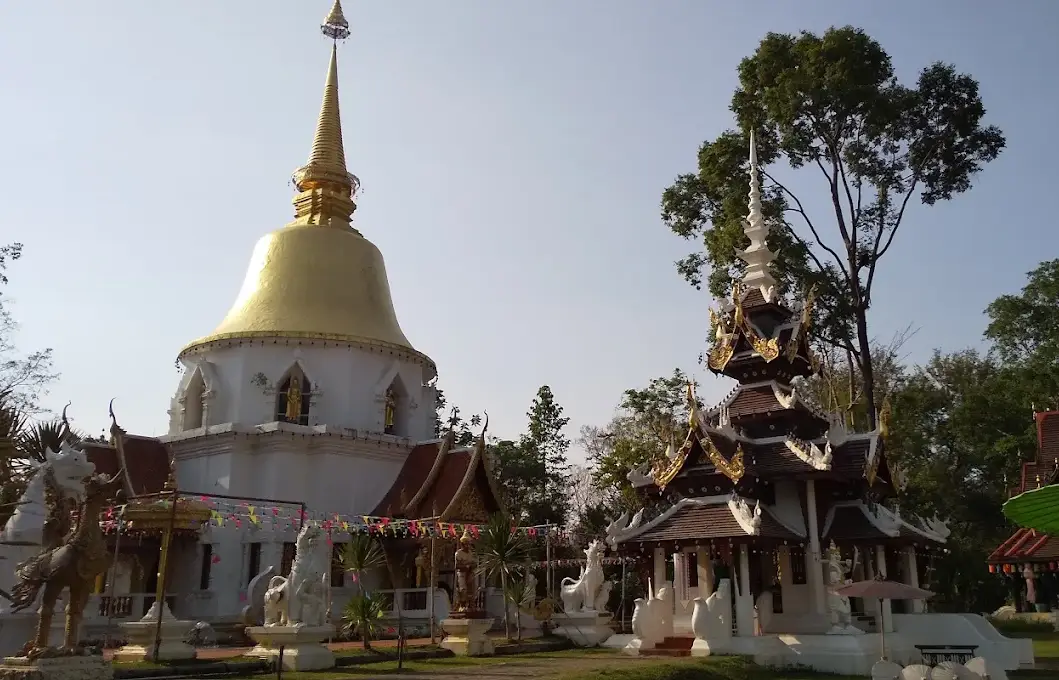
Wat Uthumphon Aram is located at No. 1, Moo 9, Ban Dueang Kok, Khua Mung Subdistrict, Saraphi District, Chiang Mai Province 50140. It is a local Buddhist temple under the Mahanikaya sect. The temple was officially established in 1852 and received its royal consecrated boundary, or Wisungkhamsima, on 13 November 1930. The current abbot is Phra Athikan Mongkhon Siritharo. Wat Uthumphon Aram is an old community temple of Ban Dueang Kok, with a name connected to the fig tree and its former name, Wat Dueak.
Wat Uthumphon Aram is suitable for visitors who want to understand Saraphi through a living village temple rather than a major tourist site. Khua Mung Subdistrict is a lowland agricultural area near Chiang Mai city, shaped by village roads, irrigation canals, old temples, and farming communities. Ban Dueang Kok is Moo 9 of Khua Mung, and the temple serves as a spiritual center where villagers make merit, listen to Dhamma, join Buddhist ceremonies, and maintain annual traditions.
The history of the temple is closely linked with its former name, Wat Dueak. The present name “Uthumphon” refers to the fig tree in Buddhist and Pali-related terminology. Local history connects the older name with a fig tree that once stood in the temple area. The present name preserves that older memory while giving it a more formal Buddhist identity. This makes the temple name a record of landscape, nature, and community memory.
The temple’s official establishment in 1852 gives Wat Uthumphon Aram more than 170 years of local history. This period belongs to the long development of communities south of Chiang Mai city, where Saraphi served as an important agricultural and cultural area between Chiang Mai and Lamphun. In such communities, temples were not separate from daily life. They were places for worship, merit-making, moral teaching, village gatherings, and the maintenance of local identity.
The granting of Wisungkhamsima on 13 November 1930 was an important milestone. The consecrated boundary measures 60 meters wide and 70 meters long. A Wisungkhamsima is used for important Buddhist monastic ceremonies, and its presence confirms the temple’s formal religious status. This strengthens Wat Uthumphon Aram’s role not only as a village temple but also as a complete Buddhist institution.
The temple land covers 5 rai and 16 square wah under N.S.3 Kor land documentation. Its boundaries show its close relationship with the local community: the north and south adjoin public alleys, the east adjoins a public road, and the west adjoins an irrigation canal and rice fields. This setting reflects the character of a village temple woven into roads, water channels, farmland, and everyday community life.
Important structures at Wat Uthumphon Aram include a Thai-style ubosot, sermon hall, two monks’ residences in hip-roof style, viharn, alms pavilion, and kitchen. These buildings support the temple’s main functions: monastic residence, Buddhist ceremonies, merit-making, Dhamma listening, and community events. The ubosot is important for monastic ceremonies, while the viharn is the main space where visitors and villagers can worship and make merit.
The Thai-style ubosot is one of the most important structures to observe. It reflects the temple’s formal religious status and its ability to support monastic ceremonies. The viharn offers a quieter devotional space for ordinary worship, while the sermon hall and kitchen show the temple’s community role during merit-making events and annual gatherings.
The abbot succession of Wat Uthumphon Aram shows the continuity of temple care. Known abbots include Khru Ba Binta, Khru Ba Dam, Phra Athikan Inta, Phra Athikan Siwichai, Phra Athikan Chanta, Phra Khru Bunma Nonthako, Phra Khru Insom Chatuttamalo, and the current abbot, Phra Athikan Mongkhon Siritharo. This succession shows that the temple has been maintained across many generations of monastic leadership.
Phra Athikan Mongkhon Siritharo, as the current abbot, plays an important role in caring for the temple, guiding ceremonies, teaching Dhamma, coordinating with local residents, and keeping the temple as a peaceful center of faith for Ban Dueang Kok. In a village temple, the abbot’s role is closely connected with daily community life, not only with formal rituals.
Wat Uthumphon Aram remains active in the community. Local authorities and villagers have used the temple as a place for Buddhist Lent Dhamma practice, almsgiving, merit-making, and community temple-care activities. These activities show that the temple continues to be used as a real religious and community space, not merely as a historical listing.
Annual merit-making at Wat Uthumphon Aram follows the rhythm of Lanna Buddhist life, including Buddhist holy days, Buddhist Lent, the end of Buddhist Lent, Kathin, robe-offering ceremonies, Songkran, water-pouring ceremonies for elders, and Yi Peng. These traditions connect the temple with family life, respect for elders, village cooperation, and Buddhist faith.
The main appeal of Wat Uthumphon Aram is its identity as an old community temple with a name connected to the fig tree and the former Wat Dueak. Visitors can pay respect in the viharn, observe the Thai-style ubosot, walk quietly through the temple grounds, and notice the surrounding landscape of canals and agricultural land. The temple’s value lies in its long continuity and living role rather than in large-scale tourist infrastructure.
Getting There is convenient because the temple is located in Saraphi District, not far from Chiang Mai city. Visitors can travel from Chiang Mai city toward Saraphi and Khua Mung Subdistrict, then continue to Ban Dueang Kok, Moo 9. Private car, motorcycle, or local transport can be used. The route is suitable for a half-day or full-day cultural trip combining several temples in Khua Mung and Saraphi.
Wat Uthumphon Aram can be combined with nearby temples and cultural places such as Wat Rai Dong Phuttharam, Wat Hua Dong, Wat Khua Mung, Wat Pak Mueang, Wat Pa Duea, Wat Si Mun Rueang, and Wiang Kum Kam. A route including Wat Uthumphon Aram and Wat Rai Dong Phuttharam helps visitors understand both old village temples and revived temple sites within the same subdistrict.
Wat Pak Mueang and Wat Pa Duea are also useful companion stops. Wat Pak Mueang highlights irrigation canals and Lanna palm-leaf manuscript culture, while Wat Pa Duea is connected with Khru Ba Uttama and the fig-tree landscape. Visiting these temples together with Wat Uthumphon Aram gives a fuller picture of how local temple names and histories are connected with nature, water, and community life.
Restaurants around Wat Uthumphon Aram include local eateries in Khua Mung, made-to-order food shops, pizza shops, drink shops, and restaurants in Saraphi. Accommodations can be found in Saraphi and nearby Chiang Mai areas, making the temple easy to include in a cultural route that also covers Wiang Kum Kam, Chiang Mai city, or Lamphun.
Visitors should dress modestly, speak quietly, avoid disturbing monks or local residents, and respect the temple’s religious areas, especially the ubosot, viharn, sermon hall, and monastic residences. Wat Uthumphon Aram is an active community temple, so a calm and respectful visit is the best way to appreciate its history and living role.
In summary, Wat Uthumphon Aram is a Mahanikaya community temple in Ban Dueang Kok, Moo 9, Khua Mung Subdistrict, Saraphi District, Chiang Mai Province. It is open daily from 08.00 to 17.00. Established in 1852 and granted its Wisungkhamsima on 13 November 1930, the temple is notable for its former name Wat Dueak, its fig-tree name origin, Thai-style ubosot, complete community temple structures, and its continuing role as a spiritual center of Ban Dueang Kok.
| Name | Wat Uthumphon Aram |
| Type | Local Buddhist temple under the Mahanikaya sect |
| Location | No. 1, Moo 9, Ban Dueang Kok, Khua Mung Subdistrict, Saraphi District, Chiang Mai Province 50140 |
| Address | Ban Dueang Kok, Moo 9, Khua Mung Subdistrict, Saraphi District, Chiang Mai 50140, Thailand |
| Highlights | Old community temple formerly known as Wat Dueak, with a name connected to the fig tree, a Thai-style ubosot, viharn, sermon hall, and village temple role |
| History | Officially established in 1852, giving the temple more than 170 years of local history in Khua Mung Subdistrict |
| Former Name | Wat Dueak |
| Name Origin | “Uthumphon” refers to the fig tree and is connected with an old fig tree in the temple area |
| Wisungkhamsima | Granted on 13 November 1930; boundary area 60 meters wide and 70 meters long |
| Temple Land | 5 rai and 16 square wah under N.S.3 Kor documentation |
| Boundaries | North: public alley South: public alley East: public road West: irrigation canal and rice fields |
| Important Structures | Thai-style ubosot, sermon hall, two hip-roof monks’ residences, viharn, alms pavilion, and kitchen |
| Main Devotional Points | Ubosot, viharn, and community religious activity areas of Ban Dueang Kok |
| Abbot / Caretaker | Phra Athikan Mongkhon Siritharo |
| Known Abbot Succession | 1. Khru Ba Binta 2. Khru Ba Dam 3. Phra Athikan Inta 4. Phra Athikan Siwichai 5. Phra Athikan Chanta 6. Phra Khru Bunma Nonthako 7. Phra Khru Insom Chatuttamalo 8. Phra Athikan Mongkhon Siritharo |
| Open Days | Daily |
| Opening Hours | 08.00 – 17.00 |
| Temple Contact | 053-428-455 |
| Local Contact | Khua Mung Subdistrict Municipality, Tel. 053-429-622 |
| Community Role | Spiritual center of Ban Dueang Kok, place for merit-making, Dhamma listening, Buddhist Lent practice, and community temple-care activities |
| Merit Events / Traditions | Buddhist holy day merit-making, Buddhist Lent, end of Buddhist Lent, Kathin, robe offerings, Songkran, water-pouring ceremonies, and Yi Peng |
| Travel Information | Travel from Chiang Mai city toward Saraphi and Khua Mung Subdistrict, then continue to Ban Dueang Kok, Moo 9. Private car, motorcycle, or local transport is suitable. |
| Nearby Tourist Attractions | 1. Wat Rai Dong Phuttharam, about 3–5 km 2. Wat Hua Dong, about 4–6 km 3. Wat Khua Mung, about 5–8 km 4. Wat Pak Mueang, about 5–8 km 5. Wat Pa Duea, about 5–8 km 6. Wat Si Mun Rueang, about 5–8 km 7. Wiang Kum Kam, about 10–15 km |
| Nearby Restaurants / Khua Mung and Saraphi Route | 1. Pi Rung Khua Mung Moo 5, about 5–8 km, Tel. 061-065-7961 2. Rest Time Pizza Khua Mung, about 5–8 km, Tel. 081-472-0954 3. Raja Bubble Milk Tea Ban Khua Mung, about 5–8 km, Tel. 096-694-8874 4. Ro Noi Aroi Nae Rad Na @ Made to Order, about 5–9 km, Tel. 087-305-2840 5. Suki Saraphi, about 10–14 km, Tel. 081-033-1248 |
| Nearby / Saraphi and Chiang Mai Area Accommodations | 1. 9Roomz Hotel, about 10–15 km, Tel. 053-963-829, 095-446-0758 2. Baan Hom Samunphrai, about 10–15 km, Tel. 053-817-362, 081-885-1429 3. Baan Saraphi, about 10–15 km 4. Ruenthip Resort, about 10–15 km 5. Zen Retreat Chiang Mai Villa, about 12–18 km |
Frequently Asked Questions (FAQ)
Q: Where is Wat Uthumphon Aram located?
A: Wat Uthumphon Aram is located at No. 1, Moo 9, Ban Dueang Kok, Khua Mung Subdistrict, Saraphi District, Chiang Mai Province 50140.
Q: What are Wat Uthumphon Aram’s opening days and hours?
A: The temple is open daily from 08.00 to 17.00.
Q: When was Wat Uthumphon Aram established?
A: Wat Uthumphon Aram was officially established in 1852.
Q: When did Wat Uthumphon Aram receive its Wisungkhamsima?
A: Wat Uthumphon Aram received its Wisungkhamsima on 13 November 1930, with a boundary area measuring 60 meters wide and 70 meters long.
Q: What was the former name of Wat Uthumphon Aram?
A: Its former name was Wat Dueak, connected with a fig tree in the temple area.
Q: What important structures are found at Wat Uthumphon Aram?
A: Important structures include a Thai-style ubosot, sermon hall, two hip-roof monks’ residences, viharn, alms pavilion, and kitchen.
Q: Who is the abbot of Wat Uthumphon Aram?
A: The abbot is Phra Athikan Mongkhon Siritharo.
Q: What nearby places can be combined with this visit?
A: Nearby route options include Wat Rai Dong Phuttharam, Wat Hua Dong, Wat Khua Mung, Wat Pak Mueang, Wat Pa Duea, Wat Si Mun Rueang, and Wiang Kum Kam.
 Category: ●Places of Worship
 Group: ●Temple
Last Update : 2 MonthAgo
 Last Update : 2 MonthAgo
 Click to Access the Navigation Map GPS
Wat Uthumphon Aram Map
Recommend

 Muang Chiang Mai(121)Chom Thong(47)Mae Chaem(25)Chiang Dao(33)Doi Saket(68)Mae Taeng(85)Mae Rim(69)Samoeng(29)Fang(71)Mae Ai(59)Phrao(70)San Pa Tong(103)San Kamphaeng(66)San Sai(73)Hang Dong(73)Hot(32)Doi Tao(22)Omkoi(11)Saraphi(74)Wiang Haeng(15)Chai Prakan(28)Mae Wang(32)Mae On(22)Doi Lo(33)Galyani Vadhana(1)


