
lovethailand home >North Travel Attractions >Chiang Mai Travel Attractions >San Pa Tong >Mae Ka > Wat Nong Khrop
TL;DR: Wat Nong Khrop is located at Ban Nong Khrop, Mu 4, Mae Ka Subdistrict, San Pa Tong District, Chiang Mai Province, open Daily, hours 08.00 – 17.00.

Wat Nong Khrop
Open Days: Daily
Opening Hours: 08.00 – 17.00
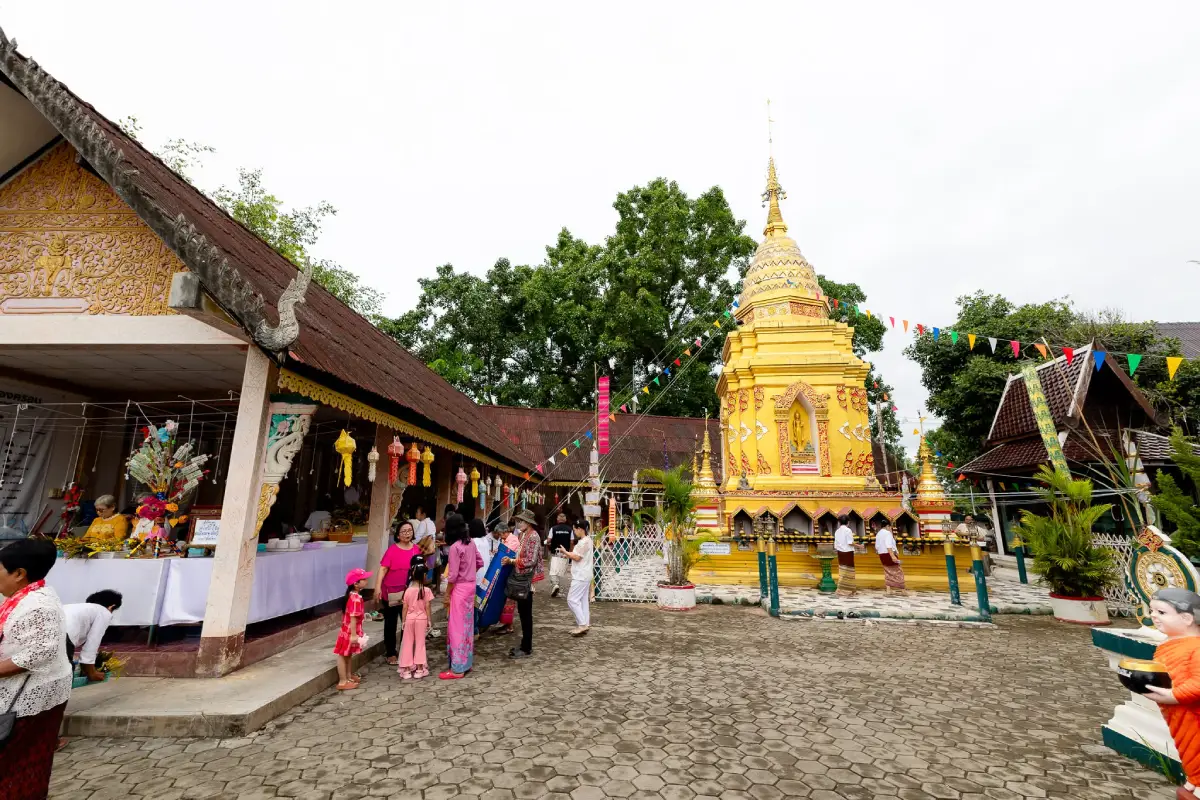
Wat Nong Khrop is a local Buddhist temple under the Mahanikaya order, located in Ban Nong Khrop, Mu 4, Mae Ka Subdistrict, San Pa Tong District, Chiang Mai Province. The temple is recorded at No. 91, with current address information also appearing as No. 977, Mu 4. Wat Nong Khrop began to be built in 1878, while provincial temple records list its formal establishment in 1929. Nai Phom Ohphom donated the land for the temple. The temple land covers 5 rai and 76 square wah under Nor Sor 3 document No. 182, with two plots of monastic land totaling 2 rai, 3 ngan, and 39 square wah under Nor Sor 3 documents No. 183 and 402. Wat Nong Khrop is therefore an old community temple with a strong historical foundation in Ban Nong Khrop.
The importance of Wat Nong Khrop lies in both its temple history and its role in the local community. The temple originated from land donated by a local resident so that the village could have a proper Buddhist center. This pattern reflects a common feature of Lanna Buddhist communities, where temples often emerged from the cooperation of landowners, monks, local leaders, and villagers who needed a place for merit-making, Dharma listening, ceremonies, and community gathering.
The temple’s beginning in 1878 gives it a history of more than a century. Since its early construction, Wat Nong Khrop has passed through many phases of San Pa Tong community life, from traditional agricultural society and village expansion to provincial temple registration and present-day community development. The temple therefore functions not only as a religious site but also as a social record of Ban Nong Khrop and Mae Ka Subdistrict.
Wat Nong Khrop received its royal monastic boundary on November 14, 1967. Later, on March 24, 1981, the temple held its formal boundary consecration ceremony, known as the burying of luk nimit. Phra Khru Khanthayaphon, former Ecclesiastical District Chief of San Pa Tong, presided over the monastic side of the ceremony, while the Deputy Governor of Chiang Mai presided over the lay side. This event was an important milestone because a royal monastic boundary and formal consecration allow the temple to support official Sangha acts in accordance with Buddhist discipline.
The temple boundaries show its connection with the surrounding community. To the north, the boundary measures about 2 sen and 13 wah, adjoining villagers’ garden land. To the south, it measures about 3 sen and 13 wah, adjoining a public road. To the east, it measures about 16 wah, adjoining Wat Nong Khrop School. To the west, it measures about 1 sen and 4 wah, adjoining private garden land. These boundaries show that the temple is closely linked with gardens, public roads, education, and village life.
The temple’s location beside Wat Nong Khrop School highlights the relationship between temple and education in Lanna communities. Temples and schools often support one another in moral education, Buddhist observances, and the transmission of local customs. Children and young people learn temple manners, respect for sacred places, and participation in community activities through temple-centered traditions.
Mae Ka Subdistrict contains several village temples, including Wat Ko Chok, Wat Sai Mun, Wat Mae Ka, Wat Rong Khut, Wat Rong Wua, Wat San Kawan, Wat San Khok Chang, Wat Nong Khaem, Wat Nong Tao Kham, Wat Inthawichai, and Wat Nong Khrop. These temples reflect the Lanna pattern in which each village maintains a temple as a center of faith, tradition, social relationship, and local memory. Wat Nong Khrop is an important part of this Buddhist landscape in San Pa Tong.
Important structures at Wat Nong Khrop include an ubosot, chanting hall, monks’ residences, viharn, alms pavilion, and sermon hall. Important sacred objects include a stucco principal Buddha image in the ubosot or viharn and a relic chedi. These elements allow the temple to support monastic acts, worship, chanting, monastic residence, Dharma listening, food offerings, and community merit-making.
The ubosot is one of the most important spaces at Wat Nong Khrop because it is connected with the royal monastic boundary and formal Sangha acts. Visitors should approach this area respectfully, keeping quiet and observing proper temple etiquette. The ubosot represents the temple’s formal religious status and its ability to support important Buddhist ceremonies.
The viharn and stucco principal Buddha image are central to devotional life at Wat Nong Khrop. Visitors can begin by paying respect in this worship area, making merit, and calming the mind. The principal Buddha image serves as the focus of faith for villagers during Buddhist holy days, annual ceremonies, and important family occasions.
The relic chedi is another important sacred feature of Wat Nong Khrop. In Lanna community temples, a chedi represents continuity, devotion, and the sacred identity of the temple grounds. Visitors should observe the chedi respectfully because it is a major sacred object and a visual reminder of the temple’s long religious history.
The chanting hall supports chanting, daily Buddhist activities, and religious practice by monks and lay supporters. It connects the temple with regular Buddhist life rather than only occasional ceremonies. Through chanting and Dharma practice, the temple remains active throughout the year.
The monks’ residences support daily monastic life. Resident monks use these spaces for living, chanting, study, temple care, and preparation for religious duties. A temple with resident monks serves the community continuously through Buddhist holy days, family ceremonies, merit-making, and spiritual guidance.
The alms pavilion and sermon hall show the temple’s role as a social and religious center. The alms pavilion is connected with food offerings and shared merit-making, while the sermon hall supports Dharma listening, temple meetings, family ceremonies, and village events. In northern Thai communities, such spaces are essential for keeping temple life closely connected with everyday village life.
Phra Khru Phisutthisorakhun is the abbot of Wat Nong Khrop. The abbot plays an important role in maintaining the temple, guiding Buddhist activities, coordinating with lay supporters, and preserving the relationship between the temple and Ban Nong Khrop. For a temple with a long history and several important structures, continuous care is essential for keeping the temple active and meaningful for the community.
Wat Nong Khrop continues to serve the local community through Buddhist holy day observances, Dharma listening, Kathin robe-offering ceremonies, pha pa merit-making, Buddhist Lent, end-of-Lent activities, and family merit-making ceremonies. The temple brings together elders, young people, families, monks, and village residents throughout the year.
The main appeal of Wat Nong Khrop lies in its long community history, land-donation origin, royal monastic boundary, formal boundary consecration, stucco principal Buddha image, and relic chedi. It is a suitable temple for visitors who want to understand a quiet Lanna village temple rather than a large commercial tourist attraction.
The main things to appreciate at Wat Nong Khrop are the ubosot, viharn, principal Buddha image, relic chedi, chanting hall, sermon hall, and the overall atmosphere of Ban Nong Khrop. Visitors should move slowly and respectfully, understanding that this is a living temple used by the local community.
Wat Nong Khrop is suitable for travelers interested in Lanna community temples, old temple histories, peaceful merit-making, and cultural routes in San Pa Tong. Nearby places include Wat Pa Chedi Liam, Wat Nong Tao Kham, Wat San Khok Chang, Wat Nong Khaem, Thung Fa Bot Market or Kad Ngua San Pa Tong, and Wiang Tha Kan Ancient Town. This route works well for a half-day or full-day trip combining temple visits, local food, village culture, and local history.
Getting There is easiest by private car or rental car. From Chiang Mai city, take the Chiang Mai–Hot Road, also known as Highway 108, toward San Pa Tong District. Continue into Mae Ka Subdistrict and Ban Nong Khrop, Mu 4. Local roads pass through village areas, so drivers should proceed carefully, especially on Buddhist holy days, weekends, and temple-event days.
The best time to visit is in the morning or afternoon before evening. These periods are suitable for worship, quiet walking, and observing the ubosot, viharn, principal Buddha image, and chedi. Travelers who want to continue the route can connect Wat Nong Khrop with nearby temples, Thung Fa Bot Market, or Wiang Tha Kan Ancient Town.
Visitors should follow normal Thai temple etiquette. Dress modestly, keep voices low, avoid disturbing monks or local residents, do not touch sacred objects without permission, and take photographs respectfully. Extra care should be taken around the ubosot, principal Buddha image, and relic chedi because these are sacred areas of the temple and community.
In summary, Wat Nong Khrop is an old community temple in Ban Nong Khrop, Mu 4, Mae Ka Subdistrict, San Pa Tong District, Chiang Mai. It began to be built in 1878, was formally recorded as a temple in 1929, received its royal monastic boundary on November 14, 1967, and held its boundary consecration ceremony on March 24, 1981. With an ubosot, chanting hall, monks’ residences, viharn, alms pavilion, sermon hall, stucco principal Buddha image, and relic chedi, Wat Nong Khrop is a meaningful destination for worship, local history, and quiet Lanna cultural travel.
| Name | Wat Nong Khrop |
| Location | Ban Nong Khrop, Mu 4, Mae Ka Subdistrict, San Pa Tong District, Chiang Mai Province |
| Address | No. 91, with current address information also appearing as No. 977, Mu 4, Mae Ka Subdistrict, San Pa Tong District, Chiang Mai Province |
| Place Type | Local Buddhist temple under the Mahanikaya order |
| Temple Area | Temple land: 5 rai and 76 square wah under Nor Sor 3 document No. 182; monastic land: two plots totaling 2 rai, 3 ngan, and 39 square wah |
| Highlights | An old community temple of Ban Nong Khrop, built beginning in 1878, with a royal monastic boundary and an important relic chedi |
| History | Began to be built in 1878; formally recorded as a temple in 1929; land was donated by Nai Phom Ohphom |
| Royal Monastic Boundary | Granted on November 14, 1967; formal boundary consecration held on March 24, 1981 |
| Distinctive Features | A Lanna community temple connected with Ban Nong Khrop, Wat Nong Khrop School, public roads, garden land, and a land-donation origin |
| Travel Information | From Chiang Mai city, take the Chiang Mai–Hot Road toward San Pa Tong, then continue into Mae Ka Subdistrict and Ban Nong Khrop, Mu 4; private car or rental car is most convenient |
| Current Status | A community temple of Ban Nong Khrop, Mae Ka Subdistrict, open for daily visits and merit-making |
| Open Days | Daily |
| Opening Hours | 08.00 – 17.00 |
| Important Structures | Ubosot, chanting hall, monks’ residences, viharn, alms pavilion, and sermon hall |
| Important Sacred Objects | Stucco principal Buddha image in the ubosot or viharn, and relic chedi |
| Abbot / Caretaker | Phra Khru Phisutthisorakhun |
| Key Boundaries | North about 2 sen and 13 wah bordering villagers’ garden land; south about 3 sen and 13 wah bordering a public road; east about 16 wah bordering Wat Nong Khrop School; west about 1 sen and 4 wah bordering private garden land |
| Nearby Tourist Attractions | 1. Wat Pa Chedi Liam, about 1 km 2. Wat Nong Tao Kham, about 3 km 3. Wat San Khok Chang / Wat Phra Chao Ton Luang, about 4 km 4. Wat Nong Khaem, about 5 km 5. Thung Fa Bot Market / Kad Ngua San Pa Tong, about 8 km |
| Nearby Restaurants | 1. Baan Ton Mai Home Stay & Coffee, about 5 km, Tel. 084-613-4997 2. Nong Fluke Restaurant, about 6 km, Tel. 053-829-528 3. 9 Kaprao Ban Ton Krok, about 7 km, Tel. 089-647-4487, 096-559-0311 4. Cafe Vintage1980 San Pa Tong, about 8 km, Tel. 096-084-0462 5. ZAPALiMENE San Pa Tong, about 9 km, Tel. 096-236-9197, 064-874-2594 |
| Nearby Accommodations | 1. Huen Ui Oey (Sane Wang Khrok), about 5 km, Tel. 087-680-4038 2. Tai Resort Sanpatong, about 8 km, Tel. 063-096-7000 3. Home Thai Resort, about 10 km, Tel. 063-952-8228 4. P Resort & W Resort, about 11 km, Tel. 064-334-4566 5. Kaomai Lanna Resort, about 14 km, Tel. 053-481-201, 086-428-7481 |
Frequently Asked Questions (FAQ)
Q: Where is Wat Nong Khrop located?
A: Wat Nong Khrop is located in Ban Nong Khrop, Mu 4, Mae Ka Subdistrict, San Pa Tong District, Chiang Mai Province.
Q: When did Wat Nong Khrop begin to be built?
A: Wat Nong Khrop began to be built in 1878 and was formally recorded as a temple in 1929.
Q: Who donated the land for Wat Nong Khrop?
A: Nai Phom Ohphom donated the land for Wat Nong Khrop.
Q: When did Wat Nong Khrop receive its royal monastic boundary?
A: Wat Nong Khrop received its royal monastic boundary on November 14, 1967, and held its formal boundary consecration ceremony on March 24, 1981.
Q: What important structures are found at Wat Nong Khrop?
A: Important structures include an ubosot, chanting hall, monks’ residences, viharn, alms pavilion, and sermon hall.
Q: What sacred objects can visitors see at Wat Nong Khrop?
A: Important sacred objects include a stucco principal Buddha image in the ubosot or viharn and a relic chedi.
Q: Who is the abbot of Wat Nong Khrop?
A: Phra Khru Phisutthisorakhun is the abbot of Wat Nong Khrop.
Q: What type of traveler is Wat Nong Khrop suitable for?
A: It is suitable for travelers interested in Lanna community temples, old temple histories, peaceful merit-making, relic chedi, and cultural routes in San Pa Tong.
 Category: ●Places of Worship
 Group: ●Temple
Last Update : 4 WeekAgo
 Last Update : 4 WeekAgo
 Click to Access the Navigation Map GPS

 Muang Chiang Mai(121)Chom Thong(47)Mae Chaem(25)Chiang Dao(33)Doi Saket(68)Mae Taeng(85)Mae Rim(69)Samoeng(29)Fang(71)Mae Ai(59)Phrao(70)San Pa Tong(103)San Kamphaeng(66)San Sai(73)Hang Dong(73)Hot(32)Doi Tao(22)Omkoi(11)Saraphi(74)Wiang Haeng(15)Chai Prakan(28)Mae Wang(32)Mae On(22)Doi Lo(33)Galyani Vadhana(1)


