
lovethailand home >North Travel Attractions >Chiang Mai Travel Attractions >San Pa Tong >Mae Ka > Wat Sai Mun (Mae Ka)
TL;DR: Wat Sai Mun (Mae Ka) is located at Ban Sai Mun, Mu 6, Mae Ka Subdistrict, San Pa Tong District, Chiang Mai Province, open Daily, hours 08.00 – 17.00.

Wat Sai Mun (Mae Ka)
Open Days: Daily
Opening Hours: 08.00 – 17.00
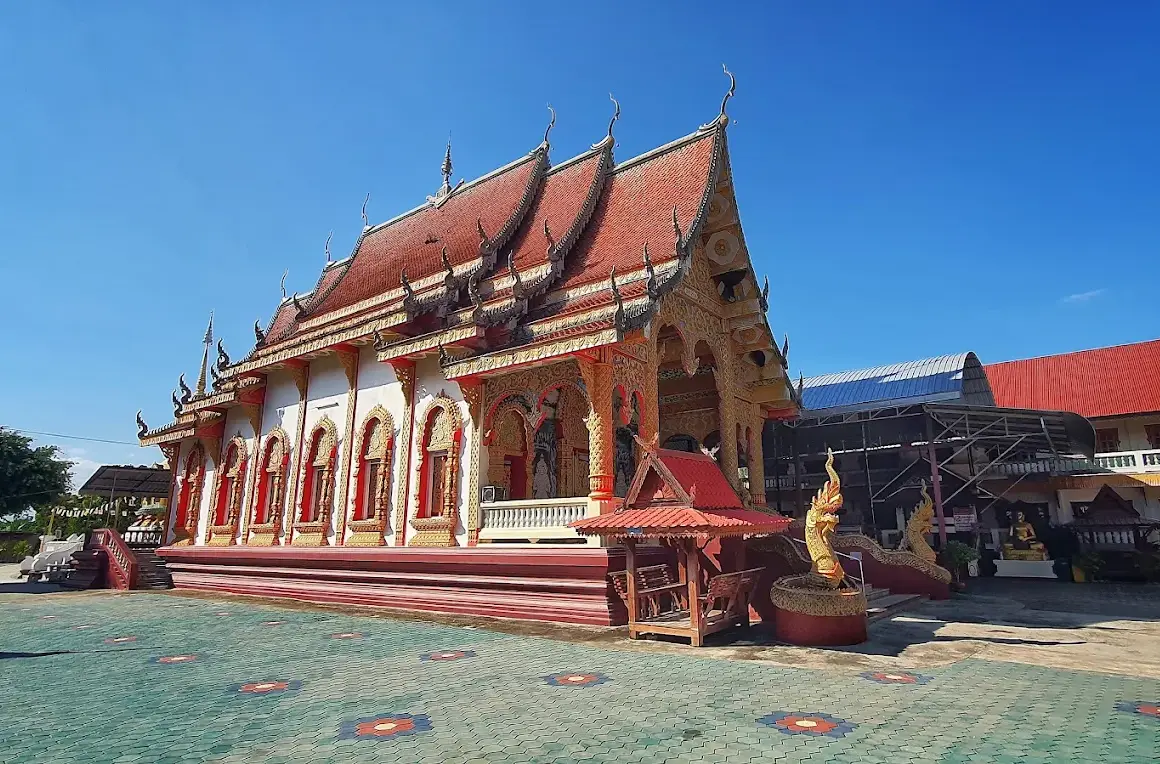
Wat Sai Mun (Mae Ka) is a local Buddhist temple under the Mahanikaya order, located at No. 76, Mu 6, Ban Sai Mun, Mae Ka Subdistrict, San Pa Tong District, Chiang Mai Province. The temple began to be built in 1912, was officially permitted as a complete temple in 1920, and received its royal monastic boundary in 1998. Phra Khru Sangwon Silaphirak Silasamvaro is the abbot of Wat Sai Mun. The temple is an important spiritual center of Ban Sai Mun and reflects the relationship between the local community, the Ping River, landscape change, and Lanna Buddhist life in San Pa Tong.
The most distinctive feature of Wat Sai Mun is the story behind its name. The area was formerly known as Ban Nong Khaem. Later, a flood damaged the Ping River embankment and carried a large amount of sand into the village. As a result, the community came to be known as Ban Sai Mun, and the temple took the same name. The name therefore preserves a local memory of water, sand, river movement, and the way the community adapted to its natural environment.
The temple’s history began in 1912, when several important local figures, including Thao Saen Luang, Thao Kham Wongsa, Pho Noi Mueang, Pho Noi Chan, and Pho Ta, came to occupy and develop the area. The land was formerly owned by Nai Tim Singkharat and Nang Chan Khaemthong, who donated the land for the establishment of the temple. This act of land donation reflects a common pattern in Lanna Buddhist communities, where temples often emerged from the faith and cooperation of landowners, community leaders, and villagers.
Wat Sai Mun was officially permitted as a complete temple in 1920, marking its firm status within the local Buddhist community. What began as a faith-based community temple became a recognized religious site serving monastic residence, merit-making, Buddhist observances, Dharma listening, and annual ceremonies. Its royal monastic boundary, granted in 1998, further strengthened its religious status because such a boundary defines the area for formal monastic acts according to Buddhist discipline.
The temple land covers 6 rai, 2 ngan, and 52 square wah. Ban Sai Mun is a village in Mae Ka Subdistrict, San Pa Tong District, with a local identity connected to the Ping River. The story of the village name shows how the temple is tied to the physical landscape rather than being separated from it. Wat Sai Mun developed together with the village, the river environment, and the memory of the community.
Mae Ka Subdistrict contains several village temples, including Wat Ko Chok, Wat Sai Mun, Wat Mae Ka, Wat Rong Khut, Wat Rong Wua, Wat San Kawan, Wat Nong Khrop, and Wat Nong Tao Kham. These temples reflect the structure of Lanna village life, where each community has a temple as a center of religion, tradition, merit-making, and social connection. Wat Sai Mun is part of this wider network and serves Ban Sai Mun in the same meaningful way that village temples have long served northern Thai communities.
Phra Khru Sangwon Silaphirak Silasamvaro is the abbot of Wat Sai Mun. The abbot plays an important role in maintaining the temple, guiding religious activities, coordinating with lay supporters, and preserving the relationship between the temple and Ban Sai Mun. For a temple with a long community history, continuous leadership is essential for maintaining religious practice, temple events, and the temple’s role as a spiritual refuge for local residents.
Wat Sai Mun continues to serve as a center of Buddhist activity for Ban Sai Mun. It is used for Buddhist holy day observances, Dharma listening, Kathin robe-offering ceremonies, pha pa merit-making, candle offerings for Buddhist Lent, the end of Buddhist Lent, and family merit-making ceremonies. The temple is also a place where elders, families, young people, and community members gather throughout the year.
A contemporary example of the temple’s role is the Buddhist Lent candle-casting ceremony held at Wat Sai Mun by Mae Ka Subdistrict. Such activities bring together local administrators, community leaders, women’s groups, elderly groups, and residents who come to participate in merit-making and prepare candles for temples in the subdistrict. This shows that Wat Sai Mun is not only a historic temple but also a living religious and community space.
In Lanna community life, temple traditions are not separate from daily life. Annual merit-making events involve food preparation, offerings, community labor, and shared ritual participation. Wat Sai Mun therefore functions as both a religious center and a social space where the community gathers, cooperates, and preserves local identity through Buddhist practice.
The main things to appreciate at Wat Sai Mun are the calm atmosphere of a village temple, the connection between the temple name and the Ping River story, the temple courtyard, and the everyday relationship between the temple and Ban Sai Mun. Visitors should move slowly and respectfully, understanding that this is a living place of faith for local residents rather than a commercial sightseeing site.
Visitors should pay respect calmly, make merit if appropriate, dress modestly, keep voices low, avoid disturbing monks or local residents, and take photographs respectfully. If visiting during a ceremony or community activity, visitors should follow the guidance of the temple and community members.
Wat Sai Mun is suitable for travelers interested in Lanna community temples, riverside village history, local Buddhist traditions, and cultural routes in San Pa Tong. Although it is not a large tourist attraction, it offers meaningful insight into how temples, rivers, village names, and community faith are connected in northern Thailand.
Wat Sai Mun can be included in a connected cultural route in Mae Ka and San Pa Tong. Nearby places include Wat Ko Chok, Wat Mae Ka, Wat Rong Wua, Wat Rong Khut, Thung Fa Bot Market or Kad Ngua San Pa Tong, and Wiang Tha Kan Ancient Town. This route works well for a half-day or full-day trip combining temple visits, local food, community culture, and local history.
Getting There is easiest by private car or rental car. From Chiang Mai city, take the Chiang Mai–Hot Road, also known as Highway 108, toward San Pa Tong District. Continue into Mae Ka Subdistrict and Ban Sai Mun, Mu 6. Local roads pass through village areas, so drivers should proceed carefully, especially on Buddhist holy days, weekends, and temple-event days.
The best time to visit is in the morning or afternoon before evening. These periods are suitable for worship, quiet walking, and continuing to nearby temples or attractions. Travelers who want to visit Thung Fa Bot Market should plan according to the market schedule. Those interested in local history can continue to Wiang Tha Kan Ancient Town on the same San Pa Tong cultural route.
In summary, Wat Sai Mun (Mae Ka) is an important community temple in Ban Sai Mun, Mae Ka Subdistrict, San Pa Tong District, Chiang Mai. Built beginning in 1912, officially permitted as a temple in 1920, and granted its royal monastic boundary in 1998, the temple preserves a local story connected with the Ping River and the change from Ban Nong Khaem to Ban Sai Mun. It is a suitable place for visitors who want to make merit, learn local history, and experience a quieter Lanna village temple in Chiang Mai.
| Name | Wat Sai Mun (Mae Ka) |
| Location | Ban Sai Mun, Mu 6, Mae Ka Subdistrict, San Pa Tong District, Chiang Mai Province |
| Address | No. 76, Mu 6, Ban Sai Mun, Mae Ka Subdistrict, San Pa Tong District, Chiang Mai 50120 |
| Place Type | Local Buddhist temple under the Mahanikaya order |
| Temple Area | 6 rai, 2 ngan, 52 square wah |
| Highlights | A village temple whose name preserves the story of sand carried into the community by the Ping River, changing the village name from Ban Nong Khaem to Ban Sai Mun |
| History | Built beginning in 1912, officially permitted as a complete temple in 1920, and granted its royal monastic boundary in 1998 |
| Name Origin | The area was formerly called Ban Nong Khaem; after the Ping River carried large amounts of sand into the village, the community became known as Ban Sai Mun and the temple took the same name |
| Important Historical Figures | Thao Saen Luang, Thao Kham Wongsa, Pho Noi Mueang, Pho Noi Chan, Pho Ta, Nai Tim Singkharat, and Nang Chan Khaemthong |
| Distinctive Features | A Lanna community temple connected with the Ping River, village memory, and Mae Ka Buddhist traditions |
| Travel Information | From Chiang Mai city, take the Chiang Mai–Hot Road toward San Pa Tong, then continue into Mae Ka Subdistrict and Ban Sai Mun, Mu 6; private car or rental car is most convenient |
| Current Status | A community temple of Ban Sai Mun, Mae Ka Subdistrict, open for daily visits and merit-making |
| Open Days | Daily |
| Opening Hours | 08.00 – 17.00 |
| Abbot / Caretaker | Phra Khru Sangwon Silaphirak Silasamvaro |
| Main Contact Number | 053-837-247 |
| Community Activities | Buddhist Lent candle-casting, Buddhist holy day merit-making, Kathin, pha pa merit-making, Buddhist Lent ceremonies, end-of-Lent ceremonies, and family merit-making events |
| Nearby Tourist Attractions | 1. Wat Ko Chok, about 3 km 2. Wat Rong Wua, about 4 km 3. Wat Mae Ka, about 5 km 4. Thung Fa Bot Market / Kad Ngua San Pa Tong, about 7 km 5. Wiang Tha Kan Ancient Town, about 11 km |
| Nearby Restaurants | 1. Baan Ton Mai Home Stay & Coffee, about 4 km, Tel. 084-613-4997 2. Nong Fluke Restaurant, about 6 km, Tel. 053-829-528 3. Steamed Fish and Grilled Fish Wraps (Pla Ka Yam) San Pa Tong, about 7 km 4. ZAPALiMENE San Pa Tong, about 8 km, Tel. 096-236-9197, 064-874-2594 5. Charcoal Pork Leg Rice San Pa Tong, about 9 km, Tel. 081-881-5112 |
| Nearby Accommodations | 1. Huen Ui Oey (Sane Wang Khrok), about 1 km, Tel. 087-680-4038 2. Tai Resort Sanpatong, about 8 km, Tel. 063-096-7000 3. Home Thai Resort, about 10 km, Tel. 063-952-8228 4. P Resort & W Resort, about 11 km, Tel. 064-334-4566 5. Kaomai Lanna Resort, about 14 km, Tel. 053-481-201 |
Frequently Asked Questions (FAQ)
Q: Where is Wat Sai Mun (Mae Ka) located?
A: Wat Sai Mun is located at No. 76, Mu 6, Ban Sai Mun, Mae Ka Subdistrict, San Pa Tong District, Chiang Mai Province.
Q: When did Wat Sai Mun begin to be built?
A: Wat Sai Mun began to be built in 1912 and was officially permitted as a complete temple in 1920.
Q: When did Wat Sai Mun receive its royal monastic boundary?
A: Wat Sai Mun received its royal monastic boundary in 1998.
Q: What is the origin of the name Wat Sai Mun?
A: The area was formerly called Ban Nong Khaem. After the Ping River carried large amounts of sand into the village, the community became known as Ban Sai Mun and the temple took the same name.
Q: Who is the abbot of Wat Sai Mun?
A: Phra Khru Sangwon Silaphirak Silasamvaro is the abbot of Wat Sai Mun.
Q: What is the main highlight of Wat Sai Mun?
A: The temple is known for its community history connected with Ban Sai Mun, the Ping River, and the village name change from Ban Nong Khaem to Ban Sai Mun.
Q: What type of traveler is Wat Sai Mun suitable for?
A: It is suitable for travelers interested in Lanna community temples, riverside village history, merit-making, and cultural routes in San Pa Tong.
Q: What is the best way to get to Wat Sai Mun?
A: A private car or rental car is the most convenient option. Take the Chiang Mai–Hot Road toward San Pa Tong, then continue into Mae Ka Subdistrict and Ban Sai Mun, Mu 6.
 Category: ●Places of Worship
 Group: ●Temple
Last Update : 2 MonthAgo
 Last Update : 2 MonthAgo
 Click to Access the Navigation Map GPS
Wat Sai Mun (Mae Ka) Map
Recommend

 Muang Chiang Mai(121)Chom Thong(47)Mae Chaem(25)Chiang Dao(33)Doi Saket(68)Mae Taeng(85)Mae Rim(69)Samoeng(29)Fang(71)Mae Ai(59)Phrao(70)San Pa Tong(103)San Kamphaeng(66)San Sai(73)Hang Dong(73)Hot(32)Doi Tao(22)Omkoi(11)Saraphi(74)Wiang Haeng(15)Chai Prakan(28)Mae Wang(32)Mae On(22)Doi Lo(33)Galyani Vadhana(1)


