
lovethailand home >North Travel Attractions >Chiang Mai Travel Attractions >San Pa Tong >Makham Luang > Wat San Sai Mun
TL;DR: Wat San Sai Mun is located at Ban San Sai Mun, Mu 1, Makhun Wan Subdistrict, San Pa Tong District, Chiang Mai Province, open Daily, hours 08.00 – 17.00.

Wat San Sai Mun
Open Days: Daily
Opening Hours: 08.00 – 17.00
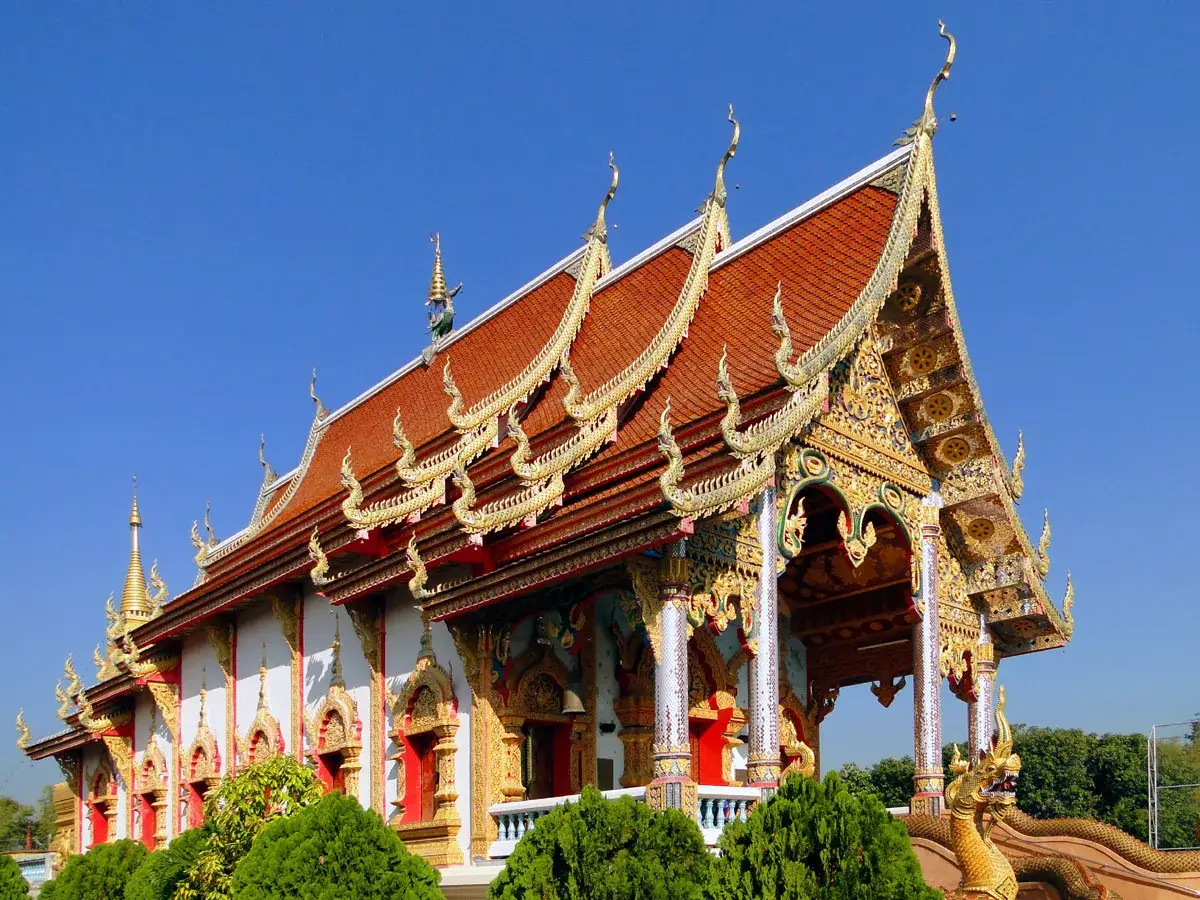
Wat San Sai Mun is a local Buddhist temple under the Mahanikaya order. It is located at No. 125, Ban San Sai Mun, formerly Mu 12, Makham Luang Subdistrict, San Pa Tong District, Chiang Mai Province, and is now in Mu 1, Makhun Wan Subdistrict, San Pa Tong District. The temple was built in 1837 and was formerly known as Wat Pa Nat. Phra Khru Ba Munin, locally known as Tu Kam, was the founder of the temple. Wat San Sai Mun is significant as an old Lanna community temple with a sermon hall containing mural paintings, monks’ residences, 2 alms pavilions, a viharn, a storage room, and a kitchen. These elements make the temple both a place of worship and a functional community religious center.
The temple is important because it reflects the continuity of Ban San Sai Mun through changes in local administrative boundaries. Although the area was formerly recorded under Makham Luang Subdistrict and is now in Makhun Wan Subdistrict, the temple continues to serve the same community spirit. It remains a place for merit-making, Buddhist observances, community ceremonies, and the preservation of local Lanna cultural life.
The former name Wat Pa Nat is meaningful in local historical context. Old temple names often preserve traces of earlier landscapes, plants, or settlement memories. The current name Wat San Sai Mun is directly connected with Ban San Sai Mun. The word “San Sai” suggests a sandy ridge or raised terrain, while “Mun” identifies the specific local community. The temple name therefore functions as a marker of place, memory, and community identity.
Wat San Sai Mun was built in 1837, giving it nearly 200 years of local history. Temples established during this period were often closely tied to the growth of village communities in Lanna. Once a settlement became stable, local residents commonly built a temple as a spiritual center, a place for Buddhist practice, and a shared space for social and cultural activities. Wat San Sai Mun therefore represents both religious faith and community cooperation.
The temple land covers 6 rai, 2 ngan, and 79 square wah under Sor Kor 1 document No. 352. Its boundaries show the temple’s close relationship with village life. To the north, it borders a school and private land. To the south, it borders an irrigation canal. These surroundings are highly meaningful in northern Thai rural culture. The school represents education and moral learning, while the canal reflects agriculture, water management, and everyday livelihood.
The irrigation canal south of the temple is an important part of the Lanna cultural landscape. Local canals are tied to farming, seasonal water management, and village life. The temple’s connection with the canal shows that religious space and everyday livelihood are not separate. Wat San Sai Mun stands within a living community environment shaped by education, agriculture, water, and Buddhist faith.
The sermon hall is one of the temple’s most important features because it contains mural paintings. In Lanna community temples, a sermon hall is commonly used for Dharma listening, merit-making, community meetings, and religious events. The presence of murals adds cultural and artistic value. Such paintings often communicate Buddhist stories, moral teachings, or local religious ideas, allowing the building to function as both a ritual space and a visual learning space.
The monks’ residence supports the daily life of resident monks. Its presence shows that Wat San Sai Mun is not merely a ceremonial site but a living Buddhist temple. Monks care for the temple, perform daily chanting, receive invitations for ceremonies, guide laypeople, and help maintain the connection between Buddhism and village life.
The 2 alms pavilions are practical structures that reflect the temple’s role in community merit-making. These pavilions support food offerings, merit-making gatherings, and temple events. Having more than one alms pavilion helps the temple accommodate larger community activities such as Kathin, pha pa merit-making, funeral rites, and annual ceremonies.
The viharn is the main worship space and one of the most meaningful areas for visitors. It is where local residents and visitors pay respect, make merit, and calm the mind. A Lanna community temple viharn may not be large, but its value lies in being a sacred space actively used by local people. Visitors should approach it with respect, quietness, and awareness of its religious function.
The storage room and kitchen are practical but essential parts of a village temple. The storage room holds temple equipment and items used for ceremonies, while the kitchen supports community food preparation during temple events. In Lanna temple culture, preparing food together is an important form of shared merit-making and social cooperation. The kitchen therefore represents the living energy of village religious life.
Phra Khru Wirapunakhet Kantaviro appears in the temple’s historical administration record as an important senior monk connected with Wat San Sai Mun. In a community temple, monastic leadership is central to maintaining the temple compound, organizing ceremonies, supporting laypeople, and preserving the relationship between monks and the village. Current abbot information should not be added without a clear official source.
The temple’s role in the local community is visible through its location and surroundings. Wat San Sai Mun is near a school, connected with an irrigation canal, and located within the village landscape. It functions as a place for elderly residents to make merit, for families to conduct ceremonies, for young people to learn Buddhist customs, and for villagers to gather during annual merit-making events.
The temple’s activities follow the rhythm of Lanna community temples. These include Buddhist holy day observances, Dharma listening, Kathin robe-offering ceremonies, pha pa merit-making, Songkran or northern Thai New Year activities, candle offerings for Buddhist Lent, the end of Buddhist Lent, salak phat offerings, and family merit-making ceremonies. During such occasions, the temple becomes a lively shared space where monks and laypeople work together.
The main things to appreciate at Wat San Sai Mun are the sermon hall with mural paintings, the viharn, the temple courtyard, and the atmosphere of a local temple connected with a school and canal. Visitors should move slowly, observe respectfully, and understand that the value of this temple lies not in spectacle but in its relationship with the community.
Wat San Sai Mun is suitable for travelers interested in old temples, Lanna community culture, mural paintings, and quieter cultural routes in San Pa Tong. It is not a temple designed for mass tourism, but it offers a meaningful experience for visitors who want to understand local religious life beyond Chiang Mai’s famous city temples.
Getting There is easiest by private car or rental car. From Chiang Mai city, take the Chiang Mai–Hot Road, also known as Highway 108, toward San Pa Tong District. Continue into Makhun Wan Subdistrict and Ban San Sai Mun, Mu 1. The temple can be included in a local cultural route with Wat Makhun Wan, Wat Pa Ngio, Wat Phra Chao Song Ong, Wat Muang Phi Nong, Thung Fa Bot Market or Kad Ngua San Pa Tong, and Wiang Tha Kan Ancient Town.
The best time to visit is in the morning or afternoon before evening. These periods are suitable for worship, walking quietly around the temple, viewing the mural paintings, and continuing to nearby temples or local markets. Travelers who want to visit Thung Fa Bot Market should plan their travel day according to the market schedule.
Visitors should follow normal Thai temple etiquette. Dress modestly, keep voices low, avoid disturbing monks or local residents, do not touch murals or temple objects without permission, and take photographs respectfully. If visiting during a ceremony, follow the guidance of the temple and community. Wat San Sai Mun is best appreciated as a living community temple rather than a simple sightseeing stop.
In summary, Wat San Sai Mun is an old community temple in Makhun Wan Subdistrict, San Pa Tong District, Chiang Mai. Built in 1837 and formerly known as Wat Pa Nat, it was founded by Phra Khru Ba Munin, or Tu Kam. The temple has a sermon hall with mural paintings, monks’ residences, 2 alms pavilions, a viharn, a storage room, and a kitchen. For travelers seeking a quieter and more local side of Chiang Mai, Wat San Sai Mun offers a meaningful encounter with Lanna village faith, art, and community life.
| Name | Wat San Sai Mun |
| Location | Ban San Sai Mun, Mu 1, Makhun Wan Subdistrict, San Pa Tong District, Chiang Mai Province |
| Address | No. 125, Ban San Sai Mun; formerly Mu 12, Makham Luang Subdistrict, San Pa Tong District, Chiang Mai; now Mu 1, Makhun Wan Subdistrict |
| Place Type | Local Buddhist temple under the Mahanikaya order |
| Temple Area | 6 rai, 2 ngan, 79 square wah |
| Highlights | An old community temple formerly known as Wat Pa Nat, with a sermon hall containing mural paintings and a strong role in Ban San Sai Mun community life |
| History | Built in 1837 by Phra Khru Ba Munin, locally known as Tu Kam |
| Former Name | Wat Pa Nat |
| Name Origin | The temple name is connected with Ban San Sai Mun and reflects the local identity of the San Pa Tong community |
| Distinctive Features | A Lanna community temple near a school and irrigation canal, with structures supporting village merit-making and annual Buddhist activities |
| Travel Information | From Chiang Mai city, take the Chiang Mai–Hot Road toward San Pa Tong, then continue into Makhun Wan Subdistrict and Ban San Sai Mun; private car or rental car is most convenient |
| Current Status | The temple still appears in current temple listings for Makhun Wan Subdistrict, San Pa Tong District, Chiang Mai Province |
| Open Days | Daily |
| Opening Hours | 08.00 – 17.00 |
| Important Structures | Sermon hall, monks’ residences, 2 alms pavilions, viharn, storage room, and kitchen |
| Artistic Highlight | Mural paintings inside the sermon hall |
| Senior Monk In Historical Administration | Phra Khru Wirapunakhet Kantaviro |
| Key Boundaries | North borders a school and private land; south borders an irrigation canal |
| Nearby Tourist Attractions | 1. Wat Makhun Wan, about 3 km 2. Wat Phra Chao Song Ong, about 4 km 3. Wat Pa Ngio (Makhun Wan), about 5 km 4. Thung Fa Bot Market / Kad Ngua San Pa Tong, about 6 km 5. Wiang Tha Kan Ancient Town, about 11 km |
| Nearby Restaurants | 1. Nong Fluke Restaurant, about 2 km, Tel. 053-829-528 2. Klin Kaprao Khao Ho Mok San Pa Tong, about 5 km, Tel. 093-243-8923 3. ZAPALiMENE San Pa Tong, about 7 km, Tel. 096-236-9197, 064-874-2594 4. Song Nakhon Restaurant San Pa Tong, about 8 km, Tel. 098-771-7581 5. Charcoal Pork Leg Rice San Pa Tong, about 8 km, Tel. 081-881-5112 |
| Nearby Accommodations | 1. Home Thai Resort, about 7 km, Tel. 063-952-8228 2. P Resort & W Resort, about 8 km, Tel. 064-334-4566 3. Khuangchan Resort, about 9 km, Tel. 089-835-3057 4. Tai Resort Sanpatong, about 10 km, Tel. 063-096-7000 5. Kaomai Lanna Resort, about 14 km, Tel. 053-481-201, 086-428-7481 |
Frequently Asked Questions (FAQ)
Q: Where is Wat San Sai Mun located?
A: Wat San Sai Mun is located at No. 125, Ban San Sai Mun, now Mu 1, Makhun Wan Subdistrict, San Pa Tong District, Chiang Mai Province.
Q: What was the former name of Wat San Sai Mun?
A: The temple was formerly known as Wat Pa Nat.
Q: When was Wat San Sai Mun built?
A: Wat San Sai Mun was built in 1837.
Q: Who founded Wat San Sai Mun?
A: Phra Khru Ba Munin, locally known as Tu Kam, founded Wat San Sai Mun.
Q: What is the main highlight of Wat San Sai Mun?
A: The temple is known as an old Lanna community temple with a sermon hall containing mural paintings, a viharn, monks’ residences, alms pavilions, a storage room, and a kitchen.
Q: What type of traveler is Wat San Sai Mun suitable for?
A: It is suitable for travelers interested in old temples, Lanna community culture, mural paintings, merit-making, and quiet cultural routes in San Pa Tong.
Q: What is the best way to get to Wat San Sai Mun?
A: A private car or rental car is the most convenient option. Take the Chiang Mai–Hot Road toward San Pa Tong, then continue into Makhun Wan Subdistrict and Ban San Sai Mun.
 Category: ●Places of Worship
 Group: ●Temple
Last Update : 2 MonthAgo
 Last Update : 2 MonthAgo
 Click to Access the Navigation Map GPS

 Muang Chiang Mai(121)Chom Thong(47)Mae Chaem(25)Chiang Dao(33)Doi Saket(68)Mae Taeng(85)Mae Rim(69)Samoeng(29)Fang(71)Mae Ai(59)Phrao(70)San Pa Tong(103)San Kamphaeng(66)San Sai(73)Hang Dong(73)Hot(32)Doi Tao(22)Omkoi(11)Saraphi(74)Wiang Haeng(15)Chai Prakan(28)Mae Wang(32)Mae On(22)Doi Lo(33)Galyani Vadhana(1)


