
lovethailand home >North Travel Attractions >Chiang Mai Travel Attractions >San Pa Tong >Makham Luang > Wat Thung Pui
TL;DR: Wat Thung Pui is located at Ban Rong Nam, Moo 7, Makham Luang Subdistrict, San Pa Tong District, Chiang Mai Province, open Daily, hours 08.00 – 17.00.

Wat Thung Pui
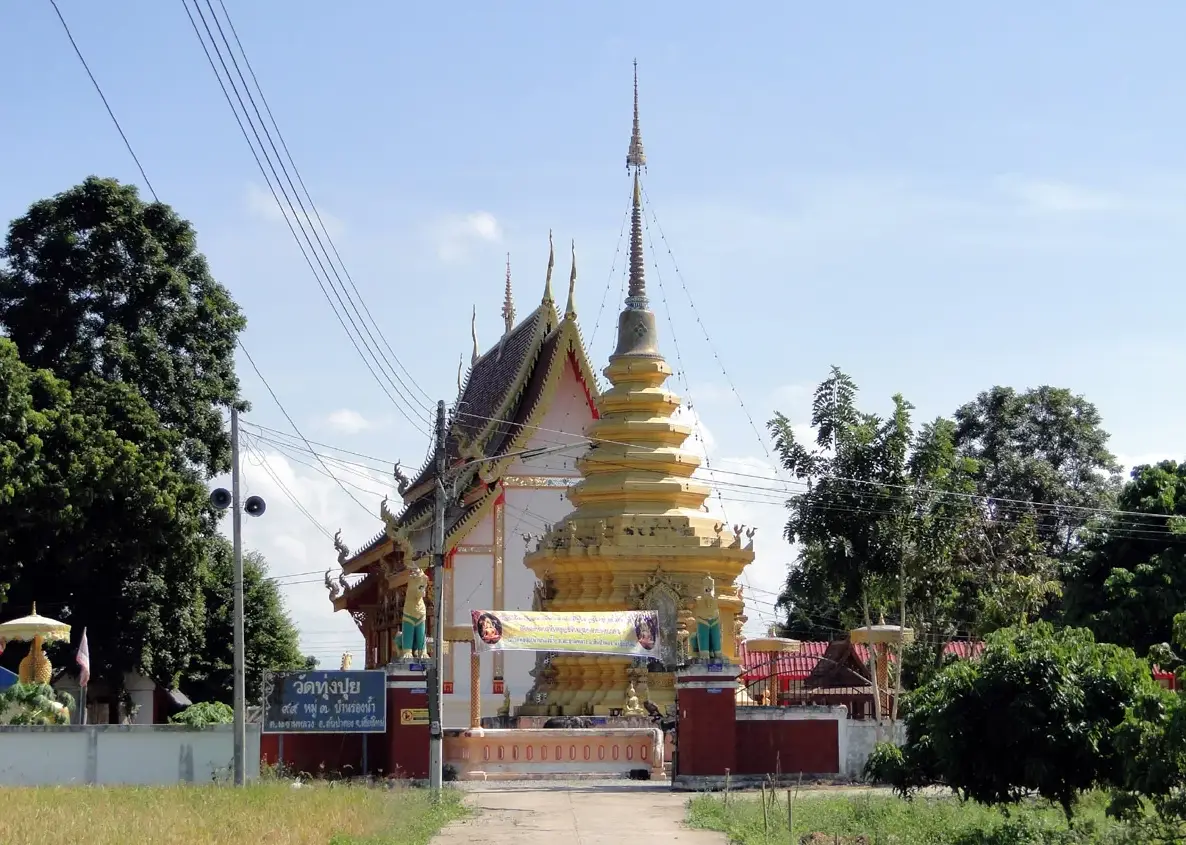
Open Days: Daily
Opening Hours: 08.00 – 17.00
Wat Thung Pui, also known as Wat Thung Pui Ban Rong Nam, is located at 99 Ban Rong Nam, Moo 7, Makham Luang Subdistrict, San Pa Tong District, Chiang Mai Province. It is a local Mahanikaya Buddhist temple with an important restoration history. The temple was once an abandoned temple site before Phra Duang Kham restored it on November 1, 1996, forming the Thung Pui monastic residence. In 2003, the abandoned temple was elevated to a temple with resident monks. Wat Thung Pui therefore represents a community temple revived through monastic leadership and local faith.
Wat Thung Pui is closely associated with Ban Rong Nam, Moo 7, in Makham Luang Subdistrict. The subdistrict contains many community temples, including Wat Makham Luang, Wat Ton Kaew, Wat Thung Tum, Wat Khuang Muen, Wat Saeng Sawang, Wat Khuan Nimit, Wat Mongkhon, Wat Nong Ueng, Wat Pa Chu, and Wat Phra Bat Yang Wit. Wat Thung Pui belongs to this wider temple network that reflects the relationship between Buddhism, farming communities, and Lanna local life in San Pa Tong District.
The name Thung Pui evokes the atmosphere of open fields and rural village landscape, while the village name Rong Nam suggests a place connected with water channels or local waterways. Together, the names preserve the memory of an agricultural village environment. Wat Thung Pui is therefore not only a religious site but also a cultural landmark of Ban Rong Nam.
The temple’s history began with an abandoned temple site. In the Lanna community context, an abandoned temple does not always lose its meaning. Such places often remain in local memory as old sacred spaces. When monks and villagers are ready to restore them, they can return to religious life. At Wat Thung Pui, Phra Duang Kham played a central role by restoring the abandoned site on November 1, 1996, and caring for the temple during its early revival period.
Restoring an abandoned temple into a monastic residence requires more than repairing buildings. It requires resident monks, space for religious practice, community support, and practical facilities for merit-making. Once the Thung Pui monastic residence took shape, villagers had a nearby place for worship, sermons, merit-making, memorial ceremonies, and community Buddhist activities.
In 2003, Wat Thung Pui was elevated from an abandoned temple to a temple with resident monks. This was an important step because it confirmed the temple’s active religious status within the Sangha administration. The temple could then function more securely as a community Buddhist center.
The old temple land was located in Ban Rong Nam, Moo 7, Makham Luang Subdistrict, San Pa Tong District. It covered about 2 rai, 2 ngan, and 49 square wah under title deed number 28952. Later, local supporters jointly purchased additional adjacent land under title deed number 51680, covering about 1 rai and 61 square wah, to offer to the temple. Together, the land reached about 3 rai, 3 ngan, and 10 square wah, making the site more suitable for monks’ residence and religious activity.
This community land offering is important to the temple’s history. It shows that the revival of Wat Thung Pui was not the work of monks alone. Local villagers saw the temple as a shared spiritual asset and supported it by expanding the land base. This allowed the temple to serve the community more effectively.
The temple structures include a sermon hall, storage pavilion, one-storey monks’ residence, toilets, kitchen, bell tower, monks’ residences, and a stupa area mentioned in the temple history as being under construction. These facilities show that Wat Thung Pui is a practical village temple designed to support monastic residence, Dhamma listening, merit-making, food preparation, storage, and community ceremonies.
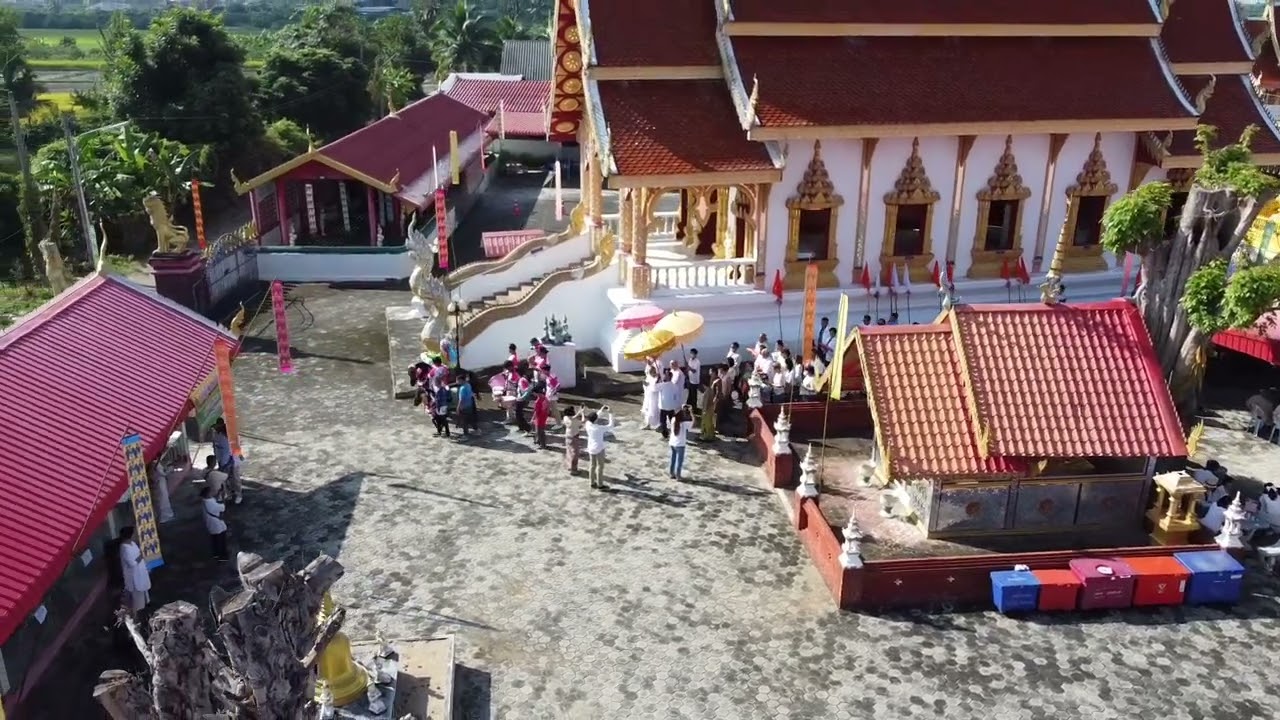
The sermon hall is one of the temple’s key buildings. It functions as a place for sermons, community meetings, merit-making preparation, Kathin, Pha Pa, memorial events, and village Buddhist activities. In a Lanna village temple, the sermon hall is both a religious and social space where monks and laypeople meet formally.
The monks’ residences and one-storey residence are essential because they allow monks to live and practice at the temple. A temple with resident monks can maintain daily chanting, Buddhist routines, merit-making ceremonies, and spiritual support for villagers. The residences therefore form the foundation of the temple’s living religious role.
The kitchen and storage pavilion reflect the practical side of community temple life. Merit-making events require food preparation, offerings, supplies, and cooperation among villagers. The kitchen connects Buddhist practice with daily community life, while the storage pavilion helps the temple manage equipment and materials needed for religious events.
Toilets are also an important facility for a working community temple. During Kathin, Pha Pa, memorial events, and large merit-making days, many villagers may gather at the temple. Basic facilities help the temple support public religious activity in an organized and respectful way.
The bell tower gives the temple a recognizable rhythm. A bell in a village temple is more than a sound. It marks time, calls monks and laypeople to religious activity, and connects the temple’s daily routine with the surrounding village.
The stupa area mentioned in the temple history reflects the community’s intention to develop a key sacred monument within the temple. A stupa or relic monument is a major Buddhist symbol and often becomes a focus of merit-making. Its construction in a community temple usually depends on collective faith and support from monks, villagers, and donors.
The main sacred object of Wat Thung Pui is a brass Phra Phuttha Chinnarat Buddha image. The Phra Phuttha Chinnarat form is one of the most respected Buddha-image forms in Thailand, known for its graceful presence and strong devotional meaning. At Wat Thung Pui, the brass image serves as a focal point of worship and merit-making for villagers and visitors.
Visitors should begin by paying respect to the Phra Phuttha Chinnarat image, then walk quietly around the sermon hall, monks’ residences, bell tower, kitchen area, and stupa area. The temple is best appreciated as a restored community temple rather than a large tourist attraction. Its value lies in the revival of an abandoned sacred site and the ongoing support of Ban Rong Nam villagers.
Phra Khru Winaithon Kittiphong Akkadhammo is the abbot of Wat Thung Pui in the information used for this article. The abbot’s role is important for a temple that was once abandoned because he must continue caring for the buildings, supporting monastic routines, organizing merit-making, coordinating with local supporters, and maintaining the temple’s role as a community spiritual center.
Wat Thung Pui serves the community on several levels. Spiritually, it is a place for worship, merit-making, and reflection. Ritually, it supports Buddhist holy days, Buddhist Lent, the end of Buddhist Lent, Kathin, Pha Pa, memorial rites, and family ceremonies. Socially, the sermon hall and temple grounds provide a gathering space for villagers. Historically, it preserves the story of an abandoned temple restored into an active temple with resident monks.
Religious events at Wat Thung Pui follow the rhythm of northern Thai village temple life. These include Buddhist holy days, Buddhist Lent, the end of Buddhist Lent, Kathin, Pha Pa, memorial rites, family merit-making, and village activities. The sermon hall, monks’ residences, kitchen, storage pavilion, toilets, and bell tower support these activities in practical ways.
Important things to see at Wat Thung Pui include the brass Phra Phuttha Chinnarat image, sermon hall, monks’ residences, bell tower, kitchen, storage pavilion, and stupa area. Visitors interested in local history should pay attention to 1996, when Phra Duang Kham restored the abandoned site, and 2003, when the temple was elevated to a temple with resident monks.
Wat Thung Pui is suitable for travelers interested in Lanna village temples, restored abandoned temples, local Buddhist history, and quiet cultural routes in Makham Luang Subdistrict. It is not a large commercial tourist site. Its value lies in community faith, restoration history, and the living relationship between the temple and Ban Rong Nam.
Visitors should dress respectfully, speak quietly, and avoid entering monks’ private areas without permission. If a merit-making ceremony, memorial rite, or village activity is taking place, visitors should give priority to local residents. Wat Thung Pui remains an active community temple, so respectful conduct is essential.
Getting There is most convenient by private car, rental car, or local hired transport. From Chiang Mai city, take Highway 108, the Chiang Mai–Hot Road, toward San Pa Tong District. Continue into Makham Luang Subdistrict and Ban Rong Nam, Moo 7. The temple is located at 99 Moo 7. When using a map application, search for “Wat Thung Pui Ban Rong Nam Makham Luang San Pa Tong” to avoid confusion with similarly named temples elsewhere.
A suitable connected route begins at Wat Thung Pui and continues to Wat Ton Kaew, Wat Mongkhon, Wat Makham Luang, Wat Thung Tum, Wat Khuang Muen, Wat Saeng Sawang, and Wat Nong Ueng. Visitors who want to extend the route can continue to Yu Wa Subdistrict to visit Wat San Pa Tong, Wat Si Koet, Wat Si Pan Ngoen, or the Yu Wa woodcarving craft center.
Overall, Wat Thung Pui is a local Mahanikaya community temple of Ban Rong Nam, Moo 7, Makham Luang Subdistrict, San Pa Tong District. Its key strengths include its restoration from an abandoned temple in 1996, its elevation as a temple with resident monks in 2003, community support for temple land, practical village-temple facilities such as the sermon hall, monks’ residences, bell tower, kitchen, toilets, storage pavilion, and its sacred brass Phra Phuttha Chinnarat image. It is suitable for travelers who want to understand Chiang Mai through Lanna village temples, restored sacred sites, and the Buddhist community life of San Pa Tong.
| Name | Wat Thung Pui / Wat Thung Pui Ban Rong Nam |
| Location | Ban Rong Nam, Moo 7, Makham Luang Subdistrict, San Pa Tong District, Chiang Mai Province |
| Address | 99 Moo 7, Ban Rong Nam, Makham Luang Subdistrict, San Pa Tong District, Chiang Mai 50120, Thailand |
| Highlights | A restored community temple that was once an abandoned temple, revived by Phra Duang Kham on November 1, 1996, elevated as a temple with resident monks in 2003, and home to a brass Phra Phuttha Chinnarat image |
| History | Formerly an abandoned temple; restored as Thung Pui monastic residence in 1996 and elevated as a temple with resident monks in 2003 |
| Temple Type / Sect | Community temple under the Mahanikaya Buddhist order |
| Temple Land | Original temple land under title deed number 28952 covers about 2 rai, 2 ngan, and 49 square wah; additional adjacent land under title deed number 51680 covers about 1 rai and 61 square wah, making the total about 3 rai, 3 ngan, and 10 square wah |
| Landscape | A village temple in Ban Rong Nam, Makham Luang Subdistrict, connected with rural settlement, agricultural landscape, water routes, and San Pa Tong Buddhist community life |
| Main Areas / Zones | Sermon hall, monks’ residences, one-storey residence, bell tower, kitchen, toilets, storage pavilion, stupa area, worship area, and community religious activity spaces |
| Important Structures | Sermon hall, bell tower, monks’ residences, one-storey residence, toilets, kitchen, storage pavilion, and stupa area mentioned in the temple history as being under construction |
| Sacred Object | Brass Phra Phuttha Chinnarat Buddha image |
| Important Figure In Temple History | Phra Duang Kham restored the abandoned temple site on November 1, 1996, and cared for the temple during its early revival period |
| Abbot / Caretaker | Phra Khru Winaithon Kittiphong Akkadhammo |
| Local Importance | A spiritual center of Ban Rong Nam, Moo 7, and an example of an abandoned temple revived through monastic leadership and community support |
| Traditions / Merit-Making | Supports Buddhist holy days, Buddhist Lent, the end of Buddhist Lent, Kathin, Pha Pa, memorial rites, and community merit-making events |
| Travel Information | Travel from Chiang Mai city via Highway 108, the Chiang Mai–Hot Road, toward San Pa Tong. Continue into Makham Luang Subdistrict and Ban Rong Nam, Moo 7. Private car, rental car, or local hired transport is recommended. |
| Current Status | A registered Mahanikaya community temple serving Ban Rong Nam, Makham Luang Subdistrict |
| Open Days | Daily |
| Opening Hours | 08.00 – 17.00 |
| Facilities | Sermon hall, monks’ residences, bell tower, kitchen, toilets, storage pavilion, worship area, merit-making area, and community religious activity spaces |
| Nearby Tourist Attractions | 1. Wat Ton Kaew, about 2 km 2. Wat Mongkhon, about 2 km 3. Wat Makham Luang, about 3 km 4. Wat Thung Tum, about 4 km 5. Wat Khuang Muen, about 5 km 6. Wat Saeng Sawang, about 5 km |
| Nearby Restaurants | 1. Kap Khao Maton, about 3 km, Tel. 084-615-7789 2. Yim Yim Moo Yang Makham Luang, about 4 km, Tel. 095-047-6761 3. Klin Kaphrao Khao Ho Mok San Pa Tong, about 4 km, Tel. 093-243-8923 4. Kuai Tiao Moo Lam Makham Luang San Pa Tong, about 4 km, Tel. 087-195-3342 5. Mae Phrom Makham Luang A La Carte, Noodles And Som Tum, about 5 km, Tel. 089-998-2236 6. Cafe Vintage1980 San Pa Tong, about 7 km, Tel. 096-084-0462 |
| Nearby Accommodations | 1. Tai Resort Sanpatong, about 4 km, Tel. 063-096-7000 2. Wooden Hut Homestay, about 5 km 3. Kulap Hotel, about 5 km 4. Non Bao Bao San Pa Tong Accommodation, about 7 km, Tel. 063-539-9952 5. Fun Rak Resort, about 7 km, Tel. 061-936-4951 6. Kaomai Lanna Resort, about 8 km, Tel. 053-481-201 |
Frequently Asked Questions (FAQ)
Q: Where is Wat Thung Pui located?
A: Wat Thung Pui is located at 99 Ban Rong Nam, Moo 7, Makham Luang Subdistrict, San Pa Tong District, Chiang Mai Province.
Q: What are the open days and opening hours of Wat Thung Pui?
A: Wat Thung Pui is open daily from 08.00 to 17.00.
Q: What is the history of Wat Thung Pui?
A: Wat Thung Pui was once an abandoned temple. Phra Duang Kham restored it on November 1, 1996, and it was elevated as a temple with resident monks in 2003.
Q: What are the main things to see at Wat Thung Pui?
A: Key features include the brass Phra Phuttha Chinnarat image, sermon hall, monks’ residences, bell tower, kitchen, storage pavilion, toilets, and stupa area.
Q: Who is the abbot of Wat Thung Pui?
A: The abbot of Wat Thung Pui is Phra Khru Winaithon Kittiphong Akkadhammo.
Q: What type of traveler is Wat Thung Pui suitable for?
A: It is suitable for travelers interested in Lanna village temples, restored abandoned temples, local Buddhist history, and quiet temple routes in Makham Luang Subdistrict.
Q: How can travelers get to Wat Thung Pui?
A: Travelers can take Highway 108, the Chiang Mai–Hot Road, from Chiang Mai city toward San Pa Tong, then continue into Makham Luang Subdistrict and Ban Rong Nam, Moo 7.
Q: What nearby places can be visited with Wat Thung Pui?
A: Nearby places include Wat Ton Kaew, Wat Mongkhon, Wat Makham Luang, Wat Thung Tum, Wat Khuang Muen, and Wat Saeng Sawang.
 Category: ●Places of Worship
 Group: ●Temple
Last Update : 2 MonthAgo
 Last Update : 2 MonthAgo
 Click to Access the Navigation Map GPS
Wat Thung Pui Map
Recommend

 Muang Chiang Mai(121)Chom Thong(47)Mae Chaem(25)Chiang Dao(33)Doi Saket(68)Mae Taeng(85)Mae Rim(69)Samoeng(29)Fang(71)Mae Ai(59)Phrao(70)San Pa Tong(103)San Kamphaeng(66)San Sai(73)Hang Dong(73)Hot(32)Doi Tao(22)Omkoi(11)Saraphi(74)Wiang Haeng(15)Chai Prakan(28)Mae Wang(32)Mae On(22)Doi Lo(33)Galyani Vadhana(1)


