
lovethailand home >North Travel Attractions >Chiang Mai Travel Attractions >San Pa Tong >Ban Klang > Wat Phra Chao Thong Thip
TL;DR: Wat Phra Chao Thong Thip is located at Ban Phra Chao Thong Thip, Moo 6, Ban Klang Subdistrict, San Pa Tong District, Chiang Mai Province, open Daily, hours 08.00 – 17.00.

Wat Phra Chao Thong Thip
Open Days: Daily
Opening Hours: 08.00 – 17.00
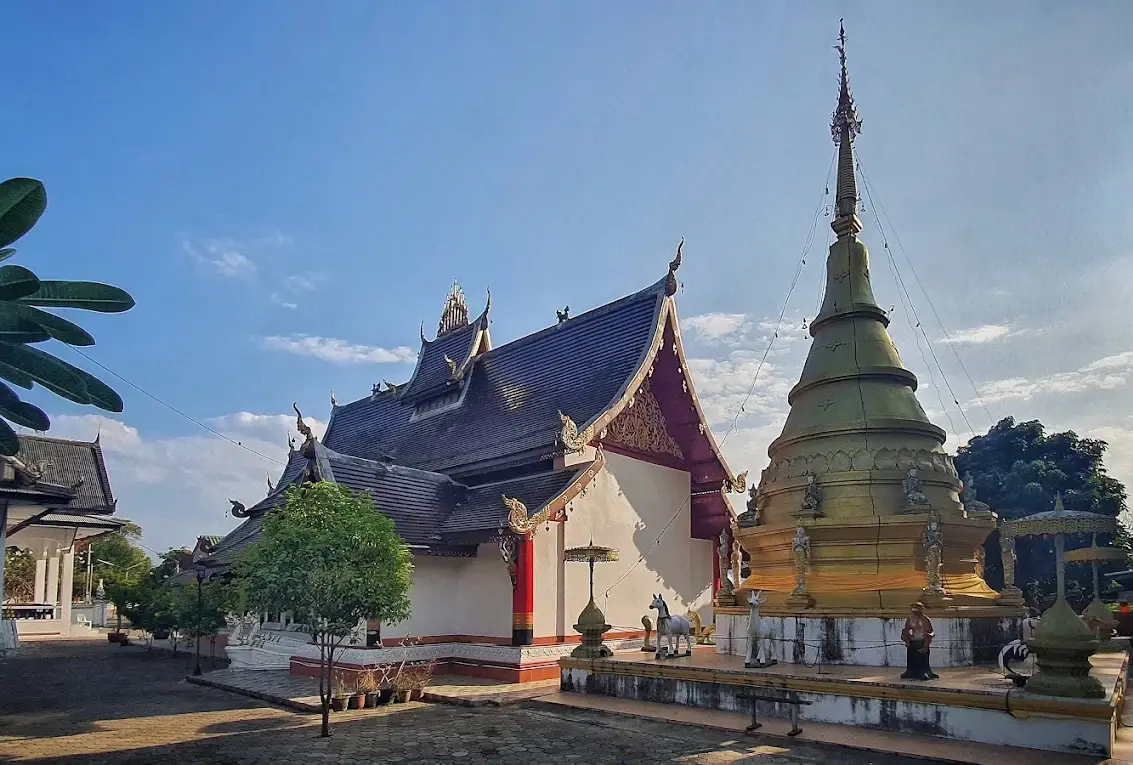
Wat Phra Chao Thong Thip is located at 30 Ban Phra Chao Thong Thip, Moo 6, Ban Klang Subdistrict, San Pa Tong District, Chiang Mai Province. It is a local Mahanikaya Buddhist temple with a long history dating back to 1567. The temple is closely tied to Ban Phra Chao Thong Thip community and forms part of the wider historical and cultural landscape of Ban Klang, an area associated with old village temples, Lanna Buddhist traditions, and the ancient site of Wiang Tha Kan.
Wat Phra Chao Thong Thip is meaningful because it connects several layers of local memory. It is an active village temple, a religious center for the community, and a place linked with stories of an older abandoned temple once known as Wat Ku Khao. The temple therefore should not be viewed only as a small local worship place. It also helps visitors understand how living Buddhist temples in Ban Klang are connected with older ruins, community stories, and the historical geography of San Pa Tong.
The temple was founded in 1567. Its land covers 3 rai and 88 square wah. To the north, east, and west, the temple borders roads. To the south, it borders local residents’ land. The temple grounds are located near roads and a factory area, showing how the temple exists within a changing community landscape. Even as the surrounding environment has developed, the temple continues to serve as a spiritual and cultural anchor for local people.
Local history also connects Wat Phra Chao Thong Thip with Wat Ku Khao, an old abandoned temple located north of Wiang Tha Kan. According to local accounts, the site was once left with the remains of an old viharn, while the principal Buddha image known as Phra Chao Thong Thip was lost for a period of time. This story gives the temple a deeper historical dimension, combining memory, disappearance, revival, and continued community faith.
The temple’s location near Wiang Tha Kan is especially important. Wiang Tha Kan is one of the notable ancient sites in San Pa Tong, with traces of moats, earthen walls, abandoned temples, stupas, viharn bases, and archaeological remains. Ban Klang therefore contains both active temples and ancient ruins. Wat Phra Chao Thong Thip should be understood within this wider historical setting rather than as an isolated village temple.
The name “Wat Phra Chao Thong Thip” reflects the importance of the Buddha image and the faith surrounding it. Unlike temple names that come from natural features or village geography, this temple’s name is tied directly to a sacred image and the devotional identity of the community. For local residents, the name is part of the temple’s spiritual meaning and collective memory.
The main religious structures of Wat Phra Chao Thong Thip include a viharn, sermon hall, monks’ residences, merit-making hall, storage room, and dining hall. The sermon hall measures 5 meters wide and 20 meters long. It was built in 1997 in Lanna style and is used for Buddhist teachings, merit-making, meetings, and community religious activities. In a village temple, the sermon hall is a practical and symbolic space connecting monks and laypeople.
The viharn measures 9 meters wide and 19 meters long and was built in 1581. It is one of the most important structures in the temple. The viharn serves as the main worship space where villagers pay respect to Buddha images, make merit, listen to sermons, and take part in Buddhist ceremonies. Its early date gives it strong historical value within the temple’s development and makes it one of the most important features for visitors to observe.
The temple has 2 monks’ residences, both described as half-concrete and half-wood buildings. This type of structure is common in northern Thai village temples because it combines durability with local architectural familiarity. Monks’ residences allow the temple to function continuously as a place where monks live, practice, and support the religious life of the community.
Wat Phra Chao Thong Thip also has 1 concrete merit-making hall. This building supports memorial ceremonies, funeral rites, merit-making events, and other community activities. The temple also has a storage room and dining hall, which reflect the practical role of the temple in real community life, especially during ceremonies that require food preparation, shared meals, and space for participants.
The abbot of Wat Phra Chao Thong Thip is Phra Athikan Bunma Chanthathammo. In a village temple, the abbot has a central role in caring for the temple, supporting monks, organizing ceremonies, guiding laypeople, and maintaining the relationship between the temple and local residents. This leadership helps the temple remain active as a religious institution rather than becoming only a historical site.
The temple’s importance to Ban Phra Chao Thong Thip can be understood on several levels. Spiritually, it is a place where villagers make merit, pay respect to sacred images, and seek peace. Ritually, it supports Buddhist ceremonies and merit-making events. Socially, it is a gathering space for the community. Culturally, it preserves memory connected with Phra Chao Thong Thip, Wat Ku Khao, and the historical area of Wiang Tha Kan.
Wat Phra Chao Thong Thip also shows how a temple can remain meaningful in a changing environment. The temple stands near roads, local homes, and a factory area. This creates a contrast between the old religious history of the site and the modern development around it. For the local community, the temple continues to be a point of continuity, preserving memory and faith amid changes in the surrounding landscape.
Key things to see at Wat Phra Chao Thong Thip include the viharn built in 1581, the Lanna-style sermon hall built in 1997, the monks’ residences, the merit-making hall, and the religious area connected with the story of Phra Chao Thong Thip. The viharn is especially important because of its historical role and its function as the central devotional space for villagers.
The atmosphere of Wat Phra Chao Thong Thip is simple and community-oriented. It is not a large commercial tourist attraction. Its appeal lies in its local history, quiet temple setting, connection with Wiang Tha Kan, and continued role in village Buddhist life. Visitors who enjoy old temples, Lanna community culture, and local historical routes in San Pa Tong will find the temple especially meaningful.
Visitors should dress respectfully, speak quietly, and remember that Wat Phra Chao Thong Thip is an active religious site. If a merit-making ceremony, funeral rite, or village activity is taking place, visitors should give priority to local people and follow temple etiquette. This is particularly important at small community temples where the temple remains part of everyday village life.
Religious events at Wat Phra Chao Thong Thip follow the rhythm of northern Thai Buddhist temple life. These include Buddhist holy days, Buddhist Lent, the end of Buddhist Lent, Kathin, Pha Pa, merit-making ceremonies, memorial rites, and village events. The sermon hall, merit-making hall, dining hall, and viharn all help support these community activities.
Wat Phra Chao Thong Thip can be included in a cultural route through Ban Klang Subdistrict. Nearby places include Kaomai Estate 1955, Wat Pa Sak, Wat Ton Kok, Wat Tha Kan, Wat Puang Sanuk, Wat Rong Than, and Wiang Tha Kan Archaeological Site. This route allows visitors to understand Ban Klang as an area of old temples, living religious communities, and ancient historical remains.
Wiang Tha Kan is a key site to connect with a visit to Wat Phra Chao Thong Thip. It contains remains of an ancient city, including moats, earthen walls, old temple sites, stupas, viharn bases, and archaeological evidence. Visiting both Wat Phra Chao Thong Thip and Wiang Tha Kan helps travelers see the relationship between living village temples and the deeper historical landscape of San Pa Tong.
Getting There is most convenient by private car, rental car, or local hired transport. From Chiang Mai city, take Highway 108, also known as the Chiang Mai–Hot Road, toward San Pa Tong District. Continue into Ban Klang Subdistrict and Ban Phra Chao Thong Thip, Moo 6. When using a map application, search for “Wat Phra Chao Thong Thip Ban Klang San Pa Tong” to avoid confusion with temples of the same name in other provinces.
Daytime travel is recommended because the temple is located within a local community setting. Visitors can combine the temple with nearby temples and cultural sites in the same half-day or full-day route. A short route can include Wat Phra Chao Thong Thip, Wat Pa Sak, Wat Ton Kok, and Wat Tha Kan. A longer route can continue to Wiang Tha Kan, Wat Puang Sanuk, and Wat Rong Than.
Overall, Wat Phra Chao Thong Thip is an important old temple of Ban Klang with religious, historical, and community value. Its key elements include its founding in 1567, its connection with Phra Chao Thong Thip and Wat Ku Khao, its proximity to Wiang Tha Kan, the old viharn built in 1581, the Lanna-style sermon hall, and its role as a spiritual center of Ban Phra Chao Thong Thip. It is a suitable destination for travelers who want to understand Chiang Mai through village temples, local history, and the cultural depth of San Pa Tong.
| Name | Wat Phra Chao Thong Thip |
| Location | Ban Phra Chao Thong Thip, Moo 6, Ban Klang Subdistrict, San Pa Tong District, Chiang Mai Province |
| Address | 30 Ban Phra Chao Thong Thip, Moo 6, Ban Klang Subdistrict, San Pa Tong District, Chiang Mai 50120, Thailand |
| Highlights | An old Ban Phra Chao Thong Thip community temple founded in 1567, connected with Phra Chao Thong Thip, Wat Ku Khao, and the Wiang Tha Kan historical landscape |
| History | Founded in 1567; local history connects the temple with Wat Ku Khao, an old abandoned temple north of Wiang Tha Kan, and the memory of Phra Chao Thong Thip |
| Temple Land | Temple land covers 3 rai and 88 square wah |
| Boundaries | North: road; South: local residents’ land; East: road; West: road |
| Landscape | Located near roads and a factory area within Ban Phra Chao Thong Thip community |
| Main Areas / Zones | Viharn, sermon hall, monks’ residences, merit-making hall, storage room, dining hall, and community religious activity areas |
| Important Structures | Viharn measuring 9 by 19 meters, built in 1581; Lanna-style sermon hall measuring 5 by 20 meters, built in 1997; 2 monks’ residences; and 1 concrete merit-making hall |
| Abbot / Caretaker | Phra Athikan Bunma Chanthathammo |
| Local Importance | A spiritual center of Ban Phra Chao Thong Thip and part of Ban Klang’s old temple and Wiang Tha Kan historical route |
| Travel Information | Travel from Chiang Mai city via Highway 108, the Chiang Mai–Hot Road, toward San Pa Tong. Continue into Ban Klang Subdistrict and Ban Phra Chao Thong Thip, Moo 6. Private car, rental car, or local hired transport is recommended. |
| Current Status | A registered Mahanikaya community temple serving Ban Phra Chao Thong Thip |
| Open Days | Daily |
| Opening Hours | 08.00 – 17.00 |
| Main Contact Number | 053-829-842 |
| Facilities | Sermon hall, monks’ residences, viharn, merit-making hall, storage room, dining hall, and community religious activity spaces |
| Nearby Tourist Attractions | 1. Kaomai Estate 1955, about 1 km 2. Wat Pa Sak, about 3 km 3. Wat Ton Kok, about 3 km 4. Wat Tha Kan, about 4 km 5. Wiang Tha Kan Archaeological Site, about 4 km 6. Wat Puang Sanuk, about 5 km |
| Nearby Restaurants | 1. Baan Plai Suan Restaurant San Pa Tong, about 1 km, Tel. 063-847-3142, 093-321-0885, 062-541-2652 2. Cafe Vintage1980 San Pa Tong, about 2 km, Tel. 096-084-0462 3. Five Star 7-Eleven Ban Thaen Thong, about 3 km, Tel. 086-306-2240 4. Kuai Tiao Ton Kok, about 4 km, Tel. 092-872-6536 5. Thoe Na Cha Chob Tam Sang San Pa Tong, about 5 km, Tel. 096-694-7277 6. Nam Fai Restaurant, about 5 km, Tel. 093-231-3988, 080-124-0002 |
| Nearby Accommodations | 1. Kaomai Lanna Resort, about 1 km, Tel. 053-481-201 2. Mae Khan Pool Villa, about 3 km, Tel. 086-831-9164 3. Huen Hom Kham Homestay, about 5 km, Tel. 086-183-1327 4. Bannoi Himsuan, about 8 km, Tel. 090-329-6108 5. Baan Suan Kaew Huen Kham @ San Pa Tong, about 9 km, Tel. 081-366-2382 6. Muan Jai Hotel, about 9 km, Tel. 081-884-7545 |
Frequently Asked Questions (FAQ)
Q: Where is Wat Phra Chao Thong Thip located?
A: Wat Phra Chao Thong Thip is located at 30 Ban Phra Chao Thong Thip, Moo 6, Ban Klang Subdistrict, San Pa Tong District, Chiang Mai Province.
Q: When was Wat Phra Chao Thong Thip founded?
A: Wat Phra Chao Thong Thip was founded in 1567 and remains an old community temple of Ban Phra Chao Thong Thip.
Q: How is Wat Phra Chao Thong Thip related to Wat Ku Khao?
A: Local history connects the temple with Wat Ku Khao, an old abandoned temple north of Wiang Tha Kan, and the story of the Phra Chao Thong Thip Buddha image.
Q: What are the main things to see at Wat Phra Chao Thong Thip?
A: Key things to see include the viharn built in 1581, the Lanna-style sermon hall, monks’ residences, merit-making hall, and the religious area connected with Phra Chao Thong Thip.
Q: Who is the abbot of Wat Phra Chao Thong Thip?
A: The abbot is Phra Athikan Bunma Chanthathammo.
Q: What kind of traveler is Wat Phra Chao Thong Thip suitable for?
A: It is suitable for travelers interested in old temples, Lanna village temples, local history, Wiang Tha Kan, and cultural routes in Ban Klang and San Pa Tong.
Q: How can travelers get to Wat Phra Chao Thong Thip?
A: Travelers can take Highway 108, the Chiang Mai–Hot Road, from Chiang Mai city toward San Pa Tong, then continue into Ban Klang Subdistrict and Ban Phra Chao Thong Thip, Moo 6.
Q: What nearby places can be visited with Wat Phra Chao Thong Thip?
A: Nearby places include Kaomai Estate 1955, Wat Pa Sak, Wat Ton Kok, Wat Tha Kan, Wat Puang Sanuk, and Wiang Tha Kan Archaeological Site.
 Category: ●Places of Worship
 Group: ●Temple
Last Update : 2 MonthAgo
 Last Update : 2 MonthAgo
 Click to Access the Navigation Map GPS
Wat Phra Chao Thong Thip Map
Recommend

 Muang Chiang Mai(121)Chom Thong(47)Mae Chaem(25)Chiang Dao(33)Doi Saket(68)Mae Taeng(85)Mae Rim(69)Samoeng(29)Fang(71)Mae Ai(59)Phrao(70)San Pa Tong(103)San Kamphaeng(66)San Sai(73)Hang Dong(73)Hot(32)Doi Tao(22)Omkoi(11)Saraphi(74)Wiang Haeng(15)Chai Prakan(28)Mae Wang(32)Mae On(22)Doi Lo(33)Galyani Vadhana(1)


