
lovethailand home >North Travel Attractions >Chiang Mai Travel Attractions >San Pa Tong >Nam Bo Luang > Wat Nam Bo Luang (Wat Wanaram)
TL;DR: Wat Nam Bo Luang (Wat Wanaram) is located at Ban Nam Bo Luang, Village No. 2, Nam Bo Luang Subdistrict, San Pa Tong District, Chiang Mai Province, open Daily, hours 07.00 AM – 05.00 PM.

Wat Nam Bo Luang (Wat Wanaram)
Open Days: Daily
Opening Hours: 07.00 AM – 05.00 PM
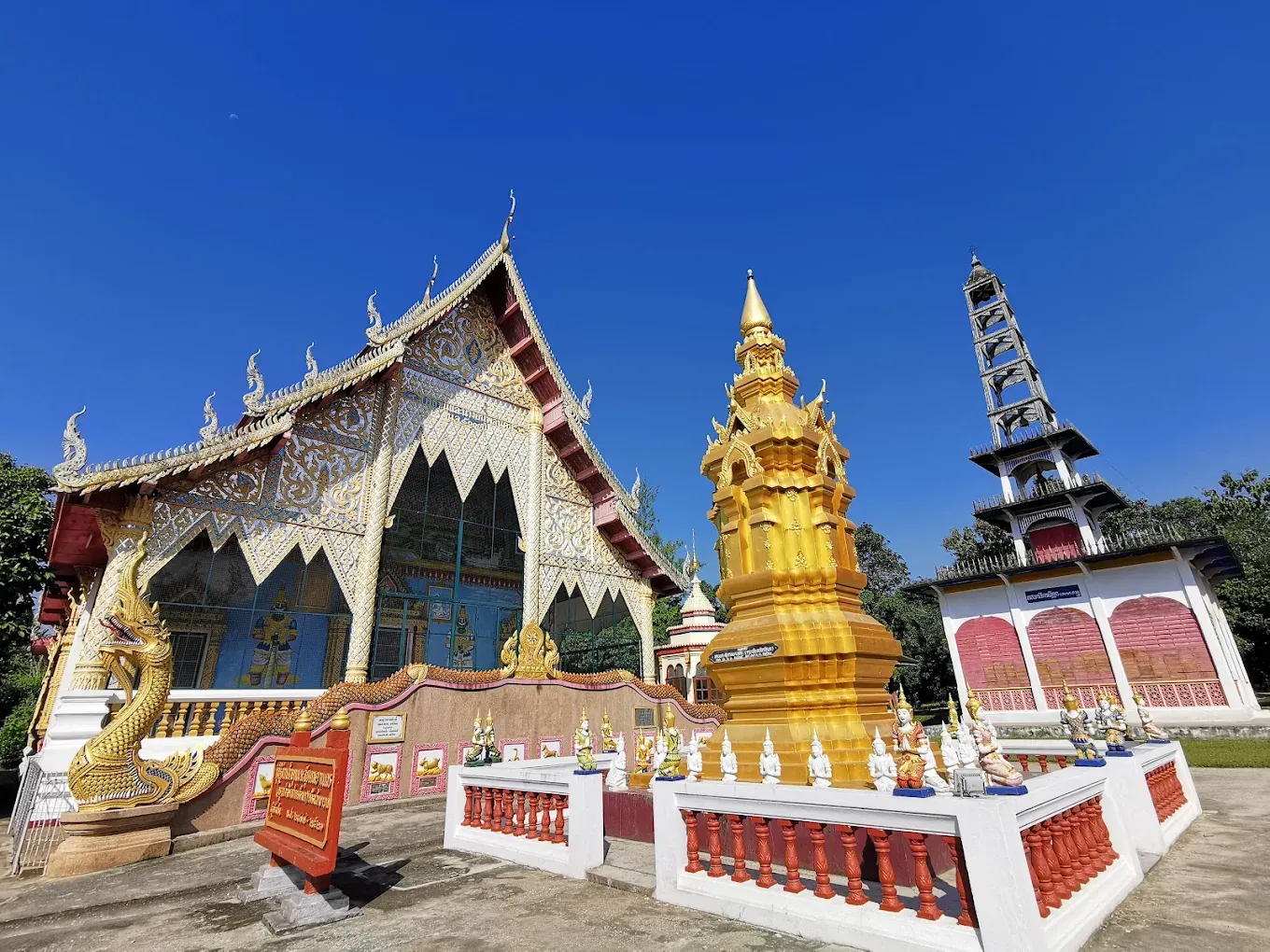
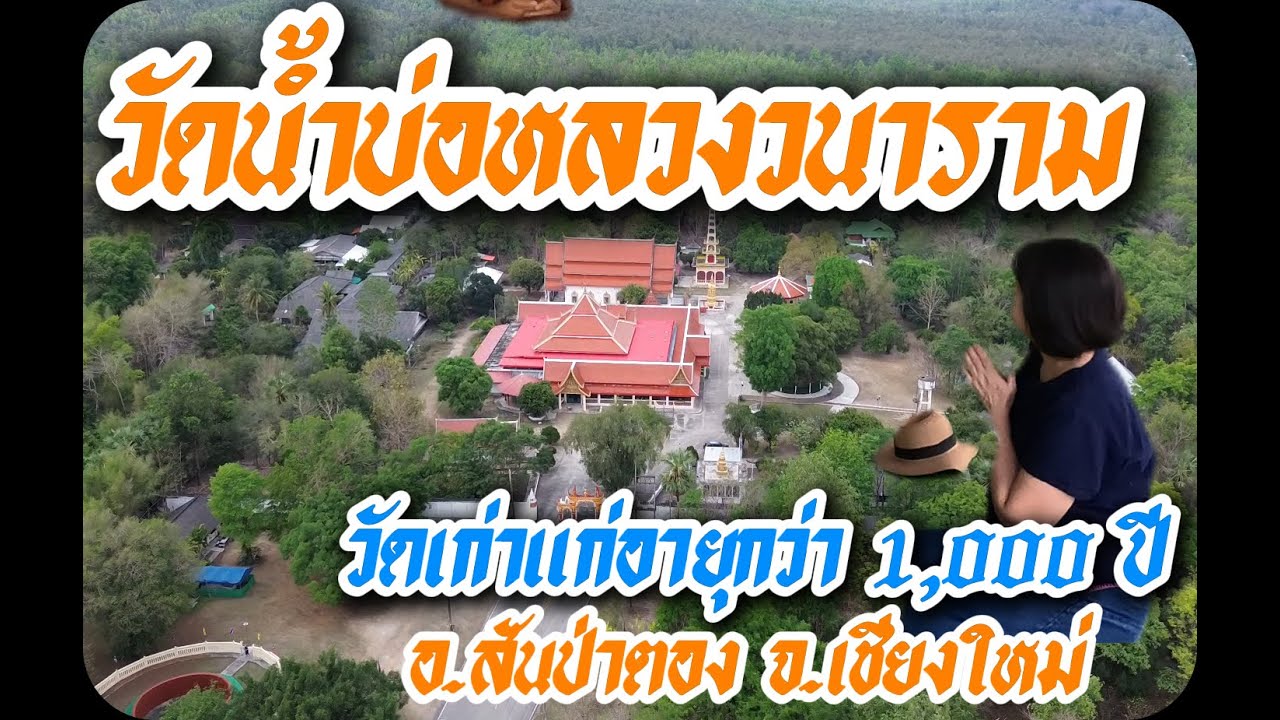
Wat Nam Bo Luang, also known as Wat Wanaram, is a Mahanikaya community forest temple located at No. 130, Ban Nam Bo Luang, Village No. 2, Nam Bo Luang Subdistrict, San Pa Tong District, Chiang Mai Province. The area was formerly Village No. 5 of San Klang Subdistrict before being recorded as Village No. 2 of Nam Bo Luang Subdistrict. According to ancient tradition, the temple was first founded in 780 CE by Suphannarangsi Pakot Setthi and his followers. It later became abandoned, was restored by Kruba Kham in 1912, and was revived again in 1934 by Kruba Inthachak Raksa, also known as Phra Suthammayanathera. Today, it is known for its forest setting, meditation atmosphere, Buddha footprint cave, sacred well, Phra Kaeo Chulamani, and the memorial pavilion of Phra Suthammayanathera.
Wat Nam Bo Luang is an important forest temple in Nam Bo Luang Subdistrict, San Pa Tong District, Chiang Mai Province. Located at No. 130 in Ban Nam Bo Luang, the temple belongs to the Mahanikaya monastic order and functions as a community temple, a meditation site, and a place of local religious memory. Its importance comes from its ancient legend, its long periods of abandonment and revival, its association with Kruba Inthachak Raksa, and its large temple grounds connected with forest, community, and irrigation landscapes.
The temple land and monastic land with issued title deeds cover a total of 303 rai, 3 ngan, and 44 square wah. The land is divided under title deed No. 67460, covering 138 rai, 3 ngan, and 46 square wah; title deed No. 67761, covering 146 rai, 2 ngan, and 40 square wah; and title deed No. 47766, covering 18 rai, 1 ngan, and 57 square wah. To the north and west, the temple borders national reserved forest. To the east, it borders a housing community, while the south borders village land and the Mae Taeng irrigation canal. This gives Wat Nam Bo Luang a distinctive setting that combines forest, village, and agricultural water systems.
Wat Nam Bo Luang is described as an ancient forest temple with consecrated monastic boundaries. According to old tradition, in 780 CE Suphannarangsi Pakot Setthi and his followers established the temple as an offering to Buddhism. Over time, it became abandoned. In 1912, Kruba Kham restored the temple, but after his passing it fell into abandonment once again. In 1934, Kruba Inthachak Raksa worked with local people to revive the abandoned temple, bringing monks back to reside there and developing permanent structures that allowed the temple to flourish again.
Kruba Inthachak Raksa, or Phra Suthammayanathera, is the most important figure in the modern history of Wat Nam Bo Luang. He did not develop the temple by emphasizing excessive construction. Instead, he emphasized moral training, meditation practice, preservation of the forest environment, and guiding people toward correct Buddhist practice. This approach shaped Wat Nam Bo Luang into a calm forest temple where visitors can feel the connection between Dhamma practice and nature.
The temple first received Wisungkham Sima around 1941, but the document was later lost. A new Wisungkham Sima was requested and granted again in 1997, with a consecrated boundary measuring 40 meters wide and 80 meters long. This is important because Wisungkham Sima is connected with formal monastic acts, especially ceremonies performed within the ordination hall according to Buddhist discipline.
The main structures of Wat Nam Bo Luang include the ordination hall, sermon hall, pavilion housing the image of Phra Suthammayanathera, viharn, Tripitaka hall and bell tower, monks’ residences, nuns’ residences, meditation hall, and relic-bathing pavilion. These structures allow the temple to support formal monastic ceremonies, worship, Dhamma listening, meditation, monastic residence, nuns’ practice, and annual merit-making activities.
The ordination hall is one of the most important religious structures at Wat Nam Bo Luang. Because the temple has received Wisungkham Sima, the ordination hall has formal significance in Sangha practice. Visitors should treat this area with particular respect, dress modestly, and follow temple guidance when entering or walking nearby.
The viharn serves as the main worship space for laypeople. Visitors can begin by paying respect in the viharn, calming the mind, and then continuing to other important areas such as the pavilion of Phra Suthammayanathera, the Buddha footprint cave, the sacred well, Phra Kaeo Chulamani, and the meditation spaces. This sequence allows visitors to understand the temple not only as a historical site but also as a living place of practice.
The pavilion housing the image of Phra Suthammayanathera is a significant memorial area. It allows visitors to pay respect to Kruba Inthachak Raksa and reflect on his role in reviving the temple. The value of this pavilion lies not only in devotion to a revered monk but also in remembrance of his commitment to morality, meditation, forest preservation, and social benefit.
The Tripitaka hall and bell tower represent the preservation of Buddhist teachings and the rhythm of monastic life. The Tripitaka hall symbolizes the protection of Dhamma knowledge, while the bell marks the time for monastic and temple activities. In a forest temple, the sound of the bell is part of the atmosphere of mindfulness and discipline.
The sermon hall and meditation hall support different forms of Buddhist learning and practice. The sermon hall is used for Dhamma talks, merit-making, and community gatherings. The meditation hall supports those who come to practice calmness, mindfulness, and insight. Together, these spaces make Wat Nam Bo Luang both a community temple and a place of inner cultivation.
The monks’ residences and nuns’ residences show the temple’s active role as a place of daily practice. Resident monks and nuns help maintain the temple’s religious rhythm, receive offerings, teach Dhamma, practice meditation, and support laypeople who come seeking guidance. These residential areas are part of the temple’s living spiritual structure and should be respected by visitors.
The important sacred sites and objects at Wat Nam Bo Luang include the Buddha footprint cave, the sacred well, Phra Kaeo Chulamani, Phra Borommathat, and the large pond in front of the temple. The Buddha footprint cave invites reflection on the Buddha’s presence and teaching. The sacred well connects the temple with the meaning of water, purity, and blessing. Phra Kaeo Chulamani adds to the temple’s devotional importance, while the pond forms one of the most memorable visual features of the temple grounds.
The large pond at the front of the temple is especially important because the temple’s name itself is connected with water. The pond reinforces the identity of Wat Nam Bo Luang and gives the temple a sense of calm and spaciousness. Together with the forest surroundings, it creates an atmosphere suitable for meditation, quiet walking, and mindful worship.
Wat Nam Bo Luang plays several roles in the local community. It is a place for merit-making, Dhamma listening, meditation, moral training, and Buddhist observance. It also continues the intention of Kruba Inthachak Raksa to help people understand morality, meditation, and right practice while preserving the forest environment as much as possible.
The temple’s annual and seasonal activities follow the Buddhist calendar, including Buddhist holy days, Buddhist Lent, the end of Buddhist Lent, Kathin, robe-offering ceremonies, temple-supporting merit-making, and meditation-related activities. Because the temple has a meditation hall, nuns’ residences, and large forest grounds, it is especially suitable for activities that emphasize reflection, calmness, Dhamma study, and spiritual training.
Important areas to see at Wat Nam Bo Luang include the ordination hall, viharn, pavilion of Phra Suthammayanathera, Tripitaka hall and bell tower, meditation hall, relic-bathing pavilion, Buddha footprint cave, sacred well, Phra Kaeo Chulamani, large pond, and forest temple grounds. Visitors should move slowly and respectfully, allowing time to experience the temple’s calm atmosphere rather than treating it as a quick sightseeing stop.
The atmosphere of Wat Nam Bo Luang is suited to travelers interested in forest temples, old temples of San Pa Tong, the life and legacy of Kruba Inthachak Raksa, meditation, and cultural routes in Nam Bo Luang. It is not a commercial tourist site. Its value lies in its history, spiritual atmosphere, forest preservation, and living Buddhist practice.
Visitors should dress respectfully, speak quietly, avoid disturbing monks, nuns, and meditators, avoid entering restricted areas, and refrain from touching sacred objects unnecessarily. If a meditation session, religious ceremony, or merit-making activity is taking place, visitors should follow the guidance of monks and temple caretakers.
Getting There is most convenient by private car, rental car, or local hired transport. From Chiang Mai city, travel toward San Pa Tong District, then continue into Nam Bo Luang Subdistrict and Ban Nam Bo Luang, Village No. 2. To avoid confusion with similarly named places, travelers can search using Wat Nam Bo Luang, Wat Wanaram, or Wat Nam Bo Luang San Pa Tong.
A meaningful cultural route can begin at Wat Nam Bo Luang, then continue to Wat Thung Fa Ham, Ban Nam Bo Luang Community Market, Wat Chom Chaeng, Wat Rong Wua, Wat Huai Thong, or Lam Nam Khan at Ban Huai Thong. This route connects forest temple practice, village temples, local markets, agricultural landscapes, irrigation systems, and the Lanna cultural setting of southern Chiang Mai.
Overall, Wat Nam Bo Luang is one of the most significant religious and cultural sites in Nam Bo Luang Subdistrict. Its importance comes from its ancient legend, revival by Kruba Kham and Kruba Inthachak Raksa, large forest temple grounds, Buddha footprint cave, sacred well, Phra Kaeo Chulamani, memorial pavilion, and atmosphere of meditation. For travelers seeking a deeper and quieter experience of Chiang Mai’s living Lanna forest temples, Wat Nam Bo Luang is worth visiting with care and respect.
| Name | Wat Nam Bo Luang Or Wat Wanaram |
| Location | Ban Nam Bo Luang, Village No. 2, Nam Bo Luang Subdistrict, San Pa Tong District, Chiang Mai Province |
| Address | No. 130, Ban Nam Bo Luang, Village No. 2, Nam Bo Luang Subdistrict, San Pa Tong District, Chiang Mai 50120, Thailand |
| Former Administrative Area | Formerly Village No. 5, San Klang Subdistrict; currently Village No. 2, Nam Bo Luang Subdistrict |
| Monastic Order | Mahanikaya |
| Temple Type | Community Temple / Ancient Forest Temple |
| Open Days | Daily |
| Opening Hours | 07.00 AM – 05.00 PM |
| Temple And Monastic Land | Total 303 Rai, 3 Ngan, And 44 Square Wah Under Title Deeds No. 67460, 67761, And 47766 |
| Boundaries | North And West: National Reserved Forest; East: Housing Community; South: Village Area And Mae Taeng Irrigation Canal |
| History | Tradition Says The Temple Was Founded In 780 CE By Suphannarangsi Pakot Setthi And Followers; Restored By Kruba Kham In 1912; Revived Again By Kruba Inthachak Raksa And Local People In 1934 |
| Wisungkham Sima | Granted Again In 1997, Measuring 40 Meters Wide And 80 Meters Long |
| Important Monk | Phra Suthammayanathera, Also Known As Kruba Inthachak Raksa, Who Played A Central Role In Reviving And Developing The Temple |
| Abbot / Caretaker | Phra Khru Thammapirom, Also Known As Intha Warathammo |
| Important Structures | Ordination Hall, Sermon Hall, Pavilion Housing Phra Suthammayanathera’s Image, Viharn, Tripitaka Hall And Bell Tower, Monks’ Residences, Nuns’ Residences, Meditation Hall, And Relic-Bathing Pavilion |
| Sacred Objects / Key Worship Points | Buddha Footprint Cave, Sacred Well, Phra Kaeo Chulamani, Phra Borommathat, And Large Pond In Front Of The Temple |
| Main Areas / Zones | Ordination Hall, Viharn, Phra Suthammayanathera Pavilion, Sermon Hall, Meditation Hall, Tripitaka Hall And Bell Tower, Monks’ Residences, Nuns’ Residences, Relic-Bathing Pavilion, Buddha Footprint Cave, Sacred Well, Large Pond, And Forest Temple Grounds |
| Facilities | Parking, Public Restrooms, And Accessible Areas For Disabled Visitors |
| Phone | 053-835-156 |
| Current Status | Active Community Forest Temple In Ban Nam Bo Luang, Village No. 2, Nam Bo Luang Subdistrict, San Pa Tong District, Chiang Mai Province |
| Travel Information | Travel From Chiang Mai City Toward San Pa Tong District, Then Continue Into Nam Bo Luang Subdistrict And Ban Nam Bo Luang, Village No. 2; Private Car, Rental Car, Or Local Hired Transport Is Recommended |
| Nearby Tourist Attractions | 1. Wat Thung Fa Ham, About 2 Km 2. Ban Nam Bo Luang Community Market, About 2 Km 3. Wat Chom Chaeng, About 4 Km 4. Wat Rong Wua, About 5 Km 5. Lam Nam Khan At Ban Huai Thong, About 8 Km |
| Nearby Restaurants | 1. MIRACLE COFFEE Nam Bo Luang, About 2 Km, Tel. 086-917-8080 2. Tea Tree House, About 3 Km, Tel. 089-431-7600, 091-075-7478 3. Khrua Khun Daeng, About 4 Km 4. Coffee & Craft In Home, About 6 Km, Tel. 096-014-6459 5. Hong Lap Mae Wang 88, About 8 Km, Tel. 081-062-2544 |
| Nearby Accommodations | 1. Tea Tree House, About 3 Km, Tel. 089-431-7600 2. Nakamaharuy Khun Nueng Art & Gallery, About 5 Km, Tel. 080-289-4923 3. Baan Suan Kaew Huen Kham @ San Pa Tong, About 8 Km, Tel. 081-366-2382 4. Lake View @ Sanpatong, About 10 Km, Tel. 093-195-8098 5. Home At 9, About 12 Km, Tel. 088-636-2679 |
Frequently Asked Questions (FAQ)
Q: Where Is Wat Nam Bo Luang Located?
A: Wat Nam Bo Luang is located at No. 130, Ban Nam Bo Luang, Village No. 2, Nam Bo Luang Subdistrict, San Pa Tong District, Chiang Mai Province 50120.
Q: What Are The Opening Days And Hours Of Wat Nam Bo Luang?
A: Wat Nam Bo Luang is open daily from 07.00 AM to 05.00 PM.
Q: What Is The Main History Of Wat Nam Bo Luang?
A: Local tradition says the temple was founded in 780 CE by Suphannarangsi Pakot Setthi and followers. It later became abandoned, was restored by Kruba Kham in 1912, and was revived again by Kruba Inthachak Raksa and local people in 1934.
Q: How Is Kruba Inthachak Raksa Connected With Wat Nam Bo Luang?
A: Kruba Inthachak Raksa, also known as Phra Suthammayanathera, revived the abandoned temple and shaped it into a place focused on morality, meditation, forest preservation, and Buddhist practice.
Q: What Important Worship Points Are Found Inside The Temple?
A: Important worship points include the Buddha footprint cave, sacred well, Phra Kaeo Chulamani, Phra Borommathat, the pavilion of Phra Suthammayanathera, and the large pond in front of the temple.
Q: What Kind Of Travelers Should Visit Wat Nam Bo Luang?
A: It is suitable for travelers interested in forest temples, old temples of San Pa Tong, Kruba Inthachak Raksa’s legacy, meditation, and faith-based cultural routes in Nam Bo Luang.
Q: How Can Travelers Get To Wat Nam Bo Luang?
A: Travel from Chiang Mai city toward San Pa Tong District, then continue into Nam Bo Luang Subdistrict and Ban Nam Bo Luang, Village No. 2 by private car, rental car, or local hired transport.
Q: What Nearby Places Can Be Visited Together With Wat Nam Bo Luang?
A: Nearby places include Wat Thung Fa Ham, Ban Nam Bo Luang Community Market, Wat Chom Chaeng, Wat Rong Wua, and Lam Nam Khan at Ban Huai Thong.
 Category: ●Places of Worship
 Group: ●Temple
Last Update : 1 MonthAgo
 Last Update : 1 MonthAgo
 Click to Access the Navigation Map GPS
Wat Nam Bo Luang (Wat Wanaram) Map
Recommend

 Muang Chiang Mai(121)Chom Thong(47)Mae Chaem(25)Chiang Dao(33)Doi Saket(68)Mae Taeng(85)Mae Rim(69)Samoeng(29)Fang(71)Mae Ai(59)Phrao(70)San Pa Tong(103)San Kamphaeng(66)San Sai(73)Hang Dong(73)Hot(32)Doi Tao(22)Omkoi(11)Saraphi(74)Wiang Haeng(15)Chai Prakan(28)Mae Wang(32)Mae On(22)Doi Lo(33)Galyani Vadhana(1)


