
lovethailand home >North Travel Attractions >Chiang Mai Travel Attractions >San Pa Tong >Thung Satok > Wat Tha Champi (Thung Satok)
TL;DR: Wat Tha Champi (Thung Satok) is located at Ban Tha Champi, Moo 8, Thung Satok Subdistrict, San Pa Tong District, Chiang Mai Province.

Wat Tha Champi (Thung Satok)
Operating day: Daily
Operating time: 08.00 - 17.00
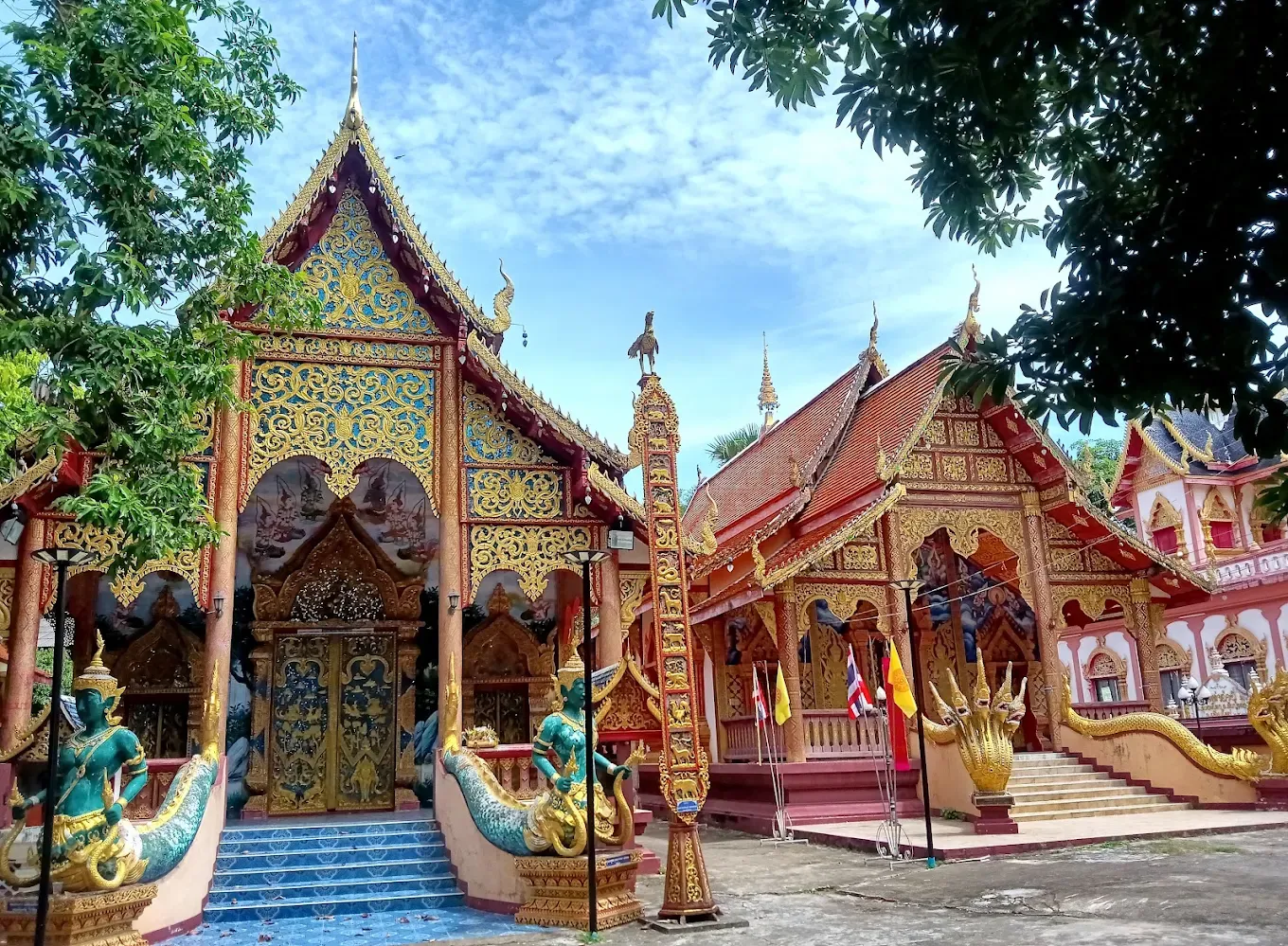
Wat Tha Champi (Thung Satok) is an old Mahanikaya community temple located beside the Mae Wang River landscape in Ban Tha Champi, Moo 8, Thung Satok Subdistrict, San Pa Tong District, Chiang Mai Province. Officially established as a temple in 1876 and granted royal Wisungkhamsima on 27 August 1883, the temple preserves an important Lanna village-temple identity through its old brick-and-stucco principal Buddha image, Lanna-style ordination hall, viharn, sermon hall, Phra Sangkachai pavilion, reclining Buddha pavilion, monks’ residences, multipurpose hall, and Lanna-style chedi. It is also strongly associated with Luang Pu Khruba Duangdee Subhaddo, one of the respected Lanna monks connected with the temple.
Wat Tha Champi (Thung Satok) is located at 24 Ban Tha Champi, Moo 8, Thung Satok Subdistrict, San Pa Tong District, Chiang Mai Province 50120. It is a local Buddhist temple under the Mahanikaya order and is classified as a temple with consecrated monastic boundary. The temple is an important religious center for Ban Tha Champi and the Mae Wang River community landscape, serving as a place for worship, merit-making, Dhamma listening, monastic ceremonies, and local Buddhist traditions.
Wat Tha Champi was officially established as a temple in 1876 and received royal Wisungkhamsima on 27 August 1883, with a consecrated boundary measuring 20 meters wide and 40 meters long. A Wisungkhamsima is essential in Buddhist monastic practice because it defines the sacred boundary used for formal monastic acts such as ordination. This gives Wat Tha Champi a clear religious status and allows it to function as a complete community temple for monks and lay supporters.
The name “Tha Champi” is closely connected with local geography and village memory. The temple was originally associated with the Mae Wang River, where the riverbank was deep and villagers had to descend many steps to reach the water. A large champi tree in the village also became part of the place name. “Tha” refers to a river landing or water access point, while “Champi” refers to the fragrant champi tree. The name therefore preserves the relationship between river, tree, village, and faith.
The temple was formerly known as Wat Tha Champi, Ban Ton Hat. Its old setting beside the Mae Wang River reflects how northern Thai temples often developed close to water routes, agricultural land, and village settlement. In earlier times, rivers were not only natural features but also part of movement, farming, daily water use, and community identity. Wat Tha Champi therefore carries a landscape memory that is important to understanding the temple.
Ban Tha Champi, Moo 8, belongs to Thung Satok Subdistrict, a lowland area of San Pa Tong District shaped by waterways, rice fields, orchards, village roads, and Buddhist temple networks. Nearby temples in the same subdistrict include Wat Don Kaew, Wat Talat Kaew, Wat Tha Sa, Wat Prasat, Wat Pa Chi, Wat Pa Mai Daeng, Wat Rong Som Poi, Wat Si Bun Rueang, Wat Sawang Arom, and Wat Hua Rin. Together, these temples form a local Buddhist landscape that reflects the cultural structure of Thung Satok.
The temple land consists of three title-deed parcels totaling 19 rai, 2 ngan, and 30 square wah. The listed land documents include Nor Sor 4 numbers 13, 14, 15, 822, 823, 824, 923, 933, and 944, as well as Sor Kho Ngor number 15 for the temple site. This substantial land area allows the temple to support multiple religious buildings, community activities, and annual merit-making events.
Phra Palat Theerapong Dhammadharo is listed as the abbot of Wat Tha Champi in the current information used for this article. In a community temple, the abbot plays an important role in maintaining temple order, preserving monastic discipline, coordinating with lay supporters, caring for temple buildings, and guiding Buddhist activities. This role is especially important at Wat Tha Champi because the temple has a long history, several important buildings, and deep community memory.
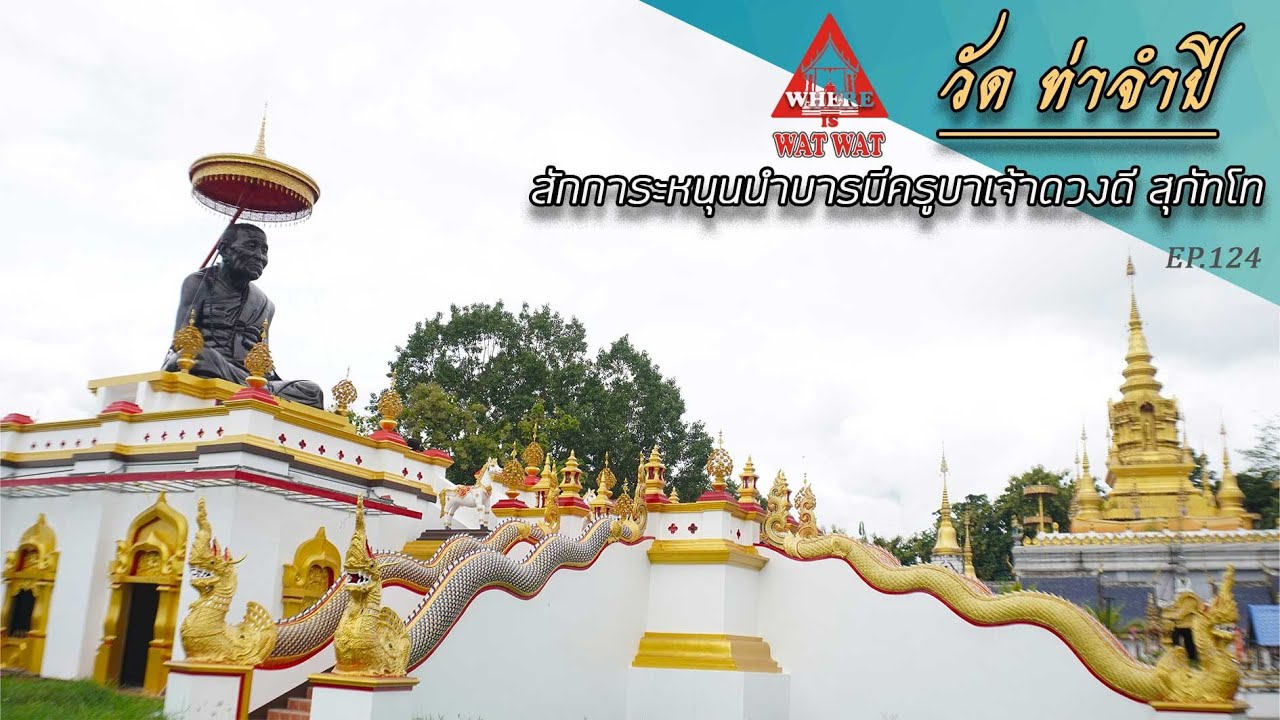
One of the most important figures connected with Wat Tha Champi is Phra Khru Suphat Sila Khun, widely known as Luang Pu Khruba Duangdee Subhaddo. He is remembered as a respected Lanna monk and an important figure in the development of the temple. The temple history records major improvements associated with the period of development, including the viharn, ordination hall, sermon hall, monks’ residences, reclining Buddha pavilion, Phra Sangkachai pavilion, and multipurpose hall.
Luang Pu Khruba Duangdee gives Wat Tha Champi a special place in Lanna Buddhist memory. The temple is therefore meaningful not only as a riverside village temple but also as a site connected with a respected monastic lineage. Visitors interested in northern Thai Buddhist culture, respected monks, and community temple restoration will find Wat Tha Champi especially relevant.
The most important sacred object of Wat Tha Champi is the old brick-and-stucco Buddha image in the viharn, serving as the principal Buddha image of the temple. It is accompanied by Buddha images on the left and right. Such an old principal image is significant because it preserves the faith of earlier generations and remains the devotional center of the temple. Visitors should approach it respectfully, avoid touching sacred objects, and keep voices low inside the viharn.
The ordination hall measures 6 meters wide and 15 meters long. It was completed in 1982 and is built in Lanna style, with reinforced-concrete posts and beams, brick-and-plaster walls, a hardwood roof structure, and glazed roof tiles. The ordination hall is connected with the temple’s consecrated boundary and formal monastic acts. Visitors should treat this building as one of the temple’s most sacred areas.
The viharn measures 8 meters wide and 20 meters long. It was completed in 1971 and is built in Lanna style. It is the main devotional space of the temple and houses the principal Buddha image. In a Lanna community temple, the viharn is where laypeople pay respect to the Buddha, listen to Dhamma, make merit, and gather for ceremonies. Visitors should remove shoes before entering and behave calmly inside the building.
The sermon hall measures 10 meters wide and 20 meters long. It was completed in 1998 and is also built in Lanna style. This building supports Dhamma talks, temple meetings, Kathin robe offerings, forest robe offerings, ordinations, funerals, dedication ceremonies, and other community activities. In a village temple, the sermon hall is often the place where monks, elders, families, and young people meet through repeated acts of faith and cooperation.
The Phra Sangkachai pavilion measures 6 meters wide and 13 meters long. It was completed in 1983 and is built in Thai Lanna style. Phra Sangkachai is widely venerated in Thai Buddhist culture as a figure associated with abundance, auspiciousness, and benevolent blessings. This pavilion adds another devotional focus to the temple and allows visitors to follow a meaningful worship route within the compound.
The monks’ residences measure 10 meters wide and 15 meters long. They were completed in 1990 and are built in Thai Lanna style, with reinforced-concrete structural elements and a hardwood roof covered with CPAC tiles. These residences support monastic life, study, rest, and daily religious duties. Visitors should avoid entering monastic residential areas without permission and should respect the privacy of monks.
The reclining Buddha pavilion measures 9 meters wide and 15 meters long. It was completed in 1998 and is built in Thai Lanna style. A reclining Buddha image carries deep Buddhist meaning, often associated with the Buddha’s final passing into Parinibbana and the serenity of spiritual completion. Visitors should use this space quietly and contemplate the meaning of the image rather than treating it as only a visual attraction.
The multipurpose hall measures 14 meters wide and 35 meters long. It was completed in 1998 and is built in Thai Lanna style. Such a hall is important for large merit-making events, community gatherings, food preparation, youth activities, and visitor reception. It allows Wat Tha Champi to function as a social and religious center for Ban Tha Champi and nearby communities.
The chedi measures 10 meters wide and 10 meters long and is built in Lanna style. A chedi is one of the most important sacred architectural forms in northern Thai Buddhist culture. It symbolizes continuity of Buddhism, reverence for the Triple Gem, and community devotion. Visitors should walk around the chedi respectfully and avoid touching or climbing any sacred structure.
In addition to the main buildings, Wat Tha Champi is associated with moral training, morning and evening chanting, and local cultural learning. These activities show that the temple is not merely a place for ceremonies. It is also a living educational space where children, youth, adults, elders, monks, and lay supporters participate in Buddhist and cultural life.
Wat Tha Champi plays an important role for Ban Tha Champi. It is used for Buddhist holy days, Dhamma listening, ordinations, funerals, dedication ceremonies, Kathin robe offerings, forest robe offerings, meal offerings, morning and evening chanting, and annual temple activities. During temple events, villagers help prepare food, arrange the temple grounds, welcome guests, support monks, and maintain the ritual atmosphere.
The temple also remains relevant in contemporary community life. The area near the temple has been used for local health-education activities, and access-related public works near the road to Wat Tha Champi have been developed by the local municipality. These details show that the temple continues to function as a community space, not only as an old religious site.
Religious traditions connected with Wat Tha Champi follow the rhythm of Lanna community Buddhism. These include Buddhist holy days, Buddhist Lent, the end of Buddhist Lent, Kathin robe offerings, forest robe offerings, ordination ceremonies, funerals, dedication ceremonies, meal offerings, morning and evening chanting, and local cultural activities. Such traditions sustain cooperation among monks, villagers, elders, families, and youth.
The main highlight of Wat Tha Champi is its combination of history, sacred objects, Lanna architecture, riverside identity, and monastic memory. Its old principal Buddha image, Lanna-style ordination hall, viharn, sermon hall, reclining Buddha pavilion, Phra Sangkachai pavilion, multipurpose hall, and chedi make it a layered temple for visitors interested in old Lanna community temples. Its association with Luang Pu Khruba Duangdee gives the temple additional spiritual significance.
Visitors should dress modestly, remove shoes before entering sacred buildings, keep voices low in the viharn and ordination hall, avoid touching old Buddha images or sacred objects, avoid entering monks’ residences without permission, and give priority to local worshippers if a ceremony is taking place. Wat Tha Champi remains a living religious place, so respectful conduct is essential.
Getting There is most convenient by private car or rental car. From Chiang Mai city, travel south via the Chiang Mai – Hang Dong – San Pa Tong route or the Chiang Mai – Hot Road, then continue into Thung Satok Subdistrict and Ban Tha Champi, Moo 8. The temple is located within a local community landscape connected with the Mae Wang River and nearby village roads.
A practical connected route can begin at Wat Tha Champi, then continue to Wat Don Kaew, Wat Talat Kaew, Wat Tha Sa, Wat Prasat, Wat Hua Rin, Wat Pa Chi, Wat Sawang Arom, and Wat Si Bun Rueang. Travelers who want to extend the route beyond Thung Satok can continue to Wat Buppharam, Wat Huai Som, Wat Kantharam, Wat Phra Bat Thung O, Wat Ubosot, or Wiang Tha Kan.
The best time to visit is in the morning or late afternoon, when the atmosphere is more comfortable and suitable for quiet worship. During the rainy season, visitors should allow additional travel time because Thung Satok is a lowland area connected with waterways. If a temple ceremony or community event is taking place, visitors should give priority to local participants and follow temple etiquette carefully.
Overall, Wat Tha Champi (Thung Satok) is an old Mahanikaya community temple of Ban Tha Champi, Moo 8, Thung Satok Subdistrict, San Pa Tong District, Chiang Mai Province. Established as a temple in 1876 and granted royal Wisungkhamsima on 27 August 1883, it preserves a strong Lanna identity through its old principal Buddha image, ordination hall, viharn, sermon hall, Phra Sangkachai pavilion, reclining Buddha pavilion, monks’ residences, multipurpose hall, and chedi. It is a meaningful stop for visitors interested in Lanna Buddhist heritage and temple routes in San Pa Tong.
| Name | Wat Tha Champi (Thung Satok) |
| Former / Related Name | Wat Tha Champi, Ban Ton Hat |
| Location | Ban Tha Champi, Moo 8, Thung Satok Subdistrict, San Pa Tong District, Chiang Mai Province |
| Address | 24 Ban Tha Champi, Moo 8, Thung Satok Subdistrict, San Pa Tong District, Chiang Mai 50120, Thailand |
| Temple Type | Local Buddhist Temple Under The Mahanikaya Order; Consecrated-Boundary Temple |
| Temple Land | Three land-title parcels totaling 19 Rai, 2 Ngan, and 30 Square Wah |
| Land Documents | Nor Sor 4 numbers 13, 14, 15, 822, 823, 824, 923, 933, 944, and Sor Kho Ngor number 15 |
| History | Officially established as a temple in 1876; originally associated with the Mae Wang River landing and a large champi tree in the village |
| Wisungkhamsima | Granted royal Wisungkhamsima on 27 August 1883, with a consecrated boundary measuring 20 meters wide and 40 meters long |
| Abbot / Caretaker | Phra Palat Theerapong Dhammadharo |
| Important Monastic Figure | Phra Khru Suphat Sila Khun, also known as Luang Pu Khruba Duangdee Subhaddo, former abbot and respected Lanna monk associated with Wat Tha Champi |
| Important Structures | 1. Ordination Hall, 6 M Wide And 15 M Long, Completed In 1982, Lanna Style 2. Viharn, 8 M Wide And 20 M Long, Completed In 1971, Lanna Style 3. Sermon Hall, 10 M Wide And 20 M Long, Completed In 1998, Lanna Style 4. Phra Sangkachai Pavilion, 6 M Wide And 13 M Long, Completed In 1983, Thai Lanna Style 5. Monks’ Residences, 10 M Wide And 15 M Long, Completed In 1990, Thai Lanna Style 6. Reclining Buddha Pavilion, 9 M Wide And 15 M Long, Completed In 1998, Thai Lanna Style 7. Multipurpose Hall, 14 M Wide And 35 M Long, Completed In 1998, Thai Lanna Style 8. Chedi, 10 M Wide And 10 M Long, Lanna Style |
| Important Sacred Objects | Old brick-and-stucco principal Buddha image in the viharn, with Buddha images on the left and right |
| Name Origin | The name comes from a Mae Wang River landing and a large champi tree in the village, which led local residents to call the temple Wat Tha Champi |
| Highlights | An old riverside Lanna temple with an old principal Buddha image, Lanna-style ordination hall and viharn, reclining Buddha pavilion, Phra Sangkachai pavilion, Lanna-style chedi, and a strong connection with Luang Pu Khruba Duangdee Subhaddo |
| Community Role | A spiritual center for Ban Tha Champi, used for merit-making, Dhamma listening, Buddhist ceremonies, ordinations, funerals, dedication ceremonies, Kathin offerings, forest robe offerings, temple activities, and community events |
| Related Traditions | Buddhist Holy Days, Buddhist Lent, The End Of Buddhist Lent, Kathin Robe Offerings, Forest Robe Offerings, Meal Offerings, Ordinations, Funerals, Dedication Ceremonies, Morning And Evening Chanting, And Local Cultural Activities |
| Travel Information | Private car or rental car is the most convenient option. From Chiang Mai city, travel via the Chiang Mai – Hang Dong – San Pa Tong route or the Chiang Mai – Hot Road, then continue into Thung Satok Subdistrict and Ban Tha Champi, Moo 8. |
| Current Status | Active local Mahanikaya temple in Ban Tha Champi, Moo 8, Thung Satok Subdistrict, San Pa Tong District, Chiang Mai Province, serving religious, merit-making, local cultural, and community functions |
| Nearby Tourist Attractions | 1. Wat Don Kaew (Thung Satok), about 4 km 2. Wat Talat Kaew, about 4 km 3. Wat Tha Sa, about 5 km 4. Wat Prasat (Thung Satok), about 6 km 5. Wat Hua Rin, about 8 km 6. Wiang Tha Kan, about 16 km |
| Nearby Restaurants | 1. Khrua Pa Phan San Pa Tong, about 7 km, Tel. 084-609-6109 2. Hong Larb Mae Wang 88, about 7 km, Tel. 081-062-2544 3. Anuwat Salapao San Pa Tong, about 8 km, Tel. 061-368-2385 4. Lung Ta Coffee, about 8 km, Tel. 086-672-5722 5. Ton Khao Shop, about 12 km, Tel. 098-792-6440 6. Pla Salawin Restaurant, about 14 km, Tel. 086-919-3851 |
| Nearby Accommodations | 1. Home At 9, about 12 km, Tel. 088-636-2679 2. Kaomai Lanna Resort, about 14 km, Tel. 053-481-201 3. Tai Resort Sanpatong, about 15 km 4. Wanwan Lanna By Pat, about 18 km, Tel. 080-892-7724 5. P Resort & W Resort, about 18 km, Tel. 064-334-4566 |
Frequently Asked Questions (FAQ)
Q: Where Is Wat Tha Champi (Thung Satok) Located?
A: Wat Tha Champi is located at 24 Ban Tha Champi, Moo 8, Thung Satok Subdistrict, San Pa Tong District, Chiang Mai Province 50120.
Q: When Was Wat Tha Champi Officially Established?
A: Wat Tha Champi was officially established as a temple in 1876.
Q: When Did Wat Tha Champi Receive Royal Wisungkhamsima?
A: Wat Tha Champi received royal Wisungkhamsima on 27 August 1883, with a consecrated boundary measuring 20 meters wide and 40 meters long.
Q: What Is The Origin Of The Name Wat Tha Champi?
A: The name comes from the temple’s old setting near a Mae Wang River landing and a large champi tree in the village.
Q: What Are The Important Sacred Objects At Wat Tha Champi?
A: The most important sacred object is the old brick-and-stucco principal Buddha image in the viharn, together with Buddha images on the left and right.
Q: What Important Structures Are Found At Wat Tha Champi?
A: Important structures include the ordination hall, viharn, sermon hall, Phra Sangkachai pavilion, monks’ residences, reclining Buddha pavilion, multipurpose hall, and Lanna-style chedi.
Q: How Is Wat Tha Champi Connected With Luang Pu Khruba Duangdee?
A: Luang Pu Khruba Duangdee Subhaddo, also known as Phra Khru Suphat Sila Khun, is an important former abbot and respected Lanna monk associated with Wat Tha Champi and its development.
Q: What Nearby Places Can Be Visited With Wat Tha Champi?
A: Nearby places include Wat Don Kaew, Wat Talat Kaew, Wat Tha Sa, Wat Prasat, Wat Hua Rin, and Wiang Tha Kan.
 Category: ●Places of Worship
 Group: ●Temple
Last Update : 1 MonthAgo
 Last Update : 1 MonthAgo
 Click to Access the Navigation Map GPS
Wat Tha Champi (Thung Satok) Map
Recommend

 Muang Chiang Mai(121)Chom Thong(47)Mae Chaem(25)Chiang Dao(33)Doi Saket(68)Mae Taeng(85)Mae Rim(69)Samoeng(29)Fang(71)Mae Ai(59)Phrao(70)San Pa Tong(103)San Kamphaeng(66)San Sai(73)Hang Dong(73)Hot(32)Doi Tao(22)Omkoi(11)Saraphi(74)Wiang Haeng(15)Chai Prakan(28)Mae Wang(32)Mae On(22)Doi Lo(33)Galyani Vadhana(1)


