
lovethailand home >North Travel Attractions >Chiang Mai Travel Attractions >San Pa Tong >Thung Tom > Wat Boon Nak
TL;DR: Wat Boon Nak is located at Ban Pa Ruak, Thung Tom Subdistrict, San Pa Tong District, Chiang Mai Province. Highlights include An old Ban Pa Ruak community temple with a former name connected to ruak bamboo forest, a gold-covered meditation Buddha image, and.

Wat Boon Nak
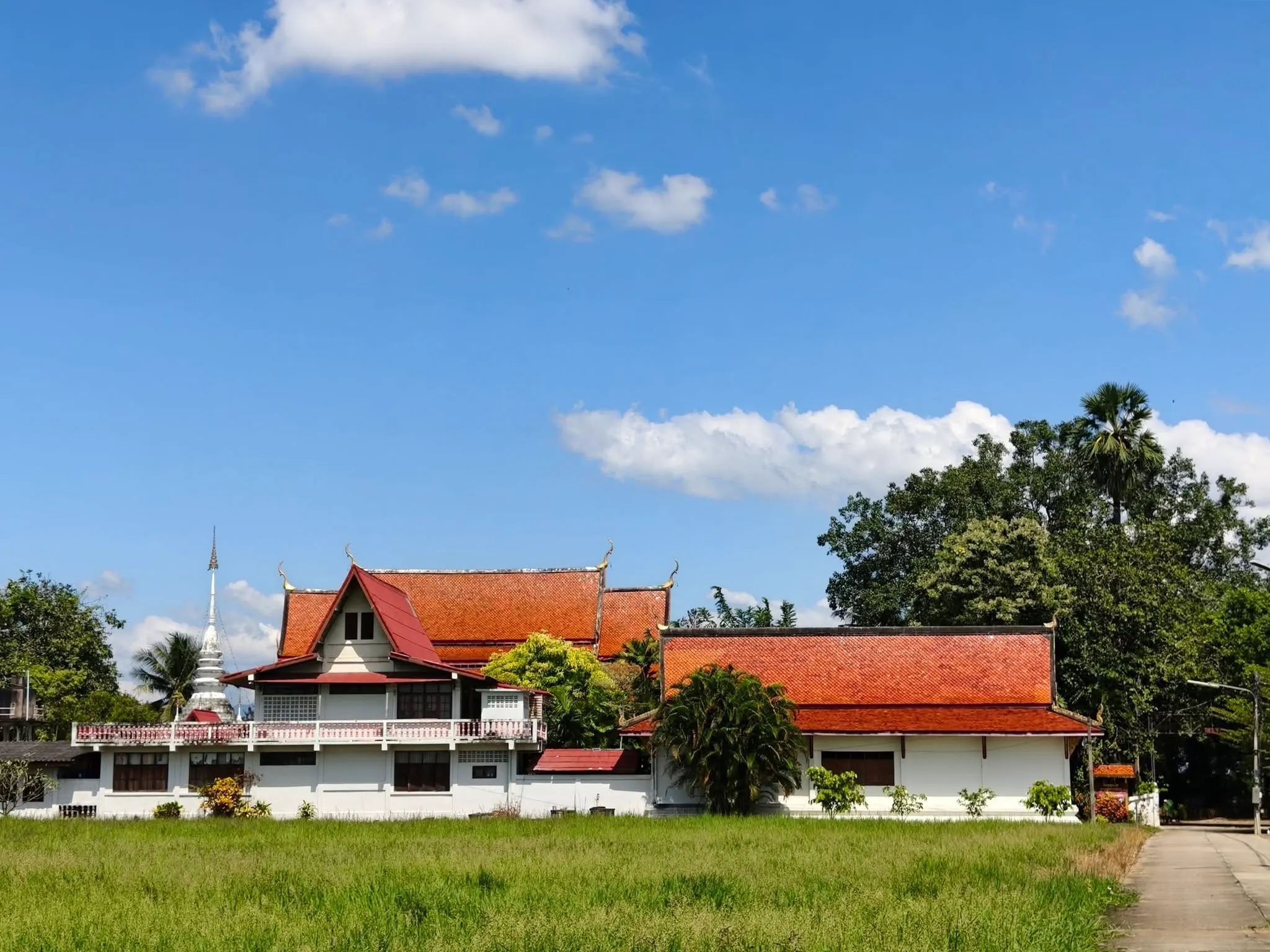
Operating day: Daily
Operating time: 08.00 - 17.00
Wat Boon Nak is a local Mahanikaya temple located at 228 Ban Pa Ruak, Thung Tom Subdistrict, San Pa Tong District, Chiang Mai Province. Formerly known as Wat Pa Ruak because the temple site was once covered with ruak bamboo, it was built around 1752 and is listed in provincial temple records as having been established around 25 March 1906. The temple covers 3 rai, 2 ngan, and 69 square wah under title deed number 1468. Important features include the viharn, two sermon halls, monks’ residences, a gold-covered brick-and-stucco Buddha image in meditation posture with left and right disciples, a teakwood Dhamma chest with Thai decorative patterns, a decorated sermon seat, and a carved teak cabinet for Buddha images.
Wat Boon Nak is located at 228 Ban Pa Ruak, Thung Tom Subdistrict, San Pa Tong District, Chiang Mai Province 50120. It is a local Buddhist temple under the Mahanikaya order. The temple land covers 3 rai, 2 ngan, and 69 square wah under title deed number 1468. Wat Boon Nak is an old community temple of Ban Pa Ruak and plays an important role as a place for merit-making, Dhamma listening, family ceremonies, and community Buddhist activities. Its older name, Wat Pa Ruak, preserves the memory of a landscape once associated with ruak bamboo.
The temple was built around 1752, making it one of the older temples in the San Pa Tong area. The name Wat Pa Ruak shows a strong connection between the temple and its original landscape. Ruak bamboo was useful in rural life for tools, fencing, construction, agriculture, and daily household needs. The temple therefore began in a natural setting that was closely connected with village life. Over time, the area developed into a Buddhist religious space and later became known as Wat Boon Nak.
The former name Wat Pa Ruak is important because it records the environmental memory of the community. “Pa” means forest, while “ruak” refers to a type of bamboo. The name suggests that the temple site was once surrounded by bamboo growth. The current name Wat Boon Nak gives the temple a more auspicious religious meaning. “Boon” refers to merit and goodness, while “Nak” carries sacred associations in Thai and Lanna Buddhist culture. Together, the two names show both the natural past and the religious identity of the temple.
Provincial temple records list the establishment of the temple around 25 March 1906. This should be understood together with the older construction date of around 1752. The temple therefore has two layers of historical meaning: an older community memory of temple creation and a later formal record in the provincial temple register. Both are important for understanding the temple’s development and long relationship with Ban Pa Ruak.
Thung Tom Subdistrict is a lowland area of San Pa Tong District with irrigation canals, the Mae Kung irrigation stream, rice fields, gardens, and village roads. The local way of life has long been associated with farming, gardening, trade, government service, animal raising, and processed agricultural products. Wat Boon Nak stands within this agricultural and community landscape. It should therefore be understood not only as a religious building but also as part of a wider system of water, land, village roads, and Buddhist practice.
The temple boundaries reveal its relationship with the surrounding village environment. The northern boundary adjoins a public irrigation channel, the southern boundary adjoins private land and a road, the eastern boundary adjoins private land, and the western boundary adjoins private land. The public irrigation channel on the northern side shows the importance of water management in Thung Tom. The road and private land around the temple show that it stands within a living community rather than apart from village life.
Ban Pa Ruak preserves the memory of its natural environment through its name. The temple’s former name also reflects that memory. As the community developed, Wat Boon Nak became a spiritual center where villagers could make merit, listen to teachings, conduct family ceremonies, and join annual Buddhist traditions. The temple connects the older landscape of bamboo groves with the present religious life of the community.
The important structures of Wat Boon Nak include the viharn, two sermon halls, and monks’ residences. The viharn is the main worship space where villagers and visitors pay respect to the Buddha image. The two sermon halls support Dhamma listening, merit-making events, lay gatherings, and community ceremonies. The monks’ residences support monastic life, study, rest, and daily religious duties. Together, these structures allow the temple to function as an active community temple.
The viharn is the most important area for visitors to approach respectfully. The temple’s key sacred image is a brick-and-stucco Buddha image covered with gold leaf, seated in meditation posture, with disciples on the left and right. Brick-and-stucco construction reflects local craftsmanship and the use of durable materials. Gold leaf represents devotion and the continuing faith of the community. The meditation posture expresses calmness, mental stability, and spiritual concentration.
The presence of left and right disciples beside the Buddha image adds religious meaning to the worship space. It reminds visitors of the Buddha, the Dhamma, and the Sangha. The image is not only a work of religious art; it is a devotional focus for villagers who come to make merit, pray, and cultivate peace of mind. Visitors should behave quietly and respectfully inside the viharn.
The teakwood Dhamma chest decorated with Thai patterns is another important cultural object. It reflects respect for Buddhist teachings and local woodworking craftsmanship. Teakwood has long been valued in northern Thailand for its strength and durability. A beautifully decorated Dhamma chest shows that sacred texts and teachings were treated as precious objects worthy of careful preservation.
The decorated sermon seat is significant because it is used for Dhamma teaching. In Lanna community temples, a sermon seat is not merely a functional object. It represents the transmission of Buddhist teachings from monks to villagers. Its decorative patterns show the care and devotion of the local community in creating objects for the support of Buddhism.
The carved teak cabinet for Buddha images adds another layer to the temple’s cultural value. Such cabinets protect sacred objects and reflect local craftsmanship. The presence of carved wooden objects at Wat Boon Nak shows that the temple is not only a place of worship but also a place that preserves the artistic and religious memory of the community.
Phra Phuwadon Yanasophano is listed as the abbot of Wat Boon Nak. In a village temple, the abbot has an important role in maintaining religious activities, temple order, monastic life, and the relationship between monks and lay supporters. The life of a community temple depends on cooperation among monks, temple committees, village leaders, and local residents.
Wat Boon Nak plays an important role in Ban Pa Ruak. It serves as a place for Buddhist holy days, merit-making, Dhamma listening, ordinations, funerals, dedication ceremonies, and annual religious events. These activities allow villagers of different generations to meet, cooperate, support monks, honor ancestors, and maintain community bonds through Buddhism.
Religious traditions connected with Wat Boon Nak should be understood within the wider context of Lanna community temples. These include Buddhist holy days, Buddhist Lent, the end of Buddhist Lent, Kathin robe offerings, forest robe offerings, ordination ceremonies, funerals, dedication ceremonies, and seasonal merit-making. Such events are both religious rituals and community cooperation.
The main value of Wat Boon Nak lies in its age, its former name connected with ruak bamboo, its sacred Buddha image, and its preserved wooden religious objects. The temple is suitable for visitors interested in old village temples, Lanna Buddhist culture, local craftsmanship, and the relationship between temples and agricultural communities. A visit should be calm, respectful, and attentive to both the temple objects and the surrounding landscape.
Getting There is most convenient by private car or rental car. From Chiang Mai city, travel south via the Chiang Mai – Hang Dong – San Pa Tong route or Highway 108, then continue into Thung Tom Subdistrict and Ban Pa Ruak. The temple is located within a village setting and can be combined with nearby temples, restaurants, and accommodations in San Pa Tong.
A practical connected route can begin at Wat Boon Nak, then continue to Wat Chang Kradat, Wat Ko Kao, Wat Klang Thung, Wat Pa Lan, Wat Rattanaram, Wat Thung Tom, Wat Suphan Rangsri, and Wiang Tha Kan. Travelers who want a broader cultural route can continue toward Tha Wang Phrao Subdistrict, where old temples such as Wat Ton Naen Luang, Wat Tha Wang Phrao, Wat Mongkhon, Wat Si Rattanaram, and Wat Don Chai add further depth to the San Pa Tong temple route.
The best time to visit is in the morning or late afternoon during opening hours. These periods are more comfortable for a quiet temple visit. During the rainy season, visitors should consider local road and irrigation conditions because Thung Tom is a lowland area with canals and irrigation channels. During Buddhist holy days or temple events, visitors should give priority to local residents and follow temple etiquette carefully.
Overall, Wat Boon Nak is an old Mahanikaya community temple of Ban Pa Ruak, Thung Tom Subdistrict, San Pa Tong District, Chiang Mai Province. Built around 1752 and formerly known as Wat Pa Ruak, it preserves the memory of a bamboo landscape while continuing to serve the religious life of the community. With its viharn, two sermon halls, monks’ residences, gold-covered brick-and-stucco Buddha image, teakwood Dhamma chest, decorated sermon seat, and carved teak cabinet, Wat Boon Nak is a meaningful stop for travelers interested in rural Lanna Buddhist culture and old temple routes in San Pa Tong.
| Name | Wat Boon Nak |
| Former Name | Wat Pa Ruak |
| Location | Ban Pa Ruak, Thung Tom Subdistrict, San Pa Tong District, Chiang Mai Province |
| Address | 228 Ban Pa Ruak, Thung Tom Subdistrict, San Pa Tong District, Chiang Mai 50120, Thailand |
| Temple Type | Local Buddhist Temple Under The Mahanikaya Order |
| Temple Land | 3 Rai, 2 Ngan, 69 Square Wah under title deed number 1468 |
| Boundaries | North: Public Irrigation Channel South: Private Land And Road East: Private Land West: Private Land |
| History | Built around 1752; formerly known as Wat Pa Ruak because the temple site was once a ruak bamboo forest; provincial temple records list its establishment around 25 March 1906 |
| Abbot / Caretaker | Phra Phuwadon Yanasophano |
| Important Structures | Viharn Two Sermon Halls Monks’ Residences |
| Important Sacred Objects | Gold-Covered Brick-And-Stucco Buddha Image In Meditation Posture With Left And Right Disciples Teakwood Dhamma Chest Decorated With Thai Patterns Decorated Sermon Seat Carved Teak Cabinet For Buddha Images |
| Highlights | An old Ban Pa Ruak community temple with a former name connected to ruak bamboo forest, a gold-covered meditation Buddha image, and important carved wooden religious objects |
| Community Role | A spiritual center for Ban Pa Ruak, used for merit-making, Dhamma listening, Buddhist ceremonies, ordinations, funerals, dedication ceremonies, and local Lanna community activities |
| Related Traditions | Buddhist Holy Days, Buddhist Lent, The End Of Buddhist Lent, Kathin Robe Offerings, Forest Robe Offerings, Ordination Ceremonies, Funerals, Dedication Ceremonies, And Local Merit-Making |
| Open Days | Daily |
| Opening Hours | 08.00 – 17.00 |
| Travel Information | Private car or rental car is the most convenient option. From Chiang Mai city, travel via the Chiang Mai – Hang Dong – San Pa Tong route or Highway 108, then continue into Thung Tom Subdistrict and Ban Pa Ruak. |
| Current Status | Active local Mahanikaya temple in Thung Tom Subdistrict, San Pa Tong District, Chiang Mai Province |
| Nearby Tourist Attractions | 1. Wat Chang Kradat, about 3 km 2. Wat Ko Kao, about 4 km 3. Wat Klang Thung (Thung Tom), about 5 km 4. Wat Pa Lan (Thung Tom), about 5 km 5. Wat Rattanaram (Thung Tom), about 6 km 6. Wiang Tha Kan, about 12 km |
| Nearby Restaurants | 1. Pla Salawin Restaurant, about 8 km, Tel. 086-919-3851 2. Ton Khao Shop, about 8 km, Tel. 098-792-6440 3. Lake View @ San Pa Tong, about 9 km, Tel. 097-079-8448 4. Klin Kaphrao Khao Ho Mok San Pa Tong, about 10 km, Tel. 093-243-8923 5. Charcoal Pork Leg Rice San Pa Tong, about 10 km |
| Nearby Accommodations | 1. Khuang Chan Resort, about 7 km, Tel. 089-835-3057 2. P Resort & W Resort, about 8 km, Tel. 064-334-4566 3. Ban Muan Jai Hotel (Ton Naen), about 9 km, Tel. 089-261-1426 4. Sompor Inn Hotel, about 9 km, Tel. 053-025-112 5. The Elephant House And Pool Villa, about 10 km, Tel. 098-963-2274 |
Frequently Asked Questions (FAQ)
Q: Where Is Wat Boon Nak Located?
A: Wat Boon Nak is located at 228 Ban Pa Ruak, Thung Tom Subdistrict, San Pa Tong District, Chiang Mai Province 50120.
Q: What Are The Open Days And Opening Hours?
A: Wat Boon Nak is open daily from 08.00 to 17.00.
Q: What Was The Former Name Of Wat Boon Nak?
A: Wat Boon Nak was formerly known as Wat Pa Ruak because the temple site was once a ruak bamboo forest.
Q: When Was Wat Boon Nak Built?
A: Wat Boon Nak was built around 1752, and provincial temple records list its establishment around 25 March 1906.
Q: What Important Structures Are Found At Wat Boon Nak?
A: Important structures include the viharn, two sermon halls, and monks’ residences.
Q: What Important Sacred Objects Are Found At Wat Boon Nak?
A: Important sacred objects include a gold-covered brick-and-stucco Buddha image in meditation posture with left and right disciples, a teakwood Dhamma chest, a decorated sermon seat, and a carved teak cabinet for Buddha images.
Q: Who Is The Abbot Of Wat Boon Nak?
A: The abbot is Phra Phuwadon Yanasophano.
Q: What Nearby Places Can Be Visited With Wat Boon Nak?
A: Nearby places include Wat Chang Kradat, Wat Ko Kao, Wat Klang Thung, Wat Pa Lan, Wat Rattanaram, and Wiang Tha Kan.
 Category: ●Places of Worship
 Group: ●Temple
Last Update : 4 DayAgo
 Last Update : 4 DayAgo
 Click to Access the Navigation Map GPS
 Muang Chiang Mai(121)Chom Thong(47)Mae Chaem(25)Chiang Dao(33)Doi Saket(68)Mae Taeng(85)Mae Rim(69)Samoeng(29)Fang(71)Mae Ai(59)Phrao(70)San Pa Tong(103)San Kamphaeng(66)San Sai(73)Hang Dong(73)Hot(32)Doi Tao(22)Omkoi(11)Saraphi(74)Wiang Haeng(15)Chai Prakan(28)Mae Wang(32)Mae On(22)Doi Lo(34)Galyani Vadhana(1)


