
lovethailand home >North Travel Attractions >Chiang Mai Travel Attractions >San Sai >San Pa Pao > Wat Ton Sarn
TL;DR: Wat Ton Sarn is located at Ban Ton Sarn Nok, Soi 2, Mu 1, San Pa Pao Subdistrict, San Sai District, Chiang Mai Province, open Daily, hours 08.00 – 17.00.

Wat Ton Sarn
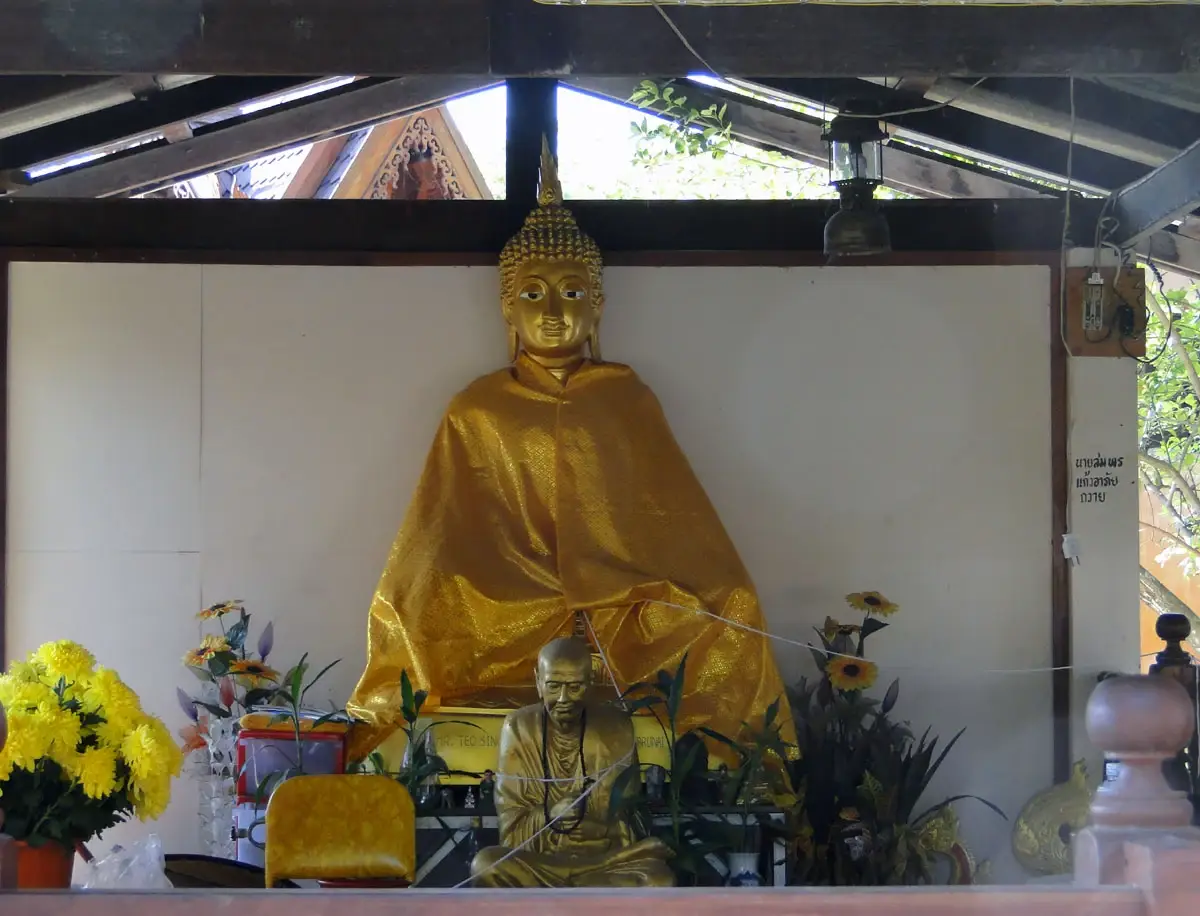
Open Days: Daily
Opening Hours: 08.00 – 17.00
Wat Ton Sarn is a local Buddhist temple under the Mahanikaya monastic order, located at 100 Mu 1, Ban Ton Sarn Nok, Soi 2, San Pa Pao Subdistrict, San Sai District, Chiang Mai Province 50210. The temple covers 6 rai and 9 square wah. It is a community temple closely connected with Ban San Ton Pao, local irrigation waterways, agricultural land, and the Buddhist life of San Pa Pao Subdistrict.
Wat Ton Sarn is suitable for visitors who want to experience a quiet local temple rather than a crowded tourist site. Its main historical significance is that it was once an abandoned temple before being officially restored as a temple with resident monks on 10 January 1972. This transformation gives the temple a distinctive identity as a revived community religious site.
The temple stands in Mu 1 of San Pa Pao Subdistrict, an area of San Sai District shaped by village life, waterways, agriculture, and local roads. San Pa Pao lies within the eastern side of the Chiang Mai suburban zone, where old communities and modern development exist alongside one another. Wat Ton Sarn therefore reflects the character of a Lanna village temple that remains connected with everyday life.
The temple boundaries show its close relationship with water and farming. The north borders a public irrigation channel, the south borders villagers’ rice fields, the east borders an irrigation channel and villagers’ land, and the west borders another public irrigation channel. This setting places the temple within a living village landscape of fields, waterways, homes, and local pathways.
The history of Wat Ton Sarn centers on the restoration of an abandoned temple. The site had previously been deserted before monks returned and local religious structures were developed. The Ministry of Education officially elevated the abandoned temple into a temple with resident monks on 10 January 1972. For the community, this marked the return of an important Buddhist space to active religious life.
In a local historical context, the revival of an abandoned temple is meaningful. It shows that the community still needed a nearby Buddhist center for merit-making, Dharma listening, ceremonies, and shared village activities. Wat Ton Sarn therefore represents not only a place of worship but also the renewal of collective faith in Ban Ton Sarn Nok and the surrounding San Ton Pao community.
Important temple structures include a viharn, pavilion, dining hall, and monks’ residences. The viharn serves as the main space for worship and religious activities. The pavilion supports lay gatherings and merit-making events. The dining hall is connected with the daily routine of monks and food offerings from villagers, while the monks’ residences allow monastic life to continue within the temple.
The viharn is the main sacred space that visitors should treat with particular respect. Local residents use the viharn for worship, chanting, and Buddhist activities on important religious days. The value of the viharn does not come only from its size or decoration, but from its role as a living devotional space for the community.
The pavilion and dining hall show the practical side of a community temple. These spaces support merit-making, food preparation, offerings, Dharma listening, and village gatherings. In a small local temple, such spaces are essential because they allow villagers to participate directly in temple activities and maintain the relationship between monks and laypeople.
The monks’ residences support the daily life of the monastic community. Their presence allows the temple to remain active as a place where villagers can make merit, seek religious guidance, and join ceremonies throughout the year. Wat Ton Sarn is therefore a living temple rather than only a historical site.
The recorded temple administration includes the name Phra Athikan Kham Chittakaro as an abbot known from temple history. His name is connected with the temple’s administrative record and the period in which the temple returned to active religious use. In a community temple, the abbot plays an important role in maintaining religious practice, caring for temple structures, and preserving the relationship between monks and local residents.
San Pa Pao Subdistrict includes several temples and religious sites, such as Wat Ton Sarn, Wat San Ton Pao, Wat Phayak Noi, and Wat San Pa Khang. These temples form a network of village Buddhist sites that reflect the religious and cultural identity of the district. Wat Ton Sarn should therefore be understood as part of a wider local temple landscape rather than as an isolated site.
Nearby Ban San Ton Pao also has cultural tourism potential, including local ways of life, community-based activities, and homestay networks connected with San Sai District. This gives Wat Ton Sarn additional relevance for travelers who want to combine temple visits with local culture, village atmosphere, and nearby natural or botanical attractions.
Wat Ton Sarn continues to serve the community as a place for Buddhist holy day merit-making, Dharma listening, family ceremonies, and annual merit-making events. During major occasions, villagers often help prepare the temple, offer food to monks, and support community religious activities. These shared actions keep the temple active as a social and spiritual center.
Religious activities associated with Wat Ton Sarn include Buddhist holy day merit-making, Dharma listening, Buddhist Lent, end-of-Lent activities, Kathin, Pha Pa offerings, Lanna New Year, and ceremonies on important Buddhist dates. Kathin and Pha Pa are especially important because they allow villagers and supporters to help maintain the temple and support the monastic community.
During Lanna New Year or Songkran, local temples in Chiang Mai often become centers for merit-making, water-pouring ceremonies, offerings for ancestors, and community gatherings. Wat Ton Sarn, as a community temple in Mu 1 of San Pa Pao, helps connect families, local residents, and Buddhist traditions through these annual customs.
The atmosphere of Wat Ton Sarn is calm, modest, and local. It is best suited to visitors who appreciate community temples, quiet Buddhist sites, and places with stories of revival and renewed local faith. The temple’s value lies in its history, its relationship with irrigation waterways and agricultural land, and its continuing role in village Buddhist life.
Visitors can respectfully observe the viharn, pavilion, dining hall, monks’ residences, and temple courtyard. A visit should be slow and respectful, allowing time to understand how the temple relates to the surrounding irrigation channels, rice fields, and village community.
Visitors should dress modestly, speak quietly, remove shoes before entering religious buildings, avoid disturbing monks or worshippers, and refrain from entering private monastic areas without permission. If visiting during a ceremony or merit-making event, visitors should give priority to local residents participating in the ritual and observe respectfully before taking photographs.
Getting There is most convenient by private car, rental car, or local transport. From Chiang Mai city, travel toward San Sai District and San Pa Pao Subdistrict using the Chiang Mai–Doi Saket route or connecting local roads. Continue into Ban San Ton Pao and Ban Ton Sarn Nok, Soi 2, Mu 1.
A meaningful route can begin at Wat Ton Sarn to learn about the revival of an abandoned temple. Visitors can then continue to Wat San Ton Pao, Wat Phayak Noi, and Wat San Pa Khang. For a nature and leisure stop, Tweechol Botanic Garden can also be added to the route. This combination gives travelers a view of local religion, community life, and the natural landscape of San Pa Pao.
In summary, Wat Ton Sarn is a local Mahanikaya temple in San Pa Pao, San Sai District, Chiang Mai. Formerly an abandoned temple, it was restored as a temple with resident monks on 10 January 1972. With its viharn, pavilion, dining hall, monks’ residences, irrigation-side setting, and continuing community role, it is a meaningful stop for travelers who want to understand Chiang Mai’s local Lanna Buddhist culture beyond the main tourist routes.
| Name | Wat Ton Sarn |
| Type | Local Buddhist Temple Under The Mahanikaya Order |
| Location | Ban Ton Sarn Nok, Soi 2, Mu 1, San Pa Pao Subdistrict, San Sai District, Chiang Mai Province |
| Address | 100 Mu 1, Ban Ton Sarn Nok, Soi 2, San Pa Pao Subdistrict, San Sai District, Chiang Mai 50210, Thailand |
| Highlights | Community temple formerly abandoned before being restored as a temple with resident monks on 10 January 1972, with a viharn, pavilion, dining hall, and monks’ residences |
| History | Formerly an abandoned temple and later elevated by the Ministry of Education into a temple with resident monks on 10 January 1972 |
| Distinctive Features | Lanna community temple connected with public irrigation channels, villagers’ rice fields, Ban San Ton Pao, and agricultural life in San Pa Pao |
| Temple Area | 6 rai and 9 square wah |
| Boundaries | North: public irrigation channel; South: villagers’ rice fields; East: irrigation channel and villagers’ land; West: public irrigation channel |
| Important Structures | Viharn, pavilion, dining hall, and monks’ residences |
| Main Areas / Zones | Viharn area, pavilion, dining hall, monks’ residential area, and temple courtyard for community activities |
| Abbot Known From Temple History | Phra Athikan Kham Chittakaro |
| Traditions / Merit-Making Events | Buddhist holy day merit-making, Dharma listening, Buddhist Lent, end-of-Lent activities, Kathin, Pha Pa offerings, Lanna New Year, and ceremonies on important Buddhist dates |
| Current Status | Registered as a local Mahanikaya temple in San Pa Pao Subdistrict, San Sai District, Chiang Mai |
| Open Days | Daily |
| Opening Hours | 08.00 – 17.00 |
| Travel Information | Best reached by private car, rental car, or local transport from Chiang Mai city toward San Sai District, San Pa Pao Subdistrict, and Ban Ton Sarn Nok, Soi 2, Mu 1 |
| Nearby Tourist Attractions | 1. Wat San Ton Pao, about 1 km 2. Wat Phayak Noi, about 3 km 3. Wat San Pa Khang, about 4 km 4. Tweechol Botanic Garden, about 5 km 5. Ban San Ton Pao Community Route, about 1 km |
| Nearby Restaurants | 1. Bingsu Mobile Branch 1 San Ton Pao, about 1 km, Tel. 063-850-4105 2. JinnyLlama Coffee and Matcha San Pa Pao, about 2 km, Tel. 090-950-2551 3. Nueng Phleng Sushi Home, about 2 km, Tel. 090-320-0325, 095-048-5819 4. PunThai Coffee San Sai 3, about 2 km, Tel. 061-030-3470 5. Baan Coffee Horizon, about 5 km, Tel. 098-983-5896 |
| Nearby Accommodations | 1. Is Am O Chiangmai Resort, about 1 km, Tel. 083-885-5757 2. Horizon Village & Resort, about 5 km, Tel. 053-292-381-5 3. Suwanna Tara Resort & Spa, about 8 km, Tel. 053-291-937 4. Palm Villa - Modern Luxury & Exclusive Villa Resort, about 8 km, Tel. 064-597-6494 5. Fern Paradise Hotel, about 8 km, Tel. 084-687-2474 |
Frequently Asked Questions (FAQ)
Q: Where is Wat Ton Sarn located?
A: Wat Ton Sarn is located at 100 Mu 1, Ban Ton Sarn Nok, Soi 2, San Pa Pao Subdistrict, San Sai District, Chiang Mai 50210, Thailand.
Q: Is Wat Ton Sarn open daily?
A: Yes. It is listed in the article as open daily from 08.00 to 17.00.
Q: Why is Wat Ton Sarn historically important?
A: Wat Ton Sarn was formerly an abandoned temple before being officially elevated into a temple with resident monks on 10 January 1972.
Q: What important structures can visitors see at Wat Ton Sarn?
A: Visitors can see the viharn, pavilion, dining hall, monks’ residences, and temple courtyard.
Q: Who is the abbot associated with Wat Ton Sarn’s history?
A: The temple history records Phra Athikan Kham Chittakaro as an abbot known from the administrative record.
Q: What type of traveler is Wat Ton Sarn suitable for?
A: It is suitable for travelers who enjoy quiet community temples, local Buddhist culture, and village temple routes in San Sai District.
Q: What religious events are associated with Wat Ton Sarn?
A: The temple is associated with Buddhist holy day merit-making, Dharma listening, Buddhist Lent, end-of-Lent activities, Kathin, Pha Pa offerings, Lanna New Year, and ceremonies on important Buddhist dates.
Q: What nearby places can be visited with Wat Ton Sarn?
A: Nearby places include Wat San Ton Pao, Wat Phayak Noi, Wat San Pa Khang, Tweechol Botanic Garden, and the Ban San Ton Pao community route.
 Category: ●Places of Worship
 Group: ●Temple
Last Update : 2 MonthAgo
 Last Update : 2 MonthAgo
 Click to Access the Navigation Map GPS
Wat Ton Sarn Map
Recommend

 Muang Chiang Mai(121)Chom Thong(47)Mae Chaem(25)Chiang Dao(33)Doi Saket(68)Mae Taeng(85)Mae Rim(69)Samoeng(29)Fang(71)Mae Ai(59)Phrao(70)San Pa Tong(103)San Kamphaeng(66)San Sai(73)Hang Dong(73)Hot(32)Doi Tao(22)Omkoi(11)Saraphi(74)Wiang Haeng(15)Chai Prakan(28)Mae Wang(32)Mae On(22)Doi Lo(33)Galyani Vadhana(1)


