
lovethailand home >North Travel Attractions >Chiang Mai Travel Attractions >San Sai >San Sai Noi > Wat San Sai Mun
TL;DR: Wat San Sai Mun is located at Ban San Sai Mun, Mu 3, San Sai Noi Subdistrict, San Sai District, Chiang Mai Province, open Daily, hours 08.00 – 17.00.

Wat San Sai Mun
Open Days: Daily
Opening Hours: 08.00 – 17.00
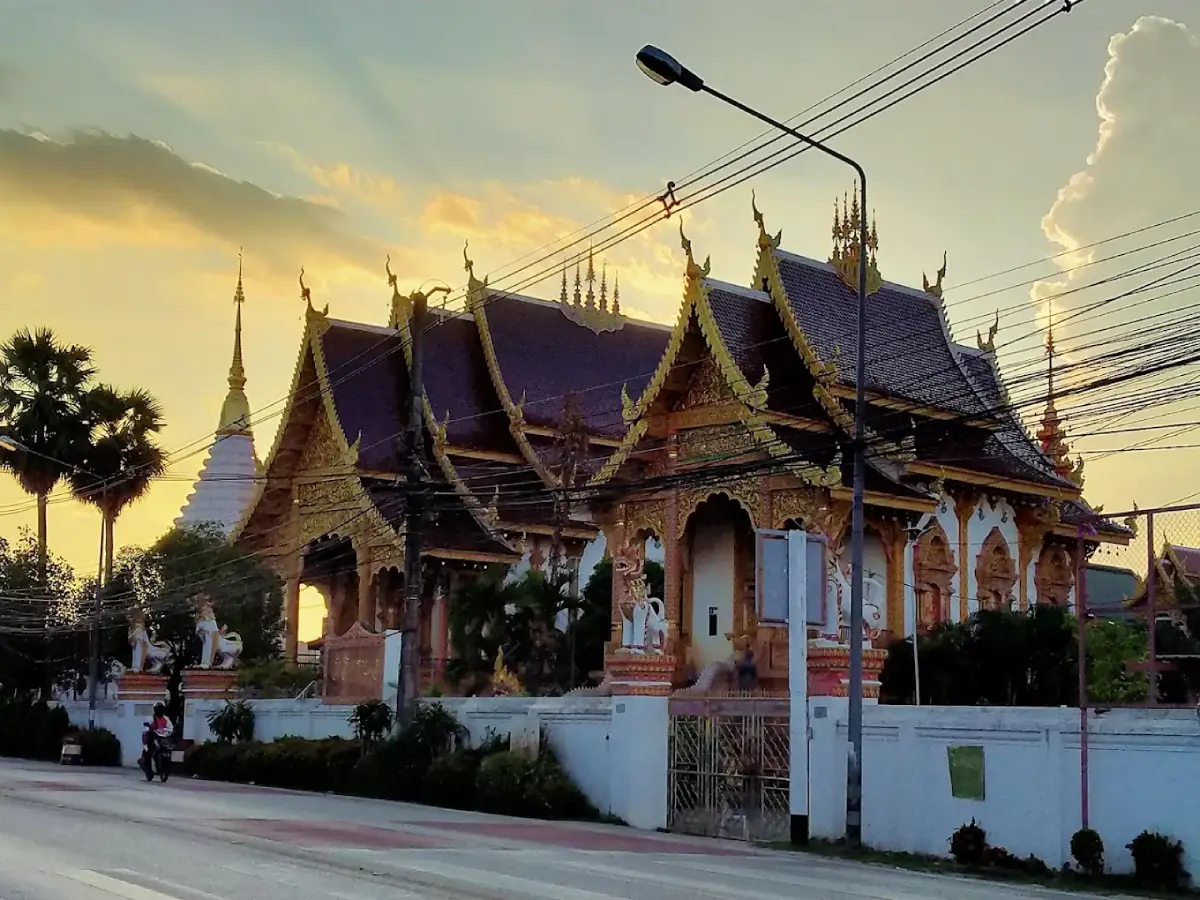
Wat San Sai Mun is a local Buddhist temple under the Mahanikaya monastic order, located in Ban San Sai Mun, Mu 3, San Sai Noi Subdistrict, San Sai District, Chiang Mai Province. It is not a large tourist temple, but it is an important community temple with a long history, a close relationship with local residents, and a quiet Lanna atmosphere suitable for merit-making, cultural visits, and travelers who want to understand Chiang Mai beyond the main tourist circuit.
For travelers looking for a peaceful temple near Chiang Mai city, Wat San Sai Mun offers a grounded and meaningful experience. The temple was officially established in 1857 and received its royal consecrated boundary in 1917. These dates show that the temple has served the Buddhist community of San Sai Noi for generations. Today, the temple remains active as a place for worship, religious ceremonies, community merit-making, and local Buddhist traditions.
The name of Wat San Sai Mun is closely connected to the landscape and settlement history of the area. The word “San Sai” refers to sandy ridges or sand deposits, a landscape feature associated with the historical flow of local waterways. San Sai Noi developed around communities shaped by water, agricultural land, village expansion, and later urban growth from Chiang Mai. The temple name therefore reflects both the geography and the identity of Ban San Sai Mun.
The earlier name of the temple was Wat Saen Mueang Mun. Local history links the name to early community figures and to the old settlement near the Mae Khao watercourse. The original temple site was on the eastern side of the stream in an area that later became associated with the San Sai Mun cemetery. Because the old location was affected by repeated flooding, the temple was later moved and rebuilt near the San Sai–Phrao road. This relocation shows how the temple adapted to the needs of the village, the environment, and local travel routes.
Wat San Sai Mun was officially granted temple status in 1857 and received its royal consecrated boundary in 1917. In Thai Buddhist temple administration, this consecrated boundary is significant because it marks the formal area for important monastic acts such as ordination. The temple is therefore not only a local place of worship but also an established religious institution within the Buddhist community of San Sai District.
The temple grounds today cover 6 rai, 1 ngan, and 53 square wah, with an additional monastic land plot used as the San Sai Mun community cemetery. This relationship between the temple and the cemetery reflects the traditional role of Thai village temples. Wat San Sai Mun is connected not only to daily merit-making and Buddhist festivals, but also to life-cycle rituals, remembrance of ancestors, and the spiritual continuity of the community.
Important structures inside Wat San Sai Mun include a Lanna-style ordination hall, a sermon hall, monks’ residences, a viharn, resting pavilions, a bell tower, and a temple kitchen. These buildings show that the temple functions as a complete community religious space. The ordination hall supports monastic ceremonies, the viharn serves as a place for worship, the sermon hall is used for religious gatherings, and the kitchen helps support merit-making events, Kathin ceremonies, and other community activities.
The temple also contains Buddhist images and a chedi, which are important sacred objects for visitors and local residents. The Buddhist images serve as focal points for prayer and merit-making, while the chedi represents the continuity of Buddhist faith in the Lanna cultural landscape. Travelers should take time to walk quietly through the temple grounds, observe the architecture respectfully, and appreciate the modest but meaningful character of a local Chiang Mai temple.
Wat San Sai Mun also has cultural value through its mural-related records. Photographic references to mural paintings from Wat San Sai Mun in San Sai District appear in cultural and museum-related sources. In northern Thai temples, murals often communicate Buddhist stories, Jataka tales, moral lessons, and local ways of life. Even when a temple is not widely promoted as a major art destination, these details can give travelers a deeper view of Lanna religious culture.
The temple was selected as a model temple for development in San Sai District in 1975. This recognition reflects the cooperation between the monastic community, local supporters, and villagers. A developed temple in the Thai community context is not defined only by buildings, but also by cleanliness, orderly use of space, religious activities, and its ability to serve as a reliable community center.
Wat San Sai Mun is strongly connected with Ban San Sai Mun, one of the villages of San Sai Noi Subdistrict. The surrounding area has changed from a traditional agricultural community into a mixed semi-urban area influenced by Chiang Mai’s expansion. Local people work in different occupations, including trade, services, employment, agriculture, and small businesses. In this changing setting, the temple continues to provide cultural continuity and a shared spiritual space for residents.
The temple is also connected to local education through Wat San Sai Mun Mongkhon Witthaya School. This reflects a common pattern in Thai society, especially in older northern communities, where temples historically supported learning, moral education, literacy, and social values before modern school systems became fully established. The relationship between the temple and the school helps show how Wat San Sai Mun has contributed to local life beyond religious ceremonies.
The current abbot of Wat San Sai Mun is Phra Khru Phiphat Sila Sangwon, also known by his monastic name Sangwaro. He has also been referenced in connection with Buddhist administrative activities in San Sai District. This gives the temple a role not only within its village, but also within the wider Buddhist network of the district.
One of the important annual religious activities connected with the temple is the Kathin ceremony, traditionally held after the Buddhist Lent. Kathin is a major merit-making occasion when lay supporters offer robes and other necessities to monks who have completed the rains retreat. In a community temple such as Wat San Sai Mun, Kathin is more than a ceremony; it is a social event that brings together villagers, relatives, donors, and temple supporters.
The overall atmosphere of Wat San Sai Mun is calm, local, and sincere. This is not a temple designed for crowds or dramatic tourist photography. Its value lies in its continuity as a living community temple, its historical links with Ban San Sai Mun, and its role in preserving Lanna Buddhist practice. Visitors who appreciate quiet temples, community history, and local culture will likely find the temple meaningful.
Travelers can also use Wat San Sai Mun as part of a half-day cultural route in the San Sai Noi area. Nearby places include Wat San Khayom, Ruamchok Market, Meechok Plaza, Central Chiangmai, and the Ganesha Shrine near Chiang Mai Arcade. This makes the temple easy to combine with local food, shopping, and other stops on the northeastern side of Chiang Mai city.
Getting There is most convenient by private car, rental car, or local transport. From Chiang Mai city, travelers can use the Chiang Mai–Doi Saket route, the old San Sai road, or the ring roads toward San Sai Noi Subdistrict. The temple is located in Ban San Sai Mun, Mu 3. Using the coordinates 18.823518, 99.035173 will help with accurate navigation.
The best time to visit is in the morning or late afternoon, when the weather is more comfortable and the temple atmosphere is quiet. Visitors should dress modestly, speak softly, remove shoes where required, and avoid disturbing monks or local residents during religious ceremonies. If visiting during Buddhist holy days, the rains retreat, the end of Buddhist Lent, or Kathin season, allow extra time because local merit-making activities may take place.
In summary, Wat San Sai Mun is a meaningful local temple for travelers who want to explore Chiang Mai’s community-based Buddhist heritage. Its history, former name, relocation from a flood-prone area, Lanna-style temple structures, sacred objects, cemetery connection, and continuing role in local religious life make it a valuable cultural stop in San Sai District.
| Name | Wat San Sai Mun |
| Type | Local Buddhist Temple Under The Mahanikaya Order |
| Location | Ban San Sai Mun, Mu 3, San Sai Noi Subdistrict, San Sai District, Chiang Mai Province |
| Address | 209 Mu 3, Ban San Sai Mun, San Sai Noi Subdistrict, San Sai District, Chiang Mai 50210, Thailand |
| Coordinates | 18.823518, 99.035173 |
| Highlights | Historic community temple connected with Ban San Sai Mun, local Buddhist ceremonies, and Lanna village life |
| History | Officially established in 1857, received its royal consecrated boundary in 1917, and was selected as a model temple for development in 1975 |
| Former Name | Wat Saen Mueang Mun |
| Name Origin | The name is linked to Ban San Sai Mun and the sandy ridge landscape of San Sai Noi |
| Distinctive Features | A quiet Lanna community temple serving religious ceremonies, local merit-making, and village activities |
| Temple Area | 6 rai, 1 ngan, 53 square wah, with additional monastic land used as the San Sai Mun community cemetery |
| Important Structures | Lanna-style ordination hall, sermon hall, monks’ residences, viharn, resting pavilions, bell tower, and temple kitchen |
| Sacred Objects | Buddhist images and a chedi |
| Main Areas / Zones | Ordination hall area, viharn, sermon hall, monks’ residences, bell tower, kitchen area, and monastic cemetery land |
| Abbot | Phra Khru Phiphat Sila Sangwon, Sangwaro |
| Current Status | Active community temple open for worship, merit-making, and Buddhist activities |
| Open Days | Daily |
| Opening Hours | 08.00 – 17.00 |
| Travel Information | Best reached by private car, rental car, or local transport from Chiang Mai city via routes toward San Sai Noi and Ban San Sai Mun |
| Nearby Tourist Attractions | 1. Wat San Khayom, about 1 km 2. Ruamchok Market, about 4 km 3. Meechok Plaza, about 4 km 4. Central Chiangmai, about 5 km 5. Ganesha Shrine Near Chiang Mai Arcade, about 6 km |
| Nearby Restaurants | 1. Steak Na Wat Mama Zaap Seed San Sai Noi, about 0.2 km, Tel. 089-649-4158 2. Im Aroi Khao Sen Tam Yam Nam Ngiao San Sai Noi, about 0.5 km, Tel. 098-624-2595 3. Ah Muay Kuay Jub Yuan & Thai Desserts San Sai, about 2 km, Tel. 094-748-5729 4. Five Star PTT Ban Jo-Ruamchok, about 3 km, Tel. 098-879-9516 5. Isan Ruamchok, about 4 km, Tel. 099-426-6456 |
| Nearby Accommodations | 1. Kin Bed & Coffee, about 3 km, Tel. 063-675-0307 2. c.k.resort, about 4 km, Tel. 085-616-2635 3. Luy Suan Homestay, about 4 km, Tel. 087-988-9688 4. Hometown Hometale, about 5 km, Tel. 094-749-2424 5. The Y Boutique, about 5 km, Tel. 053-014-222 |
Frequently Asked Questions (FAQ)
Q: Where is Wat San Sai Mun located?
A: Wat San Sai Mun is located at 209 Mu 3, Ban San Sai Mun, San Sai Noi Subdistrict, San Sai District, Chiang Mai 50210, Thailand.
Q: Is Wat San Sai Mun open daily?
A: Yes. The temple is listed as open daily from 08.00 to 17.00.
Q: Why is Wat San Sai Mun historically important?
A: The temple was officially established in 1857, received its royal consecrated boundary in 1917, and has long served the Ban San Sai Mun community.
Q: What can visitors see inside Wat San Sai Mun?
A: Visitors can see a Lanna-style ordination hall, sermon hall, monks’ residences, viharn, resting pavilions, bell tower, temple kitchen, Buddhist images, and a chedi.
Q: Who is the abbot of Wat San Sai Mun?
A: The abbot is Phra Khru Phiphat Sila Sangwon, Sangwaro.
Q: What type of traveler is Wat San Sai Mun suitable for?
A: It is suitable for travelers who enjoy quiet temples, local Buddhist culture, Lanna community history, and peaceful stops near Chiang Mai city.
Q: How can travelers get to Wat San Sai Mun?
A: The easiest way is by private car, rental car, or local transport from Chiang Mai city toward San Sai Noi and Ban San Sai Mun.
Q: What nearby places can be visited with Wat San Sai Mun?
A: Nearby places include Wat San Khayom, Ruamchok Market, Meechok Plaza, Central Chiangmai, and the Ganesha Shrine near Chiang Mai Arcade.
 Category: ●Places of Worship
 Group: ●Temple
Last Update : 2 MonthAgo
 Last Update : 2 MonthAgo

 Click to Access the Navigation Map GPS
Wat San Sai Mun Map
Recommend

 Muang Chiang Mai(121)Chom Thong(47)Mae Chaem(25)Chiang Dao(33)Doi Saket(68)Mae Taeng(85)Mae Rim(69)Samoeng(29)Fang(71)Mae Ai(59)Phrao(70)San Pa Tong(103)San Kamphaeng(66)San Sai(73)Hang Dong(73)Hot(32)Doi Tao(22)Omkoi(11)Saraphi(74)Wiang Haeng(15)Chai Prakan(28)Mae Wang(32)Mae On(22)Doi Lo(33)Galyani Vadhana(1)


