
lovethailand home >North Travel Attractions >Chiang Mai Travel Attractions >San Sai >Paphai > Wat Nong Ubosot
TL;DR: Wat Nong Ubosot is located at Ban Nong Luang Phatthana, Moo 14, Pa Phai Subdistrict, San Sai District, Chiang Mai Province.

Wat Nong Ubosot
Operating day: Daily
Operating time: 08.00 - 17.00
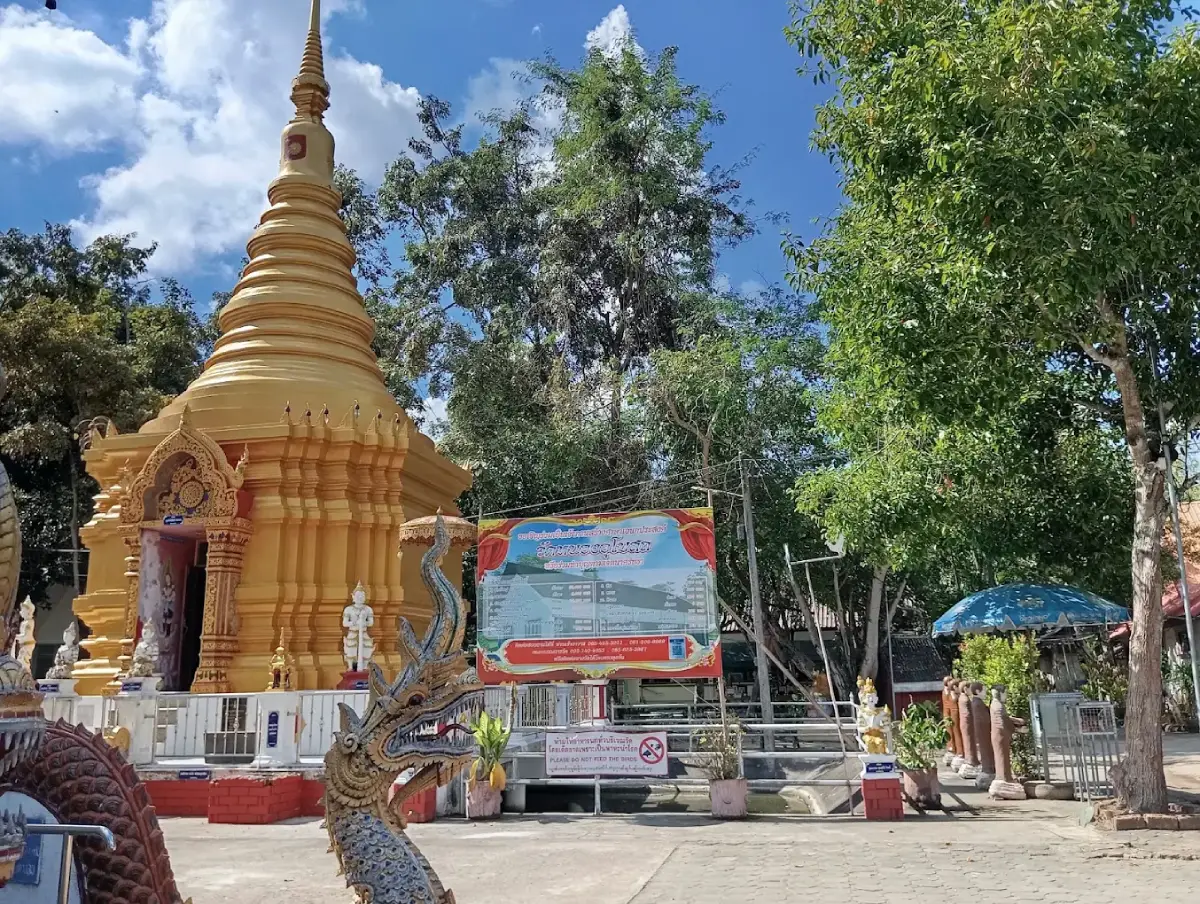
Wat Nong Ubosot is a local Buddhist temple under the Mahanikaya order, located in Ban Nong Luang Phatthana, Moo 14, along the Chiang Mai–Phrao Road in Pa Phai Subdistrict, San Sai District, Chiang Mai Province. The temple was officially permitted to be established in 1989, with Phra Athikan Singkham Abhinando serving as the abbot. Wat Nong Ubosot is meaningful not only as a village temple but also as a revived sacred site with older local memory connected to an abandoned temple, a submerged ubosot, local legends, forested surroundings, and the renewed faith of monks and villagers during the 1980s.
Ban Nong Luang Phatthana is part of Pa Phai Subdistrict, a northern San Sai community landscape shaped by local roads, agricultural areas, irrigation routes, village temples, and the Chiang Mai–Phrao corridor. Wat Nong Ubosot stands within this living landscape where temples, homes, roads, fields, and community life remain closely connected. It should therefore be understood as a working village temple rather than a standalone tourist landmark.
The temple name carries a strong sense of place. Nong refers to a pond or water area, while ubosot refers to the consecrated monastic hall used for important Buddhist rites. Local stories explain that an ubosot once stood in the middle of a pond, or that an old ubosot had sunk into the ground until only part of it remained visible. This story gave the temple its distinctive name and preserves the community’s memory of an older sacred site.
The original site was an abandoned temple whose exact founding period is unknown. Local legends tell several stories connected with the area. One story says that during the period when Burmese forces attacked Chiang Mai, Phaya Pha Dam led troops and established a position in this formerly dense forest area. Another tradition mentions Phra Mae Uma Thewi, consort of Phaya Pha Dam, in connection with local protective beliefs. These narratives preserve the cultural memory of the site and give Wat Nong Ubosot a deeper local identity.
After the old temple was abandoned, the land deteriorated and the former ubosot sank, leaving only traces associated with the area where the newer ubosot and vihara stand today. The story of an ubosot in a pond became central to the temple’s identity. Wat Nong Ubosot is therefore a temple with layered history: an older sacred site, a period of abandonment, and a modern revival through monastic practice and community faith.
The revival of the temple is especially important. Luang Pho Yom began restoring the site, but the temple later became abandoned again. In 1957, Phra Kasem stayed there for 7 days, and Pho Dam from Wat Mae Kaet Noi came to stay for religious practice. Later, on April 9, 1981, two forest-wandering monks, Phra Suang and Phra Kamon, came to pitch their umbrella tents at the site. Villagers then began to revive the temple again, and from February 20, 1982 onward the temple had resident monks continuously.
This sequence makes Wat Nong Ubosot a temple of renewed faith. It did not emerge from an empty piece of land. It was revived from an older sacred site through the presence of practicing monks and the commitment of local villagers. The temple’s official establishment in 1989 was therefore not just an administrative milestone; it marked the successful return of Buddhist life to a site that the community continued to remember as sacred.
Phra Athikan Singkham Abhinando has served as abbot of Wat Nong Ubosot from 2010 onward. In a community temple, the abbot has responsibilities beyond monastic administration. He helps care for temple activities, the monastic community, religious buildings, merit-making events, and the relationship between monks and villagers. The local temple directory also records resident monks at Wat Nong Ubosot, confirming its ongoing role as an active Buddhist temple.
In 2026, the Chiang Mai Provincial Office of Buddhism participated in a meeting about the development of internal management at Wat Nong Ubosot in Pa Phai Subdistrict, San Sai District. This recent activity shows that the temple remains an active religious site connected with contemporary Buddhist administration and community development, not merely an old name in local history.
The most meaningful areas of the temple should be understood through the historical core of the ubosot, vihara, temple courtyard, worship area, and community religious space. Public information about individual architectural details is limited, but the story of the old submerged ubosot and the newer religious buildings gives the temple’s sacred area strong local meaning. The ubosot represents monastic discipline, the vihara represents worship and sermons, and the temple grounds support village merit-making.
Wat Nong Ubosot serves as the spiritual center of Ban Nong Luang Phatthana. Villagers come to the temple to pay respect, make merit, listen to sermons, and participate in Buddhist ceremonies. A village temple of this kind is more than a ritual site; it is where elders, families, children, youth, and former residents gather during festivals and important community events.
Religious activities at Wat Nong Ubosot follow the Buddhist calendar and local Lanna practice. Important occasions include Buddhist holy days, Makha Bucha, Visakha Bucha, Asalha Bucha, Buddhist Lent, the end of Buddhist Lent, Kathin, robe-offering activities, and Ban Nong Luang Phatthana community merit-making events. These activities keep the temple active throughout the year and maintain the relationship between temple and village.
Kathin is especially important for a local temple. During Kathin, villagers and supporters offer robes and donations to support monks, temple maintenance, and religious activities. It is not only a Buddhist ceremony; it is an annual gathering that renews the bond between the temple, local residents, former residents, and supporters from nearby areas.
The temple’s main highlights for visitors are its history as an abandoned temple, the legend of an ubosot in a pond, the stories of Phaya Pha Dam and Phra Mae Uma Thewi, the modern revival led by forest-wandering monks and villagers, and its peaceful village temple atmosphere. Wat Nong Ubosot is not a large tourist temple. It is best appreciated by visitors who are interested in local history, revived sacred sites, Lanna village Buddhism, and community temple routes in San Sai.
Pa Phai Subdistrict contains a network of community temples that can be visited together. Nearby temples include Wat Nong Tao Kham, Wat Sri Boon Rueang, Wat Mueang Khon, Wat Mae Kaet Noi, Wat Pa Mueat, and Wat Pa Daet. Each temple preserves a different aspect of the area: migration history, old forest settlements, Buddhist education, moral learning parks, local legends, and village merit-making.
Getting There is convenient by private car or motorcycle. From Chiang Mai city, travel toward San Sai and Mae Jo, then continue into Pa Phai Subdistrict along the Chiang Mai–Phrao route or connected local roads. Proceed to Ban Nong Luang Phatthana, Moo 14. The temple can be included in a Pa Phai community-temple route with Wat Nong Tao Kham, Wat Sri Boon Rueang, Wat Mueang Khon, Wat Mae Kaet Noi, Wat Pa Mueat, Wat Pa Daet, and Pa Mueat Market.
A meaningful local route can begin at Wat Nong Ubosot to understand the legend of the abandoned temple and submerged ubosot, then continue to Wat Nong Tao Kham and Wat Sri Boon Rueang, followed by Wat Mueang Khon, Wat Mae Kaet Noi, Wat Pa Mueat, and Pa Mueat Market. This route gives visitors a broader view of Pa Phai through old temples, local markets, village memory, and everyday Lanna Buddhist culture.
Visitors should dress modestly, keep their voices low, avoid entering monks’ private areas without permission, and photograph sacred areas respectfully. Wat Nong Ubosot remains an active community temple, so it should be treated first as a place of worship and village faith rather than a purely touristic site.
Overall, Wat Nong Ubosot is a meaningful village temple of Ban Nong Luang Phatthana, Moo 14, Pa Phai Subdistrict, San Sai District, Chiang Mai. Its strongest value lies in its origin as an abandoned sacred site, the legend of an ubosot in a pond, the stories of Phaya Pha Dam and Phra Mae Uma Thewi, the revival by forest-wandering monks and villagers in 1981–1982, and its official establishment in 1989. It is a worthwhile stop for travelers who want to understand a quieter, deeper, and more authentic side of Chiang Mai’s Lanna village temple culture.
| Name | Wat Nong Ubosot |
| Location | Ban Nong Luang Phatthana, Moo 14, Pa Phai Subdistrict, San Sai District, Chiang Mai Province |
| Address | Moo 14, Ban Nong Luang Phatthana, Chiang Mai–Phrao Road, Pa Phai Subdistrict, San Sai District, Chiang Mai 50210, Thailand |
| Type | Local Buddhist temple under the Mahanikaya order |
| Abbot / Caretaker | Phra Athikan Singkham Abhinando |
| Main Contact Number | 053-498-342 |
| Highlights | Community temple with an origin as an abandoned sacred site, the legend of a submerged ubosot, stories of Phaya Pha Dam and Phra Mae Uma Thewi, and revival by forest-wandering monks and villagers |
| History | Originally an abandoned temple of unclear age, revived by monks and villagers from 1981–1982, and officially permitted to be established as a temple in 1989 |
| Former Status | An abandoned temple remembered through the story of an ubosot that sank into a pond or water area |
| Name Origin | The name is connected with local stories about an ubosot in a pond and the old sacred remains remembered by the community |
| Main Areas / Zones | Ubosot, vihara, temple courtyard, worship area, religious activity area, and Ban Nong Luang Phatthana community merit-making space |
| Local Stories | Legends of Phaya Pha Dam, Phra Mae Uma Thewi, a submerged ubosot, Luang Pho Yom’s restoration effort, and the arrival of Phra Suang and Phra Kamon in 1981 |
| Resident Monks | 7 monks |
| Community Role | Spiritual center of Ban Nong Luang Phatthana, used for merit-making, sermons, Kathin, robe-offering activities, Buddhist holy days, and community ceremonies |
| Traditions / Merit-Making | Buddhist holy days, major Buddhist festivals, Buddhist Lent, the end of Buddhist Lent, Kathin, robe-offering activities, and Ban Nong Luang Phatthana community merit-making events |
| Travel Information | From Chiang Mai city, travel toward San Sai and Mae Jo, continue into Pa Phai Subdistrict, and proceed to Ban Nong Luang Phatthana, Moo 14. The route is suitable for private cars or motorcycles. |
| Current Status | Open as a local Buddhist temple and community sacred site of Ban Nong Luang Phatthana, Pa Phai Subdistrict, San Sai District, Chiang Mai |
| Facilities | Worship area, temple courtyard, and community religious activity area |
| Nearby Tourist Attractions | 1. Wat Nong Tao Kham, Pa Phai Subdistrict, about 2–3 km 2. Wat Sri Boon Rueang, Pa Phai Subdistrict, about 2–3 km 3. Wat Mueang Khon, Pa Phai Subdistrict, about 5–6 km 4. Wat Mae Kaet Noi, Pa Phai Subdistrict, about 6–7 km 5. Wat Pa Mueat, Pa Phai Subdistrict, about 6–7 km 6. Pa Mueat Market, about 6–7 km |
| Nearby Restaurants | 1. Sompong Mala Original Recipe, about 0.5–1 km, Tel. 065-867-1318 2. Look Chin Thong Suk Nong Tao Kham, about 2–3 km, Tel. 086-459-0252 3. Nom Niao Pa Phai, about 3 km, Tel. 080-473-1163 4. Nam Khaeng Sai Suan Sak Pa Phai, about 3 km, Tel. 065-497-2904 5. Lab Sa Northern Food Pa Phai, about 3–4 km, Tel. 082-164-0349, 061-157-5394 6. Witsawa Hainanese Chicken Rice Pa Mueat, about 6–7 km, Tel. 099-190-6778 |
| Nearby Accommodations | 1. MonMin Farmstay, about 4–6 km, Tel. 084-656-0009 2. Baan View Na, about 6–8 km, Tel. 089-844-9675 3. Maejo Resort, about 8–10 km, Tel. 081-429-9935 4. Boonthavon Maejo Hotel, about 10–12 km 5. Na Napa Wellness Spa & Resort, about 12–14 km 6. Preme Apartment @Maejo, about 10–12 km |
Frequently Asked Questions (FAQ)
Q: Where is Wat Nong Ubosot located?
A: Wat Nong Ubosot is located in Ban Nong Luang Phatthana, Moo 14, along the Chiang Mai–Phrao Road in Pa Phai Subdistrict, San Sai District, Chiang Mai 50210, Thailand.
Q: What type of temple is Wat Nong Ubosot?
A: Wat Nong Ubosot is a local Buddhist temple under the Mahanikaya order and serves as a sacred community site for Ban Nong Luang Phatthana.
Q: When was Wat Nong Ubosot established?
A: Wat Nong Ubosot was officially permitted to be established as a temple in 1989, after the abandoned sacred site was revived by monks and villagers.
Q: What is the origin of the name Wat Nong Ubosot?
A: The name is connected with local stories about an ubosot in a pond or an old ubosot that sank into a water area.
Q: Who is the abbot of Wat Nong Ubosot?
A: The abbot of Wat Nong Ubosot is Phra Athikan Singkham Abhinando.
Q: What is Wat Nong Ubosot known for?
A: The temple is known for its origin as an abandoned temple, the legend of a submerged ubosot, stories of Phaya Pha Dam and Phra Mae Uma Thewi, and its revival by forest-wandering monks and villagers.
Q: How do visitors get to Wat Nong Ubosot?
A: From Chiang Mai city, travel toward San Sai and Mae Jo, continue into Pa Phai Subdistrict, and proceed to Ban Nong Luang Phatthana, Moo 14. Private car or motorcycle is convenient.
Q: What nearby places can be visited on the same trip?
A: Nearby places include Wat Nong Tao Kham, Wat Sri Boon Rueang, Wat Mueang Khon, Wat Mae Kaet Noi, Wat Pa Mueat, Pa Mueat Market, and Wat Pa Daet.
 Category: ●Places of Worship
 Group: ●Temple
Last Update : 2 MonthAgo
 Last Update : 2 MonthAgo

 Click to Access the Navigation Map GPS
Wat Nong Ubosot Map
Recommend

 Muang Chiang Mai(121)Chom Thong(47)Mae Chaem(25)Chiang Dao(33)Doi Saket(68)Mae Taeng(85)Mae Rim(69)Samoeng(29)Fang(71)Mae Ai(59)Phrao(70)San Pa Tong(103)San Kamphaeng(66)San Sai(73)Hang Dong(73)Hot(32)Doi Tao(22)Omkoi(11)Saraphi(74)Wiang Haeng(15)Chai Prakan(28)Mae Wang(32)Mae On(22)Doi Lo(33)Galyani Vadhana(1)


