
lovethailand home >North Travel Attractions >Chiang Mai Travel Attractions >San Sai >Mae Faek > Wat Huai Kaew (Mae Faek)
TL;DR: Wat Huai Kaew (Mae Faek) is located at Ban Huai Kaew, Moo 3, Mae Faek Subdistrict, San Sai District, Chiang Mai Province, open Daily, hours 08.00 – 17.00.
Wat Huai Kaew (Mae Faek)
Open Days: Daily
Opening Hours: 08.00 – 17.00
Wat Huai Kaew (Mae Faek) in Ban Huai Kaew, Moo 3, Mae Faek Subdistrict, San Sai District, Chiang Mai Province, is an old local Buddhist temple under the Mahanikaya order. Established in 1876, the temple is part of the long-standing Buddhist and village landscape of Mae Faek, a northern San Sai community connected with the Chiang Mai–Phrao road, irrigation canals, schools, farmland, and local Lanna religious life. The temple is not a large city landmark, but it is valuable as a living village temple with old sacred objects, a Lanna-style temple atmosphere, and a long relationship with Ban Huai Kaew.
The temple is located at No. 101, Moo 3, Ban Huai Kaew, Chiang Mai–Phrao Road, Mae Faek Subdistrict, San Sai District, Chiang Mai 50290, Thailand. This location makes the temple convenient for travelers following the northern San Sai route from Chiang Mai city toward Mae Jo, Mae Faek, Mae Faek Mai, and Phrao. Wat Huai Kaew can also be included in a community temple route with other old temples in Mae Faek, including Wat Rom Luang, Wat Si Ngam, Wat Si Sai Mun, Wat Nong Ma Chap, Wat Nong Sae, Wat Phra That Chom Kitti, and Wat Ban Pong.
The temple was formerly known as Wat Mae Bo Kaew. Temple history records Khru Ba Phimphisan as an important monk who restored the abandoned temple and revived it as a sacred place for the local community. In a Lanna village context, restoring an abandoned temple was an important act of merit because it returned a place of worship, sermons, rituals, and community gathering to the villagers.
Wat Huai Kaew was officially permitted to be established in 1876 and received its Wisungkham Sima in 1881. The consecrated boundary is important because it allows the temple to perform key monastic rites in accordance with Buddhist discipline. This confirms the temple’s status not only as a local place of worship but also as a fully recognized Buddhist temple within the monastic system.
The temple land covers 5 rai, 1 ngan, and 57 square wah. As a village temple, Wat Huai Kaew functions as a shared space for merit-making, Buddhist holy days, sermons, Kathin, robe-offering activities, ordinations, funerals, and other community events. The temple is therefore important both as a religious site and as a social center for Ban Huai Kaew.
The setting of Ban Huai Kaew and Mae Faek is essential for understanding the temple. Mae Faek is an old agricultural area where irrigation canals, roads, schools, temples, and farmlands are closely connected. Wat Huai Kaew grew within this landscape, where Buddhism, community life, and agriculture have long supported one another. The temple serves as a spiritual anchor for villagers and a place where people gather during important moments in the Buddhist calendar and in community life.
Traditional boundary information describes the temple as adjoining a public irrigation canal to the north, a public road to the south, Ban Huai Kaew School to the east, and a public road to the west. These surroundings show that the temple is closely embedded in the village environment. It is connected with water, education, transportation, and community space, all of which are important elements in a rural Lanna settlement.
The main monastic structures at Wat Huai Kaew include an ubosot, sermon hall, vihara, and monks’ residences. The ubosot is used for important monastic rites, the vihara is used for worship and religious activities, the sermon hall supports merit-making and community gatherings, and the monks’ residences allow the monastic community to remain active at the temple. Together, these structures form the essential layout of a working village temple.
One of the temple’s important sacred objects is a bronze Buddha image in Chiang Saen style. Chiang Saen-style Buddha images are strongly associated with northern Thai Buddhist art and the broader development of Lanna sacred imagery. Their presence in a community temple such as Wat Huai Kaew gives the temple artistic and cultural significance beyond its local religious role.
The temple also preserves Phra Sing Nueng and Phra Sing Song Buddha images. The Phra Sing tradition is closely connected with Lanna Buddhist devotion and the reverence for Phra Buddha Sihing, one of Chiang Mai’s most important sacred images. For visitors interested in northern Thai Buddha images, these sacred objects make Wat Huai Kaew a meaningful temple to observe respectfully.
The chedi is another important sacred structure inside the temple. In Lanna Buddhist culture, a chedi is a symbolic and devotional center of the temple compound. It represents remembrance of the Buddha and the Buddhist teachings, and it often becomes the focus of worship, circumambulation, and ritual activity during important Buddhist festivals.
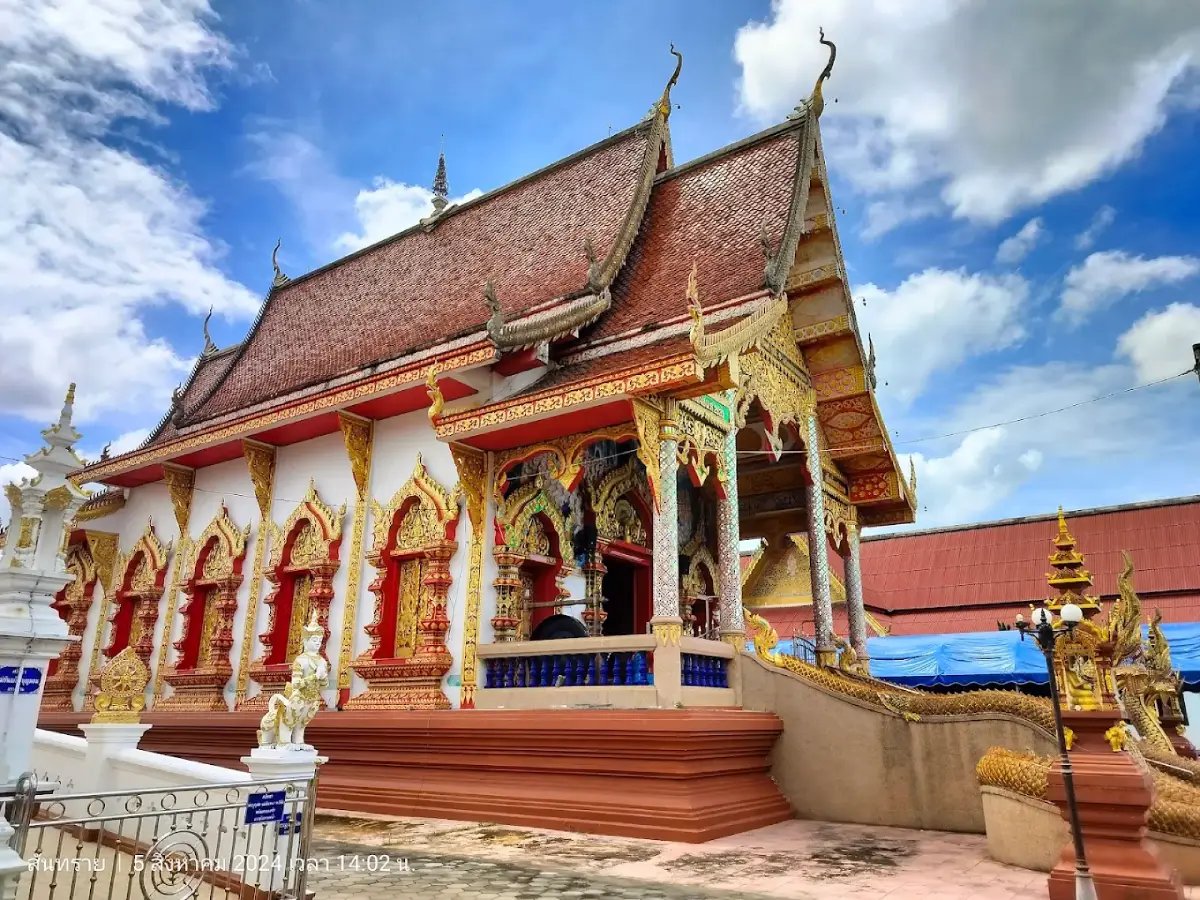
The vihara is also visually significant. Photographic records show a northern Thai temple façade with decorative details and naga stair railings leading into the sacred interior. In Lanna belief, the naga protects the temple and guides devotees from ordinary space into sacred space. This gives the entrance of the vihara both architectural and symbolic meaning.
The value of Wat Huai Kaew does not lie in the scale of a major tourist temple. Its value lies in its continuity as a local Lanna community temple. Visitors can see a functioning village temple with an ubosot, vihara, sermon hall, monks’ residences, Buddha images, chedi, courtyard, and a calm local atmosphere. This makes the temple suitable for travelers who want to understand a quieter side of Chiang Mai’s Buddhist culture.
Phra Athikan Mueang In Akkachitto is listed as the abbot of Wat Huai Kaew. In a village temple, the abbot plays an important role beyond daily monastic administration. He helps preserve the temple, guide religious activities, coordinate merit-making events, and maintain the relationship between monks and villagers. Continuous monastic care allows the temple to remain a living spiritual center.
Historical records also mention former abbots and caretakers such as Khru Ba Phimphisan, Phra Buen Ta, Phra Thongkham Thananchai, Phra Khamchan, Phra Chanta, and Phra Noi Panyasaro. These names reflect the continuity of monastic leadership and help show that Wat Huai Kaew has been maintained as a living temple across generations.
The temple plays several roles in Ban Huai Kaew. First, it is a place of worship where villagers pay respect to Buddha images, make merit, and listen to sermons. Second, it is a shared social space for annual ceremonies, funerals, ordinations, and community gatherings. Third, it is a historical marker that preserves the village’s Buddhist identity through its long establishment, former name, sacred images, and monastic continuity.
Religious activities at Wat Huai Kaew follow the Buddhist calendar and local Lanna tradition. Important occasions include Buddhist holy days, Makha Bucha, Visakha Bucha, Asalha Bucha, Buddhist Lent, the end of Buddhist Lent, Kathin, robe-offering activities, and community merit-making events. These activities keep the bond between temple and village strong throughout the year.
Kathin is especially meaningful in a community temple. Villagers and devotees gather to offer robes and support the maintenance of temple buildings and monastic life. Kathin is not only a religious ceremony; it is also a way for people connected to the village to return, cooperate, and support the temple that represents their community roots.
For visitors, Wat Huai Kaew is suitable for those interested in Lanna community temples, old Buddhist sites, Chiang Saen-style Buddha images, Phra Sing images, chedis, and quiet village temple routes. The temple should be experienced slowly, not as a quick photo stop. Its meaning becomes clearer when visitors look at the relationship between the temple, school, irrigation canal, roads, and village life around it.
The main things to see are the vihara, ubosot, sermon hall, monks’ residences, Buddha images, Phra Sing Nueng, Phra Sing Song, the chedi, and the courtyard. Visitors should pay respect quietly and observe the architectural details around the vihara, especially the entrance and naga elements, which reflect northern Thai temple symbolism.
Getting There is convenient by private car or motorcycle. From Chiang Mai city, take Highway 1001 or the Chiang Mai–Phrao road toward San Sai and Mae Jo, then continue to Mae Faek Subdistrict and Ban Huai Kaew, Moo 3. The temple is located within the village community and can be visited as part of a half-day or full-day temple route in Mae Faek.
A connected travel route can begin at Wat Huai Kaew, then continue to Wat Rom Luang, Wat Si Ngam, Wat Si Sai Mun, Wat Nong Ma Chap, Wat Nong Sae, Wat Phra That Chom Kitti, and Wat Ban Pong. This route allows visitors to see different types of Mae Faek temples, including community temples, a hilltop relic temple, temples with old sacred objects, and sites connected with village tourism and Ping River history.
Visitors should dress modestly, keep their voices low, avoid entering monks’ private areas without permission, and photograph sacred areas respectfully. Wat Huai Kaew remains an active local Buddhist temple, so it should be treated first as a place of worship and community faith rather than a purely touristic site.
Overall, Wat Huai Kaew (Mae Faek) is an old and meaningful temple in northern San Sai. Its strongest value lies in its establishment in 1876, Wisungkham Sima in 1881, former name Wat Mae Bo Kaew, restoration by Khru Ba Phimphisan, Chiang Saen-style bronze Buddha image, Phra Sing Nueng, Phra Sing Song, chedi, and its continuing role as the spiritual center of Ban Huai Kaew. It is a worthwhile stop for travelers who want to understand a quieter, deeper, and more authentic side of Chiang Mai’s village temple culture.
| Name | Wat Huai Kaew (Mae Faek) |
| Location | Ban Huai Kaew, Moo 3, Mae Faek Subdistrict, San Sai District, Chiang Mai Province |
| Address | No. 101, Moo 3, Ban Huai Kaew, Chiang Mai–Phrao Road, Mae Faek Subdistrict, San Sai District, Chiang Mai 50290, Thailand |
| Type | Local Buddhist temple under the Mahanikaya order |
| Abbot / Caretaker | Phra Athikan Mueang In Akkachitto |
| Highlights | Old community temple of Ban Huai Kaew with a Chiang Saen-style bronze Buddha image, Phra Sing Nueng, Phra Sing Song, chedi, vihara, ubosot, sermon hall, and Lanna village temple atmosphere |
| History | Established in 1876. The temple was formerly known as Wat Mae Bo Kaew and was restored from an abandoned temple by Khru Ba Phimphisan. |
| Wisungkham Sima | Granted in 1881 |
| Temple Land Area | 5 rai, 1 ngan, and 57 square wah |
| Name Origin | The name is connected with Ban Huai Kaew, Moo 3, Mae Faek Subdistrict. Huai refers to a stream or watercourse, while Kaew conveys clarity, beauty, and auspicious meaning. |
| Main Areas / Zones | Ubosot, sermon hall, vihara, monks’ residences, chedi, temple courtyard, and community merit-making areas |
| Important Sacred Objects | Chiang Saen-style bronze Buddha image, Phra Sing Nueng, Phra Sing Song, and chedi |
| Known Former Abbots | Khru Ba Phimphisan, Phra Buen Ta, Phra Thongkham Thananchai, Phra Khamchan, Phra Chanta, and Phra Noi Panyasaro |
| Traditions / Merit-Making | Buddhist holy days, major Buddhist festivals, Buddhist Lent, the end of Buddhist Lent, Kathin, robe-offering activities, and Ban Huai Kaew community merit-making events |
| Travel Information | From Chiang Mai city, take Highway 1001 or the Chiang Mai–Phrao road toward San Sai and Mae Jo, continue to Mae Faek Subdistrict, and proceed to Ban Huai Kaew, Moo 3. |
| Current Status | Open as a local Buddhist temple and community sacred site of Ban Huai Kaew, Mae Faek Subdistrict, San Sai District, Chiang Mai |
| Open Days | Daily |
| Opening Hours | 08.00 – 17.00 |
| Facilities | Worship areas, temple courtyard, sermon hall, religious activity space, and parking area within the temple community |
| Nearby Tourist Attractions | 1. Ban Huai Kaew School and Ban Huai Kaew Community, about 0.3 km 2. Wat Rom Luang, Mae Faek Subdistrict, about 3 km 3. Wat Si Ngam, Mae Faek Subdistrict, about 4 km 4. Wat Si Sai Mun (Mae Tae), about 5 km 5. Wat Nong Ma Chap and Ban Nong Ma Chap Community Tourism Area, about 6 km 6. Wat Phra That Chom Kitti, about 8 km |
| Nearby Restaurants | 1. The North Cafe Chiang Mai, about 4 km, Tel. 065-956-4865 2. CHA 168 Mae Faek Mai, about 5 km, Tel. 081-749-1549, 080-052-9538 3. Enjoy Healthy Food Mae Faek Mai, about 6 km 4. Moonshine Cafe, about 7 km, Tel. 092-365-1178 5. M&M Cha, about 8 km, Tel. 093-032-2321 6. Memory Coffee House Nong Han San Sai, about 8 km, Tel. 094-602-3773 |
| Nearby Accommodations | 1. The Royal Chiang Mai Golf Resort, about 5 km, Tel. 083-568-9797 2. Innbox Chiangmai Hotel, about 6 km, Tel. 081-171-0247 3. Mae Faek Villas, about 7 km, Tel. 081-287-9011 4. Dream Villa Resort @ Chiang Mai, about 8 km, Tel. 099-291-6447 5. Holiday Resort Rimping, about 10 km 6. Tao Garden Health Spa & Resort, about 18 km |
Frequently Asked Questions (FAQ)
Q: Where is Wat Huai Kaew (Mae Faek) located?
A: Wat Huai Kaew is located at No. 101, Moo 3, Ban Huai Kaew, Mae Faek Subdistrict, San Sai District, Chiang Mai 50290, Thailand.
Q: When was Wat Huai Kaew established?
A: Wat Huai Kaew was officially established in 1876 and received its Wisungkham Sima in 1881.
Q: What was the temple formerly called?
A: The temple was formerly known as Wat Mae Bo Kaew and was restored from an abandoned temple by Khru Ba Phimphisan.
Q: What is Wat Huai Kaew known for?
A: The temple is known as an old Lanna community temple with an ubosot, vihara, sermon hall, monks’ residences, chedi, Chiang Saen-style bronze Buddha image, Phra Sing Nueng, and Phra Sing Song.
Q: Who is the abbot of Wat Huai Kaew?
A: The abbot is Phra Athikan Mueang In Akkachitto.
Q: How do visitors get to Wat Huai Kaew?
A: From Chiang Mai city, take Highway 1001 or the Chiang Mai–Phrao road toward San Sai and Mae Jo, continue to Mae Faek Subdistrict, and proceed to Ban Huai Kaew, Moo 3.
Q: Who should visit Wat Huai Kaew?
A: The temple is suitable for travelers interested in Lanna community temples, old village temples, Chiang Saen-style Buddha images, Phra Sing images, chedis, and quiet cultural routes in San Sai District.
Q: What nearby places can be visited on the same trip?
A: Nearby places include Wat Rom Luang, Wat Si Ngam, Wat Si Sai Mun, Wat Nong Ma Chap, Wat Nong Sae, Wat Phra That Chom Kitti, and Wat Ban Pong.
 Category: ●Places of Worship
 Group: ●Temple
Last Update : 1 WeekAgo
 Last Update : 1 WeekAgo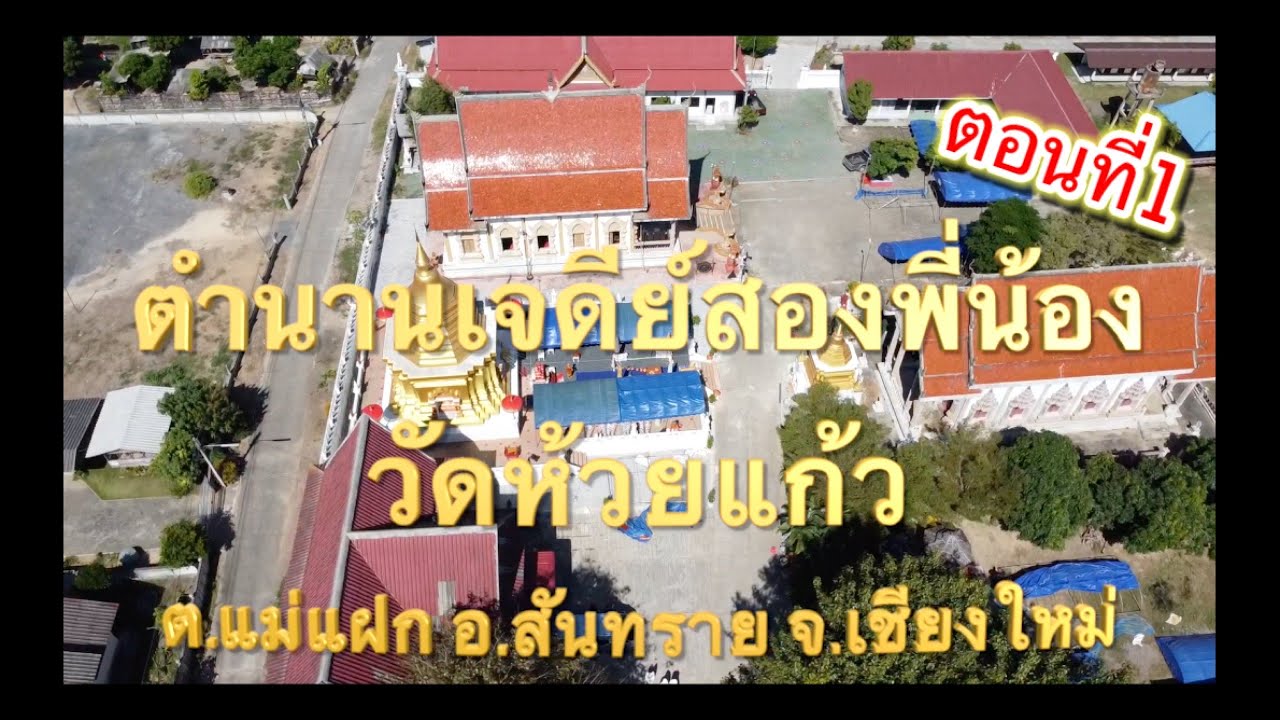
 Click to Access the Navigation Map GPS
Wat Huai Kaew (Mae Faek) Map
Recommend

 Muang Chiang Mai(121)Chom Thong(47)Mae Chaem(25)Chiang Dao(33)Doi Saket(68)Mae Taeng(85)Mae Rim(69)Samoeng(29)Fang(71)Mae Ai(59)Phrao(70)San Pa Tong(103)San Kamphaeng(66)San Sai(73)Hang Dong(73)Hot(32)Doi Tao(22)Omkoi(11)Saraphi(74)Wiang Haeng(15)Chai Prakan(28)Mae Wang(32)Mae On(22)Doi Lo(33)Galyani Vadhana(1)


