
lovethailand home >North Travel Attractions >Chiang Mai Travel Attractions >San Kamphaeng >On Tai > Wat Mae Pha Haen
TL;DR: Wat Mae Pha Haen is located at Moo 6, Ban Mae Pha Haen, On Tai Subdistrict, San Kamphaeng District, Chiang Mai Province, open Daily, hours 08.00 – 17.00.

Wat Mae Pha Haen
Open Days: Daily
Opening Hours: 08.00 – 17.00
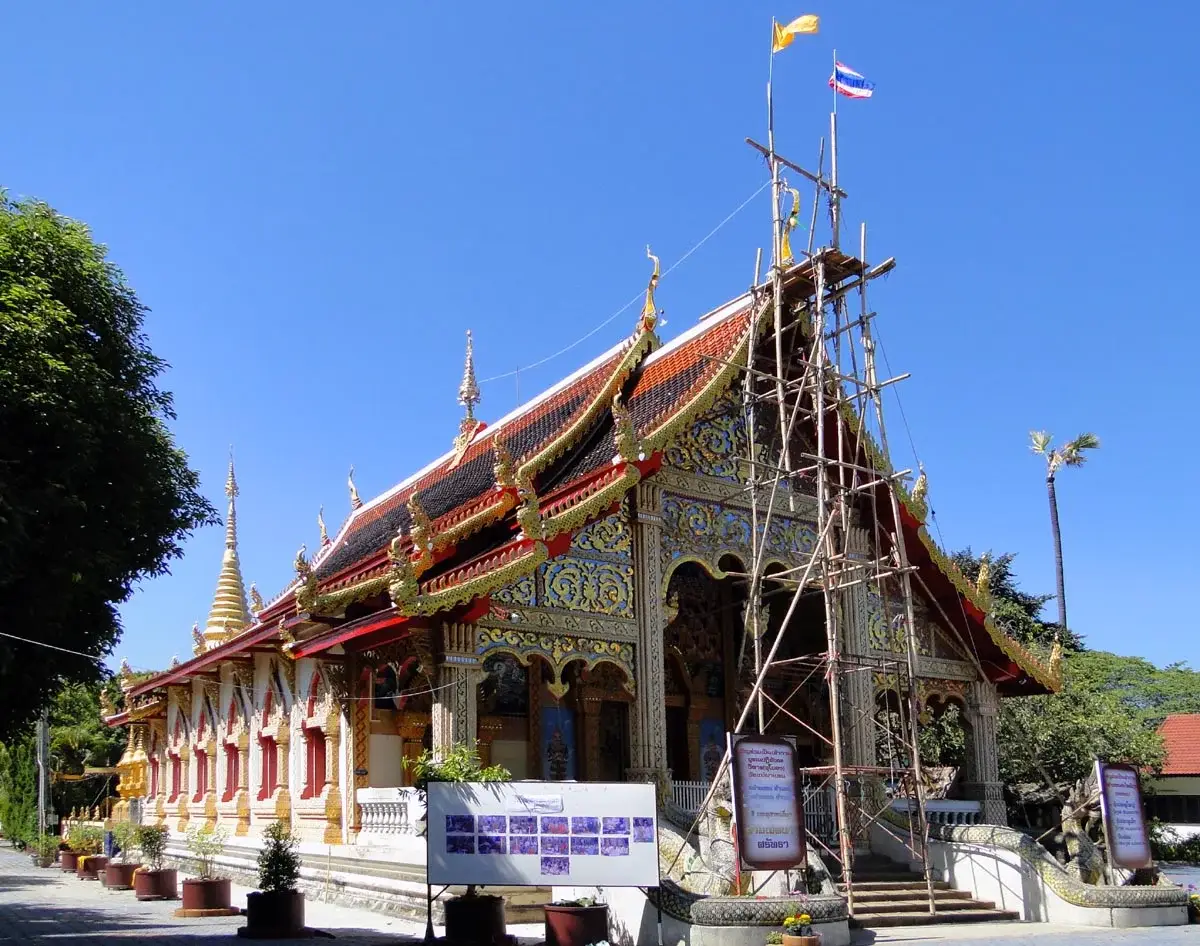
Wat Mae Pha Haen is located in Moo 6, Ban Mae Pha Haen, On Tai Subdistrict, San Kamphaeng District, Chiang Mai 50130, Thailand. It is a private Buddhist temple under the Mahanikaya order and one of the important temples of On Tai Subdistrict. The temple was officially established in 1841 and received its royal Wisungkhamsima on 2 September 1937. Phra Khru Santithada Santakayo is the abbot. Wat Mae Pha Haen is significant as an old community temple, a spiritual center of Ban Mae Pha Haen, and a key religious landmark in On Tai.
The importance of Wat Mae Pha Haen lies in its long history and its role as one of the earliest religious centers of On Tai. Local community history describes the temple as the first temple of On Tai Subdistrict, formerly known among villagers as “Wat Luang” because of its central importance to the community. In this context, “Wat Luang” refers to its community status and local reverence, not to the official category of a royal monastery. The name reflects the temple’s deep place in local memory.
Ban Mae Pha Haen is one of the important villages in On Tai Subdistrict. On Tai is known for its local stories, Lanna way of life, village crafts, agriculture, water sources, and community-based tourism. Wat Mae Pha Haen stands within this cultural setting. It is not only a religious site but also a place that reflects the historical and social identity of the community.
The temple’s establishment in 1841 shows that Ban Mae Pha Haen had a well-rooted Buddhist community and local lay supporters from the early nineteenth century. In Lanna society, a temple was more than a ceremonial space. It was a center for merit-making, Dhamma listening, ordination, village gatherings, family rituals, and the transmission of customs from one generation to the next.
The royal Wisungkhamsima granted on 2 September 1937 is an important milestone in the temple’s history. Wisungkhamsima is the consecrated boundary used for important monastic acts. Receiving this royal grant strengthened the temple’s formal Buddhist status and confirmed its role as a fully functioning religious institution for the community.
The setting of Wat Mae Pha Haen is closely connected with the landscape of On Tai, which includes villages, fields, reservoirs, mountains, and community routes. Mae Pha Haen Reservoir, a royal-initiative reservoir in the same village area, supports agriculture and is connected with local traditions. This setting makes the temple part of a wider cultural landscape where Buddhism, farming, water, and mountain scenery exist together.
The main structures and sacred points of Wat Mae Pha Haen include an old Lanna-style ubosot, sermon hall, monks’ residences, a Lanna-style viharn, the principal Buddha image, and a Lanna-style chedi containing relics of revered monks. These features give the temple strong religious, architectural, and cultural value. The temple is therefore suitable for visitors who want to study Lanna village temples in their real community setting.
The Lanna-style viharn is one of the temple’s important architectural features. In a Lanna community temple, the viharn is not merely a building. It is the shared sacred space where villagers gather for Buddhist holy days, sermons, Kathin, robe offerings, and annual ceremonies. Visitors should observe its form, interior atmosphere, and the placement of the principal Buddha image respectfully.
The principal Buddha image inside the temple is an important devotional point. Paying respect to the principal Buddha image is a suitable way to begin a temple visit, as it expresses reverence for the Triple Gem and prepares the mind for a calm and respectful walk through the temple grounds.
The old Lanna-style ubosot is another important structure. The ubosot is the space used for important monastic acts and is connected with the consecrated boundary of the temple. Its significance is both architectural and disciplinary within the Buddhist monastic system. Visitors should approach this area with particular respect.
The sermon hall supports the social and religious role of the temple. It is used for Dhamma listening, merit-making, community meetings, and annual temple activities. In a village temple, the sermon hall is a shared space connecting monks, temple committee members, elders, families, youth, and local residents.
The monks’ residences allow Wat Mae Pha Haen to remain active throughout the year. Resident monks and novices support daily religious routines, chanting, merit-making, Buddhist education, and temple activities. This makes the temple a living religious space rather than a site known only through historical records.
The Lanna-style chedi is one of the most important sacred points at Wat Mae Pha Haen. It enshrines relics of revered monks and is deeply respected by local people and pilgrims. In Lanna Buddhism, a chedi is both a sacred monument and a devotional center. Visitors should walk around the chedi respectfully and avoid touching sacred elements without permission.
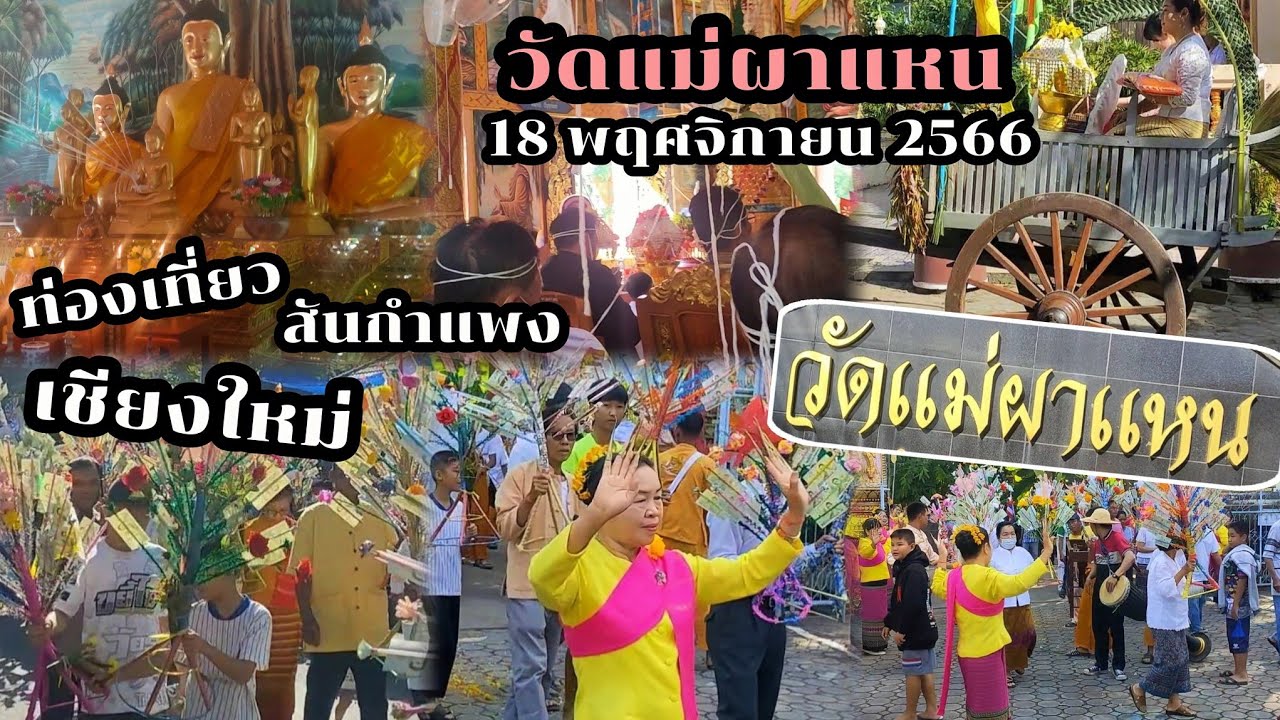
The annual relic-bathing ceremony at Wat Mae Pha Haen is held on the full moon of the third lunar month, when the moon is in the Magha lunar mansion. This tradition is an important event for the community. It allows local devotees and pilgrims to pay respect to the sacred relics, make merit, and gather as a Buddhist community.
The full moon of the third lunar month is meaningful in both Lanna and Buddhist practice. A relic-bathing ceremony during this period connects Buddhist faith, the lunar calendar, ritual timing, and community participation. Visitors who come during the annual ceremony can experience the temple as a living center of faith rather than merely a historical site.
Wat Mae Pha Haen is also connected with important monastic figures in On Tai. Local community history mentions Khru Ba Nguang as the first abbot and Khru Ba Pinta as an influential monk associated with the temple before he later founded Wat Pa Tueng. This connection links Wat Mae Pha Haen with the wider Buddhist memory of On Tai and the history of Wat Pa Tueng and Luang Pu La.
Phra Khru Santithada Santakayo is the abbot of Wat Mae Pha Haen. Community information records 5 monks and 5 novices at the temple. The abbot’s role is important in caring for the monks and novices, maintaining the temple structures, supporting the relic-bathing ceremony, coordinating merit-making events, and working with local lay supporters.
Wat Mae Pha Haen remains an active temple in San Kamphaeng District. It appears in recent Kathin information and has resident monks, showing that it continues to participate in Buddhist merit-making and community religious life. The temple is not only historically important; it remains a functioning religious center for Ban Mae Pha Haen.
Wat Mae Pha Haen is connected with regular Buddhist activities such as the relic-bathing ceremony, Kathin, robe offerings, Buddhist Lent, End of Buddhist Lent, Buddhist holy days, and local Buddhist festivals. These activities bring together monks, novices, elders, families, youth, and local lay supporters. They keep the temple active as a center of faith and community identity.
The role of Wat Mae Pha Haen can be understood on several levels. Religiously, it is a place for worship, Dhamma listening, merit-making, and Buddhist ceremonies. Historically, it is associated with the earliest temple life of On Tai. Culturally, it preserves a Lanna chedi, relic-bathing tradition, and Lanna architectural features. Spatially, it connects Ban Mae Pha Haen with Mae Pha Haen Reservoir, Doi Mon Ching, Champa Hia mineral spring, and the wider On Tai tourism route.
The atmosphere of Wat Mae Pha Haen is calm, old, and deeply connected with local faith. It is suitable for visitors who want to understand an old community temple beyond surface-level sightseeing. A visit here helps travelers see how a temple can preserve religious practice, local history, sacred monuments, community rituals, and the natural landscape of On Tai at the same time.
Key points to notice at Wat Mae Pha Haen include the Lanna-style chedi containing relics of revered monks, the Lanna-style viharn, the principal Buddha image, the old Lanna-style ubosot, the sermon hall, monks’ residences, and the overall atmosphere of the old temple in Ban Mae Pha Haen. Visitors interested in local history should note the temple’s establishment in 1841 and its role as the first temple of On Tai. Visitors interested in Buddhist tradition should pay attention to the annual relic-bathing ceremony.
Wat Mae Pha Haen can be included in a connected route around On Tai. Nearby places include Mae Pha Haen Reservoir, Doi Mon Ching, Champa Hia mineral spring, Wat Pa Tueng in On Tai, Wat Pa Ha, Wat Pa Ngae, Wat Ban Hong, and On Tai community attractions. This route is suitable for a half-day or full-day trip combining Buddhist worship, sacred relics, local history, reservoirs, mountain scenery, and community-based travel.
Mae Pha Haen Reservoir adds a natural and agricultural dimension to the visit. The reservoir is an earth-fill reservoir that supports farming and is connected with the fish procession and water-source blessing tradition. When combined with Wat Mae Pha Haen, the route reveals how temples, relics, water, farming, mountains, and village life are connected in On Tai.
Doi Mon Ching and Champa Hia mineral spring also enrich the route. Doi Mon Ching is a distinctive mountain landmark often called the “Fuji of On Tai,” while Champa Hia is a natural mineral water source flowing from rock. These places allow visitors to combine Buddhist merit-making with landscape, water, and community learning in one trip.
Visitors should observe proper temple etiquette. Dress modestly, speak quietly, respect the viharn, principal Buddha image, ubosot, chedi, sermon hall, monks’ residences, monks, and novices, and avoid touching sacred objects without permission. During the relic-bathing ceremony, Kathin, Buddhist holy days, or other temple events, visitors should follow the guidance of the temple committee and local residents.
Getting There is convenient by private car, rental car, or hired local transport from Chiang Mai city. Take the Chiang Mai–San Kamphaeng route toward San Kamphaeng District, then continue to On Tai Subdistrict and Ban Mae Pha Haen in Moo 6. The temple can be combined with Mae Pha Haen Reservoir, Doi Mon Ching, Champa Hia mineral spring, Wat Pa Tueng, Wat Pa Ha, Wat Pa Ngae, Wat Ban Hong, and the San Kamphaeng–Mae On route. Travelers using navigation apps should search for “Wat Mae Pha Haen On Tai San Kamphaeng” to reach the correct temple in Chiang Mai.
Wat Mae Pha Haen is suitable for visitors interested in old community temples, the first temple of On Tai, Lanna-style chedis, relic-bathing traditions, Lanna viharn architecture, and cultural routes around San Kamphaeng. Its value lies in its establishment in 1841, its royal Wisungkhamsima in 1937, its sacred chedi, its annual relic-bathing ceremony, and its continuing role as a spiritual center of Ban Mae Pha Haen. For travelers who want to understand Chiang Mai beyond major landmarks, this temple offers a grounded view of Buddhist faith, Lanna culture, and community life.
| Name | Wat Mae Pha Haen |
| Location | Moo 6, Ban Mae Pha Haen, On Tai Subdistrict, San Kamphaeng District, Chiang Mai Province |
| Address | 2 Moo 6, On Tai Subdistrict, San Kamphaeng District, Chiang Mai 50130, Thailand |
| Contact Number | 053-880-361 |
| Highlights | An old temple of Ban Mae Pha Haen, regarded locally as the first temple of On Tai, with a Lanna-style chedi containing relics of revered monks, Lanna viharn, and annual relic-bathing ceremony |
| History | Officially established as a temple in 1841 and granted royal Wisungkhamsima on 2 September 1937 |
| Name Origin | The temple name comes from Ban Mae Pha Haen, the village where the temple is located |
| Distinctive Features | A Mahanikaya community temple connected with local Buddhist faith, sacred relics, Lanna architecture, and the historical memory of On Tai |
| Travel Information | Travel from Chiang Mai city via the Chiang Mai–San Kamphaeng route, then continue to On Tai Subdistrict and Ban Mae Pha Haen in Moo 6. Search for “Wat Mae Pha Haen On Tai San Kamphaeng” in navigation apps. |
| Current Status | Active community Buddhist temple, merit-making space, and spiritual center of Ban Mae Pha Haen |
| Temple Type | Private Buddhist temple under the Mahanikaya order |
| Temple Code | 350130607 |
| Temple Area | 5 rai, 2 ngan, and 50 square wah |
| Abbot / Caretaker | Phra Khru Santithada Santakayo |
| Monks / Novices | 5 monks and 5 novices |
| Open Days | Daily |
| Opening Hours | 08.00 – 17.00 |
| Main Areas / Structures | Old Lanna-style ubosot, Lanna viharn, sermon hall, monks’ residences, Lanna-style chedi, temple courtyard, and community religious activity areas |
| Important Devotional Points | Principal Buddha image in the viharn and Lanna-style chedi containing relics of revered monks |
| Related Traditions / Activities | Annual relic-bathing ceremony on the full moon of the third lunar month when the moon is in the Magha lunar mansion, Kathin, robe offerings, Buddhist Lent, End of Buddhist Lent, Buddhist holy days, and local Buddhist festivals |
| Nearby Tourist Attractions | 1. Mae Pha Haen Reservoir, about 2 km 2. Doi Mon Ching, about 3 km 3. Champa Hia Mineral Spring, about 3 km 4. Wat Pa Ha, On Tai, about 3 km 5. Wat Pa Tueng, On Tai, about 5 km |
| Nearby Restaurants | 1. On Tai Farm, about 3 km 2. Kin Pu Du Na On Tai San Kamphaeng, about 5 km, Tel. 094-265-6094 3. Baanpong Restaurant by Baanpong Lodge, about 7 km 4. Khao Soi View Na San Kamphaeng, about 11 km, Tel. 096-686-9779 5. Southern Curry Jae Pha Old San Kamphaeng Road, about 13 km, Tel. 081-367-6261 |
| Nearby Accommodations | 1. Baanpong Lodge, about 7 km, Tel. 083-969-6555 2. LaMoon Cottage SanKampang, about 12 km, Tel. 094-723-5395 3. 102 Residence, about 13 km 4. San Kamphaeng Lake View Resort, about 15 km, Tel. 053-381-039 5. The Vet Boutique Hotel, about 16 km, Tel. 052-011-179, 091-852-5507 |
Frequently Asked Questions (FAQ)
Q: Where is Wat Mae Pha Haen located?
A: Wat Mae Pha Haen is located in Moo 6, Ban Mae Pha Haen, On Tai Subdistrict, San Kamphaeng District, Chiang Mai 50130, Thailand.
Q: What are the open days and opening hours of Wat Mae Pha Haen?
A: Wat Mae Pha Haen is open daily from 08.00 to 17.00.
Q: What is the history of Wat Mae Pha Haen?
A: Wat Mae Pha Haen was established in 1841, is regarded locally as the first temple of On Tai, and received royal Wisungkhamsima on 2 September 1937.
Q: Who is the abbot of Wat Mae Pha Haen?
A: The abbot is Phra Khru Santithada Santakayo.
Q: What important structures can visitors see at Wat Mae Pha Haen?
A: Important structures include the old Lanna-style ubosot, Lanna viharn, sermon hall, monks’ residences, Lanna-style chedi, temple courtyard, and community religious activity areas.
Q: Why is the chedi at Wat Mae Pha Haen important?
A: The Lanna-style chedi contains relics of revered monks and is an important devotional point for local people and pilgrims.
Q: What is the main annual tradition at Wat Mae Pha Haen?
A: The main annual tradition is the relic-bathing ceremony held on the full moon of the third lunar month when the moon is in the Magha lunar mansion.
Q: What nearby places can visitors combine with Wat Mae Pha Haen?
A: Visitors can combine the trip with Mae Pha Haen Reservoir, Doi Mon Ching, Champa Hia mineral spring, Wat Pa Ha, and Wat Pa Tueng in On Tai.
 Category: ●Places of Worship
 Group: ●Temple
Last Update : 2 MonthAgo
 Last Update : 2 MonthAgo
 Click to Access the Navigation Map GPS
Wat Mae Pha Haen Map
Recommend

 Muang Chiang Mai(121)Chom Thong(47)Mae Chaem(25)Chiang Dao(33)Doi Saket(68)Mae Taeng(85)Mae Rim(69)Samoeng(29)Fang(71)Mae Ai(59)Phrao(70)San Pa Tong(103)San Kamphaeng(66)San Sai(73)Hang Dong(73)Hot(32)Doi Tao(22)Omkoi(11)Saraphi(74)Wiang Haeng(15)Chai Prakan(28)Mae Wang(32)Mae On(22)Doi Lo(33)Galyani Vadhana(1)


