
lovethailand home >North Travel Attractions >Chiang Mai Travel Attractions >San Kamphaeng >San Kamphaeng > Wat San Tai
TL;DR: Wat San Tai is located at Moo 9, Ban San Tai, San Kamphaeng Subdistrict, San Kamphaeng District, Chiang Mai Province.

Wat San Tai
Operating day: Daily
Operating time: 08.00 - 17.00
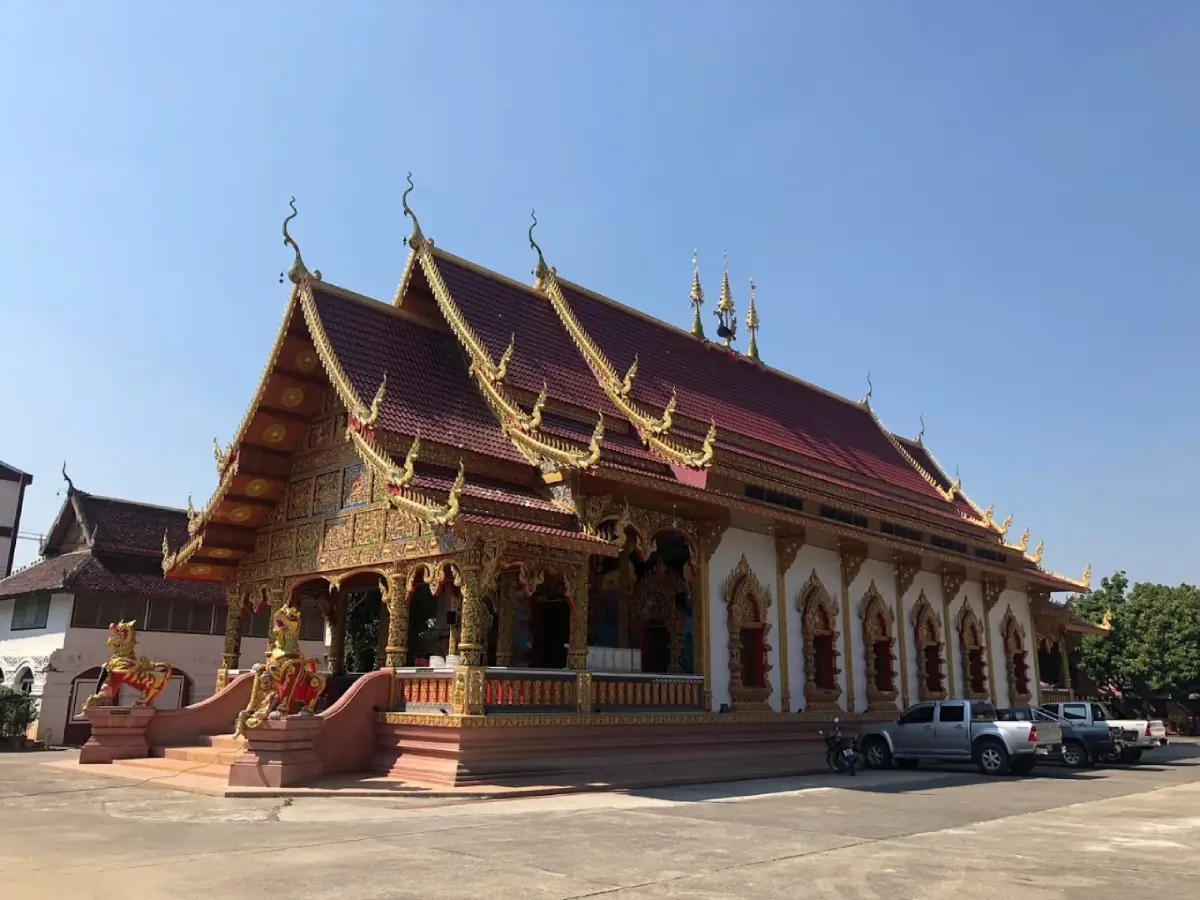
Wat San Tai is located at 76 Ban San Tai, Mae On Road, Moo 9, San Kamphaeng Subdistrict, San Kamphaeng District, Chiang Mai Province. It is a private Buddhist temple under the Mahanikaya order and an old community temple of Ban San Tai. The temple was built and officially established in 1854 and received its royal Wisungkhamsima on 14 April 1916. It covers approximately 5 rai, 3 ngan, and 97 square wah, with one plot of monastic land measuring about 8 rai, 2 ngan, and 2 square wah. Wat San Tai remains connected with worship, merit-making, local ceremonies, and the Buddhist life of Ban San Tai community.
The importance of Wat San Tai lies in its long history of more than one and a half centuries. Its establishment in 1854 places it among the old community temples of San Kamphaeng. In Lanna society, a temple was not only a place for religious ceremonies. It was also a center for Dhamma listening, ordination, merit-making, community gatherings, and the preservation of local memory. Wat San Tai continues to represent this close relationship between Buddhism and village life.
Ban San Tai in Moo 9 is part of San Kamphaeng Subdistrict, an area with many village temples such as Wat San Tai, Wat San Kamphaeng Luang, Wat Kham Sao, Wat Ban Noi, Wat Pa Heo, Wat Si Bun Rueang, Wat Pa Daeng, and Wat Santiwanaram. This pattern reflects the Lanna community system, where temples and villages develop together. Each temple serves its own village while also forming part of the wider Buddhist and cultural landscape of San Kamphaeng.
The name “San Tai” reflects local geography and village identity. The word “san” is commonly found in northern Thai place names and is often associated with a ridge, raised ground, or a settlement line. The word “tai” gives the village and temple a specific local identity. The temple name is therefore directly connected with Ban San Tai, Mae On Road, and the local routes used by residents in everyday life.
Temple records identify Phra Athikan Kawin Kanthawiso as the initiator of Wat San Tai. This detail is important because it shows that the temple began through the combined religious effort of monks and local lay supporters. In village society, founding a temple meant creating a spiritual center, a place for merit-making, and a shared institution that could support Buddhist learning and community life for later generations.
The royal Wisungkhamsima granted on 14 April 1916 was a major milestone in the temple’s formal Buddhist status. Wisungkhamsima is the consecrated boundary used for important monastic acts. The boundary of Wat San Tai is recorded as 1 sen wide and 1 sen long. This confirms the importance of the ubosot area as a space for monastic ceremonies and shows the temple’s development from a village religious site into an established Buddhist institution.
The main structures of Wat San Tai include an ubosot, sermon hall, chanting hall, and monks’ residences. These structures allow the temple to support both religious and community functions. The ubosot is used for important monastic acts. The sermon hall supports Dhamma listening, merit-making, and community gatherings. The chanting hall is used for Buddhist practice, while the monks’ residences support monastic life. Together, these buildings show that Wat San Tai is a functioning community temple.
The temple’s important sacred object is a bronze Buddha image in the Sing Sam style, associated with Chiang Saen Buddhist art. Chiang Saen-style Buddha images are strongly connected with northern Thai and Lanna artistic heritage. Their forms are calm, dignified, and devotional. The presence of this bronze image gives Wat San Tai both religious and artistic value. Visitors can pay respect to the image and appreciate the older Buddhist art tradition of northern Thailand.
Wat San Tai is also closely associated with Phra Khru Thiphayaphimon, also known as Luang Pu Khru Ba Inpan Wisuttho, an important former abbot of the temple. He was respected by many disciples and local devotees. He was known as a development-oriented monk who helped build and maintain Buddhist structures at Wat San Tai. His name remains an important part of the temple’s modern memory and the faith of Ban San Tai community.
Phra Khru Thiphayaphimon, or Luang Pu Khru Ba Inpan Wisuttho, passed away on 18 March 2026 at the age of 79, after 46 rains retreats as a monk. After his passing, monks, lay supporters, and disciples conducted merit-making ceremonies at Wat San Tai. These events show the temple’s role as a spiritual center where community memory, monastic leadership, and local faith come together.
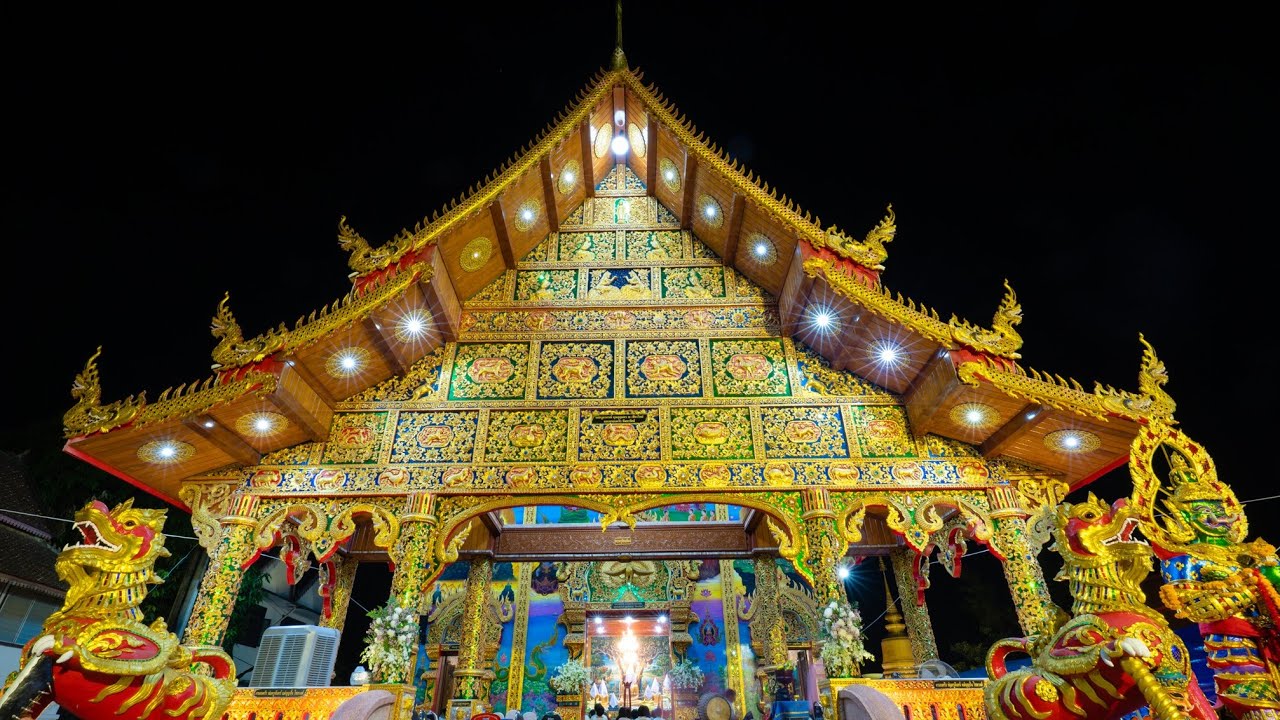
The temple viharn has also served as an important ceremonial space in recent community life. In 2026, the royal bathing rite for Phra Khru Thiphayaphimon took place inside the viharn of Wat San Tai, with monks from San Kamphaeng District and many devotees attending. This shows that the viharn is not only a regular temple building but also an important gathering space for major religious ceremonies in the district.
One of the important traditions connected with Wat San Tai is the Phra That bathing tradition. In the local community context, this ceremony allows residents to pay respect to the temple’s sacred structure, make merit, remember former teachers, and strengthen village unity. It is connected with a gratitude day for former teachers, including Khru Ba Techa and former abbots, as well as ceremonies associated with Phra Khru Thiphayaphimon. This gives the temple a strong ritual connection with both sacred architecture and monastic lineage.
In addition to the Phra That bathing tradition, Wat San Tai is connected with regular Buddhist community activities such as Buddhist Lent, End of Buddhist Lent, Kathin, robe offerings, Buddhist holy days, and local merit-making events. These activities bring together elders, families, young people, monks, and lay supporters. They keep the temple active as a living center of faith and social connection.
The temple also has a library within its grounds. This gives Wat San Tai an additional educational dimension. In traditional Lanna communities, temples often served as places where Buddhist texts, Dhamma books, local history, and community knowledge were preserved. The presence of a library reflects the temple’s role not only as a ritual space but also as a place of learning and cultural continuity.
The atmosphere of Wat San Tai is calm and community-oriented. Its value comes from its old history, local function, religious structures, Chiang Saen-style sacred image, Phra That bathing tradition, and the memory of Luang Pu Khru Ba Inpan. Visitors can pay respect, make merit, observe the ubosot, viharn, sermon hall, chanting hall, monks’ residences, and sacred image, and experience a working community temple in San Kamphaeng.
Key points to see at Wat San Tai include the ubosot, viharn, Phra That, bronze Sing Sam Buddha image, sermon hall, chanting hall, monks’ residences, and spaces connected with the memory of Phra Khru Thiphayaphimon. Visitors interested in local history should note the temple’s establishment in 1854 and royal Wisungkhamsima in 1916. Visitors interested in Lanna culture should focus on the Phra That bathing tradition and the temple’s connection with former respected monks.
Wat San Tai plays several roles in Ban San Tai community. Religiously, it is a place for worship, Dhamma listening, merit-making, and Buddhist ceremonies. Culturally, it preserves the Phra That bathing tradition, monastic memory, and Chiang Saen Buddhist art. Socially, it serves as a gathering place during merit-making and community events. Spatially, it functions as a local landmark connected with Ban San Tai, Mae On Road, and the temple route of San Kamphaeng.
Wat San Tai can be included in a connected cultural route around San Kamphaeng. Nearby places include Wat Ban Noi, Wat Santiwanaram, San Kamphaeng Walking Street, Wat Kham Sao, Wat Pa Heo, Wat San Kamphaeng Luang, and Bo Sang Umbrella Village. This route is suitable for a half-day or full-day trip combining old temples, local food, community markets, Lanna culture, and San Kamphaeng handicrafts.
Visitors should observe proper temple etiquette. Dress modestly, speak quietly, respect the ubosot, viharn, Phra That, and Buddha images, avoid disturbing monks or residents, and take photographs respectfully. During Buddhist holy days or merit-making events, visitors should follow the guidance of the temple committee and local residents. Community temples remain living sacred spaces, so respectful behavior helps preserve both the religious atmosphere and local rhythm of life.
Getting There is convenient by private car, rental car, or hired local transport from Chiang Mai city. Take the Chiang Mai–San Kamphaeng route toward San Kamphaeng Subdistrict and continue to Ban San Tai in Moo 9. The temple is located on Mae On Road within the community area. It can be combined with San Kamphaeng Walking Street, Wat Ban Noi, Wat Santiwanaram, Wat Kham Sao, Wat Pa Heo, Wat San Kamphaeng Luang, and Bo Sang Umbrella Village. Travelers using navigation apps should search for “Wat San Tai San Kamphaeng” to reach the correct temple in Chiang Mai.
Wat San Tai is suitable for visitors interested in old village temples, Lanna Buddhist art, Chiang Saen-style Buddha images, the Phra That bathing tradition, and quiet cultural routes around San Kamphaeng. Its value lies in the combination of long history, functioning temple structures, local monastic memory, and village faith. For travelers who want to understand Chiang Mai beyond major landmarks, Wat San Tai offers a grounded view of Buddhist faith and community life in San Kamphaeng.
| Name | Wat San Tai |
| Location | Moo 9, Ban San Tai, San Kamphaeng Subdistrict, San Kamphaeng District, Chiang Mai Province |
| Address | 76 Ban San Tai, Mae On Road, Moo 9, San Kamphaeng Subdistrict, San Kamphaeng District, Chiang Mai 50130, Thailand |
| Highlights | An old Ban San Tai community temple with an ubosot, sermon hall, chanting hall, monks’ residences, a bronze Chiang Saen-style Buddha image, and the Phra That bathing tradition |
| History | Built and officially established as a temple in 1854; granted royal Wisungkhamsima on 14 April 1916 |
| Temple Founder | Phra Athikan Kawin Kanthawiso |
| Distinctive Features | A Mahanikaya community temple connected with Ban San Tai, Buddhist merit-making, Chiang Saen Buddhist art, and the memory of respected former monks |
| Travel Information | Travel from Chiang Mai city via the Chiang Mai–San Kamphaeng route, then continue to Ban San Tai in Moo 9. Search for “Wat San Tai San Kamphaeng” in navigation apps. |
| Current Status | Active community Buddhist temple and religious activity space of Ban San Tai |
| Temple Type | Private Buddhist temple under the Mahanikaya order |
| Temple Area | 5 rai, 3 ngan, and 97 square wah, with one monastic land plot of 8 rai, 2 ngan, and 2 square wah |
| Important Former Abbot | Phra Khru Thiphayaphimon, also known as Luang Pu Khru Ba Inpan Wisuttho |
| Open Days | Contact the temple before visiting |
| Opening Hours | Contact the temple before visiting |
| Main Areas / Structures | Ubosot, viharn, sermon hall, chanting hall, monks’ residences, Phra That, temple courtyard, and community religious activity areas |
| Important Sacred Object | Bronze Sing Sam Buddha image in Chiang Saen style |
| Related Traditions / Activities | Phra That bathing tradition, gratitude day for former teachers, Buddhist Lent, End of Buddhist Lent, Kathin, robe offerings, Buddhist holy days, and local merit-making events |
| Nearby Tourist Attractions | 1. Wat Ban Noi, about 1 km 2. Wat Santiwanaram, about 2 km 3. San Kamphaeng Walking Street, about 2 km 4. Wat Kham Sao, about 3 km 5. Bo Sang Umbrella Village, about 5 km |
| Nearby Restaurants | 1. Khrop Khrua Tam Sang 1, about 1 km 2. San Kamphaeng Beef Noodle, about 2 km, Tel. 082-685-2863 3. San Kamphaeng Restaurant, about 2 km, Tel. 053-332-935, 053-395-389 4. CM Fresh Pork Pa Heo Market, about 3 km, Tel. 097-037-1286 5. Huen Jai Yong, about 6 km, Tel. 086-671-8710 |
| Nearby Accommodations | 1. 102 Residence, about 2 km 2. ORA HOUSE, about 4 km 3. San Kamphaeng Lake View Resort, about 7 km, Tel. 053-381-039 4. The Vet Boutique Hotel, about 8 km, Tel. 052-011-179, 091-852-5507 5. Boon Homestay & Cafe, about 8 km, Tel. 093-494-8000 |
Frequently Asked Questions (FAQ)
Q: Where is Wat San Tai located?
A: Wat San Tai is located at 76 Ban San Tai, Mae On Road, Moo 9, San Kamphaeng Subdistrict, San Kamphaeng District, Chiang Mai 50130, Thailand.
Q: What are the open days and opening hours of Wat San Tai?
A: Visitors should contact the temple before visiting because there is no clear dedicated opening-time notice available for the temple.
Q: What is the history of Wat San Tai?
A: Wat San Tai was built and officially established as a temple in 1854 by Phra Athikan Kawin Kanthawiso and received royal Wisungkhamsima on 14 April 1916.
Q: What are the important structures at Wat San Tai?
A: Important structures include the ubosot, viharn, sermon hall, chanting hall, monks’ residences, Phra That, temple courtyard, and community religious activity areas.
Q: What important sacred object is found at Wat San Tai?
A: The important sacred object is a bronze Sing Sam Buddha image in Chiang Saen style.
Q: How is Phra Khru Thiphayaphimon connected with Wat San Tai?
A: Phra Khru Thiphayaphimon, also known as Luang Pu Khru Ba Inpan Wisuttho, was an important former abbot of Wat San Tai and remains deeply respected by the local community.
Q: What important tradition is connected with Wat San Tai?
A: The temple is connected with the Phra That bathing tradition, gratitude day for former teachers, Kathin, robe offerings, and local Buddhist merit-making events.
Q: What nearby places can visitors combine with Wat San Tai?
A: Visitors can combine the trip with Wat Ban Noi, Wat Santiwanaram, San Kamphaeng Walking Street, Wat Kham Sao, and Bo Sang Umbrella Village.
 Category: ●Places of Worship
 Group: ●Temple
Last Update : 2 MonthAgo
 Last Update : 2 MonthAgo
 Click to Access the Navigation Map GPS
Wat San Tai Map
Recommend

 Muang Chiang Mai(121)Chom Thong(47)Mae Chaem(25)Chiang Dao(33)Doi Saket(68)Mae Taeng(85)Mae Rim(69)Samoeng(29)Fang(71)Mae Ai(59)Phrao(70)San Pa Tong(103)San Kamphaeng(66)San Sai(73)Hang Dong(73)Hot(32)Doi Tao(22)Omkoi(11)Saraphi(74)Wiang Haeng(15)Chai Prakan(28)Mae Wang(32)Mae On(22)Doi Lo(33)Galyani Vadhana(1)


