
lovethailand home >North Travel Attractions >Chiang Mai Travel Attractions >San Kamphaeng >Buak Khang > Wat Rong Kong Khao
TL;DR: Wat Rong Kong Khao is located at Ban Rong Kong Khao, Moo 9, Buak Khang Subdistrict, San Kamphaeng District, Chiang Mai Province, open Daily, hours 08.00 – 17.00.

Wat Rong Kong Khao
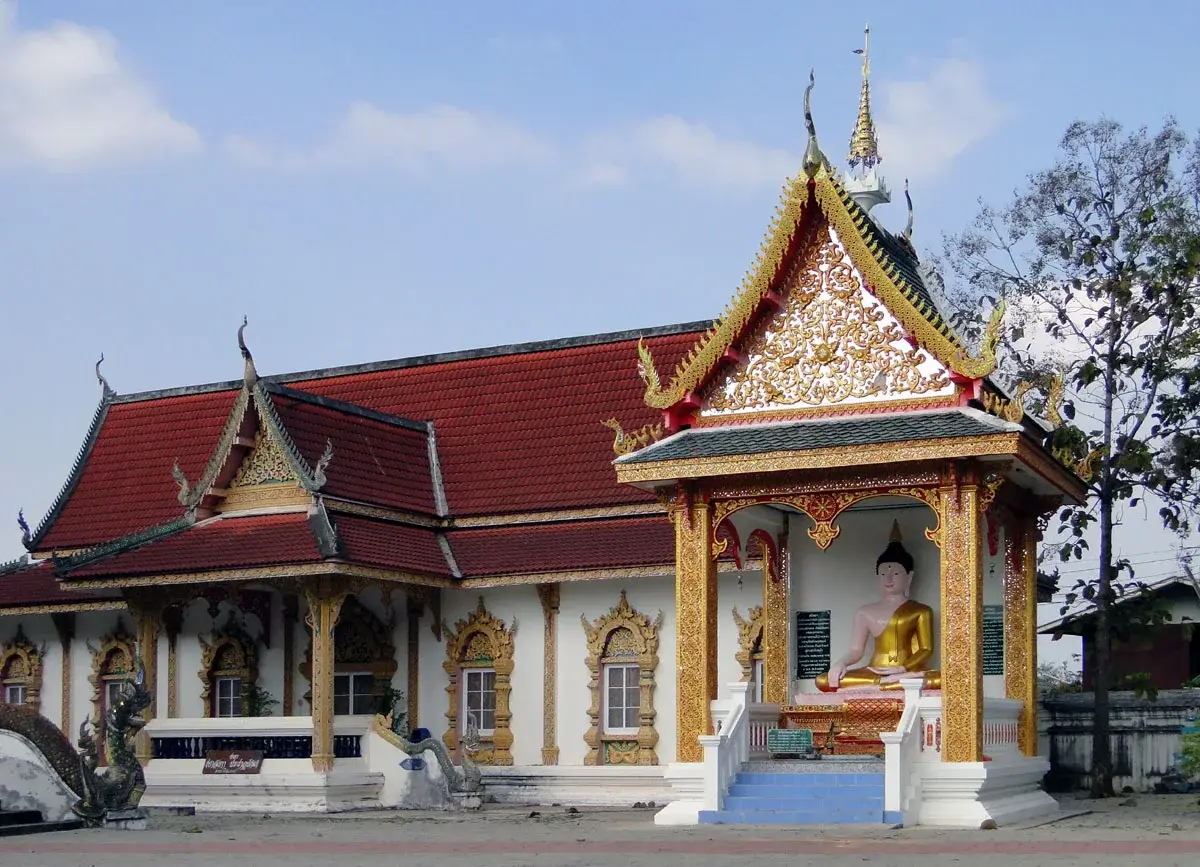
Open Days: Daily
Opening Hours: 08.00 – 17.00
Wat Rong Kong Khao is located at 68 Moo 9, Ban Rong Kong Khao, Buak Khang Subdistrict, San Kamphaeng District, Chiang Mai Province. It is a local Buddhist temple under the Mahanikaya order and an important religious center for Ban Rong Kong Khao and the surrounding Buak Khang community. The temple is suitable for travelers who want to visit a quiet local temple, make merit, learn about village-level Buddhist heritage, and explore the cultural landscape of San Kamphaeng beyond the better-known handicraft routes and major tourist sites.
Wat Rong Kong Khao is best understood through the story of its community. Ban Rong Kong Khao is part of Buak Khang Subdistrict, an area with strong Tai Yong and Lanna cultural roots. Temples, local traditions, language, food, and craft knowledge remain deeply connected to everyday life here. Visiting Wat Rong Kong Khao therefore offers more than a short temple stop. It gives travelers a chance to see how a rural Chiang Mai temple functions as a spiritual and social center for local residents.
The history of Wat Rong Kong Khao is closely tied to the revival of an abandoned temple site. The original temple area was once covered by dense forest and remembered as an old deserted temple whose earliest founding year is not clearly recorded. On January 21, 1934, local lay leaders including Pho Nan Som Yasamut, Pho Jai Ma Prasongsap, Pho Nan Saeng Munfoei, and Pho Ai Luang of Ban Ko Sa Liam recognized that the site had a good natural setting and could be developed for the benefit of later generations. They invited villagers to clear the forest and prepare the land for Buddhist structures.
After the local community began restoring the site, they invited Khru Ba Inta of Wat Buak Khang to preside over the monastic ceremony and Khru Ba Yan Rangsri of Wat Don Pin to serve as deputy monastic leader. Twelve monks from the subdistrict also stayed at the site for seven days in a forest-dwelling practice. This event reflects a typical Lanna pattern of temple revival, where monks, lay leaders, and villagers worked together to transform an abandoned sacred space into an active center of religious life.
The monastic community later assigned the novice Saeng Pintana to help teach moral principles to villagers and support the construction of temple facilities. On March 14, 1935, the novice was ordained at the consecrated boundary of Wat Ko Sa Liam and received the monastic name Phra Saeng Chayalangkaro. He was later appointed abbot in 1943. His role became an important part of the temple’s memory because he was connected to the transition from a restored forest site into a functioning village temple.
Wat Rong Kong Khao was officially permitted as a temple in 1934. The temple covers about 6 rai and received its royal consecrated boundary, or Wisungkham Sima, in 1989. These facts show that the temple developed from a community-led restoration into a recognized Buddhist institution with a clear place in the ecclesiastical structure of Chiang Mai.
The name Wat Rong Kong Khao is connected with Ban Rong Kong Khao, the village name of Moo 9 in Buak Khang Subdistrict. The phrase evokes the rural agricultural landscape of northern Thailand, especially rice, harvest seasons, granaries, and village life. Although no detailed origin story for the temple name is firmly recorded, the name fits the agricultural and community identity of the area.
The temple atmosphere is calm and local. It is not a large tourist-oriented temple, but its value lies in its history, its relationship with the village, and its role as a place for merit-making, Buddhist ceremonies, and community gatherings. Travelers who enjoy quiet temples, local history, and less commercialized cultural routes will find Wat Rong Kong Khao a meaningful stop in San Kamphaeng.
Within the temple grounds, visitors can experience the layout of a working village temple. The compound includes areas for Buddhist worship, a temple courtyard, and spaces used for community religious activities. Like many Lanna village temples, Wat Rong Kong Khao serves more than a ritual function. It is a gathering place for merit-making, Kathin, Pha Pa offerings, Buddhist holy days, funerary rites, and community events that connect local people across generations.
One of the main reasons to visit Wat Rong Kong Khao is to understand how a small temple can preserve a large amount of local memory. The temple’s story includes abandoned sacred land, community initiative, monastic leadership, and the long process of rebuilding a place of faith. This makes it an interesting destination for travelers who want to look beyond famous temples in Chiang Mai Old City and see how Buddhism is lived in village communities.
Buak Khang Subdistrict has a strong Tai Yong cultural background. Local history connects the area with the movement of people from Mueang Yong and the revival of communities during the period of King Kawila. Because of this background, the area contains temples, craft communities, and cultural learning sites that help explain the identity of San Kamphaeng. Wat Rong Kong Khao should therefore be seen as part of a wider cultural route that includes Wat Buak Khang, Wat Pa Tan, Wat Ban Pong, and local craft sites.
Wat Rong Kong Khao plays an important role for Ban Rong Kong Khao, Moo 9, as a spiritual center where local residents make merit, listen to Dhamma teachings, gather for religious ceremonies, and maintain community bonds. This is the essential function of many rural Lanna temples. The temple is part of everyday life, not a place separated from the people around it. It supports moral learning, social continuity, and the passing of traditions from one generation to another.
Important annual religious occasions connected with the temple can be understood through the broader Buddhist calendar of Buak Khang and northern Thai communities. These include Songkran, Buddhist Lent, the end of Buddhist Lent, Loy Krathong, Kathin, and Pha Pa merit-making. Such events are not only religious rituals. They are also social mechanisms that bring villagers together, strengthen local identity, and help younger generations remain connected to Lanna and Tai Yong traditions.
For cultural travelers, Wat Rong Kong Khao is best visited as part of a connected route. A meaningful itinerary can begin at Wat Rong Kong Khao to learn about the revival of an abandoned temple, continue to Wat Ko Sa Liam, which is connected to the ordination story of Phra Saeng Chayalangkaro, and then move on to Wat Buak Khang to see the twin viharn, Phra Non La, and Phra That Ku Dam. Wat Pa Tan and Wat Ban Pong can also be included for visitors who want to understand the cultural and religious landscape of Buak Khang more deeply.
Other nearby cultural places include Baan Jang Nak, a well-known woodcarving site specializing in elephant sculptures, and local cultural learning routes related to Tai Yong heritage. These places help complete the experience of Buak Khang by combining temples, craft knowledge, village history, and living traditions. When combined with Wat Rong Kong Khao, the route becomes suitable for a half-day or full-day cultural trip from Chiang Mai city.
Getting There is most convenient by private car, rental car, or local hired vehicle. From Chiang Mai city, travel toward San Kamphaeng District, continue into Buak Khang Subdistrict, and head to Ban Rong Kong Khao, Moo 9. The roads are local village roads, so visitors should drive carefully, especially near schools, houses, and small intersections. Travelers without a private vehicle can use a hired car or ride-hailing service from Chiang Mai city or San Kamphaeng, but it is better to arrange the return trip in advance because public transport is not frequent in this area.
The best time to visit is in the morning or late afternoon when the weather is more comfortable. Visitors should dress modestly, speak quietly, and respect monastic areas. If a ceremony or community event is taking place, follow local guidance. Visiting a village temple responsibly means respecting the rhythm of the temple and the community that maintains it.
The main value of Wat Rong Kong Khao lies in its identity as a community temple with a documented modern history, beginning with its official establishment in 1934 and its royal consecrated boundary in 1989. It is a useful destination for readers and travelers searching for information about temples in Chiang Mai, temples in San Kamphaeng, temples in Buak Khang, and cultural attractions connected with Lanna and Tai Yong heritage.
In cultural terms, Wat Rong Kong Khao shows how a temple does not need to be monumental to be meaningful. Its importance comes from the people who restored it, maintained it, and continued using it as a place of faith for nearly a century. For travelers who want to understand Chiang Mai at a deeper level, this temple offers a small but valuable window into village Buddhism, local memory, and the living relationship between temples and communities in northern Thailand.
| Name | Wat Rong Kong Khao |
| Location | Ban Rong Kong Khao, Moo 9, Buak Khang Subdistrict, San Kamphaeng District, Chiang Mai Province |
| Address | 68 Moo 9, Rong Kong Khao, Buak Khang Subdistrict, San Kamphaeng District, Chiang Mai 50130, Thailand |
| Coordinates | 18.6852, 99.10433 |
| Temple Type | Local Buddhist temple under the Mahanikaya order |
| Temple Area | About 6 rai |
| Highlights | A community temple revived from an old abandoned temple site and connected with the Tai Yong cultural landscape of Buak Khang |
| History | Officially permitted as a temple in 1934 and granted a royal consecrated boundary in 1989 |
| Important Historical Figures | Pho Nan Som Yasamut, Pho Jai Ma Prasongsap, Pho Nan Saeng Munfoei, Pho Ai Luang of Ban Ko Sa Liam, Khru Ba Inta of Wat Buak Khang, Khru Ba Yan Rangsri of Wat Don Pin, and Phra Saeng Chayalangkaro |
| Name Origin | The name is connected with Ban Rong Kong Khao, Moo 9, and reflects the agricultural village landscape of Buak Khang |
| Distinctive Features | A quiet local temple serving as a spiritual center for Ban Rong Kong Khao and a meaningful stop for cultural travelers in San Kamphaeng |
| Travel Information | From Chiang Mai city, travel toward San Kamphaeng District, continue into Buak Khang Subdistrict, and head to Ban Rong Kong Khao, Moo 9. Private car, rental car, or local hired transport is recommended. |
| Current Status | An active listed temple in Buak Khang Subdistrict, San Kamphaeng District, Chiang Mai Province |
| Open Days | Daily |
| Opening Hours | 08.00 – 17.00 |
| Main Areas / Zones | Buddhist worship area, temple courtyard, religious activity area, and community event space |
| Abbot / Caretaker | Phra Sri Thon Siri Techo |
| Main Contact Number | 053-446-526 |
| Nearby Tourist Attractions | 1. Wat Ko Sa Liam, about 2 km 2. Wat Pa Tan, about 5 km 3. Wat Buak Khang, about 6 km 4. Wat Ban Pong / Inverted Viharn, about 5 km 5. Baan Jang Nak, about 7 km 6. Air Sport Farm, about 8 km |
| Nearby Restaurants | 1. Kuay Tiew Tom Yum Pad Tho 1, about 4 km, Tel. 098-730-8110, 087-656-3493 2. Hong Na Cafe, about 5 km, Tel. 085-036-8826 3. Huen Jai Yong, about 6 km, Tel. 086-671-8710 4. Mao Cha Ban Buak Khang Branch, about 6 km, Tel. 088-758-8155 5. PunThai Coffee San Kamphaeng 5, about 6 km, Tel. 093-323-6853 6. Timber Hood Cafe, about 6 km, Tel. 086-187-7680 |
| Nearby Accommodations | 1. Boon Homestay & Cafe, about 4 km, Tel. 093-494-8000 2. Huanmaisakngam Resort, about 4 km, Tel. 065-495-5365 3. OYO 749 Baan Suan Resort, about 7 km 4. Sanaepatan Home Resort, about 8 km, Tel. 092-815-5029 5. Baanpong Lodge, about 9 km, Tel. 083-969-6555 6. The Vet Boutique Hotel, about 14 km, Tel. 052-011-179 |
Frequently Asked Questions (FAQ)
Q: Where is Wat Rong Kong Khao located?
A: Wat Rong Kong Khao is located at 68 Moo 9, Ban Rong Kong Khao, Buak Khang Subdistrict, San Kamphaeng District, Chiang Mai 50130, Thailand.
Q: What are the opening days and hours of Wat Rong Kong Khao?
A: The temple is open daily from 08.00 to 17.00.
Q: Why is Wat Rong Kong Khao historically important?
A: The temple was revived from an old abandoned temple site, officially permitted as a temple in 1934, and granted a royal consecrated boundary in 1989.
Q: Who is the current abbot of Wat Rong Kong Khao?
A: The local development plan of Buak Khang Municipality lists Phra Sri Thon Siri Techo as the abbot of Wat Rong Kong Khao.
Q: What kind of travelers should visit Wat Rong Kong Khao?
A: It is suitable for travelers who enjoy quiet temples, local Buddhist culture, Lanna community history, and cultural routes away from crowded tourist areas.
Q: How can travelers get to Wat Rong Kong Khao?
A: Travel from Chiang Mai city toward San Kamphaeng District, continue into Buak Khang Subdistrict, and head to Ban Rong Kong Khao, Moo 9. A private car, rental car, or local hired vehicle is recommended.
Q: What nearby places can be combined with Wat Rong Kong Khao?
A: Nearby places include Wat Ko Sa Liam, Wat Pa Tan, Wat Buak Khang, Wat Ban Pong, Baan Jang Nak, and Air Sport Farm.
Q: Does Wat Rong Kong Khao have a contact number?
A: The listed contact number for Wat Rong Kong Khao is 053-446-526.
 Category: ●Places of Worship
 Group: ●Temple
Last Update : 2 MonthAgo
 Last Update : 2 MonthAgo
 Click to Access the Navigation Map GPS
Wat Rong Kong Khao Map
Recommend

 Muang Chiang Mai(121)Chom Thong(47)Mae Chaem(25)Chiang Dao(33)Doi Saket(68)Mae Taeng(85)Mae Rim(69)Samoeng(29)Fang(71)Mae Ai(59)Phrao(70)San Pa Tong(103)San Kamphaeng(66)San Sai(73)Hang Dong(73)Hot(32)Doi Tao(22)Omkoi(11)Saraphi(74)Wiang Haeng(15)Chai Prakan(28)Mae Wang(32)Mae On(22)Doi Lo(33)Galyani Vadhana(1)


