
lovethailand home >North Travel Attractions >Chiang Mai Travel Attractions >San Kamphaeng >Buak Khang > Wat Ya Phai (Wat Ya Pai)
TL;DR: Wat Ya Phai (Wat Ya Pai) is located at Village No. 7, Buak Khang Subdistrict, San Kamphaeng District, Chiang Mai Province.

Wat Ya Phai (Wat Ya Pai)
Operating day: Daily
Operating time: 08.00 - 17.00
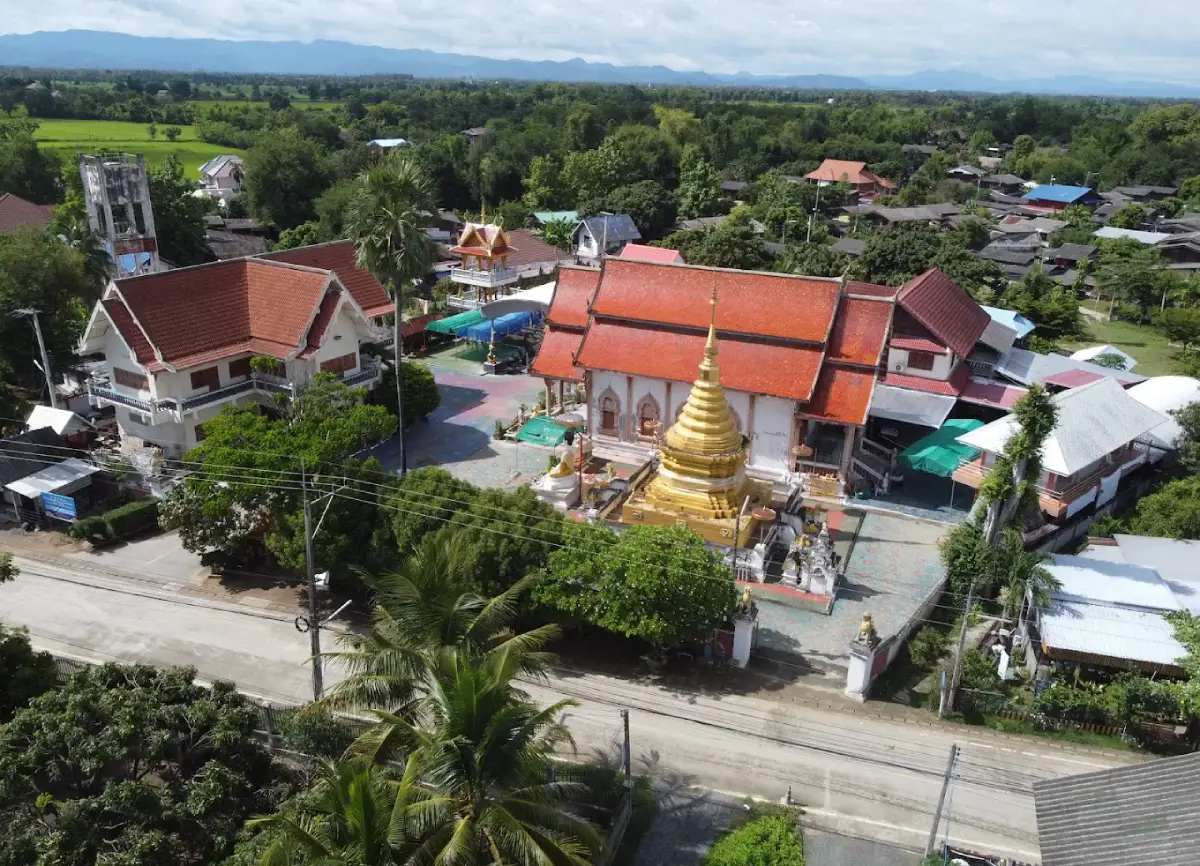
Wat Ya Phai, also locally known as Wat Ya Pai, is a local Buddhist temple under the Mahanikaya sect, located in Village No. 7, Buak Khang Subdistrict, San Kamphaeng District, Chiang Mai Province. The temple was officially established in 1767 and is one of the old community temples of Buak Khang. It is important for its religious role, its local history, and its preservation of ancient sacred objects inside the viharn. Wat Ya Phai is especially known for an old sacred structure locally called “ku,” together with Buddha images and ancient decorative works that have been preserved by the community.
Buak Khang Subdistrict is one of the culturally significant areas of San Kamphaeng District. It is closely associated with Yong cultural identity, village temples, local language, annual merit-making, and Buddhist customs. In this setting, Wat Ya Phai is not only a place of worship. It is a village spiritual center, a place of community memory, and part of the wider network of old temples in Buak Khang.
The names “Ya Phai” and “Ya Pai” appear together in local usage. The local name reflects the relationship between the temple and Ban Ya Pai, the community where the temple is located. This shows that the temple name is not merely an administrative label, but a living name used by villagers and connected with community memory.
Wat Ya Phai was established in 1767, giving it more than 250 years of history. Over this long period, the temple has witnessed major changes in Lanna society, from village-based agricultural life and the revival of local communities to the present-day cultural landscape of San Kamphaeng. Its age and continuing use make it an important community temple rather than only a historic name in a temple register.
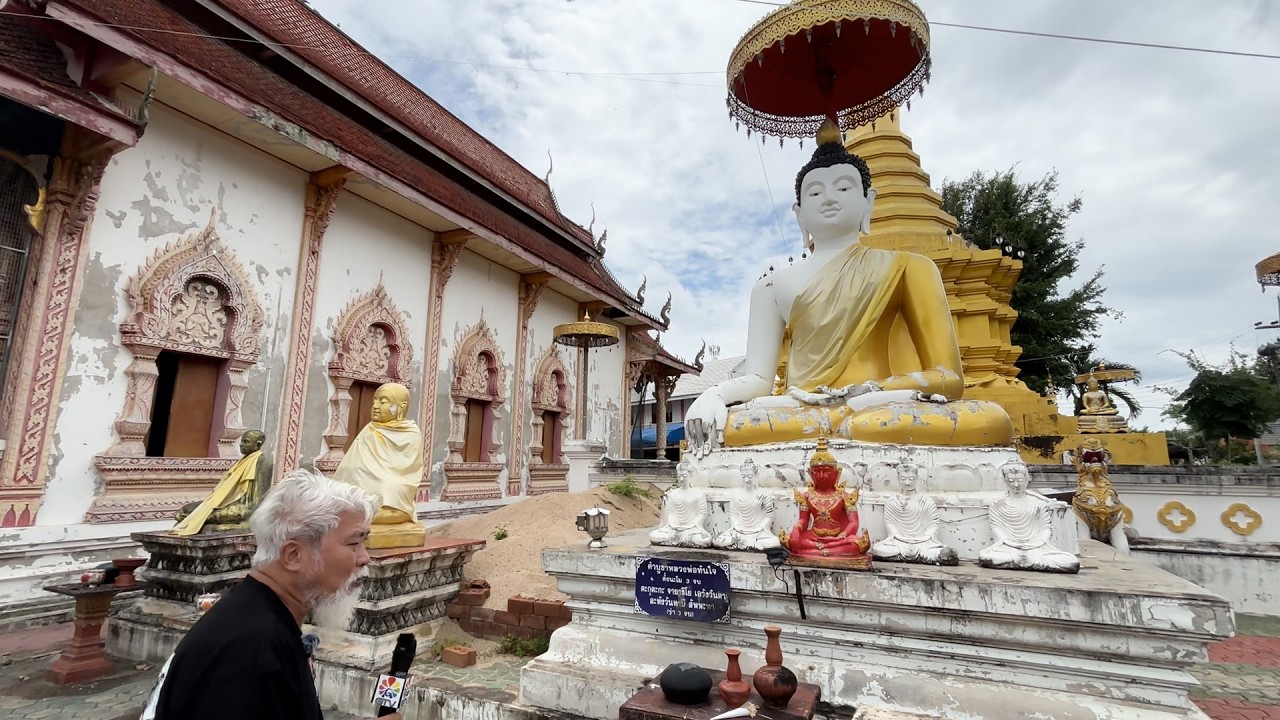
Local tradition says that the temple site was once home to wild animals and was an abandoned temple area. Villagers found old sacred objects at the site, especially a structure they called “ku,” a local term often used for an old sacred monument, shrine, chedi base, or religious structure. This ku enshrined Buddha images in different postures and ancient sculptural works. Some of the decorative details were described locally as having Chinese or Khmer-style influence, with animal figures included in the design.
The preservation of the ku and ancient sacred objects inside the viharn gives Wat Ya Phai special value as a place of local heritage. The temple is not only a site for ceremonies, but also a place where later generations can see tangible remains of an older sacred landscape. Visitors should pay attention to the viharn and the preserved ku, as they form the core of the temple’s historical and devotional identity.
The old mandapa-like sacred structure at Wat Ya Phai is described as decorated with floral and animal motifs. These details make the temple distinctive among community temples in Buak Khang. Although current public information is not detailed enough to assign a precise art-historical period, the continued preservation of these objects shows the importance placed on them by the local community.
Wat Ya Phai is also associated with Luang Pu Khru Ba Tan, or Phra Khru Phimon Thammarat, a former abbot deeply respected by local devotees and disciples. In community memory, he played an important role in the temple’s spiritual life. The temple is therefore often connected with visits to pay respect to Luang Pu Khru Ba Tan and with the continuing faith of people in San Kamphaeng and nearby areas.
After the period of the former abbot, Wat Ya Phai has continued to function as an active temple. Recent temple information lists Phra Athikan Pradit Chinawangso as the abbot, with 5 resident monks. The temple also participates in Kathin activities, reflecting its continuing role in the Buddhist life of the local community.
Recent land-title information records the temple land at 2 rai, 1 ngan, and 80.4 square wah. Older temple-history records list 2 rai, 1 ngan, and 30 square wah. Such differences can occur in old temples because land surveys, land offerings, and historical records may have been made at different times. For the summary table, the more recent land-title figure is used.
Important areas and structures at Wat Ya Phai include the viharn, the old ku or mandapa-like sacred structure, monks’ quarters, worship area, temple courtyard, and community merit-making space. The viharn is the most important area because it preserves the old sacred objects linked with the story of the former abandoned temple site.
The monks’ quarters support the daily life of resident monks. The presence of resident monks means that Wat Ya Phai remains part of everyday village religious life, not only a historic temple. Villagers can come to make merit, offer food, listen to Dhamma, seek spiritual guidance, and participate in Buddhist activities throughout the year.
The main highlight of Wat Ya Phai is the old sacred heritage preserved inside the viharn. Visitors should not treat the temple only as a quick photo stop. It is better to spend time paying respect, observing the ku, looking at the old sculptural details, and appreciating the calm atmosphere of a living community temple.
Wat Ya Phai plays an important role in local religious and social life. The temple is used for Buddhist ceremonies, Buddhist holy days, Kathin, forest robe offerings, Buddhist Lent, the end of Buddhist Lent, and major Buddhist observances. During temple events, villagers help prepare the grounds, support food offerings, welcome devotees, and maintain the temple as a shared sacred space.
Kathin is one of the important annual activities that reflects the relationship between the temple and local devotees. After the Buddhist Lent, communities gather to offer robes and support temple maintenance. For a community temple such as Wat Ya Phai, Kathin is not only a ritual, but also a moment when villagers and supporters renew their relationship with the temple.
Wat Ya Phai can be connected with several nearby temples and cultural sites in Buak Khang, including Wat Buak Khang, Wat Pa Tan, Wat Ko Saliam, Wat Chang Phian, Wat Ban Pong, and Wat Rong Kong Khao. These sites help visitors understand Buak Khang as a cultural community shaped by old temples, village history, Yong identity, and local Buddhist traditions.
Wat Buak Khang is known for Phra Non La, Ku Dam, and its rare twin-roofed viharn. Wat Pa Tan is known for Phra Sing Yong, Luang Pho Metta, and its Yong folk museum. Wat Ko Saliam is an old community temple whose name is associated with saliam trees. Wat Chang Phian preserves a distinctive naming legend, and Wat Ban Pong is another old village temple in Buak Khang. Visiting Wat Ya Phai together with these temples gives a fuller view of the subdistrict’s religious and cultural landscape.
Getting There from Chiang Mai city is convenient by private car, rental car, or local hired transport. Take the Chiang Mai–San Kamphaeng route or the Chiang Mai–Mae On new road toward San Kamphaeng District, then continue to Buak Khang Subdistrict and Ban Ya Pai, Village No. 7. The temple can be included in a local cultural route with Wat Buak Khang, Wat Pa Tan, and Wat Ko Saliam.
A half-day itinerary can begin at Wat Ya Phai to pay respect to the ku and Buddha images inside the viharn, then continue to Wat Buak Khang to see Phra Non La and Ku Dam, or to Wat Pa Tan to visit the Yong folk museum. With more time, visitors can stop for local food in Buak Khang and continue toward Bo Sang Umbrella Village or Ban Ton Pao. This creates a deeper San Kamphaeng route focused on temples, community history, and local culture.
Visitors should dress modestly, keep noise low, avoid disturbing monks or local devotees, and behave respectfully inside the temple grounds. When entering the viharn or viewing old sacred objects, visitors should avoid touching any object without permission. Photography should be discreet and should not disturb ceremonies or worshippers, as Wat Ya Phai is still an active temple used by the local community.
Wat Ya Phai deserves a place in San Kamphaeng’s cultural travel routes because it combines a temple history dating to 1767, an old abandoned sacred site, preserved ku and Buddha images, a connection with Luang Pu Khru Ba Tan, and an active monastic community. For travelers who want to understand Buak Khang beyond only its better-known temples, Wat Ya Phai offers a calm and meaningful community-temple experience rooted in local memory and Lanna Buddhist faith.
| Name | Wat Ya Phai / Wat Ya Pai |
| Location | Village No. 7, Buak Khang Subdistrict, San Kamphaeng District, Chiang Mai Province |
| Type | Local Buddhist temple under the Mahanikaya sect |
| Highlights | Old ku or sacred structure inside the viharn, Buddha images in different postures, ancient floral and animal motifs, local Chinese or Khmer-style sculptural details, connection with Luang Pu Khru Ba Tan, and the calm atmosphere of Ban Ya Pai community temple |
| History | Officially established as a temple in 1767 and associated with an older abandoned sacred site preserved by the local community |
| Local Name | Wat Ya Pai / Ban Ya Pai |
| Historical Importance | The temple site was formerly remembered as a place inhabited by animals and as an abandoned temple area with old sacred objects called ku |
| Abbot / Caretaker | Phra Athikan Pradit Chinawangso |
| Important Former Monk | Phra Khru Phimon Thammarat, also known as Luang Pu Khru Ba Tan, former abbot of Wat Ya Phai |
| Resident Monks | 5 monks |
| What To See / Worship | Ku inside the viharn, Buddha images in different postures, ancient sculptural details, worship area, viharn, temple courtyard, and the atmosphere of Ban Ya Pai community temple |
| Main Areas / Structures | Viharn, old ku or mandapa-like sacred structure, monks’ quarters, worship area, temple courtyard, and community merit-making space |
| Important Sacred Objects | Ancient ku or mandapa-like sacred structure decorated with floral and animal motifs, together with Buddha images preserved inside the viharn |
| Temple Land | 2 rai, 1 ngan, and 80.4 square wah |
| Community Context | Located in Buak Khang Subdistrict, a Yong cultural area of San Kamphaeng where temples remain central to language, customs, merit-making, and village identity |
| Religious Activities | Kathin, forest robe offerings, Buddhist holy days, Buddhist Lent, the end of Buddhist Lent, Makha Bucha, Visakha Bucha, Asalha Bucha, and annual community merit-making |
| Community Importance | Spiritual center of Ban Ya Pai, used for Buddhist ceremonies, Dhamma listening, merit-making, Kathin, forest robe offerings, and community activities throughout the year |
| Travel Information | From Chiang Mai city, take the Chiang Mai–San Kamphaeng route or the Chiang Mai–Mae On new road toward San Kamphaeng District, then continue to Buak Khang Subdistrict and Ban Ya Pai, Village No. 7; best accessed by private car, rental car, or local hired transport |
| Current Status | Active community Buddhist temple used for local religious ceremonies |
| Main Areas / Zones | 1. Viharn and worship area 2. Old ku or mandapa-like sacred structure inside the viharn 3. Buddha image worship area 4. Monks’ quarters and temple courtyard 5. Community merit-making area |
| Nearby Tourist Attractions | 1. Wat Buak Khang, about 3 km 2. Wat Pa Tan, about 4 km 3. Wat Ko Saliam, about 4 km 4. Wat Chang Phian, about 5 km 5. Bo Sang Umbrella Village, about 10 km |
| Nearby Restaurants | 1. Bar Buak Khang @ San Kamphaeng, about 3 km, Tel. 062-309-4252 2. Huen Jai Yong, about 4 km, Tel. 086-671-8710, 086-730-2673 3. Aroi Ploen Phung, about 5 km, Tel. 085-151-5409 4. Huen Chao Khun, about 6 km 5. Tam Zaap San Kamphaeng, about 9 km, Tel. 089-559-0298 |
| Nearby Accommodations | 1. Boon Homestay & Cafe, about 4 km, Tel. 093-494-8000 2. Huanmaisakngam Resort, about 6 km, Tel. 065-495-5365 3. OYO 749 Baan Suan Resort, about 7 km 4. LaMoon Cottage SanKampang, about 11 km, Tel. 094-723-5395 5. The Vet Boutique Hotel, about 13 km, Tel. 052-011-179 |
Frequently Asked Questions (FAQ)
Q: Where is Wat Ya Phai located?
A: Wat Ya Phai is located in Village No. 7, Buak Khang Subdistrict, San Kamphaeng District, Chiang Mai Province.
Q: What type of temple is Wat Ya Phai?
A: Wat Ya Phai is a local Buddhist temple under the Mahanikaya sect and an old community temple of Ban Ya Pai in Buak Khang.
Q: When was Wat Ya Phai established?
A: Wat Ya Phai was officially established as a temple in 1767, making it more than 250 years old.
Q: What are the main highlights of Wat Ya Phai?
A: The main highlights are the old ku inside the viharn, Buddha images in different postures, ancient floral and animal motifs, and the calm atmosphere of a village temple.
Q: Who was Luang Pu Khru Ba Tan?
A: Luang Pu Khru Ba Tan, also known as Phra Khru Phimon Thammarat, was a former abbot of Wat Ya Phai who remains highly respected by local devotees.
Q: Who is the current abbot of Wat Ya Phai?
A: Recent temple information lists Phra Athikan Pradit Chinawangso as the abbot of Wat Ya Phai.
Q: What nearby places can be visited with Wat Ya Phai?
A: Nearby places include Wat Buak Khang, Wat Pa Tan, Wat Ko Saliam, Wat Chang Phian, and Bo Sang Umbrella Village.
 Category: ●Places of Worship
 Group: ●Temple
Last Update : 1 MonthAgo
 Last Update : 1 MonthAgo
 Click to Access the Navigation Map GPS
Wat Ya Phai (Wat Ya Pai) Map
Recommend

 Muang Chiang Mai(121)Chom Thong(47)Mae Chaem(25)Chiang Dao(33)Doi Saket(68)Mae Taeng(85)Mae Rim(69)Samoeng(29)Fang(71)Mae Ai(59)Phrao(70)San Pa Tong(103)San Kamphaeng(66)San Sai(73)Hang Dong(73)Hot(32)Doi Tao(22)Omkoi(11)Saraphi(74)Wiang Haeng(15)Chai Prakan(28)Mae Wang(32)Mae On(22)Doi Lo(33)Galyani Vadhana(1)


